United States · 1926–1995
Lockheed
The Lockheed Corporation was an American aerospace manufacturer founded in 1926 and based for decades in Burbank, California. Its founder, Allan Loughead, came from an earlier company whose name sounded the same, the Loughead Aircraft Manufacturing Company, active between 1912 and 1920; the spelling was rewritten phonetically so that customers would not mispronounce it. The firm ran through the whole history of twentieth-century aviation: from the record-setting Vega and Model 10 Electra monoplanes to the twin-engined P-38 Lightning of the Second World War, from the Constellation airliner to the C-130 Hercules transport still in production, and from the F-104 Starfighter to the L-1011 TriStar widebody. Its secret projects office, the celebrated Skunk Works founded in Burbank in 1943, produced the U-2, the SR-71 Blackbird and the F-117 Nighthawk stealth fighter. Lockheed was also a major contractor for submarine-launched ballistic missiles — Polaris, Poseidon and Trident — and it survived two enormous crises: the federal loan guarantee of 1971, which saved it from insolvency, and the bribery scandals exposed in 1976, which led the United States to pass the Foreign Corrupt Practices Act. In 1995 it merged with Martin Marietta to form Lockheed Martin.
Lockheed in the news
.jpg)
Lockheed Martin delivered to the US Navy the first C-130J-30 Super Hercules destined for conversion into the E-130J Phoenix II, in Marietta, Georgia, in October 2026. The aircraft will…
Lockheed Martin Rotary Mission Systems, Stratford, Connecticut, has been awarded a $20,314,866 modification (P00372) to a previously awarded contract (FA8629-14-C-2403) for HH-60W repairs. The…

Lockheed Martin has delivered the first C-130J, which will be converted into the E-130J Phoenix II. In an emergency, this special aircraft relays the launch order for nuclear missiles.
.jpg)
Lockheed Martin Skunk Works and the Royal Netherlands Aerospace Centre (NLR) are expanding their strategic partnership to advance aerospace technologies, strengthen Dutch industrial participation…
_(23620418510).jpg)
Recently we looked at the PAC-3 Edge, Lockheed Martin's proposal for the U.S. Army's Future Interceptor program. Now it's Anduril that has presented…
-800.webp)


-800.webp)
_(23620418510)-1600.webp)
History
The Loughead brothers and the birth of Lockheed
Allan and Malcolm Loughead had run a first aircraft factory from 1912 that flew paying passengers on sightseeing trips over California, but the flood of military surplus after the First World War sank it in 1920. On 13 December 1926 Allan Loughead, John Northrop, Kenneth Kay and Fred Keeler raised the money to form the Lockheed Aircraft Company in Hollywood, the family name now spelled the way it sounded. The firm moved to Burbank in March 1928 and closed the year with sales above one million dollars; by April 1929 its three hundred workers were finishing five aircraft a week. The Great Depression cut the run short: Keeler had sold 87 per cent of the stock to the Detroit Aircraft Corporation, which went bankrupt, and in 1932 a group of investors led by the brothers Robert and Courtland Gross bought the company out of receivership for just 40,000 dollars. Robert E. Gross chaired the new Lockheed Aircraft Corporation from 1934; in 1977 it was renamed simply the Lockheed Corporation.
Records, war and mass production
The first genuine production success was the Vega, built from 1927 in 141 examples and famous for the record flights of Amelia Earhart, Wiley Post and George Hubert Wilkins. The company then spent 139,400 dollars developing the twin-engined Model 10 Electra, selling forty in its first year; it was the type in which Earhart and her navigator Fred Noonan attempted to circle the world in 1937. The Model 14 Super Electra led to the Hudson patrol bomber, supplied to Britain and to the American forces. In the war, with Clarence "Kelly" Johnson leading design, Lockheed answered an interceptor specification with the P-38 Lightning, a twin-engined, twin-boom fighter and the only American fighter in production from Pearl Harbor to the end of the conflict. Lockheed and its Vega subsidiary delivered 19,278 aircraft during the war — six per cent of national output — among them 9,000 Lightnings, 2,900 Hudsons, 2,750 B-17 Flying Fortresses built under Boeing licence and 2,600 Venturas. The Burbank plant was camouflaged entirely beneath a painted tarpaulin depicting a semi-rural neighbourhood, complete with chicken-wire trees and rubber cars.
Constellation, Skunk Works and the Cold War
During the war, working with Trans-World Airlines, Lockheed developed the L-049 Constellation, a pressurised four-engined airliner able to fly from New York to London with 43 passengers at around 480 km/h in thirteen hours. The military took the first machines and the airlines received their orders once peace came, which gave the company more than a year's head start over its competitors in the modernisation of civil air travel. Meanwhile the secret team Johnson had assembled for the P-38 prototype — and which moved on to the first American combat jet, the P-80 Shooting Star — crystallised as the Advanced Development Division, nicknamed the Skunk Works after a strip by Al Capp. That workshop produced the U-2 in the late 1950s, the A-12 and SR-71 Blackbird in the 1960s and the F-117 Nighthawk. The conventional catalogue grew with the C-130 Hercules, first flown in 1954 and still in production, the F-104 Starfighter, the world's first Mach 2 fighter, the C-141 Starlifter jet transport and, in the 1960s, the huge C-5 Galaxy and the L-1011 TriStar trijet.
Bailout, scandal and merger
The C-5 and the TriStar, the cancellation of the AH-56 Cheyenne attack helicopter and troubled shipbuilding contracts left the company on the edge of collapse. In May 1971 the Nixon administration sent Congress an emergency loan guarantee bill worth 250 million dollars; the debate was ferocious and was settled only on 2 August 1971 by the tie-breaking vote of Vice President Spiro Agnew, with the president signing a week later. Lockheed finished repaying the credit in 1977, along with some 112.22 million dollars in guarantee fees. Shortly before, in 1976, it had become public that the company had paid 22 million dollars in bribes to foreign officials to sell aircraft such as the F-104: the scandal shook politics in West Germany, the Netherlands, Italy and Japan, cost Daniel J. Haughton the chairmanship and drove the passage of the Foreign Corrupt Practices Act in the United States. The firm survived, acquired General Dynamics' Fort Worth division — home of the F-16 Fighting Falcon — in 1993, and in August 1994 announced its merger with Martin Marietta, completed on 15 March 1995 with shareholder approval: Lockheed Martin was born, headquartered in Maryland.
Catalog — Aircraft
- 1927
Lockheed Vega
The Lockheed Vega was a closed-cabin high-wing monoplane that Lockheed began building in 1927, and its reputation rested on the speed and range delivered by a wooden monocoque fuselage and a cantilever wing. Amelia Earhart crossed the Atlantic alone in one, and Wiley Post circled the globe twice with his.
- 1934
Lockheed Model 10 Electra Sheet pending
Variants (7)
- Electra 10-A
- Electra 10-B
- Electra 10-C
- Electra 10-D
- Electra 10-E
- KXL1
- XC-35
- 1936
Lockheed Model 12 Electra Junior Sheet pending
Variants (13)
- C-40
- C-40A
- C-40B
- C-40D
- JO-1
- JO-2
- Model 12-25
- Model 12-26
- Model 12A
- Model 12B
- Model 212
- R3O-2
- XJO-3
- 1937
Lockheed Model 14 Super Electra Sheet pending
Variants (16)
- C-111
- Kawasaki Army Type 1 Freight Transport
- Kawasaki Ki-56
- Model 14
- Model 14-08
- Model 14H
- Model 14H-2
- Model 14-N
- Model 14-N2
- Model 14-N3
- Model 14-WF62
- Model 14-WG3B
- Model C-14H-1
- Tachikawa Type LO Transport Aircraft
- Type LO Transport Aircraft
- XR4O-1
- 1938
Lockheed Hudson Sheet pending
Variants (18)
- A-28
- A-28A
- A-29
- A-29A
- A-29B
- AT-18
- AT-18A
- C-63
- Hudson I
- Hudson II
- Hudson III
- Hudson IIIA
- Hudson IV
- Hudson IVA
- Hudson V
- Hudson VI
- Model 414
- PBO-1
- 1939
Lockheed P-38 Lightning Sheet pending
Variants (31)
- F-4
- F-4A
- F-5A
- F-5B
- F-5C
- F-5E
- F-5F
- F-5G
- Lightning I
- Lightning II
- P-322-I
- P-322-II
- P-38
- P-38B
- P-38C
- P-38D
- P-38E
- P-38E Floatplane
- P-38F
- P-38G
- P-38H
- P-38J
- P-38K
- P-38L
- P-38M
- TP-38L
- XF-5D
- XFO-1
- XP-38
- XP-38A
- YP-38
- 1939
Lockheed Model 18 Lodestar Sheet pending
Variants (32)
- 18-07
- 18-08
- 18-10
- 18-14
- 18-40
- 18-50
- 18-56
- C-104
- C-56
- C-56A
- C-56B
- C-56C
- C-56D
- C-56E
- C-57
- C-57A
- C-57B
- C-57C
- C-57D
- C-59
- C-60
- C-60A
- C-60C
- C-66
- R5O-1
- R5O-2
- R5O-3
- R5O-4
- R5O-5
- R5O-6
- XC-60B
- XR5O-1
- 1941
Lockheed Ventura Sheet pending
Variants (15)
- B-34
- B-34A
- B-34B
- B-37
- PV-1
- PV-1P
- PV-2C
- PV-2D
- PV-2 Harpoon
- PV-2T
- PV-3
- Ventura I
- Ventura II
- Ventura IIA
- Ventura V
- 1942
Lockheed XP-49 Sheet pending
- 1943
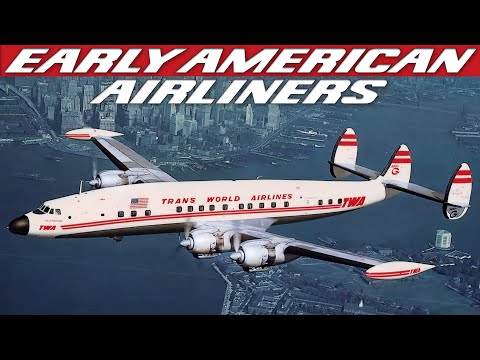
Lockheed Constellation Sheet pending
Variants (86)
- C-121A
- C-121C
- C-121G
- C-121J
- C-69
- C-69A
- C-69B
- C-69C-1
- C-69D
- EC-121D
- EC-121H
- EC-121J
- EC-121K
- EC-121L
- EC-121M
- EC-121P
- EC-121Q
- EC-121R «BatCat»
- EC-121T
- JC-121C
- JC-121K
- L-049
- L-051
- L-084
- L-1049
- L-1049A
- L-1049B
- L-1049C
- L-1049D
- L-1049E
- L-1049F
- L-1049G
- L-1049H
- L-1049J
- L-1149
- L-1249A
- L-1249B
- L-1449
- L-149
- L-1549
- L-1649A Starliner
- L-1649B
- L-249
- L-349
- L-449
- L-549
- L-649
- L-649A
- L-749
- L-749A
- L-749B
- L-849
- L-949
- Lockheed EC-121R Warning Star
- NC-121C
- NC-121D
- NC-121J
- NC-121K
- NC-121S
- PO-1W
- PO-2W Warning Star
- R7O-1
- R7V-1
- R7V-1P
- R7V-2
- RC-121C
- RC-121D
- TC-121C
- TC-121G
- VC-121A
- VC-121B
- VC-121C
- VC-121E
- VC-121G
- VC-121J
- WQC-121N
- WV-1
- WV-2E
- WV-2Q
- WV-2 Warning Star
- WV-3
- XB-30
- XC-69
- XC-69E
- XW2V-1
- YC-121F
- 1944
Lockheed P-80 Shooting Star Sheet pending
Variants (22)
- DF-80A
- EF-80
- ERF-80A
- F-14A
- F-80A
- F-80B
- F-80C
- FP-80A
- P-80A
- P-80B
- P-80C
- P-80R
- QF-80A/QF-80C/QF-80F
- RF-80A
- RF-80C
- TO-1/TV-1
- XF-14
- XFP-80A
- XP-80
- XP-80A
- XP-80B
- YP-80A
- 1944
Lockheed XP-58 Chain Lightning Sheet pending
- 1945
Lockheed P-2 Neptune Sheet pending
Variants (40)
- AP-2E
- AP-2H
- CP-122 Neptune
- DP-2H
- EP-2H
- Kawasaki P-2J
- Lockheed OP-2E Neptune
- Neptune MR.1
- NP-2E
- NP-2H
- OP-2E
- P-15
- P2V-1
- P2V-2
- P2V-2N «Polar Bear»
- P2V-2S
- P2V-3
- P2V-3B
- P2V-3C
- P2V-3W
- P2V-3Z
- P2V-4
- P2V-5
- P2V-5F
- P2V-5FD
- P2V-5FE
- P2V-5FS
- P2V-5JF
- P2V-6
- P2V-6B
- P2V-6F
- P2V-6T
- P2V-7
- P2V-7B
- P2V-7LP
- P2V-7S
- P2V-7U
- RB-69A
- XP2V-1
- XP2V-2
- 1945
Lockheed Big Dipper Sheet pending
- 1946
Lockheed Saturn Sheet pending
- 1946
Lockheed R6V Constitution Sheet pending
- 1948
Lockheed T-33 Shooting Star Sheet pending
Variants (24)
- Aérospatiale Pégase
- AT-33A
- B.F.11
- Boeing Skyfox
- B.TF.11
- DT-33A
- DT-33B
- DT-33C
- Khodkar
- L-245
- NT-33A
- QT-33A
- RT-33A
- Silver Star Mk 1
- Silver Star Mk 2
- T-33A
- T-33AN/CT-133 Silver Star Mk 3
- T-33B
- TF-33A
- TO-2
- TP-80C
- TV-2
- TV-2D
- TV-2KD
- 1949
Lockheed F-94 Starfire Sheet pending
Variants (11)
- EF-94C
- F-94A
- F-94B
- F-94C Starfire
- F-94D
- F-97A
- YF-94
- YF-94B
- YF-94C
- YF-94D
- YF-97A
- 1949
Lockheed XF-90 Sheet pending
- 1951
Lockheed X-7 Sheet pending
- 1953
Lockheed T2V SeaStar Sheet pending
- 1954
Lockheed F-104 Starfighter Sheet pending
Variants (21)
- CF-104
- CF-104D
- F-104A
- F-104B
- F-104C
- F-104D
- F-104DJ
- F-104F
- F-104G
- F-104H
- F-104J
- F-104N
- F-104S
- F-104S-ASA
- F-104S-ASA/M
- NF-104A
- QF-104A
- RF-104G
- TF-104G
- XF-104
- YF-104A
- 1954
Lockheed XFV Sheet pending
Variants (2)
- FV-2
- XFO-1/XFV-1
- 1954
Lockheed C-130 Hercules
The Lockheed C-130 Hercules is an American four-engined turboprop military transport aircraft, designed and built by Lockheed (now Lockheed Martin), with a high wing and a rear loading ramp. Conceived to carry troops, cargo and casualties out of unprepared strips, it is the main tactical airlifter of many armed forces and the longest continuously produced military aircraft in the United States: in 2024 it reached seventy years of uninterrupted manufacture since 1954, with more than 2,700 examples built as of June that year. More than forty variants, including the civil versions marketed as the Lockheed L-100, operate in more than sixty nations. It was also the fifth aircraft to complete fifty years of continuous service with its original primary customer, the United States Air Force (USAF), on a date the consulted sources place either in December 2006 or in 2007. Its origin lies in the Korean War, which exposed the inadequacy of the piston-engined transports inherited from the Second World War (Fairchild C-119, Douglas C-47, Curtiss C-46). On 2 February 1951 the USAF issued a General Operating Requirement to nine manufacturers: it called for capacity for 92 passengers, 72 combat-equipped troops or 64 paratroopers and, unlike transports derived from airliners, an aircraft conceived from the outset as a combat transport loading through a hinged ramp at the rear of the fuselage. The greatest innovation was the powerplant: the Allison T56 turboprop, developed specifically for the aircraft, which offered far more power for its weight than a piston engine and greater range than a turbojet. Lockheed, with a design team led by Willis Hawkins, won the contract for the Model 82 on 2 July 1951. The YC-130 prototype flew on 23 August 1954 from Burbank, California, and series production moved to Marietta, Georgia, where over 2,300 aircraft had been built through 2009. The configuration has barely changed since — high wing, high-flotation landing gear for dirt strips, a rear ramp equally useful for driving vehicles aboard and for airdropping cargo — and the evolution played out in engines and avionics. The initial C-130A (deliveries from December 1956) was followed by the C-130B of 1959, with auxiliary tanks in the centre wing section and four-bladed propellers; the longer-legged C-130E of 1962, with external tanks; the C-130H, with T56-A-15 engines and a redesigned outer wing, in production until 1996 and still the most widespread model; and the C-130J Super Hercules, launched by a Royal Air Force order of December 1994 and the only version in production today, with new engines, six-bladed propellers and digital avionics: 500 delivered to 26 operators in 22 countries as of March 2022. The family of specialised versions has no equivalent. The AC-130 gunship, born in Vietnam for close air support; the EC-130 for electronic warfare, airborne command and psychological operations (Commando Solo, Compass Call); the MC-130 for special operations, infiltrating, exfiltrating and refuelling special-operations helicopters in flight; the HC-130 long-range search and rescue aircraft of the USAF and the Coast Guard; the KC-130 tanker of the Marine Corps; the WC-130 weather reconnaissance version, with which the 53rd Squadron's Hurricane Hunters fly into tropical cyclones; the ski-equipped LC-130, the largest aircraft in the world able to land on snow and ice and the mainstay of Operation Deep Freeze in Antarctica; and the firefighting role through the Modular Airborne Firefighting System, which temporarily turns a Hercules into a 3,000-gallon airtanker. On the civil side, the L-100 — a C-130E without military equipment — flew in 1964 and was delivered in 114 examples up to 1992, with the LM-100J succeeding it from 2017. Its service record covers almost everything: forward air control over Laos and North Vietnam; the 1976 Entebbe raid, in which four Israeli Hercules flew more than 2,200 nautical miles almost entirely below 100 ft; the failed Operation Eagle Claw in Iran in 1980; and the 21 unarrested landings made by a KC-130F aboard the carrier Forrestal in 1963, still the record for the largest and heaviest aircraft to operate from an aircraft carrier. Australia was the first foreign user, in 1958. That mix of ruggedness, reconfigurability and longevity explains why the Hercules — the "Herk" of military slang — remains the yardstick by which tactical airlift is measured.
- 1955
Lockheed U-2
The Lockheed U-2 is a high-altitude strategic reconnaissance aircraft: a single-seater with enormously long, narrow wings, one jet engine and a structure pared down to the lightest airframe its designers could get away with, conceived in the mid-1950s to solve a problem that had no other answer. The United States needed to know what was inside the Soviet Union — how many bombers, how many missiles, where — and there was no legal or safe way to find out. Lockheed's solution was very nearly a powered glider: take it above 21,000 metres, where fighters, radars and anti-aircraft batteries were believed unable to reach it, and hang beneath it a camera able to resolve objects a few centimetres across from that height. Seventy years later it is still flying, which none of its creators would have bet on. The programme grew out of a request for proposals written in 1953 by Air Force officer John Seaberg for an aircraft able to operate at 70,000 feet over its target. The competition, code-named "Bald Eagle", was deliberately aimed at small companies; Lockheed heard about it and submitted an unsolicited design. Its author was Clarence "Kelly" Johnson, the engineer behind the P-38 and the P-80, who worked in a separate division informally known as the Skunk Works. His CL-282 gave up conventional landing gear and combat load factors in exchange for altitude. The Air Force rejected it in June 1954 — General Curtis LeMay walked out of the presentation saying he had no interest in an aeroplane with no wheels and no guns — but a group of civilian advisers, among them Edwin Land and James Killian, persuaded President Eisenhower that the aircraft should exist and that the CIA, not the military, should fly it: a military aircraft over Soviet territory could be read as an act of war. Approval came in November 1954 and the contract, $22.5 million for the first twenty aircraft, in March 1955. Johnson delivered on time and under budget. Flying the U-2 was never comfortable. At operating altitude the margin between never-exceed speed and stall speed was about ten knots: the "coffin corner", where straying above or below meant losing the airflow over wing or tail. Down low, by contrast, dense air and the absence of powered controls made it brutally hard work, and the ground effect of those wings meant it refused to land until fully stalled half a metre above the runway. Bicycle gear instead of a tricycle arrangement, two auxiliary wheels — the "pogos" — that drop away on take-off, titanium skids at the wingtips, and a chase car racing down the runway calling out the pilot's remaining height. In a cockpit that is only partly pressurised, the pilot wears a pressure suit and breathes pure oxygen for an hour before take-off to purge nitrogen from the blood; on an eight-hour mission he may lose up to 5% of his body mass. Its operational history is the history of the century. On 4 July 1956 a U-2 overflew the Soviet Union for the first time; the photographs of the following years showed that the "bomber gap" agonising Washington did not exist. On 1 May 1960 an SA-2 missile brought down Francis Gary Powers's aircraft near Sverdlovsk, the weather-research cover story collapsed when Khrushchev revealed the pilot was alive, Eisenhower refused to apologise and the Paris summit fell apart before it began. In October 1962 it was a U-2 that photographed the Soviet missiles in Cuba, and another U-2 that was shot down over the island with Major Rudolf Anderson aboard, at the tensest moment of the crisis. Then came the Taiwanese pilots of the Black Cat Squadron over mainland China, Vietnam, the Middle East, the Balkans, Iraq and Afghanistan. The platform was remade several times. The original U-2A was followed by models with more powerful engines, two-seat versions, air-refuellable variants and even one adapted for carrier operations; in 1967 came the U-2R, an airframe nearly 30% larger, and in 1981 a third production batch christened TR-1A and later returned to the U-2R designation. Since the mid-1990s the fleet has flown as the U-2S with the General Electric F118 turbofan, with the two-seat TU-2S as trainer, while NASA operates two ER-2s for atmospheric science and Earth observation. The U-2 outlived the SR-71, retired in 1998, and a very long list of announced and then cancelled retirement dates: 2007, 2012, 2015, 2019, 2025, 2026. It remains the only manned high-altitude strategic reconnaissance aircraft in the United States Air Force, and its latest death sentence is not firm either.
- 1957
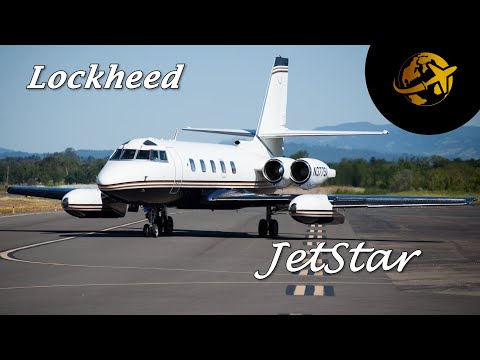
Lockheed JetStar Sheet pending
Variants (9)
- AAI FanStar
- C-140A
- C-140B
- C-140C
- JetStar 731
- JetStar I
- JetStar II
- T-40
- VC-140B
- 1957
Lockheed L-188 Electra
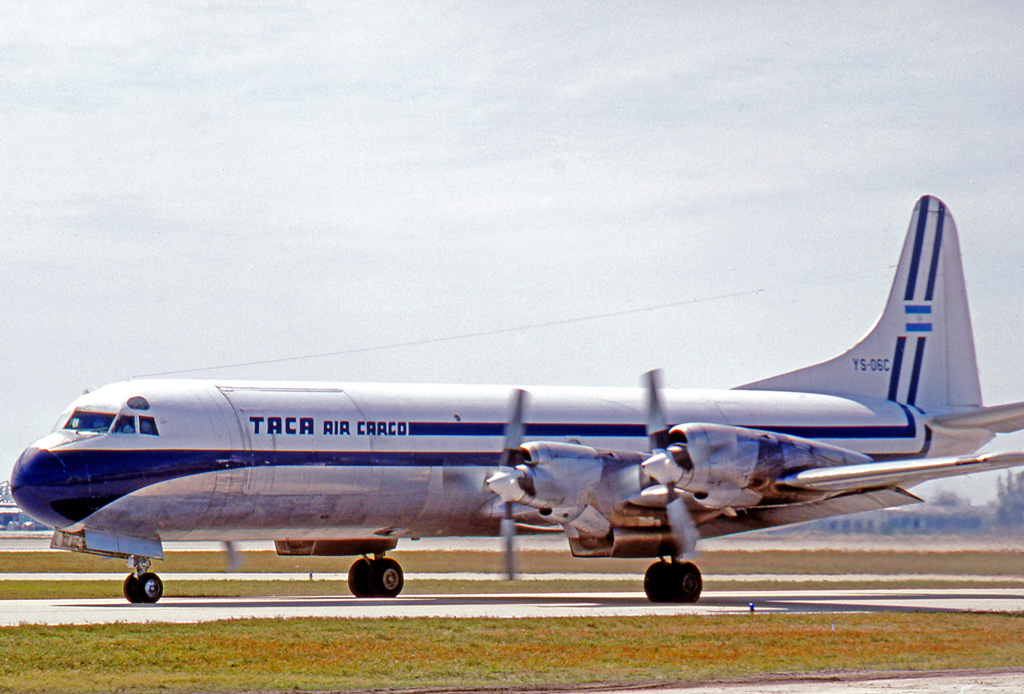
First flown on December 6, 1957, the Lockheed L-188 Electra was the first large turboprop airliner built in the United States. Its passenger career proved short, yet the sturdy airframe went on to a long second life hauling cargo and fighting fires.
- 1959
Lockheed CL-475 Sheet pending
- 1962
Lockheed A-12 Sheet pending
Variants (2)
- A-12 Trainer «Titanium Goose»
- M-21
- 1962
Lockheed XV-4 Hummingbird Sheet pending
Variants (2)
- XV-4A
- XV-4B
- 1962
Lockheed XH-51 Sheet pending
Variants (4)
- Model 286
- XH-51A
- XH-51A Compound
- XH-51N
- 1963
Lockheed YF-12 Sheet pending
Variants (3)
- F-12B
- YF-12A
- YF-12C
- 1963
Lockheed C-141 Starlifter Sheet pending
Variants (4)
- C-141A
- C-141B
- C-141C
- SOLL II
- 1964
Lockheed SR-71 Blackbird
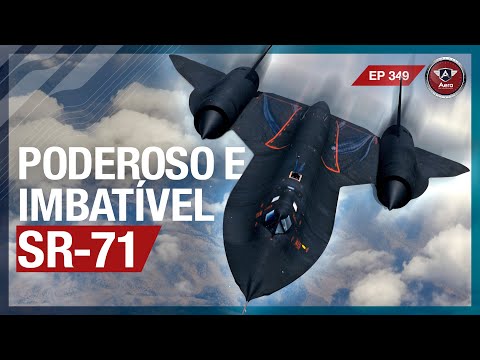
The Lockheed SR-71 "Blackbird" was the fastest and highest-flying reconnaissance aircraft ever to enter operational service: a two-seat machine able to cross continents above Mach 3 and beyond 80,000 feet, built to photograph hostile territory with no practical way of being intercepted. It came from Lockheed, and specifically from the advanced projects division run by Clarence "Kelly" Johnson that the world knows as the Skunk Works. It matters because it solved, with early-1960s technology, a problem that looked intractable: sustaining flight for hours at speeds where air friction heats an aircraft's skin to hundreds of degrees. The answer was an airframe built almost entirely of titanium, a fuel of its own (JP-7) so reluctant to ignite that a chemical starter was needed, a navigation system that tracked stars in daylight, and a powerplant — the Pratt & Whitney J58 with its translating inlet spike — that behaved in cruise more like a ramjet than a turbojet. The lineage predates the SR-71 itself. In 1957 the CIA was looking for a less vulnerable successor to the U-2 and hired Lockheed for project Archangel, which produced the A-12, first flown in April 1962. The Air Force asked for its own version: longer, heavier and crewed by two, the Lockheed R-12, which official designation turned into SR-71. The first aircraft flew on 22 December 1964 at Air Force Plant 42 in Palmdale with Bob Gilliland at the controls, and the type entered service at Beale AFB in January 1966. It flew from Kadena, Okinawa, over North Vietnam, Laos and North Korea from 1968, and from RAF Mildenhall over the Baltic and the Barents Sea from 1976; missions also covered Cuba, Nicaragua, Libya and the Middle East. None was ever shot down despite roughly 800 surface-to-air missiles fired at Blackbirds over Vietnam alone: the standard evasion was simply to accelerate. Of the 32 airframes built, twelve were lost in accidents and one crew member died. The Air Force retired the type in 1989, citing cost and the redundancy brought by satellites and unmanned aircraft; Congress funded the return of three aircraft in 1994, and military service ended for good in 1998. NASA, which flew the Blackbird as a high-speed research testbed at Dryden, closed the story with a final flight on 9 October 1999. The absolute speed and altitude records it set in July 1976 still stand.
- 1964
Lockheed D-21 Sheet pending
- 1967
Lockheed AH-56 Cheyenne Sheet pending
- 1968
Lockheed C-5 Galaxy Sheet pending
Variants (6)
- C-5A
- C-5B
- C-5C
- C-5D
- C-5 Shuttle Carrier
- L-500
- 1970
Lockheed L-1011 TriStar Sheet pending
Variants (7)
- L-1011-1
- L-1011-100
- L-1011-150
- L-1011-200
- L-1011-250
- L-1011-50
- L-1011-500
- 1972
Lockheed S-3 Viking Sheet pending
Variants (13)
- Aladdin Viking
- Beartrap Viking
- Calypso Viking
- ES-3A Shadow
- Gray Wolf Viking
- KS-3A
- KS-3B
- NASA Viking
- Orca Viking
- Outlaw Viking
- S-3A
- S-3B
- US-3A
- 1977
Lockheed Have Blue Sheet pending
- 1981
Lockheed F-117 Nighthawk
The Lockheed F-117 Nighthawk was the world's first operational aircraft designed from the outset around low observability: a single-seat, subsonic, twin-engined attack aircraft built by Lockheed's Skunk Works division and flown exclusively by the United States Air Force. Its significance lies not in its performance, which was modest, but in proving that an aeroplane could cross dense air defences without being seen, a demonstration that reshaped late twentieth-century air doctrine. The idea reached Burbank by an improbable route. In 1962 the Soviet mathematician Pyotr Ufimtsev published "Method of Edge Waves in the Physical Theory of Diffraction", showing that the strength of a radar return depends on an object's edge configuration rather than on its size, extending earlier theoretical work by the German physicist Arnold Sommerfeld. The logical conclusion, that even a large aircraft could shrink its signature by exploiting the principle, was unusable in the 1960s, because the resulting shape would be aerodynamically unstable and no flight computer then existed to tame it. When the Lockheed analyst Denys Overholser came across the paper in the 1970s, computing had caught up. Skunk Works modelled the "Hopeless Diamond" in 1975, and in 1976 DARPA contracted two demonstrators under the code name Have Blue, assembled from T-38A engines, F-16 fly-by-wire systems, A-10 landing gear and C-130 environmental systems for 35 million dollars for the pair. They first flew on 1 December 1977 and both were lost in crashes, but the test data validated the concept. The operational programme, Senior Trend, was approved on 1 November 1978 and awarded to Lockheed Advanced Development Projects in Burbank, led by Ben Rich with Alan Brown as project manager. Against Kelly Johnson's rounded proposal, Rich argued for flat surfaces, or facets, arranged by an in-house program called "Echo" so as to scatter over 99% of the radar energy painting the aircraft. The first YF-117A, serial 79-10780, flew from Groom Lake on 18 June 1981, only 31 months after the full-scale development decision; initial operating capability followed in October 1983. Five full-scale development aircraft and 59 production machines were built, the last delivered on 3 July 1990. (The Spanish-language Wikipedia dates the first prototype flight to 1982.) Faceting came at a cost. The aircraft is unstable about all three principal axes and depends on quadruple-redundant fly-by-wire controls; it has no afterburners and carries no radar of its own, is clad in almost a ton of radar-absorbent material supplied as flat sheets, and vents its exhaust through a slit-shaped, non-circular tail pipe that mixes hot gas with cool ambient air. Its radar cross-section is around 0.001 m². In exchange it is confined to subsonic speeds and to manoeuvrability far below that of any fighter, irrelevant in a dedicated attack aircraft, which makes its "F" designation all the more striking. It had no air-to-air capability; project manager Alan Brown attributed the letter to General Robert J. Dixon, who believed the top-notch fighter pilots the aircraft required would be more easily attracted to a fighter designation than to a bomber or attack one. The entire fleet operated in secret from Tonopah Test Range Airport, initially under the 4450th Tactical Group. The USAF denied the aircraft's existence until 10 November 1988, when Assistant Secretary of Defense J. Daniel Howard produced a grainy photograph at a Pentagon press conference. Its combat debut came in the 1989 invasion of Panama; its reputation was made in the 1991 Gulf War, with roughly 1,300 sorties against what the US military described as 1,600 high-value targets, and 42 aircraft dropping 2,077 bombs. On 27 March 1999 over Serbia, an S-125 Neva battery of the 3rd Battalion, 250th Air Defence Missile Brigade under Colonel Zoltán Dani downed F-117 82-0806, callsign "Vega 31"; the pilot ejected and was recovered hours later, and the wreckage was left where it fell. It remains the type's only combat loss. Retirement, brought forward to 2008 to fund more F-22s, did not end the story: most airframes went into recallable storage at Tonopah and several still fly on training and test work.
- 2006
Lockheed Martin F-35 Lightning II
The Lockheed Martin F-35 Lightning II is a family of single-seat, single-engine fifth-generation stealth fighters conceived not as one aircraft but as a common design rendered in three versions that share airframe, powerplant, sensors and mission system, and differ in how they take off and land. The F-35A operates conventionally from a runway; the F-35B takes off in a short roll and lands vertically by means of a shaft-driven lift fan and a swivelling exhaust nozzle; the F-35C carries a larger folding wing, strengthened landing gear and an arresting hook for catapult operations from aircraft carriers. That premise — a single programme replacing the F-16, the A-10, the AV-8B Harrier II and the F/A-18 Hornet at once, across three American services and the air arms of a dozen partner nations — accounts for both its industrial reach and its troubles. The aircraft grew out of the Joint Strike Fighter programme, which in 1996 pitted the Boeing X-32 against the Lockheed Martin X-35. On 26 October 2001 the Pentagon picked the X-35, and the first production-standard F-35, AA-1, flew on 15 December 2006 at Fort Worth. Between selection and service entry came a weight crisis that forced a redesign of the STOVL version, a cost breach that triggered a full restructuring of the programme, and a schedule that slipped by years. The Marine Corps declared initial operational capability in July 2015, the Air Force in August 2016 and the Navy in February 2019. Its defining quality is not speed — capped at Mach 1.6, roughly 1,960 km/h — but the pairing of low observability with a sensor fusion that blends the AN/APG-81 AESA radar, the six-camera AN/AAQ-37 distributed aperture system, the AN/AAQ-40 electro-optical targeting sensor and an integrated electronic warfare suite, all presented to the pilot on a single touchscreen and on the visor of a helmet that replaces the conventional head-up display. In stealth configuration weapons ride in two internal bays; when the threat permits, six external stations raise the load to about 8,160 kg on the A and C models. With more than a thousand aircraft delivered and customers on three continents, the F-35 has become the backbone of Western combat aviation and, at the same time, the most expensive weapons programme in history. Its development continues: the Block 4 capability package and the Technology Refresh 3 avionics upgrade — whose delays halted deliveries for a year between 2023 and 2024 — define the aircraft that will fly for decades to come.
- —
Lockheed Explorer Sheet pending
Variants (2)
- 4 Explorer
- 7 Explorer
- —
Lockheed P-3 Orion Sheet pending
Variants (58)
- AP-3C
- CP-140A Arcturus
- CP-140 Aurora
- EP-3
- EP-3A
- EP-3B
- EP-3E Aries
- EP-3E Aries II
- EP-3E SIGINT
- EP-3J
- NP-3A
- NP-3B
- NP-3C
- NP-3D
- NP-3E
- OP-3C
- Orion 21
- P-3A
- P-3A (CS)
- P-3 AEW&C
- P-3AM
- P-3B
- P-3C
- P-3C AIP
- P-3C BMUP
- P-3C CDU
- P-3C CUP
- P-3CK
- P-3C SUDS
- P-3C UIP
- P-3C Update I
- P-3C Update II
- P-3C Update II.5
- P-3C Update III
- P-3C Update IV
- P-3F
- P-3G
- P-3H
- P-3K
- P-3K2
- P-3M
- P-3N
- P-3P
- P-3T
- P-3W
- P-7
- RP-3A
- RP-3C
- RP-3D
- TAP-3C
- TP-3A
- UP-3A
- UP-3C
- UP-3D
- VP-3A
- VP-3T
- WP-3A
- WP-3D
- —
Lockheed Altair Sheet pending
Variants (7)
- 8D Altair
- 8G Altair
- DL-2A
- Sirius 8 Special
- XRO-1
- Y1C-23
- Y1C-25
- —
Lockheed Model 9 Orion Sheet pending
Variants (11)
- Orion 9
- Orion 9A Special
- Orion 9B
- Orion 9C
- Orion 9D
- Orion 9D-1
- Orion 9E
- Orion 9F
- Orion 9F-1
- Orion-Explorer
- UC-85
- —
Lockheed AQM-60 Kingfisher Sheet pending
- —
Lockheed YO-3 Quiet Star Sheet pending
Variants (5)
- Q-Star
- QT-1 Quiet Thruster
- QT-2
- QT-2PC Prize Crew
- YO-3A
- —
Lockheed YP-24 Sheet pending
- —
Lockheed Model 8 Sirius Sheet pending
Variants (5)
- DL-2
- Lockheed 8 Sirius
- Sirius 8
- Sirius 8A
- Sirius 8C
- —
Lockheed MQM-105 Aquila Sheet pending
- —
Lockheed Air Express Sheet pending
Variants (2)
- 3 Air Express
- Air Express Special
- —
Lockheed Little Dipper Sheet pending
- —
Lockheed Aequare Sheet pending
Videos




Show the 13 more






Did you know… about Lockheed
- Why was the sr 71 blackbird decommissioned?
The SR-71 was retired in 1990 because the Air Force judged it too expensive to keep flying, at hundreds of millions of dollars a year, when satellites and…