Airliner · Civil · United States
Lockheed L-188 Electra
- December 6, 1957
- First flight
- 1959
- Introduced
- In service
- Status
- 170
- Units built


_JP5949023-800.webp)
-1600.webp)
_Electra_N5534-800.webp)
_Electra%2C_TAN_Carga_-_Transportes_Aereos_Nacionales_AN0208199-800.webp)


_in_flight%2C_c._1961-800.webp)
.jpg)
_Lockheed_L-188A(F)_Electra_N285F-800.webp)


_in_flight%2C_1958-800.webp)

_Electra%2C_SAM_Colombia_AN0597250-800.webp)
_Electra%2C_Zantop_International_Airlines_AN0619908-800.webp)


_Electra%3B_N665F%40MIA%2C_May_1991_(5875759863)-1600.webp)


_Electra_Channel_Express_STN_170401-1600.webp)

_Electra_Air_Bridge_Carriers_EMS_with_G-BOSA_AmberAir_B737-200_in_background_MAN_060788_(50135229657)-1600.webp)


_Electra%2C_ALM_Antillean_Airlines_Cargo_(TPI_International_Airways)_AN0208980-800.webp)
_Electra%2C_Amerer_Air_AN0441008-800.webp)


_Electra%2C_ALM_Antillean_Airlines_JP6539370-800.webp)


_Electra_AN0230141-800.webp)
_(23620418510)-1600.webp)
_Electra-800.webp)


_Electra%2C_Hunting_Cargo_Airlines_AN0252326-800.webp)


_Electra%2C_ALM_Antillean_Airlines_Cargo_(TPI_International_Airways)_AN0213076-800.webp)


_Electra%2C_Fred_Olsen_AN0230836-800.webp)
_JP7374265-800.webp)


_Electra%2C_ALM_Antillean_Airlines_Cargo_(TPI_International_Airways)_AN0211223-800.webp)


_Electra%2C_Amerer_Air_AN0066642-800.webp)


_Electra%2C_Zantop_International_Airlines_AN0252973-800.webp)

_Electra%2C_Zantop_International_Airlines_JP6243812-800.webp)


First flown on December 6, 1957, the Lockheed L-188 Electra was the first large turboprop airliner built in the United States. Its passenger career proved short, yet the sturdy airframe went on to a long second life hauling cargo and fighting fires.
Related sheets
Category
History
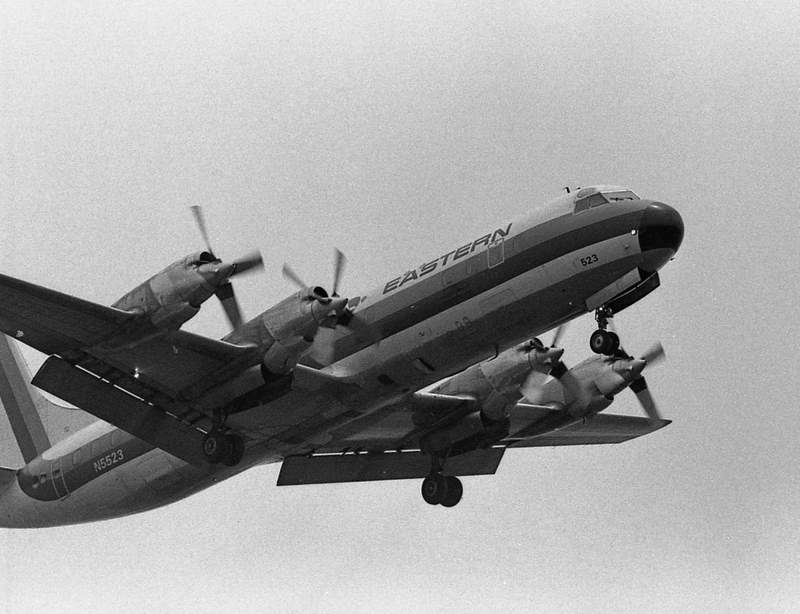
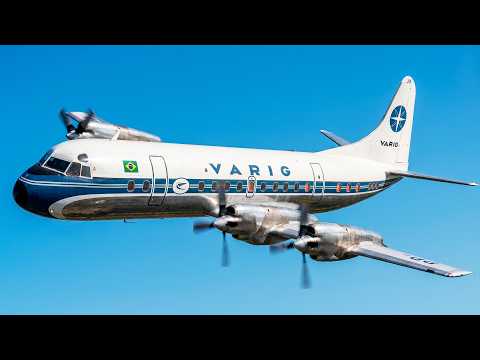
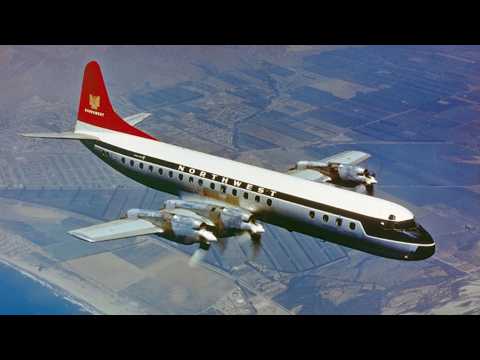
Lockheed designed the L-188 Electra to meet US airlines' demand for a short- to medium-range airliner faster than the piston types then in service. Powered by four Allison 501-D13 turboprops, the prototype flew on December 6, 1957, and Eastern Air Lines introduced the type on January 12, 1959. Its generous reserve of power gave it striking takeoff and climb performance for an airliner of its class.
The Electra's career was scarred almost immediately: between 1959 and 1960 two aircraft, one flown by Braniff and one by Northwest, broke up in flight. Investigators traced the accidents to a phenomenon called whirl mode, an engine-mount oscillation that could couple with the wing structure until it failed. Lockheed cured the flaw through the LEAP (Lockheed Electra Achievement Program) modification effort, but airline and public confidence had been damaged, and production ended in 1961 after only 170 aircraft.
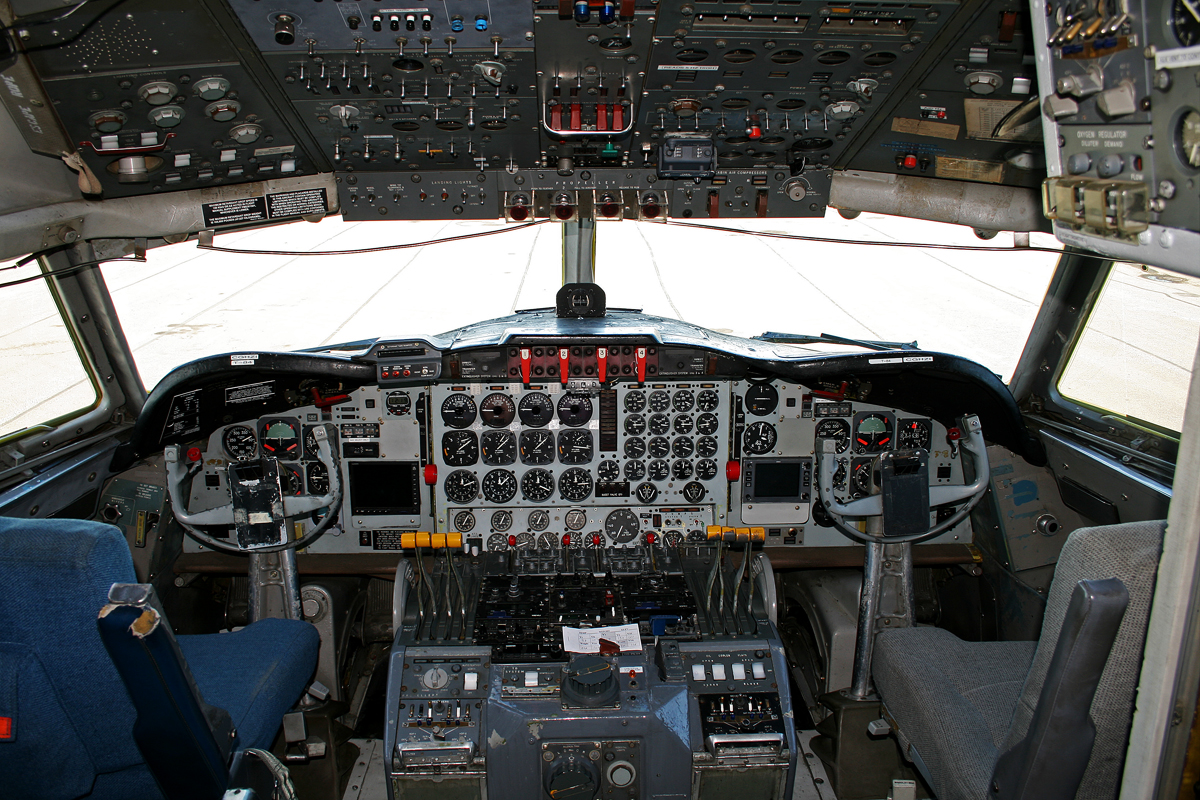
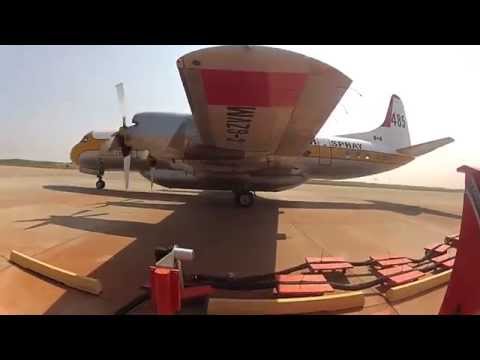
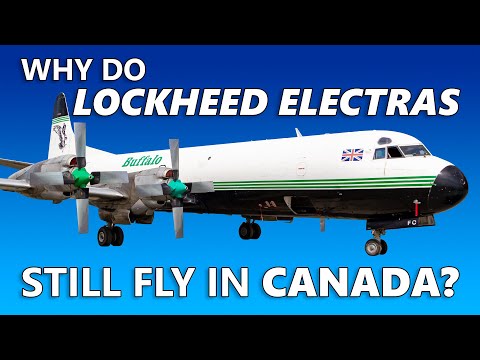
The design outlived its assembly line all the same. It became the basis of the P-3 Orion maritime patrol aircraft, one of the longest-serving military types in its field, while surviving Electras were converted into freighters and air tankers. Operators such as Buffalo Airways and aerial firefighting companies kept the type in non-passenger service for decades after it vanished from scheduled routes.
Variants
| L-188A | YP-3A Orion | L-188AF | L-188C | L-188CF | L-188E Electron | L-188PF | |
|---|---|---|---|---|---|---|---|
| First flight | December 6, 1957 | August 19, 1958 | — | — | — | — | — |
| Aircraft type | Short/medium-haul airliner | Maritime patrol aerodynamic prototype | Short/medium-haul freighter | Short/medium-haul airliner | Short/medium-haul freighter | Maritime patrol aircraft | Convertible passenger/freighter airliner |
| Powerplant | 4 × Allison 501-D13 turboprops rated at 2,796 kW (3,750 shp) each, driving four-blade propellers 4.11 m in diameter | 4 × Allison T56-A-10W turboprops, the powerplant chosen for the Model 185 that grew into the P-3 Orion | 4 × Allison 501-D13 turboprops of 2,796 kW (3,750 shp) each, unchanged from the passenger aircraft | 4 × Allison 501-D13 turboprops of 2,796 kW (3,750 shp) each, identical to those of the L-188A | 4 × Allison 501-D13 turboprops of 2,796 kW (3,750 shp) each, unchanged from the passenger aircraft | 4 × Allison 501-D13 turboprops of 2,796 kW (3,750 shp) each, carried over from the civil Electra airframes | 4 × Allison 501-D13 turboprops of 2,796 kW (3,750 shp) each, unchanged from the passenger aircraft |
| Powerplant | 4 × Allison 501-D13 | 4 × Allison T56-A-10W | 4 × Allison 501-D13 | 4 × Allison 501-D13 | 4 × Allison 501-D13 | 4 × Allison 501-D13 | 4 × Allison 501-D13 |
| Power per engine | 3,749 hp Best value in this row | — | 3,749 hp Best value in this row | 3,749 hp Best value in this row | 3,749 hp Best value in this row | 3,749 hp Best value in this row | 3,749 hp Best value in this row |
| Length | 31.9 m | — | 31.9 m Best value in this row | 31.9 m Best value in this row | 31.9 m Best value in this row | — | 31.9 m Best value in this row |
| Wingspan | 30.2 m | — | 30.2 m Best value in this row | 30.2 m Best value in this row | 30.2 m Best value in this row | — | 30.2 m Best value in this row |
| Height | 10 m Best value in this row | — | 10 m | 10 m | 10 m | — | 10 m |
| Wing area | 121 m² | — | — | — | — | — | — |
| Empty weight | 26,036 kg | — | — | — | — | — | — |
| MTOW | 51,256 kg | — | — | 52,617 kg Best value in this row | — | — | — |
| Top speed | 721 km/h | — | — | — | — | — | — |
| Max speed altitude | 3,700 m | — | — | — | — | — | — |
| Cruise speed | 600 km/h | — | — | — | — | — | — |
| Service ceiling | 8,656 m | — | — | — | — | — | — |
| Initial climb rate | 10 m/s | — | — | — | — | — | — |
| Range | 3,541 km | — | — | — | — | — | — |
| Ferry range | 4,460 km | — | — | — | — | — | — |
| Combat radius | 0 km Best value in this row | — | 0 km Best value in this row | 0 km Best value in this row | 0 km Best value in this row | — | 0 km Best value in this row |
| Range conditions | 3,541 km carrying the maximum payload and up to 4,460 km on full tanks (5,520 US gallons) | A trials aircraft with no operational mission: it flew on 19 August 1958 as the YP3V-1 to validate the airframe of the future Orion | Range matches the L-188A: 3,541 km with the maximum payload | Long-range version: 6,940 US gallons of fuel against the 5,450 of the L-188A, at a 52,617 kg maximum take-off weight | Inherits the L-188C's enlarged 6,940 US gallon tankage and its higher maximum take-off weight | They bridged the gap between the retirement of the P-2 Neptunes and the arrival of the P-3 Orions in 1994, trading on the Electra's endurance | Range matches the L-188A: 3,541 km with the maximum payload |
| Armament | None: a civil passenger transport with no combat capability | — | None: a civil freighter with no combat capability | None: a civil passenger transport with no combat capability | None: a civil freighter with no combat capability | — | None: a civil transport with no combat capability |
| Max weapons load | 0 kg Best value in this row | — | 0 kg Best value in this row | 0 kg Best value in this row | 0 kg Best value in this row | — | 0 kg Best value in this row |
| Payload | 15,300 kg | — | — | — | — | — | — |
| Cargo capacity | Cabin seating 66 to 80 in mixed-class layouts and up to 98 in high density; maximum payload 15,300 kg | Aerodynamic test bed built from the third Electra airframe (c/n 1003), seven feet shorter ahead of the wing and fitted with a bomb bay, pointed radome and tail stinger | All-freight conversion of the L-188A under a supplemental type certificate, with a strengthened floor and a large cargo door ahead of the wing on the left side | Same cabin as the L-188A, 66 to 98 seats depending on layout; the extra weight allowance went into fuel rather than payload | Freighter conversion of the L-188C under a supplemental type certificate; Lockheed rebuilt 41 Electras as freighters or convertibles with a strengthened floor and a forward cargo door | Four civil Electras rebuilt by the Argentine Navy for maritime patrol; two more took the L-188EK electronic warfare and intelligence fit | Passenger-freight conversion of the L-188A under a supplemental type certificate: the cabin takes seats or palletised freight depending on how the aircraft is configured |
| Crew | 3 Best value in this row | — | 3 Best value in this row | 3 Best value in this row | 3 Best value in this row | — | 3 Best value in this row |
| Passengers | 98 Best value in this row | — | — | 98 Best value in this row | — | — | — |
| Units built | — | 1 | — | 55 Best value in this row | — | 4 | — |
Images






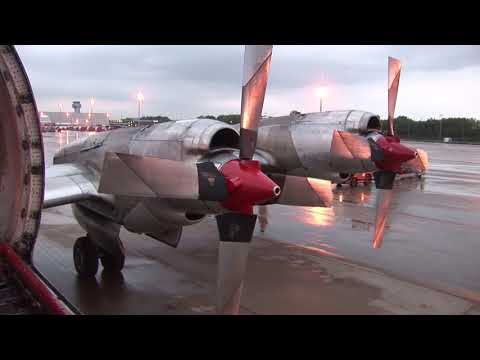


![Air Spray Lockheed L-188 Electra [C-FLJO] Approach & Landing in CYYF](https://i.ytimg.com/vi/ffoDn8hppSU/hqdefault.jpg)