Netherlands · 1912–
Fokker
Fokker was the Dutch aircraft manufacturer par excellence, in business from 1912 to 1996 and formally styled in its final years as N.V. Koninklijke Nederlandse Vliegtuigenfabriek Fokker. It grew out of the ambition of aviator Anthony Fokker, who set up his first works in Germany and made his name there supplying fighters to the German army during the First World War. The firm's heyday came in the 1920s and 1930s, when it dominated the civil aviation market and briefly ranked as the largest aircraft manufacturer in the world. The F.VIIa/3m trimotor of 1925 was its commercial masterpiece, flown by some fifty airlines, and it carried several of the era's most celebrated flights, among them Kingsford Smith's Southern Cross and the America in which Byrd crossed the Atlantic. After the Second World War the company reinvented itself at Schiphol around two long-lived airliners: the F-27 Friendship turboprop, the best-selling aircraft of its class anywhere, and the F-28 Fellowship jet. Their successors, the Fokker 50 and the Fokker 100/70 family, were technically accomplished but financially crippling. Fokker was declared bankrupt in 1996 and its operations were divided among competitors, though the name survives in a group of component and maintenance businesses.
Fokker in the news

Last November, the NHIndustries consortium, formed by Airbus Helicopters, Leonardo and GKN Fokker, settled its dispute with Norway's Ministry of Defence by agreeing to take back the…
KLM Cityhopper celebrated its 60th anniversary on Sept. 11, 2026. The KLM Cityhopper network began in 1966 as NLM (Nederlandse Luchtvaart Maatschappij) with two Fokker aircraft and a focus on…
.jpg)
KLM Cityhopper celebrates 60 years: from regional carrier to driving force of KLM's European network
KLM Cityhopper celebrated its 60th anniversary. What began in 1966 as Nederlandse Luchtvaart Maatschappij (NLM), with two leased Fokker aircraft and a handful of domestic routes, became a part…
KLM Cityhopper viert op 12 september haar 60-jarig bestaan. Wat in 1966 begon als de Nederlandse Luchtvaart Maatschappij (NLM), met twee gehuurde Fokker-vliegtuigen en enkele binnenlandse routes, is…
QantasLink has taken a significant step in its Western Australia fleet renewal programme with the arrival of its first Embraer E190, as the airline begins the transition from its long-serving Fokker…


-1600.webp)

History
From Berlin to the Western Front
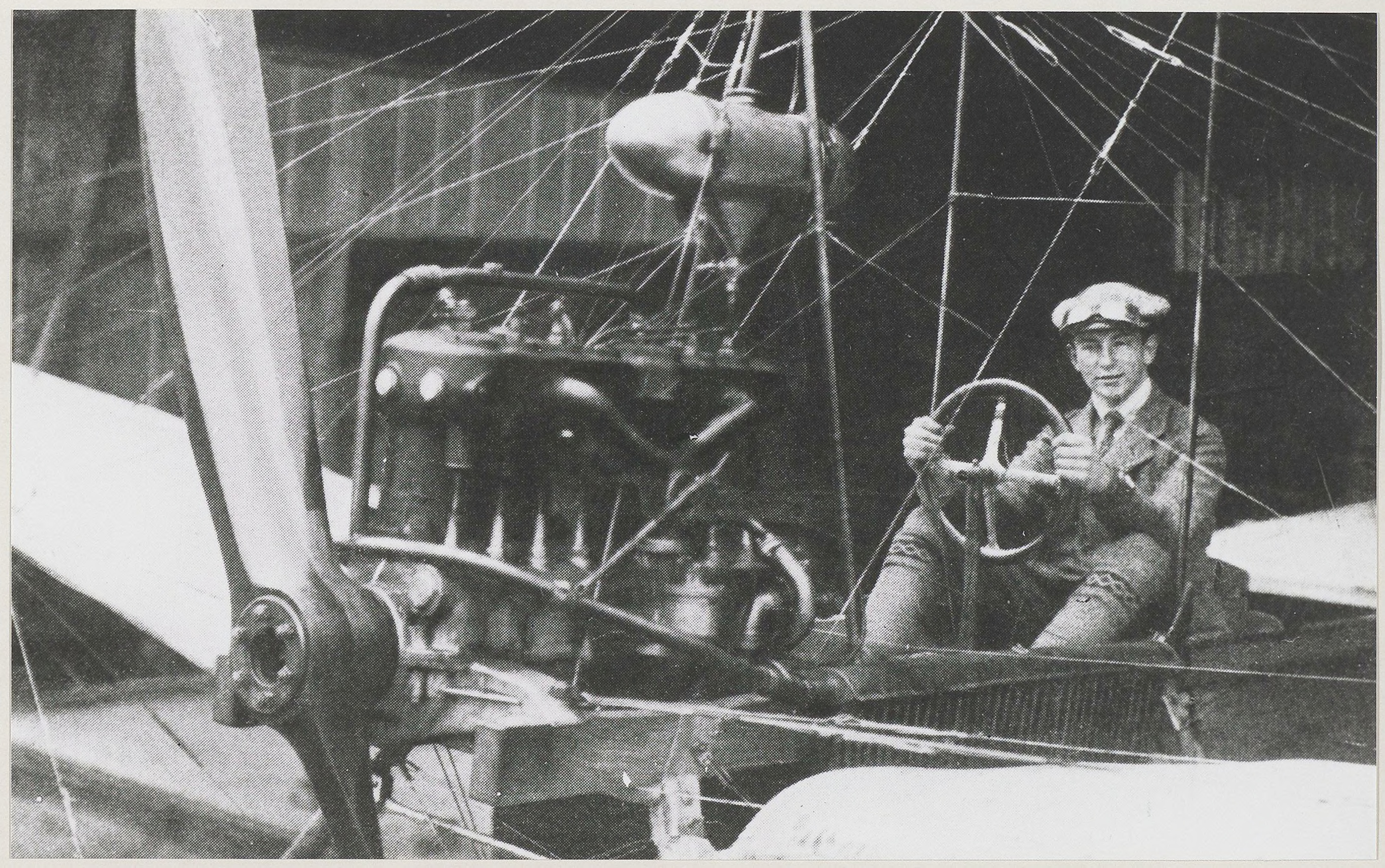
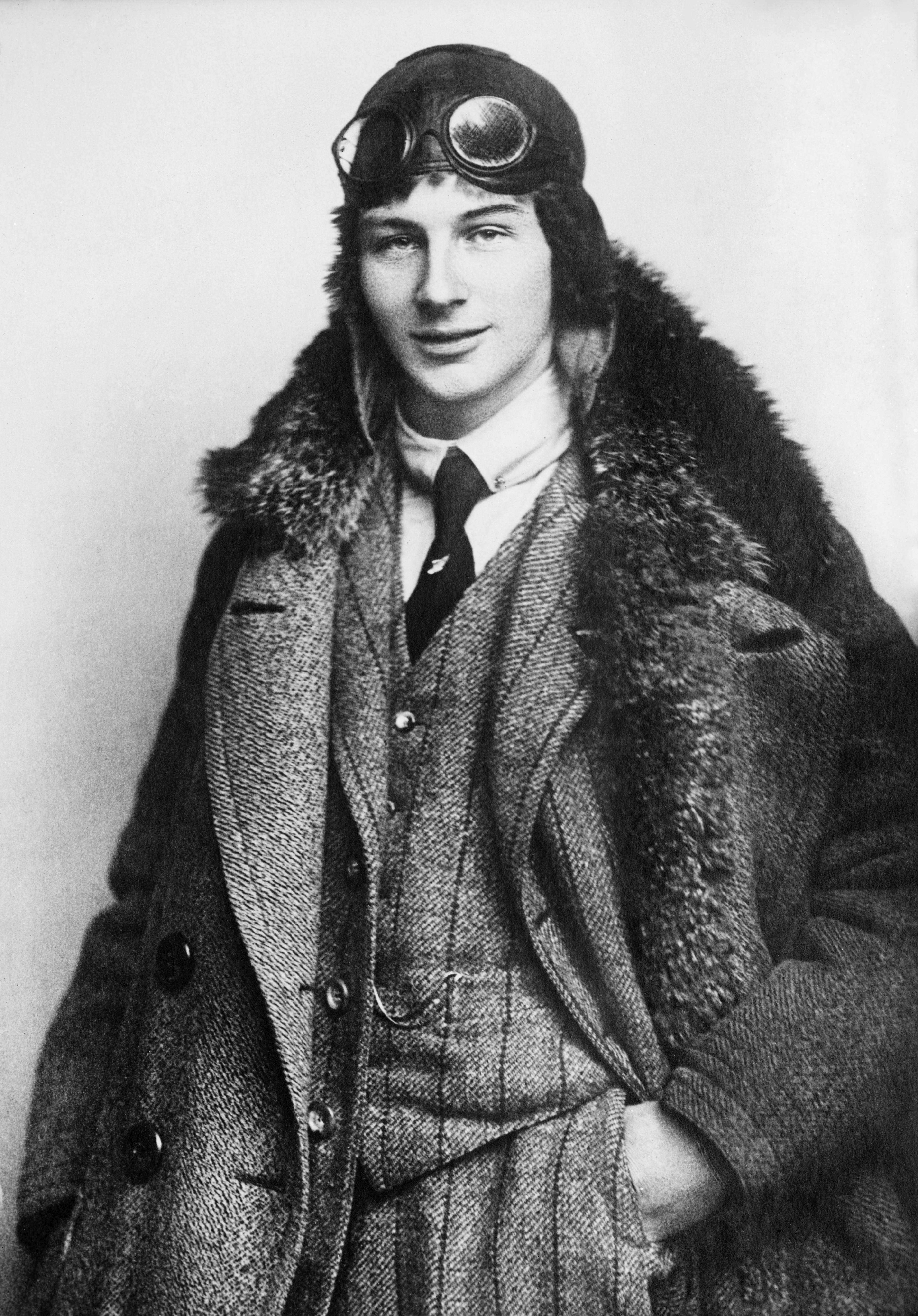
Anthony Fokker built his first aircraft, the Spin, as a young man studying in Germany; it was the first Dutch-built machine to fly in his own country. Convinced that the opportunities lay across the border, he founded his German company in 1912, first in Berlin and then near Schwerin. The war turned him into a supplier to the German army: his M.5, derived from a French monoplane but with a steel-tube fuselage, became the Eindecker once fitted with synchronisation gear that let a machine gun fire through the propeller arc. The result was a spell of German air superiority remembered as the Fokker Scourge, ended only by new Allied types such as the Nieuport 11 and the Airco DH.2.
Back to the Netherlands and the golden years
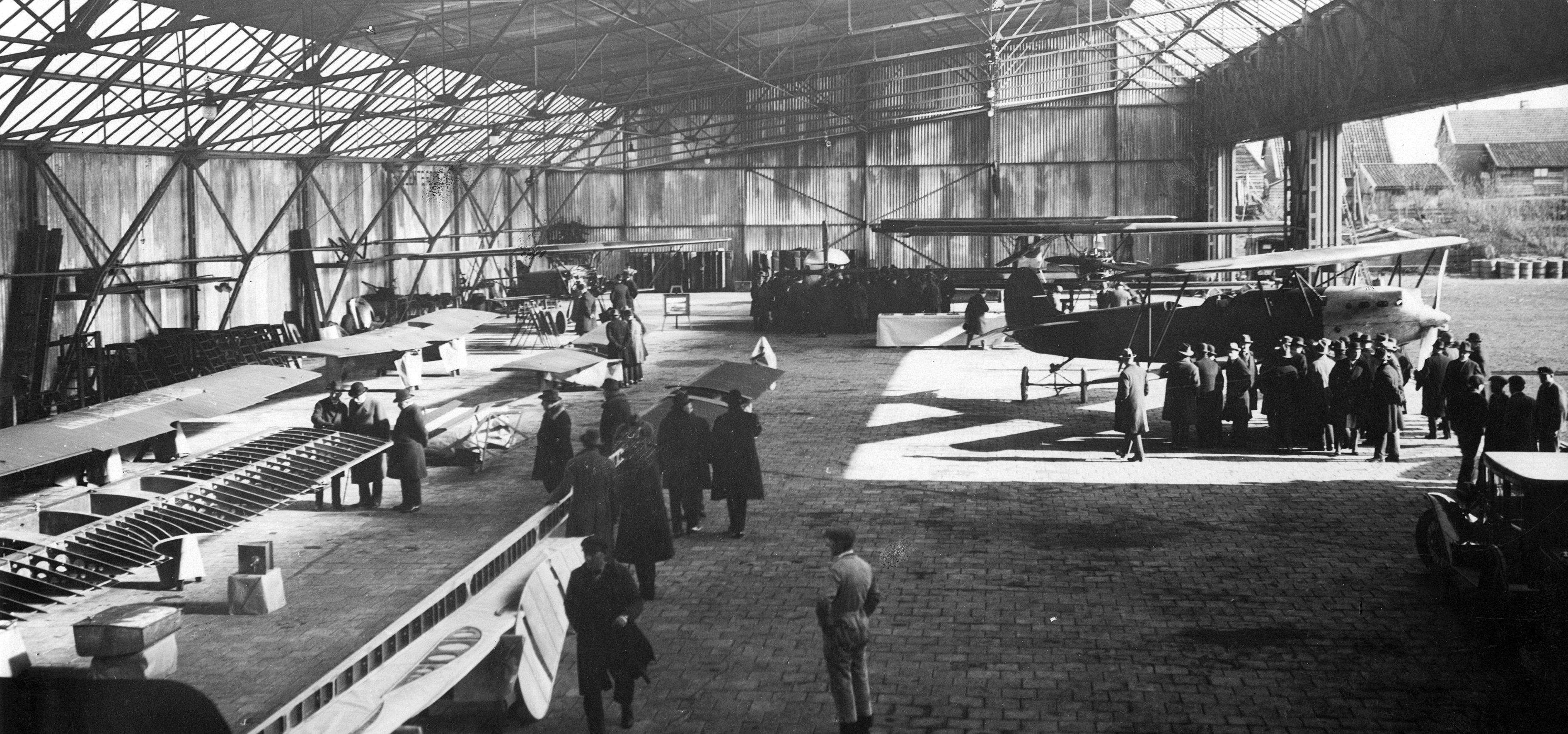
In 1919, carrying substantial tax debts, Fokker returned to the Netherlands and set up a factory near Amsterdam with backing from the Steenkolen Handels Vereniging. He called it Nederlandse Vliegtuigenfabriek to hide a brand too closely tied to the war, and used an export permit to move parts and complete airframes out of Germany by rail — a starting stock that let him begin trading at once. The C.V reconnaissance aircraft and the F.VII airliner carried the firm to its peak: by the late 1920s it was the largest aircraft manufacturer in the world. Anthony Fokker moved to the United States, where in 1927 he established a branch that was eventually absorbed by General Motors; he resigned in 1931, the same year a crash in Kansas caused by rot in a wooden wing spar badly damaged the reputation of his aircraft in that market. The founder died in New York in 1939.
Rebuilding and the turboprop years
The Second World War was ruinous. The factories were seized by the Germans, stripped bare as the conflict closed and finished off by Allied bombing. Recovery was slow in a market flooded with cheap military surplus, and the company kept going by building gliders and buses, converting Dakota transports and producing trainers such as the S-11 and the S-14 Machtrainer, one of the first purpose-built jet trainers anywhere. A new plant beside Schiphol airport, opened in 1951, allowed licence production of Gloster Meteor and F-104 Starfighter fighters. The turning point came in 1958 with the F-27 Friendship, developed with a state contribution of twenty-seven million guilders. Powered by Rolls-Royce Dart engines, it became the best-selling turboprop airliner in the world, approaching eight hundred units by 1986 including the 206 built under licence by Fairchild. The F-28 Fellowship jet followed in 1962, with 241 delivered before the line closed.
Space, overreach and bankruptcy
Alongside the airliners, Fokker opened a small space division in 1967 that grew towards independence: it built the first Dutch satellite, took part in the IRAS observatory launched in 1983, contributed to the pressurised modules of Spacelab and to the Ariane launchers, including the parachute system meant to recover Ariane 5 boosters. The aviation side ended very differently. Developing the Fokker 50 and Fokker 100 simultaneously let costs run out of control and nearly finished the company in 1987, until the Dutch government bailed it out on condition that it find a strategic partner. The Fokker 70, launched in 1991 as a shortened 100, sold below expectations against Boeing and Airbus, and the agreement signed with DASA in 1992 solved nothing because the German parent had troubles of its own. In January 1996 the Daimler-Benz board cut its ties with Fokker; talks with Bombardier came to nothing and bankruptcy was declared that March. The profitable divisions survived: the component and maintenance workshops passed to Stork N.V., which reclaimed the Fokker name in 2009 and has traded as Fokker Technologies since 2011, while the space business continued on its own until it was folded into the European EADS group.
Catalog — Aircraft
- 1913
Fokker W.1 Sheet pending
- 1915
Fokker E.II Sheet pending
- 1922
Fokker F.V Sheet pending
- 1923
Fokker B.II (1923) Sheet pending
- 1924
Fokker D.XIII Sheet pending
- 1924
Fokker F.VII
The Fokker F.VII, popularly known as the Fokker Trimotor, was a 1920s airliner produced by the Dutch firm Fokker, by its American subsidiary Atlantic Aircraft Corporation and by several licensees. It carried between six and twelve passengers depending on the version and was the aircraft of choice for many of the era's pioneering flights.
- 1925
Fokker D.XIV Sheet pending
- 1927
Fokker F.VIII Sheet pending
- 1927
Fokker T.IV Sheet pending
Variants (2)
- T.IV
- T.IVa
- 1929
Fokker F.IX Sheet pending
Variants (3)
- F.39
- F-IX
- F-IX D
- 1931
Fokker D.XVII Sheet pending
- 1932
Fokker F.XVIII Sheet pending
- 1934
Fokker F.XXXVI Sheet pending
- 1935
Fokker C.XI-W Sheet pending
- 1936
Fokker D.XXI Sheet pending
Variants (5)
- D.XXI
- D.XXI-1
- D.XXI-2
- D.XXI-3
- D.XXI-4
- 1937
Fokker G.I Sheet pending
Variants (3)
- G.I
- G.IA Mercury
- G.IB Wasp
- 1937
Fokker T.V Sheet pending
- 1937
Fokker S.IX Sheet pending
Variants (2)
- S.IX/1
- S.IX/2
- 1939
Fokker D.XXIII Sheet pending
- 1939
Fokker T.IX Sheet pending
- 1946
Fokker F.25 Sheet pending
- 1947
Fokker S-11 Sheet pending
Variants (10)
- Macchi M.416
- S-11
- S-11-1
- S-11-2
- S-11-3
- S-11-4
- S-12
- T-21
- T-22
- YT-22 Guanabara
- 1951
Fokker S.14 Machtrainer Sheet pending
Variants (2)
- S.14 Machtrainer
- S.14 Machtrainer II
- 1955
Fokker F27 Friendship
The Fokker F27 Friendship is a Dutch twin-turboprop regional airliner that first flew on 24 November 1955 and became one of the most successful European airliners of its era. Fokker built 586 aircraft through 1987, and the type was also produced under licence in the United States.
- 1967
Fokker F28 Fellowship
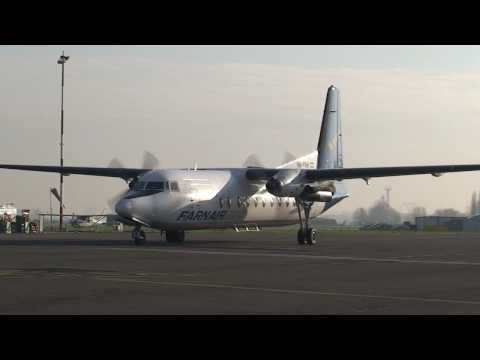
The Fokker F28 Fellowship is a twin-engined short-haul jet airliner designed and built by the Dutch manufacturer Fokker, conceived in the early 1960s as a companion to the turboprop F27 Friendship rather than its replacement. Announced in April 1962, it was shaped around a very specific promise: jet speed from the same modest regional airfields the F27 and the DC-3 already used. That promise drove the whole layout — a low, gently swept wing, two rear-mounted Rolls-Royce Spey turbofans, a T-tail, a tricycle undercarriage on large low-pressure tyres, and a split airbrake built into the tail cone, a device far more common on military aircraft than on airliners. The programme was a European industrial consortium before that became routine. Fokker built the nose, centre fuselage and inner wing; the German firms MBB and VFW-Fokker built the forward and rear fuselage and the tail; Short Brothers of Northern Ireland built the outer wings; final assembly took place at Schiphol, with the Dutch and West German governments underwriting much of the risk. The prototype PH-JHG first flew on 9 May 1967, certification followed on 24 February 1969, and Braathens SAFE flew the first revenue service on 28 March 1969. From the original Mk 1000, seating 65 in typical five-abreast layout, Fokker developed a short but well-spaced family: the stretched Mk 2000 for up to 79 passengers, the short-fuselage Mk 3000 with an extended wing and more fuel, and the Mk 4000 — the most successful version, in service with Linjeflyg from late 1976 — which combined the long fuselage, the bigger wing, quieter Spey Mk 555-15H engines and a new flight deck for up to 85 passengers. The Mk 5000, Mk 6000 and Mk 6600 never found a market. 241 airframes were built before production ended in 1987 in favour of the Fokker 70 and Fokker 100, both direct descendants of the design. The F28 brought jet service to short strips in Indonesia, Norway, Australia, Argentina and Nigeria, and also carries a hull-loss rate high for its generation, much of it linked to icing accidents. Civil service ended in 2019; the last operational aircraft remained with Argentina's LADE.
- 1985
Fokker 50 Sheet pending
Variants (3)
- F27 Mark 050
- F27 Mark 0502
- F27 Mark 0604
- 1986
Fokker 100
The Fokker 100 — certified as the F28 Mark 0100 — is the Dutch twin-jet with which Fokker tried to hold on to the hundred-seat market through the 1980s and 1990s. Derived from the Fokker F28 Fellowship, it stretched its predecessor's fuselage by 5,74 m, took on Rolls-Royce Tay turbofans, a new wing and a digital flight deck, and grew from 85 to a maximum of 109 passengers while keeping the rear-mounted engines and T-tail of the Fellowship. Announced in 1983 and first flown on 30 November 1986, the variant was approved on 20 November 1987 and deliveries to Swissair began in February 1988. The commercial start was strong: American Airlines ordered 75 aircraft, TAM Transportes Aéreos Regionais 50 and USAir 40, and the type became a familiar sight on short-haul routes in Europe, Brazil, the United States and Australia. A sound product could not offset an unsound balance sheet. Fokker accumulated losses for years, went bankrupt in March 1996, and the line stopped in early 1997 after 283 deliveries, on top of the two prototypes. Attempts to revive the programme — Rekkof Restart, the Netherlands Aircraft Company, the F120NG project — never got beyond paper and funding proposals. Its service life, by contrast, has been remarkable. Designed for 90.000 landings and supported for decades by Fokker Services, the type kept flying long after the factory closed, above all in Australia serving the mining industry and in Iran. In August 2019 some 126 aircraft were still in airline use; by May 2024 there were 66 in service worldwide, and by February 2026 QantasLink was retiring its own fleet, with airframes such as VH-NHO already donated to museums.
- 1993
Fokker 70 Sheet pending
- —
Fokker T.VIII Sheet pending
Variants (3)
- T.VIII W/C
- T.VIII W/G
- T.VIII W/M
- —
Fokker V.1 Sheet pending
- —
Fokker D.XII Sheet pending
- —
Fokker D.X Sheet pending
- —
Fokker M.16 Sheet pending
- —
Fokker M 10 Sheet pending
- —
Fokker PW-5 Sheet pending
- —
Fokker E.III Sheet pending
- —
Fokker C.IV Sheet pending
Variants (9)
- AO-1
- C.IV
- C.IVA
- C.IVB
- C.IVC
- C.IVH
- C.IV-W
- CO-4A
- XCO-4
- —
Fokker C.VIII Sheet pending
Variants (2)
- C.VIII
- C.VIII-W
- —
Fokker V.9 Sheet pending
- —
Fokker C.I Sheet pending
Variants (6)
- C.I
- C.Ia
- C.II
- C.III
- C.IW
- V 38
- —
Fokker D.VII Sheet pending
Variants (14)
- D.VII
- D.VII(Alb)
- D.VII(MAG)
- D.VII(OAW)
- MAG-Fokker 90.05
- V 11
- V 21
- V 22
- V 24
- V 31
- V 34
- V 35
- V 36
- V 38
- —
Fokker S.I Sheet pending
- —
Fokker D.III Sheet pending
- —
Fokker DC.I Sheet pending
- —
Fokker F.XX Sheet pending
- —
Fokker A.I Sheet pending
- —
Fokker V.8 Sheet pending
- —
Fokker S.IV Sheet pending
- —
Fokker C.XIV Sheet pending
- —
Fokker D.VIII Sheet pending
Variants (5)
- V 26
- V 27
- V 28
- V 29
- V 30
- —
Fokker C.X Sheet pending
Variants (4)
- C.X Series I
- C.X Series II
- C.X Series III
- C.X Series IV
- —
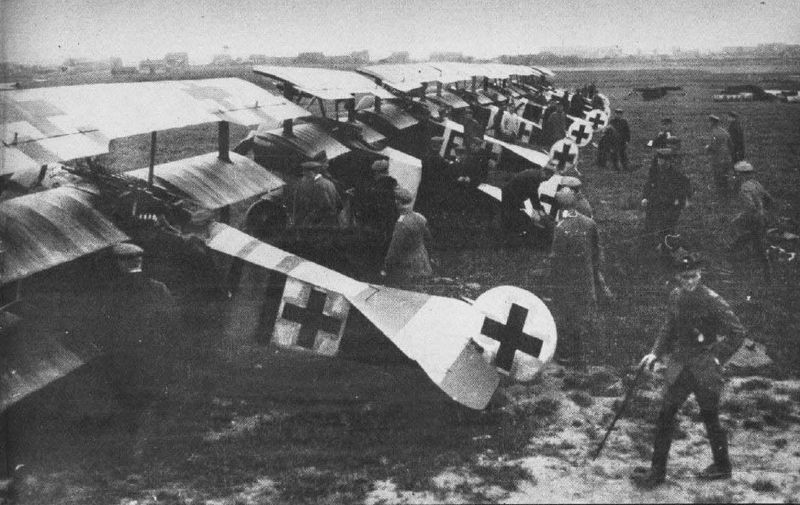
Fokker Dr.I
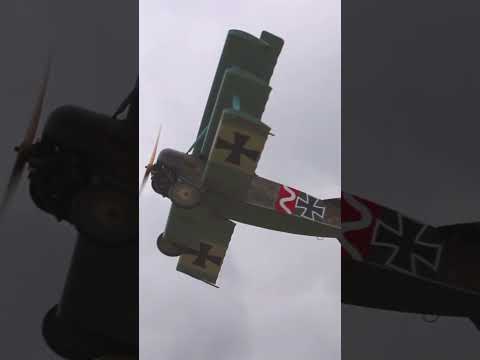
Few aircraft have survived in the popular imagination with so little statistical weight behind them. Fokker's triplane served at the front for only a few months, equipped just 14 fighter squadrons as their main type and peaked on the Western Front in late April 1918 with 171 machines on strength; production closed that May after 320 had been built. Yet its outline, three short stacked wings on a stubby fuselage, usually painted red, is still how much of the public pictures the air war of 1914-1918. It began as an answer to someone else's aeroplane. The British Sopwith Triplane appeared over the Western Front early in 1917 and, despite carrying a single machine gun, outclassed the better armed Albatros fighters then in German service. Anthony Fokker inspected a captured example while visiting Jasta 11 in April, and told his designer Reinhold Platz to build a triplane without passing on any detail of the British machine. Platz, unconvinced by the layout, produced the V.4, with a welded steel tube fuselage and thick cantilever wings; its controls proved far too heavy, and the revised V.5 introduced horn balanced ailerons and elevators, longer wings and interplane struts that were structurally unnecessary but curbed wing flexing. Idflieg ordered twenty preproduction aircraft on 14 July 1917. The aerodynamic bill came due at once: three closely stacked surfaces cancelled out the drag saved by doing away with bracing wires, and the aircraft was slow both in level flight and in a dive. What it offered instead was agility. The first two preproduction machines, designated F.I, reached Jastas 10 and 11 in Belgium in late August 1917; Manfred von Richthofen flew 102/17 on 1 September and shot down two aircraft within two days. Powered by a 110 hp Oberursel Ur.II rotary, a copy of the Le Rhone 9J, the triplane climbed sharply at first and fell away badly with altitude because of the engine's low compression; top speed was around 180 km/h. The ailerons were weak, but rudder and elevator were light and powerful, and pronounced directional instability made fast turns easy, especially to the right. The rest of the experience was less pleasant: poor view on take off and landing, a tendency to ground loop, a cramped and shoddily finished cockpit, and gun breeches close enough to injure the pilot's head in a crash landing. Chronic shortages of castor oil made matters worse, since the German substitute lubricant caused frequent engine failures, particularly in the summer of 1918. The serious trouble came early. On 29 October 1917 Heinrich Gontermann's triplane broke up during aerobatics and he died in the resulting crash; two days later Gunther Pastor of Jasta 11 was killed when his aircraft came apart in level flight. Wreckage inspection revealed poorly built wings, Idflieg grounded the fleet on 2 November, and a crash commission found that shoddy workmanship and inadequate waterproofing had let moisture into the structure, disintegrating the ribs and tearing the ailerons away. The fault lay in manufacture, not in the aerodynamic concept. Fokker had to strengthen ribs and fittings, varnish spars and ribs and repair delivered aircraft at his own expense; the type returned to service on 28 November 1917. Failures of the upper wing leading edge nonetheless continued, one of them leaving Lothar von Richthofen seriously injured in March 1918. In 1929, NACA testing showed the upper wing carried considerably more lift than the lower one, an imbalance that helps explain the record. Large orders never followed, and the Fokker D.VII pushed the triplane out of frontline service in the summer of 1918. Its fame, however, was fixed by one pilot. Richthofen scored his last 17 victories on the type and was killed on 21 April 1918 flying Dr.I 425/17, though the most successful triplane pilot was in fact Josef Jacobs, with 30 confirmed kills. Survivors ended their careers with training and home defence units, and none of the handful that outlived the armistice remains: the two machines displayed in Berlin museums were destroyed in Allied bombing during the Second World War. What flies today are reproductions, almost always with a modern radial engine in place of the original rotary.
- —
Fokker E.I Sheet pending
- —
Fokker T.III Sheet pending
Variants (2)
- T.III
- T.IIIW
- —
Fokker F.XII Sheet pending
- —
Fokker M.7 Sheet pending
Variants (2)
- M.7
- W.4
- —
Fokker F.III Sheet pending
- —
Fokker D.XI Sheet pending
- —
Fokker F.IV Sheet pending
- —
Fokker V.2 Sheet pending
- —
Fokker W.2 Sheet pending
- —
Fokker C.VII-W Sheet pending
- —
Fokker K.I Sheet pending
- —
Fokker F.I Sheet pending
- —
Fokker D.IV Sheet pending
- —
Fokker Spin Sheet pending
- —
Fokker D.IX Sheet pending
Variants (2)
- D.IX
- PW-6
- —
Fokker S-13 Sheet pending
- —
Fokker V.4 Sheet pending
- —
Fokker B.I (1922) Sheet pending
- —
Fokker D.XVI Sheet pending
- —
Fokker S.II Sheet pending
Variants (2)
- S.II
- S.IIA
- —
Fokker C.V Sheet pending
Variants (15)
- C.IX
- C.V-A
- C.V-B
- C.V-C
- C.V-D
- C.V-E
- C.VI
- C.V-W
- IMAM Ro.1
- IMAM Ro.1-bis
- Manfred Weiss WM-11 Budapest
- Manfred Weiss WM-14 Budapest
- Manfred Weiss WM-16 Budapest
- Manfred Weiss WM-21 Sólyom
- Manfred Weiss WM-9 Budapest
- —
Fokker D.VI Sheet pending
Variants (2)
- V.13/1
- V.13/2
- —
Fokker V.27 Sheet pending
- —
Fokker D.I Sheet pending
- —
Fokker T.II Sheet pending
Variants (3)
- FT-1
- FT-2
- T.II
- —
Fokker D.V Sheet pending
- —
Fokker F.XXII Sheet pending
- —
Fokker M.5 Sheet pending
Variants (3)
- M.5K
- M.5K/MG
- M.5L
- —
Fokker S.III Sheet pending
Variants (2)
- S-3
- S.III
- —
Fokker V.6 Sheet pending
- —
Fokker E.IV Sheet pending
- —
Fokker V.7 Sheet pending
- —
Fokker D.II Sheet pending
- —
Fokker M.6 Sheet pending
- —
Fokker F.II Sheet pending
- —
Fokker V.17 Sheet pending
- —
Fokker F.XIV Sheet pending




![[4K] Unique!: The ONLY Flying Dutch Fokker D.21 in the World!](https://i.ytimg.com/vi/mzM-W7wxNIw/hqdefault.jpg)


![WW1 German Fighter - Fokker D.VII [1918]](https://i.ytimg.com/vi/rpJIbujIviY/hqdefault.jpg)