Germany · 1914–
Dornier
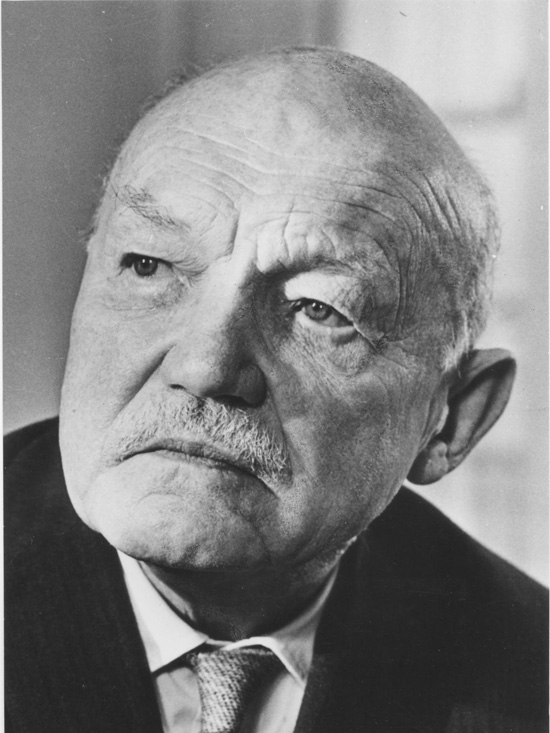
Dornier Flugzeugwerke was the German aircraft manufacturer founded at Friedrichshafen in 1914 by Claude Dornier, on the shore of Lake Constance and within the industrial orbit of the Zeppelin works. Over an unusually long life it produced civil and military designs in almost every imaginable category, from giant flying boats to regional jets. Between the two world wars it was Europe's leading builder of large all-metal flying boats: the Wal set long-distance records and the twelve-engined Do X was the largest flying boat of its day. Its landplane airliners, the Komet and the Merkur, flew with Lufthansa and other European carriers, and its Do 17 bomber, nicknamed the Flying Pencil for its slender fuselage, was the firm's most important military design of the Second World War. With aircraft construction banned in Germany again after 1945, Dornier worked from Spain and Switzerland as a consultancy and did not return home until 1954, where it rebuilt itself on the short-field Do 27 and Do 28 utility aircraft. It joined the Daimler-Benz group in 1985 and its aircraft arm passed to Fairchild in 1996; the insolvency of Fairchild Dornier in 2002 ended the industrial chapter, though the name survives in Lindauer Dornier's textile machinery, in Dornier MedTech's medical equipment and in the founding family's Seastar amphibian.
Dornier in the news
.jpg)
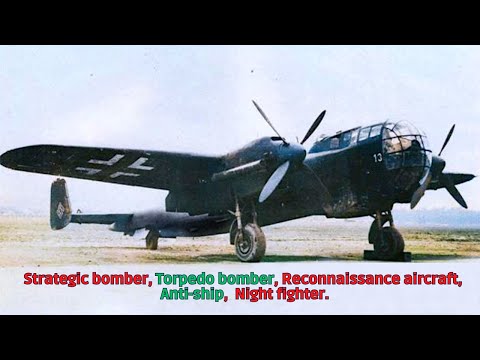
As early as 1938, Dornier developed the Do 217. Improved over the Do 17 Z in combat power, the new combat aircraft stood out for its high payload and versatility…
For more than eleven years, the only Dornier Do 24 ATT remained grounded in Friedrichshafen after an accident. On Tuesday, the flying boat surprisingly took off for two test flights. But that…
%2C_27_de_mayo_de_2018.jpg)
For more than eleven years, the only Dornier Do 24 ATT had been grounded in Friedrichshafen following an accident. On Tuesday, the flying boat surprisingly took off for two test flights…
_taking_on_fuel_off_Naval_Operating_Base_Norfolk%2C_26_August_1931_(front_view).jpeg)
70 years ago, the Do 27 made its maiden flight. The first postwar aircraft built in series in Germany quickly became, thanks to its good flight characteristics, the…
.jpg)
The Indian Air Force staged an impressive display of operational readiness, gathering its fleet of Dornier 228 aircraft in an Elephant Walk at Yelahanka Air Force Station, in…
-1600.webp)

%2C_27_de_mayo_de_2018-1600.webp)
_taking_on_fuel_off_Naval_Operating_Base_Norfolk%2C_26_August_1931_(front_view)-1600.webp)
-1600.webp)
History
From a Zeppelin shed to giant flying boats
Claude Dornier founded the firm at Friedrichshafen in 1914, when all-metal aircraft construction was still a gamble. It was first called Dornier Metallbau, and it grew by taking over the plants of Flugzeugbau Friedrichshafen — Weingarten, Warnemünde and the former Zeppelin shed at Manzell — when that company failed in 1923. Its speciality was fixed early: large all-metal flying boats meant to cross oceans. The Wal of 1924 was used on many long-distance flights and set records; the Do X, unveiled in 1929 with twelve engines, broke the size and weight records of its day. On land, the Komet and the Merkur were successful airliners for Lufthansa and other European carriers.
Building outside Germany
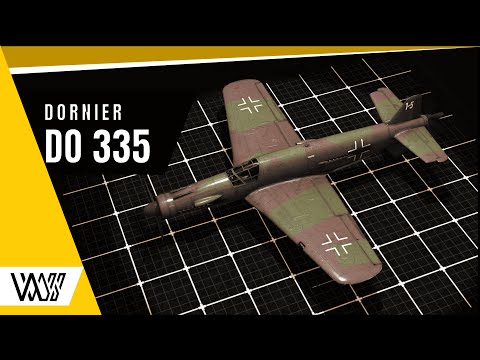
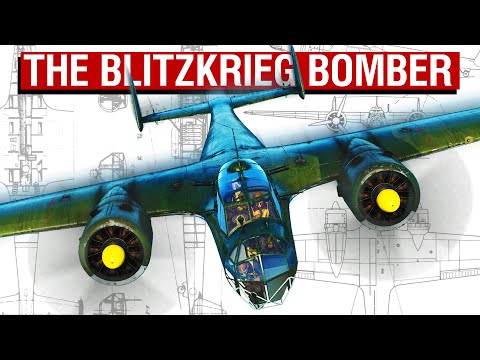
The Treaty of Versailles restricted what German industry could build, and Dornier solved the problem by leaving the country: it set up production at Altenrhein in Switzerland, twelve kilometres from Zeppelin's Lindau site, and licensed its designs to CMASA and Piaggio in Italy, CASA in Spain, Kawasaki in Japan and Aviolanda in the Netherlands. Once the Nazi government dropped the treaty's restrictions, production returned to German soil. The success of the Wal family bred a long line of successors — the Do 18 and the Do 24, the latter serving in several air forces — while the landplane side produced the Do 17, flown in 1934 as a mailplane for Lufthansa and a commercial failure because of its narrow fuselage. Recast as a military machine, its bomber prototype flew in 1935, the Condor Legion used it in 1937 during the Spanish Civil War, and it served the Luftwaffe as a medium bomber in the Battle of Britain before being developed into a night fighter. The much larger Do 217 grew out of it, and the firm also produced the Do 335, the fastest piston-engined fighter of the war, which came too late for service.
Technical exile and return
Defeat banned aircraft construction in Germany once more. Dornier moved first to Spain and then to Switzerland, where it survived selling aeronautical consultancy until it could come home in 1954. Its second life rested on short take-off utility aircraft, the Do 27 and the twin-engined Do 28, ancestors of the Dornier 228. In 1974 it entered a joint venture with France's Dassault-Breguet to develop the Alpha Jet, and in 1983 Hindustan Aeronautics bought a Dornier 228 production licence for the Asian market: by 2013 the Indian firm had built 117 aircraft. Dornier also worked beyond aviation: its German subsidiary built the Faint Object Camera for the Hubble Space Telescope, funded by the European Space Agency, in service from 1990 until it was replaced in 2002 by the Advanced Camera for Surveys.
Break-up, bankruptcy and legacy
In 1985 Dornier became part of the Daimler-Benz group, which absorbed its aeronautical assets. The deal split off Lindauer Dornier, left in family hands as an independent maker of textile machinery, and divided the rest into subsidiaries for defence, satellites, medical technology and aircraft. Most of the aircraft business was sold to Fairchild Aircraft in 1996, creating Fairchild Dornier, which became insolvent in early 2002: production of the 328 Jet was bought by the American company Avcraft, the 728 project was never restarted despite interest from Asian groups, Dornier 228 manufacturing passed to Switzerland's RUAG and from there to General Atomics in 2020, and other subsidiaries ended up inside EADS. The medical division went its own way as Dornier MedTech, working on lithotripsy and laser equipment, while the founder's descendants keep the aeronautical line alive with the composite Dornier Seastar amphibian.
Catalog — Aircraft
- 1921
Dornier Libelle Sheet pending
Variants (3)
- Do A
- Libelle I
- Libelle II
- 1922
Dornier Do J Wal Sheet pending
Variants (17)
- Do 16
- Do J Bas Wal
- Do J Gas Wal
- Do J II 16a Bis Wal
- Do J IIa Bos Wal
- Do J IIaK Bos Wal
- Do J II Bas Wal
- Do J IIb Bos Wal
- Do J IId Bis Wal
- Do J IId Wal
- Do J IIe 16 Bos Wal
- Do J IIf Bos Wal
- Do J II Ses Wal
- Do J II Wal
- Do J Kas Wal
- Do J Wal
- Do O Wal
- 1929
Dornier Do K Sheet pending
Variants (3)
- Do K1
- Do K2
- Do K3
- 1929
Dornier Do X
The Dornier Do X was the largest, heaviest and most powerful flying boat in the world when the German firm Dornier completed it in 1929, with twelve engines and room for 66 passengers on long routes. Only three were built: commercial indifference weighed more than the public impact of its transatlantic tour.
- 1930
Dornier Do P Sheet pending
- 1930
Dornier Do S Sheet pending
- 1931
Dornier Do 10 Sheet pending
- 1931
Dornier Do Y Sheet pending
- 1932
Dornier Do 11 Sheet pending
Variants (3)
- Do 11C
- Do 11D
- Do F
- 1932
Dornier Do 12 Sheet pending
Variants (2)
- Do 12
- Do 12A
- 1934
Dornier Do 17 Sheet pending
Variants (24)
- Do 17E-1
- Do 17F-1
- Do 17J-1
- Do 17J-2
- Do 17L-0
- Do 17L-1
- Do 17L-2
- Do 17M-0
- Do 17M-1
- Do 17P-1
- Do 17P-2
- Do 17R-0
- Do 17R-1
- Do 17S-0
- Do 17U-1
- Do 17Z-0
- Do 17Z-1
- Do 17Z-10 Kauz II
- Do 17Z-2
- Do 17Z-3
- Do 17Z-4
- Do 17Z-5
- Do 17Z-6
- Do 17Z-7 Kauz I
- 1935
Dornier Do 18 Sheet pending
Variants (7)
- Do 18D
- Do 18E
- Do 18F
- Do 18G
- Do 18H
- Do 18L
- Do 18N
- 1936
Dornier Do 19 Sheet pending
- 1937
Dornier Do 24 Sheet pending
Variants (12)
- Do 24 ATT
- Do 24K-1
- Do 24K-2
- Do 24N-1
- Do 24T-1
- Do 24T-2
- Do 24T-3
- Do 24 V1
- Do 24 V2
- Do 24 V3
- Do 24 V4
- Do 318
- 1938
Dornier Do 26 Sheet pending
Variants (3)
- Do 26A
- Do 26B
- Do 26C
- 1938
Dornier Do 22 Sheet pending
Variants (5)
- Do 22Kg
- Do 22Kj
- Do 22Kl
- Do 22L
- Do C3
- 1938
Dornier Do 217 Sheet pending
Variants (23)
- Do 217 A-0
- Do 217 C-0
- Do 217 E-0
- Do 217 E-1
- Do 217 E-2
- Do 217 E-3
- Do 217 E-4
- Do 217 E-5
- Do 217 H
- Do 217 J-1
- Do 217 J-2
- Do 217 K-1
- Do 217 K-2
- Do 217 K-3
- Do 217 L
- Do 217 M-1
- Do 217 M-11
- Do 217 M-3
- Do 217 M-5
- Do 217 N-1
- Do 217 N-2
- Do 217 P
- Do 217 R
- 1943
Dornier Do 317 Sheet pending
- 1943
Dornier Do 335 Sheet pending
Variants (2)
- Do 335 A-0
- Do 335 A-1
- 1955
Dornier Do 27 Sheet pending
Variants (23)
- Do 25
- Do 27
- Do 27A-1
- Do 27A-2
- Do 27A-3
- Do 27A-4
- Do 27B-1
- Do 27B-2
- Do 27B-3
- Do 27B-5
- Do 27H-1
- Do 27H-2
- Do 27J-1
- Do 27K-1
- Do 27K-2
- Do 27Q-1
- Do 27Q-3
- Do 27Q-4
- Do 27Q-5
- Do 27Q-5(R)
- Do 27Q-6
- Do 27S-1
- Do 27T
- 1958
Dornier Do 29 Sheet pending
- 1959
Dornier Do 28 Sheet pending
Variants (16)
- Do 28
- Do 28A-1
- Do 28A-1-S
- Do 28B-1
- Do 28B-2
- Do 28D
- Do 28D-1
- Do 28D-2
- Do 28D-2/OU
- Do 28D-2T
- Do 28D-5X Turbo Skyservant
- Do 28D-6X Turbo Skyservant
- Do 28E-TNT
- Do 28 G.92
- Dornier 128-2
- Dornier 128-6
- 1962
Dornier Do 32 Sheet pending
- 1967
Dornier Do 31 Sheet pending
- 1972
Dornier Aerodyne Sheet pending
- 1973
Dassault/Dornier Alpha Jet Sheet pending
Variants (9)
- Alpha Jet 2
- Alpha Jet A
- Alpha Jet Al-Ghait
- Alpha Jet ATS
- Alpha Jet E
- Alpha Jet MS1
- Alpha Jet MS2
- Alpha Jet TST
- B.J.7
- 1981
Dornier 228 Sheet pending
Variants (5)
- Dornier 228-100
- Dornier 228-200
- Dornier 228NG
- Dornier 228 NXT
- Hindustan-Dornier 228
- 1984
Dornier Seastar Sheet pending
Variants (1)
- Seastar CD-2
- 1991
Dornier 328
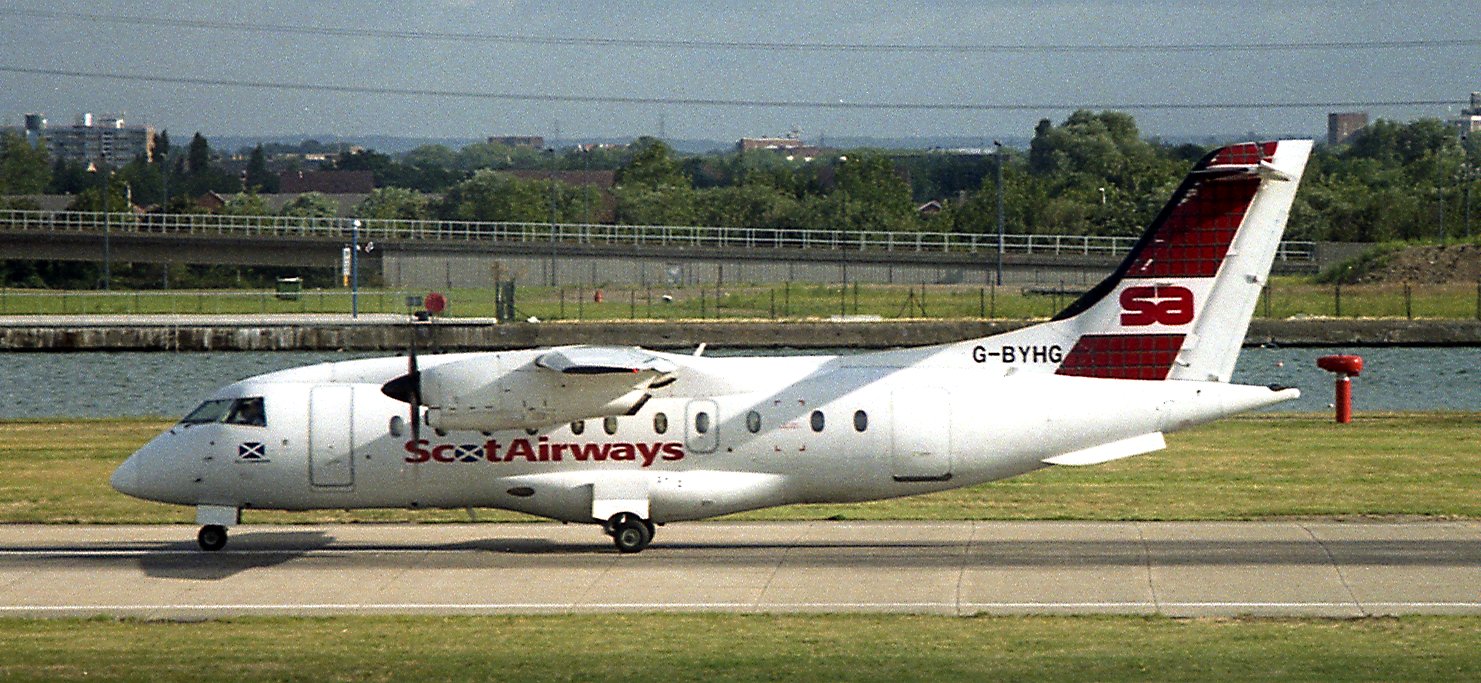
The Dornier 328 is a twin-turboprop regional airliner conceived by Dornier Luftfahrt GmbH at Oberpfaffenhofen, near Munich, for a very specific niche: around thirty seats, three-abreast, and performance close enough to a jet that the aircraft could slot into big-airport traffic without disruption. The 1984 market study behind the programme called for a fast, quiet and easy-to-maintain commuter airliner; the project was relaunched in December 1988 after an agreement between the Dornier family and Daimler-Benz, first flew on 6 December 1991 and entered commercial service on 13 October 1993. A supercritical wing inherited from the Dornier 228, a pressurised fuselage shaped for high cruise speed, six-bladed Hartzell propellers and a Honeywell Primus 2000 glass cockpit made it one of the fastest and quietest regional turboprops of its generation. Technical merit did not translate into commercial success. Launched just as regional jets were taking over, and into a recession, the 328 never approached the four hundred units originally projected. In June 1996 Deutsche Aerospace sold most of Dornier Luftfahrt to America's Fairchild Aircraft, creating Fairchild Dornier, which re-engined the aircraft with Pratt & Whitney Canada PW306/9 turbofans —the 328JET, first flown on 20 January 1998— and planned a whole family (428JET, 728, 928) that the April 2002 bankruptcy left on paper. A total of 107 turboprops and 110 jets were built, and the last airframe was the final commercial aircraft designed and manufactured entirely in Germany. After the collapse the type certificate passed through AvCraft Aviation, M7 Aerospace and, from June 2006, 328 Support Services GmbH, bought in February 2015 by Sierra Nevada Corporation. The design found a second military life as the C-146A Wolfhound of US Air Force Special Operations Command, and an industrial one as Deutsche Aircraft's D328eco, a stretched version seating up to forty passengers, assembled at Leipzig/Halle, whose first prototype was rolled out at Oberpfaffenhofen in May 2025.
- 2007
Dornier S-Ray 007 Sheet pending
- —
Dornier Do 14 Sheet pending
- —
Dornier Do 23 Sheet pending
Variants (5)
- Do 23A
- Do 23C
- Do 23E
- Do 23F
- Do 23G
- —
Dornier Delphin Sheet pending
Variants (3)
- Delphin I
- Delphin II
- Delphin III
- —
Dornier Do 212 Sheet pending
- —
Dornier Komet Sheet pending
Variants (10)
- Do B Bal Merkur II
- Do B Merkur I
- Do C
- Do C-1
- Do C-2A
- Do C-3
- Do D
- Do Komet II
- Do Komet III
- Do T
- —
Do228 Sheet pending
- —
Dornier Do 215 Sheet pending
Variants (10)
- Do 215 A-1
- Do 215 B-0
- Do 215 B-1
- Do 215 B-2
- Do 215 B-3
- Do 215 B-4
- Do 215 B-5
- Do 215 V1
- Do 215 V2
- Do 215 V3
- —
Dornier Do 13 Sheet pending
Variants (2)
- Do 13c
- Do 13d
- —
Dornier Do R Superwal Sheet pending
Variants (6)
- R2
- R4
- R4 Cas
- R4 Gas
- R4 Nas
- R4 Sas
- —
Dornier Kiebitz Sheet pending
Variants (3)
- Do 32K
- Do 32K Kiebitz I
- Do 34 Kiebitz II
- —
Dornier Do E Sheet pending
- —
Dornier Do H Falke Sheet pending









![[4K] Aurigny Dornier Do-228NG Full Flight Experience: Southampton to Alderney](https://i.ytimg.com/vi/sCDyeoH4MQk/hqdefault.jpg)