Airliner · Civil · Germany
Dornier Do X
- July 12, 1929
- First flight
- 1929
- Introduced
- 1935
- Retired
- 3
- Units built

-1600.webp)
_at_Schellingwoude_airfield%2C_Amsterdam%2C_5_November_1930_(second_view)-1600.webp)
.jpg)


_on_the_M%C3%BCggelsee%2C_Berlin%2C_May_1932_(second_view)-800.webp)

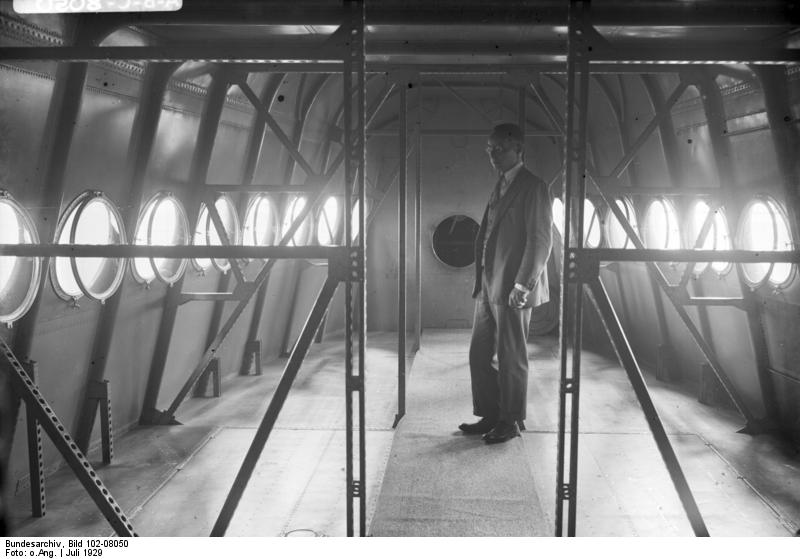
_taking_on_fuel_off_Naval_Operating_Base_Norfolk%2C_26_August_1931_(side_view)-1600.webp)
.jpg)
_(2)-1600.webp)
-1600.webp)
%2C_Italian_flying_boat.jpg)
_at_Schellingwoude_airfield%2C_Amsterdam%2C_5_November_1930-1600.webp)

-1600.webp)

_over_the_Alps%2C_August_1931.jpg)

_taking_on_fuel_off_Naval_Operating_Base_Norfolk%2C_26_August_1931_(front_view)-1600.webp)
_on_the_M%C3%BCggelsee%2C_Berlin%2C_May_1932_(Bundesarchiv).jpg)
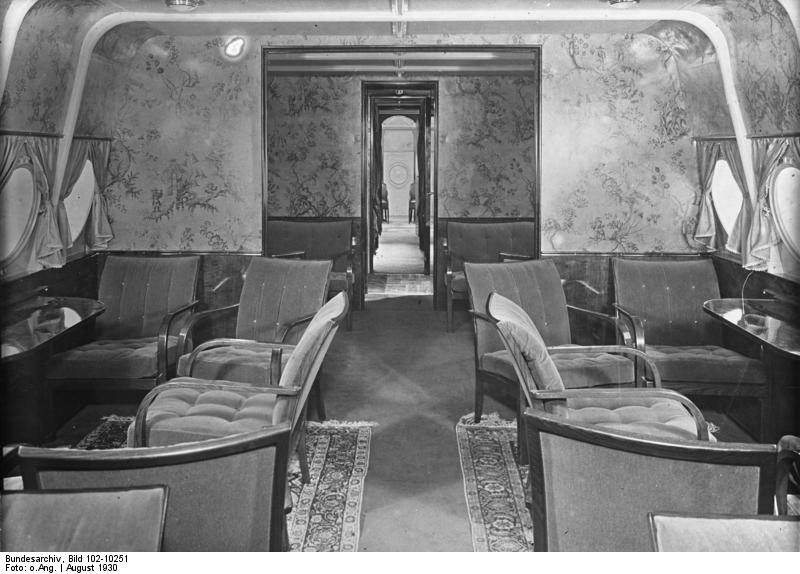
_on_the_M%C3%BCggelsee%2C_Berlin%2C_May_1932-800.webp)
_at_Rio_de_Janeiro%2C_1931.jpg)
_in_Amsterdam_harbour%2C_November_1930.jpg)
_over_the_Atlantic_on_the_return_flight%2C_May_1932.jpg)
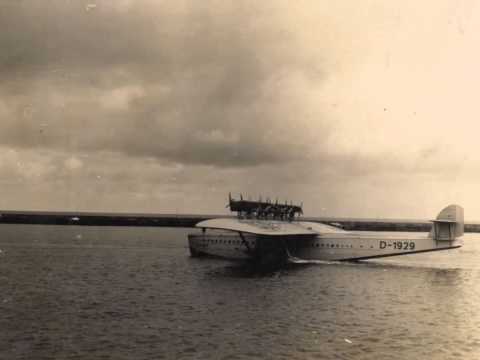
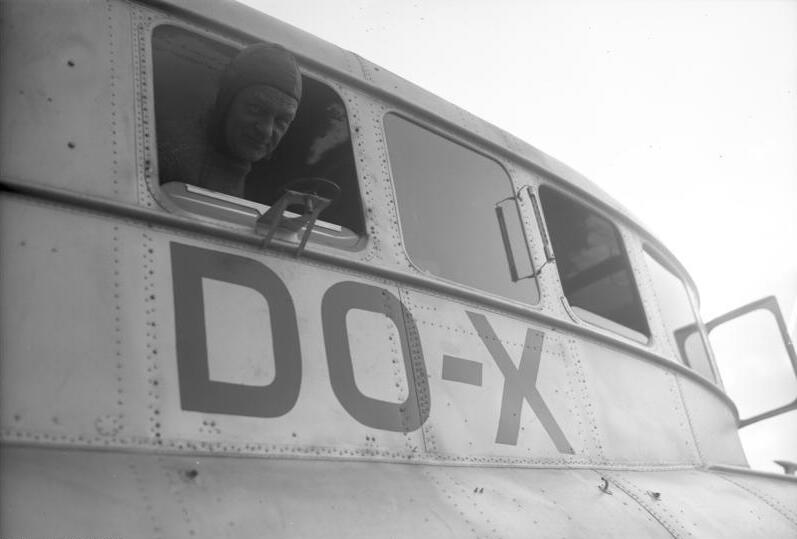
The Dornier Do X was the largest, heaviest and most powerful flying boat in the world when the German firm Dornier completed it in 1929, with twelve engines and room for 66 passengers on long routes. Only three were built: commercial indifference weighed more than the public impact of its transatlantic tour.
Related events
Related sheets
Category
Dornier Do X in the news
Heart Aerospace took a major step in the development of electric aircraft by completing the first flight of the X1, its full-scale technology demonstrator. The aircraft took off from the airport…

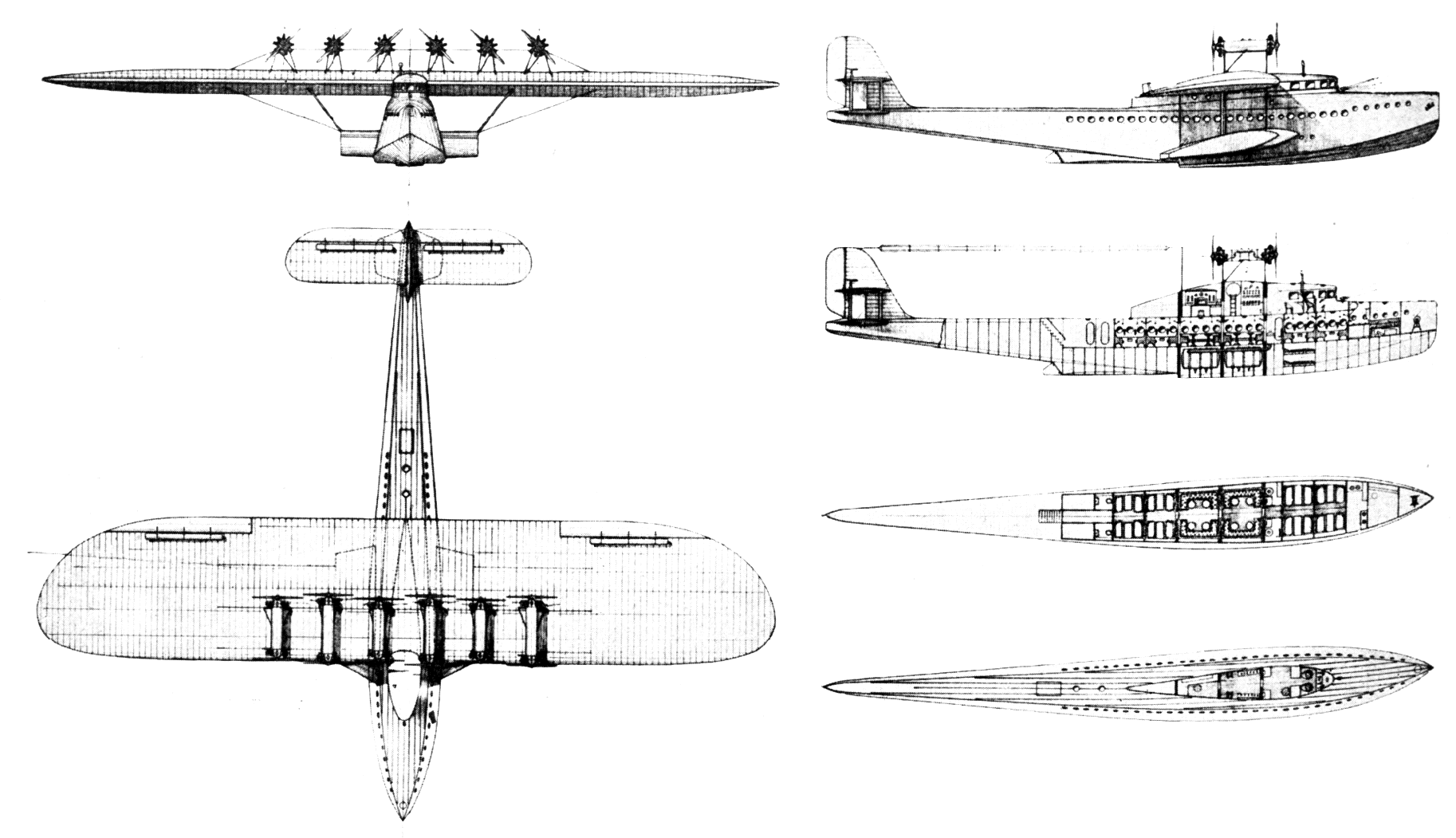
Three-view drawing

History
Claude Dornier conceived the Do X in 1924, planning started in late 1925, and the aircraft was finished in June 1929 after more than 240,000 work-hours. Because the Treaty of Versailles barred Germany from building aircraft above set speed and range limits, the programme was financed by the German Transport Ministry but a purpose-built plant was erected at Altenrhein, on the Swiss shore of Lake Constance. What emerged was a semi-cantilever monoplane with an all-duralumin hull and wings of steel-reinforced duralumin framework covered in heavy linen and aluminium paint. Its 56-tonne maximum takeoff weight put it beyond every contemporary: only the Soviet Tupolev ANT-20 Maksim Gorki of a few years later was physically larger, and it stopped at 53 tonnes.
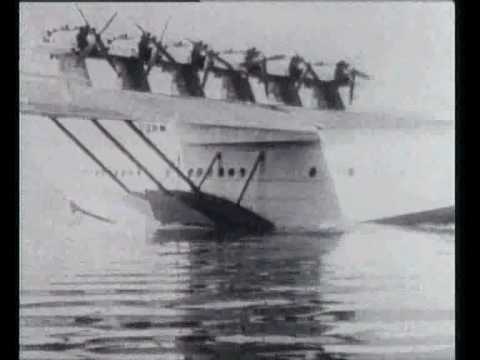
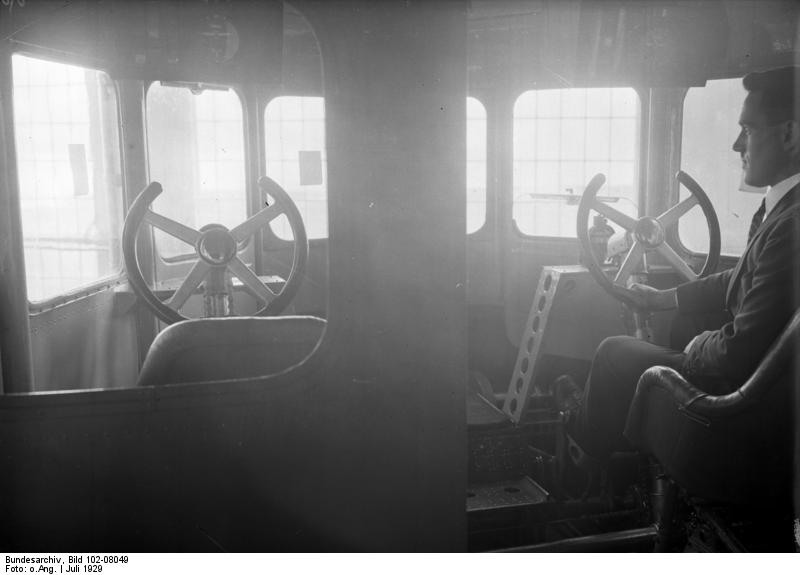
The powerplant was both the Do X's most striking feature and its weakness. Twelve 391 kW Bristol Jupiter radials built under licence by Siemens were mounted in tandem push-pull pairs on six strut-mounted nacelles above the wing, six tractors and six pushers, joined by an auxiliary wing that steadied the mountings. Air-cooled, they overheated and could barely lift the boat to 425 metres; a flight engineer worked the twelve throttles and watched the twelve sets of gauges while the pilot passed power requests to him through an engine order telegraph of the kind used aboard ships. After 103 flights in 1930 they were replaced by water-cooled 455 kW Curtiss V-1570 Conqueror V-12s, and only then could the aircraft reach the 500 metres needed to cross the Atlantic. The accommodation matched an ocean liner: three decks, a smoking room with its own bar, a dining salon and seats convertible into berths for the 66 passengers of long flights, up to 100 on short ones.

On 12 July 1929 the Flugschiff, or flying ship, made its first test flight with a crew of fourteen. To silence sceptics, on its seventieth test flight on 21 October it carried 169 people aboard, 150 of them passengers, ten aircrew and nine stowaways, setting a world record for people carried on a single flight that stood for twenty years. On 3 November 1930 it left Friedrichshafen under Friedrich Christiansen bound for New York; the journey stalled at Lisbon on 29 November, when a tarpaulin touching a hot exhaust pipe started a fire that consumed most of the left wing. Repaired after six weeks in the harbour, it worked its way down the African coast, reached Cape Verde on 5 June 1931, crossed to Natal in Brazil and arrived in New York on 27 August 1931, almost ten months after departure. It left again on 21 May 1932 via Newfoundland and the Azores and touched down on 24 May at the Müggelsee in Berlin before a crowd of 200,000.
The other two aircraft, ordered by the Italian state airline SANA, were the X2 Umberto Maddalena and the X3 Alessandro Guidoni, slightly larger and powered by Fiat A-22R V12s; they entered service in August 1931 and May 1932, but the Italian air force requisitioned them for prestige flights, officer training cruises and aeronaval manoeuvres before breaking them up in 1937. The German original passed to Deutsche Luft Hansa once Dornier could no longer afford to operate it; an overly steep landing on a reservoir near Passau tore off its tail section in 1933 and kept it out of service for three years. It ended as the centrepiece of Germany's aviation museum at the Lehrter station in Berlin, where a Royal Air Force air raid destroyed it on the night of 23 to 24 November 1943. It was never a commercial success, yet it showed that international passenger air service was within reach.
Variants
| Do X1 | Do X1a | Do 20 | Do X2 Umberto Maddalena | Do X3 Alessandro Guidoni | |
|---|---|---|---|---|---|
| First flight | July 12, 1929 | August 4, 1930 | — | — | — |
| Aircraft type | Passenger flying boat | Passenger flying boat | Passenger flying boat (project) | Passenger flying boat | Passenger flying boat |
| Powerplant | 12 × air-cooled Bristol Jupiter radial engines built under licence by Siemens, 391 kW (524 hp) each, in six tandem nacelles above the wing. The choice was the aircraft's great failing: the cylinders lost power on sustained running and could not be revved harder without overheating, so the flying boat barely reached 425 m. | 12 × Curtiss V-1570 Conqueror piston engines — liquid-cooled V-12s of 455 kW (610 hp) each — carried in six tandem nacelles above the wing, each with one tractor and one pusher propeller. They replaced the air-cooled Siemens Jupiters in 1930, which overheated and left the aircraft with no useful altitude. | Eight diesel engines of about 1,000 hp grouped in four pairs, each pair housed in a nacelle faired into the wing leading edge and driving a single propeller: four propellers in all. The layout was meant to correct the Do X's fundamental error, whose twelve engines slung above the wing punished both drag and maintenance. The exact engine model was not found in the sources consulted. | 12 × Fiat A.22R piston engines — liquid-cooled V-12s of 447 kW (600 hp) each — in six faired tandem nacelles above the wing. Less powerful than the German aircraft's Curtiss units, they were chosen for Italian industrial availability. | 12 × Fiat A.22R piston engines — liquid-cooled V-12s of 447 kW (600 hp) each — in six faired tandem nacelles above the wing, identical to the Do X2 installation. |
| Powerplant | 12 × Siemens-built Bristol Jupiter | 12 × Curtiss V-1570 Conqueror | 8 × piston | 12 × Fiat A.22R | 12 × Fiat A.22R |
| Power per engine | 524 hp | 610 hp Best value in this row | — | 599 hp | 599 hp |
| Length | — | 40.1 m | — | — | — |
| Wingspan | — | 47.8 m | — | — | — |
| Height | — | 10.3 m | — | — | — |
| Wing area | — | 450 m² | — | — | — |
| Empty weight | 28,250 kg | 28,000 kg Best value in this row | — | 34,820 kg | 34,820 kg |
| MTOW | 45,300 kg | 49,000 kg Best value in this row | — | 48,000 kg | 48,000 kg |
| Top speed | — | 242 km/h Best value in this row | — | 210 km/h | 210 km/h |
| Cruise speed | — | 170 km/h | — | 175 km/h Best value in this row | 175 km/h Best value in this row |
| Service ceiling | 425 m | 3,200 m Best value in this row | — | 3,200 m Best value in this row | 3,200 m Best value in this row |
| Initial climb rate | 0.8 m/s | 1.2 m/s Best value in this row | — | 0.9 m/s | 0.9 m/s |
| Range | — | 1,700 km | — | — | — |
| Ferry range | — | 2,300 km | — | — | — |
| Combat radius | 0 km Best value in this row | 0 km Best value in this row | 0 km Best value in this row | 0 km Best value in this row | 0 km Best value in this row |
| Range conditions | Useful range was crippled by the lack of power: the climb to 1,000 m took 21 minutes and the real operating altitude never exceeded 425 m, not enough to cross the Atlantic. | 1,700 km normal range, up to 2,300 km with the maximum fuel load (23,300 l). The certified ceiling was 3,200 m, but in service the flying boat cruised a few hundred metres above the sea, leaning on ground effect to carry its weight. | No published range figures: the aircraft never left the drawing board. | Performance very close to the German aircraft — 175 km/h cruise and a 3,200 m ceiling — with a climb to 1,000 m in 18 minutes, between that of the Jupiter-engined Do X and the Curtiss-engined Do X1a. | Same performance as the Do X2: 175 km/h cruise, 3,200 m ceiling and a climb to 1,000 m in 18 minutes. |
| Armament | None | None | None | None. The aircraft was trialled as a bomber for the Italian air arm and received a glazed tail position, but it was never armed nor entered service in that role. | None. Like its twin, it was evaluated as a bomber with a glazed tail position, but was never armed. |
| Max weapons load | 0 kg Best value in this row | 0 kg Best value in this row | 0 kg Best value in this row | 0 kg Best value in this row | 0 kg Best value in this row |
| Cargo capacity | Original 1929 configuration, planned for 66 passengers on a long stage and up to 100 on a short one, with a crew of 14. It carried a small 30.8 m² auxiliary wing surface that disappeared with the engine change. | From 66 seats on a long crossing to 100 on a short hop, spread over three decks with lounge, dining room and sleeping cabins, plus a crew of 10 to 14. On 21 October 1929, during a 53-minute demonstration flight over Lake Constance, it carried 169 people — 150 passengers, the crew and nine stowaways — an occupancy record that stood for twenty years. | Mid-1930s commercial project, an improved and enlarged version of the Do X. A model was shown at the 1936 Stockholm International Aviation Exhibition (ILIS) and its data appeared in the 1937 Jane's All the World's Aircraft, but no orders followed and none was built. | 66 passenger seats and 14 crew, in the airline configuration ordered by SANA for Mediterranean routes. The intended commercial service never materialised: the aircraft passed to the Italian military and was used for prestige flights out of La Spezia. | 66 passenger seats and 14 crew. Also ordered by SANA, it never flew a scheduled route: it was attached to the La Spezia seaplane base for display flights. |
| Crew | 14 Best value in this row | 14 Best value in this row | — | 14 Best value in this row | 14 Best value in this row |
| Passengers | 100 Best value in this row | 100 Best value in this row | — | 66 | 66 |
| Units built | 1 Best value in this row | 1 Best value in this row | 0 | 1 Best value in this row | 1 Best value in this row |
Images






![DeOldify Colorization: Dornier DO-X Waterplane D-1929 over Amsterdam in 1930 [HD]](https://i.ytimg.com/vi/WOXdY-L1Ems/hqdefault.jpg)