Transport · Civil · Germany
Junkers Ju 52
- October 13, 1930
- First flight
- In service
- Status


The Junkers Ju 52 is Germany's great interwar transport trimotor, instantly recognisable by its corrugated duralumin skin and the third engine in its nose. It was conceived at the Junkers works in Dessau, under engineer Ernst Zindel, as a sturdy single-engined freighter — the Ju 52/1m — able to work from short strips, but it was the three-engined Ju 52/3m that prevailed and was eventually built in the thousands. Crews and passengers called it "Tante Ju" (Auntie Ju); in the English-speaking world it was also known as "Iron Annie". Its significance runs along two lines. As an airliner it became the standard type of Deutsche Luft Hansa, which flew it across Europe, Asia and South America, and many other carriers — from Lloyd Aéreo Boliviano to South African Airways — bought it for its reliability, its low landing speed and its ability to operate on wheels, skis or floats. As a military aircraft it was turned by the still-secret Luftwaffe first into a stop-gap bomber and then into its standard transport: it flew the 1936 airlift that carried Franco's Army of Africa to mainland Spain, bombed with the Condor Legion and, during the Second World War, dropped paratroops and supplied forces in Norway, the Netherlands, Crete, North Africa and Stalingrad, suffering very heavy losses along the way. Production outlived the Third Reich. In France, Amiot and later Ateliers Aéronautiques de Colombes kept building it as the AAC.1 Toucan, and in Spain CASA produced it as the CASA 352 and 352L for the Spanish Air Force, which nicknamed it "Pava" and flew it until the 1970s. Portugal used it in its colonial wars, and Switzerland kept a small batch in air force service until the early 1980s. That Swiss batch gave rise to Ju-Air, which for decades offered sightseeing flights in these veterans, while Lufthansa operated its own example, D-AQUI. The loss of HB-HOT in 2018 and the restrictions that followed all but ended passenger flying, yet the Ju 52 remains one of Europe's best-loved historic aircraft, with examples preserved in museums around the world and a few still airworthy.
Related events
- First flight of the Junkers Ju 52
- First flight of the three-engined Junkers Ju 52/3m
- Ju 52s begin the airlift of the Army of Africa from Morocco
- 493 Ju 52s carry the airborne invasion of Crete
- The air supply of the Sixth Army at Stalingrad begins
- The Spanish Air Force retires its last Ju 52s and CASA 352Ls
Related sheets
Category
Junkers Ju 52 in the news
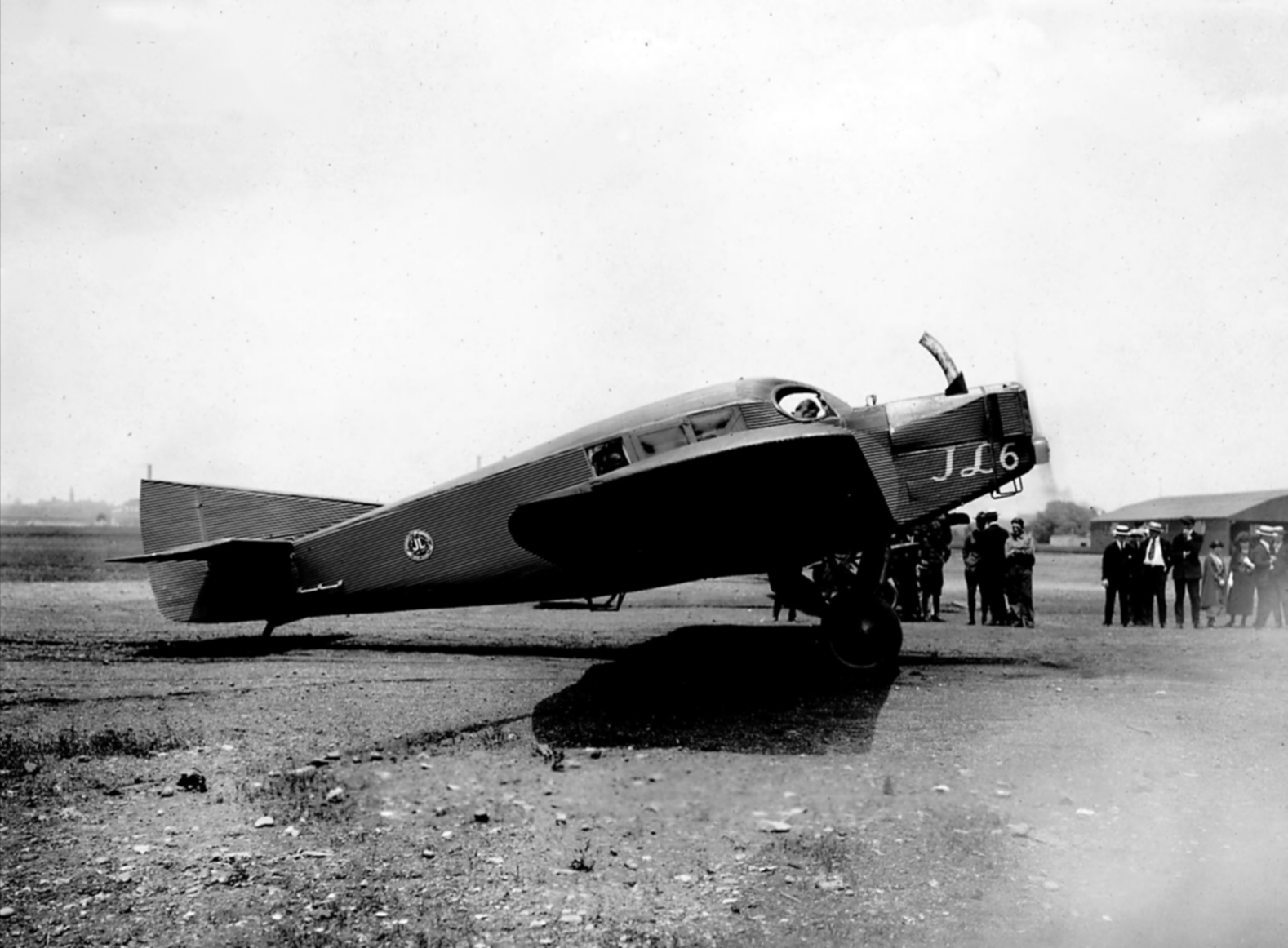
Junkers was certainly the most enterprising German aircraft manufacturer of the interwar period and sold its products on every continent from the start. So it's no surprise that in Canada too the…

History
Origins: a single-engined freighter
Junkers conceived the Ju 52 in the late 1920s as a large single-engined cargo aircraft, meant to carry heavy loads in regions with poor infrastructure and with minimal maintenance. The team, led by Ernst Zindel at Dessau, drew on the W 33 and W 34: an all-metal structure skinned in corrugated duralumin — a Junkers trademark since the First World War that bought stiffness at the price of extra drag — and the patented Junkers "double wing", a narrow surface set apart from the trailing edge whose inner part acted as a flap and outer part as an aileron. German Wikipedia adds that the Reichswehr ministry shaped the design so the transport could be turned into a bomber with little effort: a split undercarriage leaving room for a bomb rack, a prepared cargo hold and a dorsal hatch suited to a gun position.
The first airframe, works number 4001 and designated Ju 52ba, flew in 1930 with a Junkers V-12 engine. Further airframes followed with BMW, Armstrong Siddeley Leopard and Junkers Jumo engines and with wheels or floats. The single-engined machine, later called the Ju 52/1m, could lift around two tonnes from improvised strips, and its cavernous hold, loaded through two large side doors, earned it the nickname "flying furniture van". The best known was 4006, delivered to Canadian Airways as CF-ARM: fitted with a Leopard and, from 1936, a Rolls-Royce Buzzard, it supplied mines and remote camps in northern Canada, where it was dubbed the "Flying Boxcar", and remained in service until 1947. The single-engined version was underpowered, however, and only seven were built.
The Ju 52/3m trimotor
The answer was two more engines on the wings. The seventh airframe was pulled from the line to become the prototype Ju 52/3m ("3m" for drei Motoren, three engines), and pressure from Deutsche Luft Hansa — notably its director Erhard Milch — saw the trimotor added to the production programme in 1931. The wing engines sat almost perpendicular to the swept leading edge, so that they appeared splayed outwards, an arrangement meant to ease straight flight after an engine failure. Early aircraft used Pratt & Whitney Hornet radials; most later ones the BMW 132, a licence-built development of that engine, and export versions were offered with the Pratt & Whitney Wasp or the Bristol Pegasus.
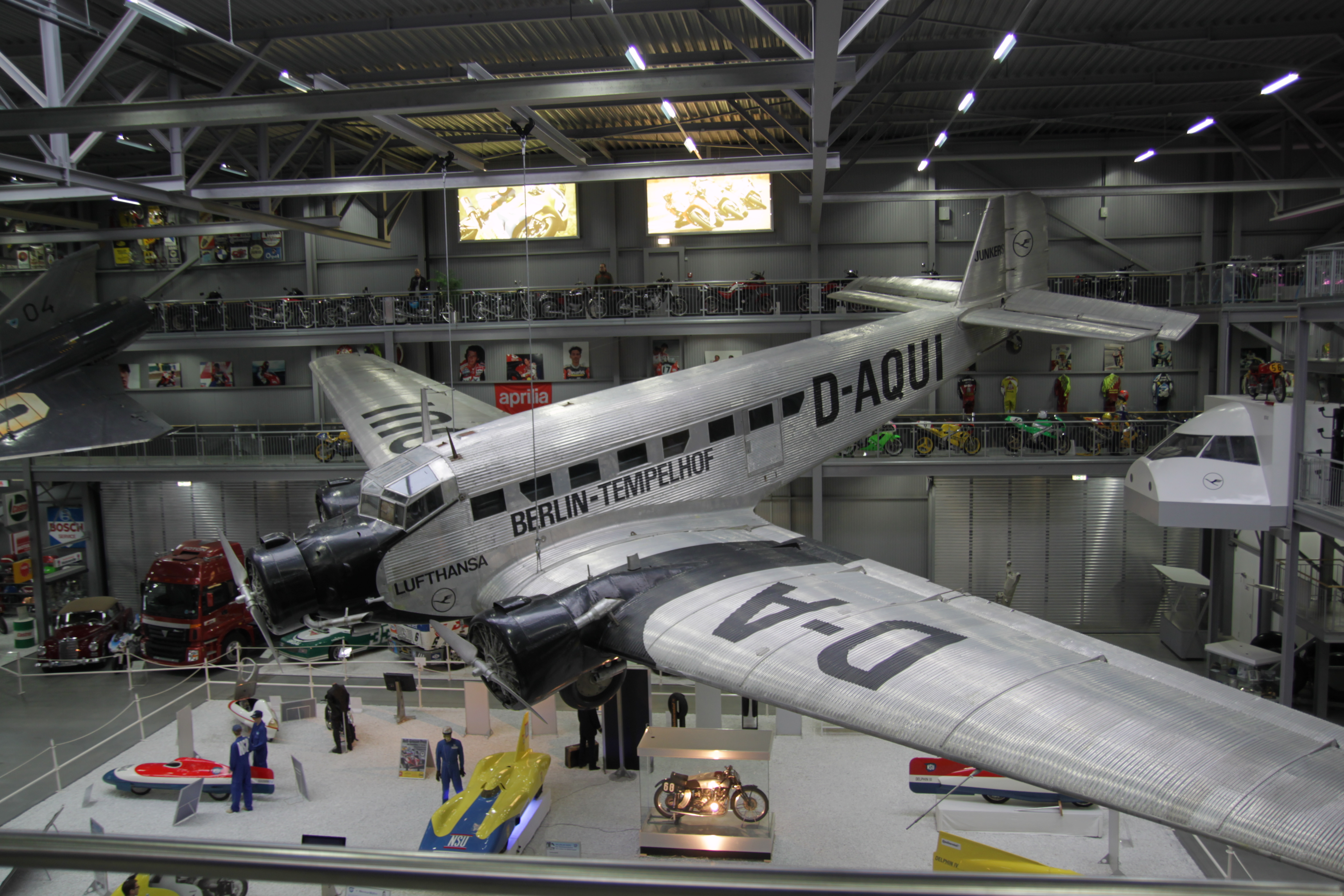
Curiously, the first two trimotors (works numbers 4008 and 4009) entered service not in Germany but in Bolivia, with Lloyd Aéreo Boliviano. The cabin took 17 passengers, was heated and, being unpressurised on routes flown above 3000 metres over the Alps or the Andes, carried oxygen masks.
The great airliner years
Luft Hansa took its first Ju 52/3m in May 1932 and, convinced of its reliability, made it the airline's standard type. By 1938 it flew some 75 % of the company's traffic, and the fleet eventually reached 231 aircraft based at Berlin-Tempelhof, on routes such as Berlin-Rome over the Alps, London-Berlin and legs of the mail service to South America. By 1935, 97 Ju 52s were flying with various airlines; early customers included Aero O/Y in Finland, AB Aerotransport in Sweden and Syndicato Condor in Brazil, later joined by Swissair, South African Airways, China's Eurasia and Iberia. In Colombia, FAC-625, acquired in 1933, opened its career carrying President Olaya Herrera and is preserved today at the Colombian Aerospace Museum. The arrival of the faster, more economical twin-engined Douglas DC-2 and DC-3 left the trimotor dated by the end of the decade and led Junkers to develop the Ju 252 as its successor.
The Ju 52 also carried the powerful: Hitler campaigned in a Luft Hansa machine in 1932 and, once chancellor, had his own, "Immelmann II" (D-2600), flown by Hans Baur; a demonstrator sent to Eurasia became Chiang Kai-shek's personal transport.
First wars: the Chaco and Colombia-Peru
The type first went to war in South America. Colombia used three float-equipped Ju 52/3mde as bombers in the 1932-1933 war with Peru. In the Chaco War against Paraguay, Bolivia mobilised Lloyd Aéreo Boliviano's aircraft — Choroloque, Juan del Valle and Huanuni, later joined by Bolívar and Illampú — as transports and air ambulances; according to English Wikipedia they carried more than 4,400 tons of cargo to the front.
A stop-gap bomber for the Luftwaffe
In 1934 the still-secret Luftwaffe ordered a bomber version, the Ju 52/3mg3e, as interim equipment until the Dornier Do 11 was available. It had two bomb bays for up to 1,500 kg of bombs, an open dorsal position and a retractable ventral "dustbin", each with an MG 15 machine gun. Some 450 were delivered in 1934-1935, the first unit being Kampfgeschwader 152 "Hindenburg". When the Do 11 failed, the Junkers remained Germany's main bomber until the He 111, Do 17 and Ju 86 arrived.
Spain: the first great airlift and the Condor Legion
When the Spanish Civil War broke out, the rebels seized Luft Hansa's D-APOK at Gando and used it to fly to Germany the delegation that secured military aid; within days the twenty Ju 52/3m requested began to arrive. Their first task made history: ferrying the Army of Africa across the Strait, past the Republican naval blockade. English Wikipedia counts 7,350 troops moved in July and August 1936, 5,455 more in September and another 1,157 by early October; Spanish Wikipedia gives close to 14,000 men and German Wikipedia 15,000. Later assigned to the Condor Legion's Kampfgruppe 88, they bombed Madrid and other targets and took part in the raid on Guernica, but their low speed made them vulnerable and from 1937 they were moved to night and transport work, giving way to He 111s and Do 17s and passing to Spanish units. Their last sortie of the war came on 26 March 1939, after some 13,000 operational hours.
Second World War: the transport of every front
In March 1938 the Ju 52/3m of Kampfgruppe zur besonderen Verwendung 1 had already carried whole battalions to Vienna, Linz and Graz during the annexation of Austria, according to Delta's history of the air war. The Luftwaffe had 552 at the outbreak of war and received 2,804 more between 1939 and 1944. In Poland, besides bombing Warsaw, they moved ground crews, spares, fuel and ammunition from airfield to airfield right behind the advance.

For the invasion of Denmark and Norway in April 1940 the Luftwaffe assembled some 500 Ju 52/3m in seven transport groups plus a seaplane group: paratroops jumped onto the two Aalborg airfields and more troops landed minutes later; in Norway Stavanger-Sola was seized, and at Trondheim-Værnes the trimotors used an improvised strip on the snow. Over the campaign they flew 3,018 sorties and carried 29,280 personnel, losing around 150 aircraft. Some Ju 52s also served as minesweepers, carrying a large current-carrying ring under the fuselage to detonate magnetic mines.
On 10 May 1940 Luftflotte II had some 430 Ju 52/3m for the airborne assault on Belgium and the Netherlands. Forty-two took off from Cologne towing DFS 230 gliders against Fort Eben-Emael and the Albert Canal bridges, while others dropped paratroops or landed at Waalhaven, Ypenburg and Valkenburg; at Ypenburg the flak hit 11 of the 13 aircraft in one wave, and at Valkenburg damaged Ju 52s blocked the runway. The Dutch campaign cost 125 Ju 52s lost and 47 damaged.
On Crete, in May 1941, 493 Ju 52/3m carried most of the 22,750 troops of Germany's largest airborne invasion; 170 aircraft were lost and the casualties ended large-scale paratroop operations. In North Africa the type was the lifeline between Sicily and Tunisia until the Allied Operation Flax of April 1943 destroyed more than 140 transports in two weeks, the "Palm Sunday Massacre" being its darkest day. At Stalingrad, flying from Pitomnik and Gumrak, it tried to supply the Sixth Army: 266 Ju 52s were lost there between November 1942 and January 1943. From 1943 the Luftwaffe looked to the Ju 352 as a successor and German production ended in 1944; the Amiot factory at Colombes, opened in 1942 to replace losses, and assembly in Budapest rounded off wartime output.
Postwar: Toucan, CASA 352 and long military careers
Captured aircraft were put back to work: British European Airways flew 11 ex-Luftwaffe Ju 52/3mg8e on domestic routes between 1946 and 1947, and in the Soviet Union they hauled sulphur from the Karakum Desert. In France production continued after liberation as the AAC.1 Toucan; German Wikipedia puts postwar output at 415, flown by Air France and the Armée de l'Air, which used them in Algeria and Indochina, even as bombers. One, bought for a single franc in 1959, is now in the Deutsches Museum.
In Spain, CASA took up the licence in 1942 and built 170 aircraft: 106 CASA 352s with BMW 132 engines and 64 CASA 352Ls with Elizalde (ENMASA) Beta engines, until 1954. Designated T.2 by the Spanish Air Force, they fought in the Ifni War of 1957-1958 and trained paratroops at Alcantarilla until 1974. Portugal used the Ju 52 from 1956 to drop its new paratroop forces in Angola and other African colonies, and Yugoslavia flew it with aero clubs until 1960. The Swiss Air Force kept it from 1939 to 1982, probably the type's longest military service.
The survivors
The three Swiss trimotors became the basis of Ju-Air, a volunteer association founded in 1982 at Dübendorf: HB-HOS and HB-HOP began sightseeing flights in 1983 and HB-HOT in 1985, later joined by a CASA 352. Lufthansa, for its part, recovered an aircraft abandoned in Quito and flew it as D-AQUI until 2018. On 4 August that year HB-HOT crashed near Piz Segnas, killing all 20 on board; the Swiss authorities then imposed conditions so strict that commercial passenger flights ceased to be viable. In 2023 one French-registered example and one in the United States remained airworthy, and in 2022 a Swiss company announced the Ju 52 New Generation, a 14-passenger successor with modern engines. A Ju 52, together with a DC-3, was among the last aircraft to leave Tempelhof before it closed in 2008.
Variants
| Ju 52/3m | A.A.C. 1 Toucan | C-79 | CASA 352 | CASA 352L | Ju 52 | Ju 52/1mba | Ju 52/1mbe | Ju 52/1mbi | Ju 52/1mca | Ju 52/1mcai | Ju 52/1mce | Ju 52/1mci | Ju 52/1mdi | Ju 52/1mdo | Ju 52/3m12e | Ju 52/3mba | Ju 52/3mce | Ju 52/3mci | Ju 52/3mde | Ju 52/3mf1e | Ju 52/3mfe | Ju 52/3mg10e | Ju 52/3mg11e | Ju 52/3mg12e | Ju 52/3mg13e | Ju 52/3mg14e | Ju 52/3mg3e | Ju 52/3mg4e | Ju 52/3mg5e | Ju 52/3mg6e | Ju 52/3mg7e | Ju 52/3mg8e | Ju 52/3mg9e | Ju 52/3mge | Ju 52/3mho | Ju 52/3mkao | Ju 52/3ml | Ju 52/3mlu | Ju 52/3mmao | Ju 52/3m MS | Ju 52/3mnai | Ju 52/3mreo | Ju 52/3msai | Ju 52/3mte | Ju 52/3mZ5 | K 45c | |
|---|---|---|---|---|---|---|---|---|---|---|---|---|---|---|---|---|---|---|---|---|---|---|---|---|---|---|---|---|---|---|---|---|---|---|---|---|---|---|---|---|---|---|---|---|---|---|---|
| First flight | March 7, 1932 | — | — | — | — | — | — | — | — | — | — | — | — | — | — | — | — | — | — | — | — | — | — | — | — | — | — | — | — | — | — | — | — | — | — | — | — | — | — | — | — | — | — | — | — | — | — |
| Powerplant | 3 × Pratt & Whitney R-1340 Wasp | 3 × BMW 132Z | 3 × piston | 3 × BMW 132 | 3 × ENMA Beta B-4 | 1 × BMW VIIaU | 1 × Junkers L88 | 1 × BMW VIIaU | 1 × Armstrong Siddeley Leopard | 1 × BMW VIIaU | 1 × BMW IXau | 1 × BMW VIIaU | 1 × piston | 1 × piston | 1 × Junkers Jumo 4 | 3 × BMW 132L | 3 × Hispano-Suiza 12Mb + 2 Hispano-Suiza 12Nb | 3 × Pratt & Whitney Hornet / BMW 132 | 3 × Pratt & Whitney Wasp | 3 × piston | 3 × piston | 3 × BMW 132A-3 | 3 × BMW 132T | 3 × piston | 3 × BMW 132L | 3 × piston | 3 × piston | 3 × BMW 132A-3 | 3 × BMW 132A | 3 × BMW 132T-2 | 3 × piston | 3 × BMW 132T | 3 × piston | 3 × BMW 132Z | 3 × BMW 132A-1 | 3 × Junkers Jumo 205C | 3 × BMW 132A + BMW 132F/N | 3 × Pratt & Whitney Hornet S1EG | 3 × Piaggio Stella X / Alfa Romeo 126RC.34 | 3 × piston | 3 × piston | 3 × Pratt & Whitney Wasp | 3 × BMW 132Da/Dc | 3 × Pratt & Whitney Wasp | 3 × BMW 132K | 3 × BMW 132Z-3 | 1 × piston |
| Power per engine | 550 hp | — | — | — | 775 hp | — | 789 hp | 680 hp | — | — | 789 hp | 680 hp | — | — | — | — | — | — | — | — | — | — | — | — | 789 hp | — | — | 725 hp | — | 830 hp Best value in this row | — | — | — | — | — | 542 hp | — | 656 hp | — | — | — | — | — | — | — | — | — |
| Length | — | — | — | — | — | — | — | — | — | — | — | 18.5 m | — | — | — | — | — | — | — | — | — | — | — | — | — | — | — | 19 m Best value in this row | — | — | — | — | — | — | — | — | — | — | — | — | — | — | — | — | — | — | — |
| Wingspan | — | — | — | — | — | — | — | — | — | — | — | 29.5 m Best value in this row | — | — | — | — | — | — | — | — | — | — | — | — | — | — | — | 29 m | — | — | — | — | — | — | — | — | — | — | — | — | — | — | — | — | — | — | — |
| Height | — | — | — | — | — | — | — | — | — | — | — | 4.7 m | — | — | — | — | — | — | — | — | — | — | — | — | — | — | — | 5.5 m Best value in this row | — | — | — | — | — | — | — | — | — | — | — | — | — | — | — | — | — | — | — |
| Wing area | — | — | — | — | — | — | — | — | — | — | — | 116 m² Best value in this row | — | — | — | — | — | — | — | — | — | — | — | — | — | — | — | 111 m² | — | — | — | — | — | — | — | — | — | — | — | — | — | — | — | — | — | — | — |
| Empty weight | — | — | — | — | — | — | — | — | — | — | — | 4,000 kg Best value in this row | — | — | — | — | — | — | — | — | — | — | — | — | — | — | — | 5,720 kg | — | — | — | — | — | — | — | — | — | — | — | — | — | — | — | — | — | — | — |
| MTOW | — | — | — | — | — | — | — | — | — | — | — | 7,000 kg | — | — | — | — | — | — | — | — | — | — | — | — | — | — | — | 10,500 kg Best value in this row | — | — | — | — | — | — | — | — | — | — | — | — | — | — | — | — | — | — | — |
| Top speed | — | — | — | — | — | — | — | — | — | — | — | 195 km/h | — | — | — | — | — | — | — | — | — | — | — | — | — | — | — | 277 km/h Best value in this row | — | — | — | — | — | — | — | — | — | — | — | — | — | — | — | — | — | — | — |
| Max speed altitude | — | — | — | — | — | — | — | — | — | — | — | 0 m | — | — | — | — | — | — | — | — | — | — | — | — | — | — | — | 900 m | — | — | — | — | — | — | — | — | — | — | — | — | — | — | — | — | — | — | — |
| Cruise speed | — | — | — | — | — | — | — | — | — | — | — | 160 km/h | — | — | — | — | — | — | — | — | — | — | — | — | — | — | — | 246 km/h Best value in this row | — | — | — | — | — | — | — | — | — | — | — | — | — | — | — | — | — | — | — |
| Cruise altitude | — | — | — | — | — | — | — | — | — | — | — | 0 m | — | — | — | — | — | — | — | — | — | — | — | — | — | — | — | 910 m | — | — | — | — | — | — | — | — | — | — | — | — | — | — | — | — | — | — | — |
| Service ceiling | — | — | — | — | — | — | — | — | — | — | — | 3,400 m | — | — | — | — | — | — | — | — | — | — | — | — | — | — | — | 5,900 m Best value in this row | — | — | — | — | — | — | — | — | — | — | — | — | — | — | — | — | — | — | — |
| Initial climb rate | — | — | — | — | — | — | — | — | — | — | — | 2.3 m/s | — | — | — | — | — | — | — | — | — | — | — | — | — | — | — | 3.9 m/s Best value in this row | — | — | — | — | — | — | — | — | — | — | — | — | — | — | — | — | — | — | — |
| Range | — | — | — | — | — | — | — | — | — | — | — | 1,000 km Best value in this row | — | — | — | — | — | — | — | — | — | — | — | — | — | — | — | 1,000 km Best value in this row | — | — | — | — | — | — | — | — | — | — | — | — | — | — | — | — | — | — | — |
| Endurance | — | — | — | — | — | — | — | — | — | — | — | 390 min | — | — | — | — | — | — | — | — | — | — | — | — | — | — | — | — | — | — | — | — | — | — | — | — | — | — | — | — | — | — | — | — | — | — | — |
| Max weapons load | — | — | — | — | — | — | — | — | — | — | — | — | — | — | — | — | — | — | — | — | — | — | — | — | — | — | — | 500 kg | — | — | — | — | — | — | — | — | — | — | — | — | — | — | — | — | — | — | — |
| Payload | — | — | — | — | — | — | — | — | — | — | — | 1,820 kg | — | — | — | — | — | — | — | — | — | — | — | — | — | — | — | — | — | — | — | — | — | — | — | — | — | — | — | — | — | — | — | — | — | — | — |
| Crew | — | — | — | — | — | — | — | — | — | — | — | 2 Best value in this row | — | — | — | — | — | — | — | — | — | — | — | — | — | — | — | 2 Best value in this row | — | — | — | — | — | — | 3 | — | — | — | — | — | — | — | — | — | — | — | — |
| Passengers | — | — | — | — | — | — | — | — | — | — | — | — | — | — | — | — | — | — | — | — | — | — | — | — | — | — | — | 17 | — | — | — | 18 Best value in this row | — | — | 17 | — | — | — | — | — | — | — | — | — | — | — | — |
| Units built | — | 415 Best value in this row | — | 106 | 64 | — | — | — | — | — | 1 | — | — | — | — | — | 1 | — | 0 | — | — | — | — | — | — | — | — | — | — | — | — | — | — | — | — | 2 | — | — | — | — | — | — | — | — | — | — | — |
Images
Elsewhere
- Airliners.netJunkers Ju 52/3mge de Aero O/Y (Finnair) ↗
- FortepanJu 52/3mge en el aeropuerto de Tempelhof ↗
- SDASM ArchivesJunkers Ju 52 civil, Colección Charles Daniels ↗
- FlickrJu-Air Junkers Ju 52/3mg4e A-702 ↗
- DigitaltMuseum (Flygvapenmuseum)Ju 52 SE-AFD de AB Aerotransport ↗
- Wikimedia CommonsJu 52 en Waalhaven, mayo de 1940 ↗
- Wikimedia CommonsJu 52 HB-HOT de Ju-Air sobre la catedral de Colonia ↗
- BundesarchivJu 52 en Creta, 1941 ↗
- BundesarchivTransportes Junkers Ju 52 de la Luftwaffe ↗
- USAAF (Wikimedia Commons)Ju 52 capturado en servicio de la USAAF, 1942 ↗
- O Cruzeiro (Wikimedia Commons)Ju 52 PP-SPD de VASP, 1941 ↗