Transport · Civil · Ukraine
Antonov An-225 Mriya
- December 21, 1988
- First flight
- In service
- Status




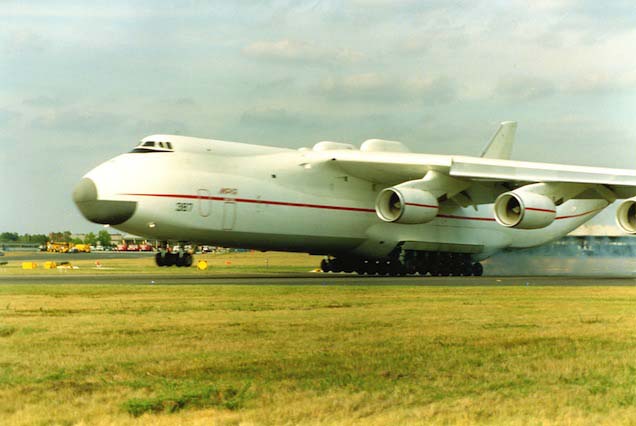




The Antonov An-225 Mriya — Ukrainian for 'dream', reported by NATO as Cossack — was a six-engined strategic airlifter designed by the Antonov bureau in the Soviet Union as a scaled-up development of the An-124 Ruslan. It existed because of the Soviet space programme: its job was to carry the boosters of the Energia rocket and the Buran orbiter on its back between factories and the launch site. It first flew on 21 December 1988. Two airframes were ordered, yet only one was ever finished, registered CCCP-82060 and later UR-82060, while the second remained incomplete. Once the Soviet Union and the Buran programme had gone, the aircraft had nothing left to do, and in 1994 it was put into storage with its engines taken away for other aircraft. Around the turn of the century Antonov brought it back for its own cargo airline. After an upgrade that raised its maximum take-off weight to 640 tonnes, it gained its type certificate in 2001 and from 2002 onwards moved loads no other aircraft could take: power-station generators, wind-turbine blades, locomotives and relief supplies. It set 240 world records and was both the heaviest aircraft ever built and the operational aircraft with the largest wingspan. The only complete Mriya was destroyed in its hangar at Hostomel during the Battle of Antonov Airport, in the opening days of Russia's full-scale invasion of Ukraine in 2022. It has since become a national symbol, and its story is not closed: Ukraine has announced that the unfinished second airframe will be completed, using parts recovered from the wreck, so that a Mriya can fly again.
Related events
- First flight of the Antonov An-225 Mriya
- The An-225 debuts at the Paris Air Show carrying the Buran orbiter
- The An-225 Mriya sets 110 world records in a single flight
- The An-225 receives its type certificate and returns to service with Antonov Airlines
- The An-225 flies with a world-record 253.82 tonnes of cargo
- First commercial flight of the An-225, from Stuttgart to Oman
- The An-225 airlifts the heaviest single item in history
- The An-225 carries the longest piece of air cargo in history
- The An-225 joins the COVID-19 pandemic relief airlift
- Ukraine announces the destruction of the An-225 Mriya at Hostomel
- Antonov confirms it is building a second An-225 Mriya
Related sheets
Category
Antonov An-225 Mriya in the news
1:400 B337SGT Super Guppy Airbus Skylink Aero Spacelines "Tracor Aviation 25 Years" F-BPPA Polished – XX40697 Antonov An225 Antonov Design Bureau Mriya "Red Stripe" UR-82060 Interactive Series –…
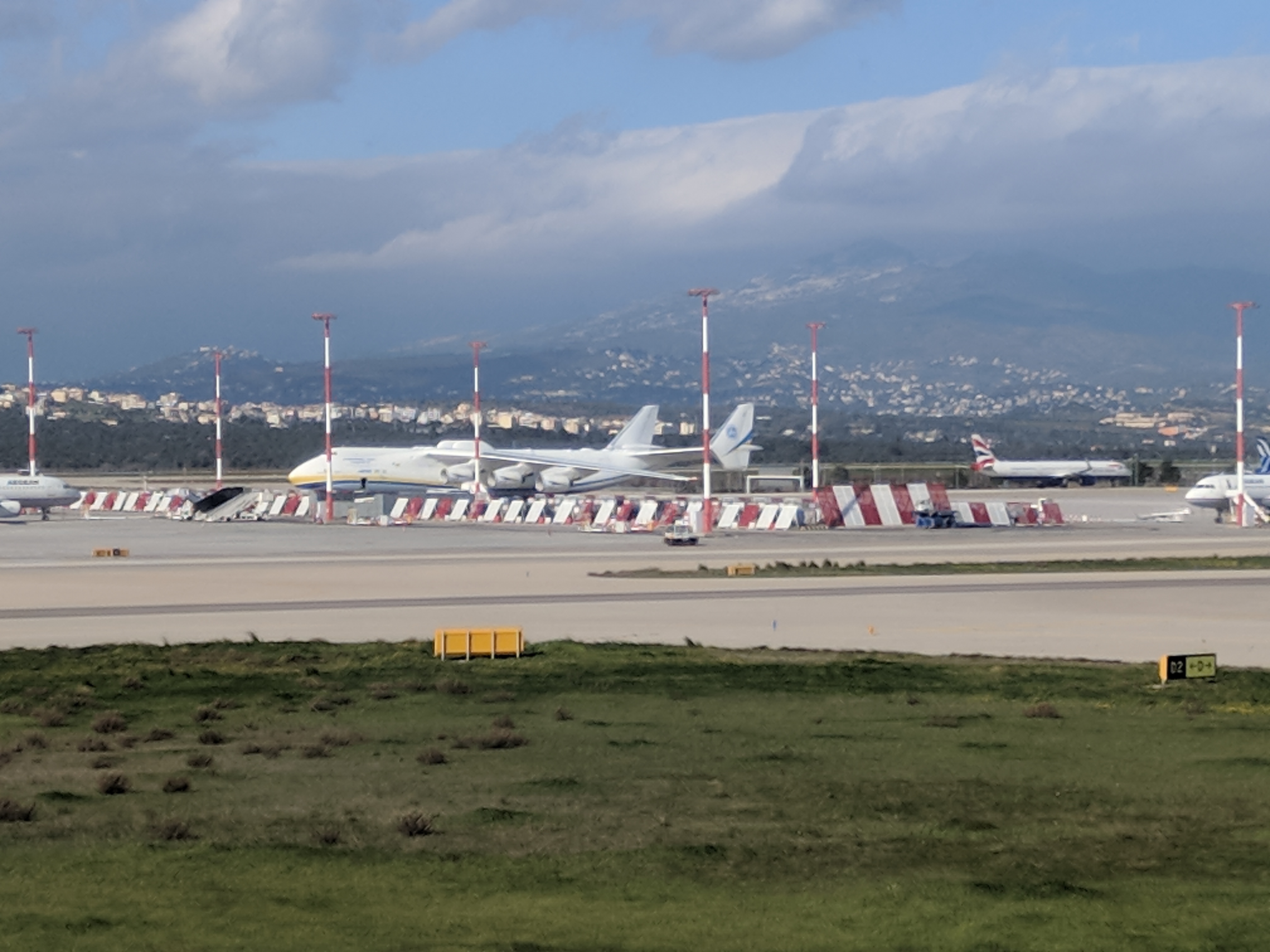
Jesus Sagastuy Estivariz submitted this photo and note: "A photo of the An-225 Mriya — Dream in Ukranian — taken in 2010 in Vitoria, Spain, next to a Yakovlev Yak-52 painted in yellow and blue…


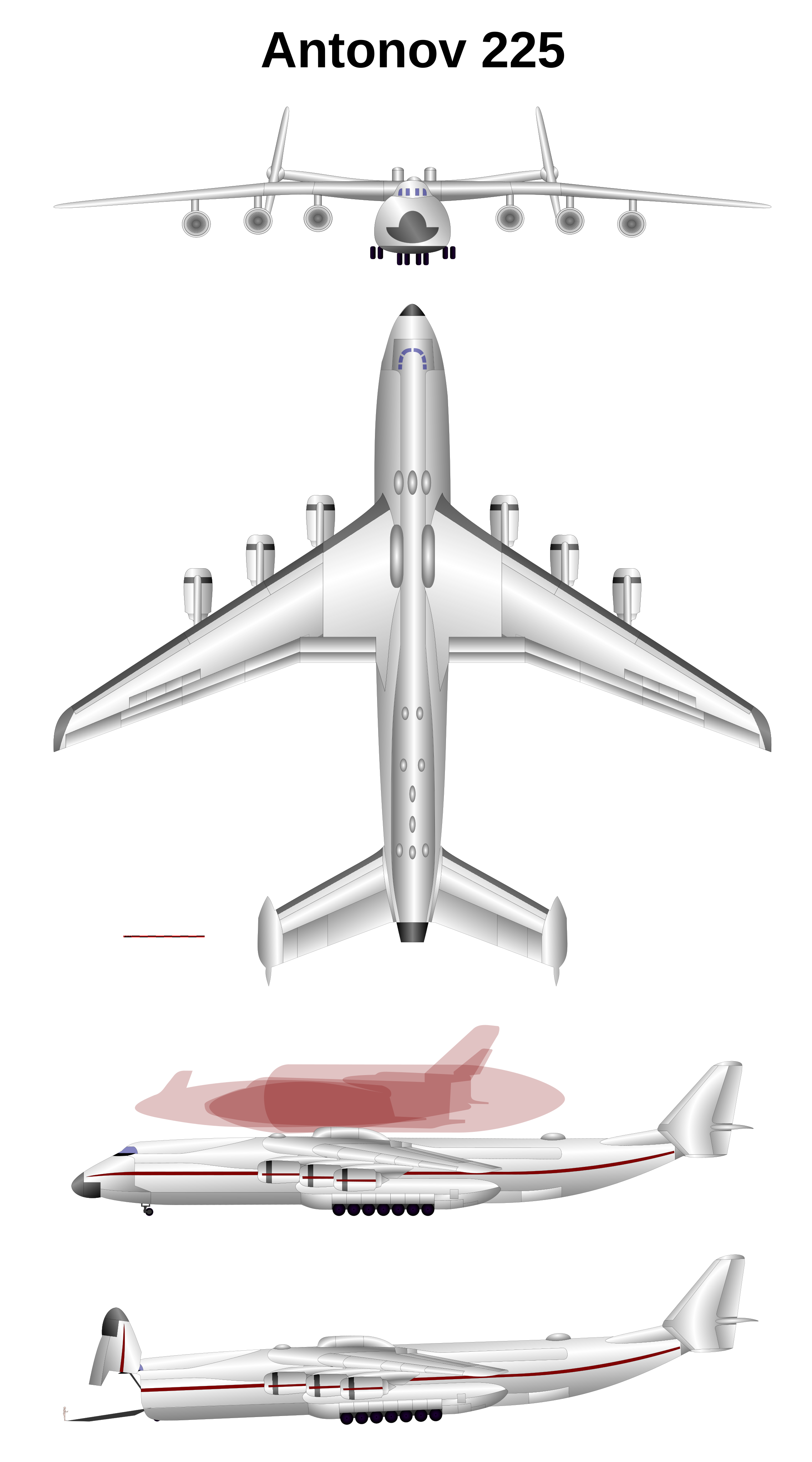
Three-view drawing
History
A brief from the space programme
The An-225 story begins in 1984, when the Soviet government asked Antonov for a giant airlifter to take over from the Myasishchev VM-T in carrying large space hardware. The requirement was demanding: a payload of up to 231,838 kilograms carried inside or outside the fuselage, and the ability to operate from any runway of at least 3,500 metres. Its intended role closely mirrored that of the United States' Shuttle Carrier Aircraft — moving the boosters of the Energia rocket and the Buran orbiter — and the delivery schedule was tight, which ruled out a clean-sheet design.
From Ruslan to Mriya
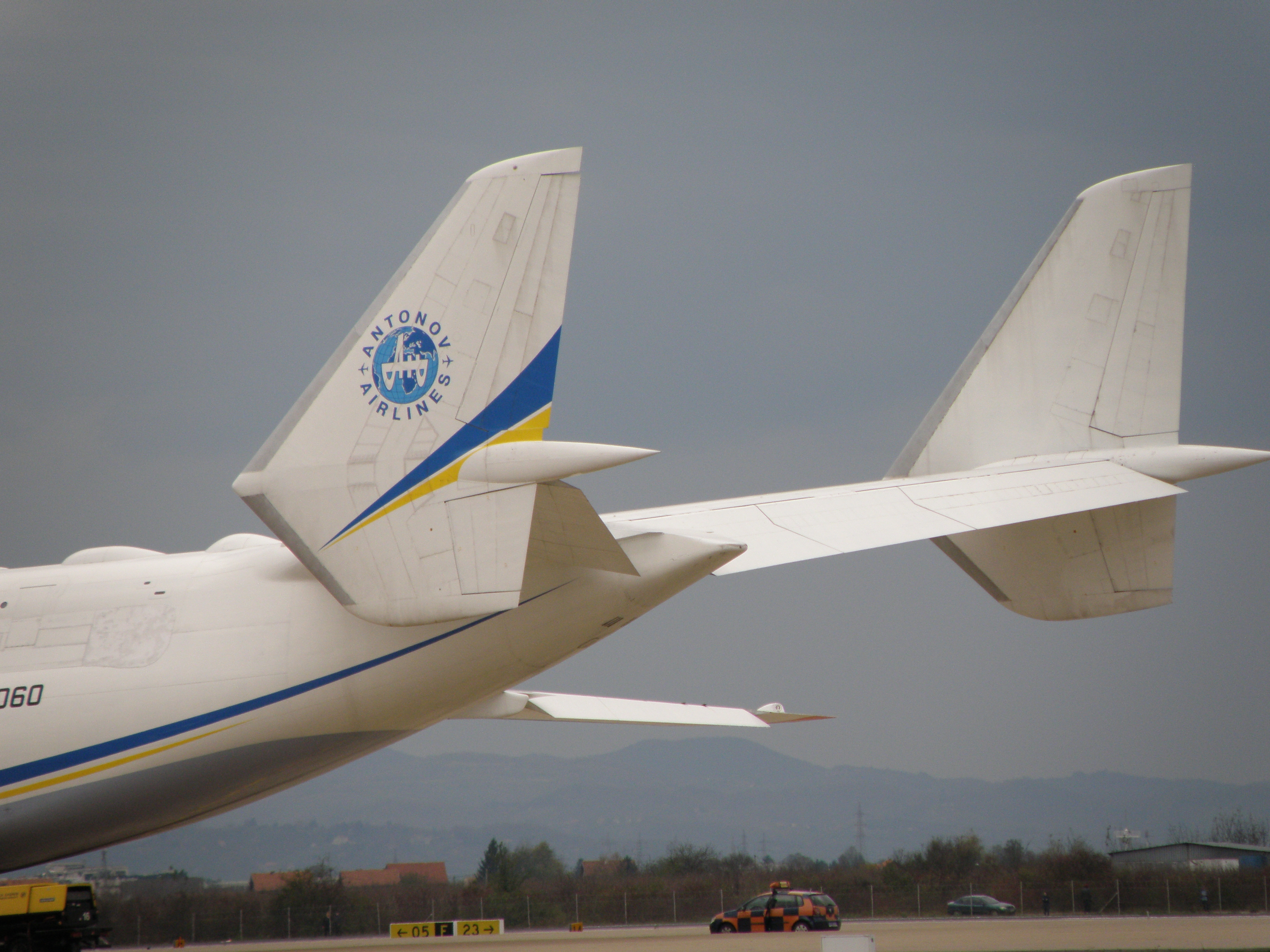
Antonov's answer was to stretch the An-124 Ruslan it already had in production. Extra fuselage barrels went in ahead of and behind the wing, and a new, wider centre section lengthened the span and made room for a third pair of Progress D-18T turbofans, taking the total from four engines to six. The tail had to be redesigned from scratch: a bulky load riding on the spine sheds turbulent wake that would have blanked a single fin, so the Mriya received twin fins at the tips of a large swept tailplane. For all its size, the engineering was intentionally conventional. As on the An-124, the chief designer was Viktor Tolmachev.
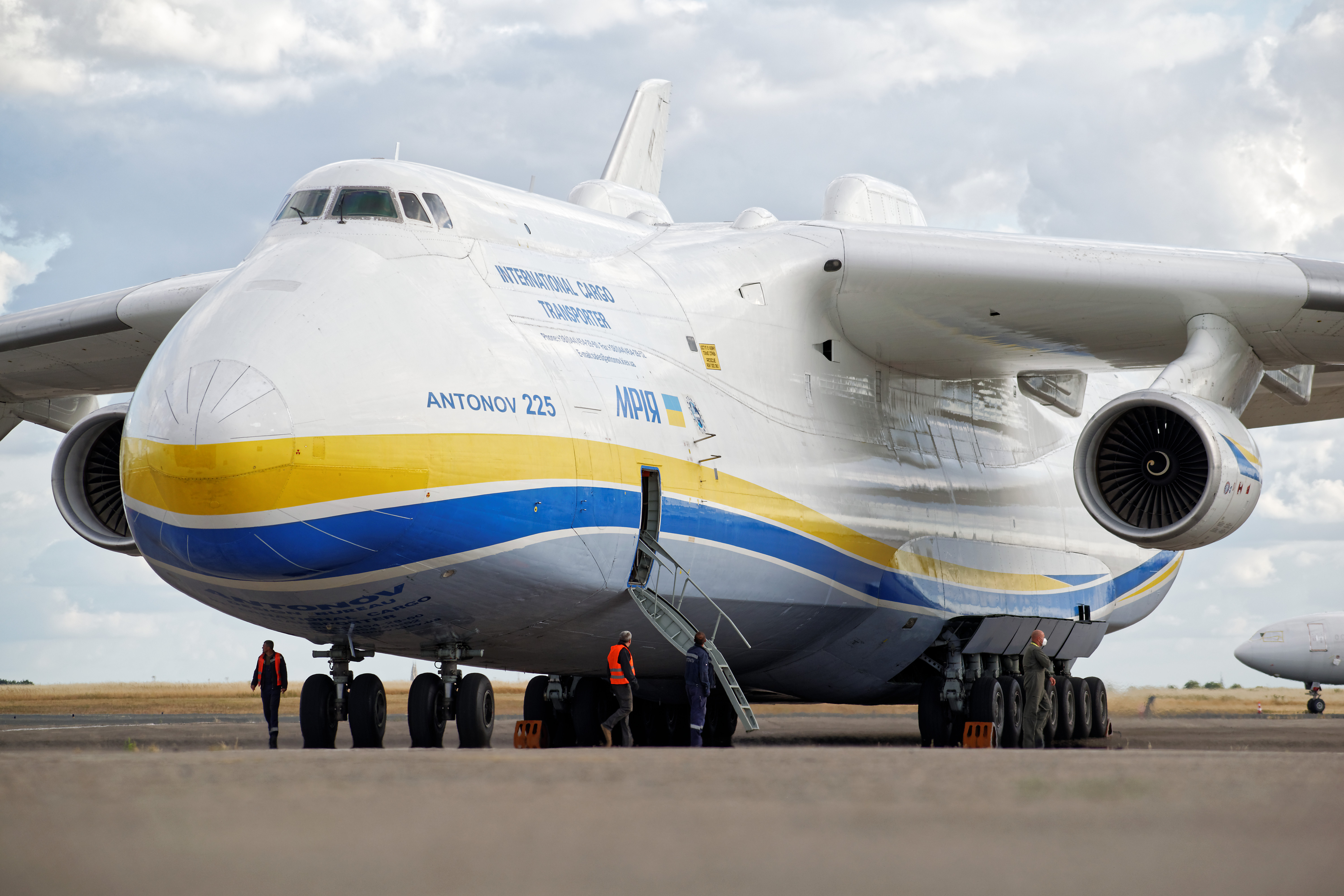
The flight controls were fly-by-wire, backed by triple-redundant hydraulics. The undercarriage grew to 32 wheels, some of them steerable, letting the aircraft turn round on a runway 60 metres wide, and the nose gear could still kneel to lower the loading sill. Four overhead cranes ran the full length of the hold, each rated at 5,000 kilograms. Unlike the An-124, the An-225 was never meant for tactical work or short strips, so the rear door and ramp were deleted to save weight and everything went in through the nose. The pressurised, sound-proofed hold was 43.35 metres long, 6.4 metres wide and 4.4 metres high, with a volume of 1,300 cubic metres — room for up to 80 cars or 16 containers. Hard points on top of the fuselage took external loads up to 70 metres long.
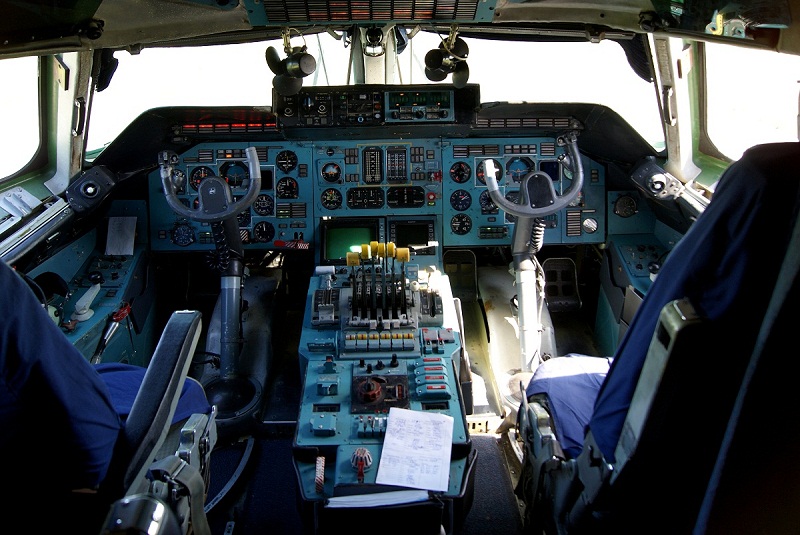
The flight deck sat at the front of the upper deck, reached by a ladder from below. It was nearly the same as the Ruslan's apart from extra controls for the added engines. Behind it were stations for the two flight engineers, the navigator and the communications specialist, plus bunks so that a relief crew could rest on long sectors.
First flight and the Buran years
The Mriya first took to the air on 21 December 1988. Only three months later, on 22 March 1989, test pilot Oleksandr Halunenko and his crew lifted off from Hostomel with more than 156 tonnes aboard and, in a flight of 3 hours 45 minutes, set 110 world records for speed, altitude and payload, climbing to 12,430 metres. That year it made its first appearance outside the Soviet Union at the Paris Air Show, carrying a Buran, and in 1990 it flew a display at Farnborough.
Between 1988 and 1991 it was the main means of moving Buran orbiters. Halunenko, its first pilot, kept flying it until 2004. Two aircraft had been ordered, but only the first was finished, registered CCCP-82060 and later UR-82060.
Storage and a second, commercial life
The break-up of the Soviet Union and the end of the Buran programme left the sole Mriya without a job. Antonov had set up its own heavy-cargo carrier, Antonov Airlines, in 1989, flying An-124s and An-12s in partnership with Air Foyle out of London Luton, and as early as 1990 its managers spoke of putting the An-225 to commercial use. Even so, it was mothballed in 1994; its six engines went to other An-124s and the unfinished second airframe was put away as well.
By the late 1990s demand for outsize freight persuaded Antonov that something bigger than the Ruslan was needed. The Mriya was re-engined and, during 2000 and 2001, went through an upgrade costing about 20 million dollars which, among other changes, strengthened the cargo floor and raised maximum weight from 600 to 640 tonnes. The An-225-100 designation marked that update, which added a traffic collision avoidance system, better communications and navigation gear and noise-reduction measures. On 23 May 2001 the type certificate was issued by the Aviation Register of the Interstate Aviation Committee. With maximum fuel it could fly 15,400 kilometres, or about 4,000 with 200 tonnes aboard.
Its first commercial flight left Stuttgart on 3 January 2002 for Thumrait in Oman with 216,000 ready meals for US troops: 375 pallets weighing 187.5 tonnes. Canadian and US government contracts to supply coalition forces in the Middle East followed, along with a long run of extraordinary loads — generators, wind-turbine blades, diesel locomotives — and disaster-relief flights. In 2017 chartering it cost around 30,000 dollars an hour. From 2009 it wore the blue and yellow of the Ukrainian flag, and The New York Times described it as Ukraine's winged ambassador to the world. In 2020, during the COVID-19 pandemic, it carried medical supplies from China around the globe. Wherever it landed, spotters turned out in crowds.
A string of records
On 11 September 2001 Halunenko's crew broke the absolute payload record previously held by the An-124: carrying five main battle tanks, 253.82 tonnes in all, the Mriya flew a 1,000-kilometre closed circuit at 763.2 km/h. Between 16 and 18 June 2004 Anatoliy Moiseyev's crew flew four pipe-layers weighing 247 tonnes with their loading gear from Prague to Tashkent, the largest commercial cargo in aviation history.
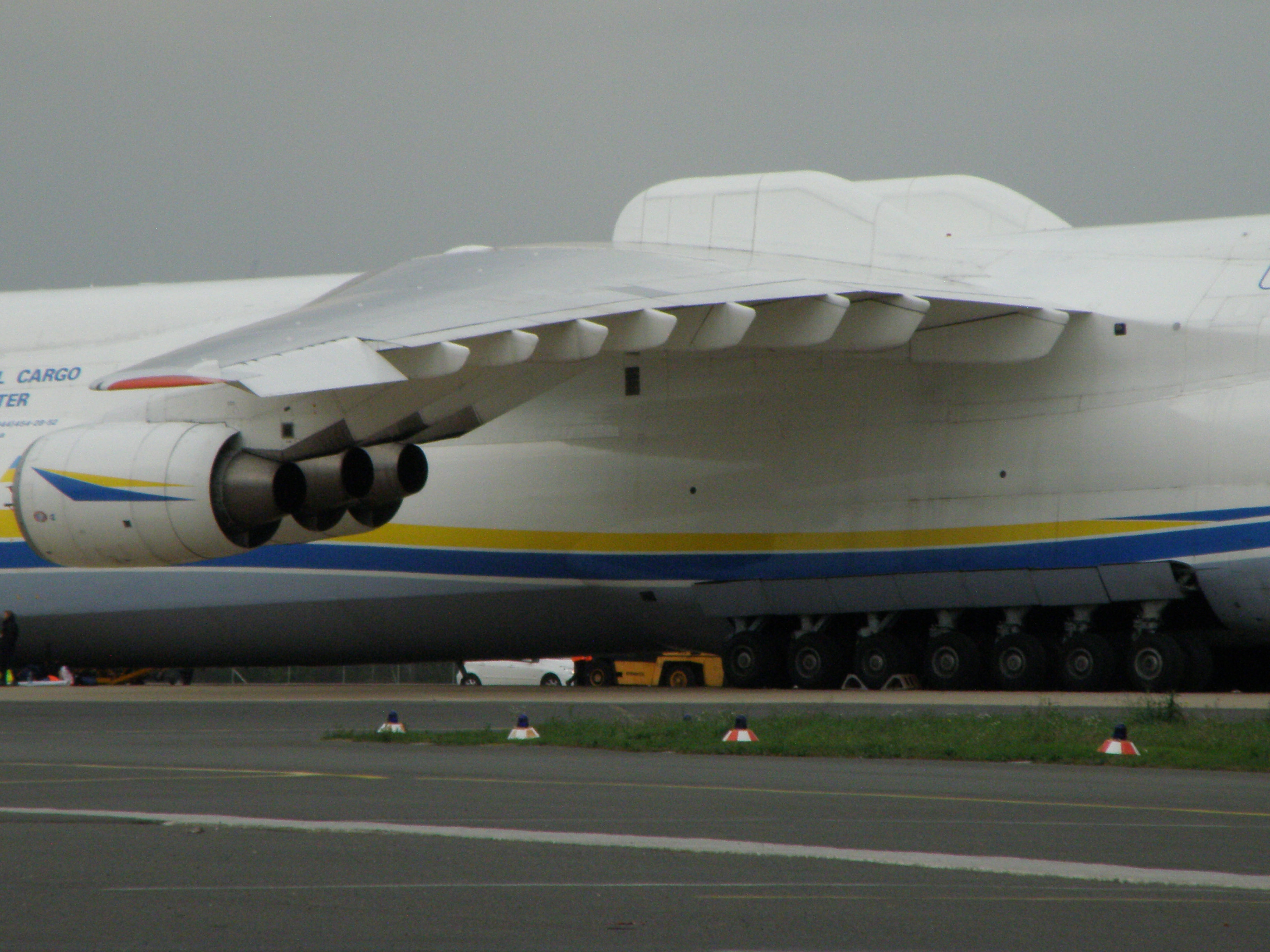
On 11 August 2009 the same crew loaded a generator for a new Armenian power plant at Frankfurt-Hahn. The unit weighed 174 tonnes, or 187.6 with its frame, and Guinness recognised it as the heaviest item ever airlifted; it was flown to Yerevan. In June 2010 the Mriya carried two test wind-turbine blades, each more than 42 metres long, from China to Skrydstrup in Denmark — the longest air cargo ever moved. And on 27 September 2012 it hosted, at 10,150 metres, an exhibition of 500 works by 120 Ukrainian artists, the highest art show in the world. Altogether it set 240 world records, a tally unmatched in aviation.
The second airframe that was never finished
Work on the second An-225 began in 1989 for the space programme, but stopped when the Soviet Union collapsed, and the airframe was stored from 1994. In September 2006 Antonov decided to complete it, aiming for about 2008, but delay followed delay and by August 2009 the work was reported to have been abandoned. In May 2011 Antonov's chief executive said finishing it — with a 250-tonne capacity — would take at least 300 million dollars and three years once funding was in place. Different sources put it at 60–70% complete.
Space-launch schemes gathered around it. Early in the century Antonov studied the An-325, an even larger eight-engined derivative intended for Russia's MAKS spaceplane, while the AKS, a twin-fuselage giant meant to carry Tupolev's OOS orbital plane, never left the drawing board. In April 2013 the Russian government said it would revive Soviet air-launch projects using a modified An-225. In May 2017 the Airspace Industry Corporation of China announced plans to modernise the second airframe as a platform for launching satellites from 12,000 metres; that too came to nothing. Meanwhile the flying Mriya carried on: on 25 March 2020 it resumed test flights from Hostomel after more than a year on the ground to receive a Ukrainian-designed power management and control system.
Hostomel, February 2022
Its last commercial mission ran from 2 to 5 February 2022, bringing almost 90 tonnes of COVID-19 test kits from Tianjin to Billund via Bishkek. Back at its base, Antonov Airport in Hostomel, it had an engine changed. On NATO advice an evacuation flight was planned for the morning of 24 February, but that day Russia invaded and the airfield was among the first targets. Ukraine closed its airspace to civil flights and the fighting left the runway unusable.
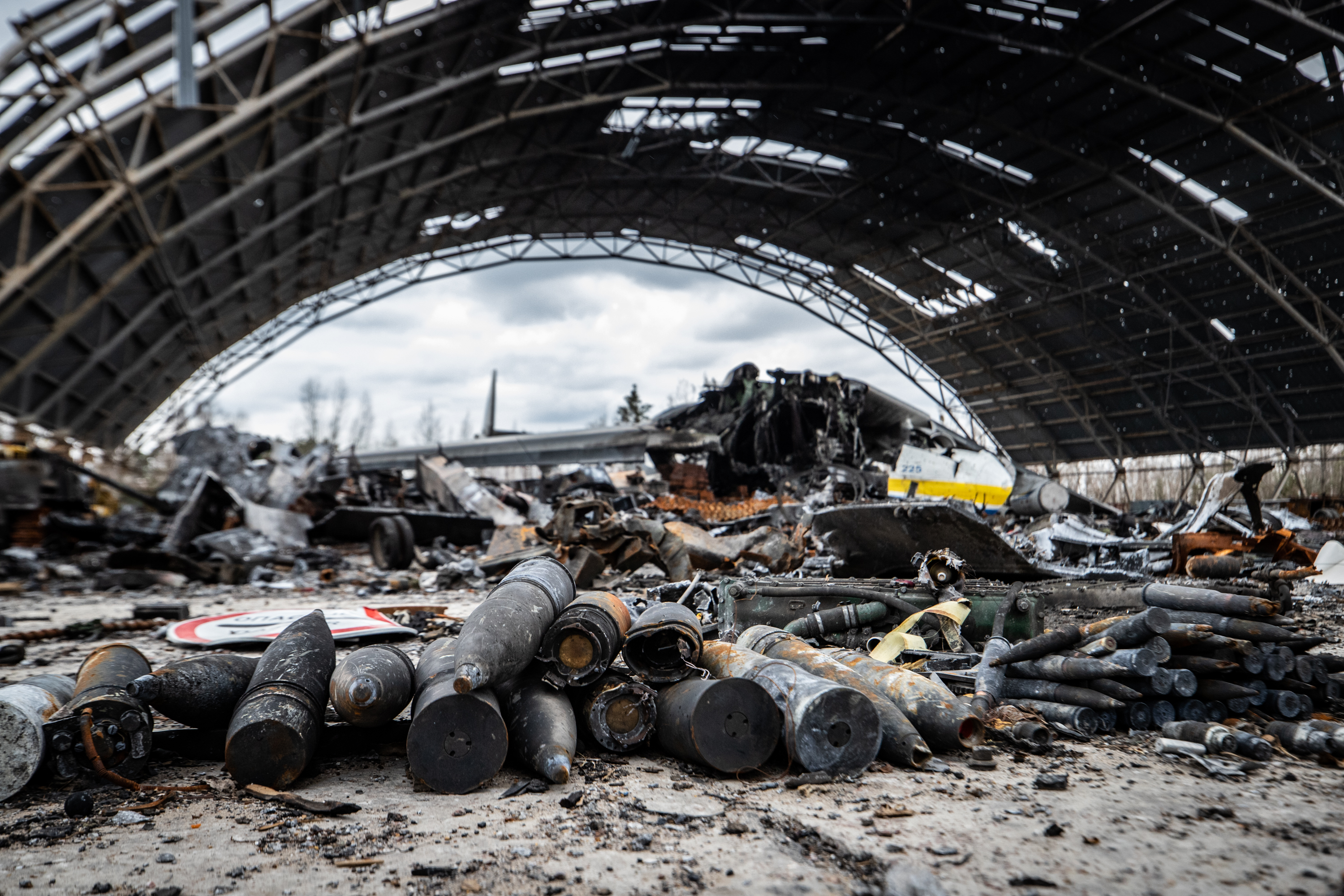
On 24 February the aircraft was said to be intact. On 27 February a photograph appeared of what looked like the Mriya burning in its hangar, and Ukroboronprom, Antonov's parent group, announced the same day that Russian forces had destroyed it, while Antonov itself said it was still checking. Other aircraft shared the hangar, among them a Hungarian-registered Cessna 152 that was crushed when the giant's left wingtip came down on it. Later images removed any doubt: a video on 3 March showed the aircraft ablaze beside Russian trucks, and on 4 March Russian state television aired the first clear ground footage, with much of the forward section gone. Drone footage on 1 April showed the front fuselage burned out and the wings partly intact; the right wing had snapped and was held up only by its engines resting on the ground. After the Russian withdrawal from northern Ukraine, the second airframe, stored at Antonov's Sviatoshyn plant, was found intact despite artillery strikes.
Could it have been saved?
The loss triggered a bitter dispute. On 19 March 2022 the Mriya's captain, Dmytro Antonov, accused company management of failing to act even though NATO had advised moving the airworthy aircraft to Leipzig. In a later interview he said the engine removed after the final mission had been fitted to a Ruslan and returned to the Mriya in mid-February, so that by 23 February it was ready to leave; that Germany had offered to take the whole fleet, crews and spares to Leipzig, where Antonov has a logistics subsidiary; and that insurance for flights in Ukrainian airspace had been withdrawn shortly before. Several Antonov employees rejected his claims. In March 2023 the Ukrainian government detained two of three officials suspected of preventing the National Guard from preparing the airport's defence, and in April prosecutors charged the former director general, Serhii Bychkov, with negligence for not ordering the flight to Leipzig; the security service said the aircraft had been fit to fly out of the country.
Rebuilding the dream
From the outset Ukraine vowed the Mriya would return. Ukroboronprom put restoration at more than three billion dollars and over five years, and demanded that Russia pay; engineers later spoke of a much lower range of 350 to 500 million dollars, and Antonov designer Anatolii Vovnianko of 250 to 300 million. Former pilot Andrii Sovenko warned that repair was out of the question: the only path was to build another aircraft from whatever could be salvaged and the parts made in the 1980s for the second example. Many Soviet-era components are no longer produced, and whether the investment would ever pay off remained unclear.
On 20 May 2022 President Volodymyr Zelenskyy announced that the second An-225 would be completed, both to replace the lost aircraft and to honour Ukrainian pilots killed in the war. In November Antonov confirmed that work had started: it estimated it had about 30% of the components needed and a cost of at least 500 million euros, and said the unfinished airframe would be completed with parts from the bombed aircraft and new ones. Four months later it confirmed that parts had been removed from the wreck for mating to the incomplete fuselage. Meanwhile Leipzig/Halle airport, a regular stop for the Mriya and now home to the surviving An-124s, opened an exhibition to keep its memory alive. Dmytro Antonov argued for preparing the project straight away with major international manufacturers involved, and reckoned that with modern technology the aircraft could be rebuilt in about two years.
Legacy
The An-225 was one of a kind: an aircraft born to carry spacecraft that became the last-resort tool of global air freight and an emblem of Ukraine. No other aircraft has taken off so heavy or carried a single item so heavy or so long. Its destruction at Hostomel turned it into a symbol of the country's resistance, and the effort to finish its incomplete twin keeps the final chapter of its story open.
Variants
| An-225 | An-225-100 | AKS | An-224 | An-325 | |
|---|---|---|---|---|---|
| First flight | December 21, 1988 | May 7, 2001 | — | — | — |
| Aircraft type | Super-heavy transport aircraft (original configuration) | Commercial super-heavy cargo aircraft | — | — | — |
| Powerplant | 6 × Progress D-18T turbofans | 6 × Progress D-18T turbofans, 229.5 kN each | — | — | — |
| Powerplant | 6 × ZMKB Progress (Lotarev) D-18T | 6 × ZMKB Progress D-18T | — | — | 8 × turbofan |
| Thrust per engine | — | 230 kN | — | — | — |
| Length | 84 m Best value in this row | 84 m Best value in this row | — | — | — |
| Wingspan | 88.4 m Best value in this row | 88.4 m Best value in this row | — | — | — |
| Height | 18.2 m Best value in this row | 18.1 m | — | — | — |
| Wing area | 905 m² Best value in this row | 905 m² Best value in this row | — | — | — |
| Empty weight | 285,000 kg Best value in this row | 285,000 kg Best value in this row | — | — | — |
| MTOW | 600,000 kg | 640,000 kg Best value in this row | — | — | — |
| Top speed | 850 km/h Best value in this row | 850 km/h Best value in this row | — | — | — |
| Cruise speed | 800 km/h Best value in this row | 800 km/h Best value in this row | — | — | — |
| Service ceiling | — | 11,000 m | — | — | — |
| Range | 4,500 km Best value in this row | 4,000 km | — | — | — |
| Ferry range | 15,400 km Best value in this row | 15,400 km Best value in this row | — | — | — |
| Range conditions | 4,500 km typical range; 15,400 km ferry range (aerospaceweb). | 4,000 km with a 200-tonne payload; 15,400 km with maximum fuel. | — | — | — |
| Armament | None | None | — | — | — |
| Max weapons load | 0 kg Best value in this row | 0 kg Best value in this row | — | — | — |
| Payload | — | 253,820 kg | — | — | — |
| Cargo capacity | — | Capacity 253.82 tonnes; 1,300 m³ hold. | — | — | — |
| Crew | 6 Best value in this row | 6 Best value in this row | — | — | — |
| Units built | 1 Best value in this row | — | 0 | 0 | 0 |
Images
Elsewhere
- Airliners.netAntonov An-225 Mriya (UR-82060), fotografía n.º 69955 ↗
- Airliners.netAntonov An-225 Mriya (UR-82060), fotografía n.º 140074 ↗
- Airliners.netAntonov An-225 Mriya (UR-82060), fotografía n.º 174209 ↗
- Airliners.netAntonov An-225 Mriya (UR-82060), fotografía n.º 189660 ↗
- Airliners.netAntonov An-225 Mriya (UR-82060), fotografía n.º 210643 ↗
- Airliners.netAntonov An-225 Mriya (UR-82060), fotografía n.º 212716 ↗
- JetPhotosAntonov An-225 Mriya (UR-82060), fotografía JetPhotos n.º 5872571 ↗
- JetPhotosAntonov An-225 Mriya (UR-82060), fotografía JetPhotos n.º 8313603 ↗
- JetPhotosAntonov An-225 Mriya (UR-82060), fotografía JetPhotos n.º 5890044 ↗
- JetPhotosAntonov An-225 Mriya (UR-82060), fotografía JetPhotos n.º 230683 ↗
- JetPhotosAntonov An-225 Mriya (UR-82060), fotografía JetPhotos n.º 9722031 ↗
- JetPhotosAntonov An-225 Mriya (UR-82060), fotografía JetPhotos n.º 6780466 ↗
Show the 15 more
- Planespotters.netAntonov An-225 Mriya (UR-82060) de Antonov Airlines, foto de Li Junjie ↗
- Planespotters.netAntonov An-225 Mriya (UR-82060) de Antonov Airlines, foto de Toni Marimon ↗
- Planespotters.netAntonov An-225 Mriya (UR-82060) de Antonov Airlines, foto de Christian Jilg ↗
- Planespotters.netAntonov An-225 Mriya (UR-82060) de Antonov Airlines, foto de Ton Jochems ↗
- Planespotters.netAntonov An-225 Mriya (UR-82060) de Antonov Airlines, foto de Erik Eriksson ↗
- Planespotters.netAntonov An-225 Mriya (UR-82060) de Antonov Airlines, foto de Arno Vesterholm ↗
- AirTeamImagesAntonov An-225 Mriya (UR-82060) ↗
- AirTeamImagesAntonov An-225 Mriya (UR-82060) de Antonov Airlines ↗
- AirTeamImagesAntonov An-225 Mriya (RA-82060) de Antonov Airlines ↗
- AlamyEl Antonov An-225 Mriya en el salón aéreo de Farnborough de 1990 ↗
- AlamyAntonov An-225 Mriya ↗
- Getty ImagesAntonov An-225 Mriya en la nave de montaje de la planta de Antonov, Kiev (2016) ↗
- Getty ImagesAntonov An-225 Mriya en la nave de montaje de la planta de Antonov, Kiev (2016) ↗
- Aerospaceweb.orgAntonov An-225 Mriya, three-view schematic (Aerospaceweb) ↗
- The-Blueprints.comAntonov An-225 Mriya CCCP, vector three-view drawing (The-Blueprints) ↗
Videos


Show the 8 more


Did you know… about Antonov An-225 Mriya
- Why did the USSR need to build a new aircraft to move its Buran shuttle?
Sea, land, and rail transport had become obsolete and inefficient at the scale of the USSR for moving the Buran and its parts. The VM-T Atlant could only…