Airliner · Civil · Ukraine
Antonov An-148
- December 17, 2004
- First flight
- 2009
- Introduced
- In service
- Status
- 47
- Units built


-800.webp)

_Russian_Air_Force_CKL_(32600959103)_(2)-800.webp)
-800.webp)
-1600.webp)
_Russian_Air_Force_CKL_UUMU_(35986336826)-800.webp)


%2C_Gostomel%2C_30_September_2010-800.webp)


-1600.webp)

-1600.webp)


-800.webp)
-1600.webp)

-800.webp)


-1600.webp)


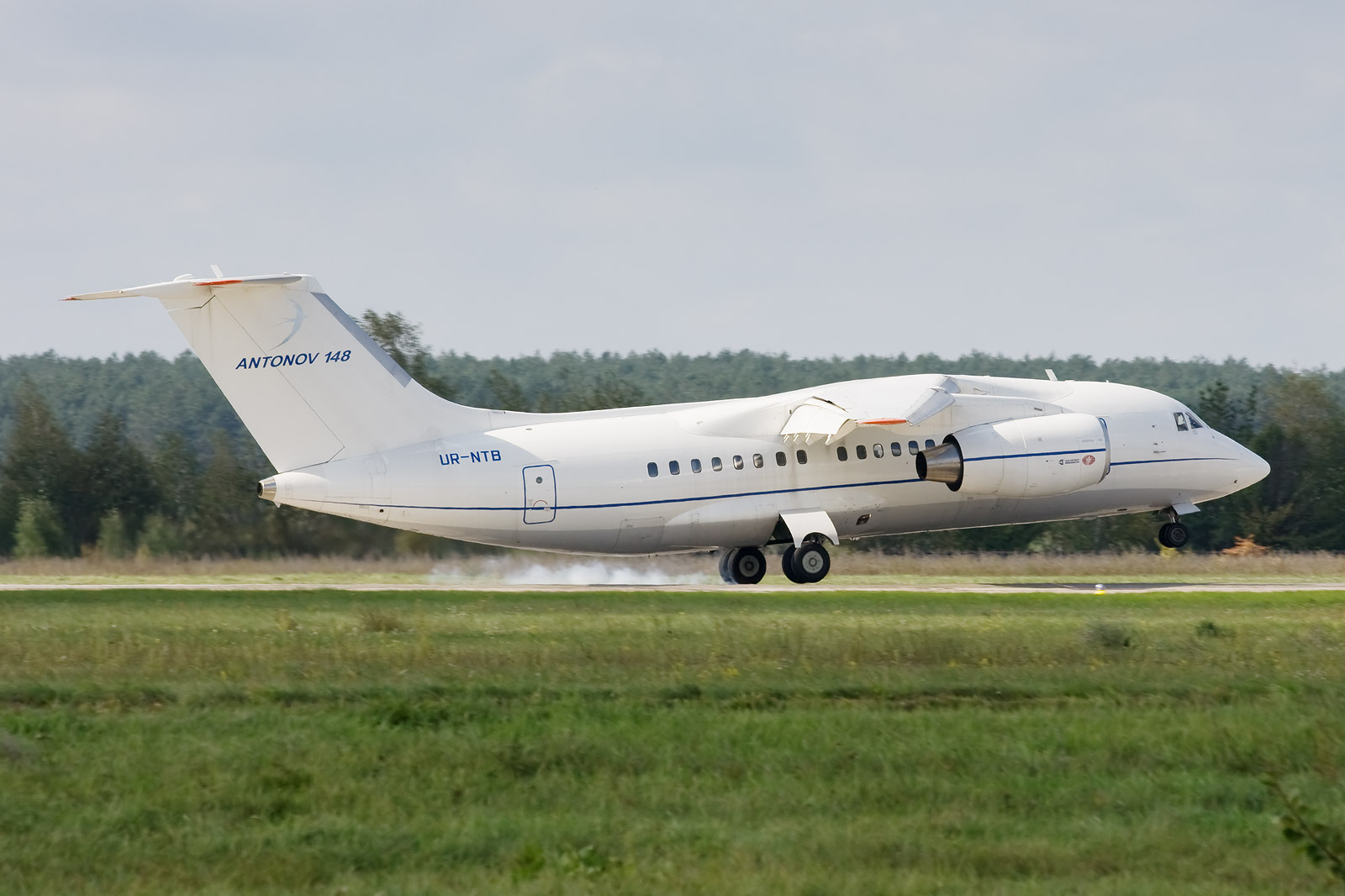
The Antonov An-148 is a high-wing, twin-turbofan regional jet designed by the Ukrainian bureau Antonov and built on two parallel lines: the Kyiv serial plant AVIANT and the Voronezh Aircraft Production Association (VASO) in Russia, which assembled it under licence. The project began in the 1990s as a passenger conversion of the An-74, took the An-148 designation in 2001 and led to the maiden flight of the first prototype on 17 December 2004. On 26 February 2007 the Interstate Aviation Committee and the Ukrainian aviation authority certified the aircraft together with its D-436-148 engine and its AI-450-MS auxiliary power unit. Its layout answers a very specific brief: operating from short, rough and cold airstrips in Siberia, Africa and Asia. Hence the high wing, the engines in pods slung beneath it and shielded from foreign object damage, the built-in airstair, the auxiliary power unit and the self-diagnosis system that let the type work without ground support. The manufacturer's own performance table gives a maximum capacity of 85 passengers, a 9,000 kg payload, altitudes of up to 12,200 m and a ground operating temperature range of -55 to +45 °C. The family was ordered by range: the An-148-100A covers 2,100 km with 75 passengers, the -100B reaches 3,500 km and the -100E 4,400 km at a maximum take-off weight of 43,700 kg. From them came the stretched 99-seat An-158, the An-148-200 sharing its rear fuselage, the An-148-300 business version (previously An-168) and the An-178 freighter, plus proposals for an airborne early warning platform and for licence assembly in Iran. The An-148 entered commercial service on 2 June 2009 with Ukraine's Aerosvit and on 21 December of the same year with Russia's Rossiya. It also flew with Angara, Saratov Airlines, Air Koryo and, in An-158 form, with Cubana de Aviación, while its largest export customer turned out to be the Russian Ministry of Defence, which contracted fifteen aircraft. It never reached the planned production rate. Two crashes and a political rupture closed the story. On 5 March 2011 a military prototype broke up in flight over Belgorod Oblast, and on 11 February 2018 Saratov Airlines Flight 703 crashed near Ramenskoye with 65 passengers and six crew aboard, leaving no survivors; the Russian fleet was grounded the following month. The break between Kyiv and Moscow after the 2014 annexation of Crimea cut off engines and spare parts: the last Russian-built An-148 was completed in October 2018 and VASO replaced the line with one for the Ilyushin Il-112. The programme ended with 47 aircraft built.
Related sheets
Category
Three-view drawing
.jpg)
History
From the An-74 to a regional jet of its own
The An-148 did not start from a blank sheet. In the early 1990s, with the Soviet aerospace industry freshly split among republics, Antonov began studying how to turn the An-74 — a twin-engined transport conceived for Arctic work — into a passenger aircraft. Petro Balabuev led the effort, and for almost a decade the project had no name of its own: only in 2001 was it redesignated An-148. By then little of the starting point survived. The fuselage had been stretched and the wing was a clean-sheet design.
The most distinctive decision was to keep the high wing. This was not sentimental inheritance from the An-74 but a market choice: an aircraft with its wing on top and its engines hung beneath copes better with the rough, unpaved or poorly maintained strips of remote Russia, Africa and Asia, which were exactly the customers Antonov was courting. That choice conditioned everything else, from undercarriage height to how the engine intakes are protected.
Prototypes, trials and the 2007 certificate
In 2002 construction of the first three prototypes began at AVIANT, the Kyiv serial plant. The first flew on 17 December 2004 and the second joined the test programme in April 2005. Between them they accumulated some 600 certification flights, a long campaign for an aircraft of this size.
The type certificate arrived on 26 February 2007, issued by the aviation register of the Interstate Aviation Committee and equally recognised by the Ukrainian state aviation administration. The certification basis was the SB-148 document, built on the CIS AP-25 airworthiness requirements and the European CS-25 standard. It was not only the airframe: the D-436-148 engine and the AI-450-MS auxiliary power unit were certified in the same act, no small matter in a programme whose supply chain crossed a border. The trade press of the day read the certificate commercially: it authorised sales across the Commonwealth of Independent States and set the An-148, then quoted at 75 seats, against a 95-seat Superjet-100 still in flight test.
An aircraft split between two countries
The An-148 was built simultaneously at the Kyiv serial plant — AVIANT, later folded into Antonov as its serial production plant — and at the Voronezh Aircraft Production Association, VASO, which assembled it under licence. The production-sharing agreement signed in 2005 gave Russian firms close to 70 per cent of the components and Ukrainian firms the rest; VASO supplied, among other assemblies, the tail section, rear fuselage, engine pylons and high-lift devices. Antonov described the programme as an international undertaking involving some 240 companies from fourteen countries, run on a Western-style shared-risk model, with a growing presence of European and American suppliers: by 2008 thirteen Western firms were reported to be involved.
That split was both its strength and its weakness. It opened the Russian market, where most orders sat — the leasing house Ilyushin Finance had dozens of aircraft committed and VASO once projected around 250 airframes in ten years — but it meant no An-148 could be finished without parts from both countries.
.jpg)
Production never met its promises. The plans spoke of five aircraft in 2009, eighteen in 2010, thirty-six in 2011 and fifty a year from 2013; in reality, in the year to mid-2012 the Russian plant had delivered five An-148s and the Ukrainian one two. Irregular financing at both plants complicated component purchases, since suppliers demanded payment guarantees, and Kyiv had an ageing workforce, averaging around fifty years old. Between 2009 and 2018 VASO completed 33 aircraft.
Design: difficult strips and a glass cockpit
The An-148 is a high-wing monoplane with two turbofans in pods under the wing, an arrangement that keeps the intakes away from the ground and shields engines and structure from foreign object damage. The main gear rotates into the belly of the fuselage, with partial doors leaving the sides of the tyres exposed, a solution familiar to anyone who knows the Boeing 737. A built-in airstair, an auxiliary power unit and an integrated self-diagnosis system complete the picture of an aircraft meant to work at airfields with no equipment.
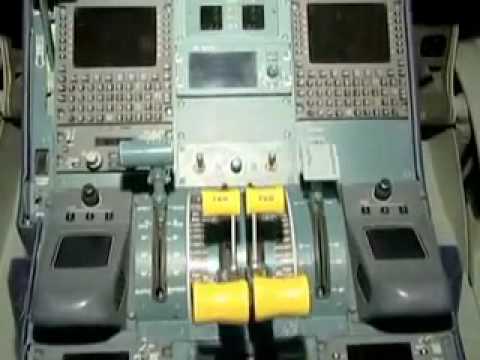
On the flight deck, flight and navigation system information is shown on five liquid crystal displays of 15 by 20 cm built by Russia's Aviapribor, and the controls are fly-by-wire. The aircraft is cleared for day and night operations under instrument flight rules on high-density routes, as well as visual flight rules in suitable weather.
The baseline model, the An-148-100, seats 70 passengers at 864 mm pitch or up to 80 at 762 mm in a single-class two-plus-three layout, and also accepts mixed configurations with four-abreast business seating. Antonov's published performance table adds the figures that define its niche: flight speed of 800 to 870 km/h, altitudes up to 12,200 m, aerodromes up to 1,500 m of elevation, hourly fuel burn of 1,550, 1,600 and 1,650 kg/h by version and required runway lengths of 1,600, 1,800 and 1,900 m — with the note that the -100B drops to 1,600 m when fitted with the FADEC of the -100E.
The engine and the Motor Sich dependency
From the outset the type was to be powered by two Ukrainian-built D-436-148s from Motor Sich in Zaporizhzhia. During the 2000s Antonov openly acknowledged studying versions with Western engines in the 58.86 to 78.48 kN class, such as the General Electric CF34 or the Rolls-Royce BR700, and in Russia it was argued that demand could double with a powerplant other than Motor Sich's. None of those variants materialised, so the aircraft remained tied to a single engine supplier on the far side of an increasingly tense border. Motor Sich was committed to supplying engines for the first fifty machines.
Into service: Aerosvit, Rossiya and early trouble
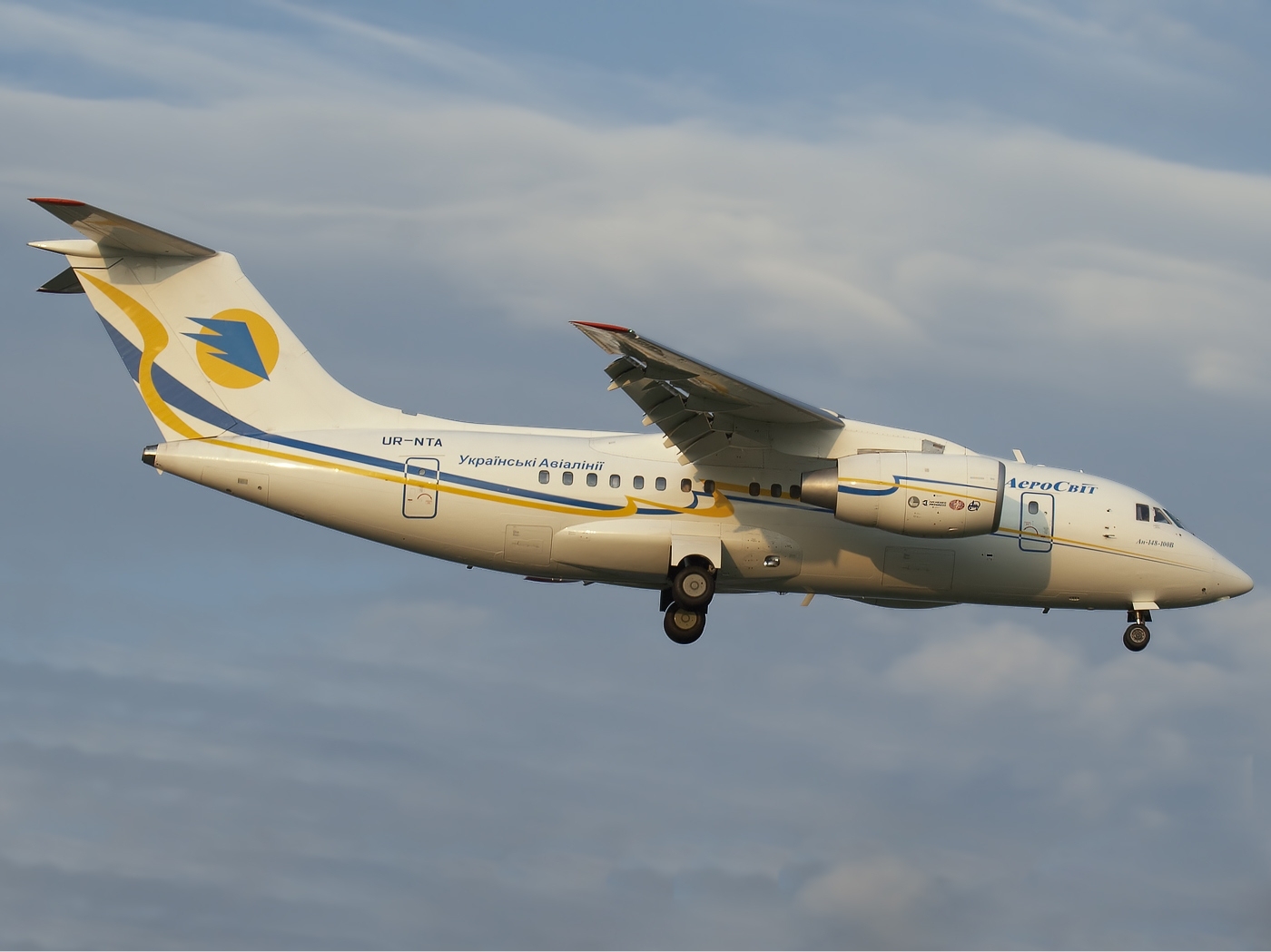
The commercial debut was Ukrainian: on 2 June 2009 Aerosvit put the type into line service on a flight from Kharkiv to Kyiv with the aircraft registered UR-NTA. By November it was flying the Kyiv-Odesa and Simferopol-Lviv routes, and on 15 February 2010 it made the type's first service into the European Union, to Poland.
In Russia service began on 21 December 2009 with Rossiya, which operated flight FV135 from Pulkovo airport in Saint Petersburg to Sheremetyevo in Moscow with aircraft RA-61701. Early experience was rough. By 20 May 2010 the fleet had logged 915 flight hours and 710 landings, and in October Rossiya went public with its complaints: over the first three months of operation the aircraft suffered an in-flight technical failure every 344 hours. Technical trouble was compounded by a shortage of qualified pilots, since training capacity was not growing at the rate of deliveries. By 2011 the situation had improved enough for fleet utilisation to rise noticeably.
The family: An-158, -200, -300 and derivatives
In 2008 Antonov announced, in response to customer demand, a stretched version seating up to 99 in single class, initially called An-148-200 and rebranded the following year as the An-158. One of the An-148 prototypes, dismantled for structural analysis after its 600 certification flights, was rebuilt as the first An-158; it flew on 28 April 2010 and received Russian certification on 3 March 2011. It is recognisable by its wingtip fences, credited by Antonov with an 8.5 per cent improvement in fuel efficiency, and by a fuselage of 30.83 m against the 29.13 m of the An-148-100E.
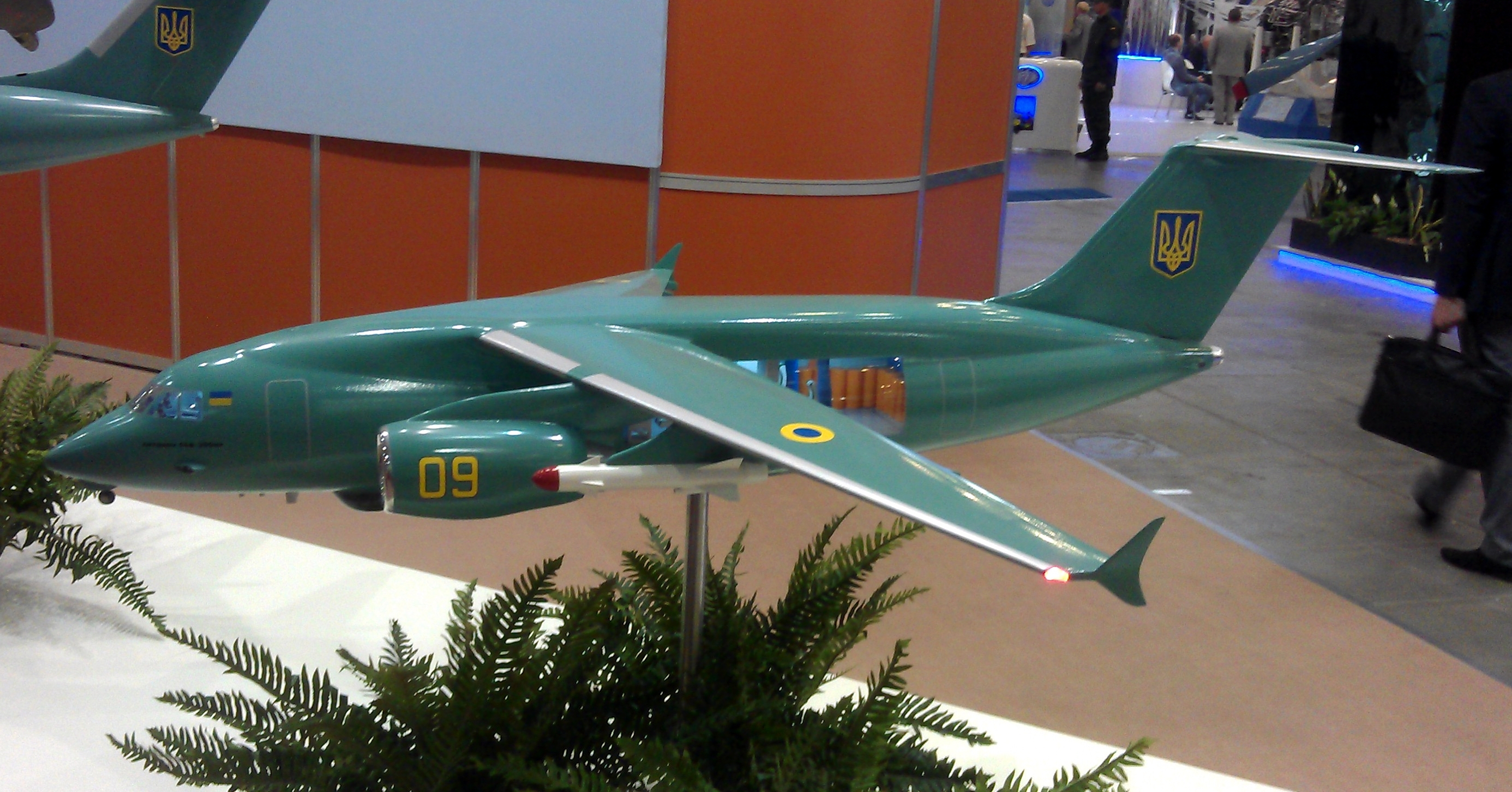
The An-148-200 designation was later reused for a variant unified with the An-158 through the rear fuselage, seating up to 89 in dense configuration and planned for production in Kyiv alongside the An-158. The An-148-300, formerly the An-168 and once presented as the Sky Cruiser, is the business version for eight to forty passengers with ranges of up to 7,000 km. Studies also covered an An-148DRLV airborne early warning and control platform, a higher-gross-weight model with an additional centre tank for Siberian operators that raised range with 75 passengers from 2,198 to 3,598 km, an "E" variant of 5,100 km and an "E1" able to link Moscow and Vladivostok non-stop — 6,995 km — with 44 passengers. The same trunk produced the An-178 freighter, with a 15-tonne payload, which borrows the An-158's outer wing panels, forward fuselage with cockpit and nose leg. In Iran, licence assembly from knocked-down kits was proposed under the designation HESA IrAn-148.
Military, VIP and export operators
The licence agreement allowed Russia to develop military transport, cargo, combi and special-mission versions, and estimates of the time spoke of up to two hundred aircraft for maritime patrol, electronic warfare, reconnaissance, airborne command post or tanker duties. Reality was more modest. In December 2011 the Russian government awarded a 65 million dollar contract for two VIP-configured An-148s, delivered over the following two years and operated by the Special Air Detachment to carry senior officials. The Russian Ministry of Defence later signed with VASO for fifteen aircraft: five were to arrive in 2016 and three more in 2017, making it the type's largest export customer.
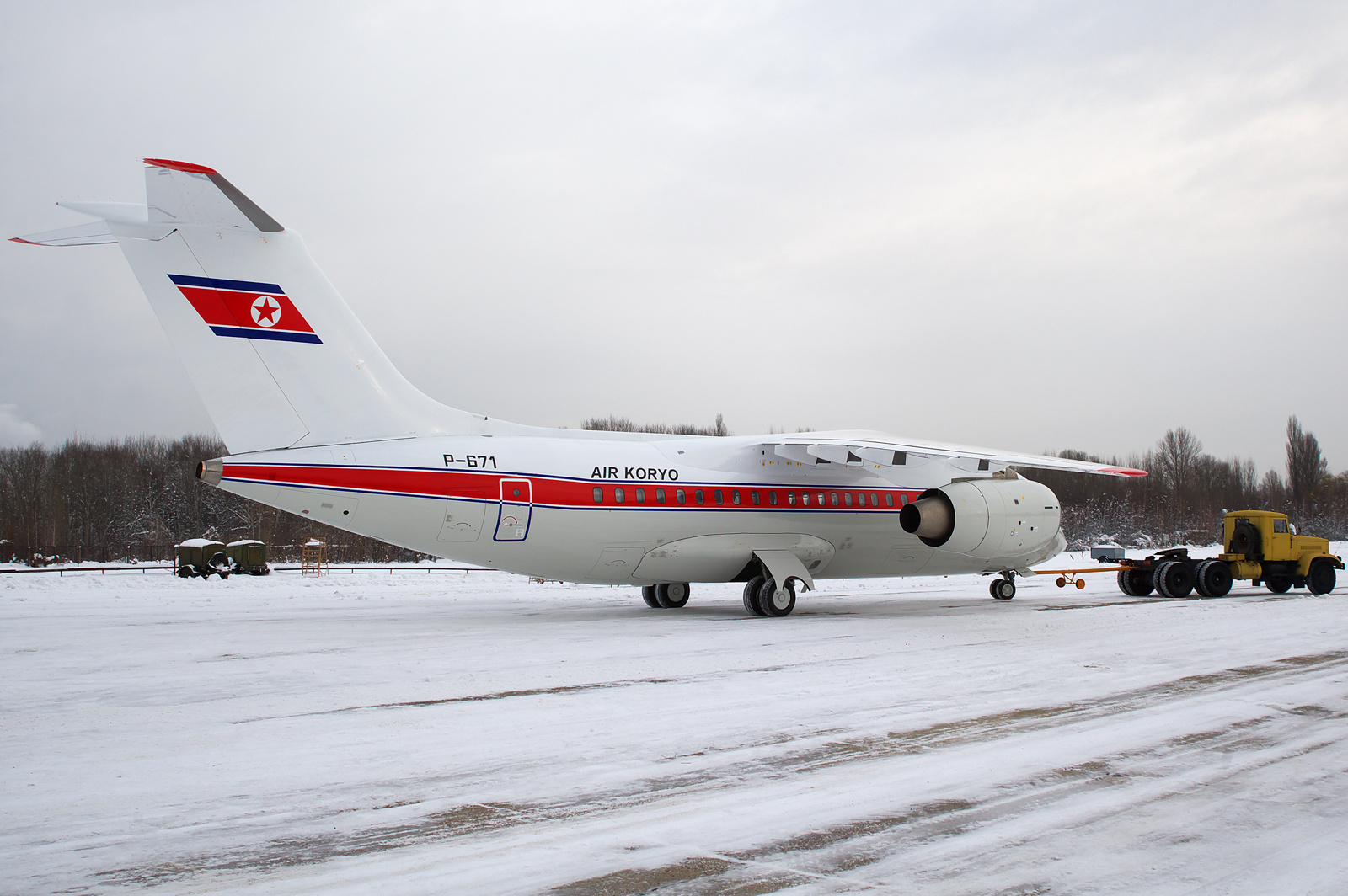
Outside the former Soviet Union the An-158 reached Cuba: on 18 April 2013 the first production example was handed to Cubana de Aviación, and on the 28th of the same month the third, together with a contract for three more. In early February 2013 the first An-148-100 for Air Koryo left for North Korea. The Cuban fleet gave trouble almost at once: in April 2017 Cubana suspended flights between Havana and Guantánamo and, on the Holguín route, 38 of 116 planned flights in the first months of the year were cancelled and another 36 badly delayed. The airline's explanation exposed the underlying problem: the aircraft were leased from Ukraine but the spare parts came from Russia.
Belgorod, 2011
On 5 March 2011 a VASO-assembled An-148 carrying test registration 61708 and destined for Myanmar broke up in flight during a test sortie over Belgorod Oblast, killing all six crew. Witnesses on the ground described a wing separating. The investigating commission found that the crew had allowed the aircraft to accelerate more than sixty knots above its never-exceed speed during an emergency descent, causing the in-flight break-up. It was a test accident rather than an airline one, but it left an early mark on the type's reputation.
Saratov 703 and the grounding
The decisive blow came on 11 February 2018. A Saratov Airlines An-148-100B registered RA-61704, operating flight 703, crashed shortly after take-off near Ramenskoye outside Moscow with 65 passengers and six crew aboard. There were no survivors: it was the type's first fatal accident in commercial service. The Interstate Aviation Committee investigation concluded that the pitot tubes had iced over because their heating was never switched on, and that the resulting false airspeed indications, combined with an incorrect crew response, flew the aircraft into the ground. In March 2018 Rostransnadzor suspended all An-148 flights in Russia. In May the Cuban aviation authority ordered Cubana to ground its An-158s after repeated failures in complex systems and evidence of design and manufacturing flaws, flight control system problems, structural cracks and engine temperatures above normal parameters.
2014 and the end of production
The Russian annexation of Crimea in 2014 broke the industrial chain the programme rested on. In early 2018 Ukraine explicitly banned the sale of Progress D-436 engines to Russia. In June 2017 VASO had already announced that the last two Russian-assembled An-148s would be delivered shortly and that the project would go no further. The final Russian aircraft was completed in October 2018, and that same month it was announced that VASO would replace the An-148 line with one for the Ilyushin Il-112, given disagreements that threatened not just manufacture but after-sales support for aircraft already delivered. Ukraine, for its part, continued to produce and develop the type.
Balance
The An-148 closes its story with 47 aircraft built, far short of the hundreds forecast and of the rates announced in 2008. By the end of 2021 it remained in commercial service with a handful of carriers — Air Koryo in North Korea, Angara Airlines in Russia and the Ukrainian start-up Air Ocean Airlines — and in September 2023 Ukrainian military intelligence claimed a raid on Chkalovsky air base near Moscow in which an An-148 was deliberately damaged. It was an aircraft technically coherent with its brief — difficult strips, sufficient range, a low purchase price against its direct competitor — and, at the same time, the clearest example of what happens when an aerospace programme depends on political cooperation that ceases to exist.
Variants
| An-148 (prototypes) | An-158 | An-178 | An-148-100A | An-148-100B | An-148-100E | An-148-100E1 | An-148-200 | An-148-300 (An-168) | An-148DRLV | An-148 (Siberian high gross weight) | HESA IrAn-148 | |
|---|---|---|---|---|---|---|---|---|---|---|---|---|
| First flight | December 17, 2004 | April 28, 2010 | May 7, 2015 | — | — | — | — | — | — | — | — | — |
| Aircraft type | Test prototypes | Stretched regional jet airliner | Tactical military transport aircraft | Regional jet airliner | Regional jet airliner | Extended-range regional jet airliner | Long-range regional jet airliner | Regional jet airliner | Long-range business jet | Airborne early warning and control aircraft (project) | High gross weight regional jet airliner | Regional jet airliner (licence assembly) |
| Powerplant | 2 × Ivchenko-Progress D-436-148 turbofans of 67 kN each (6,830 kgf) | 2 × Ivchenko-Progress D-436-148 turbofans of 67 kN each (6,830 kgf) | 2 × Ivchenko-Progress D-436-148FM turbofans of 73.55 kN each | 2 × Ivchenko-Progress D-436-148 turbofans of 67 kN each (6,830 kgf), pod-mounted under the high wing | 2 × Ivchenko-Progress D-436-148 turbofans of 67 kN each (6,830 kgf) | 2 × Ivchenko-Progress D-436-148 turbofans of 67 kN each (6,830 kgf) | 2 × Ivchenko-Progress D-436-148 turbofans of 67 kN each (6,830 kgf) | 2 × Ivchenko-Progress D-436-148 turbofans of 67 kN each (6,830 kgf) | 2 × Ivchenko-Progress D-436-148 turbofans of 67 kN each (6,830 kgf) | 2 × Ivchenko-Progress D-436-148 turbofans of 67 kN each (6,830 kgf) | 2 × Ivchenko-Progress D-436-148 turbofans of 67 kN each (6,830 kgf) | 2 × Ivchenko-Progress D-436-148 turbofans of 67 kN each (6,830 kgf) |
| Powerplant | 2 × Ivchenko-Progress D-436-148 | 2 × Ivchenko-Progress D-436-148 | 2 × Ivchenko-Progress D-436-148FM | 2 × Ivchenko-Progress D-436-148 | 2 × Ivchenko-Progress D-436-148 | 2 × Ivchenko-Progress D-436-148 | 2 × Ivchenko-Progress D-436-148 | 2 × Ivchenko-Progress D-436-148 | 2 × Ivchenko-Progress D-436-148 | 2 × Ivchenko-Progress D-436-148 | 2 × Ivchenko-Progress D-436-148 | 2 × Ivchenko-Progress D-436-148 |
| Thrust per engine | 67 kN | 67 kN | 73.6 kN Best value in this row | 67 kN | 67 kN | 67 kN | 67 kN | 67 kN | 67 kN | 67 kN | 67 kN | 67 kN |
| Length | — | 30.8 m | 32.2 m Best value in this row | 29.1 m | 29.1 m | 29.1 m | — | — | — | — | — | — |
| Wingspan | — | 28.9 m | 30.6 m Best value in this row | 28.9 m | 28.9 m | 28.9 m | — | — | — | — | — | — |
| Height | — | 8.2 m | 9.6 m Best value in this row | 8.2 m | 8.2 m | 8.2 m | — | — | — | — | — | — |
| Wing area | — | 87.3 m² Best value in this row | — | 87.3 m² Best value in this row | 87.3 m² Best value in this row | 87.3 m² Best value in this row | — | — | — | — | — | — |
| Empty weight | — | 22,000 kg Best value in this row | — | 22,490 kg | — | 22,000 kg Best value in this row | — | — | — | — | — | — |
| MTOW | — | 43,700 kg | 52,400 kg Best value in this row | 38,550 kg | 41,550 kg | 43,700 kg | — | — | — | — | — | — |
| Top speed | — | 870 km/h | 990 km/h Best value in this row | 870 km/h | — | — | — | — | — | — | — | — |
| Cruise speed | — | 820 km/h | 825 km/h Best value in this row | 820 km/h | 820 km/h | 820 km/h | — | — | — | — | — | — |
| Cruise altitude | — | — | — | 11,600 m | — | — | — | — | — | — | — | — |
| Service ceiling | — | 12,200 m Best value in this row | 12,200 m Best value in this row | 12,200 m Best value in this row | 12,200 m Best value in this row | 12,200 m Best value in this row | — | — | — | — | — | — |
| Range | — | 2,500 km | 3,680 km | 2,100 km | 3,500 km | 4,400 km | 6,995 km | — | 7,000 km Best value in this row | — | 3,598 km | — |
| Ferry range | — | — | 5,300 km | 6,000 km Best value in this row | — | — | — | — | — | — | — | — |
| Combat radius | 0 km Best value in this row | 0 km Best value in this row | — | 0 km Best value in this row | 0 km Best value in this row | 0 km Best value in this row | 0 km Best value in this row | 0 km Best value in this row | 0 km Best value in this row | — | 0 km Best value in this row | 0 km Best value in this row |
| Range conditions | Development aircraft: no certified range figures of their own. | 2,500 km with 75 passengers; the stretch trades range for capacity. | 3,680 km with a 10 t load; 5,300 km ferry. | 2,100 km with a full passenger load; 6,000 km ferry. | 3,500 km, on extra fuel and a higher maximum weight than the -100A. | 4,400 km with 75 passengers, the longest legs of the -100 family. | A -100E development aimed at long non-stop routes. | A Kyiv production project that never reached series manufacture. | Up to 7,000 km on the business version's extra fuel. | A proposal that never left the project stage. | Extra fuel for Siberian operations: range rises from 2,198 km to 3,598 km. | Iranian knocked-down assembly proposal that never entered production. |
| Armament | None | None | None | None | None | None | None | None | None | None | None | None |
| Max weapons load | 0 kg Best value in this row | 0 kg Best value in this row | 0 kg Best value in this row | 0 kg Best value in this row | 0 kg Best value in this row | 0 kg Best value in this row | 0 kg Best value in this row | 0 kg Best value in this row | 0 kg Best value in this row | 0 kg Best value in this row | 0 kg Best value in this row | 0 kg Best value in this row |
| Payload | — | 5,000 kg | 18,000 kg Best value in this row | 9,000 kg | 9,000 kg | 9,000 kg | — | — | — | — | — | — |
| Cargo capacity | Development airframes without a definitive commercial layout. | 86 to 99 single-class seats and a 5,000 kg maximum payload. | Pressurised hold with a rear ramp: up to 18,000 kg of freight, 90 troops, 70 paratroopers or 48 stretchers. | Up to 85 seats single-class, 68 in a two-class layout, and a 9,000 kg maximum payload. | 68 to 85 seats and a 9,000 kg maximum payload. | 68 to 85 seats and a 9,000 kg maximum payload. | Low-density cabin intended for transcontinental sectors. | Up to 89 seats in a dense layout, sharing the rear fuselage of the An-158. | Executive cabin seating 8 to 40 depending on layout. | Cabin given over to operator consoles and radar equipment. | Passenger layout unchanged; the extra weight goes into fuel. | Same passenger cabin as the Ukrainian -100 series. |
| Crew | 2 Best value in this row | 2 Best value in this row | 2 Best value in this row | 2 Best value in this row | 2 Best value in this row | 2 Best value in this row | 2 Best value in this row | 2 Best value in this row | 2 Best value in this row | 2 Best value in this row | 2 Best value in this row | 2 Best value in this row |
| Passengers | — | 99 Best value in this row | — | 85 | 85 | 85 | 44 | 89 | 40 | — | — | — |
| Units built | 3 | 7 Best value in this row | — | — | — | — | — | — | — | — | — | — |
Images
Elsewhere
- JetPhotosRA-61733 — Antonov An-148-100E, Russia - Air Force ↗
- JetPhotosRA-61729 — Antonov An-148-100E, Russia - Air Force ↗
- JetPhotosRA-61735 — Antonov An-148-100EA, Russia - Air Force ↗
- JetPhotosRA-61728 — Antonov An-148-100E, Russia - Air Force ↗
- JetPhotosRA-61716 — Antonov An-148-100EA, Rossiya Special Flight Squadron ↗
- Planespotters.netRA-61712 — Antonov An-148-100EA, FSB ↗
- Planespotters.netRA-61727 — Antonov An-148-100EA, FSB ↗
- Planespotters.netRA-61735 — Antonov An-148-100E, Russian Federation Air Force ↗
- Planespotters.netP-672 — Antonov An-148-100B, Air Koryo ↗
- Planespotters.netUR-CTC — Antonov An-148-100E, Air Ocean Airlines ↗
- russianplanes.netAntonov An-148 — russianplanes.net #100594 ↗
- russianplanes.netAntonov An-148 — russianplanes.net #112859 ↗
Show the 12 more
- russianplanes.netAntonov An-148 — russianplanes.net #114861 ↗
- russianplanes.netAntonov An-148 — russianplanes.net #13599 ↗
- russianplanes.netAntonov An-148 — russianplanes.net #15114 ↗
- russianplanes.netAntonov An-148 — russianplanes.net #29608 ↗
- russianplanes.netAntonov An-148 — russianplanes.net #90864 ↗
- Spotters.AeroP-671 — Antonov An-148-100V, Air Koryo ↗
- Spotters.AeroUR-NTD — Antonov An-148-100V, Ukraine International Airlines ↗
- Spotters.AeroRA-61704 — Antonov An-148-100V, Rossiya - Russian Airlines ↗
- AirlinersGallery (SmugMug)Galería Antonov An-148 — Bruce Drum ↗
- FlightAwareUR-NTR — Antonov An-148, AUI ↗
- FlightAwareAntonov An-148 — FlightAware photo #1902668 ↗
- FlightAwareAntonov An-148 — FlightAware photo #5307673 ↗







![Antonov An-148 (Антонов Ан-148) | Antonov Documentary (11) | Takeoff & landing [HD]](https://i.ytimg.com/vi/ZrUnOZe5rKA/hqdefault.jpg)
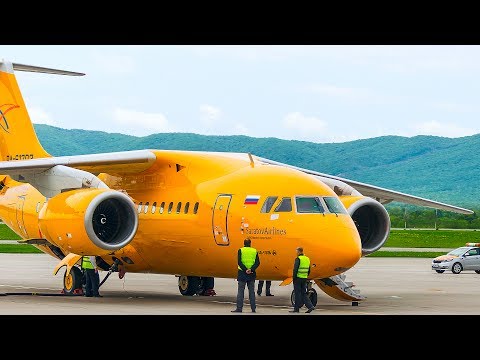

![Angara Airlines Antonov An-148 RA-61711 Landing and Takeoff [NRT/RJAA]](https://i.ytimg.com/vi/oENWRUiO_0Y/hqdefault.jpg)


![Angara Airlines Antonov An-148 RA-61710 Landing and Takeoff [NRT/RJAA]](https://i.ytimg.com/vi/yAH7b_NG91Y/hqdefault.jpg)
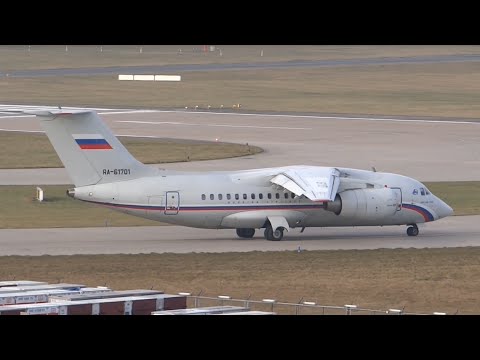


![Antonov 148 Cockpit Flight from Captain's Seat in Kiev Flight Training Center by [AirClips]](https://i.ytimg.com/vi/LEHEIylKAhc/hqdefault.jpg)
![Antonov An-148 Polet Flight Corfu Landing / Take Off Belavia 737 Антонов Ан-148 корфу [1080p HD]](https://i.ytimg.com/vi/aQ8Ni7ivDag/hqdefault.jpg)