NASA · United States
Project Gemini
- 12
- Launches (as of August 29, 2026)
- 10
- Crewed missions
- April 8, 1964
- First launch
- November 11, 1966
- Last launch
-1600.webp)

-1600.webp)

_en_el_Complejo_de_Lanzamiento_19-1600.webp)





-1600.webp)


-1600.webp)



-1600.webp)


-1600.webp)


-1600.webp)




-1600.webp)


.jpg)


-1600.webp)


-1600.webp)




_visto_desde_el_Gemini_11-1600.webp)


-1600.webp)


-1600.webp)


_and_Michael_Collins_(left)%2C_prime_crew_for_the_Gemini-10_spaceflight-1600.webp)


-1600.webp)


-1600.webp)

-1600.webp)


-1600.webp)


-12_-_Agena_Target_Docking_Vehicle_on_tether-1600.webp)

-1600.webp)
-800.webp)

-10_-_LIFTOFF_-_KALEIDOSCOPE_EFFECT_-_CAPE_(s66-42762)-1600.webp)
-1600.webp)


_expuesta_en_el_Space_Force_Museum_de_Cabo_Ca%C3%B1averal-800.webp)


-1600.webp)
_fotografiado_desde_la_c%C3%A1psula-1600.webp)

-1600.webp)

-1600.webp)


_en_la_plataforma_LC-19-1600.webp)


-8_prelaunch_activity%2C_Cape_Kennedy_(S66-24446)-1600.webp)


-12_-_Agena_rendezvous%2C_stereo_view_from_Gemini_12-1600.webp)

-1600.webp)

-1600.webp)




-1600.webp)


-1600.webp)


-1600.webp)


-1600.webp)
-8_extravehicular_system_diagram%2C_MSC_(S66-00303)-1600.webp)


-1600.webp)



-12_-_insertion%2C_fisheye_view%2C_Cape-800.webp)


_desplegado_en_%C3%B3rbita-1600.webp)


-8_postlaunch_activity%2C_Okinawa_recovery_(S66-18606)-1600.webp)


-1600.webp)




-1600.webp)


Project Gemini was NASA's second crewed spaceflight programme and the deliberate bridge between Mercury, which had done little more than prove that a man could orbit the Earth, and Apollo, which had to put him on the Moon. Formally approved in December 1961, it flew twelve missions — two uncrewed and ten crewed — between 8 April 1964 and 11 November 1966, every one of them on a version of the Titan II missile adapted to carry men, the Gemini Launch Vehicle. Its two-seat, modular spacecraft was the first American vehicle designed to genuinely manoeuvre in orbit rather than simply fall back home. The programme grew out of a political decision and an engineering itch that met in 1961. President Kennedy's commitment to reach the Moon before the decade ended ruled out the slow, safe route of a direct flight on an enormous rocket and pushed NASA towards orbital rendezvous, which promised a quicker and cheaper road but whose difficulty nobody had measured. That single unknown was large enough to justify an entire crewed programme devoted to resolving it. At the same time, the engineers who had wrestled with the Mercury capsule — packed with interlocking systems in every cranny because the Atlas could lift so little — had spent 1959 and 1960 sketching a second-generation craft that could be built, tested and readied for flight almost the way an aeroplane is. Gemini came out of the junction of those two lines. Development was organised around the Gemini Project Office at the Manned Spacecraft Center in Houston and a web of contracts erected within months: McDonnell Aircraft Corporation for the spacecraft, the Martin Company for the Titan II, Lockheed Missiles & Space Company for the Agena target vehicle, General Dynamics for the Atlas that would launch it, and North American Aviation for the paraglider meant to bring the crew down on dry land. Almost every one of those systems — the manoeuvring thrusters, the fuel cells, the onboard radar and computer, the Agena itself — went through a troubled development and extensive redesign that reached the agency's senior management. In flight, Gemini delivered everything asked of it but one goal. It achieved the first rendezvous of two spacecraft in orbit on 15 December 1965, the first docking on 16 March 1966, the first American extravehicular activity in June 1965, missions of one and two weeks, controlled reentries flown to a target, and the use of a docked propulsion stage to carry men higher than anyone had gone before. Landing on land, by contrast, died with the paraglider. The ten crewed flights followed one another across 603 days, one every sixty, and banked 970 mission-hours and 1940 man-hours in space. The balance was drawn mostly in what Apollo inherited ready-made: manufacturing and checkout procedures, a Houston mission control centre run in earnest, a standing board for crewed experiments, fixes to failures — such as the Agena 5002 explosion — applied straight to the lunar module, and sixteen flown astronauts of whom fifteen would go on to fly in the lunar programme. The programme closed formally with a summary conference in Houston on 1 and 2 February 1967, only days after the Apollo 1 fire, and its lessons weighed heavily in the recovery that followed.
Objectives
Gemini was born with six objectives set out in the preliminary project development plan of August 1961, which still spoke of a spacecraft called Mark II: long-duration flight, with men up to seven days in orbit and animals up to fourteen; a look at the Van Allen radiation belts by way of a highly elliptical orbit; controlled landing, understood as the pilot's ability to steer the spacecraft towards a limited touchdown area and cushion the impact; rendezvous and docking with a separately launched target vehicle; astronaut training, then regarded mainly as a useful by-product; and a sixth objective left open to whatever those capabilities might later allow. The order soon reversed itself and rendezvous moved to first place, because the feasibility of the mission mode chosen for Apollo depended on it. The operational statement of the objectives settled as follows: develop and demonstrate the techniques and hardware for rendezvous and docking between two vehicles; extend crewed flight duration to what a complete lunar mission would demand; show that an astronaut can work outside his spacecraft protected only by a pressure suit; prove controlled orbital manoeuvring and guided reentry with a precision landing; and train flight crews, controllers and the tracking networks in operations of steadily growing complexity. Landing on land remained an approved objective until the paraglider fell out of step with the schedule, and it was the only one the programme failed to meet.
Rockets
Missions of Project Gemini
| Mission number | Missions | Launch date | Launch vehicle | Crew size | Duration | Outcome |
|---|---|---|---|---|---|---|
| 1 | Gemini 1 | Apr 8, 1964, 4:00 PM | Titan II GLV | — | 4 hr 50 min | Success |
| 2 | Gemini 2 | Jan 19, 1965, 2:03 PM | Titan II GLV | — | 18 min | Success |
| 3 | Gemini 3 | Mar 23, 1965, 2:24 PM | Titan II GLV | 2 | 4 hr 52 min | Success |
| 4 | Gemini IV | Jun 3, 1965, 3:15 PM | Titan II GLV | 2 | 4 days 1 hr | Success |
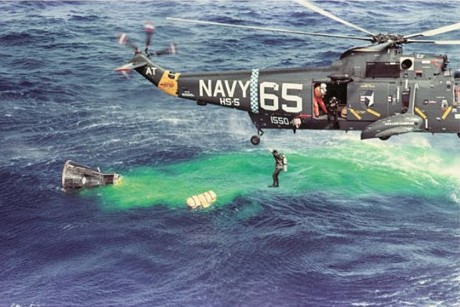
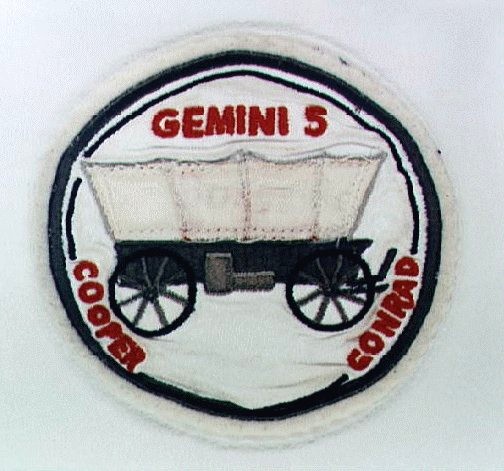
| 5 | Gemini V | Aug 21, 1965, 1:59 PM | Titan II GLV | 2 | 7 days 22 hr | Success |
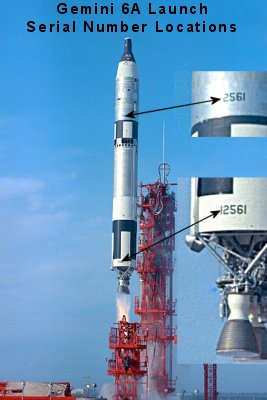
| 6 | Gemini VI-A | Dec 15, 1965, 1:37 PM | Titan II GLV | 2 | 1 day 1 hr | Success |
| 7 | Gemini VII | Dec 4, 1965, 7:30 PM | Titan II GLV | 2 | 13 days 18 hr | Success |
| 8 | Gemini VIII | Mar 16, 1966, 4:41 PM | Titan II GLV | 2 | 10 hr 41 min | Partial success |
| 9 | Gemini IX-A | Jun 3, 1966, 1:39 PM | Titan II GLV | 2 | 3 days | Partial success |
| 10 | Gemini X | Jul 18, 1966, 10:20 PM | Titan II GLV | 2 | 2 days 22 hr | Success |
| 11 | Gemini XI | Sep 12, 1966, 2:42 PM | Titan II GLV | 2 | 2 days 23 hr | Success |
| 12 | Gemini XII | Nov 11, 1966, 8:46 PM | Titan II GLV | 2 | 3 days 22 hr | Success |
History
Between Mercury and Apollo: why an intermediate programme was needed
President John F. Kennedy's decision in May 1961 to commit the United States to a lunar landing before the decade was out did more than set a goal; it set a deadline, and the deadline changed the engineering. Until then the Moon had been treated as a target for the 1970s, reachable with an enormous rocket — the projected Nova — that would send a spacecraft straight to the Moon, land it there and bring it home. That direct approach enjoyed broad support for a simple reason: it was almost certain to work.
An alternative existed, championed by a faction of NASA engineers: have two or more spacecraft meet in orbit instead of proceeding directly. The savings in fuel and weight were enormous, and a rendezvous-based lunar mission could be launched with much smaller rockets and therefore much sooner. Its great drawback was novelty. Nobody knew how hard a rendezvous in space might turn out to be. While time was ample the direct method was the prudent bet; once a deadline appeared, support for rendezvous grew. And the question mark hanging over it was big enough to justify the expense of a full-fledged crewed programme devoted to resolving it. Gemini was first and foremost a project to develop and prove the equipment and the techniques of orbital rendezvous.
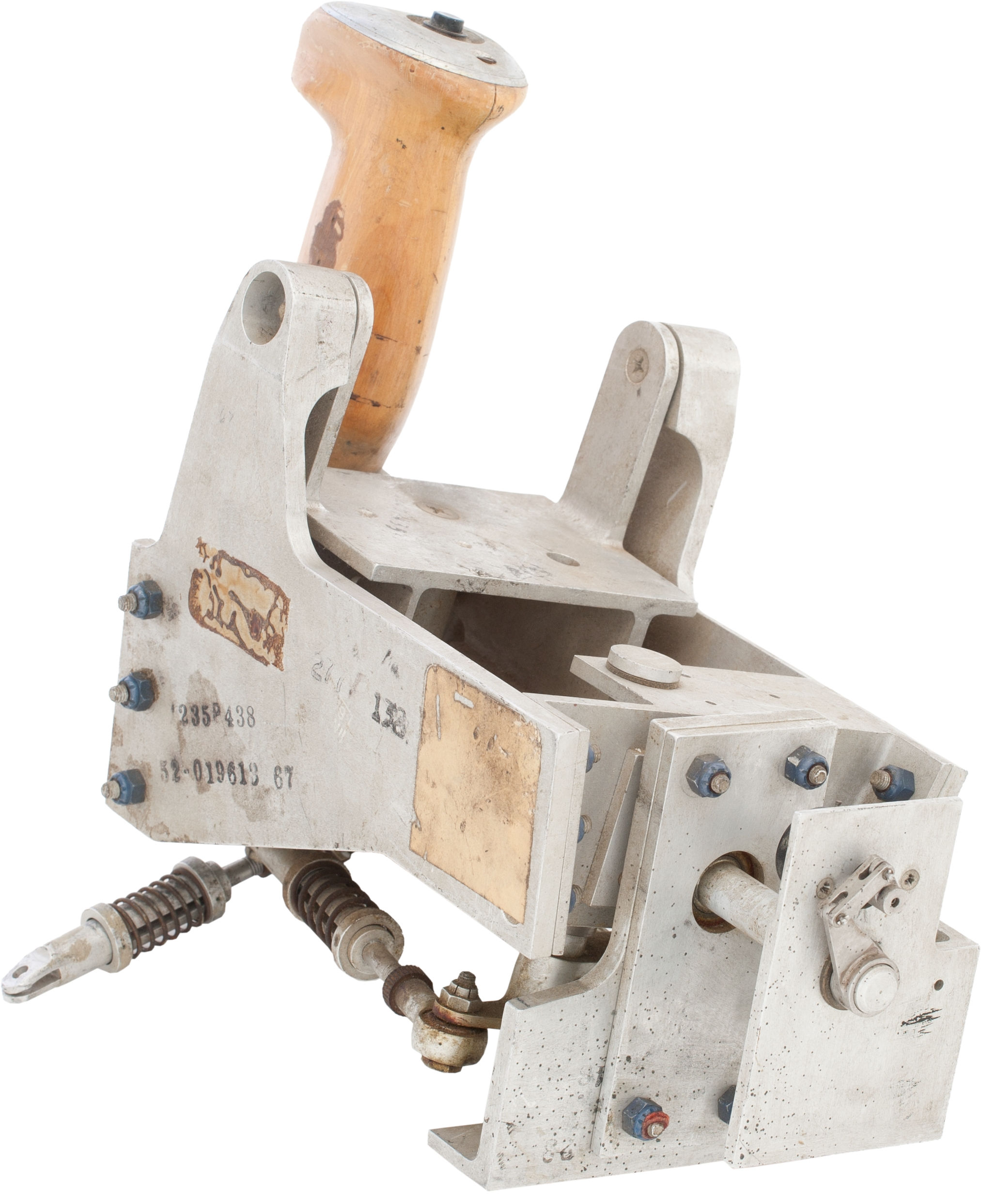
That the project turned out to be Gemini rather than something else owed to a second chain of causes. Government and industry engineers who had worked on Mercury saw countless ways to improve their product. Constrained by the limited power of the Atlas, they had been forced to design a capsule of integrated systems: the inside was crammed with layered components filling every cranny, which made the craft hard to build, hard to test and hard to prepare for flight. As a first step it would do; as the basis of a continuing programme it would not. Through 1959 and 1960, while the main effort went into making Mercury work, thinking turned increasingly to the spacecraft that should come next — one built on the lessons of that nearly handcrafted machine, but modified to allow building, testing and operation far closer to routine. By mid-1961 those ideas had coalesced into a concrete proposal, exactly when NASA was looking for a way to attack the rendezvous problem.
The international backdrop pressed hard. Cosmonaut Gherman S. Titov flew a seventeen-circuit, twenty-five-hour mission aboard Vostok II on 6 and 7 August 1961; for all his nausea, he had shown that a man could last a day in space. The Soviet effort would go on to achieve durations of five days, the flight of a multiple crew, and the first extravehicular operation, the last of these shortly before the first crewed Gemini flight. The open question was who would perform the first rendezvous.
From "Mercury Mark II" to Project Gemini
Definition work began at Langley, where James Chamberlin, helped by James Rose and a handful of contracting and scheduling specialists, started the preliminary plan for a new project built around a two-man spacecraft called Mercury Mark II. Three McDonnell engineers led by Fred Sanders travelled there to join the effort. The first result, the "Preliminary Project Development Plan for an Advanced Manned Space Program Utilizing the Mark II Two Man Spacecraft", was ready on 14 August 1961.
That document framed six objectives to be achieved in ten flights, the first in March 1963 and the rest at two-month intervals until September 1964. The first was long-duration flight: men in orbit for up to seven days, animals for up to fourteen, with two biological flights inserted to yield the completely objective physiological data that could not be had otherwise. The second was a look at the Van Allen radiation belts: the first flight, uncrewed, would confirm that spacecraft and booster were compatible, and the Titan II would place the craft in a highly elliptical orbit reaching 160 kilometres at its lowest point and 1400 at its highest, crossing the belts to gather radiation data. The third was controlled landing, to be pursued on all seven crewed flights: the pilot needed some means of flying the craft towards a relatively limited landing area, and the most direct method was to offset the centre of gravity for a measure of aerodynamic lift and use the attitude control system to roll the spacecraft and steer that lift during descent. Cushioning the touchdown was a harder problem, and there the paraglider seemed to promise an answer.
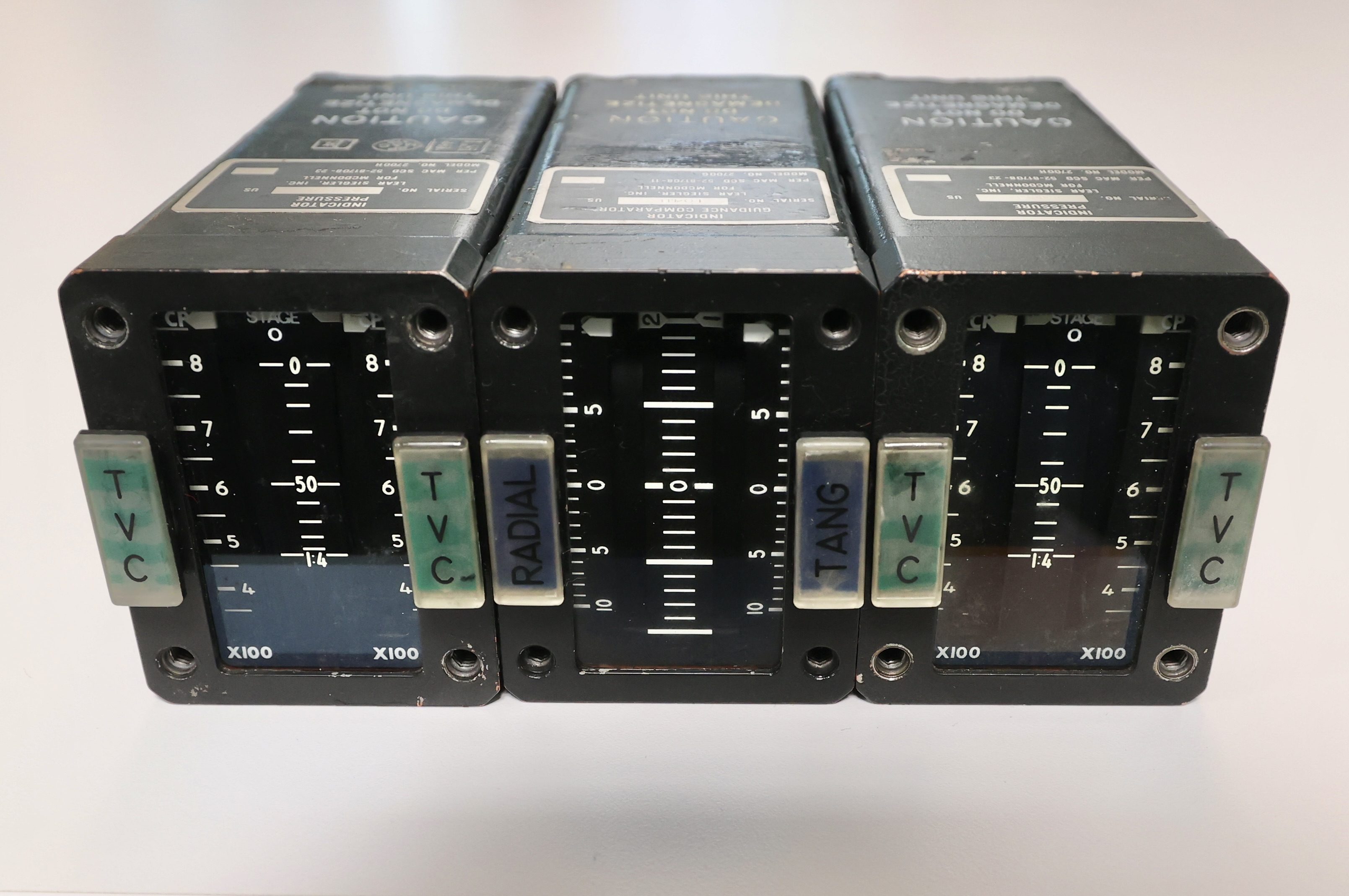
Rendezvous and docking stood fourth. The fifth, seventh, ninth and tenth flights each required two launches so that the Titan II-launched Mark II could meet and dock in orbit with an Atlas-launched Agena B. Planners saw the main difficulty of the early rendezvous missions in the size of the launch window: the larger it was, the greater the velocity difference between spacecraft and target that had to be made up — beyond the powers of the spacecraft alone, though the target could contribute part of it. With experience they expected to narrow the window, after which the target's spare power might find other uses, perhaps in deep-space or lunar missions with the target vehicle acting as a booster after rendezvous. The fifth objective was astronaut training, seen mainly as a useful by-product.
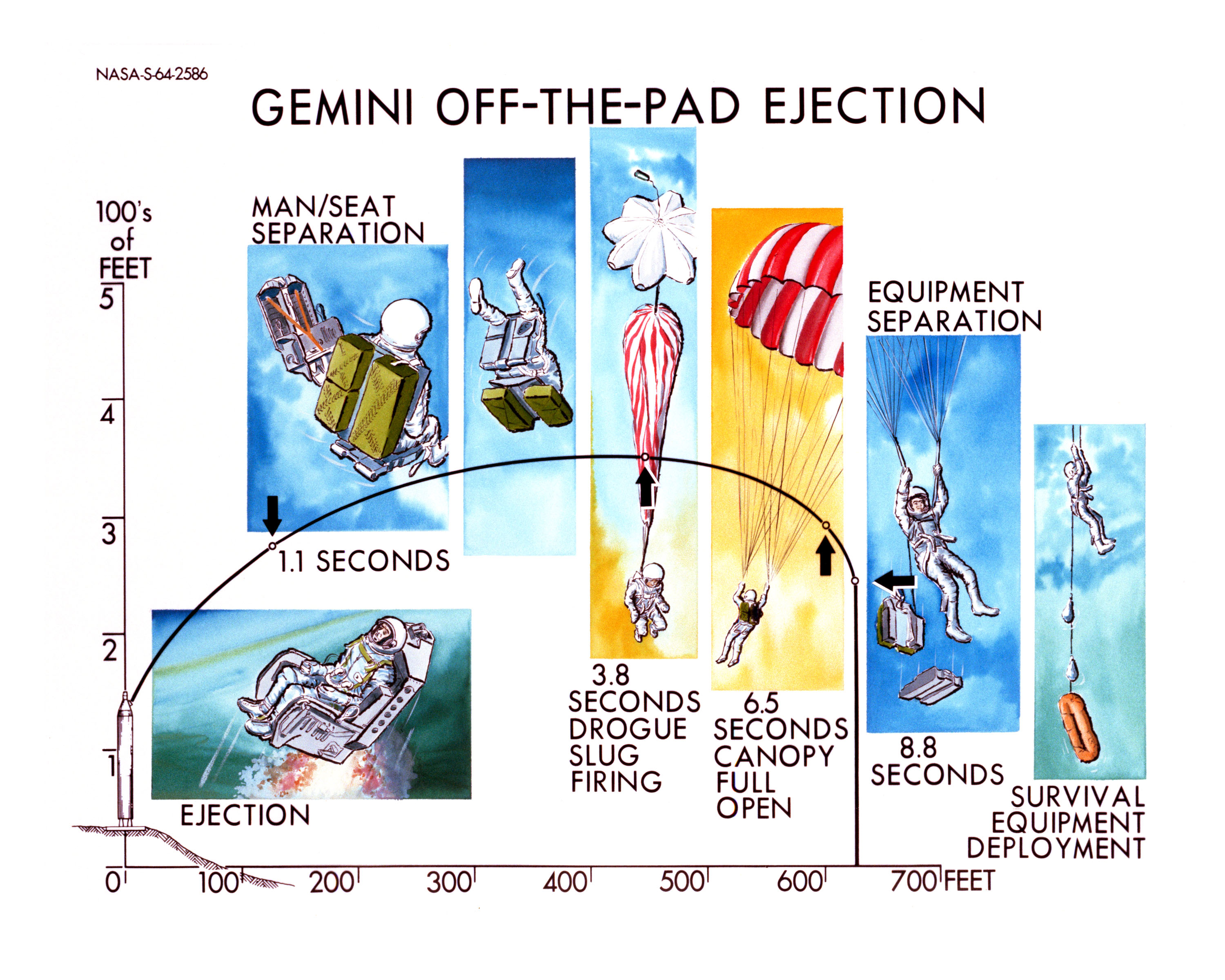
The plan stressed making extensive use of vehicles and equipment already on hand, altered as little as possible. The Mark II kept what Mercury had proved: its aerodynamic shape, its thermal protection and much of its systems hardware. New goals demanded some changes: on longer flights crews needed improved pressure suits, fuel cells in place of batteries and more stable propellants than hydrogen peroxide in the attitude control system. For rendezvous, most of the gear — inertial platforms, radar, computers — was expected to need little or no modification; of the major requirements only a rendezvous propulsion system was missing. The other substantial changes were ejection seats instead of Mercury's escape tower and an environmental control system that amounted to two Mercury systems hooked together. Since almost everything else differed little from flight-tested Mercury equipment, the engineers foresaw a modest testing effort and guessed the cost at 177 million dollars.
In December 1961 the project received its formal stamp of approval from NASA Headquarters in Washington. By then much of the design work had been done and many of the major decisions taken. Oversight fell to a Gemini Project Office set up at the Manned Spacecraft Center in Houston, the centre that would be renamed the Lyndon B. Johnson Space Center in February 1973.
The web of contracts
Barely a week after project approval, the first major contract went to McDonnell Aircraft Corporation for the Gemini spacecraft. A separate contract with North American Aviation had already started work on the paraglider landing system, intended to let Gemini alight on land rather than water. The other key contracts followed shortly through the Air Force Space Systems Division: to the Martin Company for the Titan II that would launch the spacecraft, to Lockheed Missiles & Space Company for the Agena that would serve as rendezvous target, and to General Dynamics Corporation for the Atlas that would boost the Agena into space. A matter of months sufficed to erect the whole structure of contracts and subcontracts binding government and industry together.
The spacecraft: a modular second-generation machine
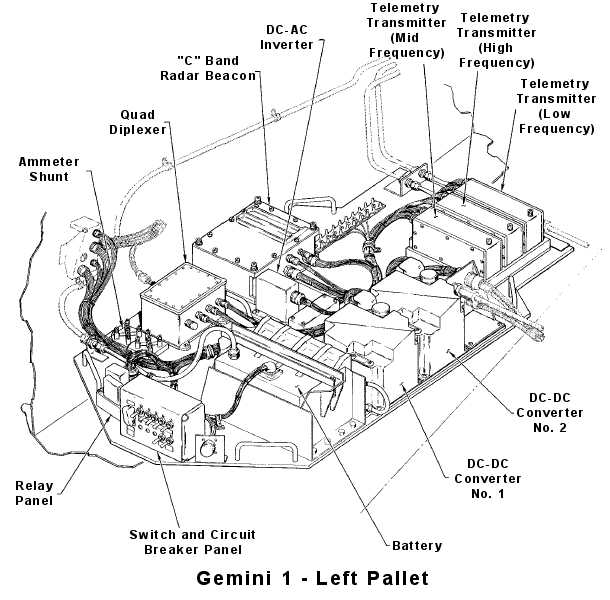
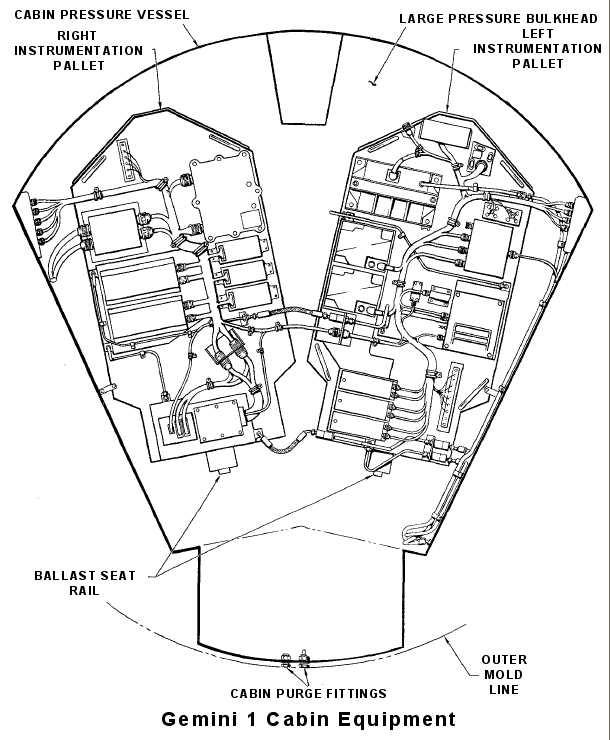
The decisive difference between Gemini and Mercury was not size or crew number but architecture. Against the interlocking systems of the earlier capsule, Gemini was organised into accessible modules: a reentry module, the only part that came home, and an adapter section housing equipment and retrograde propulsion that was jettisoned before the return. Vehicles left the contractors' plants much the way aeroplanes do, tested and nearly ready to fly, and that transformed the role of Cape Kennedy: from the test and modification centre it had been during Mercury it became a checkout and launch activity.
Gemini also came to grips with several systems new to spaceflight operations that would reappear, in one form or another, in Apollo. Thrusters powerful enough to alter the flight path several times during a mission, and fuel cells generating the electrical energy the systems consumed, were impressive advances in aerospace technology. The orbital attitude and manoeuvring system combined small engines rated at 111 newtons with larger ones of 445 newtons — two of them aimed forward — a rating later reduced to 378 newtons. The spacecraft also carried a computer and a radar to help solve the rendezvous problem. All of these went through troubled development and qualification and, in most cases, extensive redesign. The difficulties repeatedly reached NASA's top administrators, who appointed problem-solving boards headed by senior officials and chartered to draw on organisations and facilities across government and industry; the most stubborn areas were aired at joint Gemini and Apollo executive meetings attended by agency administrators and company presidents.
The Titan II turned into a crewed launch vehicle
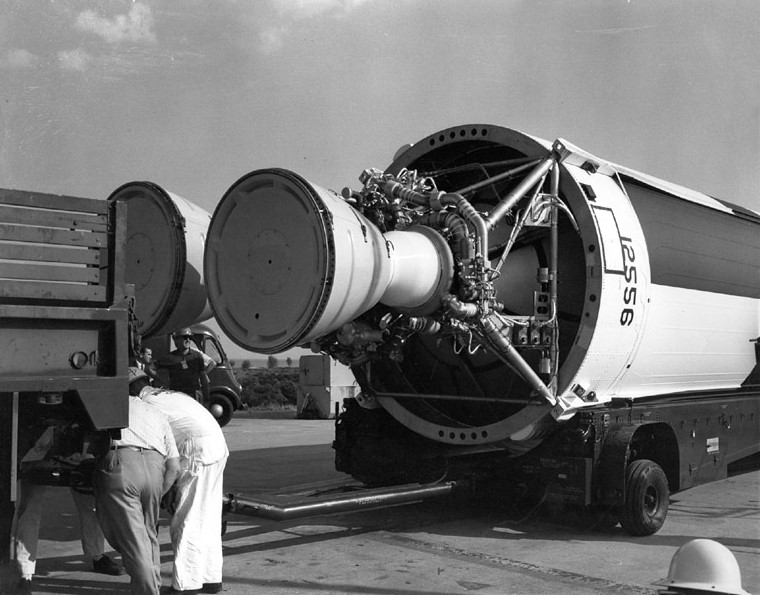
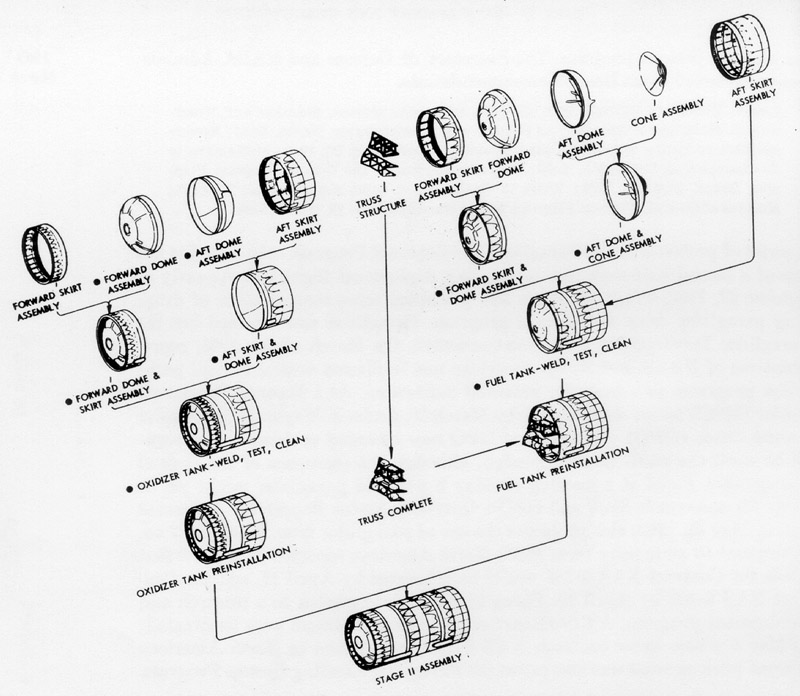
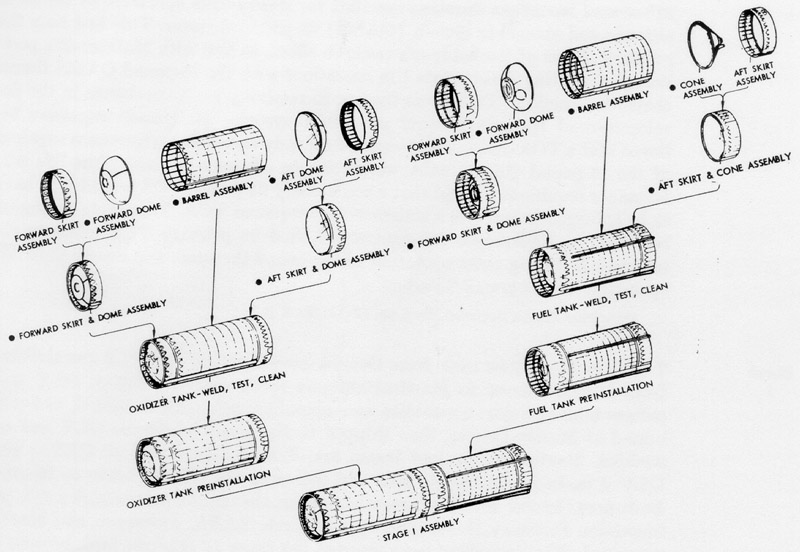
The Titan II was an intercontinental ballistic missile, and turning it into the Gemini Launch Vehicle meant solving problems a missile does not care about. It ran on storable hypergolic propellants — a hydrazine blend as fuel and nitrogen tetroxide as oxidiser — a combination that ignites on contact and dispenses with an ignition system, with the added merit that the vehicle can sit loaded and ready. That was precisely the kind of simplicity a high launch rate required.
The most notorious obstacle was pogo, the longitudinal oscillation that bounced the vehicle while its first-stage engine burned and took its name from the pogo stick. Neither its cause was clear nor was there a recipe for removing it, and over those months it became a regular visitor to the test programme. Raising the pressure in the first-stage fuel tank cut it in half, and the fourth Titan II test achieved a reduced level of 1.25 g; the Martin Company also proposed a surge suppressor. Putting men on top of the missile required a redundant malfunction detection system and a backup flight control system, and the programme set aside five vehicles to carry that detection hardware. Accrued launch vehicle costs came to 283.3 million dollars.
Rendezvous targets: Agena, Atlas and the 5002 explosion
The Agena target vehicle, built by Lockheed and launched by a General Dynamics Atlas, was the indispensable other half of the rendezvous problem. It too used storable hypergolic propellants, in its case based on unsymmetrical dimethylhydrazine. Its record was rough: in October 1965 the Gemini Agena target vehicle 5002 exploded, and the fix adopted — injecting oxidiser into the firing chamber ahead of the fuel — was applied simultaneously to modifications of the Agena's primary propulsion system and to the ascent engine of the Apollo lunar module. Visions of astronauts on the lunar surface igniting their takeoff engine only to have it blow up were too harrowing to leave unresolved. The Agena cost 100.1 million dollars and the associated Atlas vehicles 31.1 million.
The paraglider and the goal that got away
Setting down on land was the one approved goal Gemini failed to achieve. North American's paraglider was to replace the parachute and allow a piloted landing, but the device weighed almost 360 kilograms more than a conventional parachute and its development slipped steadily out of phase with the programme. The irony is that in 1965 there were near-perfect tests with a limp, non-inflatable version of the wing; by then it was too late. The paraglider landing system programme ended stripped of all its other objectives, having consumed 27.4 million dollars.
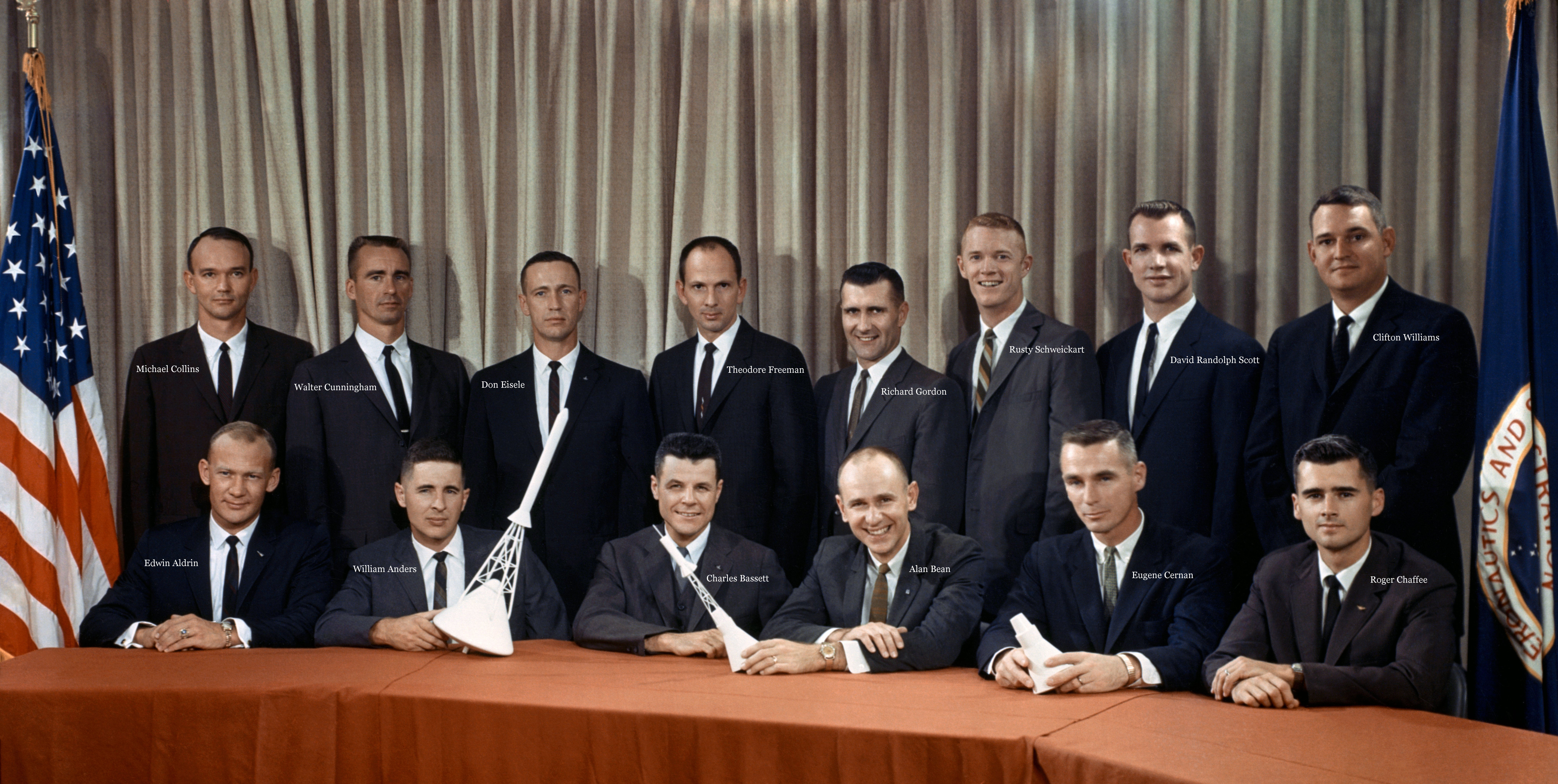
Its demise had one unforeseen and fruitful consequence: it left unoccupied space aboard the spacecraft, and several NASA officials saw a chance to set up an experiments programme in orderly fashion.
Money: crises, cuts and incentive contracts
Mercury and Gemini shared at least one trait: both cost roughly double the original estimate. The best educated guess NASA's first Administrator, T. Keith Glennan, could offer for Mercury was 200 million dollars, and the programme ended up above 400. Gemini started at 531 million to build what was supposed to be an improved Mercury and wound up costing more than a thousand million to cover a programme full of new development.
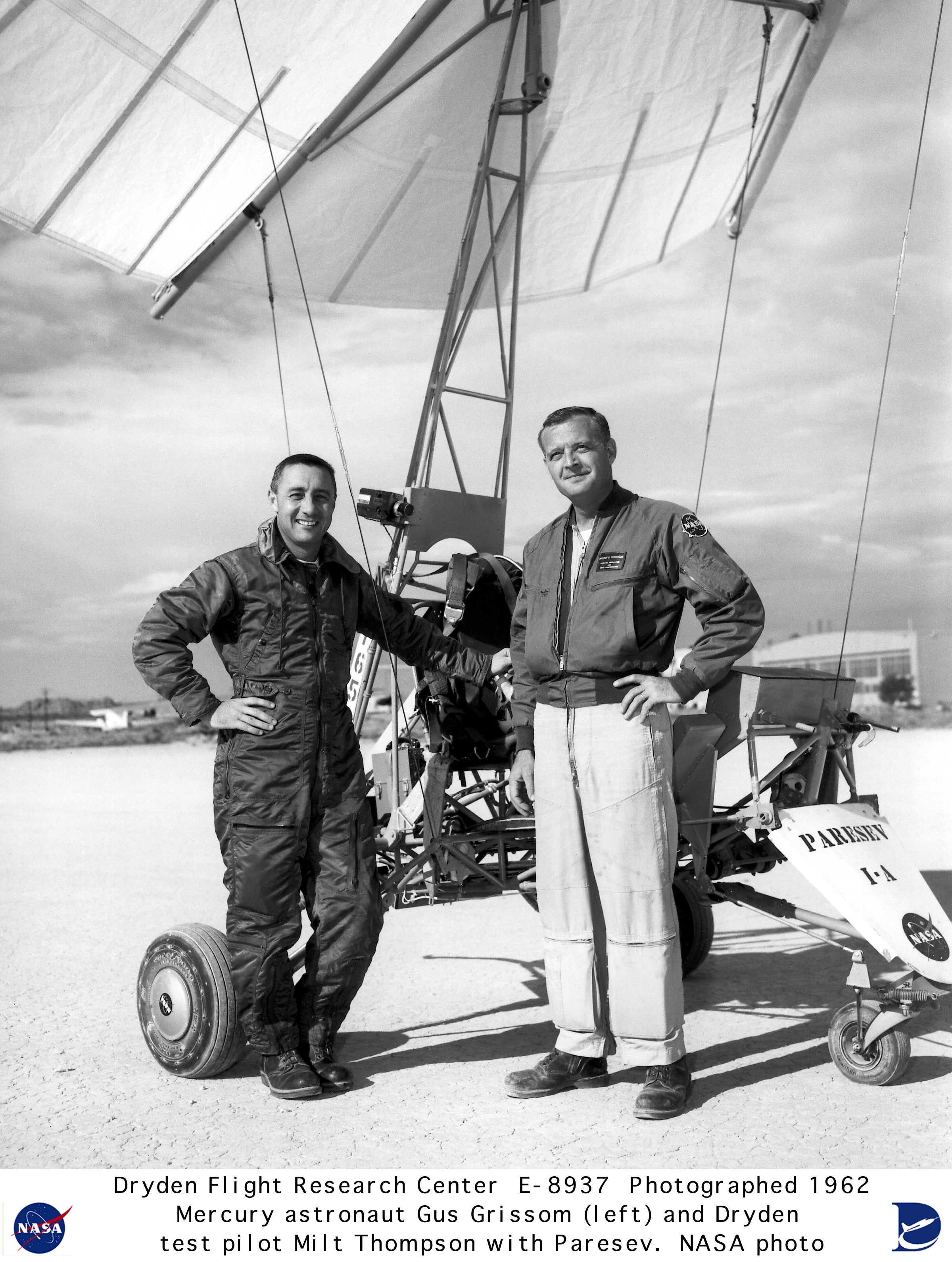
Unlike Mercury, Gemini had its share of financial crises. Congress and the Administration, beset by domestic and international problems, curbed the flow of money to NASA, and Gemini usually bore the brunt; at times the prospects must have looked bleak to the engineers working on it. The cuts repeatedly threatened the primary objectives but never quite precluded them. And in what must count as an unusual circumstance at the leading edge of technology, the programme actually rolled back the money tide to some extent: the runout cost projected in fiscal year 1964 was reduced when better test and checkout procedures cut two months from the schedule and saved an estimated 200 million dollars. Much of the credit belongs to the incentive contracts that in 1964 put Gemini procurement on a strikingly new footing.
The flights: from uncrewed tests to a mission every two months
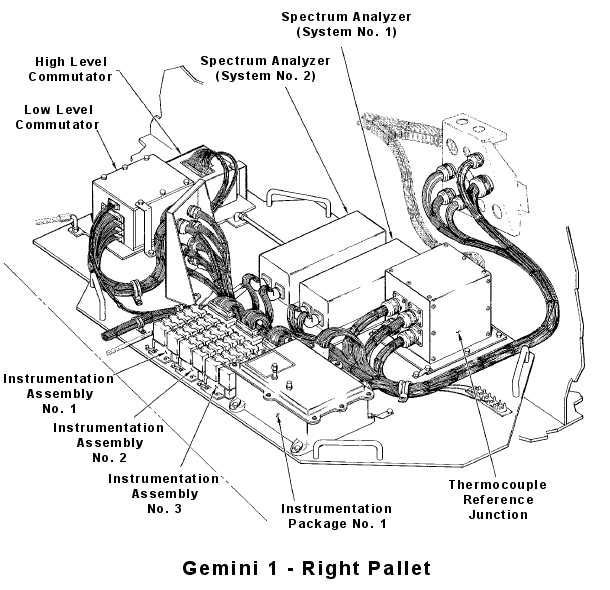
The first Gemini lifted off on 8 April 1964. It was an uncrewed flight, not recovered, whose mission was terminated after three orbits and whose vehicle reentered on 12 April during the sixty-fourth revolution, from an orbit with an apogee of 320.3 kilometres and a perigee of 160.3. Its primary objectives — demonstrating launch vehicle performance, flight-qualifying subsystems, determining exit heating, proving structural integrity and verifying guidance through orbital insertion — were all achieved.
The second flight, on 19 January 1965, was a suborbital ballistic trajectory lasting 18 minutes and 16 seconds and reaching an altitude of 171.1 kilometres. Its purpose was the bluntest of all: to show that the heat protection survived a maximum heating rate reentry, to verify the structural integrity of the spacecraft and to confirm the performance of the major subsystems. The fuel cell was deactivated before liftoff, so that secondary test was only partly accomplished.
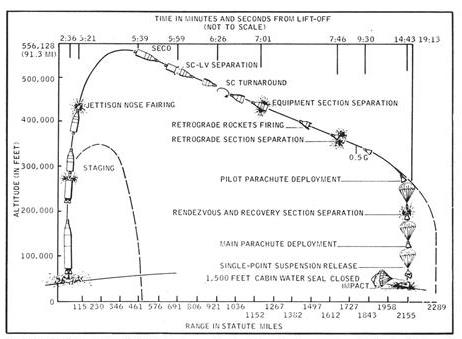
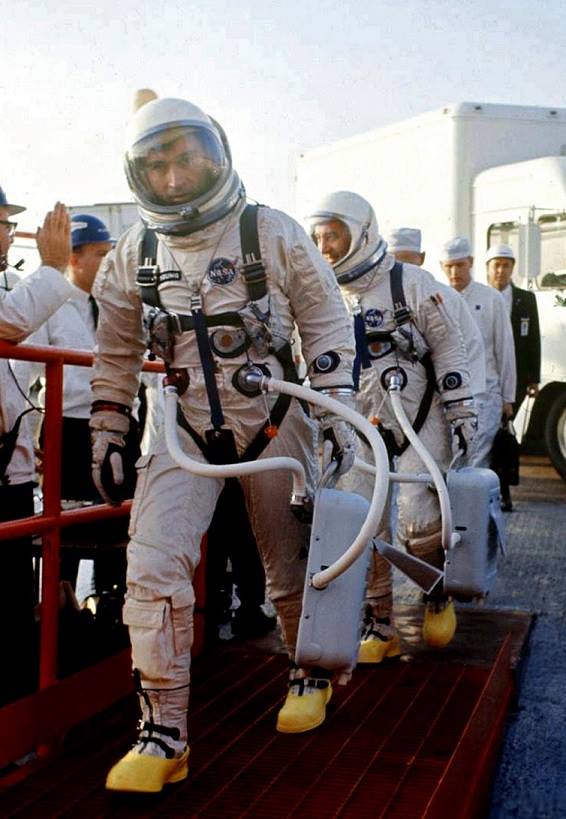
On 23 March 1965 the first men flew. Virgil "Gus" Grissom and John Young circled the Earth three times in four hours, fifty-two minutes and thirty-one seconds, evaluated the two-man design, demonstrated the manoeuvring capability of the propulsion system and attempted the controlled reentry, which was only partly achieved: the landing point fell 111.1 kilometres from the one planned. From there the pace accelerated sharply. Gemini IV carried James McDivitt and Edward White from 3 to 7 June 1965 on a four-day, sixty-two-revolution, ninety-eight-hour flight that included the first American spacewalk. There followed Gordon Cooper and Charles "Pete" Conrad on Gemini V; Frank Borman and James Lovell on the fourteen-day Gemini VII; Walter Schirra and Thomas Stafford on Gemini VI-A, launched after VII precisely in order to meet it; Neil Armstrong and David Scott on Gemini VIII; Stafford and Eugene Cernan on Gemini IX-A; Young and Michael Collins on Gemini X; Conrad and Richard Gordon on Gemini XI; and finally the twelfth mission of the programme, which closed the crewed series. Ten crewed flights in under twenty months — a rate no space programme has since surpassed — with the last five crewed launches accompanied by nearly simultaneous and precisely timed launches of rendezvous target vehicles.
Long-duration flight
Long duration had headed the original list of objectives for one medical reason and one operational one: nobody knew how the body would respond to weeks of weightlessness, and a complete lunar mission would run a week or more. Gemini stretched the mark to the three hundred and thirty hours of Gemini VII, fourteen days in orbit, and in doing so allayed the major medical concerns about man's ability to adapt to space and keep working in it. The record stood for a long time: more than five years passed before the Soviets exceeded it with Salyut. In September 1968, when Charles W. Mathews signed the foreword to the programme's chronology, the fourteen-day duration had still not been matched, and the ten successful crewed flights had provided nearly two thousand man-hours of direct spaceflight experience.
Extravehicular activity
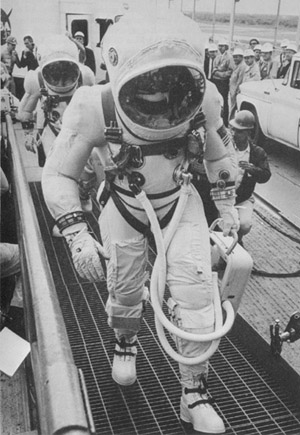
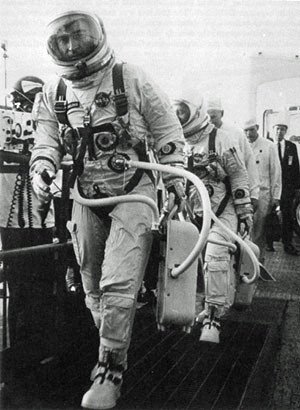
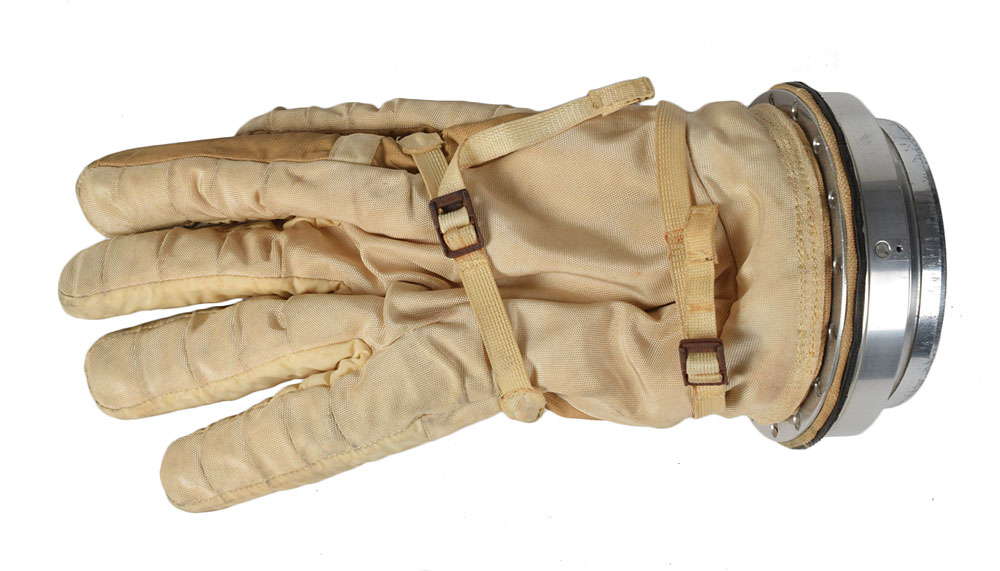
Edward White's exit from Gemini IV in June 1965 was the first American spacewalk and one of the programme's founding images. White manoeuvred with a hand-held manoeuvring unit and stayed tied to the spacecraft by a tether; in the Houston photographic laboratory, the first roll processed from the mission held sixteen remarkable views of that excursion. Later extravehicular work proved considerably harder than expected — physical effort, the shortage of restraints and overheating all caused real trouble — but the programme ended by conducting fully successful operations outside the spacecraft, including on the final mission, which systematised working techniques based on restraints and scheduled rest. The toll was measurable: McDivitt lost two kilograms on his flight and White four.
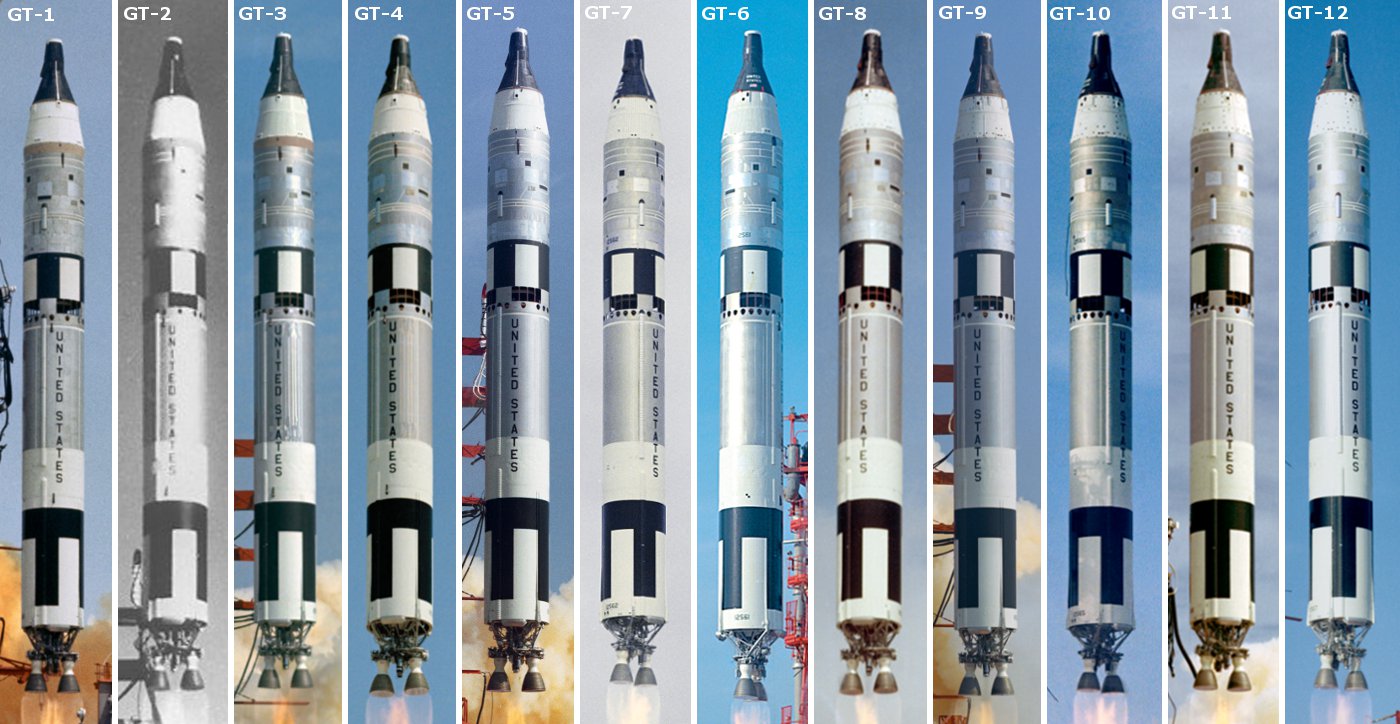
None of that work stayed within Gemini. Staff from the Flight Crew Support and Crew Systems Divisions developed equipment and suits spanning a range of capabilities from extravehicular activity to shirtsleeve cabin operation — features of obvious value to Apollo, where astronauts would have to step out in their pressure suits onto the lunar surface.
Rendezvous and docking
At 2:33 in the afternoon of 15 December 1965 two crewed spacecraft met in orbit for the first time: Gemini VI-A closed on Gemini VII, with four men spread between them. The approach manoeuvres cost VI-A only 51 kilograms of propellant, a figure that by itself captured how far rendezvous had moved from unknown quantity to measurable operation.
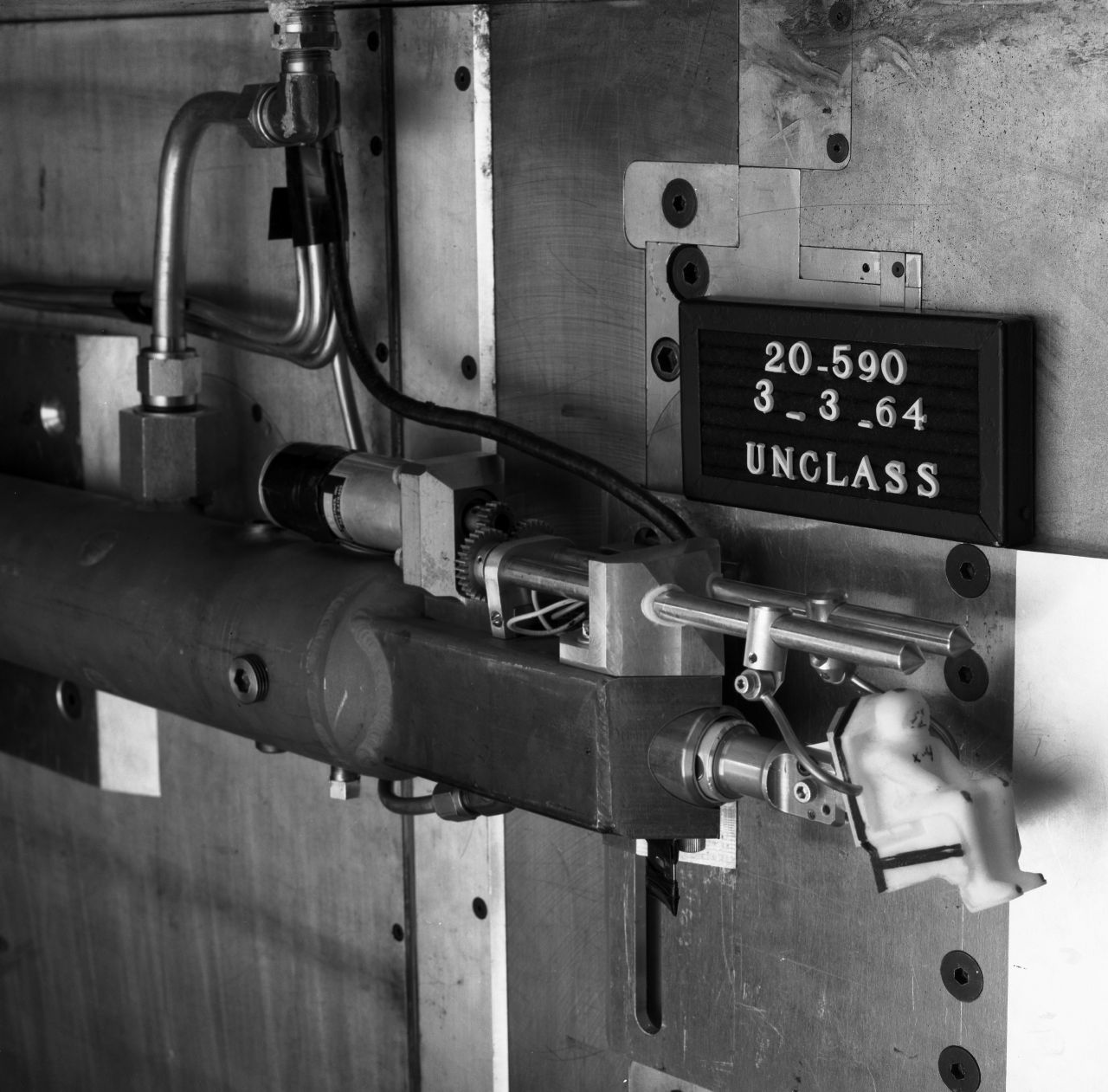
The next step came on 16 March 1966, five months later, when Neil Armstrong and David Scott's Gemini VIII performed the first docking of two vehicles in space. Shortly afterwards a stuck thruster set the combination tumbling and forced an early end to the mission; the crew regained control and returned, and systems engineers studied the incident with an eye to how something similar might affect Apollo. Later missions repeated the rendezvous six times over with a variety of techniques, and docking with a propulsive stage allowed that engine to lift the astronauts to altitudes above the Earth never before reached by men, with a consequent harvest of photography over vast areas of the planet. Precision manoeuvring was applied to the very high speed reentry as well, making accurate landings possible.
Experiments and the look back at Earth
During Mercury, science and aerospace engineering barely touched: engineers were busy making the capsule work and most scientists preferred to fly their experiments on uncrewed satellites. The summer of 1963 changed that. With the space left aboard by the paraglider's demise, Homer E. Newell, director of NASA's Office of Space Sciences, wrote to more than six hundred scientists describing Gemini and inviting proposals. The response was good, and in January 1964 the agency set up the Manned Space Flight Experiments Board. By the fourth flight of the programme — the second crewed — experiments and their principal investigators had been worked into mission operations with fair success, and by the last flight the procedures were sharp enough for the board to carry on without a break into Apollo and later Skylab.
Something nobody had planned came out of that effort as well. Beginning with the crewed missions, scientists gradually realised that the photographs of Earth the astronauts brought back could serve as a tool for identifying and husbanding the planet's resources. Richard W. Underwood, who ran the photographic work, remembered the June 1965 day when the first roll from Gemini IV was processed: while the senior people crowded around the spacewalk frames, he stood at the other end of the strip quietly looking at pictures of places no human eye had seen before. The programme's official historians suggest that future historians may see that downward gaze as Gemini's most lasting contribution.
Mission control, operations and management
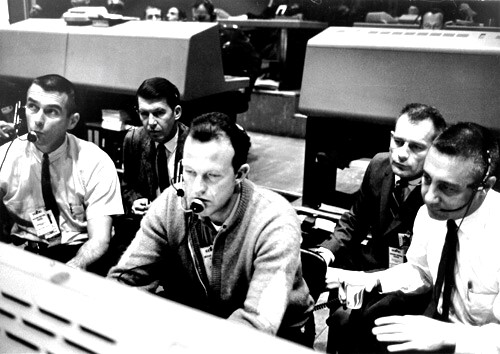
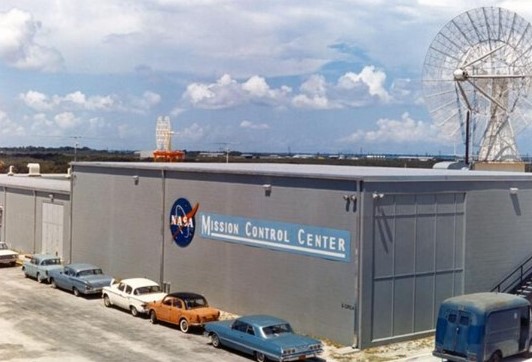
The old Mercury control centre was plainly inadequate for what was coming. NASA decided to build a new one in Houston, the new home of the Manned Spacecraft Center, partly on the reasoning that flight control and spacecraft design would both profit from having their engineers work together. Christopher Kraft, who directed the activity, concentrated first on Gemini's requirements, partly because of manpower and schedule limits but mainly because real experience was needed to qualify the people, equipment and procedures that would have to handle Apollo's far more complex missions. Kraft and his group foresaw that both programmes would need large numbers of systems, network and trajectory specialists, and arranged staff rooms around the main mission operations control room. The centre was not needed for the first two crewed missions, but it was set up and running one flight before any rendezvous manoeuvre was scheduled. Kraft led his team through the first rendezvous mission and then withdrew to apply what he had learned to Apollo. One point he pressed was the computer complex: the IBM 7094 then in use was adequate for Gemini but better suited to scientific purposes, and what Apollo needed was a second-generation machine capable of supporting real-time space operations. He was proved right when flight controllers were able to convert Apollo 13 in mid-mission from a lunar landing into a circumlunar flight and avert a tragedy.
The transfer of knowledge went well beyond flight control. Once Gemini reached its operational phase, Apollo managers sought help on many fronts: programme control and cost containment, ground test programmes, crew lessons applicable to flight problems, checkout experience. North American and Grumman, builders of the command module and the lunar module, pressed the Gemini spacecraft contractor for manufacturing assistance so persistently that a deputy manager in the Apollo office had to caution them not to turn McDonnell into an educational institution. From the sixth mission onward, Apollo personnel followed operations closely, attending panel meetings on spacecraft systems and mission planning, observing flight control and taking part in mission debriefings and evaluations.
The balance and the legacy
More than 1800 days separated 7 December 1961, when the project was officially approved, from 15 November 1966, when the programme's last two fliers came back from orbit. The comparison with Mercury measures the leap: Mercury's period of orbital operations covered 451 days, a flight every 112 days, to accumulate only 55 hours of crew experience; Gemini's ten crewed flights spanned 603 days, a flight every 60, and accumulated 970 mission-hours and 1940 man-hours in space. Sixteen different astronauts flew Gemini missions and four others trained for them; fifteen of those twenty would go on to fly in the lunar programme. Across the flight period an American spacecraft was circling the Earth about six percent of the time.
Gemini held to its original schedule far more closely than Mercury had. The first crewed mission ran eighteen months behind the plan approved in January 1962, and the final mission, nine flights later, was still eighteen months behind; Mercury, by contrast, was twenty-two months late with its first crewed orbital flight and more than thirty-two months late with its last, only three flights afterwards. That regularity told on American and international opinion: crewed spaceflight began to look commonplace. Over a thousand reporters came to Houston for Gemini IV, drawn by the debut of the new control centre and by predictions in some medical circles that the astronauts might die after so long in weightless flight; no later mission drew nearly as many until Apollo 11.
The programme's final event took place in the Manned Spacecraft Center auditorium in Houston on 1 and 2 February 1967, as planned. Some nine hundred people gathered from around the country and were greeted by the centre's director, Robert Gilruth, who asked them to divorce the recent Apollo accident from the Gemini proceedings. Over two days, twenty-one technical papers were presented, concentrating mainly on rendezvous, extravehicular activity and experiments. The conference got little space in the news media, but Gemini's lessons and its people, some in leadership roles, were significant factors in Apollo's recovery: twenty-two months elapsed before America put men into space again, and only nine months after that, in July 1969, two astronauts walked on the Moon.
In their summing up, the programme's official historians stress that Gemini achieved its goals — save for land landing — quietly, systematically and to some degree economically, and that it marked the moment when the United States caught up with and surpassed the Soviet Union in crewed spaceflight. Its spacecraft, simpler and more efficiently designed than Apollo's, which still relied on stacked and integrated components rather than complete modules, was frequently and mistakenly cited as having shaped the Apollo concept. The real contribution was different and deeper: techniques, hardware, procedures and tested crews, without which the lunar landing would have been a far riskier bet.
Images