Project Gemini · NASA · Uncrewed
Gemini 1
- Apr 8, 1964, 4:00 PM
- Launch date
- 4 hr 50 min
- Duration
- Success
- Outcome
-1600.webp)



-1600.webp)
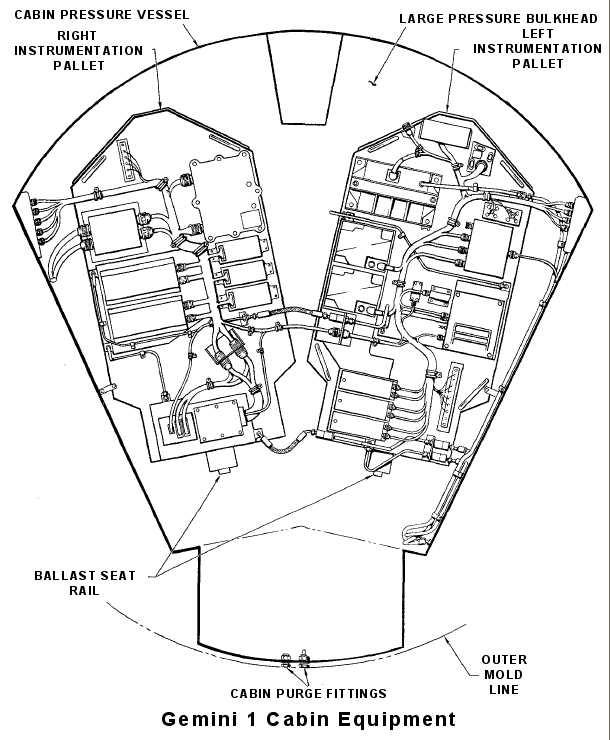

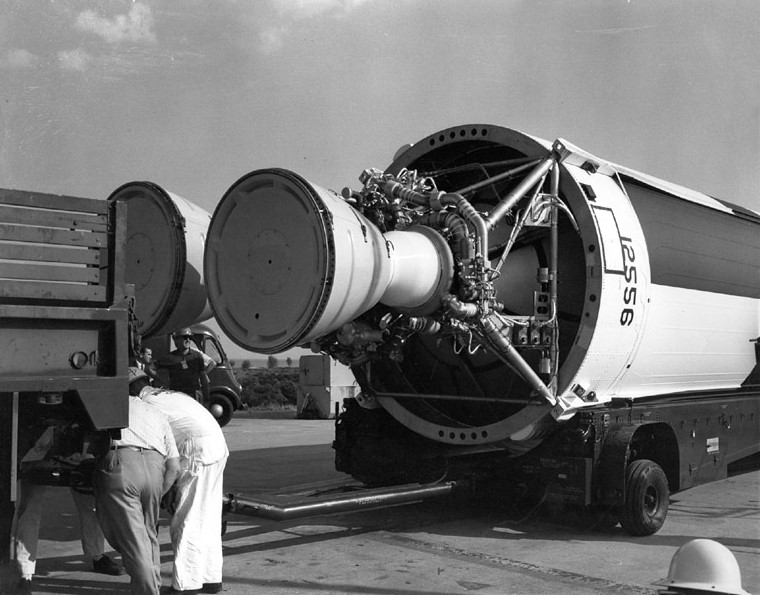
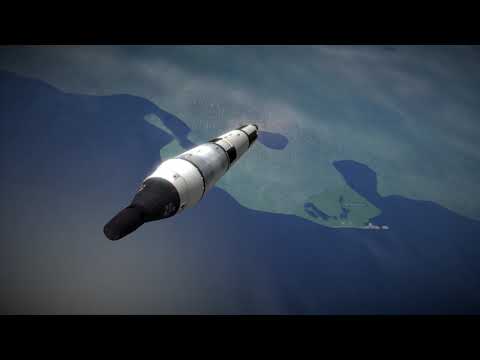
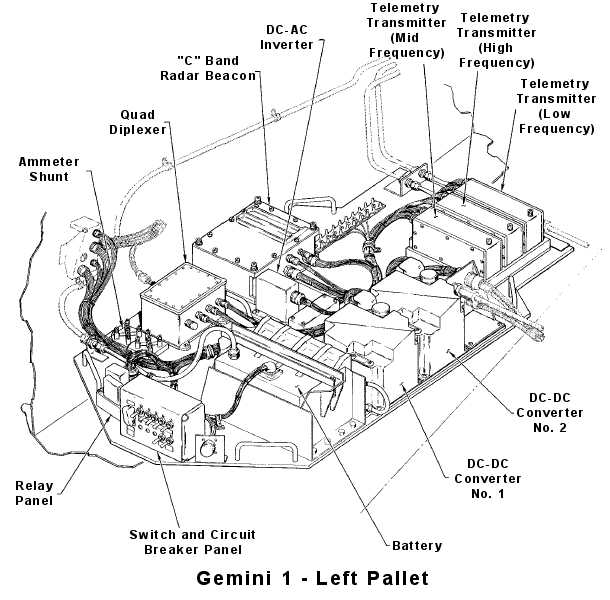
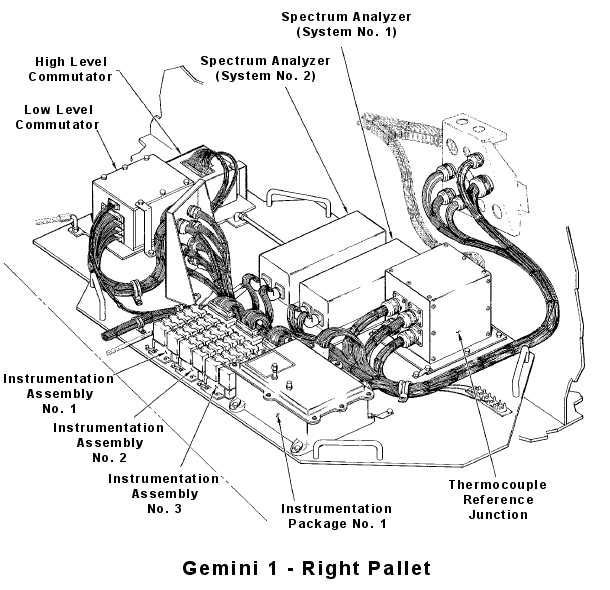
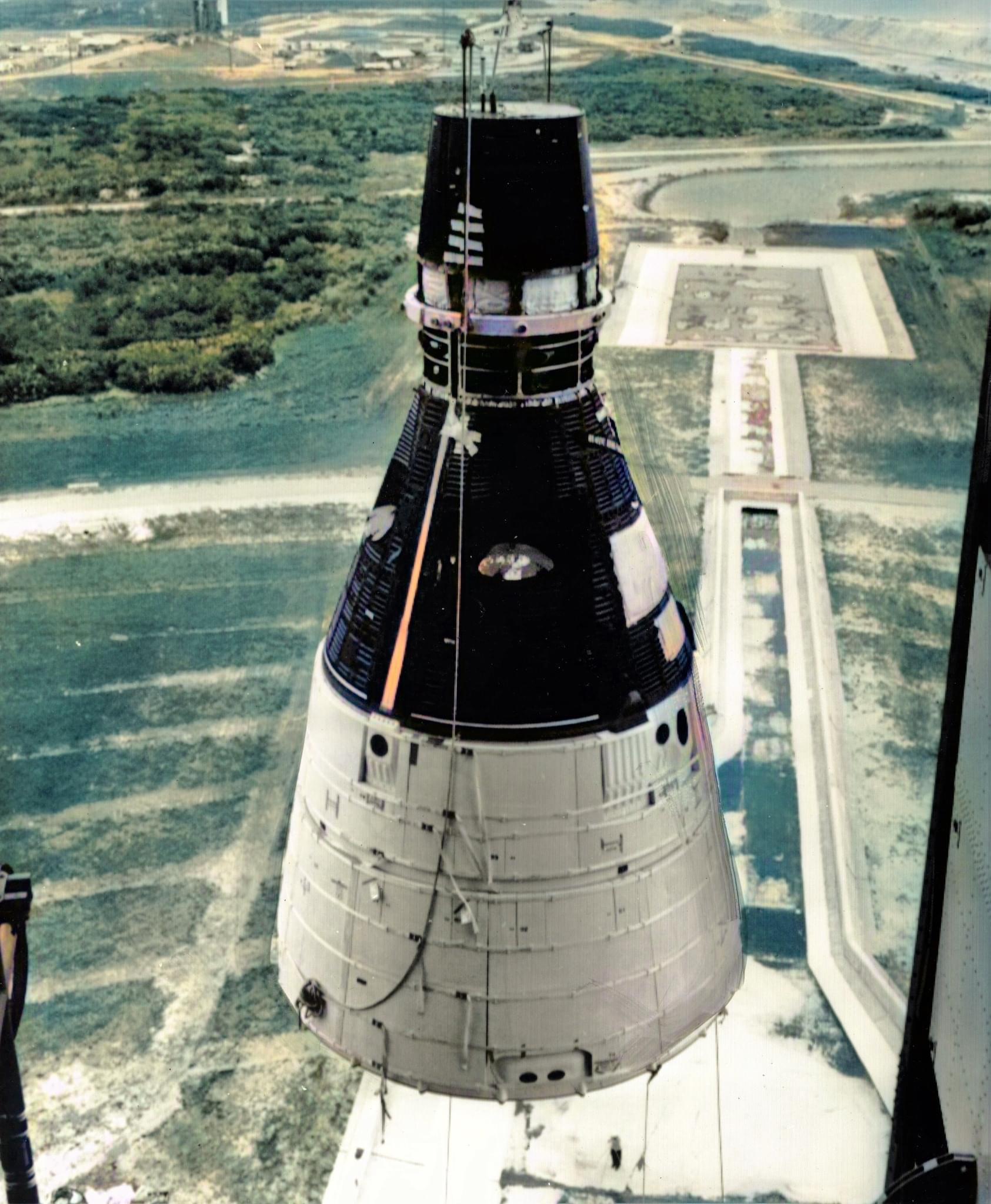
Gemini 1 — designated GT-1 in the program's own paperwork — was the first mission of Project Gemini: an uncrewed orbital test launched on 8 April 1964 at 11:00:01 a.m. Eastern time (16:00:01 UT) from Complex 19 at Cape Canaveral. It carried no astronauts, performed no manoeuvres and was never meant to come back. Its purpose was both simpler and more consequential than any of that: to show that the Titan II, adapted into a crew-rated launch vehicle, could put the new two-seat spacecraft into orbit within the constraints that flying people imposes, and that the combined launch vehicle and spacecraft structure could take the ride. Spacecraft 1 left McDonnell's St. Louis plant as a one-off. It went up almost without working flight systems, carrying dummy equipment and ballast chosen to match the mass, centre of gravity and moments of inertia of a complete spacecraft. Only two Gemini systems were live — a C-band radar transponder with its associated gear, and three telemetry transmitters — alongside instruments measuring pressure, vibration, acceleration, temperature and structural loads, mounted on two pallets placed where the crew would later sit. Since recovery was not part of the plan, the heat shield merely completed the structure, and four large holes bored through the ablative material guaranteed that the spacecraft would be destroyed on the way back down. The flight went almost perfectly. About six minutes after liftoff the Titan II had placed the spacecraft and its second stage — which never separated and orbited as a single body — into a 160.5 by 320.6 kilometre orbit with a period of 89.3 minutes; an excess of 22.5 kilometres per hour at insertion left the apogee 33.6 kilometres higher than planned. The flight plan covered only three revolutions: the mission formally ended about 4 hours and 50 minutes after launch, on the third pass over Cape Kennedy. The hardware, however, stayed up. The worldwide tracking network followed it by radar until 12 April 1964, when on its 64th pass it reentered and broke up over the South Atlantic. NASA judged that the systems had performed within planned tolerances and that the test had succeeded. Gemini 1 thereby closed out the technical crisis that had made the launch vehicle the biggest question mark in the program — the Titan II's longitudinal oscillations, universally known as pogo — and left the rocket qualified to fly with a crew. The spacecraft was not: that job fell to Gemini 2's suborbital flight and to Gemini 3, the first with two men aboard.
Objectives
Gemini 1 was an uncrewed orbital test of the Titan II launch vehicle, of the structural integrity of the Gemini spacecraft and of launch vehicle–spacecraft compatibility, covering every phase of the flight through orbital insertion. Further objectives were to check launch heating conditions, launch vehicle performance, the flight control system switch-over circuits, orbital insertion accuracy and the malfunction detection system.
Payload
The payload was the Gemini spacecraft itself, No. 1 and the first production article, with a launch mass of 5,170 kg. The flight plan did not call for separating it from the Titan II second stage — 3.05 m in diameter and 5.8 m long — so spacecraft and stage orbited together as a single body.
History
The Titan II, from silo to crew-rated pad
Before there was a Gemini 1 mission there was an engineering problem that nearly derailed the program. The Titan II ballistic missile, chosen as the basis of the Gemini launch vehicle, suffered a lengthwise vibration that bounced the vehicle while the first-stage engine burned. The effect quickly earned the nickname "pogo stick", soon shortened to pogo, and its cause resisted explanation. For a missile carrying a warhead it was a nuisance; for a rocket with two pilots on top it was a serious obstacle. Ordinary acceleration already pressed a crewman into his couch at roughly two and a half times the force of gravity, and adding another two and a half gravities of shaking could badly hamper his response to an emergency — a particular worry in Gemini, where the crew was expected to fly the spacecraft far more actively than in Mercury.
The search for a cure was largely trial and error. Raising the pressure in the first-stage fuel tank halved the pogo level on the fourth test flight, on 25 July, though nobody was quite sure why. Martin engineers suspected oscillating pressure in the propellant feedlines, an effect analogous to water hammer in a pipe, and proposed installing a surge-suppression standpipe — a relative of the surge tanks used in hydroelectric plants — in the oxidizer line. The fix went into the eighth Titan II of the Air Force development program, missile N-11, launched on 6 December 1962, and did the opposite of what was intended: instead of damping pogo it drove it up to five gravities, and the violent shaking shut the first-stage engines down early. Robert Gilruth offered the Manned Space Flight Management Council the only consolation available — that if the surge chamber had affected the oscillation at all, the work was at least being done in the right place.
The next Titan II, on 19 December, flew with no standpipes but with higher tank pressure and with aluminium rather than steel oxidizer feedlines; the amplitude dropped sharply, and again the reason was not obvious. On the tenth flight, on 10 January 1963, pogo reached a new low of six tenths of a gravity at the point where a crewed spacecraft would sit — close to what Mercury had tolerated, still well short of NASA's goal of a quarter of a gravity at most. That same flight brought a fresh worry: the second-stage engine delivered only half the thrust it should have, a failure that on earlier flights had been blamed on pogo and now looked like a problem in its own right.
The knot came undone late in 1963 and in January 1964. After a third consecutive success with the suppression hardware — missiles N-25, N-29 and N-31 — Robert Seamans accepted that a qualitative understanding of the problem and its solution had been demonstrated in flight, enough to press ahead with Gemini; the weekly Titan II status reports the Air Force had been sending him were discontinued as no longer necessary. The launch vehicle that had been the program's largest uncertainty for a year and a half stopped being one almost overnight. Gemini 1 would be the flight confirmation of that verdict, and it came a day before the last flight of the missile's own research and development test program.
One objective: qualify the combination
The primary objective of the first Gemini mission, as it emerged from the revised flight program of April 1963, was to prove that the Titan II could launch the Gemini spacecraft and place it in orbit within the constraints imposed by crewed spaceflight. Everything else followed from that. NASA wanted to verify the structural integrity of the spacecraft, the compatibility between spacecraft and launch vehicle, launch heating conditions, launch vehicle performance, the switch-over circuits of its flight control system, orbital insertion accuracy and the malfunction detection system — the sensor suite that on crewed missions would tell the astronauts when it was time to leave. The test covered every phase through orbital insertion, and not one phase beyond. These were also the first production Gemini spacecraft and launch vehicle.
That framing produced an unusual spacecraft. Spacecraft 1's job was to gather and report data, so it was built without most standard systems; in their place it carried dummy equipment and ballast matched to the normal weight, centre of gravity and moment of inertia. Structurally it differed from later vehicles in only one respect, but a decisive one: since the flight plan did not call for recovery, the heat shield had nothing to protect and simply completed the structure, and four large holes bored through the ablative material ensured the spacecraft's total destruction when it plunged back into the atmosphere. The working equipment sat on two special pallets installed where the crew would go, an arrangement descended from Mercury's "crewman simulator": a C-band radar transponder and related gear so ground radars could track the vehicle, and three telemetry transmitters fed by instruments that measured pressure, vibration, acceleration, temperature and structural loads.
Spacecraft 1 in St. Louis
McDonnell began testing Spacecraft 1 on 5 July 1963, expecting to ship it to Cape Canaveral by mid-August. The first phase of systems tests checked that each working item did what it was supposed to do, and many did not: testing halted on 21 July. The instrumentation pallets had a string of defects, particularly in their electrical circuits and in their response to vibration; a transmitter and a radar beacon had to go back to their makers for out-of-specification performance. With those matters settled, testing resumed on 5 August and ran smoothly to the end of the first phase on 21 August. Four days later the major modules were mated, and the assembled vehicle moved on to the second phase of systems testing, which checks the whole and the compatibility between mated sections. Arrival at the Cape was rescheduled to 20 September.
The contrast with the rocket explains much of what followed. Spacecraft 1 was little more than an instrumented shell; GLV-1 was a launch vehicle in every sense of the term. When the second mission's turn came, those roles would be reversed.
March 1964 on Complex 19
By 3 March 1964 spacecraft and booster were together at last on launch complex 19 at Cape Kennedy. The tests showing that all booster systems worked had just been completed, and the spacecraft hung from a tripod in the "white room" atop the erector. That four-level room, with a four-and-a-half tonne crane to hoist the spacecraft, was sealed off from the outside world and held at a constant 295 kelvins and 50 per cent relative humidity to give the spacecraft and the upper stage a controlled environment. Beside the erector stood a 31-metre umbilical tower whose seven booms carried 31 cables and lines feeding electrical power, propellants and everything else until the moment of launch. Liftoff was scheduled for 28 March 1964.
A premate systems test on 4 March confirmed the spacecraft ready for mating the next day, when the adapter would be bolted to the booster's upper stage. The work was briefly delayed by a very human accident: a McDonnell worker dropped his wrench onto the dome of the oxidizer tank directly below the spacecraft. A plastic sheet protected the dome, but the impact left a scratch 0.95 centimetres long and 0.0038 centimetres deep in a steel surface only 0.16 centimetres thick at that point; the area was burnished to the depth of the scratch and tested to confirm the metal was still sound.
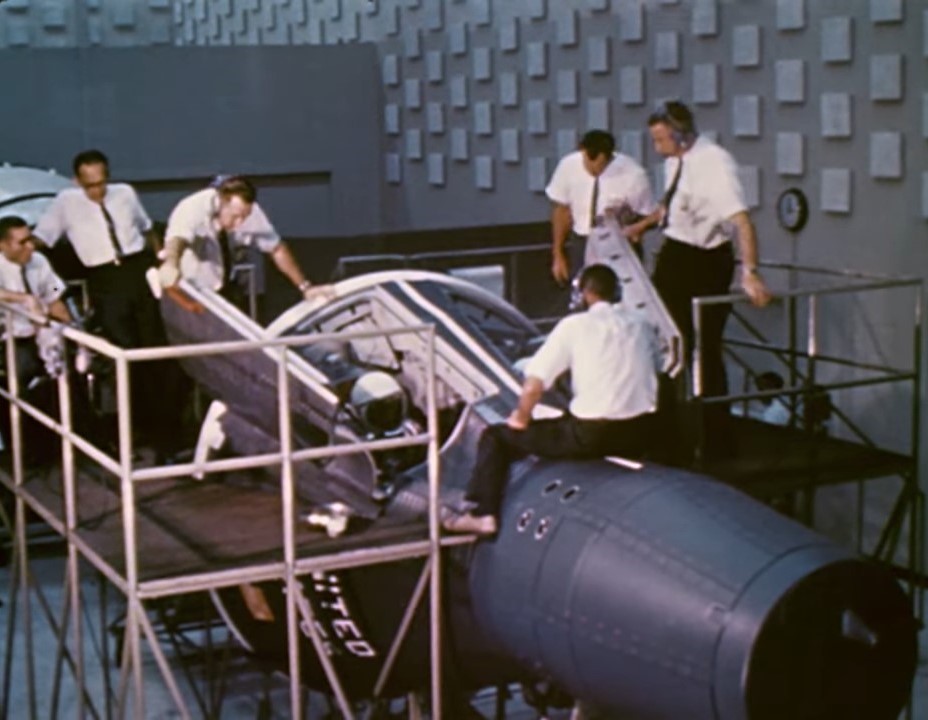
Mechanical mating was followed by electrical mating, and before that came a combined systems test of the booster, set for Sunday 8 March and followed by three electromagnetic interference tests between 9 and 13 March. Little of it held. Minor problems pushed the combined test to Tuesday, and interference testing did not start until Thursday the 12th. The first attempt had to be scrubbed at a cost of four more days; the run on Monday the 16th went cleanly and encouraged the crew to attempt the second test immediately, which then went astray through a procedural error. The third attempt, on Thursday the 19th, brought bad news: amplifiers in the circuits controlling the booster's tandem actuators — which swivel the engines to steer the vehicle — showed noisy outputs. A dry run the next day reproduced the fault. The argument over how to fix it ended on Tuesday the 24th, when Martin troubleshooters traced the trouble to the test equipment itself. Another test confirmed it, the suspect equipment was removed that night, and the dry-run data were accepted as meeting the intent of interference testing. The tests had taken nearly two weeks longer than planned, and launch slipped to 7 April 1964.
Dress rehearsal: a burnt-out transformer and an inversion
From there things began to move. On Friday 27 March a combined systems test and simulated flight produced no serious problems. On Tuesday the 31st all the nonflight parts GLV-1 had brought to the Cape were replaced and the pogo suppression hardware was installed. The tanks were to be filled that night as part of the wet mock simulated launch, and at nine in the evening, as shift workers cleared the area for tanking, someone saw smoke pouring from a switch on the pad. The transformer and switch motor had burnt out. It was not an incidental part: that switch automatically transferred the complex to auxiliary power if commercial power failed, and without it a power loss would have left the water deluge system — the response to a propellant leak — inoperable for about thirty minutes. A spare transformer was found at 1:18 in the morning and installed; the motor proved harder, until one was borrowed from the blockhouse, whose own system could be worked by hand. Another day gone.
Propellant loading resumed just before ten on Wednesday night and finished four hours later. The countdown began at five on Thursday morning and immediately ran into weather: the Cape lay under an atmospheric inversion, a blanket of warm air over cooler air near the ground that would have blocked the upward dispersal of toxic fumes in an accident. The count was held from seven until half past eight, when the inversion began to break up. With the propellant lines removed, the count ran normally until three minutes before launch, when a minor problem — quickly corrected — forced a recycle to T-5. Five minutes later, at half past noon, the count reached T-0, the moment at which a real launch would have ignited the first stage. The test was a complete success, free of spacecraft problems and marred only by a minor procedural error in the launch vehicle count. After a vibration test of GLV-1, draining the tanks took five hours and finished at midnight.
The Spacecraft Flight Readiness Review Board met on Friday afternoon, 3 April. Of the items left open from the February preflight review only a circuit breaker not yet fully qualified remained; McDonnell certified it flightworthy and the board concurred. Two new problems had appeared since the earlier review, both easily corrected. Everything hinged on the final systems test, a simulated flight set for Sunday 5 April, and when that went off without a hitch Spacecraft 1 was ready. Launch vehicle readiness was reviewed on Saturday afternoon, with two Air Force problems reported — one of which proved not to exist, the other a missing report on an analysis of a secondary autopilot failure, still absent on the eve of flight until a phone call confirmed the analysis had been done. After Sunday's simulated flight Walter Williams convened the Mission Review Board, heard every group report ready, and announced at noon that NASA was proceeding toward a launch no earlier than eleven on Wednesday morning, 8 April. On Tuesday morning the GLV-1 status review team took a last look and agreed the vehicle was ready; at nine the Flight Safety Review Board committed it to launch.
8 April 1964
The final countdown was a split count of 390 minutes. The first 60-minute segment began before dawn on Tuesday and ended at five in the morning, when the count was held for twenty-three and a half hours to prepare the spacecraft, install and connect pyrotechnics, run launch vehicle tests and load propellants. GLV-1's tanks were topped off at ten past four on Wednesday morning with about seventy-five people from Martin, the Air Force, Aerojet-General and Aerospace on hand; thirty systems experts from McDonnell and the Manned Spacecraft Center reached the blockhouse at half past four. The hold ended on time an hour later and the final count began at six, at T-300. Not one flaw marred the next five hours.
One second after eleven o'clock on Wednesday morning, 8 April 1964, the booster's first-stage engine ignited. Of that one-second discrepancy Williams later joked to a room full of reporters that something must be wrong with the range clock. Four seconds later the 136-tonne vehicle lifted from the pad on the oddly luminous flame characteristic of the Titan II's hypergolic propellants, and within moments it vanished into the hot Florida sky, beyond the reach of human senses but not of electronic sensors. Telemetry told the controllers what the view had already suggested: the launch was as nearly perfect as it looked.
Two and a half minutes after liftoff, the 118 tonnes of first-stage propellants exhausted, the engines cut off with the vehicle 64 kilometres high and 91 kilometres downrange. The second-stage engine lit and the four bolts holding the stages together exploded as designed, cutting the spent first stage loose. Five and a half minutes after launch the second-stage motor stopped, its 27 tonnes of propellants gone: 1,000 kilometres downrange, 160 kilometres high and coasting at 7,888 metres per second, Spacecraft 1 — with the second stage of GLV-1 still attached — was in orbit. The only quibble available to a purist was an excess seven metres per second of launch vehicle speed, which carried the apogee out to 320 kilometres instead of the programmed 299. The main goals — proving the booster could do its job and that the combined structure was sound — were met beyond argument, as Williams told the press shortly after launch; Major General Ben Funk of the Space Systems Division called it a storybook sort of flight.
Three orbits planned, four days flown
Gemini 1's mission was far shorter than its journey. Only the first three orbits were part of the flight plan: when Spacecraft 1 passed over Cape Kennedy for the third time, about 4 hours and 50 minutes after launch, the first Gemini flight formally ended. Neither spacecraft nor stage ever separated; the two orbited as a unit, the stage measuring 3.05 metres in diameter and 5.8 metres in length. The resulting orbit was 160.5 by 320.6 kilometres with a period of 89.3 minutes.
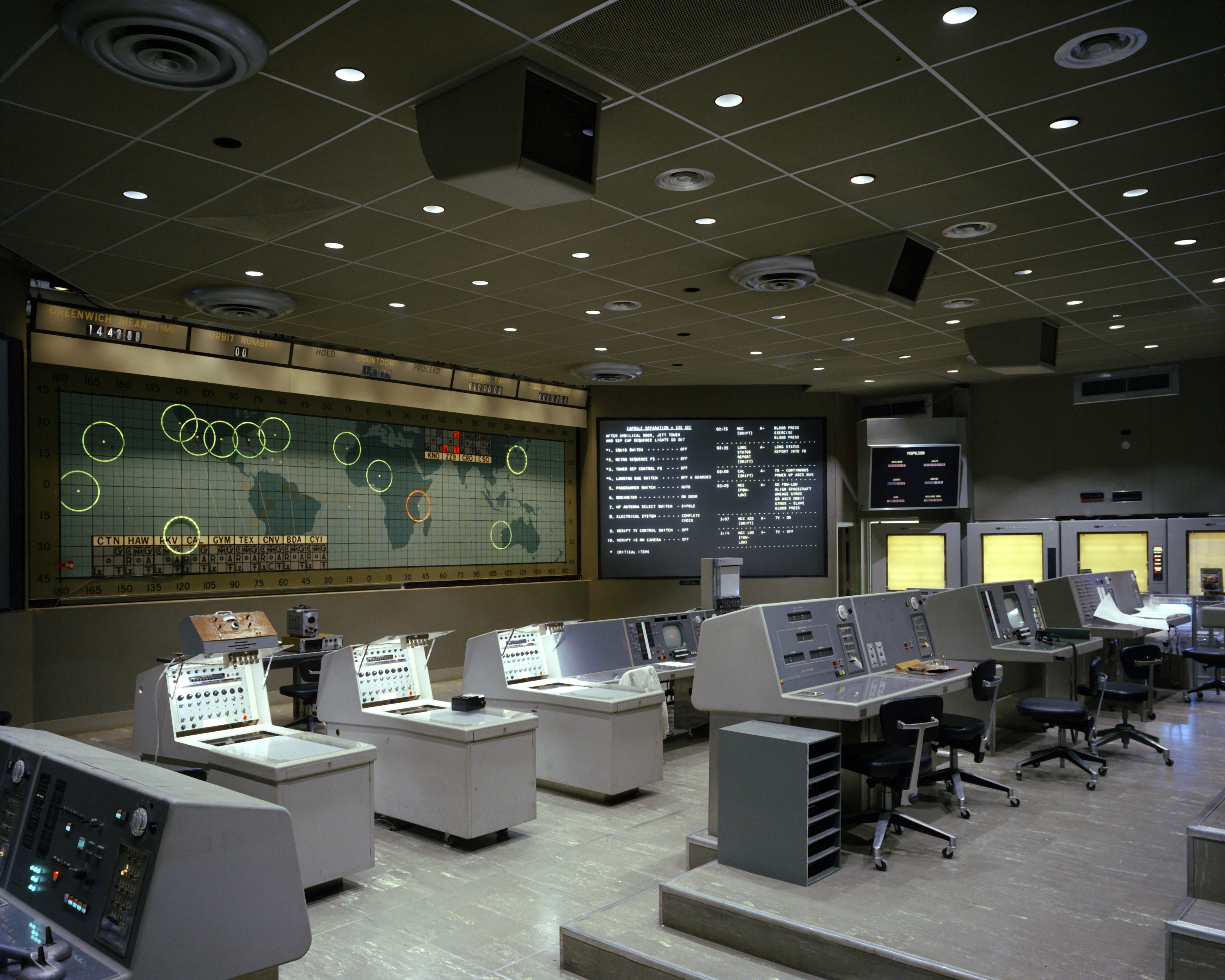
The combination had been expected to stay up about three and a half days, but because the orbit was slightly higher than planned it lasted nearly four. Throughout that time the Manned Space Flight Network, a round-the-world system of tracking stations controlled from Goddard Space Flight Center, followed the vehicle by radar from Kennedy, Grand Bahama, San Salvador, Bermuda, Woomera in Australia, Hawaii, Point Arguello in California, White Sands in New Mexico and Eglin Air Force Base in Florida. On Sunday 12 April 1964, during its 64th pass, the steadily slowing spacecraft plunged back into the atmosphere and ended its career in flames over the South Atlantic, midway between South America and Africa. The four holes in the heat shield had done their work. NASA concluded that the systems had functioned within planned tolerances and judged the test a success; Seamans commended the Air Force for its launch vehicle program.
What Gemini 1 left behind
The flight closed one chapter and opened another. The launch vehicle was now qualified for crewed missions; the spacecraft was not. When the Gemini Management Panel met a week after the mission, on 15 April, a comfortable optimism prevailed: the work schedule called for the second flight toward the end of August and the third in mid-November, with almost a four-week cushion in each case for unforeseen problems. Neither date survived.
Trouble came from two directions. Meteorologically, first lightning and then a run of hurricanes abused the second launch vehicle on complex 19 and delayed its flight long past schedule. Industrially, Spacecraft 2 — the first fully equipped ship to go through the McDonnell plant — was carrying the consequences of late deliveries of thruster systems from Rocketdyne and fuel cell stacks from General Electric that had slowed its construction through 1963, and could not begin systems tests until 13 January 1964. Its Design Engineering Inspection, originally set for November 1963 and postponed to February 1964, produced a long list of minor discrepancies that became 22 mandatory changes, four conditional ones and ten items to be studied. By mid-April 1964 Spacecraft 2 had become the pacing item for the second mission, the dubious honour the launch vehicle had held before the first flight.
Success also briefly revived an old idea. George Mueller, uneasy about Apollo's outlook after crewed Saturn I flights were cancelled — leaving Gemini as the only system available for crewed orbital missions for the next two years or more — asked whether a lunar mission could be flown with the Gemini spacecraft, as a contingency should Apollo suffer a serious setback. A review of earlier studies suggested it was feasible and recommended asking McDonnell for a detailed study, but the idea went nowhere: NASA had too much money, time and prestige invested in Apollo, and on 8 June Seamans told Mueller there would be no funds for study contracts and that any circumlunar work involving Gemini would be confined to in-house effort.
Gemini 1's direct sequels arrived the following winter. Gemini 2 lifted off on 19 January 1965 at 9:03:59 a.m. Eastern time from the same Complex 19, on a suborbital flight of 18 minutes and 16 seconds reaching a maximum altitude of 171.2 kilometres with a launch mass of 3,133.9 kilograms; this time the spacecraft itself, its heat shield and its reentry were the subject, run by an onboard automatic sequencer. Two months later, on 23 March 1965, Gemini 3 finally carried two men into space on a flight of 4 hours, 52 minutes and 31 seconds. The chain that led to the first orbital rendezvous and the first American spacewalk began with that instrumented shell nobody intended to bring home.
Images
Elsewhere
- WikipediaGemini 1 — artículo de referencia con imágenes de la misión ↗
- AstronautixGemini 1 — ficha técnica y fotografías ↗
- Space Launch NowTitan II GLV | Gemini I — registro de lanzamiento ↗
- NASA HistoryProject Gemini - A Chronology, Part 2(B): preparación y vuelo de Gemini 1 ↗
- Wikimedia CommonsCategoría Gemini 1 en Wikimedia Commons ↗
- NASA Fandom WikiTitan II GLV — vehículo de lanzamiento del programa Gemini ↗
- NASA60 years ago: Gemini 1 flies a successful uncrewed test flight ↗
- Drew Ex MachinaThe Mission of Gemini 1: America's First Unmanned Gemini Test Flight ↗
- Next SpaceflightGemini 1 | Titan II GLV — ficha de lanzamiento ↗
- GrokipediaGemini 1 — artículo enciclopédico ↗