Project Gemini · NASA · Crewed
Gemini 3
- Mar 23, 1965, 2:24 PM
- Launch date
- 2
- Crew size
- 4 hr 52 min
- Duration
- Success
- Outcome






-1600.webp)


-1600.webp)


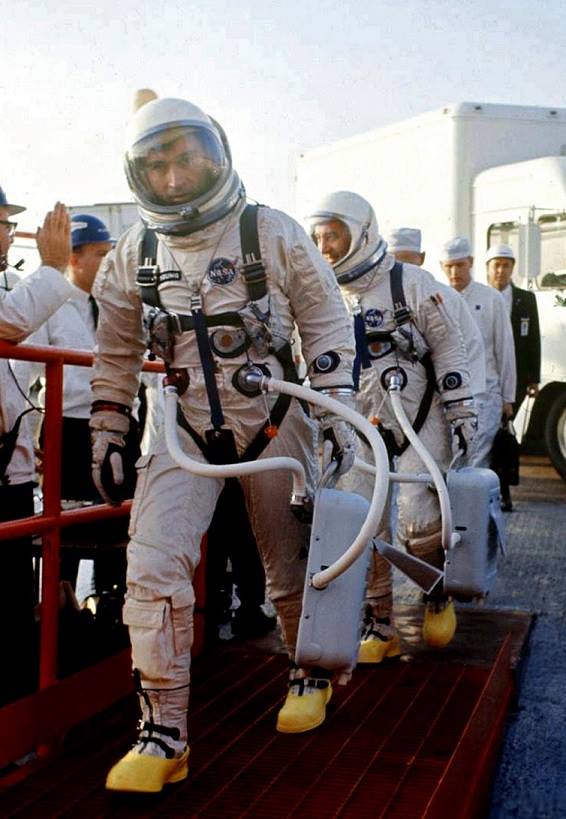
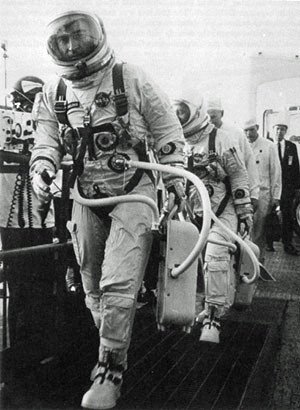
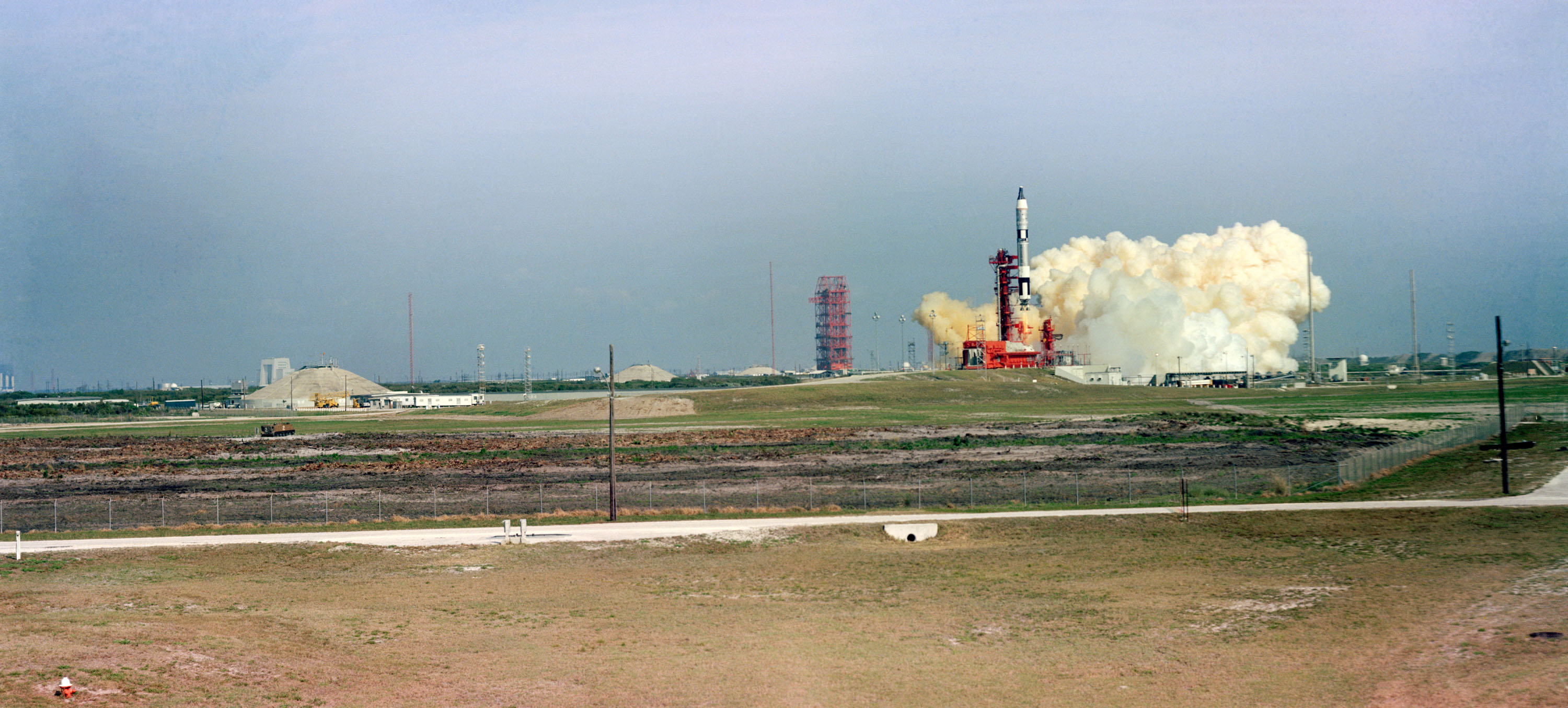
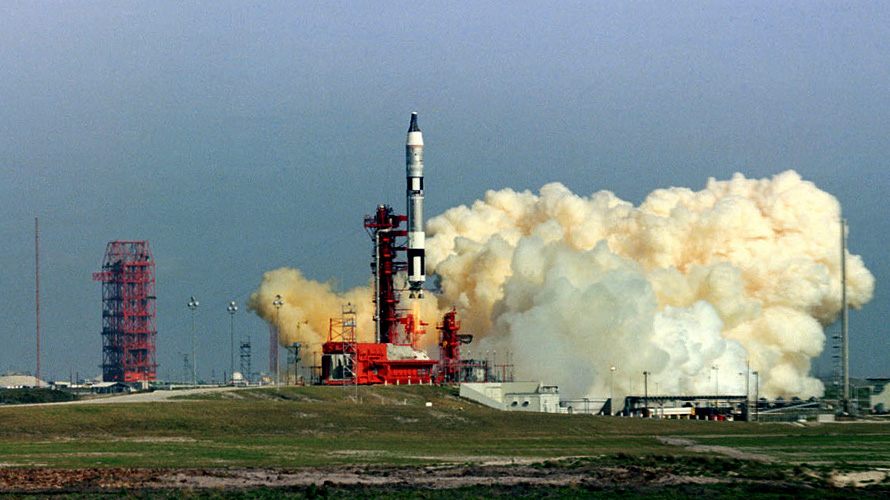
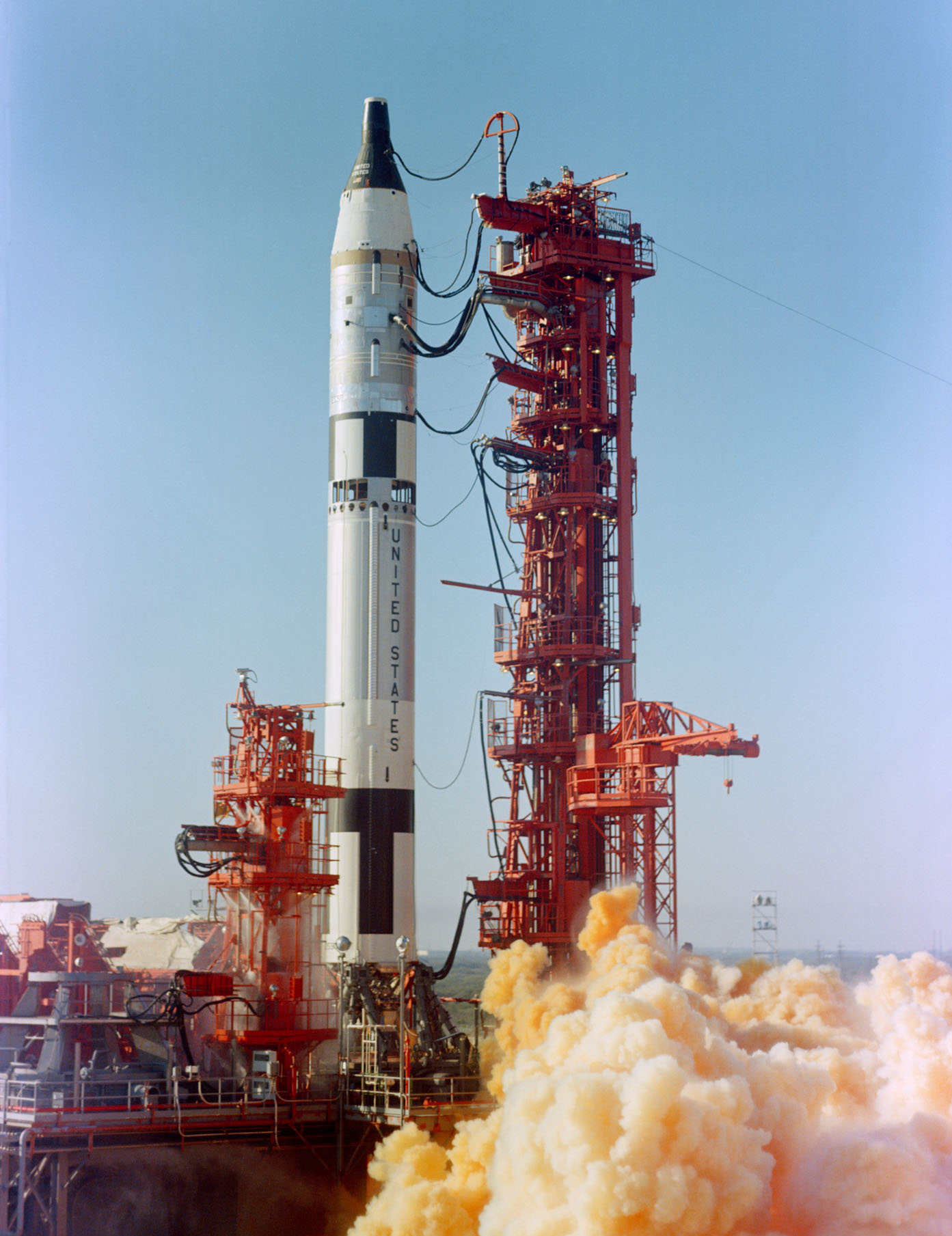
Gemini 3 was the first crewed flight of Project Gemini and the first time two Americans flew into space together. It lifted off from Complex 19 at Cape Kennedy on 23 March 1965 at 9:24 a.m. Eastern time (14:24:00 UT) atop a Titan II GLV, with Virgil I. "Gus" Grissom as command pilot and John W. Young as pilot; the spacecraft was McDonnell's Gemini SC3, with a launch mass of 3,236.9 kg and international designation 1965-024A. The mission was not about endurance records but about qualifying the vehicle: evaluating the two-man design, the worldwide tracking network, the Orbit Attitude and Maneuver System (OAMS), control of the reentry flight path and landing point, the onboard systems and spacecraft recovery. In three revolutions of the Earth, Grissom and Young performed the three burns that made Gemini 3 the first crewed spacecraft in history able to change its own orbit: one to circularise it, a second to shift the orbital plane by 0.02 degrees, and a third, fail-safe burn that lowered perigee to guarantee reentry even if the retrorockets failed. The crew nicknamed the spacecraft "Molly Brown", after the "unsinkable" heroine of the Broadway musical and in memory of the sinking of Grissom's Liberty Bell 7; NASA's senior management found the name undignified and only consented grudgingly on learning that the crew's second choice was "Titanic". The flight also produced two famous episodes: the corned beef sandwich Young smuggled aboard in his suit pocket, which ended up before a congressional committee and in new rules about what an astronaut may carry, and a short splashdown, with the carrier USS Intrepid far further away than expected and a long half hour of waiting inside a hot capsule pitching on the Atlantic swells. Gemini 3 splashed down near Grand Turk Island at 19:16:31 UT after 4 hours, 52 minutes and 31 seconds of flight. It was the last crewed mission controlled from Cape Kennedy — control moved permanently to Houston from Gemini IV onwards — and it closed the programme's test phase: the spacecraft was ready for the nine missions that in less than two years would rehearse rendezvous, docking, extravehicular activity and long-duration flight, and so make Apollo possible.
Objectives
The first crewed flight of the Gemini series, with the primary objective of demonstrating the crewed qualifications of the spacecraft: evaluating the two-man design, the worldwide tracking network, the orbit attitude and maneuver system (OAMS), control of the reentry flight path and landing point, the spacecraft systems and their recovery. Secondary objectives were to evaluate flight crew equipment and the effects of low-level launch vehicle oscillations (pogo) on the crew, to perform three experiments and to obtain photographic coverage from orbit.
Payload
Spacecraft Gemini 3, with a launch mass of 3,236.9 kg, flown by Virgil I. “Gus” Grissom as command pilot and John W. Young as pilot: it was NASA's first mission on which the crew could maneuver their spacecraft in orbit by firing thrusters. It carried three experiments — one of them on sea urchin egg growth in microgravity, left incomplete by a mechanical failure — and a 16 mm camera whose improper lens cut short the photographic coverage.
| Crew | Role | Agency | Extravehicular activity |
|---|---|---|---|
| Virgil I. "Gus" Grissom | Commander · Command Pilot | NASA · United States | — |
| John W. Young | Pilot · Pilot | NASA · United States | — |
History
The bridge to the Moon
NASA describes Project Gemini as the "bridge to the moon": the programme that spanned the period between Project Mercury, with which the United States set out to determine whether human beings could survive in space, and the Apollo lunar landing flights. Its goals were the ones Apollo would take for granted: demonstrating rendezvous and docking between two spacecraft, extended stays in orbit, work outside the cabin and a controlled return, all in time to meet President John F. Kennedy's commitment to land a man on the Moon and return him safely to Earth before the end of the 1960s.
Before anyone flew, the uncrewed Gemini I and Gemini II missions had validated the spacecraft's design, its reliability and its heat shield, clearing the way to launch Gemini III with a crew. With that behind it, the mission was defined as exactly what it was: a qualification flight. Its primary objective, in NASA's own words, was demonstrating the crewed qualifications of the Gemini spacecraft, including evaluation of the two-man Gemini design, of the worldwide tracking network, of the orbit attitude and maneuver system (OAMS), of the control of reentry flight path and landing point, of spacecraft systems and of spacecraft recovery. Secondary objectives included evaluation of flight crew equipment and of the effects of low-level launch vehicle oscillations — the POGO phenomenon — on the crew, the performance of three experiments and photographic coverage from orbit.
The crew
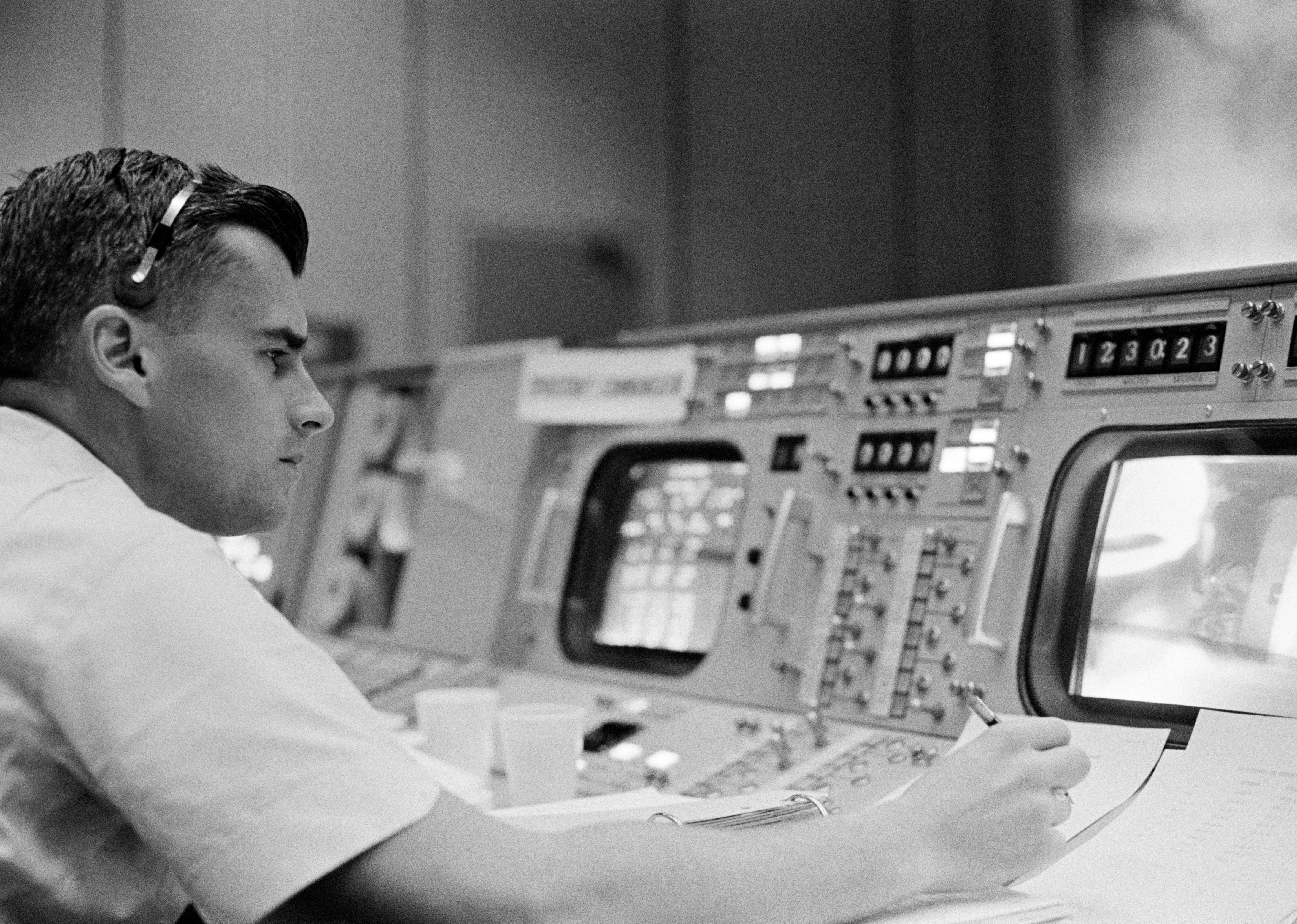
On 13 April 1964, just five days after the uncrewed Gemini I mission, director Robert R. Gilruth introduced the Gemini III crew to the press in the newly opened auditorium of the Manned Spacecraft Center, today NASA's Johnson Space Center in Houston. The prime crew were Mercury 4 veteran Virgil I. "Gus" Grissom and Group 2 astronaut John W. Young; the backups were Mercury 8 veteran Walter M. Schirra, Jr. and Thomas P. Stafford. Support at the consoles came from Roger B. Chaffee as CAPCOM in Houston and L. Gordon Cooper, Jr. as CAPCOM at the Cape.
.jpg)
Grissom was one of the seven Mercury astronauts selected by NASA in April 1959 and had piloted Liberty Bell 7, the second and final suborbital flight of that programme. Young had been selected in September 1962; in time he would become the first person launched into space six times from Earth, logging more than 15,275 hours of flying time in various aircraft and 835 hours in space over six flights, and would serve as chief of the Astronaut Office for thirteen years. For Grissom, Gemini III meant becoming the first human being to enter space a second time; for Young, being the first member of his group to fly.
The readiness reviews
During the first two days of March 1965 the Office of Manned Space Flight held a Design Certification Review in Washington. The board — George Mueller, Gilruth, Kurt Debus, director of the Kennedy Space Center, Wernher von Braun, director of Marshall, Major General Osmond J. Ritland and Major General Ben Funk — asked for, and got, formal pledges from the top executives of all the major Gemini contractors that their products were ready for crewed flight, barring something unforeseen in what remained of checkout at the Cape.
A week later the spacecraft Flight Readiness Review turned up only minor problems, quickly corrected. The launch vehicle passed its final test, the simulated flight, on 18 March, and its own Flight Readiness Review on the morning of Saturday the 20th. When the Mission Review Board met that afternoon, weather was the only thing that could delay the flight. On Monday morning the contractors confirmed that GLV-3 was ready and, at nine o'clock, the Flight Safety Review Board committed the booster. Martin's pad crew began loading oxidizer aboard GLV-3 at 6:22 p.m. on 22 March and five hours later all tanks were full. The final countdown began at two o'clock on Tuesday morning under an overcast sky.
That countdown included static firings of both of the spacecraft's rocket systems, a matter that had set the astronauts against the programme office: the office, backed by the Preflight Operations Division, preferred to fire only the lateral thrusters, while the pilots wanted the aft thrusters fired as well. The dispute was settled in May 1964, when NASA Deputy Director for Gemini William Schneider decided that both would be fired; he knew the extra test time might affect the launch, but believed that it would save time in the long run and increase confidence in flying a successful mission.
"Molly Brown", the name NASA did not want
In Mercury each pilot named his own spacecraft, and Cooper had already had trouble selling the agency on Faith 7 for the last of them. Grissom and Young ran into the same wall. Grissom had lost his first ship: Liberty Bell 7 sank after the hatch blew prematurely and before help could arrive. "Molly Brown", the "unsinkable" heroine of a Broadway hit, struck Grissom as the logical choice for his second command. NASA's upper echelons thought the name lacked dignity; but since Grissom's second choice was "Titanic", they grudgingly consented and the name stuck, if only quasi-officially. Later spacecraft were officially referred to by Roman numerals, although a few kept nicknames as well.
The mission emblem was not worn as an in-flight patch — that practice began with Gemini 5 — but was minted on gold-plated sterling silver medallions one inch across, about 25 mm, which the crew carried aboard to give to family and friends afterwards. The same design appeared on the cover of Grissom's book *Gemini!: A Personal Account of Man's Venture Into Space*, and Young was seen wearing the emblem as a post-flight patch on his flightsuit as late as 2002.
The morning of 23 March 1965
Grissom and Young had reviewed their flight plan and gone to bed around nine the night before. They were woken shortly before five. After the steak-and-eggs breakfast inherited from Mercury, they were driven from their Merritt Island quarters to pad 16, site of the preflight ready room. They arrived about six and had their suits on some forty-five minutes later. Shortly after seven a transfer van carried them to pad 19; they rode the elevator to the eleventh level and by half past seven were inside the spacecraft with the hatches sealed, about twenty minutes ahead of schedule because the countdown had run faster than expected. Young would later complain about that extra time flat on his back and fully suited; the planned wait was bad enough.
Weather was still the question mark: the overcast had not lifted. They had been in the spacecraft less than an hour when the count was halted thirty-five minutes before launch, because the first-stage oxidizer line had sprung a leak. A wrench applied to a poorly seated nut solved it, but the count was held for twenty-four minutes to make sure the leak had stopped. By the time it resumed, the clouds over the Cape had begun to scatter. Thirty-five minutes later, at 9:24 on the morning of Tuesday 23 March 1965, the sky was almost clear when the engines of the Titan II's first stage burst into life and Gemini III rose from the launch pad. With a "You're on your way, Molly Brown" from CAPCOM Gordon Cooper, the third Gemini flight — and the first to which men entrusted themselves — had begun.
Ascent and insertion
"Molly Brown" lifted off so smoothly that neither man felt anything: their real cues were seeing the mission clock start on the instrument panel and hearing Cooper call it from mission control. There was less noise than in the moving-base simulator in Dallas. First-stage cutoff two and a half minutes later dropped acceleration from six gravities to one. The second stage ignited and bathed the spacecraft in an orange-yellow flash that disconcerted Young for the moment it took him to remember that this was the normal product of fire-in-the-hole staging. The launch vehicle slightly exceeded its predicted thrust and, warned by Cooper, the pilots were ready for a larger pitchdown than expected when the second stage took over the steering. Young, who had never been in space, was entranced by the Earth's horizon and by the sense of rapid motion as second-stage thrust built up.
Five minutes and fifty-four seconds after liftoff — at 9:29:54 a.m. Eastern time — came insertion. The pop of the pyrotechnics that severed spacecraft from launch vehicle sounded to Young like the bark of howitzers. Grissom fired the aft thrusters to kick the spacecraft into orbit, lost track of the time and fired too long, leaving a slight overspeed on his incremental velocity indicator. The result was good all the same. The official mission page puts the insertion orbit at 161.2 by 224.2 km, with a period of 88.3 minutes; the mission's inclination was 32.6 degrees.
An anomaly settled in forty-five seconds
About twenty minutes after liftoff, on the first revolution and just past the range of the Canary Island tracking station, the oxygen pressure gauge of the environmental control system reported an abrupt drop. Young, who was assigned to watch it, naturally assumed the system was at fault; but a quick glance showed odd readings on several other meters and suggested that the real trouble lay in the instrument power supply. He switched from the primary to the secondary electrical converter and the problem vanished. From Young's first notice of the anomalous reading to the switch, forty-five seconds went by: one clear payoff from intense preflight training.
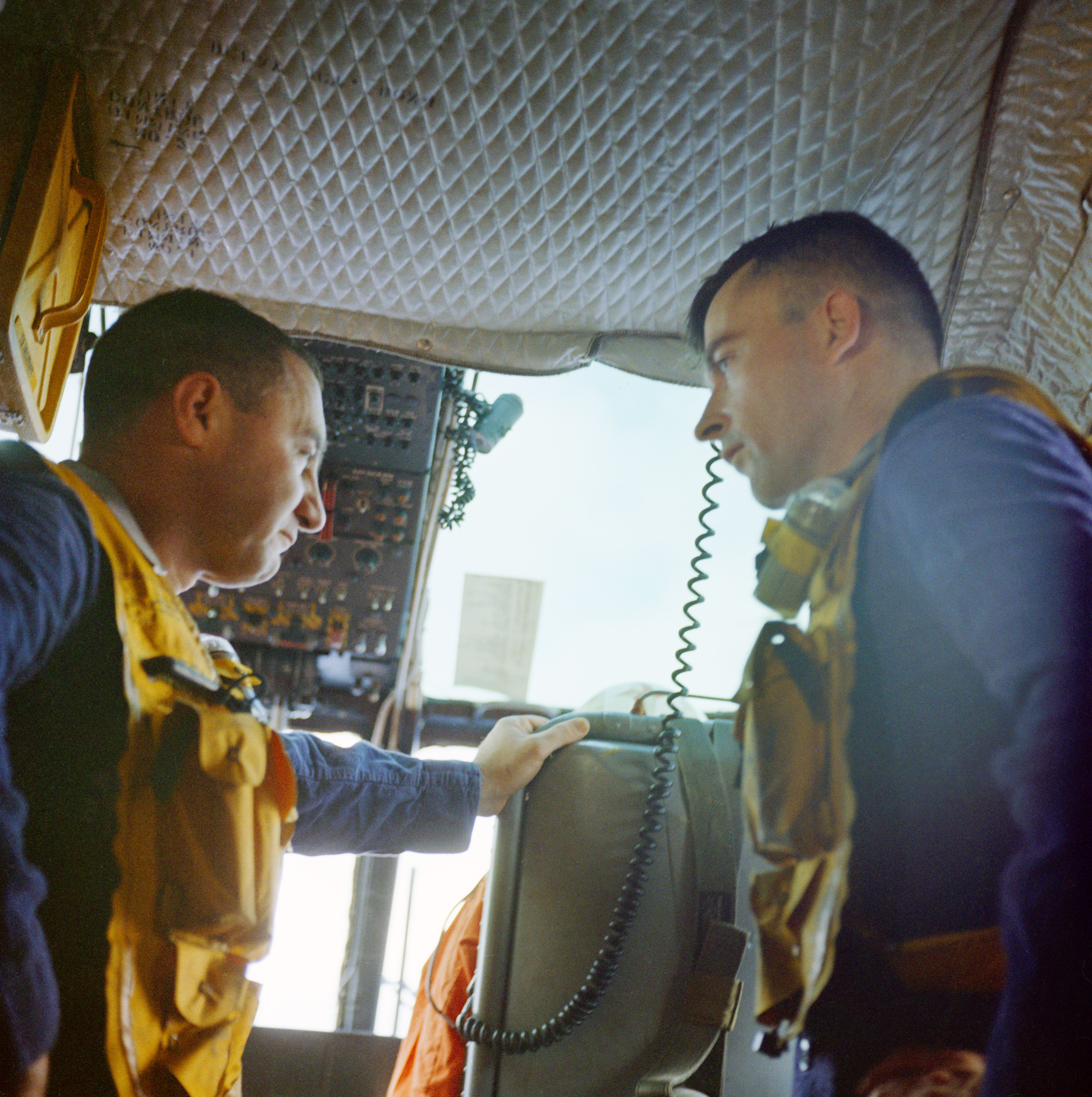
Shortly before that, the crew had noticed the craft yawing slowly to the left. "I seem to have a leak. There must be a leak in one of the thrusters, because I get a continuous yaw left," Grissom reported eighteen minutes into the flight; "very slight, very slow drift". The cause was first attributed to a stuck thruster and was finally traced to a venting water boiler.
The first orbital change by a crewed spacecraft
An hour and a half after launch, at the end of the first revolution and while passing over Texas — Wikipedia places the burn at 15:57:00 UTC, over Corpus Christi — Grissom fired the OAMS. SP-4203 puts the burn at a carefully timed 75 seconds; the NASA anniversary article and Wikipedia give it as one minute and fourteen seconds. The result was a braking of about 15 m/s — 15.5 m/s according to Wikipedia — that left the spacecraft in a near-circular orbit of 158 by 169 km. It was the first orbital manoeuvre performed by any crewed spacecraft. "They appear to be firing good," said Young, confirming the success of the manoeuvre.
Three quarters of an hour later, on the second revolution, Grissom fired the system again, this time to test the ship's translational capability and to shift the plane of its orbit by one-fiftieth of a degree, that is, 0.02 degrees. Near the end of the third revolution he completed the fail-safe plan with a burn that lowered perigee to ensure reentry even if the retrorockets failed: the official mission page places it at 4:21:23 ground elapsed time and gives a perigee of 84 km. With those three burns, manoeuvrability in orbit — the condition without which there was no rendezvous, no docking and no voyage to the Moon — stopped being a calculation and became a demonstrated fact.
The experiments
The flight's three experiments gave uneven results. The cell-growth experiment with sea urchin eggs failed: the lever essential to operating it broke off when it was pulled. Grissom later remarked that perhaps he had too much adrenalin pumping and twisted the handle too hard. Most of the fault was ascribed to a poorly designed package installed in the spacecraft barely a week before flight, a case of too little and too late.
The radiation experiment gave Young some trouble, but he managed to complete it. The results were suggestive and inconclusive: exposed to nearly identical doses of radiation, the inflight blood samples showed more damage than the control samples on the ground. The effect was small, but it pointed to an interaction between radiation and some aspect of space flight, without it being possible to say which aspect or how it acted. The work was later presented as "Experiment S-4, Zero g and Radiation on Blood during Gemini III", by Michael A. Bender, P. Carolyn Gooch and Sohei Kondo.
The third experiment dealt with the reentry communications blackout, using a system originally designed for the cancelled Mercury-Atlas 10 mission: injecting water into the plasma sheath surrounding the capsule. Young threw the switch just over a minute after the plasma had formed and communications had blacked out. The results were encouraging: at high rates of water flow, ground stations picked up signals from the spacecraft in both UHF and C-band. The official mission page specifies that about 7 kg of water were injected at an altitude of 90 km, resulting in improved communications during the blackout period.
Both crewmen believed that most of the trouble with the experiments stemmed from differences between the packages they flew with and those they had trained with. But they also admitted that they were not quite as fascinated by sea urchins as by the chance to carry out some real firsts in space flight. Photographic coverage, another secondary objective, was only partly achieved because of an improper lens on the 16 mm camera.
The corned beef sandwich
Of everything that happened that day, what reached Congress was a sandwich. The idea was born during training, when Grissom grew bored with the food they practised with and complained regularly about the dehydrated "delicacies" that food scientists concocted. Bringing aboard something freshly made that did not have to be rehydrated "seemed like a fun idea at the time" to Young. He had Wally Schirra, his backup command pilot, pick one up at a local restaurant; on his way out to the launchpad, Young put it in the pocket of his pressure suit. Wikipedia adds a nuance: Deke Slayton, Director of Flight Crew Operations, wrote in his autobiography that he had given Young permission.
One of the goals of the flight was precisely to evaluate NASA's flight food packaging, whether the containers leaked when foods were reconstituted, and the procedures for disposing of the meal and its packaging after eating. Foods included rehydratable items such as chicken bites, applesauce and drinks, and compressed foods such as brownie bites. The Gemini food system was not haute cuisine: Young described the chicken bites as "barely edible" in his post-flight debriefing, and all rehydrated Gemini meals were mixed with cold water, which made them less appetizing than a hot meal.
Nearly two hours into the flight, as Young started his food and waste evaluation, he pulled the sandwich out of his suit and offered it to his commander. The air-to-ground recordings caught the exchange. "Where did that come from?" Grissom asked. "I brought it with me," Young responded, "let's see how it tastes." Even he had not expected the sandwich to be so pungent: "Smells, doesn't it?" Grissom took a bite, found that the rye crumbled, and placed the rest in his suit pocket to prevent crumbs from floating about the cabin. The whole episode lasted about thirty seconds.
Two days later, nearly a thousand members of the media from the United States and around the world gathered at the Carriage House Motel in Cocoa Beach, Florida, to hear from the crew and NASA management at the postflight press conference. Space reporter Bill Hines asked Young about the sandwich — erroneously referring to it as a "baloney sandwich" — and about what had happened when Grissom was offered a taste. Young seemed surprised: "How did you find out about that?", then laughed and added that Grissom had eaten it.
The official reaction was far less amused. The matter came up at the hearings on NASA's 1966 budget. Representative George E. Shipley was especially disgusted, knowing how much money and time NASA had spent preparing the spacecraft for launch: he likened the crew cabin to a "surgeon's operating room" and pointed out that crumbs could have made their way behind instrument panels, interfering with the operation of flight equipment and costing the mission and its crew. He called Young's antics "foolish" and asked NASA's leaders to share their thoughts.
George Mueller, associate administrator for Manned Space Flight, stated unequivocally that the agency did not "approve [of] unauthorized objects such as sandwiches going on board the spacecraft", and promised that steps had been taken to prevent a recurrence, while noting that there had been no detriment either to the experimental programme or to the actual carrying out of the mission. Gilruth was more forgiving: such antics, he told the committee, helped the crews to "break up the strain" of spaceflight, and he hesitated "to be too strict in the future by laying down a lot of rules for men who have this responsibility and who, in all the flights so far, have done such good jobs". Administrator James Webb disagreed: "this is the United States of America's space program and, as a matter of policy, we are not going to permit individuals to superimpose their judgment as to what is going to be taken on these flights." For Webb it was a sign that Gilruth was too lax in managing his astronauts, and he pressed him for a report on the incident to determine whether Young should be disciplined or at the very least reprimanded.
The practical outcome was a new body of rules. Starting with Gemini IV, flight crews had to present a list of the items they planned to take on their missions. Prohibited items naturally included sandwiches, as well as bulky or heavy items and metal that could negatively affect the operation of spacecraft equipment, though astronauts were still allowed personal items such as wedding bands or coins for families and friends in their personal preference kit. Young never received a formal reprimand, but he was made aware of Congress's frustration; others in the corps were advised to avoid similar stunts and to focus on the mission. His career did not suffer: he flew into space six times, on two Gemini missions, two Apollo missions — including the dress rehearsal for the first lunar landing — and two space shuttle missions, among them STS-1.
Reentry
With the third revolution ending, Grissom and Young ran through the retrofire checklist. They oriented the spacecraft with its blunt end facing forward and, with everything ready, the pilot fired the pyrotechnics that separated the adapter from the reentry module, the biggest jolt they had felt so far, and then armed the automatic retrofire switch. One after another the four retrorockets burst into life and burned themselves out — the official mission page places retrofire at 4:33:23 ground elapsed time — and another set of pyrotechnics cut the spent retrograde section loose, exposing the heat shield, as "Molly Brown" arced back toward the planet she had left four and a half hours earlier.
At first reentry matched the simulations down to the colour and pattern of the plasma sheath. The spacecraft encountered the upper layers of the atmosphere at 400,000 feet and the buildup of ionized gases caused a temporary loss of communication with mission control. But it soon became clear that "Molly Brown" was off course. The initial computer reading showed she would miss the planned landing point by more than 69 km, and Grissom's best efforts were fruitless: in theory the Gemini spacecraft had enough lift to be flown to a relatively precise landing, but its real lift fell far short of what wind tunnel tests had predicted. The official mission page puts the final shortfall at 111 km; SP-4203 leaves it at about 84 km. Grissom deployed the drogue parachute at 50,000 feet to stabilize and slow the spacecraft, followed by the main canopy at 10,600 feet.
One shock was still to come. Hanging from the main parachute, the spacecraft was suspended vertically from a single point; before touchdown, a cabin switch shifted it to a two-point suspension with its nose forward and some thirty-five degrees above the horizontal. When Grissom hit that switch, "Molly Brown" literally dropped into place and pitched both men into the windshield: Grissom's acrylic faceplate broke and Young's was scratched. Later Gemini suits, and all Apollo and Space Shuttle suits, used polycarbonate.
Splashdown, waiting and recovery
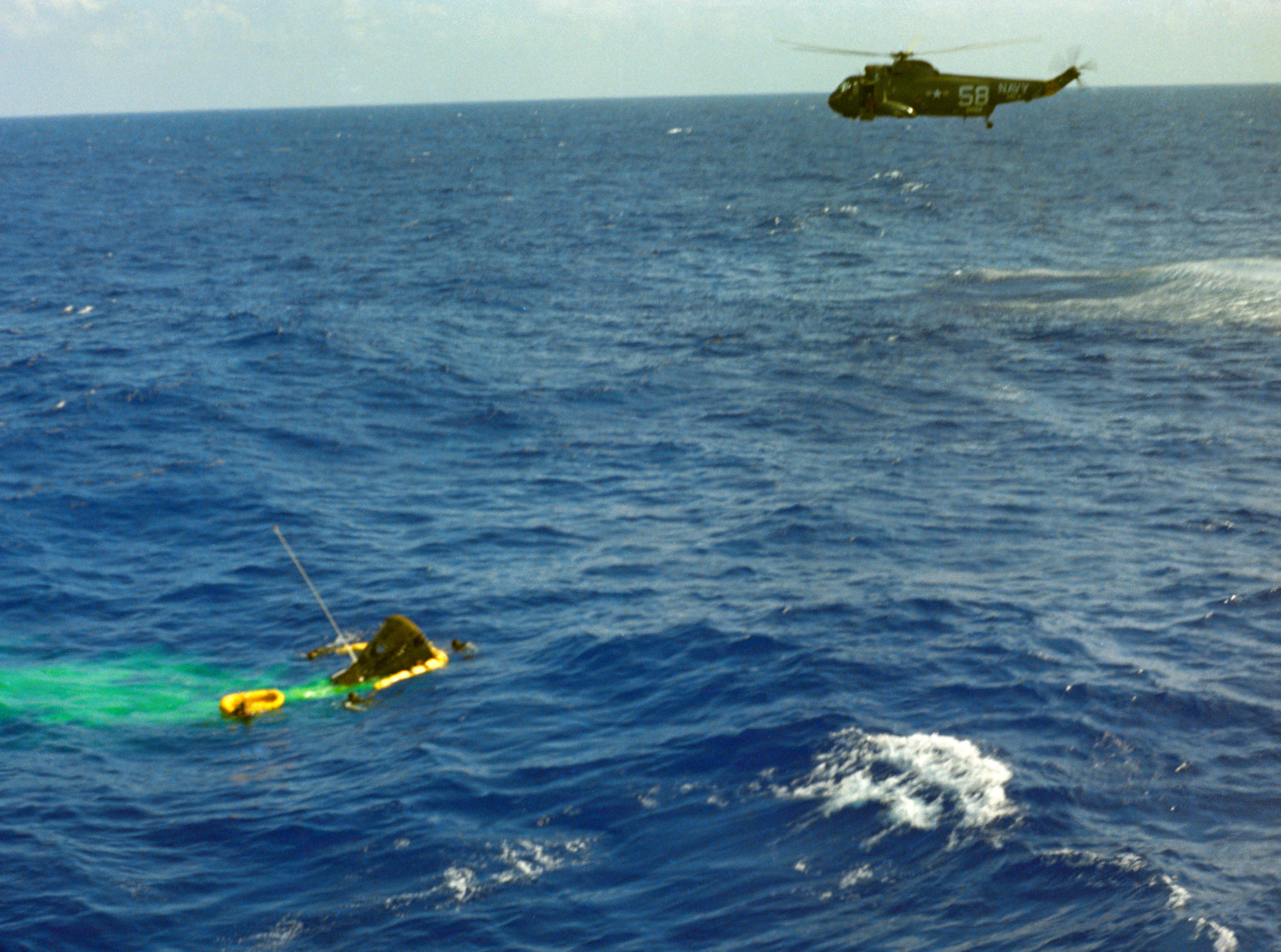
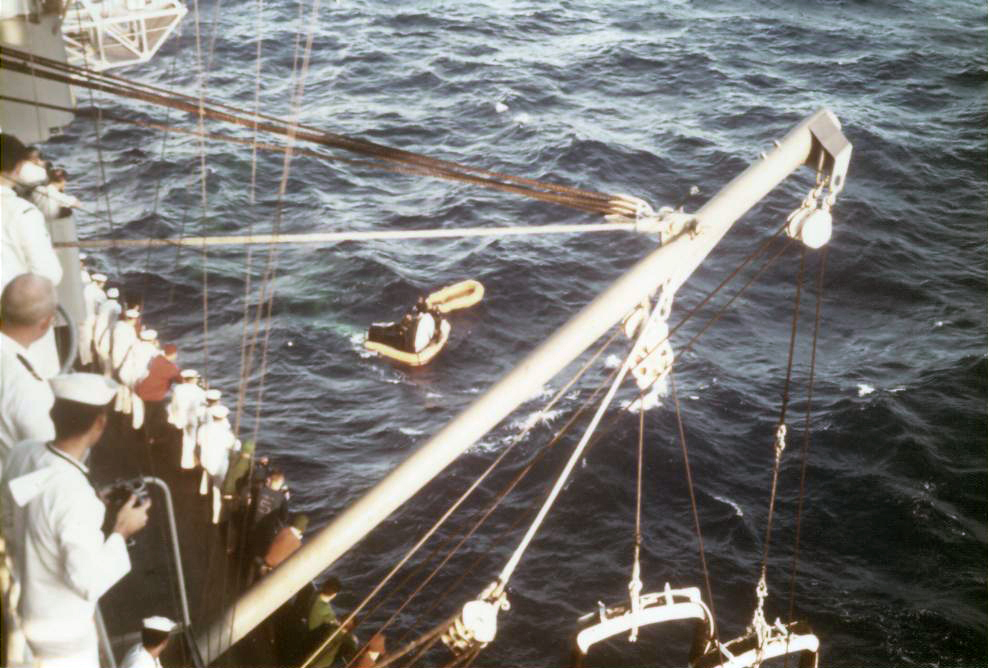
The jolt of hitting the water a few minutes later was mild by comparison. Splashdown came at 19:16:31 UT — 2:16:31 p.m. Eastern time — at 4 hours, 52 minutes and 31 seconds into the flight, in the Atlantic in the vicinity of Grand Turk Island, at 22.43° N and 70.85° W. All Grissom could see through his window was water: the parachute was still attached and the wind was dragging it, tugging the nose down. With the memory of Liberty Bell 7 momentarily staying his hand, he released the chute and "Molly Brown" bobbed to the surface, fully watertight.
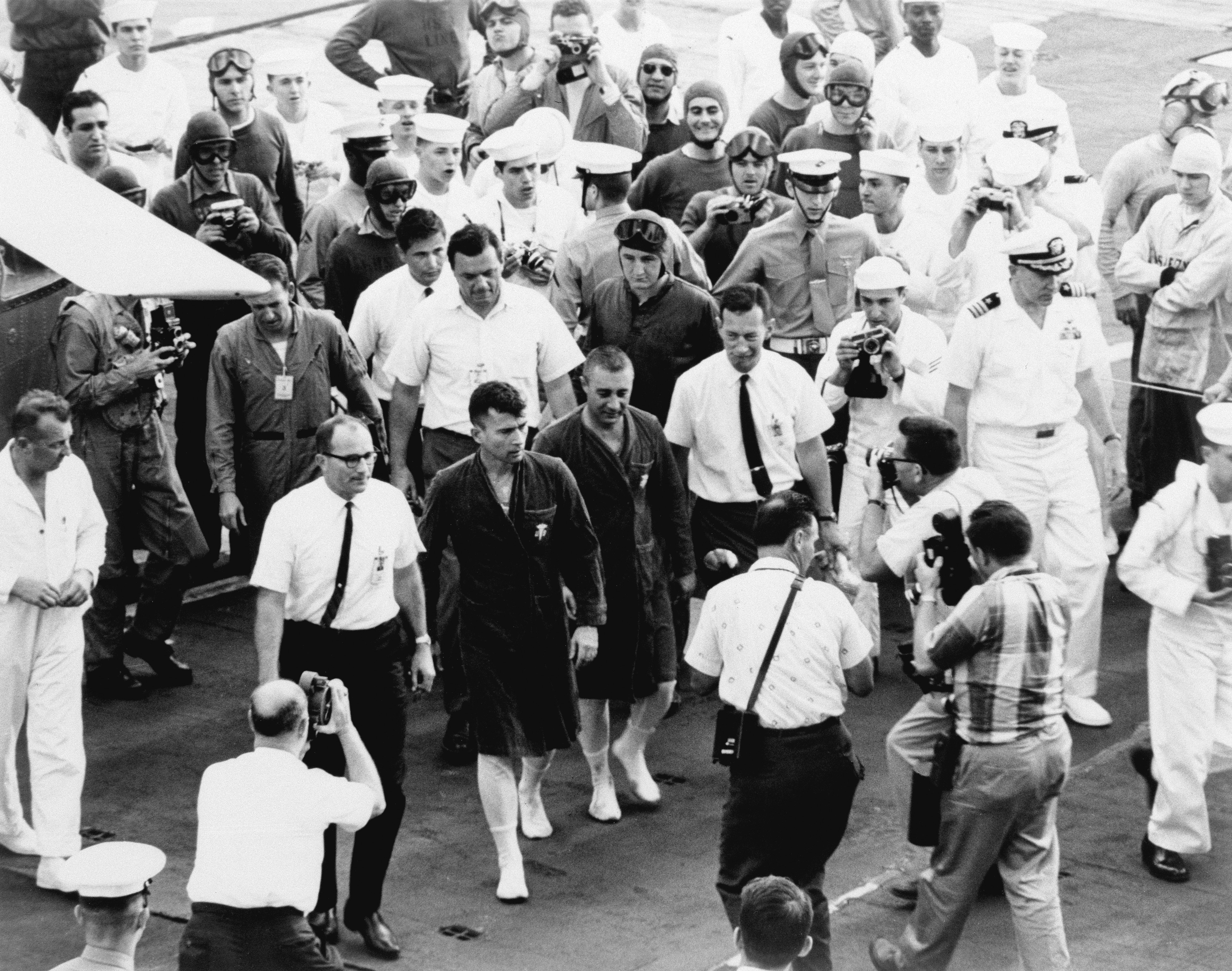
The mission plan called for the crew to stay aboard until the spacecraft was picked up, a short wait if the carrier U.S.S. Intrepid was about eight kilometres away, which was the last thing Grissom and Young had heard before splashdown. When they learned the real distance was closer to 110 kilometres, Grissom asked for a helicopter. Even so, with Liberty Bell 7 still on his mind, he refused to crack a hatch until Navy swimmers had attached a flotation collar. The spacecraft was not going to sink, but the crew endured a long half hour inside a sealed capsule that grew hotter as it pitched and tossed on the long Atlantic swells. "That was no boat," Young recalled. Heat and motion took their toll on Grissom; Young managed to keep his breakfast down. Wikipedia adds that, because of unexpected smoke from the thrusters, the crew departed from the post-landing checklist and kept their helmets on with faceplates closed for some time.
Once the collar was in place and a swimmer opened a hatch, the two men lost no time getting out and putting on the horse-collar hoists that lifted them to the helicopter. According to the official mission page they removed their suits and left the spacecraft at about 3:00 p.m. Eastern time, and were taken to the recovery ship at 3:28 p.m., one hour and twelve minutes after splashdown; there they were found to be in good condition, had a medical checkup and took a telephone call from President Lyndon B. Johnson. The ship then sailed to pick up the spacecraft, which sailors hoisted aboard at 5:03 p.m., less than three hours after landing. The Department of Defense had committed 10,185 personnel, 126 aircraft and 27 ships in support of the mission.
After the flight
Medical examinations and debriefings began in the helicopter and went on for several days. A brief stir followed when Grissom and Young had little to say to scientists about their observations in orbit, mainly astronomical ones, and more questions were raised about the failure of the cell-growth experiment; in the crew's defence, the mission was short, centred on engineering evaluation of the spacecraft, and its schedule was full.
The day after splashdown the astronauts flew to Cape Kennedy for debriefings, for the continuation of the medical examinations begun on the carrier and for a press conference. Following visits to the White House, New York and Chicago, they returned home to Houston on 31 March. The next day Gilruth welcomed them back to the Manned Spacecraft Center, where, in front of the main administration building, workers raised the American flag that Grissom and Young had carried on their mission; that flag flew during every subsequent Gemini mission.
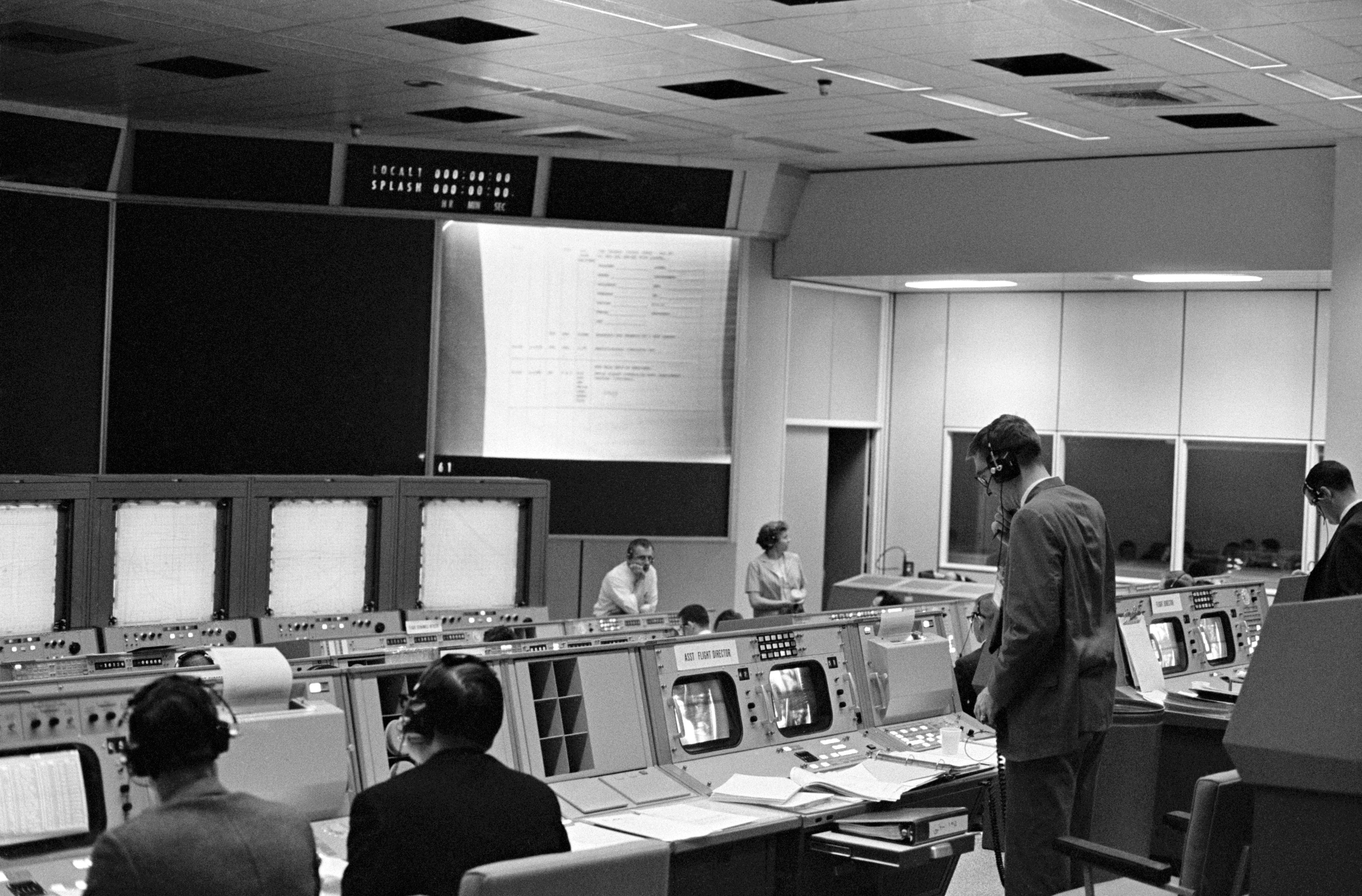
Gemini III was also the last spaceflight controlled from Cape Kennedy. While engineers monitored the countdown from the pad 19 blockhouse and flight controllers at the Cape took over once in orbit, controllers in the new Mission Control Center at the Manned Spacecraft Center staffed their consoles and monitored the mission in a backup capacity. Beginning with Gemini IV, control of all American human spaceflights shifted permanently to the Houston facility. Nine more successful Gemini missions would follow in less than two years, demonstrating the techniques required for a Moon landing.
The verdict of the programme's official history is terse: despite its minor problems, Gemini III was a complete success as far as its major objectives were concerned, and there could be no doubt that Gemini was ready for its role in the manned space flight programme. "The time of testing was over." Of the three experiments, two were performed successfully and the sea urchin egg growth experiment was not completed because of a mechanical failure; the photography objective was only partially achieved; all other mission objectives were achieved. Wikipedia puts the total distance flown at 128,748 km.
The spacecraft and its figures
The spacecraft was Gemini SC3, built by McDonnell, with a mass at launch of 3,236.9 kg. The launch vehicle was a Titan II GLV, serial number 62-12558, fired from Complex 19 at Cape Kennedy. The mission's international designation is 1965-024A, and it completed three revolutions in a total flight time of 4 hours, 52 minutes and 31 seconds. Wikipedia today places the capsule at the Grissom Memorial in Spring Mill State Park, two miles east of Mitchell, Indiana, Grissom's home town.
Not every figure is unanimous. The official mission page, which reproduces the NSSDCA catalogue parameters, and the SP-4203 history disagree on the insertion orbit, on the perigee of the fail-safe burn and on the splashdown shortfall; those differences are recorded in this entry's verification notes rather than resolved in silence. The spacecraft's landing mass is not given by any of the sources consulted and is not estimated here.
Images
Elsewhere
- AlamyGrissom y Young a la finalización de la misión Gemini 3, retrato 1965 ↗
- AlamyRetrato oficial de la tripulación titular del Gemini 3 con trajes espaciales ↗
- AlamyGrissom y Young en la reunión de revisión del lanzador Gemini-Titan antes del GT-3 ↗
- AlamyYoung y Grissom entrenan en el simulador Gemini de McDonnell Aircraft ↗
- Getty ImagesCápsula del Gemini 3 tras el amerizaje con el equipo de rescate de la Armada ↗
- Getty ImagesColección fotográfica de Gus Grissom y John Young ↗
- Smithsonian National Air and Space MuseumAstronauta John Young, 1965 ↗
- Naval History and Heritage Command65-H-565 Recuperación del Gemini 3 ↗
- Space.comGemini 3 en fotos: el primer vuelo tripulado de la nave de dos plazas ↗
- Space.comGemini 3 en fotos (página 3): preparación y lanzamiento ↗
- ApollospaceArchivo fotográfico restaurado del vuelo Gemini 3 ↗
- NASAGalería oficial de la NASA para Gemini III ↗




![GEMINI 3 Launch to Staging [HD source] (1965/03/23)](https://i.ytimg.com/vi/m2YLeEjWUIs/hqdefault.jpg)


