United States · 1994–
Northrop Grumman
Northrop Grumman is an American aerospace, defense and space group headquartered in Falls Church, Virginia. It was born in 1994, when Northrop bought Grumman Aerospace, the builder of the Apollo Lunar Module, bringing together two lineages: Jack Northrop's flying wings and Leroy Grumman's naval aircraft. From that merger onward the company grew by acquisition. In less than a decade it absorbed Westinghouse's defense electronics business, Logicon, Teledyne Ryan, Litton Industries, the Newport News shipyards and TRW, and in 2018 it added Orbital ATK, which took it fully into launch vehicles, solid rocket motors and satellites. The company itself counts more than 20 pioneering firms in its heritage. In 2011 it parted with shipbuilding, which became Huntington Ingalls Industries, and moved its headquarters from Los Angeles to Virginia to be close to its main customer, the federal government. Today it is organized in four sectors: Aeronautics Systems, Defense Systems, Mission Systems and Space Systems. Its portfolio includes the B-2 Spirit stealth bomber and its successor, the B-21 Raider, which first flew in 2023; the E-2 Hawkeye early-warning aircraft; the Global Hawk and MQ-4C Triton long-endurance drones; the Sentinel intercontinental ballistic missile; the Cygnus cargo spacecraft and the Antares rocket; and its part in the James Webb Space Telescope, launched in 2021. In 2024 it reported sales of $41.0 billion, ended the year with a record backlog of $91.5 billion and employed close to 100,000 people across every U.S. state and in more than 25 countries.
Northrop Grumman in the news
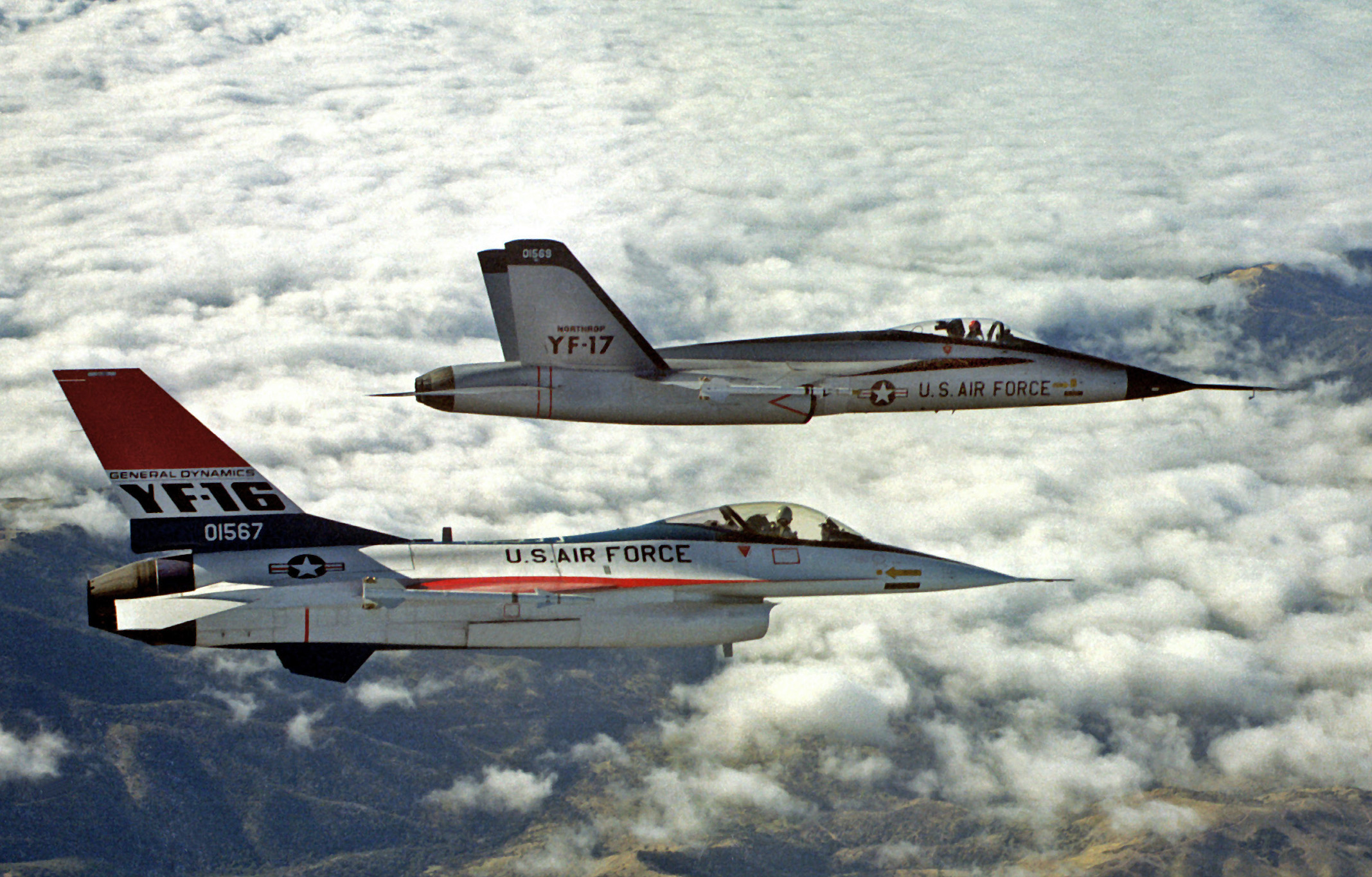
Vertical Aerospace has signed long-term supplier agreements with ANH Structure and Northrop Grumman LITEF to provide seating and inertial navigation The post Vertical Aerospace Bolsters Supplier…
_061006-F-1234S-076.jpg)
Vertical Aerospace today announced long-term supplier agreements with ANH Structure, a specialist in aircraft seating systems, and Northrop Grumman LITEF GmbH, a developer of navigation and sensor…

SRC Inc., a global, not-for-profit, defence research and development company, recently announced that it developed its new Gryphon R1810 radar for Northrop Grumman’s Raid Hunter, a gun-based air…
_at_Canada_Aviation_and_Space_Museum_(3).jpg)
The U.S. Air Force (USAF) and Northrop Grumman have broken ground on a new assembly plant for the B-21 Raider stealth bomber. The facility will be located in Palmdale…

Northrop Grumman Systems Corp., Woodland Hills, California, is awarded a $34,388,301 modification (P00005) to a firm-fixed-price, indefinite-delivery/indefinite-quantity contract (N0001924D0123)…

_061006-F-1234S-076-800.webp)

_at_Canada_Aviation_and_Space_Museum_(3)-1600.webp)

History
Two lineages before 1994
Both halves of the name have their own histories, which the portal covers in their own entries. Leroy Grumman founded the company in December 1929 on Long Island, New York; during the Second World War it built most of the U.S. Navy's aircraft, and later it produced the Apollo Lunar Module and the F-14 Tomcat. Jack Northrop founded his namesake company in 1939, and it became known for the flying-wing concept that culminated in the B-2 stealth bomber. This entry deals with the group created when the two came together.
The 1994 merger
In 1994 Northrop bought Grumman Aerospace for about $2.1 billion and the combined company took the name Northrop Grumman. The deal came in the middle of the post-Cold War restructuring of the defense industry, when budgets were shrinking and contractors sought scale in order to survive. At the helm was Kent Kresa, Northrop's chief executive since 1990, who made acquisitions the core strategy of the new company: between 1994 and 2003 he closed another 15 purchases.
A decade of acquisitions
The heritage list the company publishes lets that growth be traced year by year. In 1996 it acquired Westinghouse's defense and electronics business, a major maker of military and civil aviation radars. Logicon, a supplier of defense information systems, followed in 1997, and in 1999 came Teledyne Ryan Aeronautical, a specialist in unmanned reconnaissance aircraft and aerial targets; the Global Hawk descends from that line. Vought and a number of smaller electronics, simulation and IT firms were added along the way. In 1998 a merger with Lockheed Martin was considered, but it was abandoned in the face of opposition from the Department of Defense and the Department of Justice.
_sobrevolando_la_ceremonia_de_bautizo_del_%C2%ABSpirit_of_Kansas%C2%BB%2C_18_de_mayo_de_1995%3B_configuraci%C3%B3n_Block_10.jpeg)
The biggest leap came at the turn of the century. In 2001 Northrop Grumman bought Litton Industries, a defense electronics maker and builder of surface ships for the Navy; to absorb it, a new holding company was created in Delaware that eventually took the name Northrop Grumman Corporation. That same year it acquired Newport News Shipbuilding, the yard that builds America's nuclear aircraft carriers and submarines. In 2002 it took over TRW, one of the great names in civil and military space systems; its space and laser capabilities formed the Space Technology sector, based in Redondo Beach, California. That year Forbes named it company of the year.
New leadership and reorganization
Kresa retired in 2003 and was succeeded by Ronald Sugar, previously chief operating officer, who also became chairman in October of that year. In 2006 the company opened a technical services sector, and in 2007 it bought Scaled Composites, Burt Rutan's firm known for SpaceShipOne. In January 2010 Wes Bush took over, leading a new phase of concentration on the aerospace and electronics business.
In March 2011 the company spun off its entire naval business as an independent company, Huntington Ingalls Industries, which took the shipyards inherited from Litton and Newport News. That same year it moved its headquarters from Los Angeles to West Falls Church, Virginia, to be closer to its government customers. Acquisitions did not stop altogether, but they changed in scale: a cybersecurity firm in 2012 and, in 2014, Qantas's defense services business in Australia.
The B-21 and a return to bombers
In 2015 the Air Force awarded Northrop Grumman the contract for the new long-range bomber meant to succeed the B-1 and the B-52, which would be designated B-21 Raider. The contract covered development and five low-rate initial production lots. The first aircraft took off on 10 November 2023 from Air Force Plant 42 in Palmdale, California, and landed at Edwards Air Force Base after about 90 minutes in the air. Palmdale is also home to the Aeronautics Systems sector, which keeps the B-2 in service, produces F-35 fuselage sections and builds the E-2 Hawkeye and the MQ-4C Triton.
Orbital ATK and the move into launch
In September 2017 Northrop Grumman announced the purchase of Orbital ATK, itself formed in 2015 from the merger of Orbital Sciences and part of Alliant Techsystems. The deal, valued at $9.2 billion including $7.8 billion in cash and $1.4 billion in assumed debt, closed on 6 June 2018, one day after the Federal Trade Commission cleared it on one condition: the group had to keep offering Orbital ATK's solid rocket motors to other contractors. The acquired company became a division called Northrop Grumman Innovation Systems, led by Blake Larson. It brought the Antares launcher, the Cygnus cargo spacecraft that resupplies the International Space Station under NASA contracts, the Minotaur and Pegasus rockets and a broad range of rocket motors.
_en_exhibici%C3%B3n_est%C3%A1tica%2C_18_de_mayo_de_1995%2C_ceremonia_de_bautizo%3B_configuraci%C3%B3n_Block_10_(entregas_1993-1996%2C_conversi%C3%B3n_desde_juli.jpg)
On 1 January 2020 that division was dissolved and most of its activity was merged into a new Space Systems sector. In June 2020 NASA ordered from the group the HALO module for the Gateway lunar station, derived from Cygnus, and in September of that year the company ended development of the OmegA launcher, intended for national security satellites. That same year it launched a new brand identity that celebrates its heritage of more than 20 companies.
Telescopes and nuclear deterrence
Northrop Grumman took part in the James Webb Space Telescope, launched in 2021; for its development and production the company and its partners received the Collier Trophy, one of nine the company and its industry partners have won. In 2020 it also secured the Sentinel contract, the intercontinental ballistic missile meant to replace the Minuteman III. On 1 January 2019 Kathy Warden, until then president and chief operating officer, succeeded Bush as chief executive.
The company today
Since 2019 Northrop Grumman has been divided into four sectors: Aeronautics Systems; Defense Systems; Mission Systems, based in Linthicum, Maryland, and devoted to radars, sensors and electronics; and Space Systems. On 1 July 2024 the Sentinel program moved from Space Systems to Defense Systems. According to its annual report, sales in 2024 reached $41.0 billion, up from $39.3 billion the previous year, and backlog closed at a record $91.5 billion. Most of the business comes from the U.S. government, chiefly the Department of Defense and the intelligence community. The company has close to 100,000 employees and more than 550 facilities across all 50 states and in more than 25 countries, trades on the New York Stock Exchange under the symbol NOC and names Australia, the United Kingdom, Japan, South Korea and the Middle East as its priority markets outside the United States.
.jpg)
Catalog — Aircraft
- 1989
Northrop Grumman B-2 Spirit
The Northrop Grumman B-2 Spirit is a subsonic, nuclear-capable stealth strategic bomber flown exclusively by the United States Air Force. It is a pure flying wing — no distinct fuselage, no tail — of lambda planform, powered by four turbofans buried inside the wing and normally crewed by two, with provision for a third. Its purpose fits in a sentence: to go unseen where no other bomber could go, carrying nuclear or conventional ordnance in two internal bays. Its 52.4-metre span and barely 21 metres of length produce a silhouette unlike anything else in service, and one that is genuinely disorienting in the air precisely because it lacks an aircraft's usual visual references. The Spirit came out of the Advanced Technology Bomber programme, a black project launched in 1979 under the Carter administration, just as stealth stopped being a laboratory promise. That promise was among the arguments used to cancel the supersonic B-1A, and the competition was settled on 20 October 1981 in favour of the Northrop/Boeing team over Lockheed/Rockwell. Northrop arrived with an advantage nobody else had: it was the house that had built the YB-35 and YB-49 flying wings in the late 1940s, cancelled then without reaching operational service. The B-2 shares exactly the same wingspan as the YB-49, a detail that sums up thirty years of technical stubbornness. The aircraft was rolled out publicly on 22 November 1988 at Palmdale and first flew on 17 July 1989. The B-2's stealth comes not from a single trick but from the sum of many: a continuously curved shape with no vertical surfaces to throw back a lateral echo; carbon-graphite composites that absorb radar energy; special coatings; intakes and exhausts that bury the engines and mix hot efflux with cold boundary-layer air to cut the infrared signature; no afterburners; and unusually tight assembly tolerances to prevent fluid leaks. Flying an inherently unstable flying wing demands a quadruplex fly-by-wire control system, and directional control is achieved with split brake-rudders and differential thrust instead of fins. All of it carries a steep operating price: maintaining the low-observable skin requires climate-controlled hangars big enough for the full span, and in 1997 each flight hour called for 119 hours of maintenance, against 53 for the B-52 and 60 for the B-1B. Cost was also the reason the B-2 never became a fleet. From the 165 aircraft the Air Force once contemplated and the 132 approved in the mid-1980s, the number fell to 75, then to 20 in the 1992 State of the Union address, and finally settled at 21 when a test prototype was authorised in 1996 for conversion to operational Block 30 standard. Opposition in Congress was broad and bipartisan, and the end of the Cold War drained the urgency from the mission the aircraft had been designed for. The cost figures in circulation are several, and they do not measure the same thing: the whole programme was estimated at $44.75 billion in 1997 dollars, an average of $2.13 billion per aircraft; unit procurement cost was $737 million in 1997 dollars, or $929 million including spares and software support; and in 1995 Northrop offered twenty additional aircraft at a flyaway cost of $566 million each. In combat, the B-2 debuted in 1999 over Yugoslavia in Operation Allied Force: six aircraft flying non-stop from Missouri, missions of some thirty hours, just 50 of NATO's 34,000 sorties and yet 11 per cent of the bombs dropped and a third of selected targets destroyed in the first eight weeks. It was also the first aircraft to employ GPS-guided JDAM weapons in combat. Afghanistan followed in 2001, Iraq in 2003, Libya in 2011 and 2017, Yemen in 2024 and strikes on Iran in 2025 and 2026. On 23 February 2008 the first and only Spirit lost in an accident, Spirit of Kansas, crashed on take-off from Andersen Air Force Base on Guam; both crew ejected unhurt and the cause was moisture in the air-data sensors. Two more aircraft suffered serious landing accidents in 2021 and 2022, and one of them was divested in 2024 as uneconomical to repair. The Air Force keeps the rest of the fleet at Whiteman, Missouri, and plans to retire it around 2032 as its successor — the equally Northrop Grumman B-21 Raider — enters service.
Catalog — Rockets
- 1994
Pegasus XL
The Pegasus XL is the stretched configuration of Pegasus, the air-launched small-lift vehicle developed by Orbital Sciences Corporation and later built and operated by Orbital ATK and Northrop Grumman. It is not a separate rocket but a version of Pegasus with lengthened first and second stages — the motors become the Orion 50SXL and Orion 50XL — to increase performance; the upper stages are unchanged and flight operations are similar. The wing was strengthened slightly to handle the added weight. Pegasus was the world's first privately developed orbital launch vehicle. Rather than lifting off from a pad, the rocket was carried beneath a mother ship — initially a NASA B-52, and from 1994 the L-1011 TriStar 'Stargazer' — and released over open ocean at about 40,000 feet; after five seconds of free fall it ignited its first stage. That first stage had no gimballed nozzle and was steered by a delta wing and fins. The vehicle comprised three solid-propellant stages plus an optional fourth hydrazine monopropellant stage, the HAPS module. Pegasus is retired. Able to carry up to about 450 kg to low Earth orbit, it flew mainly scientific satellites for NASA. Demand fell sharply in the late 2010s as small satellites migrated to rideshare slots on larger rockets, and the programme closed in 2026 after 46 missions.
- 2010
Minotaur IV
Minotaur IV, also known as Peacekeeper SLV and OSP-2 PK, is a US small-lift launch vehicle operated by Northrop Grumman that repurposes the motors of the retired LGM-118 Peacekeeper intercontinental ballistic missile. It measures 23.88 metres tall and 2.34 metres in diameter, has a mass of 86,300 kilograms, and in its standard four-stage configuration places up to 1,591 kilograms into low Earth orbit. The vehicle belongs to the Minotaur family, a set of solid-fuel launchers repurposed from decommissioned ICBMs. Within that family Minotaur IV is not a single rocket but a common trunk from which several configurations branch: the baseline version; Minotaur IV+, which swaps the Orion 38 fourth stage for a Star 48BV motor and gains roughly 200 kilograms of capacity; and the three-stage Minotaur IV Lite, which omits the fourth stage entirely and flies suborbital missions, typically hypersonic vehicle tests. The first three stages, using the Peacekeeper's SR-118, SR-119 and SR-120 motors, are common to all of them. Because it uses components from dismantled missiles, Minotaur IV may only launch United States government missions. Its simple architecture would allow launches from essentially anywhere in the country using mobile facilities, though that capability has never actually been needed.
Videos




Show the 1 more

Did you know… about Northrop Grumman
- What is the b-21?
The B-21 Raider is the US Air Force's next stealth bomber, built by Northrop Grumman to replace the B-1B and B-2 from the late 2020s. A two-crew flying wing…
- How many b-21 will be built?
The US Air Force plans to buy at least 100 B-21 Raiders, the official programme of record since it was announced in 2015. Senior Air Force leaders have argued…
- How far can the b 21 fly?
The B-21 Raider's range is classified: neither the US Air Force nor Northrop Grumman has published a figure (data of September 2026). The Air Force describes…