United Kingdom · 1935–
Hawker Siddeley
Hawker Siddeley was a British industrial group built primarily around aircraft manufacturing, which gathered the legacies of much of the country's historic aviation industry under a single roof. Through a long chain of mergers and acquisitions it became, by the 1960s, one of only two major aircraft companies left in the United Kingdom. Its subsidiaries produced some of the best-known British aeroplanes ever built: the Hurricane fighter, which with the Spitfire carried the country's defence through the Battle of Britain; the Trident trijet and the 125 business jet, both inherited from de Havilland; the 748 turboprop; the Nimrod maritime patrol aircraft; the Hawk trainer; and, above all, the Harrier family, the first operational vertical take-off jet in the world and by a wide margin the most successful. The group was never solely an aerospace concern. It built locomotives and railway equipment through Brush Traction, diesel engines through Lister Petter, rapid transit vehicles in Canada and electrical and industrial instrumentation, and it was once a constituent of the FTSE 100 Index. In 1977 its aviation and missile divisions were nationalised and became a founding component of British Aerospace; the rest of the group carried on separately until BTR absorbed it in 1992.
History
A group assembled by acquisition
Hawker Siddeley Aircraft was formed in 1935 when Hawker Aircraft bought the businesses of J. D. Siddeley — the car and engine builder Armstrong Siddeley and the aircraft maker Armstrong Whitworth — and in the same move took in A.V. Roe & Company (Avro), the Gloster Aircraft Company and Air Training Services. The acquired firms went on designing and selling aircraft under their own names while sharing manufacturing work across the group, an arrangement that lasted almost three decades. During the Second World War the combine was one of the mainstays of British industry: the Hurricane, the most numerous RAF fighter in the Battle of Britain, on its own outnumbered all other British fighters in service and is credited with more than half of all enemy aircraft destroyed in that campaign.
The Canadian adventure
In 1945 the group bought the Victory Aircraft plant at Malton, Ontario, from the Canadian government and renamed it A.V. Roe Canada. The subsidiary expanded with extraordinary ambition — engines, mining, steel, rolling stock, electronics, computers — until by 1958 it was the third largest company in Canada, employing more than 14,000 people and providing close to half the parent's revenues. Out of it came the C102 Jetliner, the CF-100 Canuck fighter, the celebrated CF-105 Arrow and the experimental Avrocar, plus a catalogue of unbuilt projects ranging from supersonic transports to hypersonic vehicles. Only the CF-100 reached full-scale production: the cancellation of the Arrow unravelled the company, and A.V. Roe Canada was dissolved in 1962.
Consolidation and a single brand
In 1948 the parent was renamed Hawker Siddeley Group, with aviation gathered into Hawker Siddeley Aviation and guided weapons and space work into Hawker Siddeley Dynamics; that same year it took over the Kingston upon Thames factory that became its aviation headquarters. By the late 1950s the British government had concluded that the fifteen or so surviving manufacturers could not be sustained on a shrinking number of contracts, and made future orders conditional on companies merging. Hawker Siddeley responded by buying Folland in 1959 and, the following year, de Havilland and Blackburn; in 1959 its aero engine arm also merged with Bristol Aero Engines to form Bristol Siddeley. In 1963 the historic names were dropped and everything was sold as "Hawker Siddeley" or "HS": the Trident, the 125, the Nimrod, the Hawk, the wings of the Airbus A300 and the HS.146 project that would resurface years later as the BAe 146. In the same period the firm developed the Harrier, which stayed in production into the 1990s.
Railways, nationalisation and dissolution
The group diversified hard outside aviation. In 1957 it bought the Brush group of companies, including Brush Electrical Machines and Brush Traction, and with them moved into locomotives, railway signalling and industrial engines; from the 1970s its Canada Car and Foundry subsidiary built rapid transit vehicles for North American systems, among them the Blue and Orange lines in Boston and much of the older Toronto subway stock. On 29 April 1977, under the Aircraft and Shipbuilding Industries Act, Hawker Siddeley Aviation and Hawker Siddeley Dynamics were nationalised and merged with the British Aircraft Corporation and Scottish Aviation to form British Aerospace. Those two divisions accounted for only a quarter of the business, so the remainder continued as Hawker Siddeley Group Plc, concentrating on railway engineering, signalling, industrial electronics and instrumentation. Through the 1980s it shed its North American heavy manufacturing, and in 1992 BTR plc acquired it for about one and a half billion pounds; after a further chain of takeovers its business units ended up inside Schneider Electric. The name still survives in switchgear and power transformer companies, and it returned to aviation when the corporate jet line, sold by British Aerospace to Raytheon in 1993, passed in 2006 to a new company called Hawker Beechcraft.
Catalog — Aircraft
- 1960
Hawker Siddeley HS 748
The Hawker Siddeley HS 748 was the regional turboprop with which Avro set out to replace the Douglas DC-3 on feeder routes around the world. It flew on 24 June 1960, and a ruggedness aimed at unprepared strips kept it working long after the assembly line closed.
- 1960
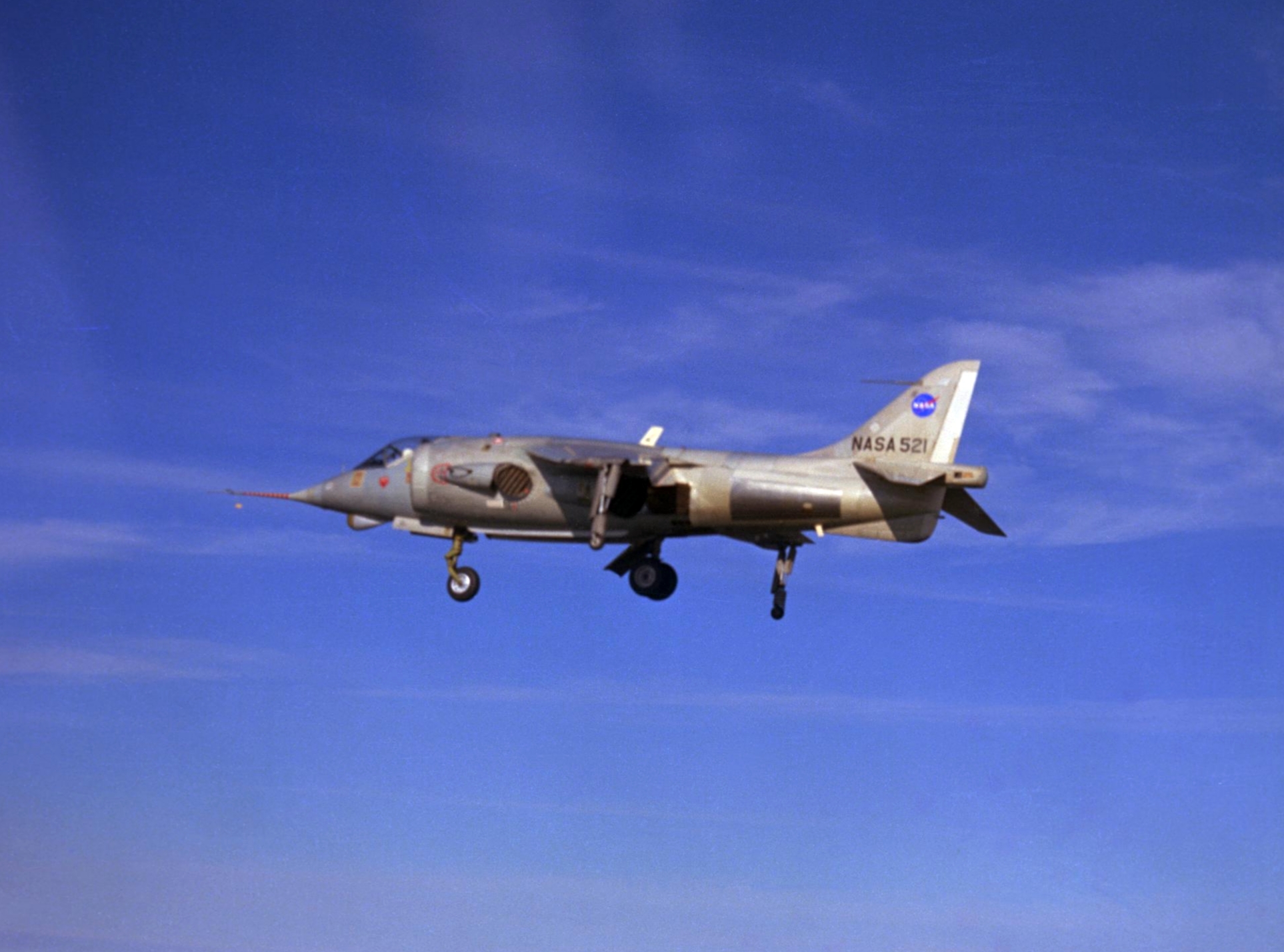
Hawker Siddeley P.1127 Sheet pending
Variants (4)
- Kestrel FGA.1
- P.1127
- P.1127 (RAF)
- XV-6A
- 1962
Hawker Siddeley Trident
The Hawker Siddeley Trident is a British short/medium-haul trijet airliner that first flew on 9 January 1962 and entered service with British European Airways on 1 April 1964. A total of 117 were built, and the last examples were retired in 1995.
- 1963
Hawker Siddeley Andover Sheet pending
Variants (6)
- Andover C.1
- Andover C.1(PR)
- Andover CC.2
- Andover E.3
- Andover E.3A
- Avro 748MF
- 1967
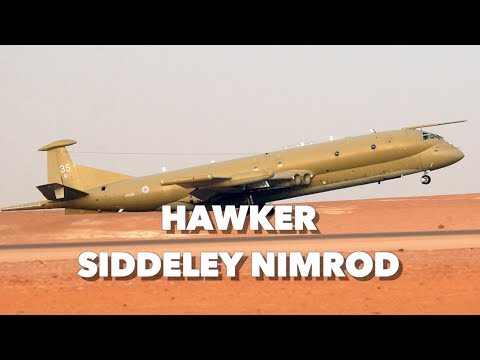
Hawker Siddeley Nimrod Sheet pending
Variants (4)
- HS.801 (prototype)
- Nimrod MR.1
- Nimrod MR.2
- Nimrod R.1
- 1967
Hawker Siddeley Harrier
The Hawker Siddeley Harrier was the first attack and reconnaissance aircraft with vertical or short take-off and landing (V/STOL) capability to reach genuine operational service, and the only design of its kind to survive the wave of vertical-flight projects of the 1950s and 1960s. It was neither the fastest nor the best armed aircraft of its generation: it was the only one that could land where there was no runway. That singularity turned it into a cult machine and, at the same time, into a demanding aircraft, expensive to maintain and unforgiving of pilot error. Its origin lies not in a military requirement but in an engine idea. In the mid-1950s the French aviation consultant Michel Wibault proposed directing a jet engine's thrust through swivelling nozzles; the Bristol Engine Company took up the concept, slimmed it down and turned it into the Pegasus, a turbofan with four rotating nozzles venting cold fan air at the front and hot exhaust at the rear. In 1957, with the P.1121 fighter cancelled by the British Defence White Paper, Hawker Aircraft found itself with spare capacity and a revolutionary engine within reach. Sydney Camm, Ralph Hooper and Stanley Hooker launched the P.1127 project, funded at first by the company itself and sustained thereafter in large part by American money and testing, channelled through NATO's mutual weapons development programme and NASA's Langley research centre. The British Treasury had refused to pay for it. The first prototype, XP831, made its tethered hover at Dunsfold in October 1960 and flew free a month later; the full transition between jet-borne and wing-borne flight came in September 1961. In 1963 one of the prototypes landed on the deck of the aircraft carrier HMS Ark Royal, and that same year another crashed in public at the Paris Air Show. Out of those six experimental machines came the Kestrel FGA.1, nine aircraft paid for jointly by Britain, the United States and West Germany and evaluated in 1964-65 by a tripartite squadron at RAF West Raynham. The cancellation of the supersonic P.1154 in 1965 left the RAF without an ambitious vertical successor and with a single realistic option: to produce a combat version of the Kestrel. That aircraft was named Harrier GR.1, flew on 28 December 1967 and entered service in 1969. The RAF used it for close air support, ground attack and tactical reconnaissance, and deployed it above all in West Germany. There the Harrier made complete sense: if the Warsaw Pact attacked, conventional air bases would be the first targets, so the squadrons would disperse into forest clearings and camouflaged sites from which to strike advancing armoured columns. The GR.3, with a more powerful Pegasus and a laser rangefinder in the nose, was the definitive version of the British first generation. The United States joined early: the Marine Corps, won over by the idea of forward bases twenty miles from the front line and of operations from amphibious ships, received its first AV-8A in January 1971 and bought 102 single-seaters and eight TAV-8A trainers by 1976. The Spanish Navy acquired the AV-8S Matador — sold with the United States acting as intermediary to work around political friction with London — and operated it from the carrier Dédalo; Spain would resell the type to the Royal Thai Navy in 1998. The 1982 Falklands War was its trial by fire. The GR.3s of No. 1 Squadron RAF, hurriedly modified for deck operations and carried to the South Atlantic aboard the container ship Atlantic Conveyor, flew from HMS Hermes and from an improvised strip at Port San Carlos, while the Royal Navy's Sea Harriers — a separate aircraft, belonging to the fleet — handled air defence. The GR.3s flew close air support, photographic reconnaissance and strikes against Stanley airfield; at Goose Green their cluster bombs unstuck the advance of 2 PARA, and in the final days of the conflict the RAF used laser-guided bombs in combat for the first time. Four GR.3s were lost, all to fire from the ground. That campaign also produced the legend of VIFFing: moving the nozzles in forward flight to force an abrupt nose-up pitch and unsettle a pursuer. The manoeuvre was first explored by Marine Corps pilots in mock combats against F-4 Phantom IIs, and it worked, but at a steep price in energy and stability, with limits imposed by the Pegasus's high-pressure air ducts. The first-generation Harrier was retired by the Marine Corps by 1987 and replaced in the RAF by the Harrier II, a deep redesign by McDonnell Douglas and British Aerospace that is already another machine. Barely a hundred-odd airframes survive, almost all of them in museums: XP831 at the Science Museum in London, Kestrels and XV-6As spread between Cosford and several American collections, and Falklands veteran GR.3s preserved in the United Kingdom.


![RARE Hawker Siddeley HS 748s STILL FLYING! Air Creebec in Timmins, Ontario [4K]](https://i.ytimg.com/vi/DMwgdLAZU5c/hqdefault.jpg)