Did you know…
When did astronauts go to the moon?
Short answer
Twelve people have walked on the Moon, all between July 1969 and December 1972. Apollo 11 landed on 20 July 1969 with Neil Armstrong and Buzz Aldrin. Five more landings followed — Apollo 12, 14, 15, 16 and 17 — ending when Apollo 17 left the surface in December 1972. No crew has returned since.

The three and a half years that hold every landing
Every human journey to the lunar surface fits inside a single window. Apollo 11 touched down in the Sea of Tranquillity on 20 July 1969; Neil Armstrong stepped out first and Buzz Aldrin followed, while Michael Collins remained in lunar orbit aboard the command module. Apollo 12 landed that November beside the Surveyor 3 probe. Apollo 13 never landed — an oxygen tank ruptured on the way out and the crew looped around the Moon and came home. Apollo 14 landed in early 1971, and Apollo 15, 16 and 17 followed with the lunar roving vehicle, longer surface stays and a stronger scientific programme. Apollo 17 lifted off from the Taurus-Littrow valley in December 1972, and with it the era closed.
Twelve who walked, twelve more who did not
Six landings, two moonwalkers each, gives twelve people who have stood on another world. A further twelve reached lunar distance without landing: the command module pilots who stayed in orbit, plus the crews of Apollo 8, which orbited the Moon at Christmas 1968, Apollo 10, which rehearsed everything but the descent, and Apollo 13. Apollo 17's Harrison Schmitt was the only professional geologist among them and the last person to set foot on the surface.
Why the gap, and what comes next
The programme ended for budgetary and political reasons rather than technical ones; the last three planned missions were cancelled and their hardware went to museums. Since then, robotic landers from several nations have reached the surface, but no crew. NASA's Artemis programme aims to return astronauts to the Moon, with Artemis II sending a crew around it and a later mission targeting a landing near the south pole, where permanently shadowed craters may hold water ice.
More questions
- Image pending
Astronauts and life in space
Why does astronauts float in space?
Because they are in free fall, not because gravity is absent. At the International Space Station's altitude of about 400 km, Earth still pulls almost as hard… more…
- Image pending
Astronauts and life in space
Why did yuri gagarin die?
Gagarin died in an aircraft crash, not in a spacecraft. On 27 March 1968 the MiG-15UTI trainer he was flying with instructor Vladimir Seryogin went down in… more…
- Image pending
Astronauts and life in space
How much an astronaut is paid?
NASA's civilian astronauts are ordinary federal employees, paid on the General Schedule grade-and-step scale with no bonus per flight, per spacewalk or per… more…
.png)
Astronauts and life in space
Why is blue origin so slow?
Blue Origin was built on deliberate, owner-funded incrementalism: its motto is Gradatim Ferociter, step by step, and it spent its first two decades on… more…
Astronauts and life in space
When did astronauts last walk on the moon?
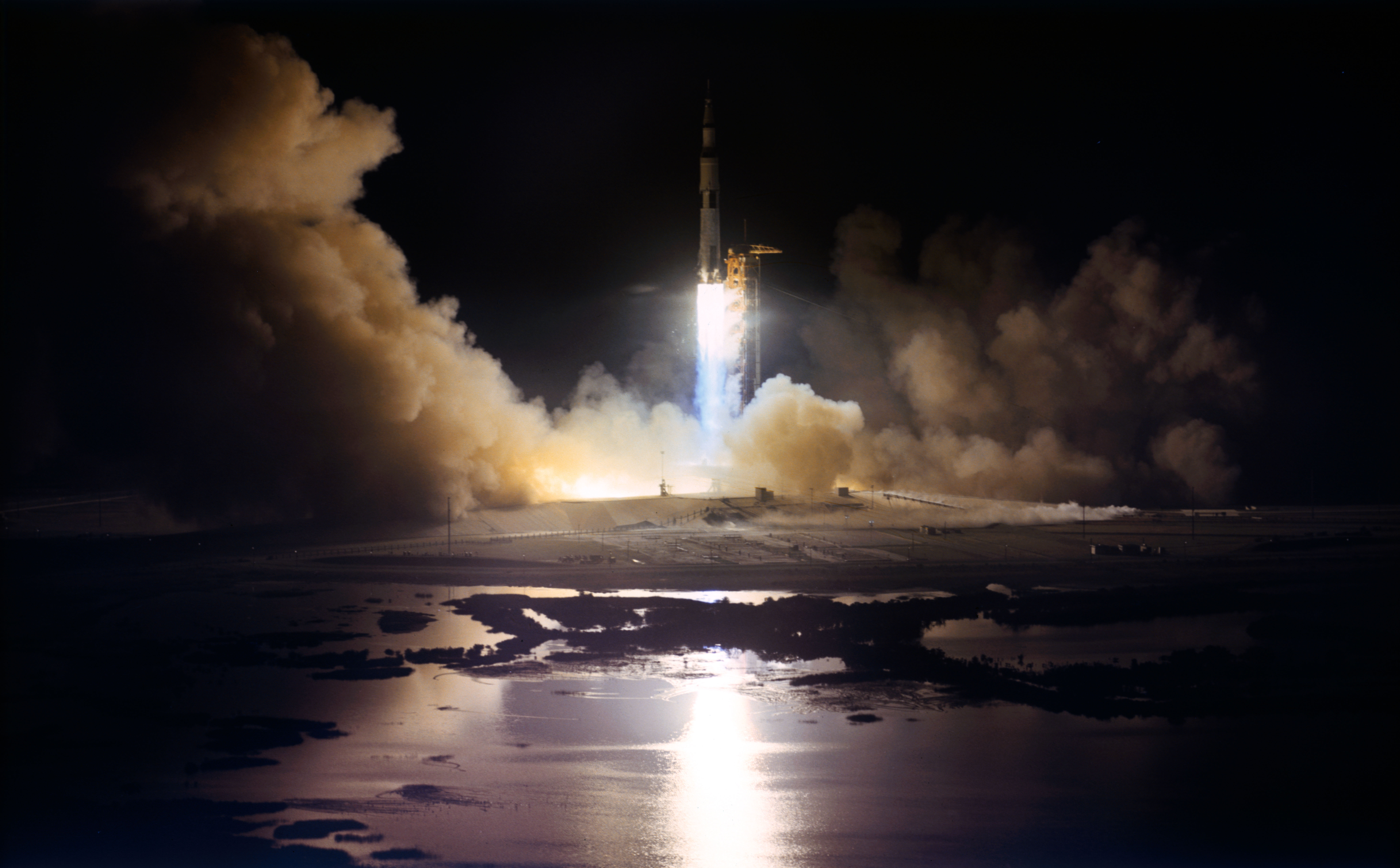
Apollo 17, in December 1972. Eugene Cernan and Harrison Schmitt landed in the Taurus-Littrow valley on 11 December 1972, worked on the surface for three days… more…
- Image pending
Astronauts and life in space
How high do astronauts orbit the earth?
Crewed spaceflight today happens a few hundred kilometres up. The International Space Station orbits at about 400 km, lapping the planet roughly every 90… more…
