Airliner · Civil · Sweden
Saab 340
- January 25, 1983
- First flight
- 1984
- Introduced
- In service
- Status
- 459
- Units built


_Saab_340B_Plus_JA8642-800.webp)
-1600.webp)


_100004_of_72_ASC_squadron%2C_Swedish_Air_Force%2C_Malmen_Airshow%2C_June_2012-1600.webp)


_2023-06-11_Andre_Gerwing_Collection_ID_015264-1600.webp)
-800.webp)
-800.webp)
-1600.webp)
-1600.webp)
%2C_Loganair%2C_Glasgow%2C_2023-1600.webp)
-800.webp)
-1600.webp)
%2C_City_Air%2C_Zurich%2C_2003-1600.webp)
%2C_Tus_Airways%2C_Rhodes-800.webp)
%2C_British_Midland_Commuter%2C_Manchester%2C_2000-1600.webp)
_serial_100004_on_static_display_at_RAF_Waddington%2C_July_2012-1600.webp)
-1600.webp)
-800.webp)
%2C_Crossair_Europe%2C_Basel%2C_2000-1600.webp)

_AN0165848-800.webp)

_AN1620908-800.webp)

-1600.webp)


_at_RAF_Waddington%2C_June_2012-1600.webp)
_AN0160394-800.webp)
_AN0142632-800.webp)


%2C_NyxAir%2C_Visby-1600.webp)
-1600.webp)
%2C_Swedish_Air_Force%2C_October_2004_(2)-800.webp)
-1600.webp)
_AN0147014-800.webp)

_on_static_display_at_Malmen%2C_Link%C3%B6ping%2C_August_2016-1600.webp)
%2C_Bearskin_Airlines-1600.webp)
-1600.webp)
-1600.webp)
%2C_Aer_Lingus%2C_Dublin%2C_July_1992-1600.webp)
_American_Eagle._(6154415225)-800.webp)


_(7181173713)-1600.webp)
_2023-06-11_Andre_Gerwing_Collection_ID_015265-1600.webp)
%2C_Aer_Lingus%2C_Dublin%2C_February_1993-1600.webp)


-1600.webp)

_AN0202367-800.webp)

%2C_Swedish_Air_Force%2C_Malmen_2010-1600.webp)
%2C_Swedish_Air_Force%2C_October_2004_(1)-800.webp)
-1600.webp)
_at_Wagga_Wagga_Airport-800.webp)

-1600.webp)

-800.webp)
-800.webp)
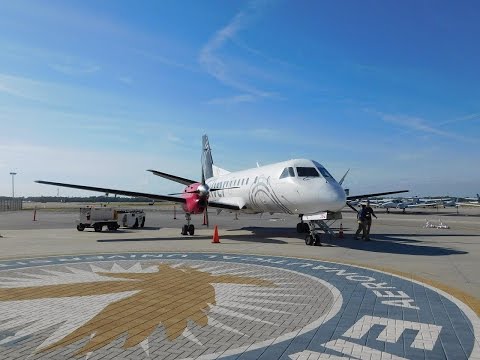
The Saab 340 is a Swedish regional airliner: a pressurised twin-engine turboprop laid out for 30 to 36 passengers, developed by Saab AB together with the American manufacturer Fairchild. It was the first major civil aeroplane of a company whose identity had been built almost entirely on military aircraft, and it made its maiden flight from Linköping on 25 January 1983. Its arrival on the market in 1984 met the regional feeder business that the 1978 Airline Deregulation Act had opened up in the United States, and shortly after launch the type became the best-selling commuter aircraft in the world. The programme ran through three generations: the original 340A with General Electric CT7-5A2 engines, of which 159 were built; the 340B of 1989, with more powerful CT7-9B engines, of which 200 were built; and the 340B Plus delivered from 1994, adding active noise control and extended wingtips over a further 100 airframes. Crossair was the launch customer in June 1984, and American Eagle, which ordered 50 aircraft in 1989, the largest United States buyer. Competition from regional jets and the collapse in turboprop demand led Saab to announce the end of production on 24 December 1997; the last 340 was delivered on 8 June 1999 after 459 aircraft, and by 2005 the company had left civil aviation altogether. The type nonetheless enjoyed a long second life as a freighter, a leasing asset and a mission platform: around 250 remained in service as of 2023, and the airframe carries the Erieye airborne early warning system as the Swedish S 100B Argus, as well as maritime surveillance fits.
Related sheets
Category
Saab 340 in the news
.jpg)
First GlobalEye for Sweden's Air Force unveiled, to replace Saab 340 AEW jets transferred to Ukraine
Yesterday, 15 October, Saab presented the first GlobalEye airborne early warning and control (AEW&C) aircraft intended to equip the Swedish Air Force…
_AN0160394.jpg)
The rollout marks a new milestone in the replacement of the Saab 340 AEW-300s and in Sweden's progress toward a multi-domain surveillance, early warning and airborne control capability.
.jpg)
The rollout marks a new milestone in the replacement of the Saab 340 AEW-300s and in Sweden's progress toward a multi-domain surveillance, early warning and airborne control capability.

The use in Italy of Air Urga's Saab 340B in HelloFly colours, flown under Luxwing flight numbers and code, lasted just over 2 months. The aircraft departed yesterday as URG521 from Trapani…

08/09/2026 Surenio.com.ar (TDF) – Note. This noble Weapon System of the Argentine Air Force made landings on the runway of Marambio Base. BUENOS AIRES (NA).- As part of the Campaign…
-1600.webp)
-1600.webp)

History
Origins: Saab looks to the civil market
Through the 1970s Saab AB — a company whose industrial identity had been built almost entirely on combat aircraft — began to take the civil market seriously. In 1974 it decided to press ahead with the development of its first significant airliner. Internal studies late in the decade concluded that the most promising gap lay in a short-haul machine optimised for around thirty passengers, and that it should be turboprop-powered: slower than a turbofan, but appreciably more economical at a moment when oil had become expensive following the 1973 crisis. The economist Gunnar Eliasson later argued that this choice made the aeroplane less attractive than jet-powered rivals, while conceding that the General Electric CT7-5A2 selected was genuinely competitive against the jet engines of the day. The stated ambition was to match jet performance within the short-haul role.
The Fairchild partnership and the SF340 name
By the end of the 1970s the venture had become the largest industrial undertaking in Sweden, and it was plainly too big for Saab alone. In January 1980 a partnership with the American manufacturer Fairchild was announced: the US partner would build wings, tail unit and engine nacelles, while Saab carried 75 per cent of development costs along with systems integration and certification. The industrial split settled at 65:35 in Saab's favour; the Swedish company built the all-aluminium fuselage and the vertical stabiliser and carried out final assembly at Linköping. In recognition of the partnership the aircraft was designated SF340, a trace that survives in official paperwork, where the initial model is certified as the SAAB SF340A. The timing was fortunate: the regional feeder market opened up by the 1978 Airline Deregulation Act in the United States would be the type's biggest customer through the following decade.
From first flight to service entry
On 25 January 1983, on a cold clear day, pilots Per Pellebergs and Eric Sjöberg took the first SF340 off from Tannefors. The flight lasted one hour and twenty-one minutes and was uneventful. Saab built the aeroplane using techniques carried over from its military line — among them diffusion bonding, which removed much of the riveting from the aluminium structure and saved weight — closely related to work then under way on the JAS 39 Gripen. The state of design authority dated the SF340A type certificate 30 May 1984. On 6 June that year the Swiss operator Crossair, the launch customer, took delivery of its first aircraft; a week later the type flew its first revenue service, with Pope John Paul II among the passengers, and that summer Crossair opened its scheduled Basel–Paris route with it. Shortly after entering the market, the 340 had become the best-selling commuter aircraft in the world.
Three generations: 340A, 340B and 340B Plus
In 1985, with Fairchild determined to leave aircraft manufacturing after the first forty airframes, Saab dropped the partner's name from the project and carried on as the Saab 340A; by 1987 all Fairchild activity on the programme had ceased and production of the American-built components moved to Sweden. A total of 159 A models were completed, serials 340A-001 to 340A-159, with two 1,735 shp CT7-5A2 engines. The second generation arrived in 1989: the 340B, with 1,870 shp CT7-9B engines and a wider horizontal stabiliser, its type certificate dated 3 July 1989, of which 200 were built (340B-160 to 340B-359). The third and final generation, the 340B Plus, began deliveries in 1994 and took up improvements Saab was introducing in parallel on the larger Saab 2000; another 100 aircraft followed (340B-360 to 340B-459), bringing the B series to 300.
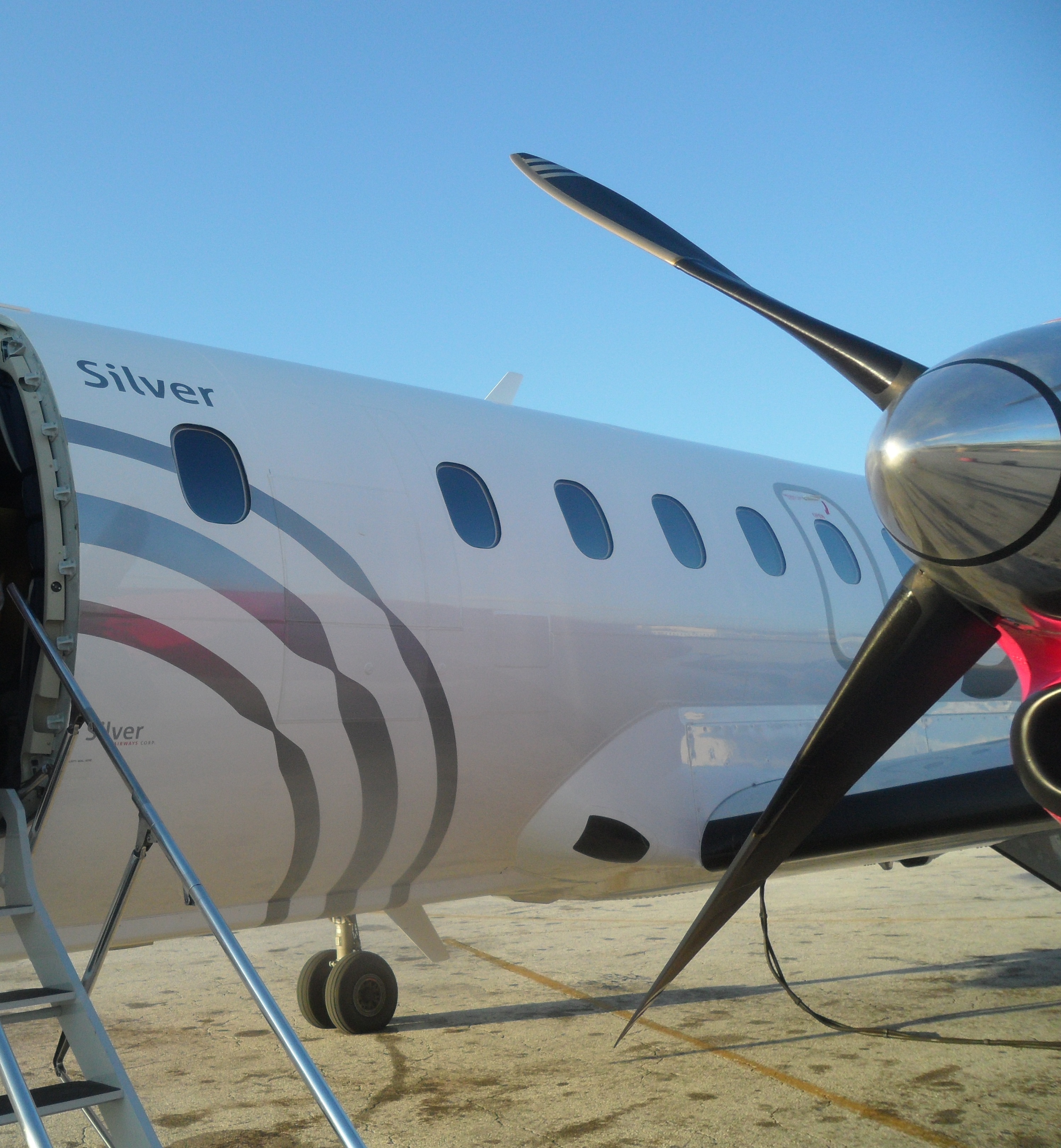
The headline change on the B Plus was an active noise and vibration control system that cut cabin levels by around ten decibels in the cruise; it became standard on all 340Bs in 1994 and could be retrofitted to aircraft already in service. Extended wingtips, an option fitted to roughly thirty 340Bs, became standard. The interior was modernised and on most third-generation aircraft the lavatory moved from the rear of the cabin to a position just aft of the flight deck, freeing the cargo volume that the original location had intruded upon. The first production 340B Plus was delivered new to Hazelton Airlines in Australia in 1995, later flying for Rex Airlines and afterwards for the Japanese coast guard. The last two 340s built were completed to the older 36-seat configuration for Japan Air Commuter.
The market closes
In 1989 the US regional carrier American Eagle placed the type's largest order: 50 340Bs plus options on a further 50. Business conditions changed dramatically across the 1990s and demand for regional turboprops collapsed; AMR Eagle's announcement in October 1999 that it would phase out its 340 fleet captures the turn neatly. Through 1997 Saab was already issuing pessimistic statements about the programme, admitting it was weighing closure of the line while pledging continued support to existing operators. On 24 December 1997 the company announced it would end production of both the 340 and the 2000, which by its own accounting had lost SKr3 billion — some $386.4 million — over the previous three years. By late 1998, with the line slowing towards shutdown, Saab acknowledged talks with several interested parties, reportedly including Indian and Chinese companies, about selling the production line. The final 340 was handed over on 8 June 1999, by which point nearly 460 aircraft had been delivered. In 2005 Saab left civil aircraft production altogether.
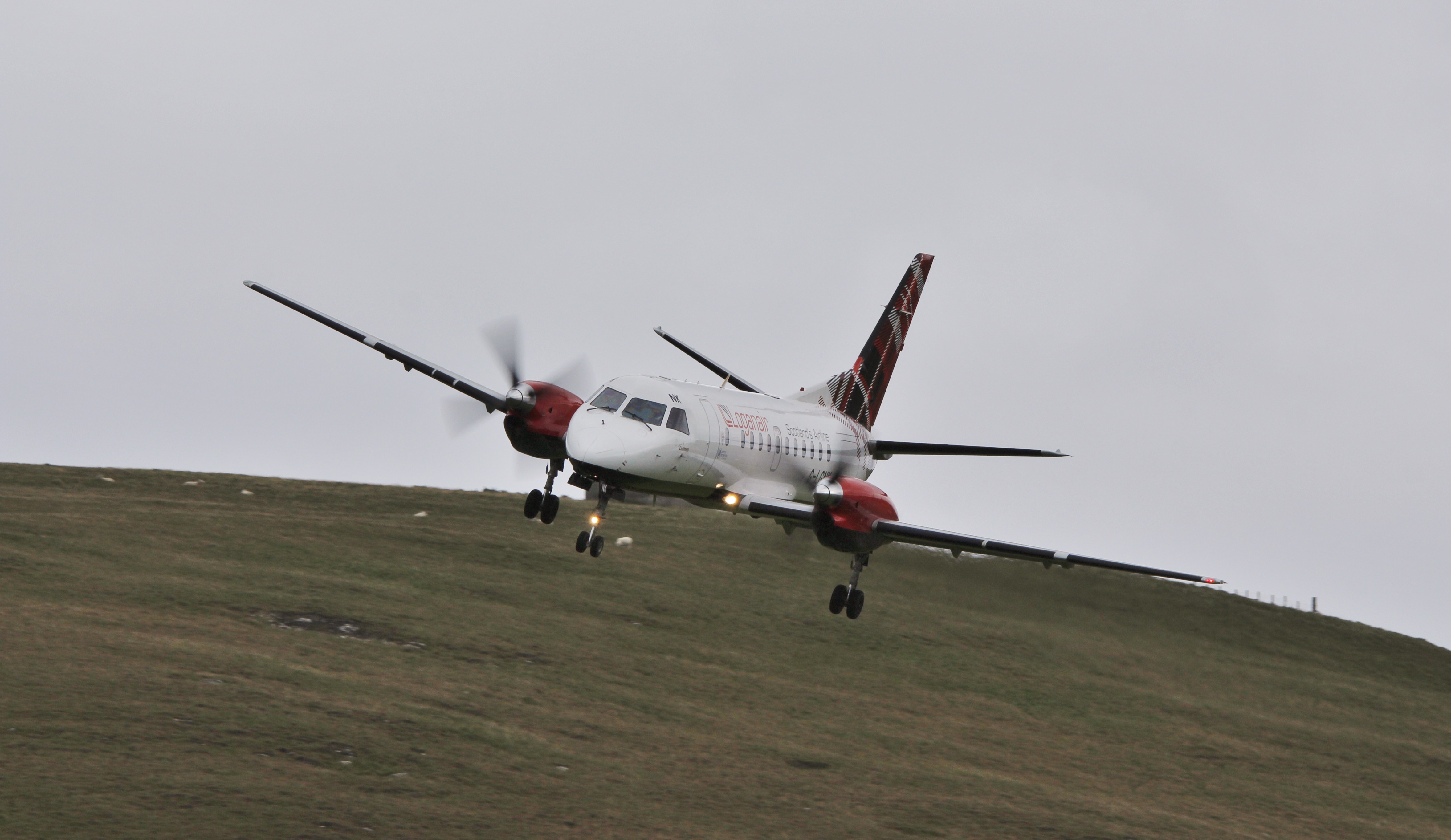
Eliasson pointed to the turboprop choice as one reason for the shutdown, alongside an increasingly crowded and politicised regional market in which competitors were alleged to benefit from state subsidies that the Swedish government was unwilling to match. Sören Eriksson and Harm-Jan Steenhuis add a further nuance: the 340 was faster than jet rivals such as the Fokker 100 and the British Aerospace 146, but held no clear advantage in payload or range, and newer types such as the Bombardier CRJ200 and the Embraer ERJ 145 family eventually took its sales.
Configuration and performance
The 340B is 19.73 m long and 21.44 m in span — 22.75 m with extended wingtips — standing 6.97 m high, with a wing area of 41.81 m² and NASA MS(1)-0316 root and MS(1)-0312 tip aerofoils. The flight crew is two pilots and the commonest cabin holds 34 seats. Average operational empty weight is around 8,618 kg against a maximum take-off weight of 13,154 kg, with 2,580 kg of fuel and a maximum payload of 3,400 kg, up from the 3,130 kg of the 340A. The two General Electric CT7-9B engines deliver 1,870 shp (1,390 kW) each for take-off under ISA conditions with automatic power reserve, driving four-blade constant-speed, fully feathering and reversible propellers of 3.35 m diameter from Hamilton Standard or Dowty Rotol.
Maximum cruise for the 340B is 524 km/h (283 kn), against 502 km/h for the 340A; long-range cruise range with 34 passengers and baggage is about 1,350 km, the service ceiling 7,620 m and the rate of climb 10.2 m/s. Take-off distance at maximum weight, sea level and standard atmosphere is 1,285 m, and reference fuel burn 0.94 kg per kilometre. The passenger cabin measures 10.4 m long by 2.2 m wide with 1.8 m of headroom, 33.4 m³ of volume and a maximum pressure differential of 7.0 psi. Original avionics paired Rockwell Collins EFD-86 CRT displays with an APS-85 autopilot, a Hamilton Sundstrand ground proximity warning system and a Universal FMS. Saab notes that metal bonding covers more than 40 per cent of the structure, in up to four layers, allowing skin thickness to be optimised and giving exceptional resistance to fatigue and cracking: fatigue testing on the static test airframe exceeded 200,000 cycles, equivalent to some 75 years of typical regional operation.
A second life: freight, leasing and airframe longevity
Production ended in 1999, but Saab kept working the 340 market hard. In July 2001 it announced a partnership with the service provider Piedmont Hawthorne to remarket used aircraft to corporate customers, and in April 2002 it contracted the Canadian firm Field Aviation to produce a freighter version, initially by converting 340As; Castle Aviation was launch customer for the 340AF in 2004. By 2006, with oil prices rising, turboprop demand rebounded and Saab closed the largest leasing deal in the type's history: twenty-five aircraft for the Australian operator Rex Airlines. In late 2008, after the merger of Northwest Airlines into Delta Air Lines, the combined carrier set up a 340 base in Atlanta and replaced twelve ATR 72s in its regional fleet with 49 former Northwest aircraft. In early 2009 the Russian operator Polet Flight was in talks with American Eagle to lease a further twenty-five.
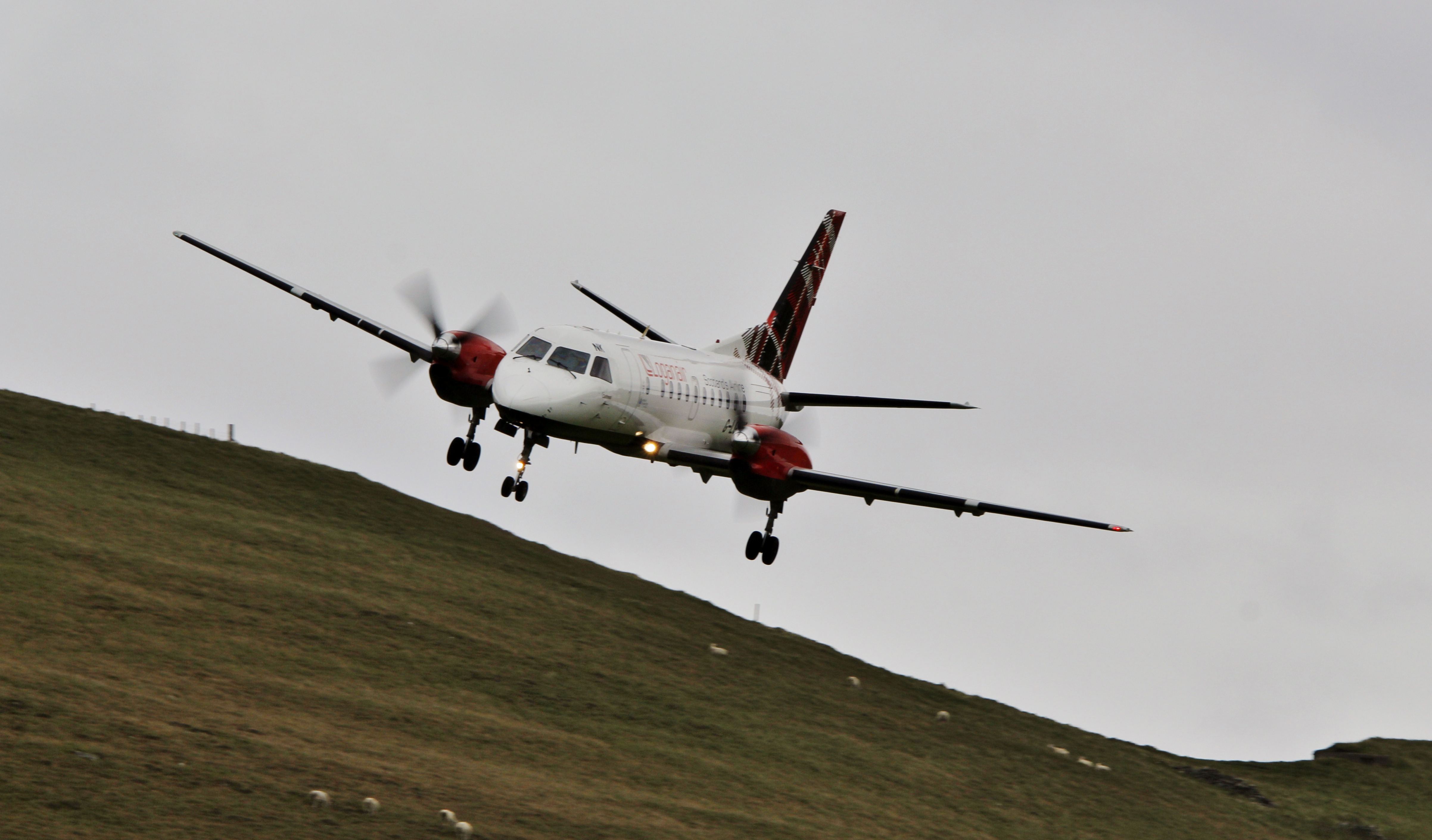
Structural longevity explains much of that second life. In late 2010 Saab was studying an extension of the certified life, which under the Maintenance Review Board programme was capped at 60,000 hours, towards a 75,000-hour limit; airframe life was subsequently extended from 45,000 to 80,000 flight hours and 90,000 cycles, opening the way to as much as thirty further years of service. In December 2016 the fleet averaged 35,277 hours and 39,446 cycles — a mean of 0.89 hours per flight, typical of very short sectors — less than halfway through its remaining life, while fleet leaders had accumulated 71,268 cycles and 61,867 hours. As of 2023 around 250 aircraft remained active, with Rex Airlines, SprintAir, Link Airways, Pacific Coastal Airlines, Ameriflight and Castle Aviation among the principal regional and cargo operators.
Military derivatives: Erieye, S 100B Argus and maritime surveillance
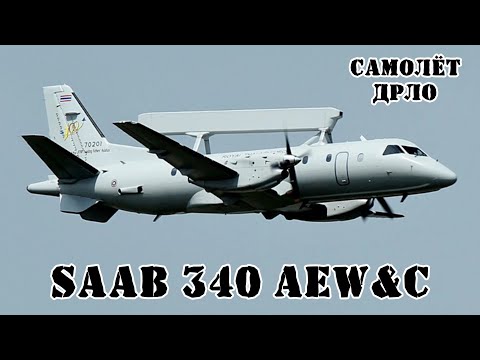
In the early 1980s Sweden's Defence Materiel Administration (FMV) asked Ericsson to develop an airborne early warning radar, and the resulting system found its natural platform in the 340. The S 100B Argus entered Swedish Air Force service in 1997: six aircraft were produced, four permanently fitted with the early warning radar and two configured for transport duties in peacetime. The airframe is a modified 340B; the thrust lines of both engines are angled to starboard to balance the aerodynamic effect of the dorsal antenna, larger strakes were added beneath the rear fuselage and small blade vortex generators were built into wing and tail. The Erieye antenna unit, nine metres long and weighing 900 kg, sits on the spine of the fuselage and gives the aircraft its unmistakable profile.
The radar, designated FSR 890 in Swedish service, is a side-looking pulse Doppler set with a fixed active phased array antenna working between 2 and 4 GHz (NATO E to F bands). It gives 360-degree coverage, with optimum performance over the 150-degree sectors on each side, and can detect fighter aircraft at 350 km in a dense electronic warfare environment and heavy clutter; a sea surveillance mode is included. The main cabin carries multifunction workstations for up to three operators, and the aircraft has secure voice and datalink communications. Against the rotodome of aircraft such as the E-3 Sentry, the Swedish solution offers lower drag at the cost of blind zones directly fore and aft.
Two aircraft were loaned to Greece before deliveries of its EMB-145 Erieye systems began in 2003. In July 2006 Saab won a contract to upgrade two Swedish aircraft for surveillance work and multinational deployment; the result, the Saab 340 AEW-300 or S 100D Argus, was delivered in April 2009. Thailand announced its intention to buy two aircraft in November 2007, took the first in 2010 and completed delivery in October 2012. The United Arab Emirates operated two, retired in 2020 on delivery of GlobalEye; Saab bought them back, refurbished them and sold them to Poland, which ordered in July 2023 and received the first in March 2024 and the second that June. On 29 May 2024 the Swedish Ministry of Defence announced that two ASC 890 airborne surveillance and control aircraft would go to Ukraine in its sixteenth military support package.
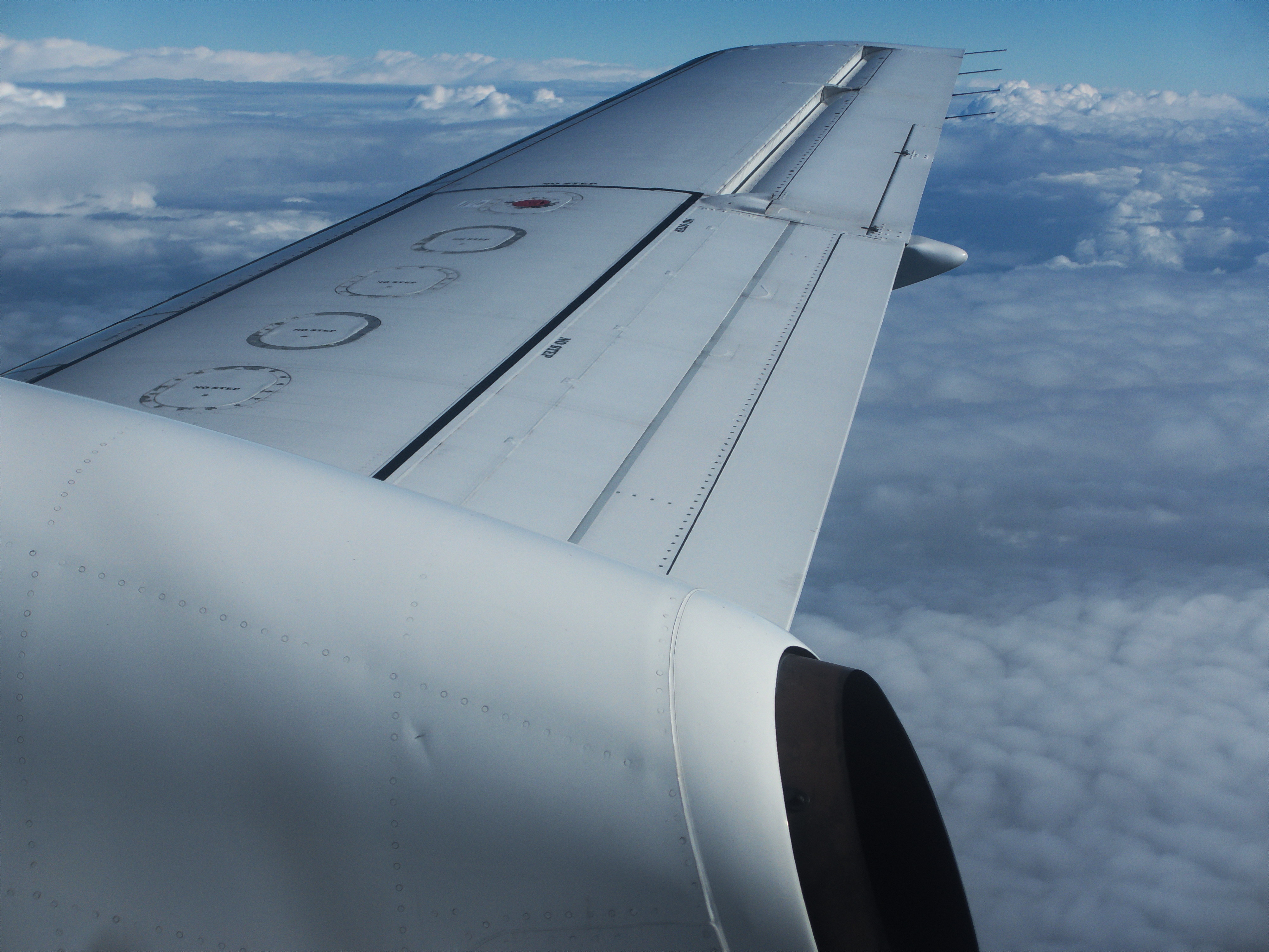
The military family runs wider still. The Tp 100 and Tp 100A are VIP transport versions of the 340B and B Plus for the Swedish Air Force, and one Tp 100A was converted into the OS 100 for Open Skies flights. The 340B Plus SAR-200, with extended wingtips, serves the Japanese coast guard on maritime search and rescue. Through the 2010s Saab promoted the 340 MSA, a maritime security aircraft able to detect, classify and identify surface contacts, conduct anti-surface and anti-submarine warfare, gather signals intelligence and run long-range search and rescue, with an optional auxiliary fuel tank. Its demonstrator was the 340B ISR, fitted with an AESA radar and Wescam MX-15 and MX-20 imaging systems under the rear and forward fuselage respectively, operated since 2019 by CAE Aviation. Thai armed forces designate the 340B as the B.L.17 and the early warning version as the B.K.1.
Operational safety
Between 1983 and 2013 the Saab 340 series recorded thirteen hull-loss accidents with 48 deaths in all. The worst was Sol Líneas Aéreas Flight 5428, a 340A registered LV-CEJ flying from Neuquén to Comodoro Rivadavia, which crashed on 18 May 2011 at Prahuaniyeu in the Argentine province of Río Negro, killing 22. On 19 March 1998 Formosa Airlines Flight 7623, a 340B, went into the sea 11 km off Hsinchu in Taiwan after an electrical fault and crew disorientation, with 13 dead. On 10 January 2000 Crossair Flight 498 left Zurich, banked steeply into a high-speed spiral dive and struck a field at Niederhasli, killing all ten aboard. And on 4 April 1994 KLM Cityhopper Flight 433 stalled while returning to Amsterdam Schiphol after its pilots wrongly concluded they had an engine problem; three people died. Non-fatal write-offs include wing ice accretion cases such as the Express Airlines aircraft that struck the runway hard at Chisholm-Hibbing on 2 January 1993, and several undercarriage collapses.
Legacy
The Saab 340 was the aircraft with which a fighter builder proved it could compete in the civil market, and for half a decade it had no real rival in its niche. Its eventual commercial defeat was one of timing rather than product: it arrived just in time to exploit American deregulation, and just in time for the regional jet to take its place. Its direct descendant, the Saab 2000 — decided upon in December 1988 as a stretched and considerably faster derivative — fared worse still commercially. The 340 airframe, however, has outlived the business that sold it: it still flies freight and passengers on short sectors across much of the world, and in Erieye form it has given Sweden, Thailand, Greece, the Emirates, Poland and Ukraine an early warning capability at a fraction of the cost of a large radar aircraft. Saab sums up that longevity in a single statistic: with production closed since 1999, the average Saab 340 has used only about half the life it was designed for.
Variants
| Saab 340A | B.K.1 | B.L.17 | Saab 340 AEW&C (S 100B Argus) | Saab 340AF | Saab 340A QC | Saab 340B | Saab 340B AEW-200 (IS-340) | Saab 340B AEW-300 (S 100D Argus / ASC 890) | Saab 340BF | Saab 340B ISR | Saab 340B Plus | Saab 340B Plus SAR-200 | Saab 340 MSA | Saab OS 100 | Saab Tp 100 | Saab Tp 100A | Saab Tp 100C | |
|---|---|---|---|---|---|---|---|---|---|---|---|---|---|---|---|---|---|---|
| First flight | January 25, 1983 | — | — | — | — | — | — | — | — | — | — | — | — | — | — | — | — | — |
| Aircraft type | Regional turboprop airliner | Airborne early warning and control aircraft | Military turboprop transport aircraft | Airborne early warning and control aircraft | Regional turboprop freighter | Quick-change regional turboprop | Regional turboprop airliner | Airborne early warning aircraft | Airborne early warning and control aircraft | Regional turboprop freighter | Intelligence, surveillance and reconnaissance aircraft | Regional turboprop airliner | Maritime search and rescue aircraft | Maritime surveillance aircraft | Open Skies Treaty observation aircraft | Military VIP transport aircraft | Military VIP transport aircraft | Military VIP transport aircraft |
| Powerplant | Two General Electric CT7-5A2 free-turbine turboprops rated at 1294 kW (1735 shp) for take-off, geared 15.9:1 and driving four-blade fully feathering reversible propellers of 3.35 m diameter. | Two General Electric CT7-9B turboprops of 1395 kW (1870 shp), those of the Saab 340B the Erieye system is mounted on. | Two General Electric CT7-9B turboprops of 1395 kW (1870 shp), those of the standard Saab 340B. | Two General Electric CT7-9B turboprops of 1395 kW (1870 shp), the same as the 340B airframe it is built on, driving 3.35 m four-blade reversible, auto-feathering propellers. | Two General Electric CT7-5A2 turboprops of 1294 kW (1735 shp), unchanged from the 340A the conversion is built on. | The same powerplant as the 340A: two General Electric CT7-5A2 turboprops of 1294 kW (1735 shp) for take-off. | Two General Electric CT7-9B free-turbine turboprops delivering 1305 kW (1750 shp) for take-off and up to 1395 kW (1870 shp) with automatic power reserve engaged; the 15.9:1 gearing of the 340A is retained and the engines drive four-blade Dowty Rotol or Hamilton Sundstrand propellers of 3.35 m. | Two General Electric CT7-9B turboprops of 1395 kW (1870 shp) on a Saab 340B airframe. | Two General Electric CT7-9B turboprops of 1395 kW (1870 shp), unchanged from the S 100B the upgrade starts from. | Two General Electric CT7-9B turboprops of 1395 kW (1870 shp) with automatic power reserve, unchanged from the 340B. | Two General Electric CT7-9B turboprops of 1395 kW (1870 shp) on a Saab 340B airframe. | Two General Electric CT7-9B turboprops identical to those of the 340B, rated at 1305 kW (1750 shp) for take-off and 1395 kW (1870 shp) with automatic power reserve. | Two General Electric CT7-9B turboprops of 1395 kW (1870 shp), the 340B Plus powerplant it derives from. | Two General Electric CT7-9B turboprops of 1395 kW (1870 shp) on a Saab 340B airframe with extended wingtips. | Two General Electric CT7-9B turboprops of 1395 kW (1870 shp), inherited from the Tp 100A it was converted from. | Two General Electric CT7-9B turboprops of 1395 kW (1870 shp), unchanged from the 340B and 340B Plus they come from. | Two General Electric CT7-9B turboprops of 1395 kW (1870 shp) on a Saab 340B airframe. | Two General Electric CT7-9B turboprops of 1395 kW (1870 shp), those of the Saab 340B-based Tp 100 family. |
| Powerplant | 2 × General Electric CT7-5A2 | 2 × General Electric CT7-9B | 2 × General Electric CT7-9B | 2 × General Electric CT7-9B | 2 × General Electric CT7-5A2 | 2 × General Electric CT7-5A2 | 2 × General Electric CT7-9B | 2 × General Electric CT7-9B | 2 × General Electric CT7-9B | 2 × General Electric CT7-9B | 2 × General Electric CT7-9B | 2 × General Electric CT7-9B | 2 × General Electric CT7-9B | 2 × General Electric CT7-9B | 2 × General Electric CT7-9B | 2 × General Electric CT7-9B | 2 × General Electric CT7-9B | 2 × General Electric CT7-9B |
| Power per engine | 1,735 hp | 1,871 hp Best value in this row | 1,871 hp Best value in this row | 1,871 hp Best value in this row | 1,735 hp | 1,735 hp | 1,871 hp Best value in this row | 1,871 hp Best value in this row | 1,871 hp Best value in this row | 1,871 hp Best value in this row | 1,871 hp Best value in this row | 1,871 hp Best value in this row | 1,871 hp Best value in this row | 1,871 hp Best value in this row | 1,871 hp Best value in this row | 1,871 hp Best value in this row | 1,871 hp Best value in this row | 1,871 hp Best value in this row |
| Length | 19.7 m | 20.6 m Best value in this row | 19.7 m | 20.6 m Best value in this row | 19.7 m | 19.7 m | 19.7 m | — | 20.6 m Best value in this row | 19.7 m | 19.7 m | 19.7 m | 19.7 m | 19.7 m | 19.7 m | 19.7 m | 19.7 m | 19.7 m |
| Wingspan | 21.4 m | 21.4 m | 21.4 m | 21.4 m | 21.4 m | 21.4 m | 21.4 m | 21.4 m | 21.4 m | 21.4 m | 21.4 m | 22.8 m Best value in this row | 22.8 m Best value in this row | 22.8 m Best value in this row | — | — | — | — |
| Height | 7 m | 7 m | 7 m | 7 m | 7 m | 7 m | 7 m Best value in this row | 7 m | 7 m | 7 m | 7 m | 7 m Best value in this row | 7 m | 7 m | 7 m | 7 m | 7 m | 7 m |
| Wing area | 41.8 m² Best value in this row | — | — | — | — | — | 41.8 m² Best value in this row | — | — | — | — | — | — | — | — | — | — | — |
| Empty weight | 8,140 kg Best value in this row | — | — | 10,300 kg | — | — | 8,618 kg | — | — | — | — | — | — | — | — | — | — | — |
| MTOW | 12,930 kg | 13,155 kg Best value in this row | 13,155 kg Best value in this row | 13,155 kg Best value in this row | — | — | 13,155 kg Best value in this row | 13,155 kg Best value in this row | 13,155 kg Best value in this row | 13,155 kg Best value in this row | 13,155 kg Best value in this row | 13,155 kg Best value in this row | 13,155 kg Best value in this row | 13,155 kg Best value in this row | 13,155 kg Best value in this row | 13,155 kg Best value in this row | 13,155 kg Best value in this row | — |
| Top speed | — | — | — | — | — | — | 524 km/h | — | — | — | — | — | — | — | — | — | — | — |
| Cruise speed | 502 km/h | — | — | — | — | — | 524 km/h Best value in this row | — | — | — | — | 524 km/h Best value in this row | — | 491 km/h | — | — | — | — |
| Service ceiling | 7,620 m Best value in this row | 7,620 m Best value in this row | 7,620 m Best value in this row | 7,620 m Best value in this row | — | — | 7,620 m Best value in this row | 7,620 m Best value in this row | 7,620 m Best value in this row | — | 7,620 m Best value in this row | 7,620 m Best value in this row | 7,620 m Best value in this row | 7,620 m Best value in this row | 7,620 m Best value in this row | 7,620 m Best value in this row | 7,620 m Best value in this row | 7,620 m Best value in this row |
| Initial climb rate | — | — | — | — | — | — | 10.2 m/s | — | — | — | — | — | — | — | — | — | — | — |
| Range | 1,732 km | — | — | — | — | — | 1,350 km | — | — | — | — | — | — | 3,176 km Best value in this row | — | — | — | — |
| Combat radius | 0 km Best value in this row | — | — | — | 0 km Best value in this row | 0 km Best value in this row | 0 km Best value in this row | — | — | 0 km Best value in this row | — | 0 km Best value in this row | — | — | — | — | — | — |
| Endurance | — | — | — | 300 min | — | — | — | — | — | — | — | — | — | 540 min Best value in this row | — | — | — | — |
| Range conditions | Operating ceiling of 7620 m on 2580 kg of usable fuel split between the two wing tanks; maximum take-off weight rose to 12930 kg with the post-production modifications. | — | — | More than five hours on station within a 7620 m ceiling. The Swedish Air Force took six aircraft, four with the early warning radar permanently fitted and two arranged for peacetime transport; the type entered service in 1997. | — | — | 1350 km in long-range cruise with 34 passengers and baggage at an operating ceiling of 7620 m; usable fuel is 2580 kg and a maximum-weight take-off needs 1285 m of runway at sea level in standard atmosphere. | — | Upgrade of two S 100B airframes contracted in 2006 and in service from 2009 as the ASC 890; both aircraft were transferred to Ukraine in 2024. | — | — | Extended wingtips take the span from 21.44 to 22.75 m and improve short-field and hot-and-high behaviour, with the same 7620 m ceiling. | — | Maximum range of 3176 km and up to nine hours of endurance with an auxiliary tank; on patrol at 140 knots it holds 5.4 hours over an exclusive economic zone 200 nautical miles out, with a 7620 m ceiling and a 1350 m take-off run. | — | — | — | — |
| Armament | None | None: unarmed surveillance platform. | None: unarmed transport. | None: unarmed surveillance platform. | None | None | None | None: unarmed surveillance platform. | None: unarmed surveillance platform. | None | None: unarmed surveillance platform. | None | None: unarmed rescue aircraft. | None: unarmed surveillance platform. | None: unarmed observation aircraft. | None: unarmed transport. | None: unarmed transport. | None: unarmed transport. |
| Max weapons load | 0 kg Best value in this row | 0 kg Best value in this row | 0 kg Best value in this row | 0 kg Best value in this row | 0 kg Best value in this row | 0 kg Best value in this row | 0 kg Best value in this row | 0 kg Best value in this row | 0 kg Best value in this row | 0 kg Best value in this row | 0 kg Best value in this row | 0 kg Best value in this row | 0 kg Best value in this row | 0 kg Best value in this row | 0 kg Best value in this row | 0 kg Best value in this row | 0 kg Best value in this row | 0 kg Best value in this row |
| Payload | 3,130 kg | — | — | — | — | — | 3,400 kg Best value in this row | — | — | 3,400 kg Best value in this row | — | 3,400 kg Best value in this row | — | — | — | — | — | — |
| Cargo capacity | Pressurised cabin certified for a maximum of 37 passengers, although airlines operated it with 30 to 36 seats; maximum payload reaches 3130 kg and the rear hold takes 950 kg. | No civil cargo capacity: Thai designation for the Erieye-equipped Saab 340; Thailand announced the purchase of two aircraft from the Swedish Air Force in 2007. | Royal Thai Armed Forces designation for the Saab 340B, used for transport and liaison duties. | No civil cargo capacity: the cabin houses the six crew and their mission consoles, while the Erieye radar rides in an active-array antenna mounted on the fuselage spine. | All-freight conversion of the 340A with no passenger seats: Castle Aviation was the launch customer in 2004. | Quick-change layout: the cabin swaps between passengers, freight or a mix of both without shop work, using the 1.30 by 1.35 m cargo door. | Pressurised cabin certified for a maximum of 37 passengers — 33 or 34 seats at 30-inch pitch depending on where the lavatory sits — and a maximum payload of 3400 kg; the rear hold adds 6.80 to 8.35 m³ and takes 950 kg. | No civil cargo capacity: export configuration of the Erieye system with the cabin given over to the early warning mission. | No civil cargo capacity: the upgrade rebuilds the mission suite with new consoles and data links for multinational operations. | All-freight conversion of the 340B with no passenger seats: the cleared cabin exploits the type's 3400 kg payload through the 1.30 by 1.35 m cargo door. | No civil cargo capacity: a single aircraft with an active-array radar, a Wescam MX-15 turret under the rear fuselage and an MX-20 under the forward one; it also served as the Saab 340 MSA demonstrator and has been flown by CAE Aviation since 2019. | Third-generation cabin with active noise control and larger overhead bins; it keeps the 37-passenger certified maximum and the 3400 kg payload. | No civil cargo capacity: maritime search and rescue version for the Japan Coast Guard, with the 340B Plus extended wingtips that take the span to 22.75 m. | No civil cargo capacity: the cabin is taken up by mission consoles, a retractable StarSaphire electro-optical and infrared sensor and a Telephonics 1700B maritime radar with all-round coverage. | No civil cargo capacity: a single Tp 100A converted into an observation aircraft for Treaty on Open Skies flights. | VIP transport cabin for the Swedish Air Force, where the type carries the Tp 100 (transportflygplan) designation. | VIP transport sub-variant derived solely from the Saab 340B. | Last transport sub-variant of the Tp 100 series in Swedish Air Force service. |
| Crew | 2 Best value in this row | 6 | 2 Best value in this row | 6 | 2 Best value in this row | 2 Best value in this row | 2 Best value in this row | — | 6 | 2 Best value in this row | — | 2 Best value in this row | — | — | — | 2 Best value in this row | 2 Best value in this row | 2 Best value in this row |
| Passengers | 37 Best value in this row | — | — | — | 0 | — | 37 Best value in this row | — | — | 0 | — | 37 Best value in this row | — | — | — | — | — | — |
| Units built | 159 | — | — | 6 | — | — | 200 Best value in this row | — | 2 | — | 1 | 100 | — | — | 1 | — | — | — |
Images
Elsewhere
- FlightGlobalDespiece numerado (cutaway) del Saab 340, lámina del archivo de Flight International ↗
- Airliners.netSaab 340B, Golden Air ↗
- Airliners.netSaab 340A, NyxAir ↗
- Airliners.netSaab 340B, American Eagle ↗
- Airliners.netSaab 340B, Legacy Airways ↗
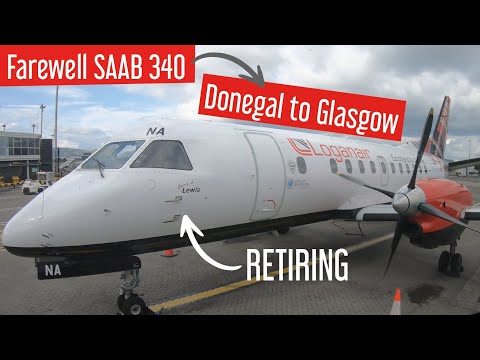
- Airliners.netSaab 340B, British Airways (Loganair) ↗
- Airliners.netSaab 340B, Continental Connection (Colgan Air) ↗
- Airliners.netSaab 340A(QC), Golden Air (Finnair) ↗
- Airliners.netSaab 340A, Golden Air (Teddy Air) ↗
- Airliners.netSaab 340B, British Airways (Loganair) ↗
- JetPhotosSE-LES, Saab 340A, Golden Air ↗
- JetPhotosSaab 340A, Saab ↗
Show the 11 more
- JetPhotosSaab 340 AEW&C Eryeye, Poland - Air Force ↗
- JetPhotosEC-JHE, Saab 340A, Air Este ↗
- JetPhotosG-LGNH, Saab 340B, Loganair ↗
- Planespotters.netSE-LES, Golden Air, Saab 340A ↗
- ABPicSaab 340A, HB-AKG, Crossair ↗
- ABPicSaab 340A, 100001, Swedish Air Force ↗
- ABPicSaab 340B, ES-NSD, NyxAir ↗
- ABPicSaab 340B, G-LGNK, Loganair ↗
- FlickrSaab 340-AF, SP-KPR, Sprintair ↗
- FlickrSaab 340 near Saab aircraft factory, Linköping ↗
- The-Blueprints.comSaab 340 - tríptico (three-view drawing) ↗





![[TRIP REPORT] Flying on a 37 year old Saab 340 in Europe! | Zagreb-Osijek | Trade air/RAF-Avia](https://i.ytimg.com/vi/j1J5ssc3Z60/hqdefault.jpg)












![SUPER LOW Pilot's View Cockpit Landing Saab 340, SHORT & OLD ex-Soviet Runway, MUST SEE! [AirClips]](https://i.ytimg.com/vi/aspVIInNbfc/hqdefault.jpg)