Airliner · Civil · Netherlands
Fokker F28 Fellowship
- May 9, 1967
- First flight
- 1969
- Introduced
- In service
- Status
- 241
- Units built


_JP5830141-800.webp)
-1600.webp)

-1600.webp)


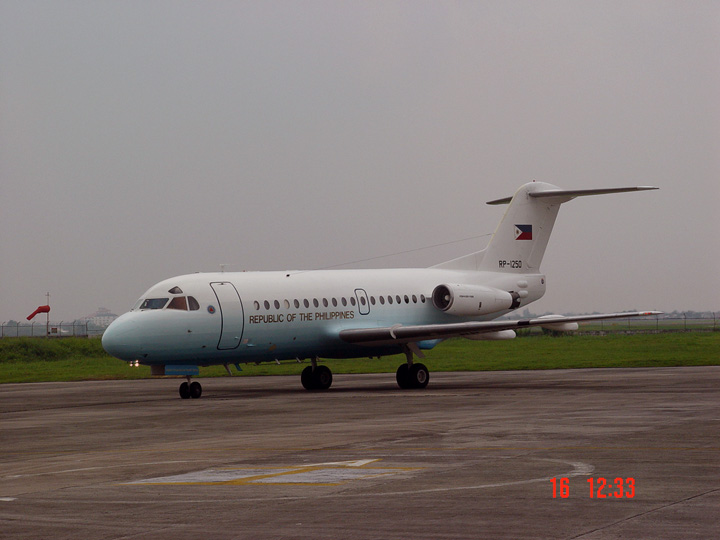
The Fokker F28 Fellowship is a twin-engined short-haul jet airliner designed and built by the Dutch manufacturer Fokker, conceived in the early 1960s as a companion to the turboprop F27 Friendship rather than its replacement. Announced in April 1962, it was shaped around a very specific promise: jet speed from the same modest regional airfields the F27 and the DC-3 already used. That promise drove the whole layout — a low, gently swept wing, two rear-mounted Rolls-Royce Spey turbofans, a T-tail, a tricycle undercarriage on large low-pressure tyres, and a split airbrake built into the tail cone, a device far more common on military aircraft than on airliners. The programme was a European industrial consortium before that became routine. Fokker built the nose, centre fuselage and inner wing; the German firms MBB and VFW-Fokker built the forward and rear fuselage and the tail; Short Brothers of Northern Ireland built the outer wings; final assembly took place at Schiphol, with the Dutch and West German governments underwriting much of the risk. The prototype PH-JHG first flew on 9 May 1967, certification followed on 24 February 1969, and Braathens SAFE flew the first revenue service on 28 March 1969. From the original Mk 1000, seating 65 in typical five-abreast layout, Fokker developed a short but well-spaced family: the stretched Mk 2000 for up to 79 passengers, the short-fuselage Mk 3000 with an extended wing and more fuel, and the Mk 4000 — the most successful version, in service with Linjeflyg from late 1976 — which combined the long fuselage, the bigger wing, quieter Spey Mk 555-15H engines and a new flight deck for up to 85 passengers. The Mk 5000, Mk 6000 and Mk 6600 never found a market. 241 airframes were built before production ended in 1987 in favour of the Fokker 70 and Fokker 100, both direct descendants of the design. The F28 brought jet service to short strips in Indonesia, Norway, Australia, Argentina and Nigeria, and also carries a hull-loss rate high for its generation, much of it linked to icing accidents. Civil service ended in 2019; the last operational aircraft remained with Argentina's LADE.
Related sheets
Category
Three-view drawing
%2C_Fuerza_A%C3%A9rea_Argentina%2C_vista_de_perfil_en_rampa.jpg)
History
A jet for the Friendship's airfields
By 1960 Fokker was in an awkwardly comfortable position. The F27 Friendship was selling well, the works were also busy with military programmes such as the Bréguet Br.1150 Atlantic and the Lockheed F-104 Starfighter, and the market was starting to ask for jets on routes that turboprops had owned until then. A British European Airways specification for a fast turbofan-powered regional airliner provided the initial push. Fokker's answer was not to imitate the bigger manufacturers but to do what it did best: ask its customers. The design leaned explicitly on the experience of F27 operators, especially in North America, and from that consultation came the two obsessions that shaped the whole aircraft — ease of maintenance, and the removal of technical and commercial friction with the American market.
Market research also changed the aeroplane's size. The first studies described a 50-seater with a range of about 1,650 km; the definitive layout grew to 65 seats five abreast, with a matching increase in maximum take-off weight. In capacity it landed near the Vickers Viscount, but far faster than any turboprop. In exchange Fokker accepted a cruise speed that was deliberately modest for a jet, which allowed a low, gently swept wing, good low-speed behaviour and — the point of the whole exercise — the ability to work from 85% of the airports already served by the F27 and the ubiquitous DC-3. Fokker always sold it as a complement to the Friendship rather than a successor, and for years both types ran on separate assembly lines.
On 28 April 1962, at the Hannover air show, Fokker revealed the F28 Fellowship.
A three-flag consortium
Work was divided from the outset. Fokker designed and built the nose section, centre fuselage and inner wing; Messerschmitt-Bölkow-Blohm and VFW-Fokker in Germany produced the forward and rear fuselage sections and the tail assembly; Short Brothers in Belfast designed and built the outer wings. Final assembly was at Schiphol. Funding was shared in the same spirit: the Dutch government covered half of the Dutch stake and the West German government the greater part of the German one, with the balance coming from Fokker's own capital and its partners. Sud Aviation and Hawker Siddeley were both approached and both declined.
There was an American chapter too. Fairchild studied a locally built derivative, the Fairchild 228, a roughly 50-seat version with Rolls-Royce RB.203 Trent engines. It never reached production, and the company ended up distributing the F28 as it was.
The powerplant nearly went another way. Early design work assumed a pair of Bristol Siddeley BS.75 turbofans, but when Fokker moved to negotiate a contract the manufacturer withdrew the engine: having lost the BAC 1-11, it judged the remaining market too small. Rolls-Royce offered the Spey Junior, a simplified Spey, and from the first prototype onwards the Fellowship flew behind some version of that engine.
Design by subtraction
The F28 shares its general configuration with the British BAC One-Eleven and the first-generation DC-9 — T-tail, rear-mounted engines — but its internal logic differs. The low wing partly shields the engine intakes from foreign object damage, no small matter in an aircraft built for unpaved strips. The structure is fail-safe and uses the bonding techniques pioneered on the F27. Fuel is carried in the outer wing and the fuselage, with optional pylon-mounted tanks for extended-range work.
The wing, with a slight crescent sweep, is built in two pieces spliced onto the fuselage and carries ailerons near the tips together with simple flaps; on approach the ailerons work with the flaps. Flight controls are duplicated cable runs, aerodynamically balanced except for the rudder. Instead of thrust reversers Fokker chose a five-section lift dumper that operates only after touchdown: less weight, less maintenance and, again, less chance of the engines swallowing debris. The leading edge is fixed — slats were flown experimentally and offered as an option, but never became standard — and is de-iced with engine bleed air.
The aircraft's signature, though, is in the tail. The rear cone splits into hydraulically actuated halves that open outwards as a variable airbrake, an idea seen earlier on the Blackburn Buccaneer and later on the British Aerospace 146. It does more than slow the aeroplane down: it allows rapid descents from cruising altitude and lets the engines sit at a higher setting on approach, so spool-up lag largely disappears if a sudden increase in thrust or a go-around is needed. A retractable tricycle undercarriage on large low-pressure tyres, with anti-skid brakes on the main wheels, completes the picture of an aircraft meant to get in and out of difficult fields.
From PH-JHG to Braathens
The first prototype was registered PH-JHG in tribute to chief designer J. H. Greidanus and lifted off from Schiphol on 9 May 1967 with Jas Moll in command, Abe van der Schraaf as test pilot and Cees Dik as flight engineer; the flight lasted an hour and twenty-five minutes. PH-WEV and PH-MOL followed as second and third prototypes. Certification came on 24 February 1969. The first order had been placed by the German carrier LTU, but the first revenue flight was flown by Norway's Braathens SAFE on 28 March 1969; the airline eventually operated five aircraft.
The family: four production marks
The **Mk 1000** is the baseline: 65 seats in typical five-abreast layout at 79 cm pitch, up to 70 in high density, a 13 m³ hold, 27.4 m long, 23.6 m span, 76.4 m² of wing and a maximum take-off weight of 29,480 kg. The **1000C** adds a large main-deck cargo door.
The **Mk 2000** stretches the fuselage by 1.4 m ahead of the wing and 0.76 m behind it, to 29.6 m, lifting capacity to 79 passengers and the hold to 15.9 m³ without touching the wing or the weights. It first flew on 28 April 1971 — the prototype was a converted PH-JHG — entered revenue service with Nigeria Airways that October and was approved on 30 August 1972. Only ten were built.
The **Mk 3000** returns to the short fuselage but adopts the wing extended by 1.5 m in span, to 25.07 m and 79 m², with greater structural strength and more fuel. Maximum take-off weight rises to 33,110 kg and range with maximum payload reaches 2,872 km, the best in the family. It was approved on 19 July 1978 and entered service with Garuda Indonesian Airways. The census also carries the **3000C** freight-door version and the **3000R/3000RC** subvariants at a different maximum weight.
The **Mk 4000** — the most successful version, and the representative variant of this entry — combines the long Mk 2000 fuselage with the extended wing, two overwing exits on each side, quieter Spey Mk 555-15H engines, a redesigned flight deck and a "wide-look" cabin with enclosed overhead bins. It was approved on 13 December 1976, appeared on 20 October 1976 and entered service with Linjeflyg at the end of that year, seating up to 85 passengers, with 10,556 kg of maximum payload and an empty weight of 17,611 kg.
The roads not taken
The **Mk 5000** was to marry the short fuselage with the extended wing, leading-edge slats and the more powerful Spey Mk 555-15H. On paper it promised excellent short-field performance, but the project was abandoned and none was built. The **Mk 6000** did fly, on 27 September 1973, with the long fuselage, extended wing and slats; it was certified in the Netherlands on 30 October 1975 and two were completed. After a period with Fokker both were sold to Air Mauritanie, converted back to Mk 2000 standard. The **Mk 6600** never left the drawing board, nor did the American Fairchild 228.
In service
The Fellowship found its market exactly where it had been aimed: regional carriers, countries with uneven airport infrastructure, and government fleets. Garuda Indonesia was by far the largest operator with 62 aircraft over time; Time Air and Canadian Regional accumulated 35, mostly second and third hand; the Ansett group in Australia operated more than fifteen; Aerolíneas Argentinas flew five and Biman Bangladesh four. Some twenty-two further airlines used smaller numbers. The longest non-stop F28 route ever flown was MacRobertson Miller Airlines' Perth–Kununurra service in Western Australia, roughly 2,240 km, at the time also the longest twin-jet route in the world.
Military and government use was extensive: VIP and head-of-state transports in the Netherlands, Argentina and Indonesia among others. Argentina's TC-53, fitted with a forward cargo door, served for forty-four years, from 1975 to 2019.
Safety
The F28 carries the highest hull-loss rate among current commercial airliners outside those built in the former USSR, the CIS or China, for which operational data is lacking: 4.62 per million flights, against 1.78 for the Boeing 737-100/200 and 1.45 for the DC-9. A common thread runs through many of its worst accidents: ice. Turkish Airlines Flight 301 at İzmir in 1974, Air Ontario Flight 1363 at Dryden in 1989, Korean Air Flight 175 at Gimpo that same year and USAir Flight 405 at LaGuardia in 1992 were attributed to wing icing, inadequate de-icing procedures, or both. Others were of an entirely different nature: NLM CityHopper Flight 431 lost a wing inside a tornado in 1981; Iran Aseman Flight 746 suffered a double engine shutdown from contaminated fuel in 1994.
End of the line, and inheritance
Production closed in 1987 after 241 airframes, in favour of two direct descendants: the Fokker 70 and the larger Fokker 100, which carried the F28's general architecture forward with new-generation engines and systems. Scheduled civil service ended in 2019, when Fly-SAX grounded its last aircraft for lack of crews; whatever flew afterwards belonged to LADE, the state airline embedded in the Argentine Air Force. Preserved examples survive in Argentina, Indonesia, Myanmar, Norway and the United States, including Braathens SAFE's LN-SUC at the Norwegian Aviation Museum in Bodø.
Variants
| F.28 Mk 1000 | F.28 Mk 2000 | F.28 Mk 6000 | F.28 Mk 4000 | F.28 Mk 1000C | F.28 Mk 3000 | F.28 Mk 3000C | F.28 Mk 3000R | F.28 Mk 3000RC | F.28 Mk 5000 | F.28 Mk 6600 | Fairchild 228 | |
|---|---|---|---|---|---|---|---|---|---|---|---|---|
| First flight | May 9, 1967 | April 28, 1971 | September 27, 1973 | October 20, 1976 | — | — | — | — | — | — | — | — |
| Aircraft type | Regional jet airliner | Regional jet airliner | Regional jet airliner | Regional jet airliner | Regional jet airliner | Regional jet airliner | Regional jet airliner | Regional jet airliner | Regional jet airliner | Regional jet airliner | Regional jet airliner | Regional jet airliner |
| Powerplant | 2 × Rolls-Royce RB.183 Spey Mk 555-15 turbofans of 43.81 kN (9,850 lbf) each at take-off; the type certificate also covers the Mk 555-15N and Mk 555-15P after the relevant modification. | 2 × Rolls-Royce RB.183 Spey Mk 555-15 turbofans of 43.81 kN (9,850 lbf) each at take-off; the type certificate also covers the Mk 555-15N. | 2 × Rolls-Royce RB.183 Spey Mk 555-15H turbofans of 44.04 kN (9,900 lbf) each, the most powerful and quietest powerplant of the family. | 2 × Rolls-Royce RB.183 Spey Mk 555-15H turbofans of 44.04 kN (9,900 lbf) each at take-off, an uprated Mk 555-15 with acoustic intake panels and a five-lobe silencing nozzle; the type certificate also covers the Mk 555-15P. | 2 × Rolls-Royce RB.183 Spey Mk 555-15 turbofans of 43.81 kN (9,850 lbf) each at take-off, with the Mk 555-15N and Mk 555-15P covered by the type certificate. | 2 × Rolls-Royce RB.183 Spey Mk 555-15H turbofans of 44.04 kN (9,900 lbf) each at take-off, flat-rated to 29.5 °C against the 22.5 °C of the Mk 555-15; the Mk 555-15P is also approved. | 2 × Rolls-Royce RB.183 Spey Mk 555-15H turbofans of 44.04 kN (9,900 lbf) each at take-off, with the Mk 555-15P covered by the type certificate. | 2 × Rolls-Royce RB.183 Spey Mk 555-15 turbofans of 43.81 kN (9,850 lbf) each at take-off, with the Mk 555-15N covered by the type certificate: it keeps the Mk 1000 powerplant despite the wider wing. | 2 × Rolls-Royce RB.183 Spey Mk 555-15 turbofans of 43.81 kN (9,850 lbf) each at take-off, with the Mk 555-15N covered by the type certificate. | 2 × Rolls-Royce RB.183 Spey Mk 555-15H turbofans planned, of 44.04 kN (9,900 lbf) each, more powerful than those of the Mk 1000 it derived from. | Twin Rolls-Royce Spey turbofans like the rest of the family; the proposal never settled on a specific engine designation. | 2 × Rolls-Royce RB.203 Trent turbofans planned, a three-shaft engine unrelated to the Spey of the European F28; none was ever fitted to an airframe. |
| Powerplant | 2 × Rolls-Royce RB.183 Spey Mk 555-15 | 2 × Rolls-Royce RB.183 Spey Mk 555-15 | 2 × Rolls-Royce RB.183 Spey Mk 555-15H | 2 × Rolls-Royce RB.183 Spey Mk 555-15H | 2 × Rolls-Royce RB.183 Spey Mk 555-15 | 2 × Rolls-Royce RB.183 Spey Mk 555-15H | 2 × Rolls-Royce RB.183 Spey Mk 555-15H | 2 × Rolls-Royce RB.183 Spey Mk 555-15 | 2 × Rolls-Royce RB.183 Spey Mk 555-15 | 2 × Rolls-Royce RB.183 Spey Mk 555-15H | 2 × turbofan | 2 × Rolls-Royce RB.203 Trent |
| Thrust per engine | 43.8 kN | 43.8 kN | 44 kN Best value in this row | 44 kN Best value in this row | 43.8 kN | 44 kN Best value in this row | 44 kN Best value in this row | 43.8 kN | 43.8 kN | 44 kN Best value in this row | — | — |
| Length | 27.4 m | 29.6 m Best value in this row | 29.6 m Best value in this row | 29.6 m Best value in this row | 27.4 m | 27.4 m | 27.4 m | 27.4 m | 27.4 m | 27.4 m | — | — |
| Wingspan | 23.6 m | 23.6 m | 25.1 m Best value in this row | 25.1 m Best value in this row | 23.6 m | 25.1 m Best value in this row | 25.1 m Best value in this row | 25.1 m Best value in this row | 25.1 m Best value in this row | — | — | — |
| Height | 8.5 m Best value in this row | 8.5 m Best value in this row | — | 8.5 m Best value in this row | 8.5 m Best value in this row | 8.5 m Best value in this row | — | — | — | — | — | — |
| Wing area | 76.4 m² | 76.4 m² | — | 79 m² Best value in this row | 76.4 m² | 79 m² Best value in this row | 79 m² Best value in this row | 79 m² Best value in this row | 79 m² Best value in this row | — | — | — |
| Empty weight | 16,144 kg Best value in this row | 16,707 kg | — | 17,611 kg | — | 16,846 kg | — | — | — | — | — | — |
| MTOW | 29,480 kg | 29,480 kg | — | 33,110 kg Best value in this row | 29,480 kg | 33,110 kg Best value in this row | 33,110 kg Best value in this row | 29,490 kg | 29,490 kg | — | — | — |
| Top speed | — | — | — | 808 km/h | — | — | — | — | — | — | — | — |
| Max speed altitude | — | — | — | 10,058 m | — | — | — | — | — | — | — | — |
| Cruise speed | 848 km/h Best value in this row | 848 km/h Best value in this row | — | 656 km/h | — | 808 km/h | — | — | — | — | — | — |
| Cruise altitude | — | — | — | 9,144 m | — | — | — | — | — | — | — | — |
| Service ceiling | 10,668 m Best value in this row | 10,668 m Best value in this row | — | 10,668 m Best value in this row | — | 10,668 m Best value in this row | — | — | — | — | — | — |
| Initial climb rate | — | — | — | 10.2 m/s | — | — | — | — | — | — | — | — |
| Range | 1,705 km | 1,705 km | — | 1,668 km | — | 2,872 km Best value in this row | — | — | — | — | — | — |
| Ferry range | 1,990 km | — | — | 3,781 km Best value in this row | — | — | — | — | — | — | — | — |
| Combat radius | 0 km Best value in this row | 0 km Best value in this row | 0 km Best value in this row | 0 km Best value in this row | 0 km Best value in this row | 0 km Best value in this row | 0 km Best value in this row | 0 km Best value in this row | 0 km Best value in this row | 0 km Best value in this row | 0 km Best value in this row | 0 km Best value in this row |
| Range conditions | 1,705 km with maximum payload and up to 1,990 km with full tanks. | Around 1,705 km with maximum payload; the stretch was paid for in payload rather than in range. | The leading-edge slats aimed at short-field performance rather than range; with no airline service in this configuration, no published range figures of its own exist. | 1,668 km with maximum payload; the longest stage with full tanks reaches 3,781 km. Long-range cruise is flown at 656 km/h at 9,144 m, and maximum cruise at 808 km/h at 10,058 m. | Same range as the Mk 1000: around 1,705 km with maximum payload. | Up to 2,872 km with maximum payload, the best range in the family thanks to the extended wing and the greater fuel capacity. | Mk 3000 range performance, with the weight penalty that comes with the cargo door. | Maximum take-off weight capped at 29,490 kg, so range stays at Mk 1000 level despite the extended wing. | Like the Mk 3000R, it operates at the Mk 1000 maximum take-off weight of 29,490 kg. | Short fuselage, extended span and leading-edge slats for short-field work; the project never flew and no measured performance exists. | With no aircraft built, no published range performance exists. | Cancelled before flight: no measured range performance exists. |
| Armament | None | None | None | None | None | None | None | None | None | None | None | None |
| Max weapons load | 0 kg Best value in this row | 0 kg Best value in this row | 0 kg Best value in this row | 0 kg Best value in this row | 0 kg Best value in this row | 0 kg Best value in this row | 0 kg Best value in this row | 0 kg Best value in this row | 0 kg Best value in this row | 0 kg Best value in this row | 0 kg Best value in this row | 0 kg Best value in this row |
| Payload | 8,629 kg | 7,976 kg | — | 10,556 kg Best value in this row | — | 8,620 kg | — | — | — | — | — | — |
| Cargo capacity | Original short-fuselage version: 65 typical seats five abreast and up to 70 certificated, with a maximum payload of 8,629 kg. | Stretched fuselage with plugs fore and aft of the wing: up to 79 passengers and a maximum payload of 7,976 kg. | Mk 2000 long fuselage with a wider, slatted wing; up to 79 passengers. Only two were built, and both were converted back to Mk 2000 standard before being sold. | Up to 85 passengers five abreast, with two overwing emergency exits on each side; maximum payload of 10,556 kg and 15.9 m³ of hold volume. | Mk 1000 fitted with a main-deck large cargo door for freight or mixed operations; it keeps the 70 certificated maximum seats in passenger layout. | Mk 1000 short fuselage with the wider wing: 65 typical seats and up to 70 certificated, a maximum payload of 8,620 kg and an optional 15-seat executive interior. | Mk 3000 with a main-deck large cargo door; up to 70 certificated seats in passenger layout. | Mk 3000 airframe operated to Mk 1000 limits: up to 70 certificated seats. | Mk 3000R with a main-deck large cargo door; up to 70 certificated seats in passenger layout. | The project was dropped before any aircraft was built: there was never a definitive cabin layout or commercial service. | Proposed version that was never built: no cabin layout and no commercial service. | Proposed 50-seat American version to be assembled by Fairchild-Hiller; the programme was cancelled without a single aircraft built. |
| Crew | 2 Best value in this row | 2 Best value in this row | — | 2 Best value in this row | — | 2 Best value in this row | — | — | — | — | — | — |
| Passengers | 70 | 79 | — | 85 Best value in this row | — | 65 | — | — | — | — | — | 50 |
| Units built | — | 10 Best value in this row | 2 | — | — | — | — | — | — | 0 | 0 | 0 |
Images
Elsewhere
- FlightGlobalDespiece numerado (cutaway) del Fokker F28 Fellowship, lámina del archivo de Flight International ↗
- FlightGlobalDespiece numerado (cutaway) del Fokker F28 Mk 6000, la versión de ala alargada con hipersustentadores de borde de ataque, lámina del archivo de Flight International ↗
- the-blueprints.comFokker F28 Fellowship — plano de tres vistas ↗
- JetPhotosFokker F28-4000 Fellowship (PK-MGJ) de Merpati Nusantara Airlines, Indonesia ↗
- JetPhotosFokker F28-4000 Fellowship (PK-MGK) de Merpati Nusantara Airlines, Indonesia ↗
- JetPhotosFokker F28-4000 Fellowship (PK-MGP) de Merpati Nusantara Airlines, Indonesia ↗
- JetPhotosFokker F28-1000C Fellowship (TC-55) de la Fuerza Aérea Argentina (LADE) ↗
- JetPhotosFokker F28-1000 Fellowship (T-03) de la Fuerza Aérea Argentina ↗
- Airliners.netFokker F28-6000 Fellowship, avión de demostración del fabricante Fokker ↗
- Airliners.netFokker F28-1000 Fellowship de Horizon Air, Estados Unidos ↗
- Airliners.netFokker F28-4000 Fellowship de Ansett Australia Airlines ↗
- Airliners.netInterior de un Fokker F28-4000 Fellowship de Horizon Air ↗
Show the 12 more
- ABPicFokker F28-4000 Fellowship (PH-ZBT) de Air Anglia, Reino Unido ↗
- ABPicFokker F28-1000 Fellowship (PH-JHG), avión de demostración del fabricante Fokker ↗
- ABPicFokker F28-1000 Fellowship (LN-SUN) de Braathens S.A.F.E, Noruega ↗
- ABPicFokker F28-4000 Fellowship (PK-GKS) de Merpati Nusantara Airlines, Indonesia ↗
- AirHistory.netFokker F28-2000 Fellowship (5N-ANH) de Nigeria Airways ↗
- AirHistory.netFokker F28-2000 Fellowship (PH-ZAX), avión de demostración del fabricante Fokker ↗
- Planespotters.netFokker F28-1000 Fellowship (F-GIAI) de Stellair, Francia ↗
- Planespotters.netFokker F28-1000C Fellowship (F-GBBR) de Air France ↗
- Planespotters.netFokker F28-1000 Fellowship (N280N) de Piedmont Airlines, Estados Unidos ↗
- Planespotters.netFokker F28-4000 Fellowship (N281MP) de Mid Pacific Air, Estados Unidos ↗
- Planespotters.netFokker F28-1000 Fellowship (TC-JAZ) de Turkish Airlines ↗
- Planespotters.netFokker F28-4000 Fellowship (PH-VGR) de Sabena, Bélgica ↗