Family: Atlas
Atlas (familia)
Launch statistics
- 0
- Total launches
- 0
- Successes
- 0
- Failures
- —
- Success rate


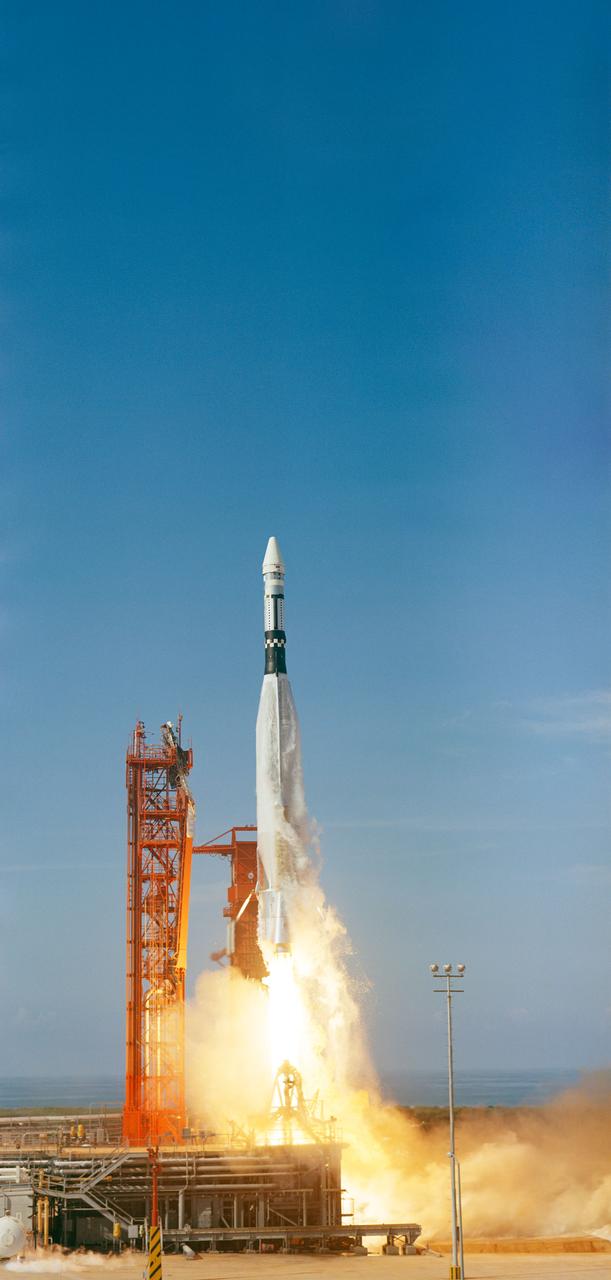

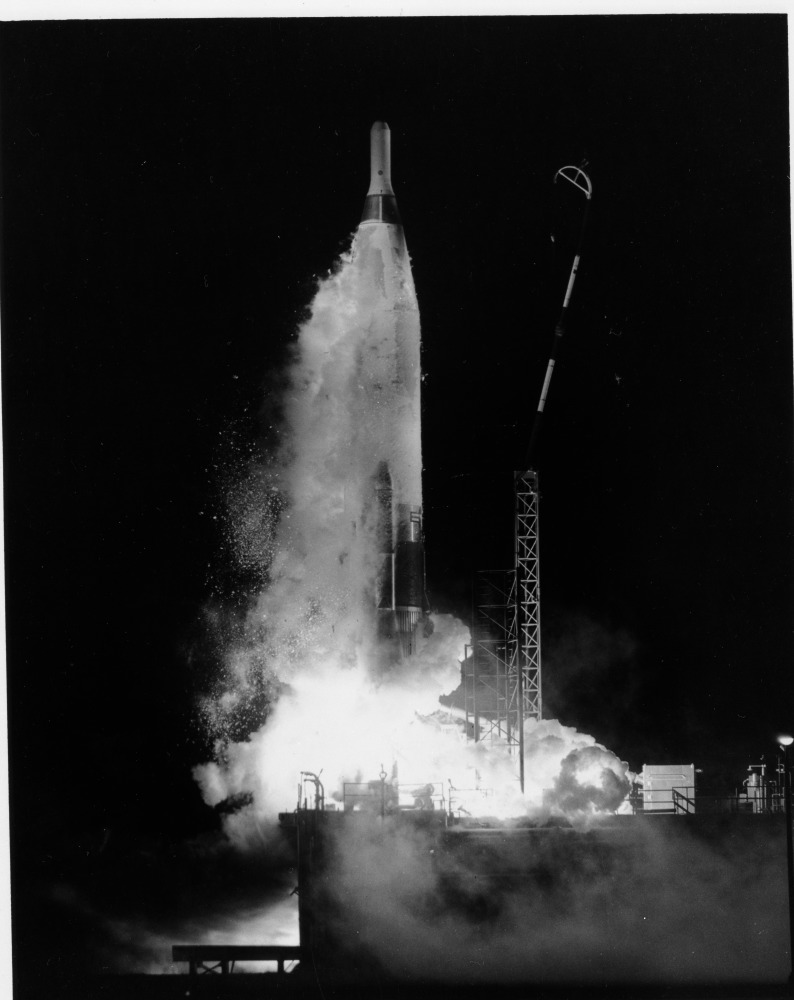


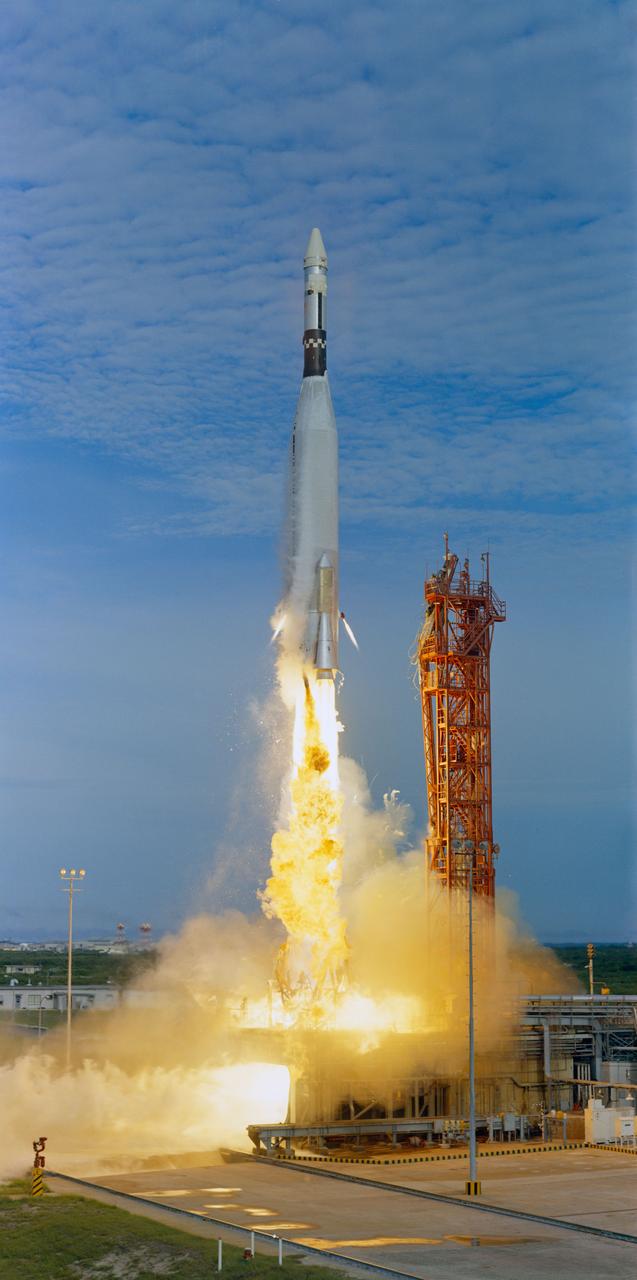

The Atlas family is the lineage of American missiles and launch vehicles that begins with the SM-65 intercontinental ballistic missile and reaches, seven decades later, the Atlas V. It was born as a Cold War weapon, had a short military life and a very long spacefaring career, with the first Americans in orbit among its payloads.
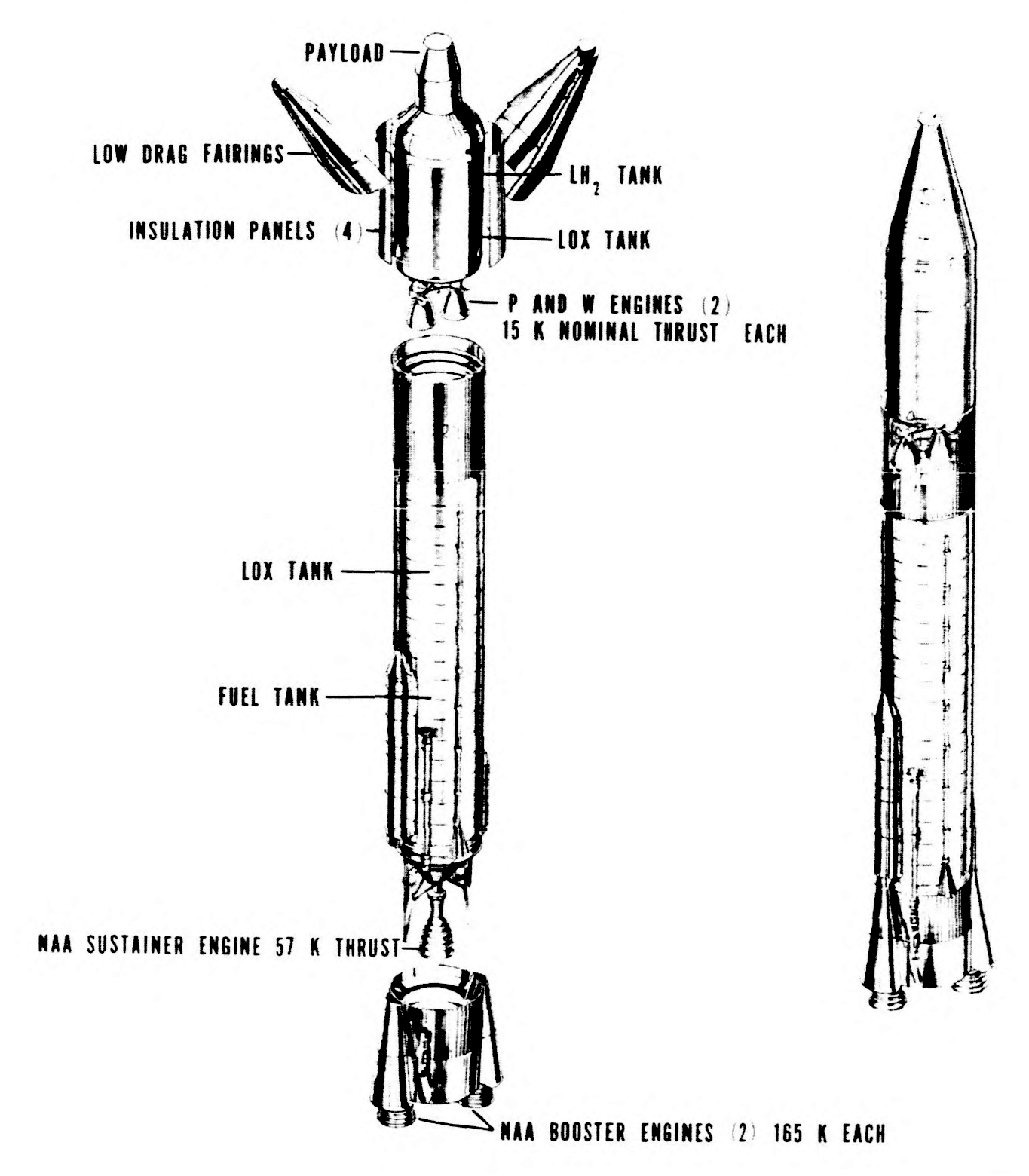
Three-view drawing

History
Atlas began as the SM-65, an intercontinental ballistic missile developed by Convair, a division of General Dynamics, under Air Force contract. It burned RP-1 kerosene with liquid oxygen in three engines arranged in an unusual "stage-and-a-half" layout: the two outboard booster engines were jettisoned with their supporting structure during ascent while the centre sustainer engine, the propellant tanks and the remaining structure stayed together until propellant depletion. The name was proposed by Karel Bossart's team on project MX-1593, invoking the Greek titan and, conveniently, Convair's parent Atlas Corporation. Its best-remembered technical trait was the "balloon" tanks of very thin stainless steel with no rigid support: only internal pressure gave them stiffness, and when empty they had to be kept pressurised with nitrogen so the rocket would not collapse under its own weight.
The full-scale prototype, Atlas A, first flew on 11 June 1957 and failed; the first successful SM-65 test came on 17 December 1957, spurred by the urgency created by the success of the Soviet R-7. Military service was brief — the last squadron came off operational alert in 1965 — but retired missiles found a second career as space boosters: converted Atlas E/F vehicles launched the early Block I GPS satellites among other payloads, and the SM-65 served as a satellite launcher first stage for half a century.
The civil side gave the family its place in history. The modified Atlas LV-3B was the orbital launcher of Project Mercury and put four crewed spacecraft into low Earth orbit; on 20 February 1962 it launched John Glenn's Friendship 7, which made three Earth orbits. With the Agena and Centaur upper stages, Atlas sent the Mariner probes to Mercury, Venus and Mars. From that trunk came the Atlas II, launched 63 times between 1991 and 2004; then the Atlas III, of which only six flew between 2000 and 2005; and finally the Atlas V, still in service. More than 300 Atlas launches have departed from Cape Canaveral and 285 from Vandenberg.
Launch timeline
| Date | Launch site | Outcome | Payload |
|---|
Versions
| SM-65A Atlas | SM-65B Atlas | SM-65C Atlas | SM-65D Atlas | Atlas-Agena | Atlas LV-3B | SM-65E Atlas | SM-65F Atlas | Atlas-Centaur | Atlas SLV-3 | Atlas E/F | Atlas H | Atlas G | Atlas I | Atlas II | Atlas IIA | Atlas IIAS | Atlas III | Atlas IIIA | Atlas IIIB | Atlas V | |
|---|---|---|---|---|---|---|---|---|---|---|---|---|---|---|---|---|---|---|---|---|---|
| First launch | June 11, 1957 | July 19, 1958 | December 24, 1958 | April 14, 1959 | February 26, 1960 | July 29, 1960 | October 11, 1960 | August 8, 1961 | May 8, 1962 | June 1, 1966 | April 6, 1968 | February 9, 1983 | June 9, 1984 | July 25, 1990 | December 7, 1991 | June 10, 1992 | December 16, 1993 | May 24, 2000 | May 24, 2000 | February 21, 2002 | August 21, 2002 |
| Last launch | — | — | — | — | June 27, 1978 | May 15, 1963 | — | — | August 31, 2004 | May 19, 1983 | March 24, 1995 | May 15, 1987 | September 25, 1989 | April 25, 1997 | March 16, 1998 | December 5, 2002 | August 31, 2004 | February 3, 2005 | March 13, 2004 | February 3, 2005 | — |
| Height | — | — | — | 22.9 m | 36 m | 29.1 m | — | — | — | — | — | — | 43.9 m | 43.9 m | 47.5 m | — | — | 52.8 m | — | — | 58.3 m Best value in this row |
| Diameter | 3.1 m | 3.1 m | 3.1 m | 3.1 m | 3.1 m | 3.1 m | 3.1 m | 3.1 m | 3.1 m | 3.1 m | 3.1 m | 3.1 m | 3.1 m | 3.1 m | 3 m | — | — | 3.1 m | — | — | 3.8 m Best value in this row |
| Mass | — | — | — | 116,100 kg | 154,675 kg | 117,934 kg | 121,563 kg | 121,563 kg | — | 118,355 kg | — | — | 164,300 kg | 164,300 kg | 204,300 kg | — | — | 214,338 kg | — | — | 590,000 kg Best value in this row |
| Stages | — | — | — | — | — | — | — | — | — | — | — | — | — | — | — | — | — | 2 Best value in this row | — | — | 2 Best value in this row |
| LEO capacity | — | — | — | — | 998 kg | 1,360 kg | — | — | — | — | — | — | 5,900 kg | 5,900 kg | 6,580 kg | 7,280 kg | 8,610 kg | — | 8,686 kg | 10,759 kg Best value in this row | — |
| GTO capacity | — | — | — | — | — | — | — | — | — | — | — | — | 2,375 kg | 2,375 kg | 2,810 kg | 3,039 kg | 3,630 kg | — | 4,060 kg | 4,500 kg Best value in this row | — |
| Reusable | No | No | No | No | No | No | No | No | No | No | No | No | No | No | No | No | No | No | No | No | No |
Images