Project Mercury · NASA · Crewed
Mercury-Atlas 6
- February 20, 1962
- Launch date
- 1
- Crew size
- 4 hr 55 min
- Duration
- Success
- Outcome

_---_Astronauts_Virgil_I-800.webp)


_---_Astronaut_John_H-1600.webp)


_---_Following_the_successful_MA-6_mission%2C_astronaut_John_H-1600.webp)


_---_Department_of_Defense_(DOD)_recovery_personnel_and_spacecraft_technicians_from_NASA_and_McDonnell_Aircraft_Corp.%2C_inspe-800.webp)


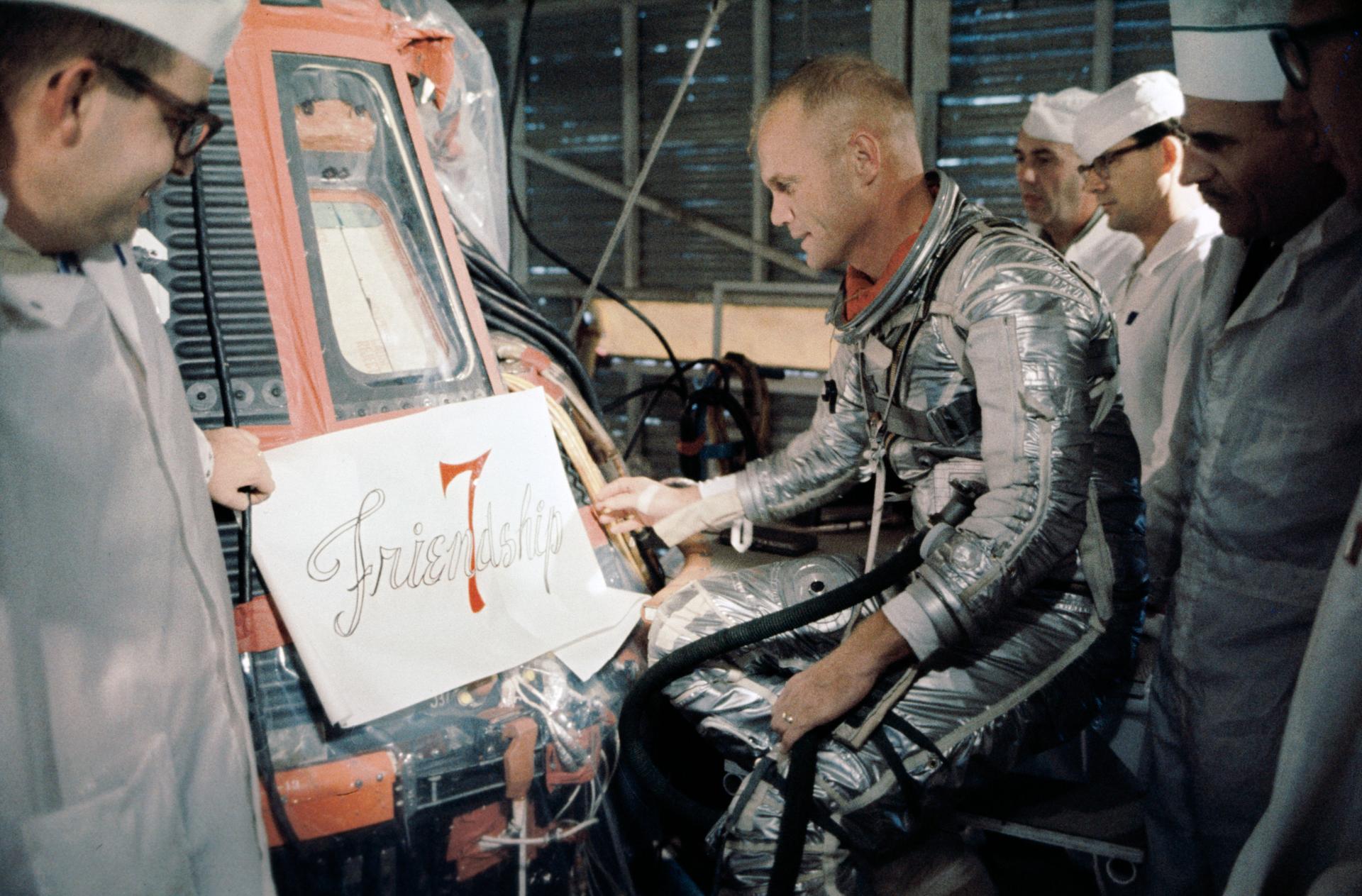
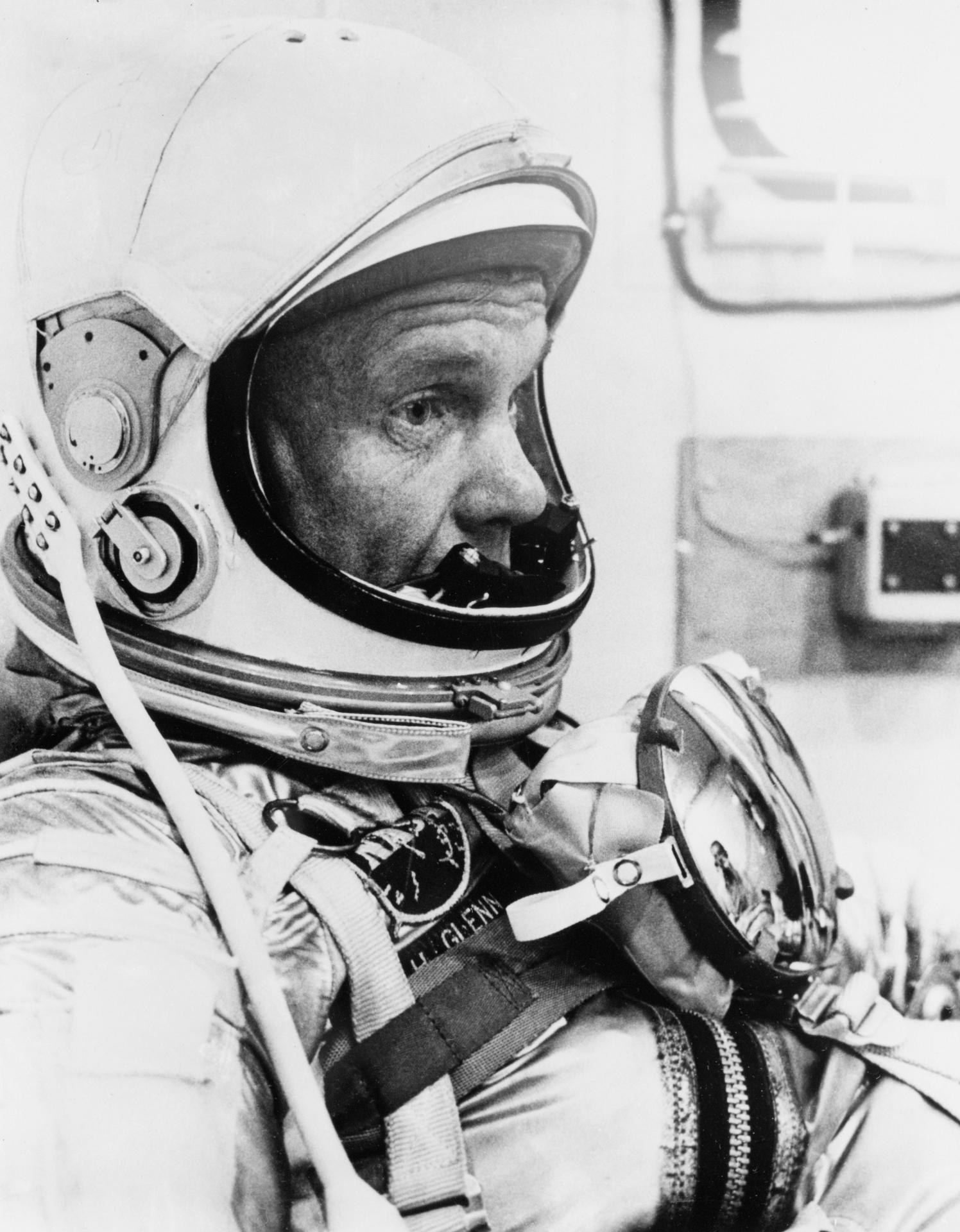
Mercury-Atlas 6 was the first crewed American orbital spaceflight. On February 20, 1962, astronaut John H. Glenn, Jr. lifted off from Launch Complex 14 at Cape Canaveral aboard the Mercury capsule he had named Friendship 7, carried by an Atlas LV-3B launch vehicle. After three orbits of the Earth and a flight lasting 4 hours 55 minutes and 23 seconds, the spacecraft re-entered the atmosphere and splashed down in the North Atlantic, where it was recovered by the destroyer USS Noa. It was the fifth human spaceflight, following the Soviet orbital missions Vostok 1 and Vostok 2 and the American sub-orbital flights Mercury-Redstone 3 and Mercury-Redstone 4. The mission carried an enormous political weight. The United States had flown two fifteen-minute ballistic hops while the Soviet Union had already orbited two men, and NASA had hoped to fly MA-6 before the end of 1961 precisely so as not to close the year behind. The hardware was not ready: Mercury spacecraft number 13 and Atlas 109-D were not stacked on the pad until January 2, 1962, and from there the flight accumulated more than a month of postponements caused by trouble with the launch vehicle's tanks, a fuel leak that soaked an internal insulation blanket, and repeated spells of winter weather. The flight itself was far less serene than popular memory suggests. A yaw thruster began to misbehave late in the first orbit and forced Glenn to fly manually for most of the mission, burning far more propellant than a healthy automatic system would have used. During the second orbit a ground sensor known as "Segment 51" indicated that the heat shield and landing bag were no longer locked in place, which would have left the shield held against the spacecraft only by the straps of the retrorocket package. What was decided about that signal is the most quoted episode of the mission and also the most distorted. Mission Director Walter C. Williams chose to retain the retro package through re-entry as added insurance, overruling Flight Director Chris Kraft, and Glenn flew the re-entry with the package still attached, watching burning fragments stream past the window that he feared were pieces of his own shield. Only afterwards was the alarm traced to a faulty sensor switch: shield and landing bag had been secure the whole time. With MA-6 the basic objectives of Project Mercury were considered met - a man placed in Earth orbit, his reactions to the space environment observed, and his safe return achieved - and the United States regained the symbolic initiative in the space race. President Kennedy presented Glenn with the NASA Distinguished Service Medal on February 23, 1962, and New York gave him a ticker-tape parade; the capsule itself was lent to the United States Information Agency for a world tour of more than 20 stops that became known as the "fourth orbit of Friendship 7". It is now displayed at the Steven F. Udvar-Hazy Center of the National Air and Space Museum.
Payload
The MA-6 payload was Mercury spacecraft No. 13, built by McDonnell Aircraft in St. Louis, Missouri: assembly began in May 1960, it was picked for the mission that October, reached Cape Canaveral on 27 August 1961 and was stacked on Atlas 109-D at Launch Complex 14 on 2 January 1962. Glenn named it Friendship 7. Wikipedia gives a launch mass of 2,981 pounds (1,352 kg); none of the NASA sources consulted supports that figure. It carried a single crewman, pilot John H. Glenn Jr., and the two attitude-control circuits held 27.4 kg of propellant, 16 kg on the automatic system and 11.1 kg on the manual one. The personal equipment mirrored the medical uncertainty of the day: a medical kit with morphine for pain, mephentermine sulfate against shock, benzylamine hydrochloride against motion sickness and racemic amphetamine sulfate as a stimulant; a survival kit with desalter kits, dye marker, distress signal, signal mirrors and whistle, first aid kits, shark chaser, a PK-2 raft, survival rations, matches and a radio transceiver; and the first dedicated urine collection device flown on an American spaceflight. Glenn also won permission to take a 35 mm Minolta Hi-Matic camera, bought by himself at a local drug store and modified for use with pressure-suit gloves; in flight he knocked a film canister loose and it floated away behind the instrument panel. For food he tried a tube of applesauce and a xylose tablet over Kano.
History
Context: the pressure to reach orbit
When MA-6 was planned, the scoreboard of the space race made uncomfortable reading in Washington. The Soviet Union had orbited Yuri Gagarin on Vostok 1 and then Gherman Titov on Vostok 2, while the American answer amounted to two ballistic Mercury-Redstone flights, MR-3 and MR-4, neither of which circled the planet once. Whatever the Soviets had learned about human performance in orbit was being kept secret, so NASA faced the flight without any borrowed experience to lean on.
The agency wanted to fly within 1961, to orbit an astronaut in the same calendar year as the Soviets had. By early December it was clear the hardware would not be ready before early 1962. The press conference held in those days, after the Mercury-Atlas 5 flight that carried the chimpanzee Enos, was the occasion on which Robert Gilruth named the crews for the next two missions: John H. Glenn, Jr. as prime pilot for MA-6 with M. Scott Carpenter as backup, and Donald K. Slayton with Walter M. Schirra as backup for Mercury-Atlas 7.
Spacecraft and launch vehicle
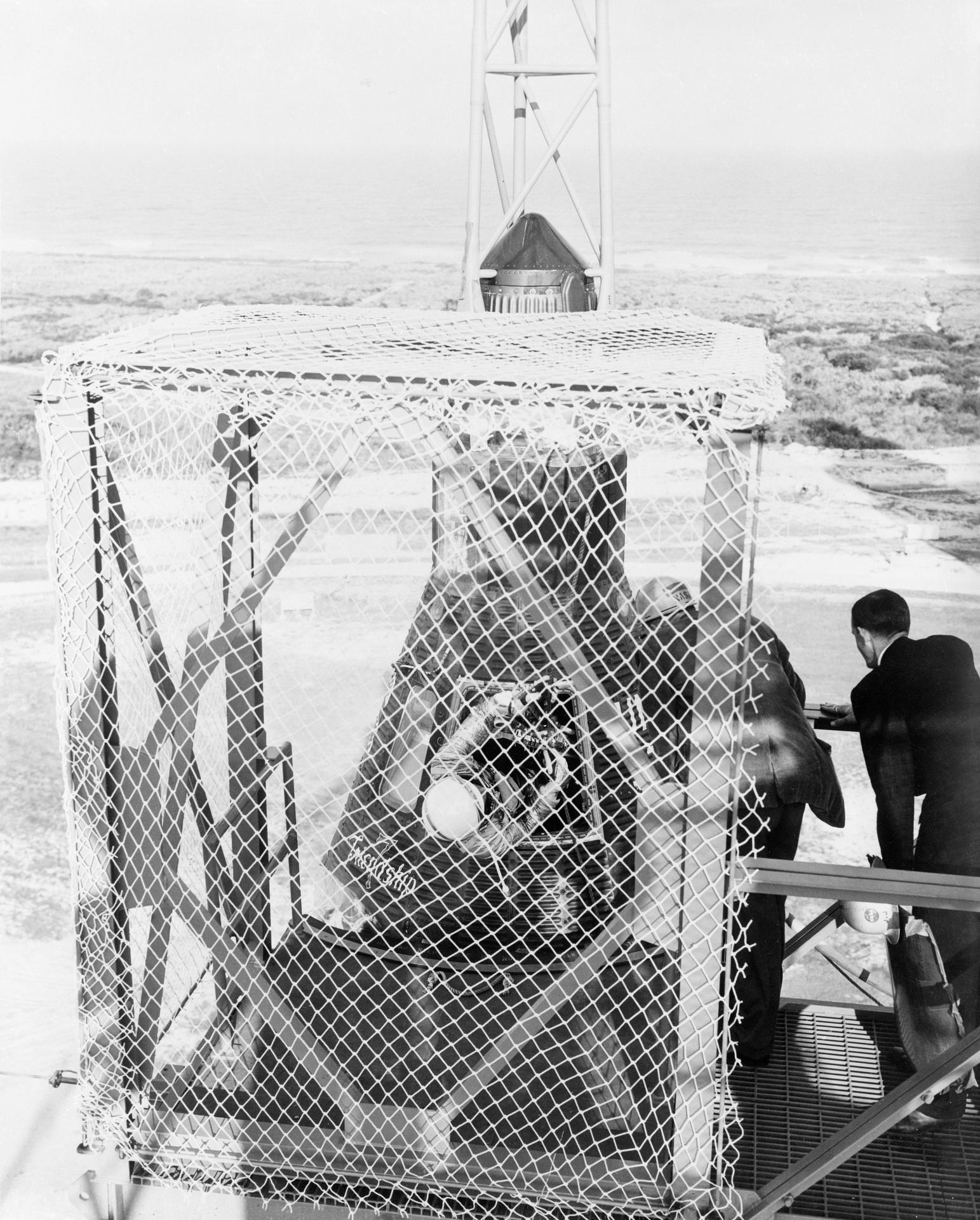
The capsule assigned to the flight was Mercury spacecraft number 13, which had begun taking shape on McDonnell's St. Louis, Missouri, assembly line in May 1960. It was selected for MA-6 in October 1960 and delivered to Cape Canaveral on August 27, 1961. The launch vehicle, Atlas 109-D, arrived at the Cape on the evening of November 30, 1961. Capsule and booster were stacked on the pad at Launch Complex 14 on January 2, 1962.
_---_Following_the_successful_MA-6_mission%2C_astronaut_John_H.jpg)
Preparation reflected how little was known about what orbital flight would do to a human body. An onboard medical kit carried morphine for pain, mephentermine sulfate against shock symptoms, benzylamine hydrochloride for motion sickness and racemic amphetamine sulfate as a stimulant. A survival kit covered the time the pilot might spend at sea before recovery: desalter kits, dye marker, distress signal, signal mirrors and whistle, first aid kits, shark chaser, a PK-2 raft, rations, matches and a radio transceiver. Taught by the two previous crewed flights, MA-6 was also the first American spaceflight to carry a dedicated urine collection device.
There was a small cultural battle as well. NASA had been reluctant to let astronauts use cameras, fearing the distraction. Glenn argued his case successfully and flew a 35 mm Minolta Hi-Matic that he bought himself at a local drug store, modified so it could be worked with pressure-suit gloves. Changing film in weightlessness proved awkward: during the flight he knocked a film canister loose and it floated away, ending up behind the instrument panel.
Naming Friendship 7
Glenn called his capsule "Friendship 7". The seven honoured the seven original Mercury astronauts and continued a tradition begun by accident: Alan Shepard had named his spacecraft "Freedom 7" because it was factory model number 7, and the others liked the symbolism enough to append the seven to their own names. The choice was made as a family, with his wife Annie and their children working through dictionaries and a thesaurus. Liberty and Independence were considered, but Glenn leaned towards Friendship: he would be flying over the whole world, and that was the message he wanted to carry.
A long chain of postponements
Few missions piled up so many delays before leaving the ground. The date was first announced for January 16, 1962, then moved to January 20 because of problems with the Atlas fuel tanks. On January 13 a faulty yaw gyro was detected by the Spin Motor Rotation Detection System and replaced. From there the launch slipped day by day to January 27 because of poor winter weather.
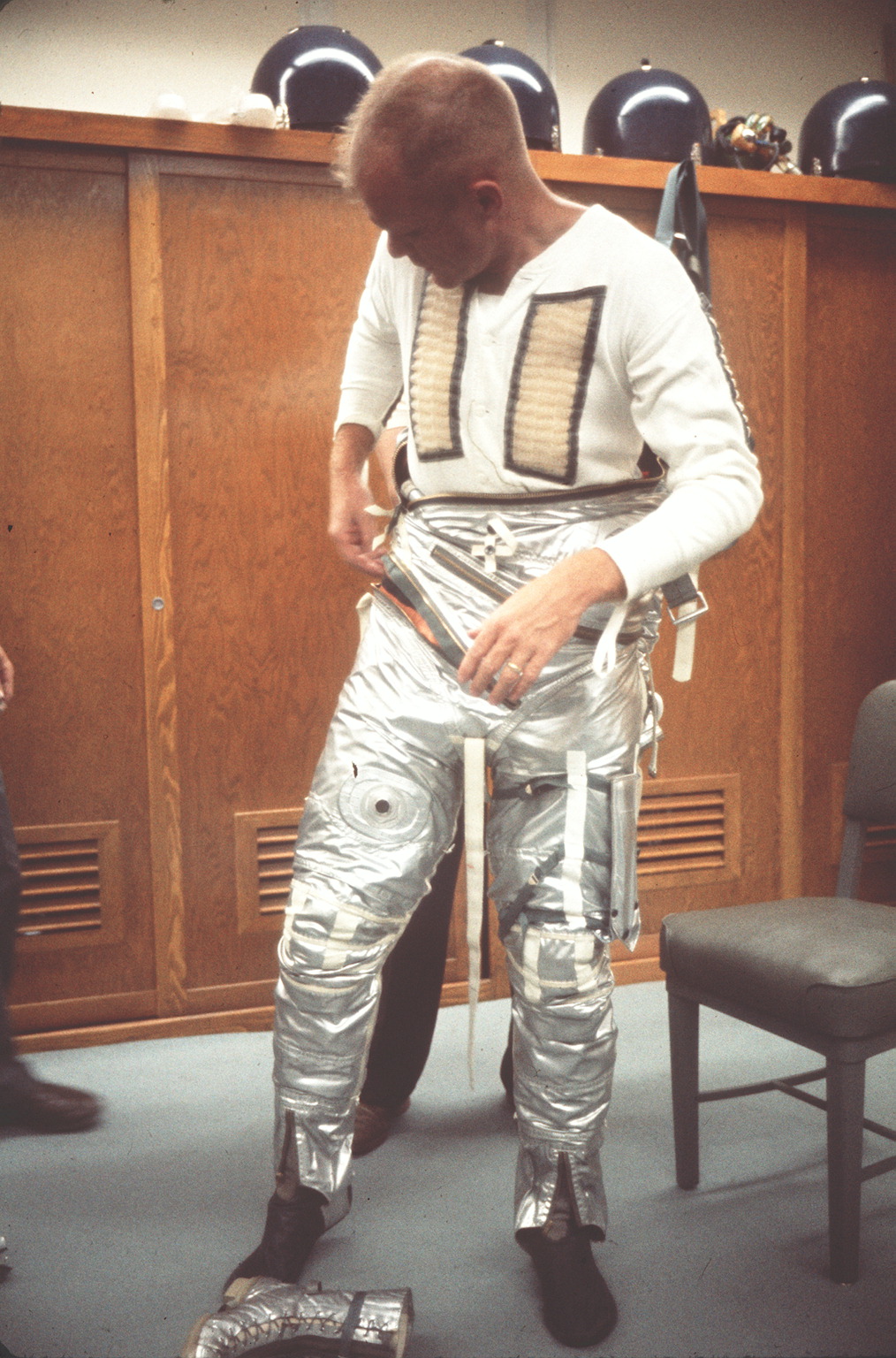
On that day Glenn was aboard and ready when, at T-29 minutes, the flight director called the attempt off: cloud thick enough to make it impossible to photograph or film the launch vehicle after the first twenty seconds of flight. The inability of the launch crews to film the failed Mercury-Atlas 1 launch sixteen months earlier had proved how much clear skies were worth. The crowd of reporters gathered at the Cape went home disappointed. Mission Director Walter Williams felt a certain relief at the weather, because there was still a general sense that neither spacecraft nor booster was quite ready to fly.
NASA told an impatient public that crewed launches demanded a level of preparation and safety that took time. February 1 was set, but when technicians began fuelling the Atlas on January 30 they found that a fuel leak had soaked an internal insulation blanket between the RP-1 and liquid oxygen tanks. Repairs cost two weeks. On February 14 weather forced another postponement; conditions began to break on February 18 and February 20 looked like a favourable day.
Days before the flight the Flight Safety Review Board met to review the twelve Atlas flights since Mercury-Atlas 5 the previous November. Four had failed. Atlas 5F and Ranger 3 had suffered guidance failures irrelevant to Mercury, which used a different guidance model, while Atlas 6F and Samos 5 were put down to random quality defects unlikely to appear in the far more closely supervised Mercury production line.
The morning of February 20
Glenn boarded Friendship 7 at 11:03 UTC after an hour-and-a-half delay to replace a faulty component in the Atlas guidance system. The hatch was bolted in place at 12:10 UTC, but with most of the seventy bolts secured one was found to be broken: all of them had to come out, the defective bolt was replaced and the hatch re-bolted, costing 42 minutes. The count resumed at 11:25 UTC, the gantry rolled back at 13:20 UTC, and at 13:58 UTC there was a further 25-minute hold to repair a liquid oxygen propellant valve.
_---_Astronauts_Virgil_I.jpg)
At 14:47 UTC, after two hours and 17 minutes of holds and three hours and 44 minutes after Glenn had entered the spacecraft, engineer T. J. O'Malley pressed the launch button in the blockhouse. O'Malley said "the good Lord ride all the way", and capsule communicator Scott Carpenter spoke the phrase that has stayed with the mission ever since: "Godspeed, John Glenn". A glitch in Glenn's radio meant he never heard it during the ascent. At lift-off his pulse climbed to 110 beats per minute.
Ascent and orbital insertion
Thirty seconds after lift-off the General Electric-Burroughs guidance system locked onto a radio transponder in the booster to steer the vehicle to orbit. Passing through maximum dynamic pressure Glenn reported vibration; beyond that point the ride smoothed out. At two minutes and fourteen seconds the booster engines cut off and dropped away, and at two minutes and twenty-four seconds the escape tower was jettisoned exactly on schedule.
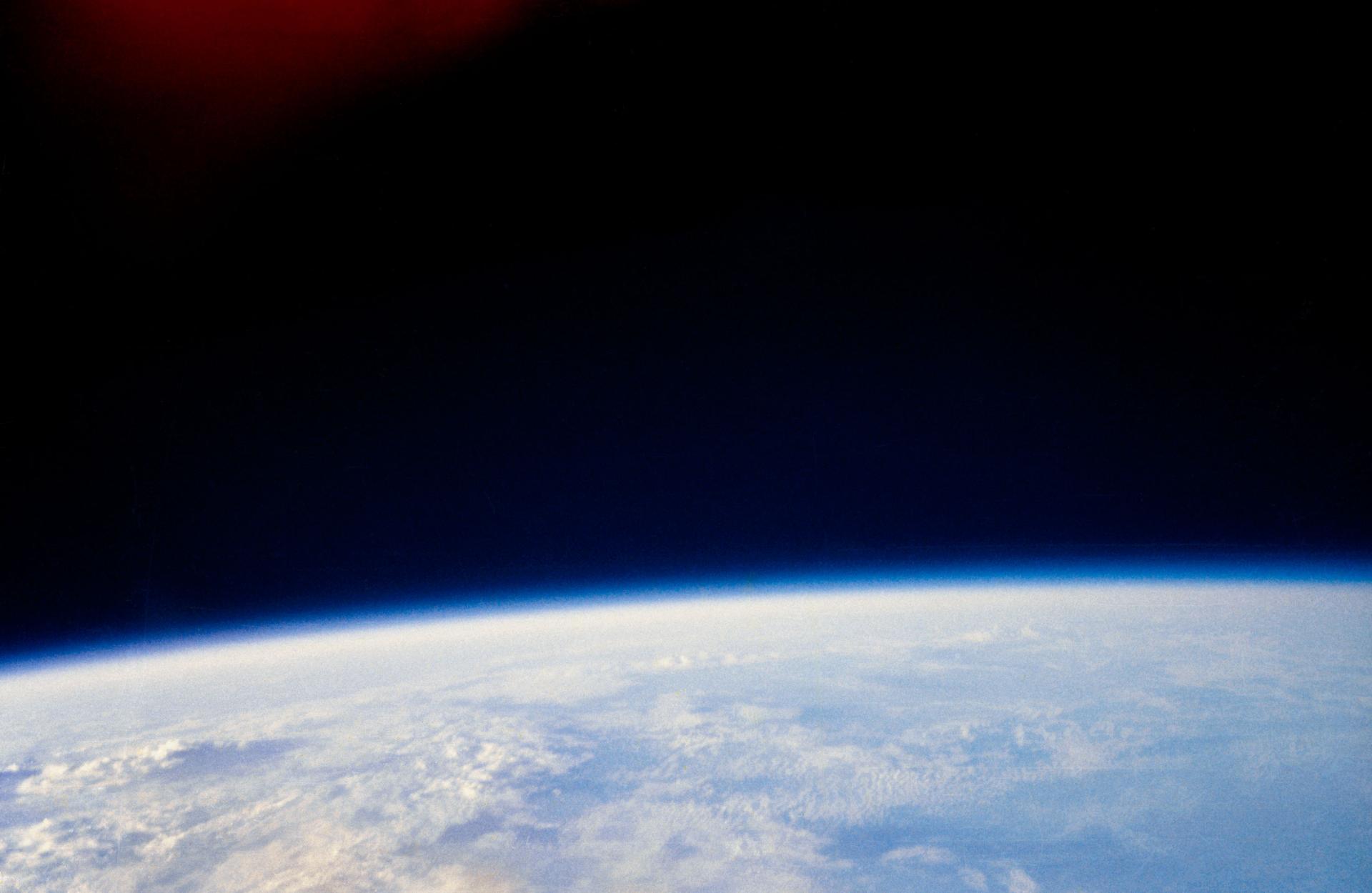
With the tower gone the stack pitched over further and Glenn saw the horizon for the first time, calling it a beautiful sight looking eastward across the Atlantic. Vibration grew as the last of the propellant was consumed. Booster performance was very nearly flawless: at sustainer engine cut-off the capsule was travelling only 7 ft/s (2.1 m/s) below the nominal speed. At 14:52 UTC Friendship 7 was in orbit. Glenn was told the trajectory would stay up for at least seven orbits, while computers at the Goddard Space Flight Center in Maryland indicated parameters good enough for almost a hundred. The orbit had an inclination of 32.5° and a period of 88.5 min.
First orbit: turnaround, sunset and "fireflies"
Separation was not clean. When the posigrade rockets fired, the five-second rate-damping operation started two and a half seconds late, producing a substantial roll error as the capsule began its turnaround. The automatic attitude control system needed 38 seconds to settle Friendship 7 into its proper orbital attitude. The manoeuvre consumed 5.4 pounds (2.4 kg) of propellant out of a total supply of 60.4 pounds (27.4 kg), split as 36 lb (16 kg) for the automatic system and 24.4 lb (11.1 kg) for the manual one. Settled into flight, the spacecraft was moving at 17,544 miles per hour (28,234 km/h).
_---_Department_of_Defense_(DOD)_recovery_personnel_and_spacecraft_technicians_from_NASA_and_McDonnell_Aircraft_Corp.%2C_inspe.jpg)
Friendship 7 crossed the Atlantic and passed over the Canary Islands, where controllers reported every system working perfectly. Over Kano, in Nigeria, Glenn described a dust storm that the local communicators confirmed had followed a week of heavy winds. There he took manual control and began a major yaw adjustment, letting the spacecraft swing until it faced along its flight path; he noticed that the attitude indicators disagreed with what he could see out of the window, though he was pleased to be facing forward rather than backward.
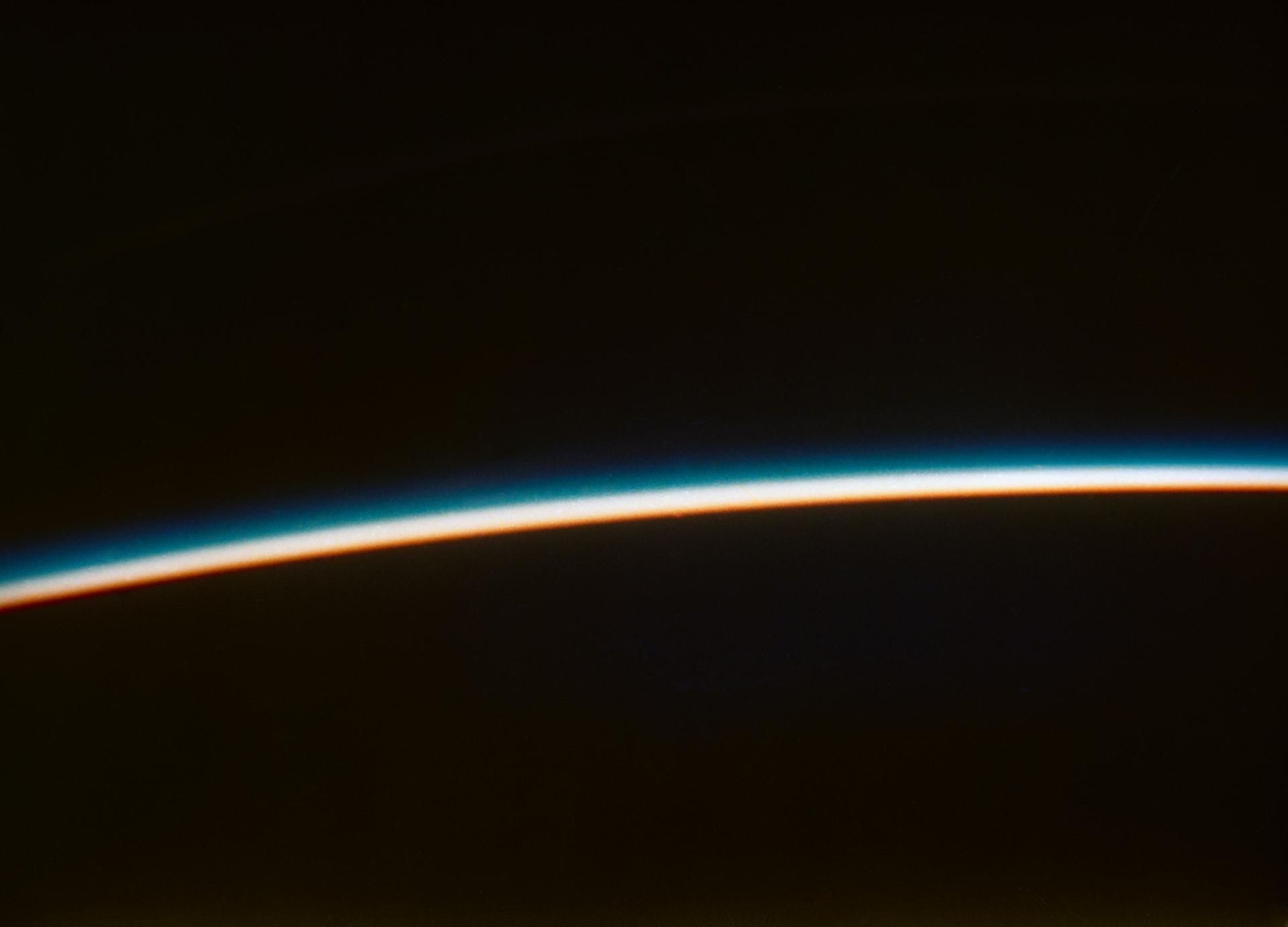
Over the Indian Ocean came his first orbital sunset. The sky, he said, was very black, with a thin blue band along the horizon, and the light faded slowly over five or six minutes, with brilliant orange and blue layers spreading 45 to 60 degrees on either side of the Sun. Cloud stopped him from seeing a mortar flare fired by the Indian Ocean tracking ship for a pilot observation experiment. Crossing the night side towards Australia he made star, weather and landmark observations, and looked in vain for the zodiacal light because his eyes had not had time to adapt to the dark.
At Muchea, Australia, the capsule communicator was Gordon Cooper. Glenn reported that he felt fine and described a very bright light that looked like the outline of a city: Perth and its satellite town of Rockingham, where many people had turned their lights on so as to be seen from orbit. "That was about the shortest day I've ever run into," he told Cooper. After a 45-minute night he prepared the periscope for his first orbital sunrise, and as the Sun rose over Canton Island he saw thousands of brilliant specks floating outside the capsule. For a moment he thought the spacecraft was tumbling or that he was looking into a star field; a hard look through the window corrected the illusion, and he saw that these "fireflies", as he called them, were streaming past from ahead rather than coming off any part of the spacecraft, disappearing as Friendship 7 moved into brighter sunlight. They were later judged to be small ice crystals venting from onboard systems.
The attitude control failure and the fuel budget
As the spacecraft crossed the Pacific coast of North America, the tracking station at Guaymas, Mexico, warned Mercury Control that a yaw thruster was causing attitude control problems. It was, as Glenn later recalled, a problem that would stay with him for the rest of the flight. The automatic stabilization and control system was letting the spacecraft drift about a degree and a half per second to the right; Glenn switched to manual-proportional control and brought it back. He tried different modes to see which used the least propellant and found the manual fly-by-wire combination the most economical. After about twenty minutes the thruster came back to life and he returned to automatic, which worked briefly before failing again, this time on the opposite yaw thruster. From then on he flew manually for the remainder of the mission.
The cost of hand-flying showed up plainly in the numbers. During the second orbit consumption ran to 6 pounds (2.7 kg) from the automatic tank and 11.8 pounds (5.4 kg) from the manual tank, close to 30% of the total supply. Over Australia a warning light indicated that fuel for the automatic system was down to 62%, and Mercury Control recommended letting the spacecraft drift to conserve it. That trade-off - a controllable spacecraft, but one burning reserves needed for re-entry - was for hours the real technical worry of the flight.
Second orbit: "Segment 51"
As Friendship 7 crossed Cape Canaveral at the start of its second orbit, flight systems controller Don Arabian noticed that "Segment 51", a sensor reporting on the landing system, was giving a strange reading: according to it, the heat shield and landing bag were no longer locked in position. If that were true, the shield was being held against the spacecraft only by the straps of the retro package. Mercury Control ordered every tracking site to watch the parameter closely and to remind the pilot that the landing-bag deploy switch must stay in the "off" position.
Glenn was not told immediately, but grew suspicious as site after site asked him to confirm the position of that switch. Meanwhile he was busy holding attitude by hand and working through as much of the flight plan as he could. Over the Canary Islands he established that the "fireflies" had no connection with gas from the reaction control jets. His suit felt too warm, but he did not stop to adjust it. The Kano and Zanzibar sites noticed a 12 percent drop in the spacecraft's secondary oxygen supply.
On the second pass over the Indian Ocean the tracking ship was in heavy weather and, instead of releasing balloons for the observation experiment, fired star-shell parachute flares that Glenn could not see, although he did watch lightning from the storms below. Approaching Woomera a warning light came on for excess cabin humidity, so for the rest of the flight he had to balance suit cooling against humidity with care. Beyond that, the second orbit passed without further trouble.
Third orbit and the retro package decision
On the third orbit the Indian Ocean ship did not even attempt to launch objects for the observation experiments, the cloud cover still being too thick. Over Australia, Glenn joked with Cooper at Muchea, asking him to notify General Shoup, Commandant of the Marine Corps, that three orbits ought to meet the minimum monthly requirement of four hours' flying time, and to certify him as eligible for his regular flight pay.
Mercury Control, meanwhile, was still wrestling with "Segment 51". The Hawaiian station asked Glenn to toggle the landing-bag deploy switch to automatic: if a light came on, re-entry would be flown with the retro package retained. Given all the earlier questions about that switch, Glenn realised the controllers suspected a loose heat shield. The test was run and no light appeared, and he reported no bumping noises during manoeuvres.
Mercury Control remained divided. Some controllers argued for jettisoning the retro package after retrofire as on a normal flight; others wanted it retained as added assurance that the shield would stay in place. Mission Director Walter C. Williams decided to keep it on through re-entry, overruling Flight Director Chris Kraft. Walter Schirra, the California communicator at Point Arguello, relayed the instruction: the package would be retained until the spacecraft was over the Texas tracking station. After the mission the warning was traced to a faulty sensor switch, meaning the heat shield and landing bag had in fact been secure throughout.
Re-entry
Keeping the package forced improvisation: Glenn would have to retract the periscope by hand and trigger the 0.05 g (0.49 m/s2) sequence with the override switch. As Friendship 7 approached the California coast, four hours and 33 minutes had passed since launch. The spacecraft was manoeuvred into retrofire attitude and the first retrorocket fired. "Roger. Retros are firing. ... Are they ever. It feels like I'm going back toward Hawaii," Glenn radioed. The second and third fired at five-second intervals, with attitude steady throughout. Six minutes after retrofire he pitched the spacecraft to a 14-degree nose-up re-entry attitude.
Losing altitude over the continental United States and heading for the Atlantic, the spacecraft was told by the Texas station to retain the retro package until the accelerometer read 1.5 g (14.7 m/s2). Crossing Cape Canaveral, Glenn reported that he had been flying manually and would use fly-by-wire as backup; Mercury Control gave him the 0.05 g mark and he pressed the override. About the same time he heard noises like small things brushing against the capsule and radioed his most quoted line of the descent, that there was a real fireball outside. A strap from the retro package broke partly loose and hung across the window as it burned away in the plasma. The control system was working well, but the manual fuel supply was down to 15 percent with the peak deceleration still ahead, so Glenn switched to fly-by-wire fed from the automatic tank, which held more.
Then came peak heating. Glenn later reported that he thought the retro package had jettisoned and saw chunks flying past the window, fearing they were pieces of his disintegrating heat shield; they were pieces of the retro package breaking up in the fireball. Past the peak-g region the capsule began oscillating severely, more than 10 degrees either side of vertical, beyond his ability to control by hand - "I felt like a falling leaf," he said. He engaged the auxiliary damping system, which helped tame the yaw and roll rates while the automatic tank ran down. Automatic fuel ran out 1 minute and 51 seconds before drogue deployment and manual fuel 51 seconds before, and the oscillations returned. At 35,000 feet (11 km) Glenn decided to deploy the drogue manually, but just before he reached the switch it opened automatically at 28,000 feet (8.5 km) instead of the programmed 21,000 feet (6.4 km), and the spacecraft steadied.
At 17,000 feet (5.2 km) the periscope opened. Glenn tried the overhead window instead, but it was so coated with smoke and film that he could see very little. The antenna section jettisoned, the main parachute deployed to full diameter, and Mercury Control reminded him to deploy the landing bag manually: he toggled the switch, the green confirmation light came on, and a clunk announced that heat shield and bag had dropped into place four feet (1.2 m) below the capsule.
Splashdown and recovery
Friendship 7 splashed down in the North Atlantic about 220 miles (350 km) northwest of Puerto Rico, 40 miles (64 km) short of the planned landing zone, because the retrofire calculations had not accounted for the spacecraft's loss of mass through the use of onboard consumables. The destroyer USS Noa, code-named "Steelhead", had spotted the capsule descending under its parachute and was about 6 miles (9.7 km) away when it radioed that it would reach him shortly; it came alongside seventeen minutes later.
One crewman cleared the spacecraft antenna while another attached a line to hoist the capsule aboard, and it bumped against the destroyer's side as it came out of the water. On deck, Glenn had intended to leave through the upper hatch, but it was too hot inside and he chose to blow the side hatch instead: he told the ship's crew to stand clear and struck the detonator plunger with the back of his hand, whose recoil slightly cut his knuckles through the glove. The hatch came off with a loud bang and Harry Beal, the first U.S. Navy SEAL, pulled him out. Standing on the deck of Noa, a smiling Glenn said that it had been hot in there. Astronaut and spacecraft both came through the mission in good shape.
Aftermath and legacy
With MA-6 the basic objectives of Project Mercury were regarded as achieved: a man placed in Earth orbit, his reactions to the space environment observed, and his safe return to a point where he could be recovered. The mission left an odd trace as well: on February 21 a metal fragment, identified by stamped numbers as part of the Atlas that had boosted the flight, landed on a farm in South Africa after about 8 hours in orbit. On April 6 NASA held a one-day symposium in Washington on the results of the three-orbit flight.
The public impact was immense. CBS carried the flight with Walter Cronkite narrating to an audience that took in most Americans, and those who did not watch CBS saw it on ABC or NBC. On February 23, 1962, President Kennedy presented Glenn with the NASA Distinguished Service Medal for the Friendship 7 flight, followed by a ticker-tape parade in New York reminiscent of those honouring Charles Lindbergh and other heroes. Much later, in 1978, Glenn received the Congressional Space Medal of Honor.
On April 19, 1962, NASA announced that the capsule would be lent to the United States Information Agency for a world tour of more than twenty stops touching every continent, which became known as the "fourth orbit of Friendship 7". The spacecraft is displayed today at the Steven F. Udvar-Hazy Center, the National Air and Space Museum's annex in Chantilly, Virginia. In 2012, for the fiftieth anniversary of the flight, Glenn was surprised with the chance to talk to the crew of the International Space Station while on stage at Ohio State University, whose school of public affairs is named in his honour.
Technically, the flight left lessons that shaped the rest of the programme: the fragility of an automatic attitude control system dependent on individual thrusters, the decisive weight of the pilot as a backup system - Glenn flew by hand for most of three orbits - and the cost of making critical decisions from a single sensor. "Segment 51" became the classic example of instrumentation that lies, and its outcome, a re-entry flown with the retro package retained as a precaution, one of the founding scenes of the American space imagination, later dramatised on film in The Right Stuff (1983) and Hidden Figures (2016).
Images
Elsewhere
- Naval History and Heritage CommandFriendship 7 spacecraft being brought alongside recovery ship USS Noa (DD-841) ↗
- Naval History and Heritage CommandUSS Noa (DD-841) crew line the ship's rail with a welcoming sign for John Glenn ↗
- Naval History and Heritage CommandUSS Noa (DD-841) crew hook on recovery equipment to hoist Friendship 7 aboard ↗
- Naval History and Heritage CommandUSS Noa crew and John Glenn inspect the Friendship 7 spacecraft on deck after recovery ↗
- U.S. House of Representatives, History, Art & ArchivesAstronaut John Glenn Addresses a Joint Meeting of Congress, February 26, 1962 ↗
- Smithsonian National Air and Space MuseumMercury Friendship 7 spacecraft, panoramic view ↗
- Smithsonian National Air and Space MuseumMercury Capsule MA-6 Friendship 7 on display ↗
- Smithsonian National Air and Space MuseumU.S. flag flown aboard Friendship 7 ↗
- NASA on The Commons (Flickr)John Glenn with T.J. O'Malley and Paul Donnelly in front of Friendship 7 ↗
- JFK Presidential LibraryPresentation of the NASA Distinguished Service Medal to John Glenn at Cape Canaveral, February 23, 1962 ↗
- Library of CongressGlenn places a rocket-workers' hard hat on President Kennedy's head, Cape Canaveral, February 23, 1962 ↗
- Library of CongressLt. Col. John H. Glenn, Jr., February 20, 1962 ↗