Did you know…
What are blue origin rockets?
Short answer
Two vehicles, plus a family of engines. New Shepard is a reusable suborbital rocket with a six-seat capsule that flies above the Kármán line at 100 km. New Glenn is the orbital heavy-lifter: two stages, seven BE-4 engines, a 7-metre fairing and about 45 tonnes to low Earth orbit, with a first stage that lands on a ship.
.png)
New Shepard, the suborbital vehicle
New Shepard is a single-stage reusable rocket carrying a detachable capsule, built for short flights above the Kármán line at 100 km. The booster lifts the capsule, separates and lands vertically on a pad near the launch site in West Texas, while the capsule coasts, gives its occupants a few minutes of weightlessness and returns under parachutes. The whole profile lasts minutes rather than hours. The capsule seats six behind unusually large windows and also flies uncrewed with research payloads; the first crewed flight, with Jeff Bezos aboard, took place in July 2021.
New Glenn, the orbital one
New Glenn is a different class of machine: two stages, a reusable first stage driven by seven BE-4 engines burning liquefied natural gas and liquid oxygen, and a 7-metre fairing that is wider than most of its competitors, which suits bulky or clustered payloads. Blue Origin quotes about 45 tonnes to low Earth orbit, with the booster recovered on a ship at sea rather than on land. It reached orbit on its first flight in 2025, and its second mission, in November 2025, carried NASA's ESCAPADE pair of Mars orbiters.
Engines, landers and what comes next
The engine line is a product in its own right. BE-3 powers New Shepard and, in a vacuum variant, New Glenn's upper stage; BE-4 flies on New Glenn and is also sold to United Launch Alliance for Vulcan, which makes Blue Origin a supplier to a direct competitor. Beyond launchers the company builds the Blue Moon lunar landers, selected by NASA for a crewed Artemis landing, and has proposed orbital habitats. The common thread is reuse of hardware built end to end in-house.
More questions
- Image pending
Astronauts and life in space
Why does astronauts float in space?
Because they are in free fall, not because gravity is absent. At the International Space Station's altitude of about 400 km, Earth still pulls almost as hard… more…
- Image pending
Astronauts and life in space
Why did yuri gagarin die?
Gagarin died in an aircraft crash, not in a spacecraft. On 27 March 1968 the MiG-15UTI trainer he was flying with instructor Vladimir Seryogin went down in… more…
- Image pending
Astronauts and life in space
How much an astronaut is paid?
NASA's civilian astronauts are ordinary federal employees, paid on the General Schedule grade-and-step scale with no bonus per flight, per spacewalk or per… more…
Astronauts and life in space
Why is blue origin so slow?
Blue Origin was built on deliberate, owner-funded incrementalism: its motto is Gradatim Ferociter, step by step, and it spent its first two decades on… more…
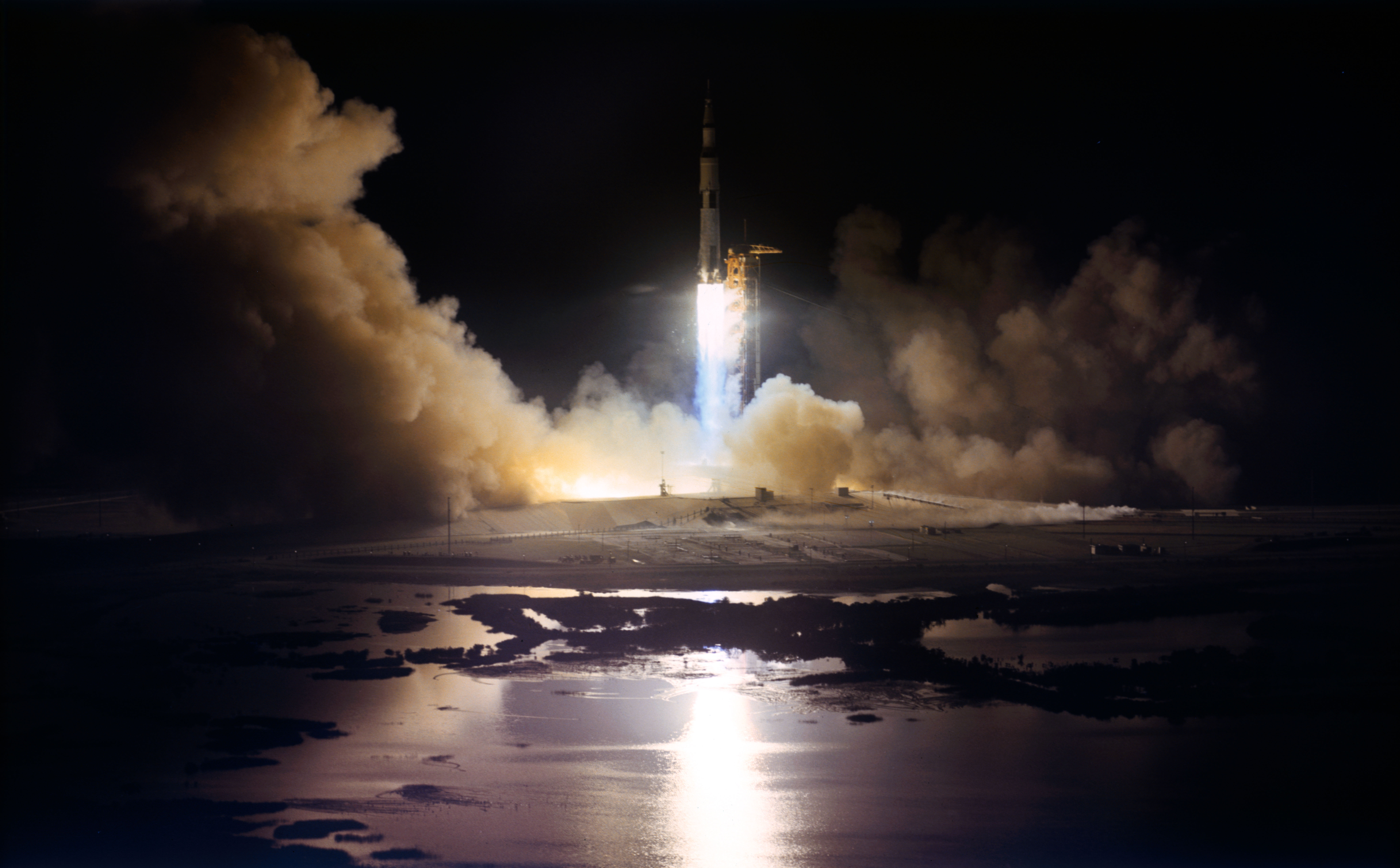
Astronauts and life in space
When did astronauts last walk on the moon?
Apollo 17, in December 1972. Eugene Cernan and Harrison Schmitt landed in the Taurus-Littrow valley on 11 December 1972, worked on the surface for three days… more…
- Image pending
Astronauts and life in space
How high do astronauts orbit the earth?
Crewed spaceflight today happens a few hundred kilometres up. The International Space Station orbits at about 400 km, lapping the planet roughly every 90… more…
