Did you know…
How fast do astronauts travel to the moon?
Short answer
Speed changed constantly. Apollo 11 covered the 384,400 km to the Moon in just over four days from lift-off to touchdown, a mean pace below 4,000 km/h. But the pace was never steady: the spacecraft was fastest in the minutes after leaving Earth orbit and slowest near the midpoint, where Earth's pull had almost stopped its climb.

A crossing measured in days, not in cruise speed
There is no cruising speed on the way to the Moon, because nothing is thrusting. A lunar spacecraft accelerates hard for a few minutes, then coasts for the rest of the journey, gaining and losing speed exactly as gravity dictates. Apollo 11 left the pad on 16 July 1969 and landed on 20 July, so the 384,400 km that separate Earth and Moon on average were crossed in a little over four days from lift-off to touchdown, a mean pace below 4,000 km/h. That figure describes almost no moment of the actual trip.
Fast at the bottom of the hill, slow at the top
The profile is the interesting part. The burn out of Earth orbit, the translunar injection, is where the spacecraft is fastest; from then on it is climbing out of Earth's gravity well and losing speed the whole way, like a ball thrown upwards. Because Earth outweighs the Moon by a factor of about 81, the point where the two pulls balance lies roughly nine tenths of the way across, and by then the vehicle is crawling. Then it accelerates again, falling towards the Moon, and must brake into orbit or sail past.
The same arithmetic for the next crews
The return is the mirror image, and it ends with the only genuinely high speed of the trip: a capsule coming back from the Moon meets the atmosphere far faster than one returning from low Earth orbit, which is why lunar heat shields are a category of their own. Artemis crews fly the same arithmetic, with outbound legs counted in days rather than hours, and nothing on the drawing board changes it. A shorter trip is possible, but every hour saved is bought with propellant on departure and paid for again on arrival.
More questions
- Image pending
Astronauts and life in space
Why does astronauts float in space?
Because they are in free fall, not because gravity is absent. At the International Space Station's altitude of about 400 km, Earth still pulls almost as hard… more…
- Image pending
Astronauts and life in space
Why did yuri gagarin die?
Gagarin died in an aircraft crash, not in a spacecraft. On 27 March 1968 the MiG-15UTI trainer he was flying with instructor Vladimir Seryogin went down in… more…
- Image pending
Astronauts and life in space
How much an astronaut is paid?
NASA's civilian astronauts are ordinary federal employees, paid on the General Schedule grade-and-step scale with no bonus per flight, per spacewalk or per… more…
.png)
Astronauts and life in space
Why is blue origin so slow?
Blue Origin was built on deliberate, owner-funded incrementalism: its motto is Gradatim Ferociter, step by step, and it spent its first two decades on… more…
Astronauts and life in space
When did astronauts last walk on the moon?
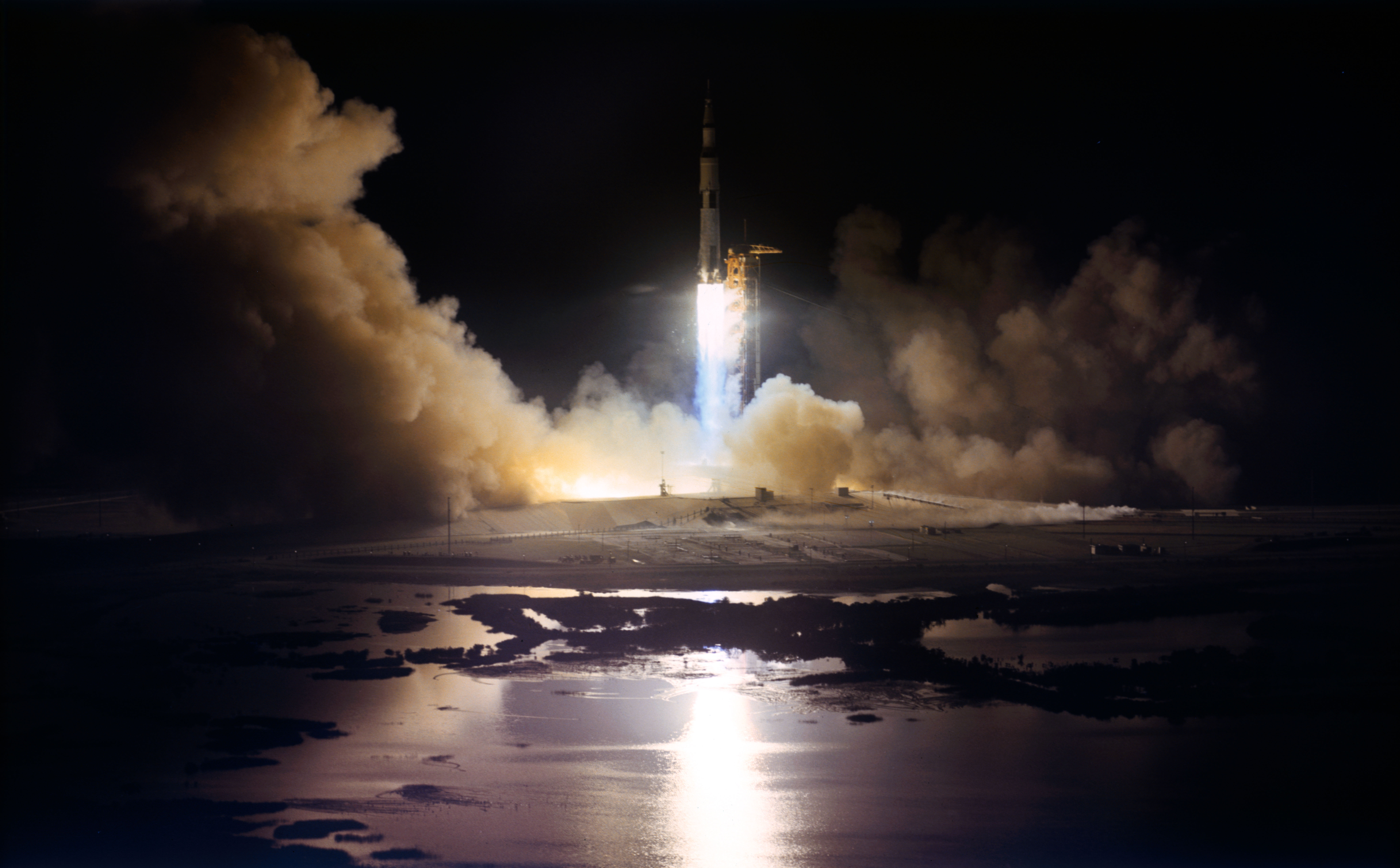
Apollo 17, in December 1972. Eugene Cernan and Harrison Schmitt landed in the Taurus-Littrow valley on 11 December 1972, worked on the surface for three days… more…
- Image pending
Astronauts and life in space
How high do astronauts orbit the earth?
Crewed spaceflight today happens a few hundred kilometres up. The International Space Station orbits at about 400 km, lapping the planet roughly every 90… more…
