Northrop F-5 variant
Northrop F-5 F-5E Tiger III
Chilean upgrade of the F-5E Tiger II, begun in 1993 and taken to a second level — Tigre III Plus — by Enaer and Elbit Systems from 2015. It replaces the AN/APQ-159 radar with an Elta EL/M-2032, adds beyond-visual-range Derby missiles, Python IV, the Dash III helmet sight and an air-refuelling probe.
- 1,405 km
- Range
History
A small fleet with a long life
Chile bought fifteen F-5Es and three F-5Fs in the 1970s, a modest fleet the Chilean Air Force chose to transform rather than replace. The first upgrade programme began in 1993 under the Tiger III name and covered the aircraft's avionics and weapons capability.
The second phase was more ambitious. From 2015 the Empresa Nacional de Aeronáutica de Chile (Enaer) and Israel's Elbit Systems took eighteen aircraft to Tigre III Plus standard. The central change was the radar: the original AN/APQ-159 gave way to an Elta EL/M-2032 pulse-Doppler set with far greater detection range and multi-target capability. With it came the weapons that radar allows: Rafael Derby beyond-visual-range missiles and highly agile short-range Python IVs, integrated with the Dash III helmet-mounted sight, which lets the pilot designate targets by head movement.
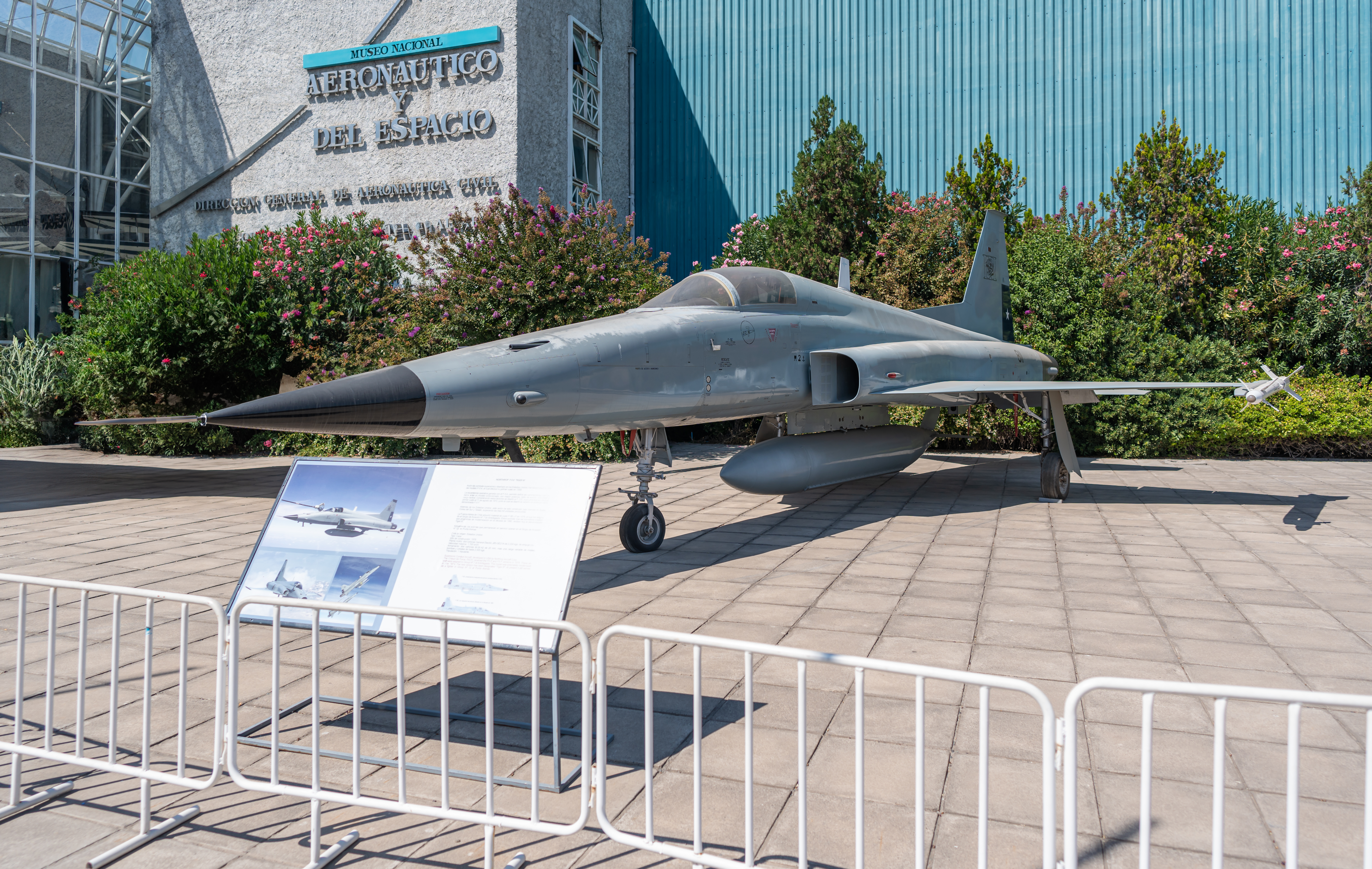
A fixed air-refuelling probe was also added, multiplying the combat radius of a fighter whose range was always its weak point, together with an electronic warfare and navigation package matched to the Israeli systems.
What upgrading instead of replacing means
The Chilean decision illustrates why the F-5 still flies in the twenty-first century. The Tiger II airframe is structurally rugged, cheap to maintain, and its architecture accepts deep avionics changes without redesigning the aircraft. An F-5E upgraded with pulse-Doppler radar and BVR missiles is not an air superiority fighter, but it is a valid interceptor and strike aircraft for a specific airspace, at a fraction of the cost of buying and operating a later-generation fighter.
The Chilean Tiger III figures recorded in the material — empty weight 4,349 kg, maximum take-off weight 11,214 kg, maximum speed 1,875 km/h, range 1,405 km, service ceiling 15,800 m and climb rate 184 m/s — show an aircraft very close to the original F-5E in raw performance, and completely different in combat capability.
A model copied elsewhere
The Chilean path has been repeated in several air forces. Brazil took 46 aircraft to F-5EM standard with the Grifo-F radar, Singapore upgraded its fleet to F-5S/T with the same radar and AMRAAM missiles, Thailand developed the F-5TH Super Tigris with Elbit, Morocco the F-5TIII and Turkey the F-5/2000. In every case the pattern is the same: new radar, glass cockpit, datalink and modern missiles on a 1970s airframe.
Multimedia
