Fighter · Military · Netherlands
Fokker Dr.I
- In service
- Status


-800.webp)


_%E2%80%94_archivo_SDASM-800.webp)

-800.webp)

-800.webp)


-800.webp)
.png)
.png)
_%E2%80%94_foto_de_%C3%A9poca-800.webp)
%2C_vista_de_conjunto-800.webp)

%2C_hacia_1917_%E2%80%94_foto_de_%C3%A9poca-800.webp)


-800.webp)

_%E2%80%94_foto_de_%C3%A9poca-800.webp)


-800.webp)


-800.webp)
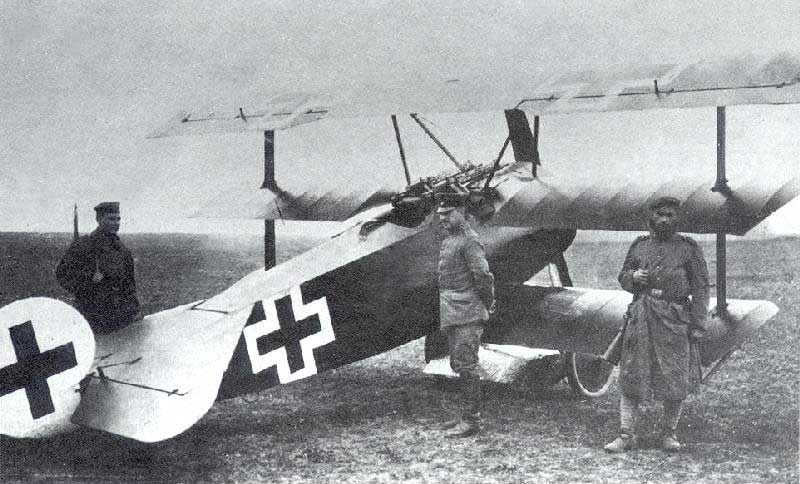
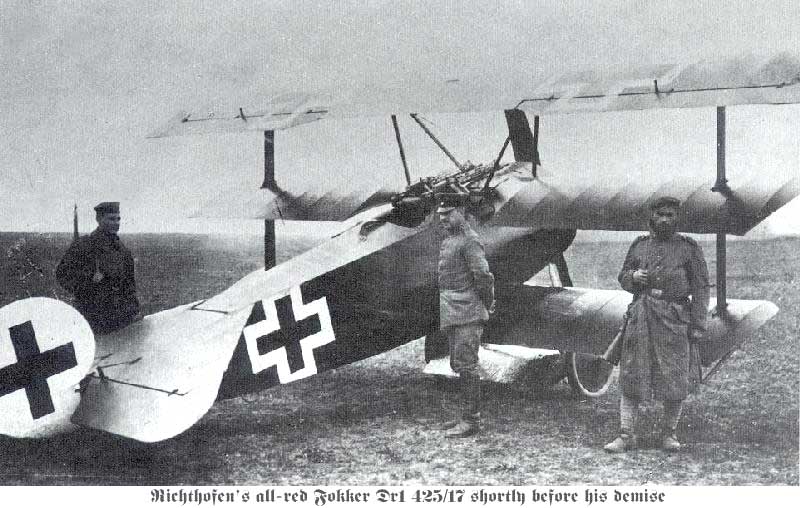
Few aircraft have survived in the popular imagination with so little statistical weight behind them. Fokker's triplane served at the front for only a few months, equipped just 14 fighter squadrons as their main type and peaked on the Western Front in late April 1918 with 171 machines on strength; production closed that May after 320 had been built. Yet its outline, three short stacked wings on a stubby fuselage, usually painted red, is still how much of the public pictures the air war of 1914-1918. It began as an answer to someone else's aeroplane. The British Sopwith Triplane appeared over the Western Front early in 1917 and, despite carrying a single machine gun, outclassed the better armed Albatros fighters then in German service. Anthony Fokker inspected a captured example while visiting Jasta 11 in April, and told his designer Reinhold Platz to build a triplane without passing on any detail of the British machine. Platz, unconvinced by the layout, produced the V.4, with a welded steel tube fuselage and thick cantilever wings; its controls proved far too heavy, and the revised V.5 introduced horn balanced ailerons and elevators, longer wings and interplane struts that were structurally unnecessary but curbed wing flexing. Idflieg ordered twenty preproduction aircraft on 14 July 1917. The aerodynamic bill came due at once: three closely stacked surfaces cancelled out the drag saved by doing away with bracing wires, and the aircraft was slow both in level flight and in a dive. What it offered instead was agility. The first two preproduction machines, designated F.I, reached Jastas 10 and 11 in Belgium in late August 1917; Manfred von Richthofen flew 102/17 on 1 September and shot down two aircraft within two days. Powered by a 110 hp Oberursel Ur.II rotary, a copy of the Le Rhone 9J, the triplane climbed sharply at first and fell away badly with altitude because of the engine's low compression; top speed was around 180 km/h. The ailerons were weak, but rudder and elevator were light and powerful, and pronounced directional instability made fast turns easy, especially to the right. The rest of the experience was less pleasant: poor view on take off and landing, a tendency to ground loop, a cramped and shoddily finished cockpit, and gun breeches close enough to injure the pilot's head in a crash landing. Chronic shortages of castor oil made matters worse, since the German substitute lubricant caused frequent engine failures, particularly in the summer of 1918. The serious trouble came early. On 29 October 1917 Heinrich Gontermann's triplane broke up during aerobatics and he died in the resulting crash; two days later Gunther Pastor of Jasta 11 was killed when his aircraft came apart in level flight. Wreckage inspection revealed poorly built wings, Idflieg grounded the fleet on 2 November, and a crash commission found that shoddy workmanship and inadequate waterproofing had let moisture into the structure, disintegrating the ribs and tearing the ailerons away. The fault lay in manufacture, not in the aerodynamic concept. Fokker had to strengthen ribs and fittings, varnish spars and ribs and repair delivered aircraft at his own expense; the type returned to service on 28 November 1917. Failures of the upper wing leading edge nonetheless continued, one of them leaving Lothar von Richthofen seriously injured in March 1918. In 1929, NACA testing showed the upper wing carried considerably more lift than the lower one, an imbalance that helps explain the record. Large orders never followed, and the Fokker D.VII pushed the triplane out of frontline service in the summer of 1918. Its fame, however, was fixed by one pilot. Richthofen scored his last 17 victories on the type and was killed on 21 April 1918 flying Dr.I 425/17, though the most successful triplane pilot was in fact Josef Jacobs, with 30 confirmed kills. Survivors ended their careers with training and home defence units, and none of the handful that outlived the armistice remains: the two machines displayed in Berlin museums were destroyed in Allied bombing during the Second World War. What flies today are reproductions, almost always with a modern radial engine in place of the original rotary.
Related events
Category
Three-view drawing
.jpg)
.jpg)
.jpg)
.jpg)
.jpg)
History
The British trigger
The story of the Fokker triplane does not begin in Schwerin but over Flanders. In the early months of 1917 the British Sopwith Triplane appeared on the Western Front and unsettled the German fighter arm: armed with a single Vickers machine gun, it nonetheless outclassed the more heavily armed Albatros fighters that then equipped most Jastas. What impressed was not firepower but manoeuvrability and climb. Manfred von Richthofen himself spoke admiringly of the British machine, and Idflieg, the inspectorate of the flying troops, responded by placing trial orders with several manufacturers for a German counterpart; instructions dated 9 July 1917 to Pfalz-Flugzeugwerke and Siemens-Schuckert survive.
Anthony Fokker moved ahead of that process. According to the German account, he already knew of the plans by early June 1917, and three experimental biplanes had been under development at his Schwerin works since the beginning of the year: the D IV, the D VI and the D VII. The version more widely repeated in English-language histories places the impulse in a visit Fokker paid to Jasta 11 in April 1917, during which he inspected a captured Sopwith Triplane. Both accounts agree on the essentials: Fokker returned to the factory determined to build a triplane and handed the job to Reinhold Platz without giving him detailed information about the British design.
Platz, the thick cantilever wing and the prototypes
Platz was no enthusiast for the formula. He began by drawing a conventional biplane and only gave way under pressure from Fokker. What emerged was not a copy of the Sopwith but an independent design tailored to the firm's manufacturing methods: a welded steel-tube fuselage and, above all, thick cantilever wings without bracing wires, a solution Platz had developed during Fokker's government-mandated collaboration with Hugo Junkers. To get there, Fokker had a D VI ordered by the Austro-Hungarian military on 13 June 1917, works number 1661, converted into a triplane; that became the V.4. He also ordered a second machine, with single-bay struts and a straight leading edge to the tailplane, at first likewise called D VI and only retrospectively designated V.5.
Initial testing of the V.4 revealed unacceptably high control forces caused by unbalanced ailerons and elevators. Rather than submit it for a type test, Fokker produced the revised prototype: the V.5 introduced horn-balanced ailerons and elevators, longer-span wings and interplane struts that were structurally unnecessary but limited wing flexing. Dispensing with bracing wires promised low drag, but the advantage never materialised — three closely stacked surfaces generate substantial drag on their own, and outboard struts eventually had to be added precisely because wing vibration appeared.
On 14 July 1917 Idflieg ordered a first batch of twenty preproduction aircraft, initially designated F.I. The V.5 was absorbed into that batch as serial 101/17 and was delivered on 7 August 1917 to the Deutsche Versuchsanstalt für Luftfahrt at Adlershof for static load testing, where it was tested to destruction on 11 August 1917. By then the aircraft had already flown.
How it was built
The Dr.I was a workshop product more than a calculated one. The fuselage frame was welded from steel tube between 10 and 35 mm in diameter; the wings were wooden with metal fittings, and the control surfaces were steel tube. The woodwork used glued plywood almost exclusively, being more flexible and stronger than solid timber: pine, fir and birch, sometimes glued to one another. Wing ribs were birch plywood with an outer layer of fir glued on top; the spars were glued pine plywood. The adhesive was casein glue, a milk-protein product. The covering was plain linen, tautened and sealed with a cellulose acetate dope; aluminium appeared only on non-structural parts such as the engine cowling. That combination of materials, and the casein glue and laminated wood in particular, explains much of what followed: the structure was extraordinarily sensitive to moisture.
From preproduction to the front
The first two preproduction machines, 102/17 and 103/17, were the only ones to carry the F.I designation. They reached Jasta 10 and Jasta 11 at Markebeeke, Belgium, on 28 August 1917 for combat evaluation. Richthofen flew 102/17 on 1 September 1917 and shot down two enemy aircraft over the following two days. He reported to the Kogenluft, the commanding general of the flying service, that the F.I was superior to the Sopwith Triplane and recommended re-equipping the fighter squadrons as soon as possible.
The evaluation ended abruptly. On 15 September 1917 Oberleutnant Kurt Wolff, Staffelführer of Jasta 11, was shot down in 102/17; on 23 September Leutnant Werner Voss, Staffelführer of Jasta 10, was killed in 103/17. Even so, Idflieg placed a production order for 100 triplanes in September and another for 200 in November. The production machines, now designated Dr.I, were nearly identical to the F.I apart from the straight leading edge of the tailplane and the addition of wingtip skids, needed because the aircraft was tricky to land and prone to ground looping. In October 1917 Fokker began delivering the Dr.I to the squadrons of Richthofen's Jagdgeschwader I.
What it offered in the air
Powered by a 110 hp Oberursel Ur.II rotary, a German copy of the Le Rhône 9J, the triplane was plainly slow for its time: a maximum speed of around 180 km/h and clear inferiority to Allied fighters both in level flight and in a dive. Initial rate of climb was excellent thanks to the thick aerofoil and low weight, but performance collapsed at altitude because of the engine's low compression. Chronic shortages of castor oil made matters worse: the German ersatz lubricant caused frequent engine failures, especially during the summer of 1918.
In exchange it offered exceptional manoeuvrability compared with the Albatros and Pfalz fighters. The ailerons were not very effective, but rudder and elevator were light and powerful, and marked directional instability made rapid turns easy, particularly to the right; even the Sopwith Camel, itself famously agile, could be out-turned. Richthofen summed the aircraft up as being as nimble as the devil and climbing like a monkey. Vizefeldwebel Franz Hemer of Jasta 6 called it his favourite fighting machine for its flying qualities, which let him loop and roll at will and dive away from an opponent in perfect safety, and he also gave the reason it had to be relinquished: it remained highly manoeuvrable, but it was no longer fast enough.
The rest of the pilot's experience was less agreeable. The view during take-off and landing was poor, the cockpit was cramped and finished in inferior materials, and the gun butts sat so close to the pilot's head that, with inadequate crash padding, any heavy landing risked serious head injury.
October 1917: the wings that came apart
On 29 October 1917 Leutnant der Reserve Heinrich Gontermann, Staffelführer of Jasta 15, was performing aerobatics when his triplane broke up in the air; he died in the ensuing crash landing. Two days later, on 31 October 1917, Leutnant der Reserve Günther Pastor of Jasta 11 was killed when his machine broke up in level flight, with no violent manoeuvre involved. Inspection of the wreckage showed that the wings had been poorly constructed, and examination of other high-time triplanes confirmed the finding.
On 2 November 1917 Idflieg grounded the entire triplane fleet pending an inquiry and convened a Sturzkommission, a crash commission. Its conclusion pointed not at the concept but at the factory: poor construction and a lack of waterproofing had let moisture damage the wing structure, causing the ribs to disintegrate and the ailerons to break away in flight. That is the crux of the episode. The Dr.I was not failing because it was a triplane; it was failing because of how it was being built.
Fokker was forced to improve quality control on the production line, particularly the varnishing of spars and ribs against moisture, and also strengthened the rib structures and the attachment of the auxiliary spars to them. Triplanes already delivered were repaired and modified at his expense. After a modified wing was tested at Adlershof, Idflieg authorised a return to service on 28 November 1917 and production resumed in early December.
The return, and the failures that continued
By January 1918 Jastas 6 and 11 were fully equipped with the triplane. Only 14 squadrons used it as their primary equipment, most of them within Jagdgeschwadern I, II and III, and frontline inventory peaked in late April 1918 with 171 aircraft on the Western Front.
The corrective measures did not end the problem. On 3 February 1918 Leutnant Hans Joachim Wolff of Jasta 11 managed to land after a failure of the upper wing leading edge and ribs. On 18 March 1918 Lothar von Richthofen, Staffelführer of Jasta 11, suffered a failure of the upper wing leading edge in combat with Sopwith Camels of No. 73 Squadron and Bristol F.2Bs of No. 62 Squadron, and was seriously injured in the resulting crash landing.
The full explanation took more than a decade to arrive, and workmanship was not the whole of it. In 1929 investigations by the American National Advisory Committee for Aeronautics found that the upper wing carried a higher lift coefficient than the lower one, more than twice as much at high speed. The most poorly executed structure was also the most heavily loaded.
Richthofen, Jagdgeschwader I and the Flying Circus
No aircraft of the First World War is so tightly bound to a single pilot. Richthofen, the war's most successful fighter pilot with 80 victories, scored 19 of them in Fokker triplanes painted wholly or partly red: his last 17 on the Dr.I plus the first two, gained in September 1917 on the F.I preproduction prototype. His unit, Jagdgeschwader I, grouped several Jastas and moved from sector to sector along the front; its brightly painted aircraft and its mobility earned it the nickname by which it is remembered, the Flying Circus.
On 21 April 1918 Richthofen was killed at the controls of a Dr.I. The machine associated with him and with that last flight is 425/17, the red triplane that has become fixed in the iconography of the air war. His brother Lothar, leading Jasta 11, had come close to death a month earlier through a wing failure on the same type.
Richthofen was not, however, the pilot who scored most on the type in absolute terms: that distinction belongs to Josef Jacobs, with 30 confirmed kills on the Dr.I.
Experimental engines
Several Dr.Is served as flying testbeds. One, designated V.7, was fitted with the Siemens-Halske Sh.III birotary engine and showed exceptional rate of climb and ceiling, but proved difficult to handle. Serial 108/17 was used to test the 118 kW Goebel Goe.III and 469/17 the 108 kW Oberursel Ur.III. None of those engines reached production aircraft. Another triplane served as a testbed for an experimental Schwade gear-driven supercharger.
Eclipsed by the D.VII
Chronic structural trouble destroyed any prospect of large-scale orders. Production ended in May 1918, and the Dr.I was withdrawn from frontline service as the Fokker D.VII — a faster, easier biplane from the same firm — entered widespread service in June and July 1918. Jasta 19 was the last squadron fully equipped with the triplane.
Survivors were dispersed to training and home-defence units. Several training machines were re-engined with the 75 kW Goebel Goe.II. At the armistice, many of the remaining triplanes were assigned to fighter-training schools at Nivelles in Belgium and Valenciennes in France; Allied pilots who tested them came away impressed by their handling.
Afterlife: the machine that outlived its own figures
Of the three triplanes known to have survived the armistice, none remains. Serial 528/17 was kept as a testbed by the Deutsche Versuchsanstalt für Luftfahrt at Adlershof, was used in the filming of two movies and is believed to have crashed sometime in the late 1930s. Serial 152/17, in which Richthofen scored three victories, was displayed at the Zeughaus museum in Berlin and was destroyed in an Allied bombing raid during the Second World War. In 1932 Fokker assembled a Dr.I from existing components for display at the Deutsche Luftfahrt-Sammlung in Berlin; it burned in another raid in 1943. Only a few original artefacts survive in museums today.
And yet the triplane that lasted a few months at the front, equipped no more than a handful of squadrons and was built in a few hundred examples is the silhouette through which the public still pictures the air war of 1914-1918. The reason lies not in its service record but in the coincidence of an unmistakable shape, a colour and a name: three short stacked wings, red paint and Manfred von Richthofen. Almost every triplane flying today is a replica; because authentic rotaries are expensive and scarce, most are powered by a modern radial such as the Warner Scarab or Continental R-670, and only a few retain a vintage Le Rhône 9J or a newly built Oberursel Ur.II.
Open questions
Two commonly quoted figures remain unresolved between the sources consulted, which is why neither appears in the data panel. The first is the number built: the English account closes production in May 1918 at 320 aircraft, while the German one gives 420 up to the same date; the higher figure is suspected to come from counting allocated serial numbers rather than delivered machines. The second is the date of first flight: the German Dr.I infobox gives 5 July 1917, but the German article on the V.5 rejects that reading and explains that the date is when the order was placed, still under the D VI designation, at a point when the aircraft was only under construction; the first flight of the Fokker triplane would therefore have taken place between late July and early August 1917, before the 7 August delivery to Adlershof and the 11 August test to destruction. Both discrepancies have been logged for editorial resolution.
Variants
| Fokker V.5 | Fokker Dr.I (serie) | Fokker V.4 | Fokker V.6 | Fokker V.7 | Vagel Grip SP.5 Greif | |
|---|---|---|---|---|---|---|
| First flight | July 5, 1917 | — | — | — | — | — |
| Aircraft type | triplane fighter prototype | triplane fighter | triplane fighter prototype | triplane fighter prototype | triplane fighter prototype | — |
| Powerplant | 1 × Oberursel Ur.II rotary engine of 110 hp (81 kW), a German copy of the Le Rhône 9J. | 1 × Oberursel Ur.II rotary engine, nine cylinders, 110 hp (81 kW) — a German copy built under licence from the French Le Rhône 9J; part of the fleet used original captured Le Rhône engines. | 1 × Le Rhône 9J rotary engine of 120 hp (89.5 kW), of French manufacture. | 1 × Mercedes D.II, a fixed inline engine (unit power not verified in the source consulted). | 1 × Siemens-Halske Sh.III twin-rotor rotary engine, 11 cylinders, 205 hp (153 kW). | — |
| Powerplant | 1 × Oberursel Ur.II | 1 × Oberursel Ur.II | 1 × Le Rhône 9J | 1 × Mercedes D.II | 1 × Siemens-Halske Sh.III | 1 × piston |
| Power per engine | 109 hp | 109 hp | 120 hp | — | 205 hp Best value in this row | — |
| Length | — | 5.8 m Best value in this row | 5.8 m Best value in this row | 5.8 m Best value in this row | — | — |
| Wingspan | — | 7.2 m | 6.2 m | 7.9 m Best value in this row | — | — |
| Height | — | 3 m | — | — | — | — |
| Wing area | — | 18.7 m² | — | — | — | — |
| Empty weight | — | 383 kg | — | — | — | — |
| MTOW | — | 585 kg | — | — | — | — |
| Top speed | — | 160 km/h | — | — | — | — |
| Max speed altitude | — | 2,800 m | — | — | — | — |
| Service ceiling | — | 6,500 m | — | — | — | — |
| Initial climb rate | — | 5.7 m/s | — | — | — | — |
| Range | — | 300 km | — | — | — | — |
| Endurance | — | 90 min | — | — | — | — |
| Range conditions | — | Approximate endurance of 1 h 30 min (about 300 km) with the standard fuel tank; no supplementary tanks documented. | — | — | — | — |
| Armament | — | Two 7.92 mm Spandau LMG 08/15 machine guns, fixed and synchronised to fire through the propeller arc. | — | — | — | — |
| Max weapons load | — | 0 kg | — | — | — | — |
| Payload | — | 0 kg | — | — | — | — |
| Cargo capacity | — | Single-seat fighter with no external ordnance load or passenger capacity; armament limited to the two fixed machine guns. | — | — | — | — |
| Crew | — | 1 | — | — | — | — |
| Passengers | — | 0 | — | — | — | — |
| Units built | 1 | 320 Best value in this row | 1 | 1 | 1 | — |
Images