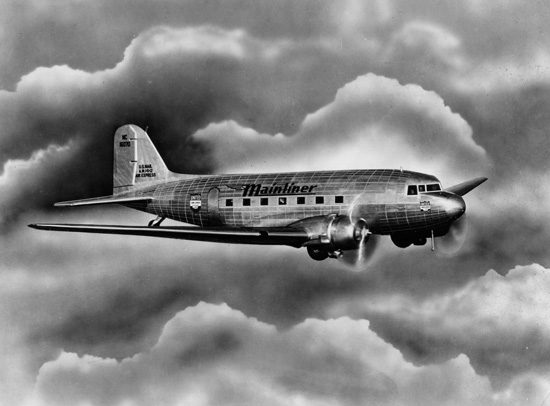
Douglas DC-3 variant
Douglas DC-3 DST
Douglas Sleeper Transport: the first DC-3 version, a sleeper airliner ordered by American Airlines for its overnight transcontinental service, first flown on 17 December 1935.

- December 17, 1935
- First flight
- 21
- Units built
- 24
- Passengers
History
The DST, or Douglas Sleeper Transport, was not a late offshoot of the DC-3 but its starting point. In the mid-1930s American Airlines flew an overnight transcontinental sleeper service with the Curtiss T-32 Condor II, a slow, short-ranged biplane, and its chief executive, Cyrus R. Smith, wanted a modern replacement. The Douglas DC-2 was the obvious basis, but its 66-inch (1.7 m) cabin was too narrow for side-by-side berths. According to the familiar story, the project began with Smith telling his chief engineer, William Littlewood, that what American needed was a DC-2 with berths.
Douglas was not keen. Its assembly lines were struggling to keep up with DC-2 orders, its design office was busy with military work, and there were doubts about American's ability to pay. Much of the structural calculation for the changes was in fact done by the airline's own engineering office. The deadlock was broken by a marathon telephone call of about two hours between Smith in Chicago and Donald W. Douglas in his office at Clover Field, California. Smith said he could obtain a government loan of 4.5 million dollars and that American intended to buy 20 aircraft, provided the first ten were sleepers. Douglas assigned a team led by chief engineer Arthur E. Raymond, with Ed Burton, Lee Atwood and Dr Baily Oswald. On 8 July 1935 American formally ordered ten sleeper aircraft at 79,500 dollars each, without engines or cabin furnishings.
There was no prototype as such. The first production aircraft, construction number 1494, carrying the temporary registration X14988, flew on 17 December 1935, the 32nd anniversary of the Wright brothers' first flight, with Douglas chief test pilot Carl Cover at the controls. It was powered by the latest Wright Cyclone, the SGR-1820-G2, rated at 1,000 hp for take-off and 850 hp continuous. The cabin had grown to 92 inches wide and held 14 to 16 berths, convertible to seat up to 24 day passengers. Douglas and American shared the flight test programme, and by April 1936 the airline was already working up the type for service. Certification (ATC A-607) followed on 21 May 1936 under the designation DST-G2, after the engine; the manufacturer's designation was DST-144. A 21-seat day version without berths was called the DC-3, and the first DC-3 followed seven DSTs off the line.
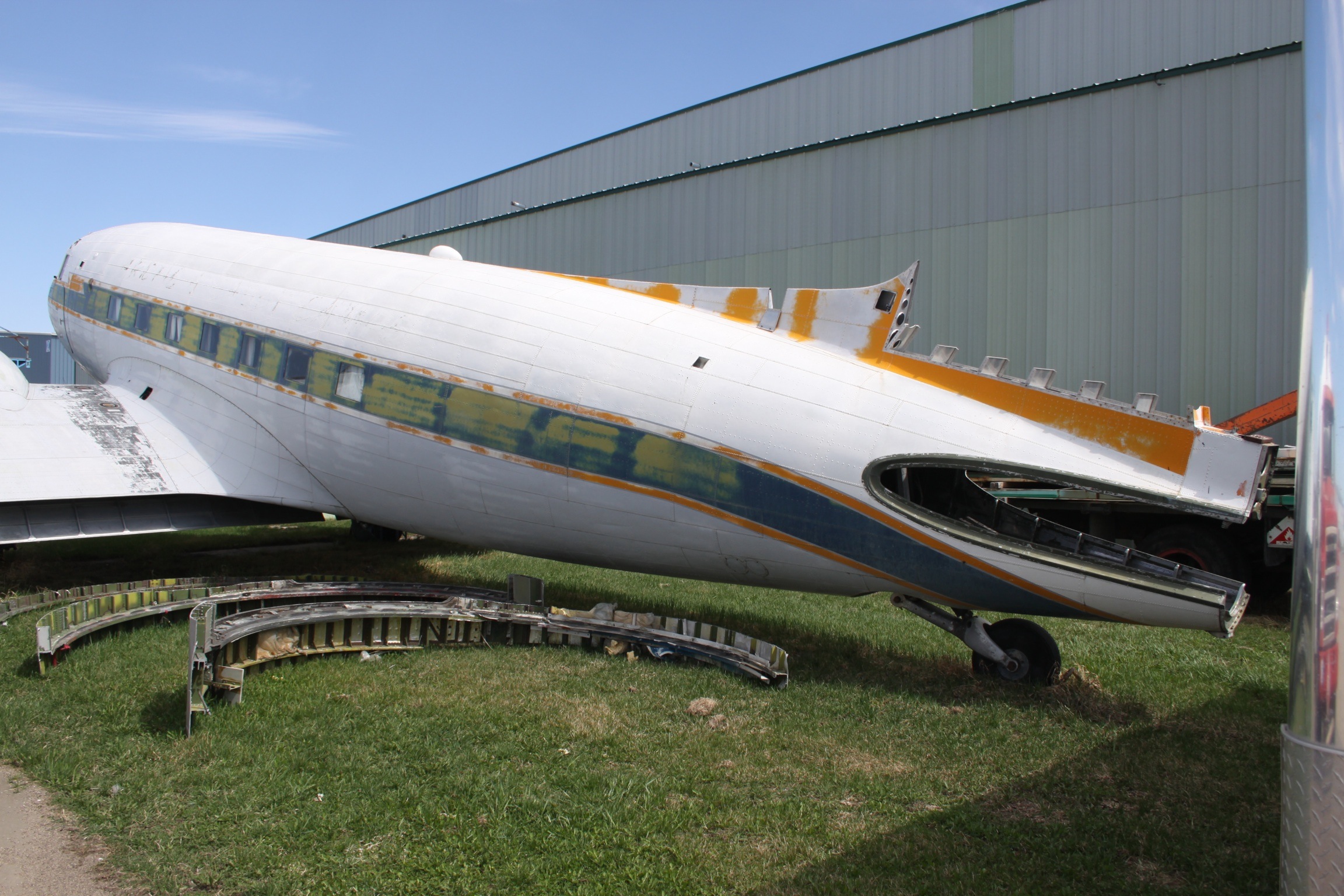
The quickest way to tell a DST from a day DC-3 is the row of small upper windows, roughly 13 by 68 centimetres, one for each upper berth, above the main cabin windows. At American's request, since its ramp procedures dated from the Ford Trimotor and the Condor, the passenger door was on the right-hand side.
American took delivery of its first DST on 7 June 1936 and began commercial service on 25 June between Chicago and Newark. On 18 September it opened the Newark-Los Angeles route, flown by the DST in 17 hours 30 minutes with three stops, against 23 hours 23 minutes and nine stops for the Condor. Of the 20 DSTs ordered, American received eight G2-powered DST-144s, then one DST-217 and two DST-217As with Cyclone G102 engines, and finally two DST-217Bs and two DST-217Cs with Cyclone G202As rated at 1,200 hp for take-off; the last was delivered on 23 August 1940. Named Flagship Skysleepers, fifteen were still in service at the start of 1942. Eastern Air Lines was the other customer for Cyclone-powered DSTs, taking three DST-318s, two DST-318As and one DST-406 between February 1940 and June 1941. Altogether the Santa Monica plant built 21 DSTs and 19 DST-As, the latter a Pratt & Whitney Twin Wasp version ordered by United Air Lines. DST production ended in mid-1941.
The war changed everything. Early in 1942 American's Skysleepers were impressed by the US Army Air Forces as C-49Es; twelve were returned to the airline between April 1943 and May 1944 and rebuilt to DC-3 standard as conventional airliners or freighters, and eight were still flying in the early 1960s. Five of Eastern's DSTs became C-49Fs; three later went back to Eastern, one was sold to Delta and one to TWA. The berths that defined the DST disappeared in these conversions, because the market had settled on the day-configured DC-3.
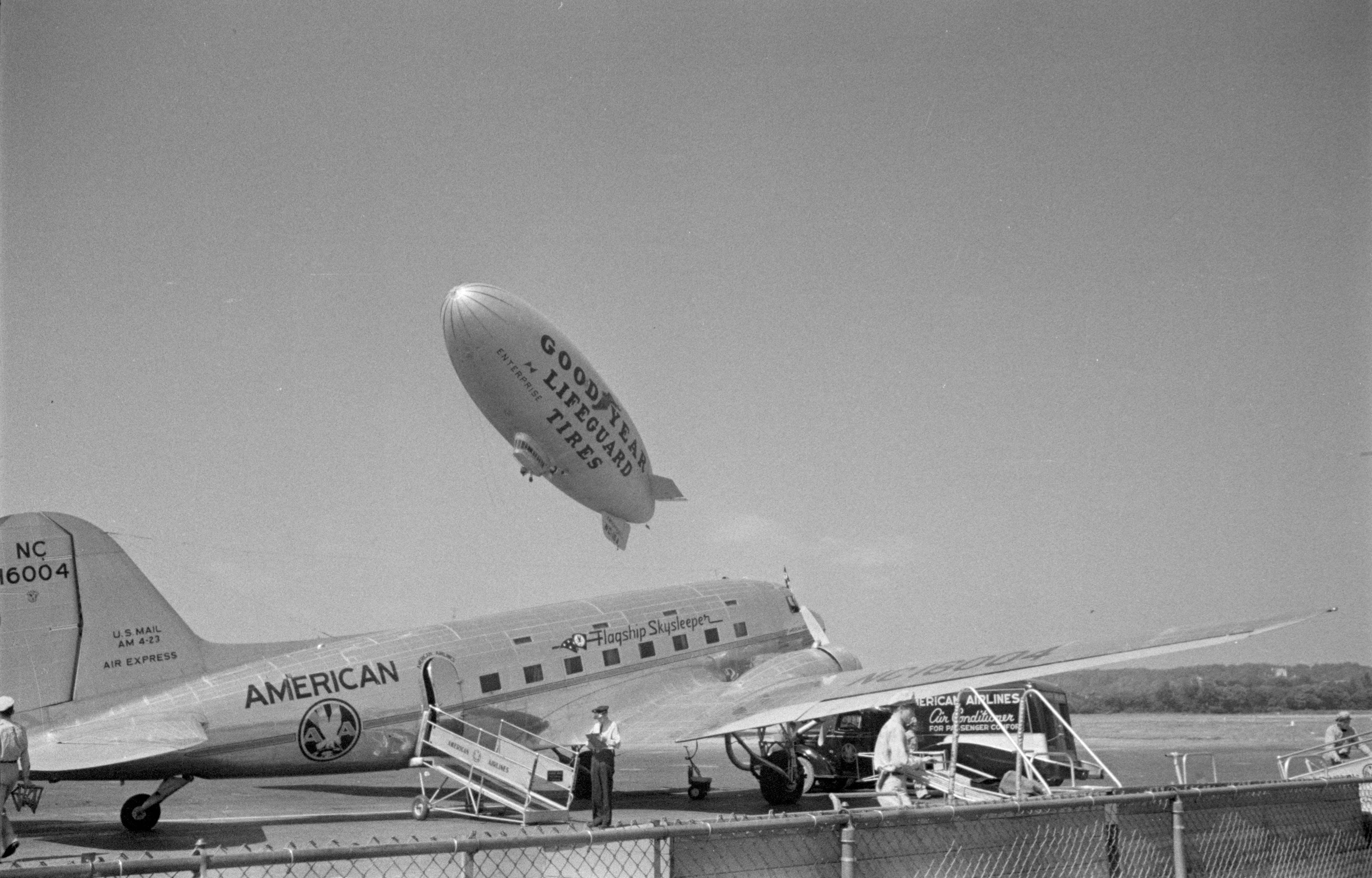
The oldest surviving DST is N133D, the sixth built, manufactured in 1936 and delivered to American Airlines on 12 July that year as NC16005. In 2011 it was at Shell Creek Airport, Punta Gorda, Florida; it was later repaired and returned to the air, and was recorded flying as recently as 25 April 2021.
Multimedia