Family: N1 · TsKBEM
N1
Launch statistics
- 4
- Total launches
- —
- Successes
- —
- Failures
- —
- Success rate


.png)



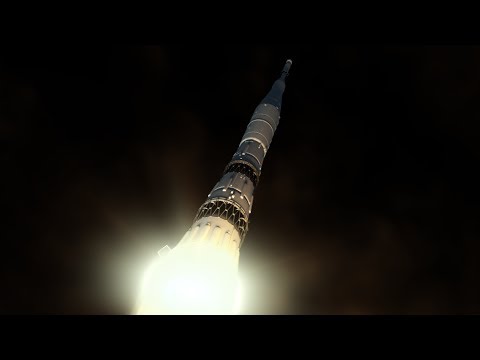
The N1 was the super-heavy rocket with which the Soviet Union intended to land cosmonauts on the Moon, its counterpart to the American Saturn V. All four launch attempts, between 1969 and 1972, failed, and the programme stayed secret until the end of the USSR.
Three-view drawing
History
Sergei Korolev's OKB-1 began studying and designing the vehicle in 1959, and the N1-L3 programme received formal approval in 1964. The mission architecture mirrored the American Apollo approach: lunar orbit rendezvous, with an L3 payload made up of the Blok G trans-lunar injection stage, Blok D for course corrections and the initial descent, the single-pilot LK lander and the two-seat Soyuz 7K-LOK spacecraft that would bring the crew home. Development started almost four years behind the Saturn V and was badly hurt by Korolev's death in 1966.
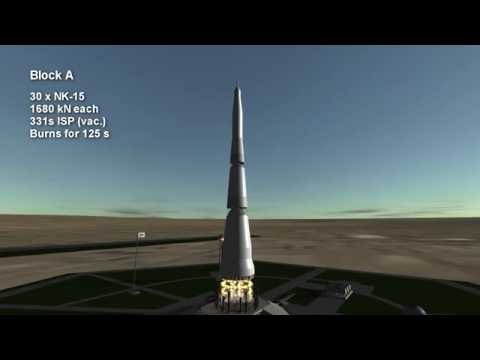
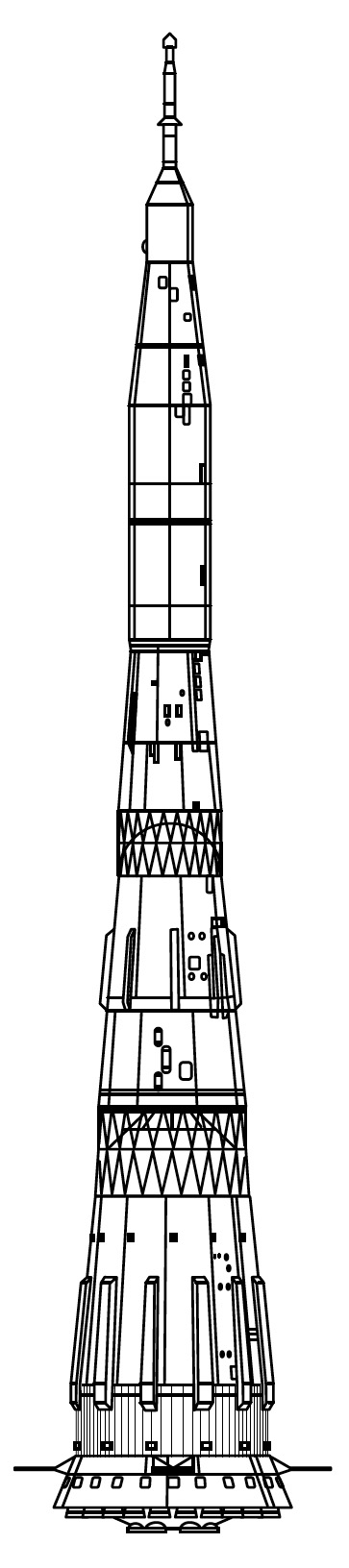
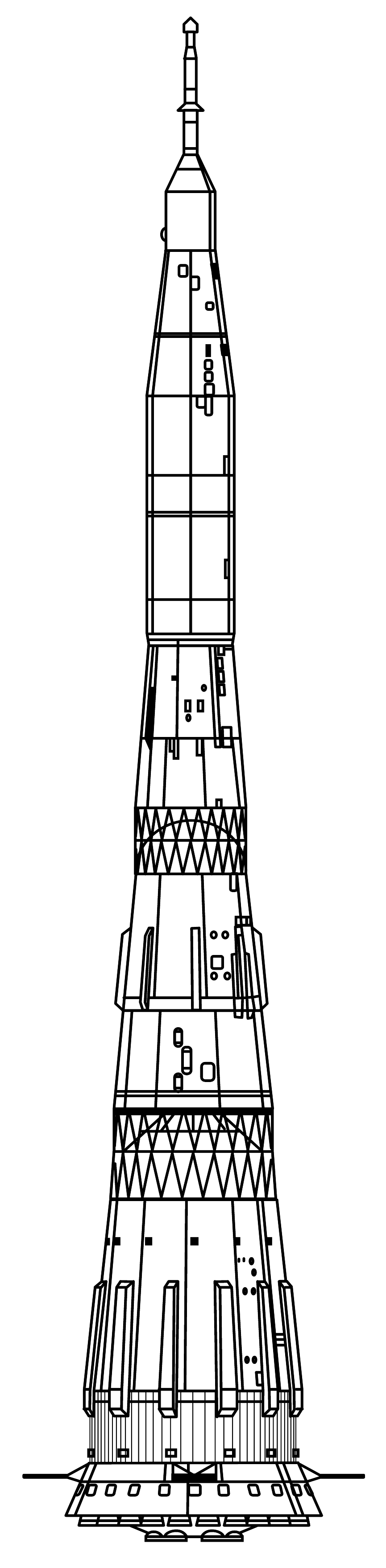
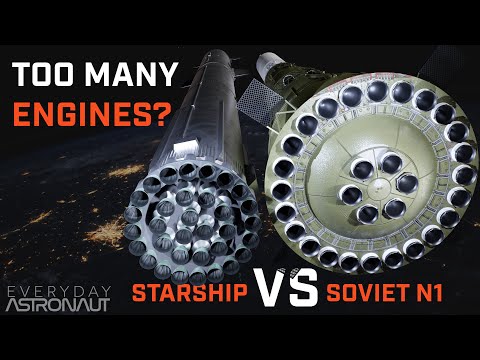
The rocket had five stages and burned kerosene and liquid oxygen. Its first stage, Blok A, was the most powerful rocket stage ever flown for more than fifty years, at 45 meganewtons of thrust, until SpaceX's Super Heavy. That thrust came from a cluster of thirty NK-15 engines prone to individual failures, managed by KORD, an analogue computer that shut down the engine opposite a failed one to preserve attitude control. At 105.3 m tall, 17 m in diameter and a liftoff mass of 2,750,000 kg, the vehicle never underwent full static firings, so the hazards of the engine cluster and its propellant feed lines went undetected until flight.
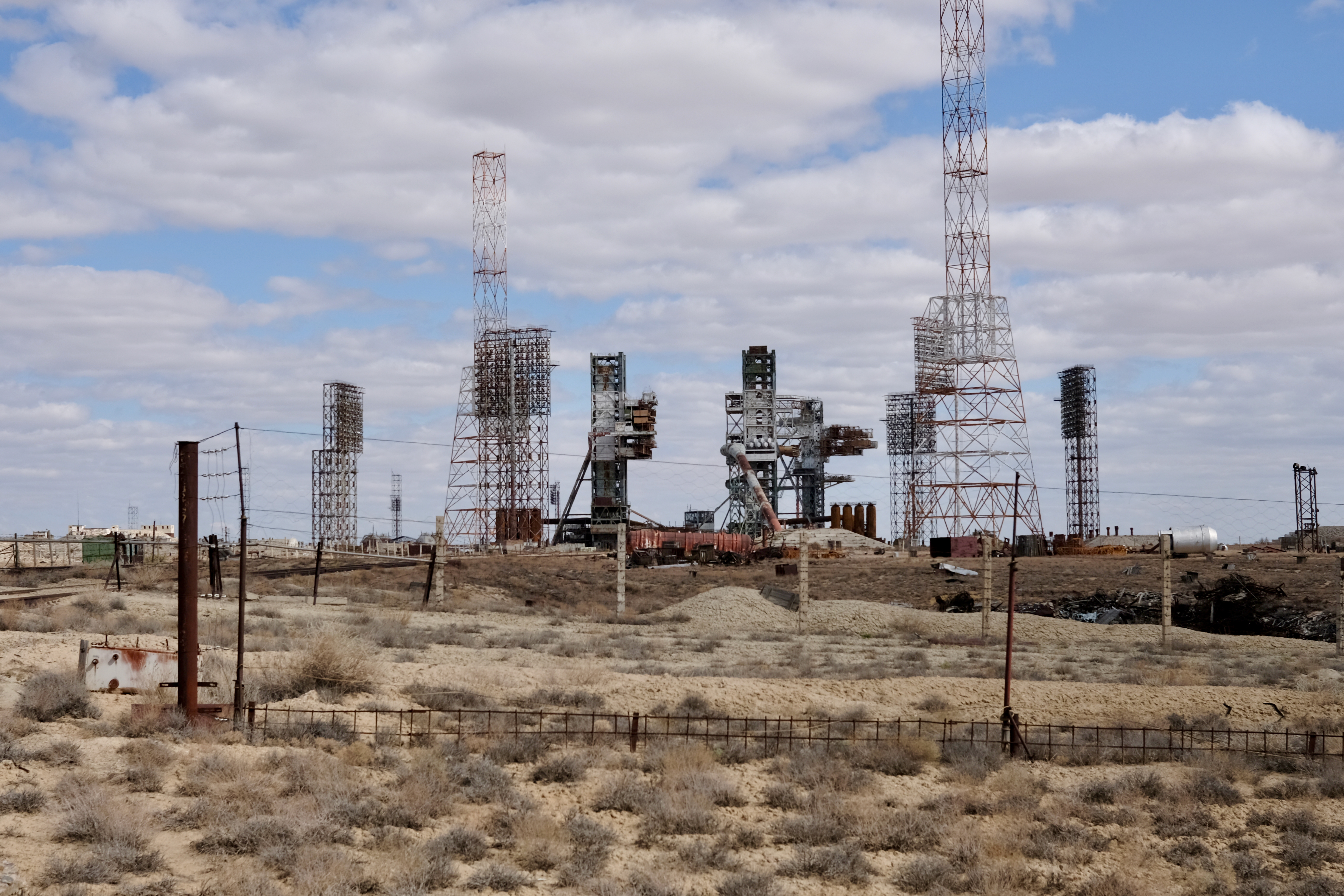
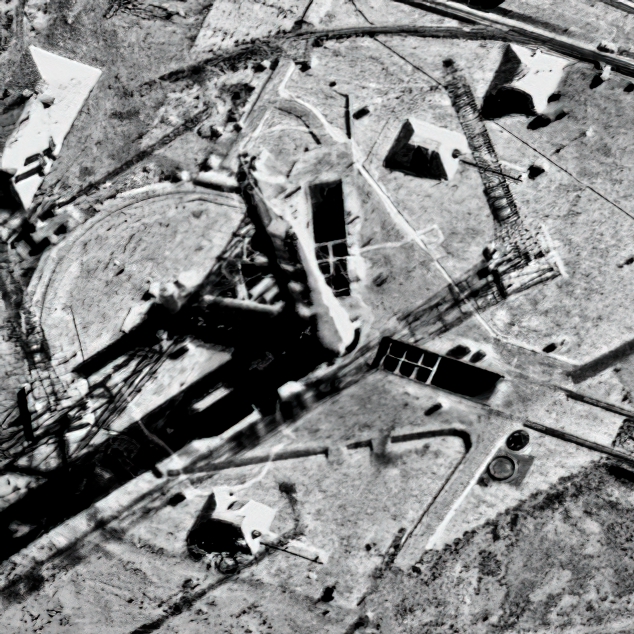
The first attempt came on 21 February 1969. The second, on 3 July 1969, ended in one of the largest conventional explosions on record, which knocked out the Site 110 pad at Baikonur for eighteen months and pushed back the entire schedule. Neither of the last two flights reached orbit; the fourth and final launch took place on 23 November 1972.
The programme was suspended in 1974 and formally cancelled in 1976. With it went the TMK project of crewed Mars and Venus flybys, which depended on the N1, and the N1F upgrade whose NK-33 engines were put into storage. The same bureau went on to develop Energia, the only Soviet super-heavy rocket to reach orbit. Details of the crewed lunar programme were not made public until 1989, and from 2013 those NK-33 engines found a second life on the American Antares 100 rockets and the Russian Soyuz 2.1v.
Launch timeline
| Date | Launch site | Program | Outcome | Payload |
|---|
Versions
| N1-L3 (11A52) | N1F | |
|---|---|---|
| First launch | February 21, 1969 | — |
| Last launch | November 23, 1972 | — |
| Powerplant | Block A: 30 NK-15 (24 in the outer ring, 6 in the core). Block B: 8 NK-15V. Block V: 4 NK-21. All three stages burned kerosene (RG-1) with liquid oxygen. In the L3 complex, Block D used one RD-58. | — |
| Height | 105 m Best value in this row | 105 m Best value in this row |
| Diameter | 17 m Best value in this row | 17 m Best value in this row |
| Mass | 2,825,000 kg | — |
| Stages | 5 Best value in this row | 5 Best value in this row |
| LEO capacity | 82,000 kg | — |
| Reusable | No | No |
Images


![[URGENTE] Conheça o Foguete N1 da Rússia: O Gigante que Nunca Chegou à Lua #FogueteN1 #Corrida](https://i.ytimg.com/vi/OcUIqVICRnw/hqdefault.jpg)




![463 - Il razzo sovietico N1 e l'Apollo 5-6 - Verso lo Spazio 18 [Pillole di Storia]](https://i.ytimg.com/vi/XacKP_yLAak/hqdefault.jpg)