Project Mercury · NASA · Crewed
Mercury-Atlas 8
- October 3, 1962
- Launch date
- 1
- Crew size
- 9 hr 13 min
- Duration
- Success
- Outcome

-1600.webp)
-1600.webp)


-1600.webp)


Mercury-Atlas 8 was the third United States crewed orbital flight and the fifth crewed mission of Project Mercury. On 3 October 1962 astronaut Walter M. Schirra Jr. circled the Earth six times aboard the capsule he named Sigma 7, in a flight of nine hours, thirteen minutes and eleven seconds that NASA framed from the outset as an engineering evaluation rather than a science campaign. It was the longest American crewed flight to that date, though far short of the multi-day records set by the Soviet Vostok 3 and Vostok 4 missions earlier that same summer. The mission grew out of a critical reading of the two orbital flights that preceded it. The three-orbit missions flown by John Glenn and Scott Carpenter had shown that the spacecraft worked, but also that its attitude control system burned propellant alarmingly easily and that a busy, endlessly revised flight plan made it hard for the pilot to train efficiently. MA-8 inverted both problems: the flight plan was issued early and left essentially unchanged, engineering objectives replaced scientific ones, and fuel economy became the organising principle of the whole flight. The reaction control system was modified so that the high-thrust jets could be disarmed, and the pilot's own discipline became the central experiment. The flight vindicated the approach. Schirra stabilised the spacecraft after separation from the booster using half a percent of his reserves, deliberately let the capsule drift for long stretches with the gyroscopes disconnected and part of the electrical system shut down, and reached the middle of his fifth orbit with eighty percent of the propellant still in both the manual and automatic tanks. Only a faulty temperature controller in his pressure suit, which nearly ended the mission after a single orbit, and a string of minor Atlas anomalies marred a flight that the official report described flatly as a technical success. The splashdown was the most accurate of the programme so far: the capsule came down in the Pacific four and a half miles from the target point and half a mile from the aircraft carrier USS Kearsarge, which had been tracking it on radar during the descent. Forty minutes later Sigma 7 was hoisted aboard. Post-flight analysis found no major malfunction, the medical review found no significant physiological effects after nine hours of weightlessness, and fuel consumption proved lower even than predicted. With that result in hand NASA could plan with confidence the full-day mission it had been pursuing since 1961, flown by Gordon Cooper as Mercury-Atlas 9. The equipment changes trialled on Sigma 7 justified stripping still more weight from the next capsule, including the periscope Schirra had found so unhelpful. Public reaction, however, was muted: the Cuban Missile Crisis pushed the Space Race off the front pages within days.
Payload
The spacecraft was Mercury capsule No. 16, named Sigma 7 by Wally Schirra, its sole occupant. Compared with MA-7, the heater blankets were removed from the retrorocket motors to save weight, 15 pounds of coolant water were added to the environmental control system, and a SOFAR bomb was fitted, detonated 2,500 feet below the surface to help locate the capsule. Schirra wore the Mercury biosensor system —the blood pressure measuring system failed to operate and the body temperature readout was erratic— and carried eight radiation dosimeters, five solid-state units in the pressure suit and three self-indicating ones he could read in flight; he ate the contents of two food tubes, one of peaches and the other of beef with vegetables, and drank about 500 cc of water. The scientific payload was four experiments: watching for four one-million-candlepower flares over Woomera and a xenon light of similar intensity over Durban, both defeated by cloud cover; a 70-mm Hasselblad camera with detachable magazines and filters, used for 15 frames through a U.S. Weather Bureau mosaic of six gelatin filters and 14 colour frames; two packages of radiation-sensitive emulsions from the Goddard Space Flight Center and two sets of radiation-sensitive film from the U.S. Naval School of Aviation Medicine; and nine ablation panels 15 by 5 inches bonded to 9 of the 12 beryllium shingles on the cylindrical section. Wikipedia gives a mass of 1,964 kg (4,330 lb), which the NASA report does not carry.
| Crew | Role | Agency | Extravehicular activity |
|---|---|---|---|
| Walter M. Schirra | Pilot | NASA · United States | — |
History
A mission designed against the flaws of the previous one
Planning for the third American orbital flight began in February 1962, before the second had even flown. The stated goal was "six or seven" orbits, an intermediate step towards the eighteen-orbit, day-long flight NASA had been pursuing since 1961. The final choice of six rather than seven was logistical rather than technical: a seventh orbit would have required significantly larger recovery forces, able to reach the capsule anywhere along its trajectory within the eighteen hours set by the mission rules. That same decision moved the optimum recovery point from the Atlantic to the Pacific and reshaped the whole naval deployment.
On 27 June 1962 NASA formally announced the mission with six orbits as its ceiling, naming Walter Schirra as prime pilot and Gordon Cooper as backup, repeating the back-up-one, fly-the-next pattern established by the two preceding flights. Schirra had been backup for the previous mission through a chain of substitutions that began in March 1962, when Deke Slayton was declared medically unfit and his seat went to Scott Carpenter rather than to Schirra himself, on the grounds of the training Carpenter had accumulated while preparing for the long-delayed first orbital flight.
The flight plan was issued on 27 July and, apart from minor revisions in August and September, remained essentially unchanged until launch. That was a deliberate correction of what had happened on the previous mission, whose plan had been altered frequently and extensively, making efficient training impossible for the pilot. The orientation changed too: MA-8 would be an engineering flight focused on how the spacecraft behaved rather than on scientific experimentation, precisely in order to clear the path for a long-duration mission.
What was fixed in the spacecraft and the booster
Capsule and rocket were almost identical to those of the two previous orbital flights, but the differences were aimed squarely at the problems those flights had exposed. Heating blankets were removed from the retrorocket motors to save weight, and a SOFAR bomb was added, to be ejected when the main parachute deployed so that recovery crews could locate the spacecraft after landing. The communications equipment was upgraded. Above all, a number of modifications were made to the reaction control system, among them the ability to disarm the high-thrust jets: exactly the lever that would make possible the frugal flying style that came to define the mission. The programme chronology records that these changes were made to eliminate the difficulties that had occurred during the Glenn and Carpenter flights.
The assigned Atlas, vehicle 113D, arrived modified as well. It carried baffled fuel injectors and a new hypergolic igniter in place of the original pyrotechnic one, changes that removed combustion instability problems and allowed the booster to be released as soon as it reached full thrust instead of being held on the pad for a few moments.
The price was delay. The Atlas was to have shipped to Cape Canaveral in July, but it failed the factory composite test at Convair and delivery slipped a month: NASA accepted it on 27 July and it arrived on 8 August. The capsule, Mercury Spacecraft No. 16, had been at the Cape since 16 January 1962.
The turbopump shadow and the safety review
With the booster at the Cape, the Air Force disclosed that two recent static firings of engines had suffered turbopump failures, and that the explosion of an Atlas one second after liftoff in April had been traced to a malfunction of the sustainer turbopump. All had occurred while the sustainer valve was moving towards the open position and while running untested hardware modifications. The recommendation was a static firing of 113D on the pad itself, which would expose the sustainer turbopump to the suspected failure mode.
The schedule was set on 6 September: testing through 24 September, with a probable launch on 3 October. Along the way a fuel leak caused by a faulty weld in a piece of plumbing brought further delay. The static firing took place on 8 September and the booster was reported ready for assembly on the 18th. On 24 September the Flight Safety Review Board went over the fifteen Atlas launches since the previous mission, three of them failures, and ruled out each cause as relevant to Mercury: a random quality-control fault that the programme's tight management would avoid; a guidance system problem that had sent a probe into the Atlantic but involved a different guidance model; and a third vehicle destroyed by range safety action whose cause the Air Force had still not announced more than a month later.
A different kind of doubt also had to be cleared: the radiation belt produced in orbit by recent nuclear testing. An extensive study concluded in early September that it was safe to fly; the outside of the capsule would receive on the order of 500 roentgens, but shielding and the spacecraft structure would reduce the astronaut's dose to around 8 roentgens, well within established tolerance limits.
The pilot and his preparation
Walter M. Schirra Jr. is recorded on the mission as its sole pilot, flying for NASA. He began training in early July, logging twenty-nine hours in simulators and thirty-one hours in the spacecraft itself, including multiple systems tests and three simulated flights. The last, on 29 September, was a six-and-a-half-hour simulation with spacecraft and booster fully stacked on the pad. Midway through the training period he received a visit from President John F. Kennedy, on 11 September.
The spacecraft's name came from the pilot. Schirra had first favoured Phoenix, and his wife championed Pioneer, but he settled on Sigma 7: the mathematical symbol for the summation of elements, because the flight was "the sum of the efforts and energies of a lot of people." The trailing seven honoured the seven original astronauts, a tradition inadvertently begun by Alan Shepard, whose capsule happened to carry that factory number.
On 1 October the mission was reported ready "except for the weather." The concerns were a major tropical storm in the Atlantic and a series of typhoons in the Pacific that could complicate recovery. On the evening of 2 October the decision was taken to launch the next morning.
Launch
Schirra was woken at 1:40 am Eastern time, ate a hearty breakfast that included a bluefish he had speared the day before, passed a brief physical and left for the pad around four. He entered the spacecraft at 4:41 am, found a steak sandwich left for him in the "glove compartment" as a joke, and began the pre-launch checks. The countdown ran as planned until 6:15, when a fifteen-minute hold let the Canary Islands tracking station repair a radar set; it resumed at 6:30 and reached ignition without further delay.
Liftoff looked clean, but there was a momentary clockwise roll transient that reached 7.83 degrees per second, approaching eighty percent of the threshold needed to trigger the automatic abort system. It was later traced to a slight misalignment of the main engines and was held in check by the booster's own vernier thrusters. Sustainer thrust ran slightly below normal and fuel consumption above it, because of a suspected leak in the sustainer fuel system.
About three and a half minutes into the flight, Deke Slayton, serving as capsule communicator, cut in to ask Schirra whether he was "a turtle today." It was the challenge of a recurring joke within the astronaut corps whose correct answer was unbroadcastable; Schirra, unruffled, announced he was switching to the on-board voice recorder to reply, and the official transcript duly noted that the correct answer had been recorded. He later explained that he was not about to let the whole world hear it.
Because the Atlas flew a slightly lofted trajectory, the booster engines cut off two seconds early, but the sustainer burned about ten seconds longer than intended, adding fifteen feet per second (4.6 metres per second) of velocity and placing the spacecraft in a slightly higher orbit than planned. Initial trajectory analysis confirmed the capsule could remain in a stable orbit for at least seven orbits, so no early deorbit would be needed.
Six orbits and one obsession: attitude fuel
After separating from the booster, Schirra stabilised the spacecraft by cartwheeling slowly into the correct attitude. He kept the motion deliberately slow to conserve propellant and managed to position the capsule using half a percent of his reserves. He briefly tracked the spent booster as it rotated slowly past, but made no attempt to move towards it. Over the Atlantic he tested manual control and found it sloppy compared with the fly-by-wire system.
Crossing the eastern coast of Africa he began to overheat. The problem was visible on the ground too, and controllers argued with the flight surgeon over whether it was safe to continue or whether the mission should end after one orbit. Flight director Christopher Kraft took the surgeon's advice to see whether it would settle and gave the go for a second orbit. Schirra gradually dialled the suit's control knob to a high cooling setting until the problem stabilised, comparing the heat to "mowing a lawn in Texas."
Over Australia he watched for a ground-launched flare, which cloud cover hid; he did see lightning and the lit outline of Brisbane. Through the night pass over the Pacific he tested the on-board periscope, found it awkward and covered it as soon as the sun rose. Over Mexico he reported being in "chimp configuration," the capsule running entirely on automatic with no pilot input, and as his second orbit began he started testing yaw manoeuvres using the Earth through the main window as a reference rather than the much-maligned periscope.
On the second orbit he confirmed the "fireflies" first reported on the initial orbital flight, and during the night section practised yaw manoeuvres referenced first to the Moon and then to known stars. The latter proved difficult: the capsule's small windows gave a very limited field of view, making constellations hard to identify. Crossing the Pacific he dropped back into automatic flight, discussing the qualities of the manual system with Gus Grissom at the Hawaiian tracking station.
Drifting flight as a technique
The third orbit opened the mission's most characteristic phase. Schirra disconnected the spacecraft's gyroscopes, shut down part of the electrical power system and let the capsule drift. This was method, not idleness: with no active inertial reference and no attitude control, propellant consumption fell to virtually nothing and the spacecraft simply went wherever its residual rotation took it. He used the quiet period to test his spatial awareness and motor control, both broadly unaffected by weightlessness, and to eat a light meal. He powered back up over the Indian Ocean and continued across the Pacific. At Hawaii he was cleared for the full six orbits, and heading towards California he shut the electrical power down again for a second drifting period, which he spent taking photographs.
The fourth orbit passed largely adrift and inverted, with the Earth "above" him. He continued photographing and tried unsuccessfully to spot the Echo 1 satellite while over East Africa. Approaching California he spoke for two minutes with John Glenn in an exchange broadcast live on American radio and television. The pressure suit misbehaved again, this time with water condensing on the faceplate; wary of the temperature problem returning, Schirra chose not to open the visor to clean it.
By the fifth orbit he allowed himself to relax, remarking that it was the first rest he had had since December 1961. He used a small bungee cord device for a little stretching before switching to manual attitude control, where he reported a sudden burst of oversteering and high fuel use. Over the Atlantic he returned to observation and photography. Over the Philippines he gave the figure that summed up the mission: after four and a half of the planned six orbits, eighty percent of the propellant remained in both the manual and automatic tanks. Passing over Quito, the tracking station asked him for a word "in Spanish to the fellows down here"; he remarked on how beautiful the country looked from orbit and signed off with a cheerful "Buenos Dias, y'all!" He admitted later that he was furious at the time: he was preparing for reentry and did not want the distraction.
The sixth orbit was given over almost entirely to reentry preparation, with a last set of photographs of South America and another round of spatial-orientation tests. He armed the retrorockets over the western Pacific and fired the first at 8 hours 52 minutes ground elapsed time. The automatic control system held the capsule "steady as a rock" through the burn, though Schirra noted that it had consumed nearly a quarter of its fuel doing so.
Observations and experiments
The plan carried four non-engineering experiments: two requiring the astronaut's active involvement and two entirely passive. The active pair called for watching four high-powered flares while passing over Woomera, Australia, and a xenon arc lamp while over Durban, South Africa, and for two sets of photographs — one with a 70mm Hasselblad through a set of coloured filters supplied by the U.S. Weather Bureau, the other conventional colour work — focused on geological features and cloud patterns. The filtered images were meant to calibrate the spectral reflectivity of clouds and surface features and so improve the cameras of future weather satellites. The passive packages were two sets of radiation-sensitive photographic films, from the Goddard Space Flight Center and the U.S. Navy School of Aviation Medicine, and a set of eight experimental ablative materials fixed to the outside of the spacecraft to test their behaviour during reentry.
The scientific yield was mixed. Both light-observation experiments failed under thick cloud, though Schirra did see lightning near Woomera and the lights of a city a few hundred miles from Durban. The filtered Weather Bureau photography worked as planned, with fifteen images taken; of the fourteen conventional colour frames, several were unusable through overexposure or excess cloud, and in the end the set was not used for scientific examination. Schirra warned that the sheer worldwide extent of cloud cover could be a problem for this kind of work, although Africa and the south-western United States were perfectly clear. Analysis of the sensitive plates confirmed a very low radioactive flux inside the spacecraft, and six of the ablative materials tested were judged broadly satisfactory despite the difficulty of comparing them with one another.
Reentry, a precision splashdown and recovery
After the deorbit burn Schirra used the high-power thrusters to orient the capsule, noting that attitude control felt "sloppy." He then enabled the rate stabilisation control system, an automatic mode that consumed propellant at a very high rate and had been specifically requested as an engineering test; it dismayed him to watch the fuel he had husbanded for six orbits go so quickly.
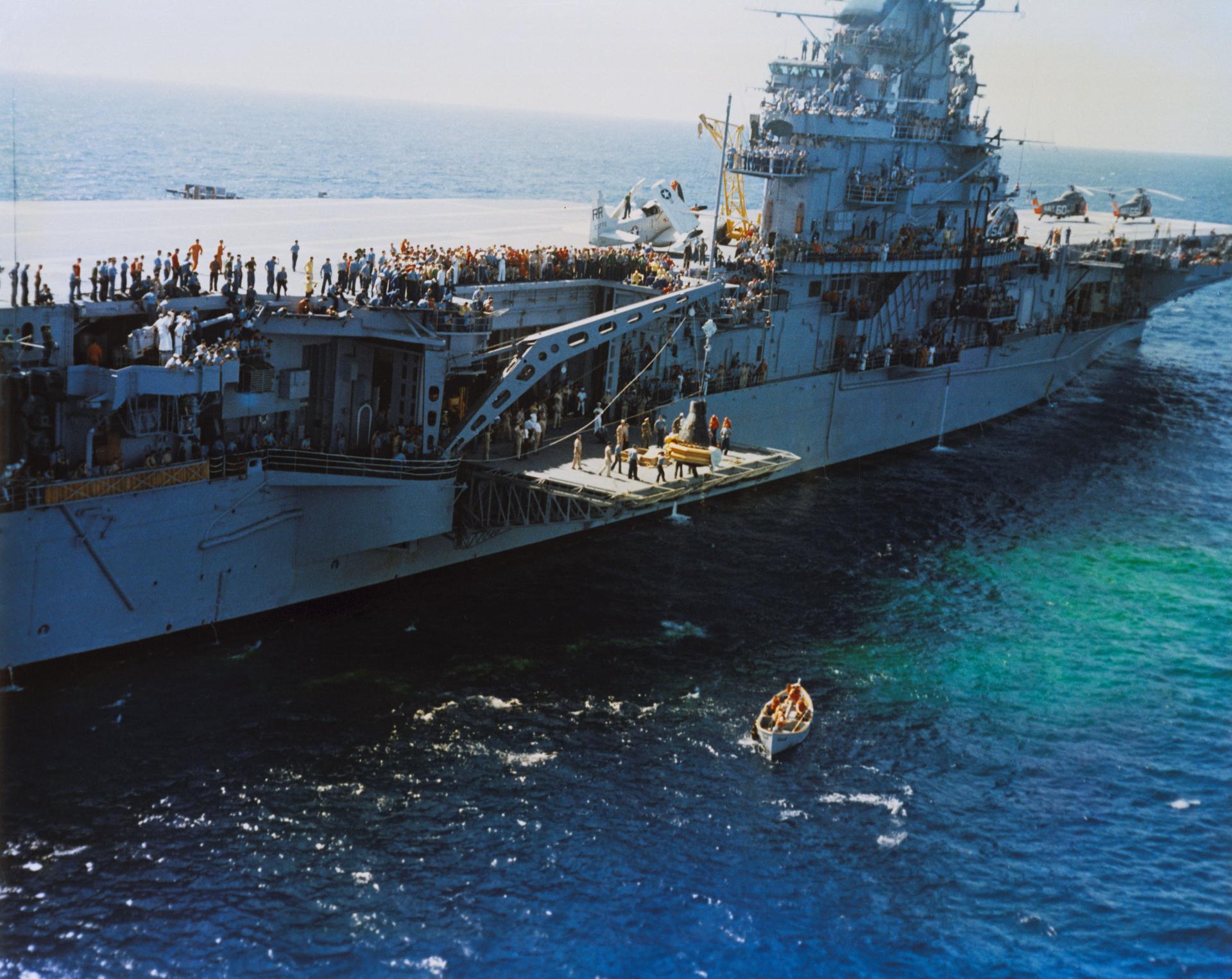
The local recovery group in the prime area, in the central Pacific, was built around the aircraft carrier USS Kearsarge at the centre of the landing area, with three destroyers strung along the orbital path, four search aircraft assigned and three recovery helicopters aboard the carrier. Kearsarge picked the capsule up on radar while it was still 200 miles (320 km) from landing; ninety miles (140 km) further up the path the destroyer USS Renshaw reported a sonic boom as it passed overhead. Schirra deployed the drogue parachute at 40,000 feet (12,000 m) and the main at 15,000 feet (4,600 m).
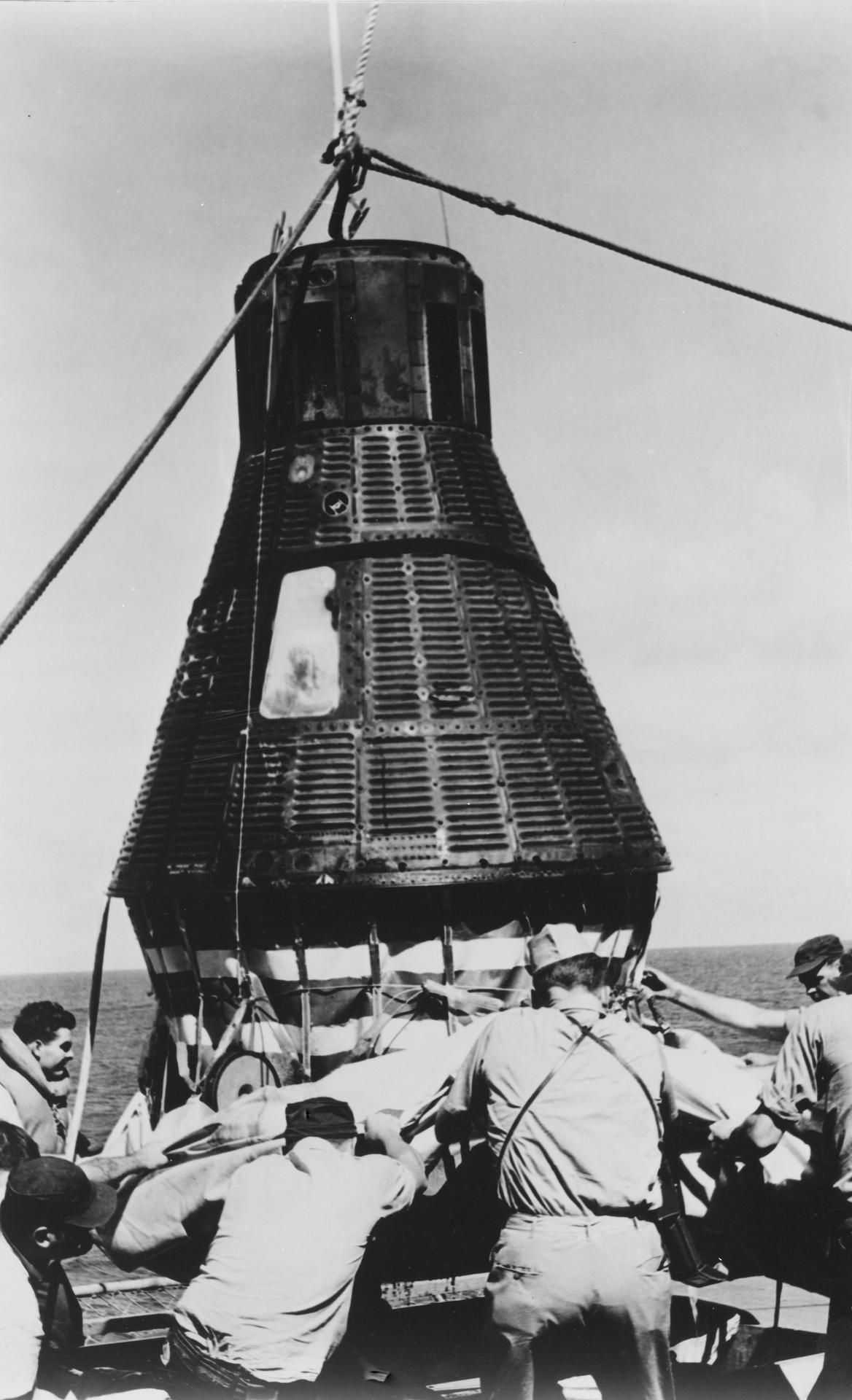
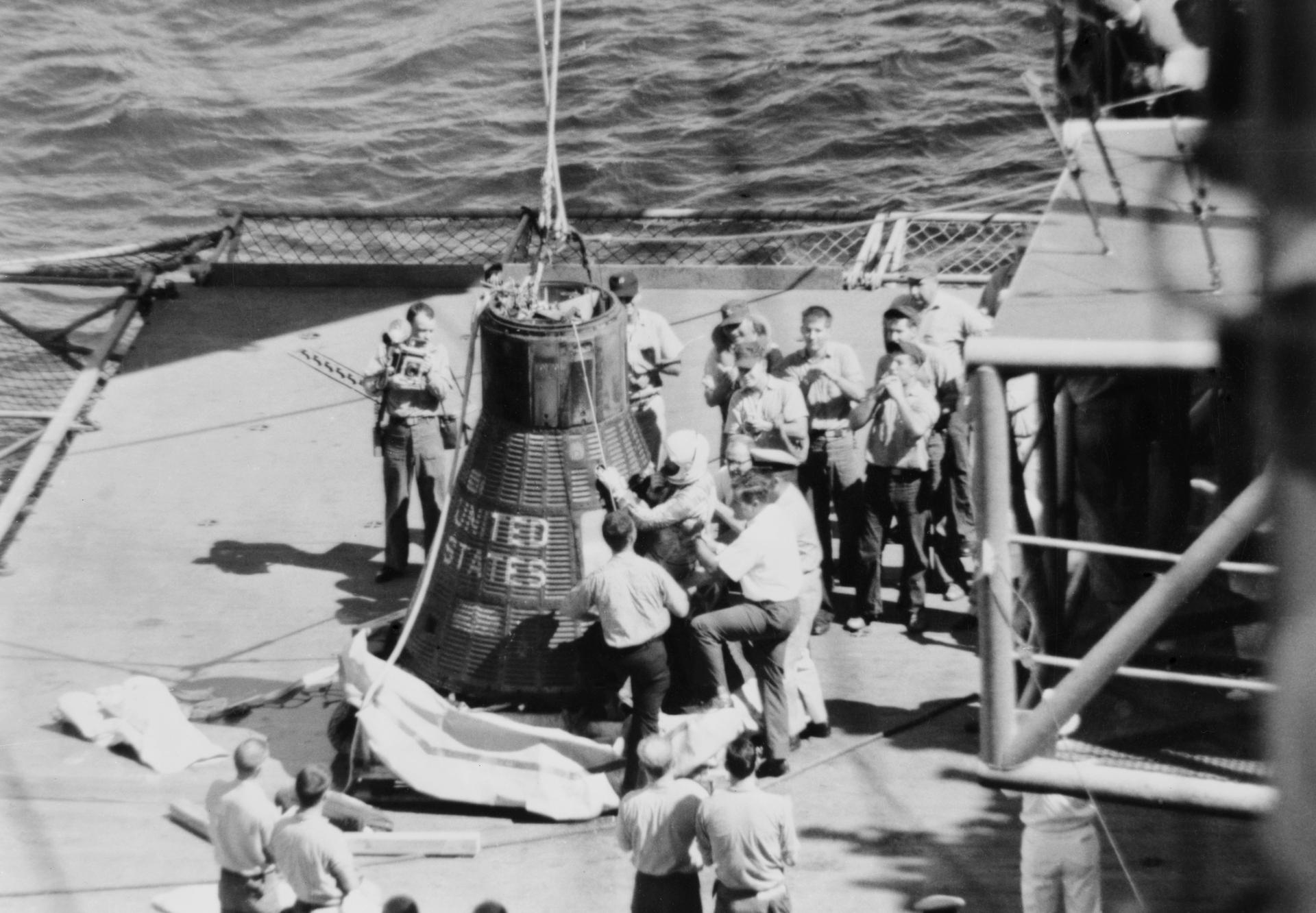
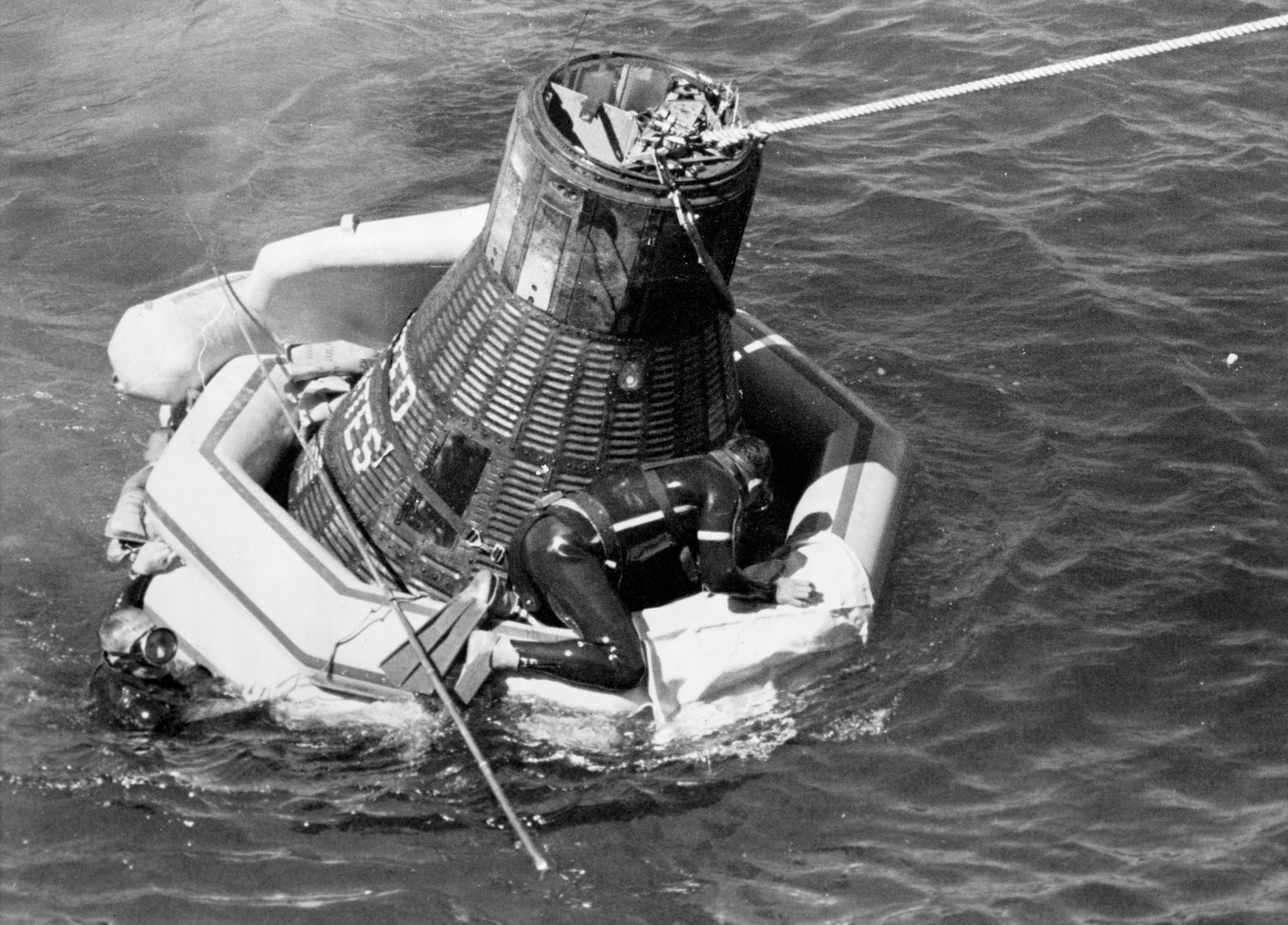
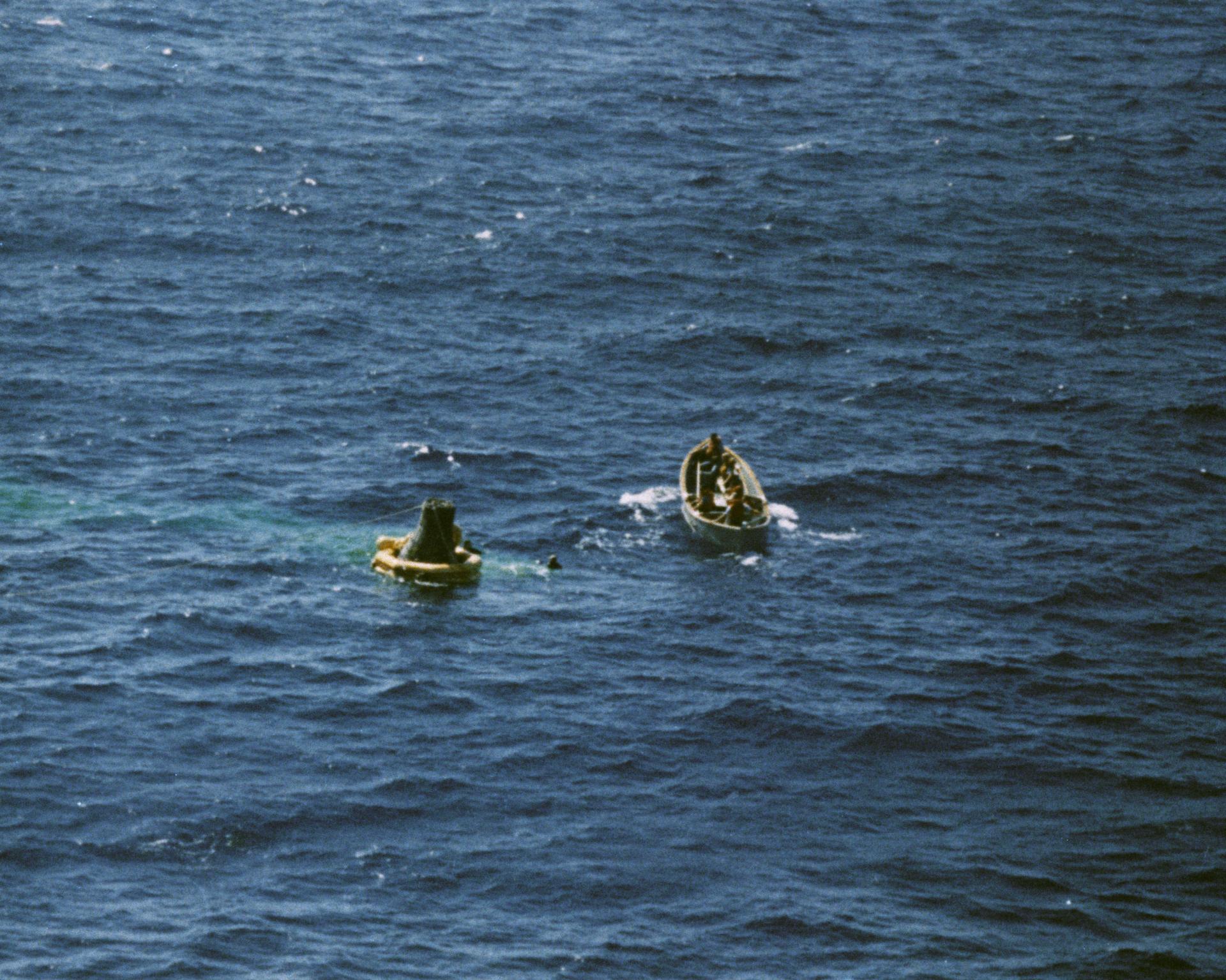
The landing was strikingly precise: 4.5 miles (7.2 km) from the target point and 0.5 miles (0.80 km) from Kearsarge, close enough that Schirra joked he was lined up on the carrier's "number three elevator." The capsule hit the water, submerged and bobbed back up, righting itself after about thirty seconds. A helicopter dropped three pararescue swimmers to help him out, but Schirra radioed that he would rather be towed to the carrier, and a whaleboat was sent from Kearsarge with a line.
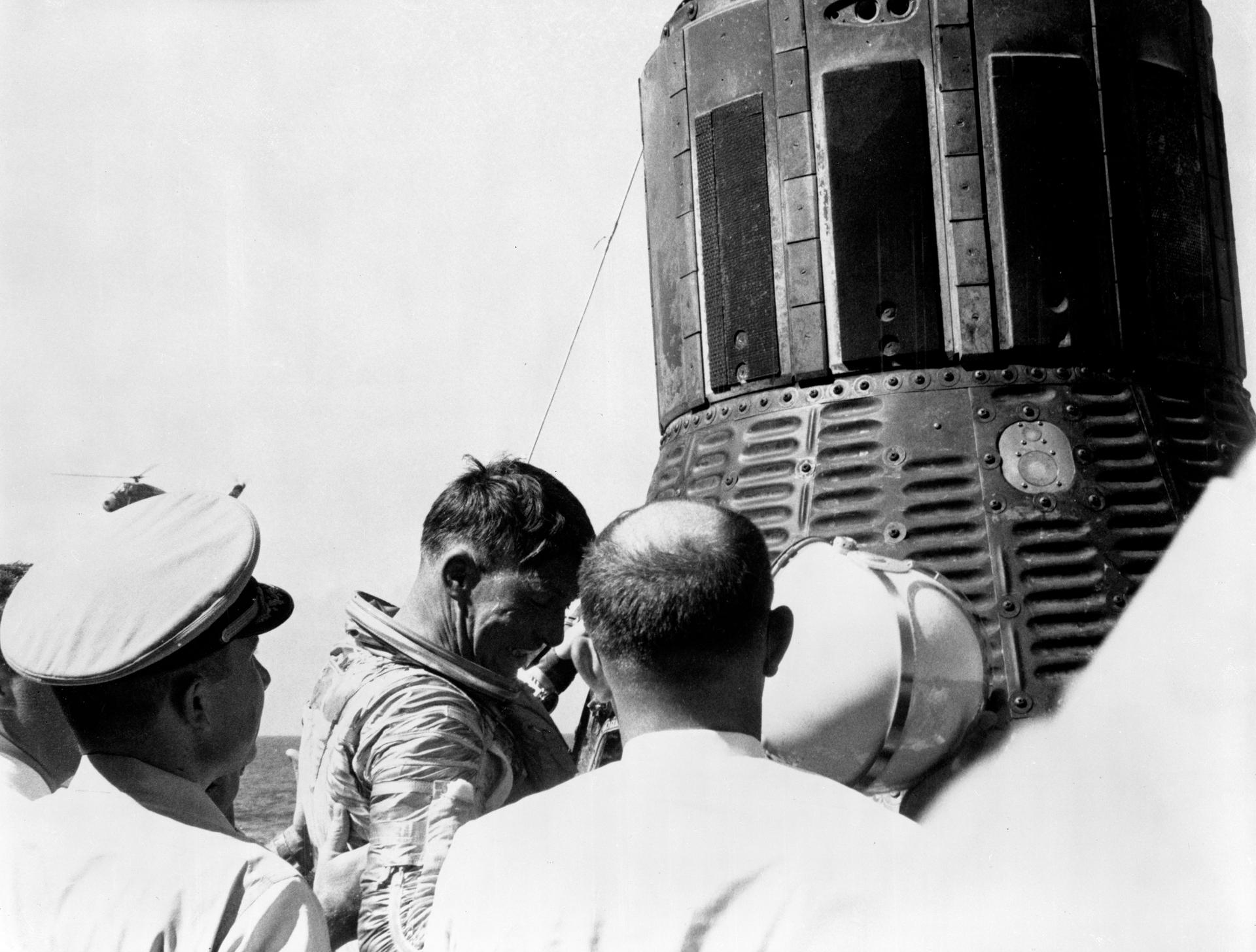
Forty minutes after landing Sigma 7 was hoisted aboard; five minutes later Schirra blew the explosive hatch and climbed out to a waiting crowd. Examination afterwards showed clear bruising on his hand from operating the heavy ejector switch. He took it as an important vindication of Gus Grissom, whose capsule had sunk on the earlier suborbital flight after its hatch blew: Grissom always maintained the hatch had gone without his input, and the absence of bruising on his hand was read as evidence that he had not fired it, and that the cause was a mechanical malfunction.
Schirra stayed aboard three days for medical tests and debriefing before disembarking. The spacecraft was offloaded at Midway Island and transferred to an aircraft for onward transport to Cape Canaveral, where it would be analysed with a view to permanent display. The spent Atlas booster reentered the atmosphere on 4 October, the day after launch, and burned up.
Technical verdict and the road to the day-long flight
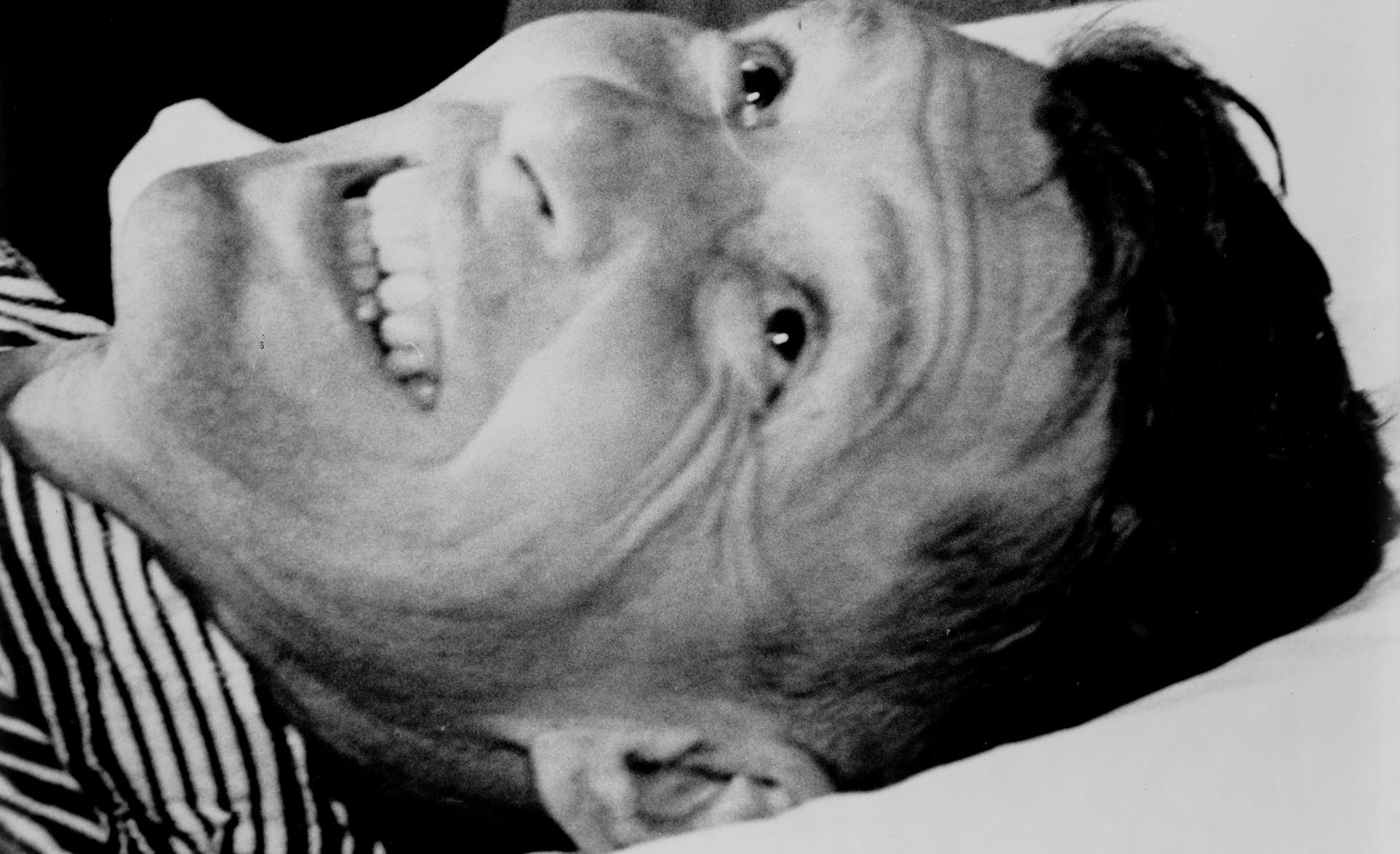
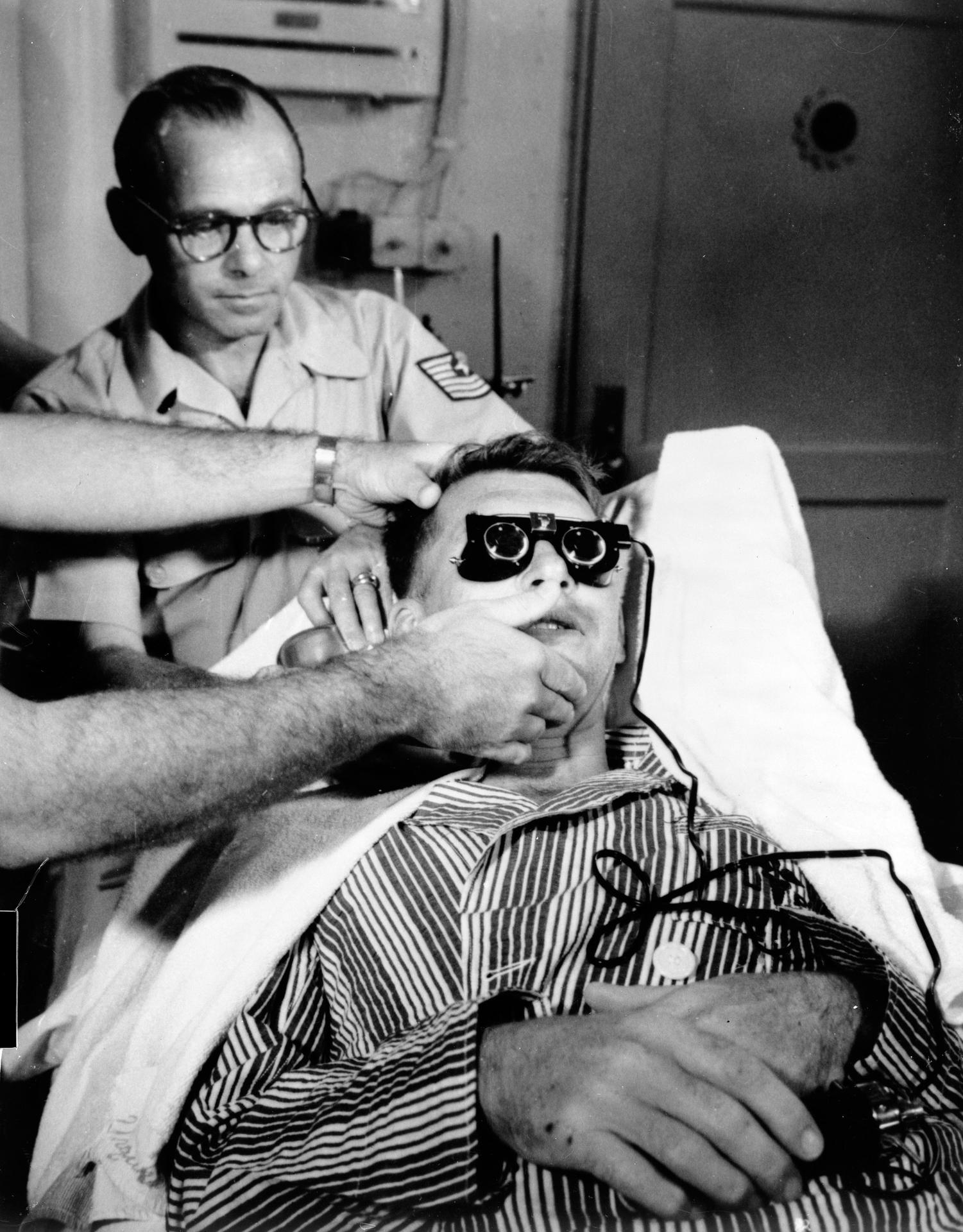
Post-flight analysis found no major malfunction: the only troublesome anomaly was the suit temperature control, and every engineering objective was deemed complete. The fuel-conservation measures worked particularly well, with consumption lower even than anticipated, and the official report gave the pilot full credit for it despite the technical changes made to the spacecraft. The medical review found no significant physiological effects after nine hours of weightlessness — only a degree of orthostatic hypotension from hours in a cramped cabin — and no appreciable radiation exposure.
In his report Schirra highlighted the "fireflies" already described on the two previous flights and the remarkable visual effect of the thick band of atmosphere around the horizon. The view of Earth, by contrast, disappointed him: the detail he could make out compared well with that from a high-flying aircraft, and he told debriefers it was "nothing new" compared with flight at 50,000 feet (15,000 m). Even so, he placed Sigma 7 at "the top of the list" of aircraft he had flown, displacing the F8F Bearcat naval piston fighter, and called the mission itself "textbook."
The success of MA-8 made preparing the next mission "considerably easier," though it led some observers to suggest the programme should end there, on a clear note of success, rather than risk another and potentially catastrophic flight. NASA's planners did not agree: they had been pressing for a day-long Mercury mission since mid-1961, when it first looked technically feasible. Preparing the spacecraft for that duration meant trimming every possible pound on board to offset the extra consumables, and the hardware changes already validated on MA-8 were used to justify removing twelve pounds (5.4 kg) of control equipment, five pounds (2.3 kg) of radio equipment and the seventy-six-pound (34 kg) periscope Schirra had found so unhelpful. In all, one hundred and eighty-three alterations were listed between the MA-8 and MA-9 capsules; the latter would carry several cameras, building on Schirra's photographic work, even though weight and power limits still constrained the science it could fly.
Reception and the fate of the spacecraft
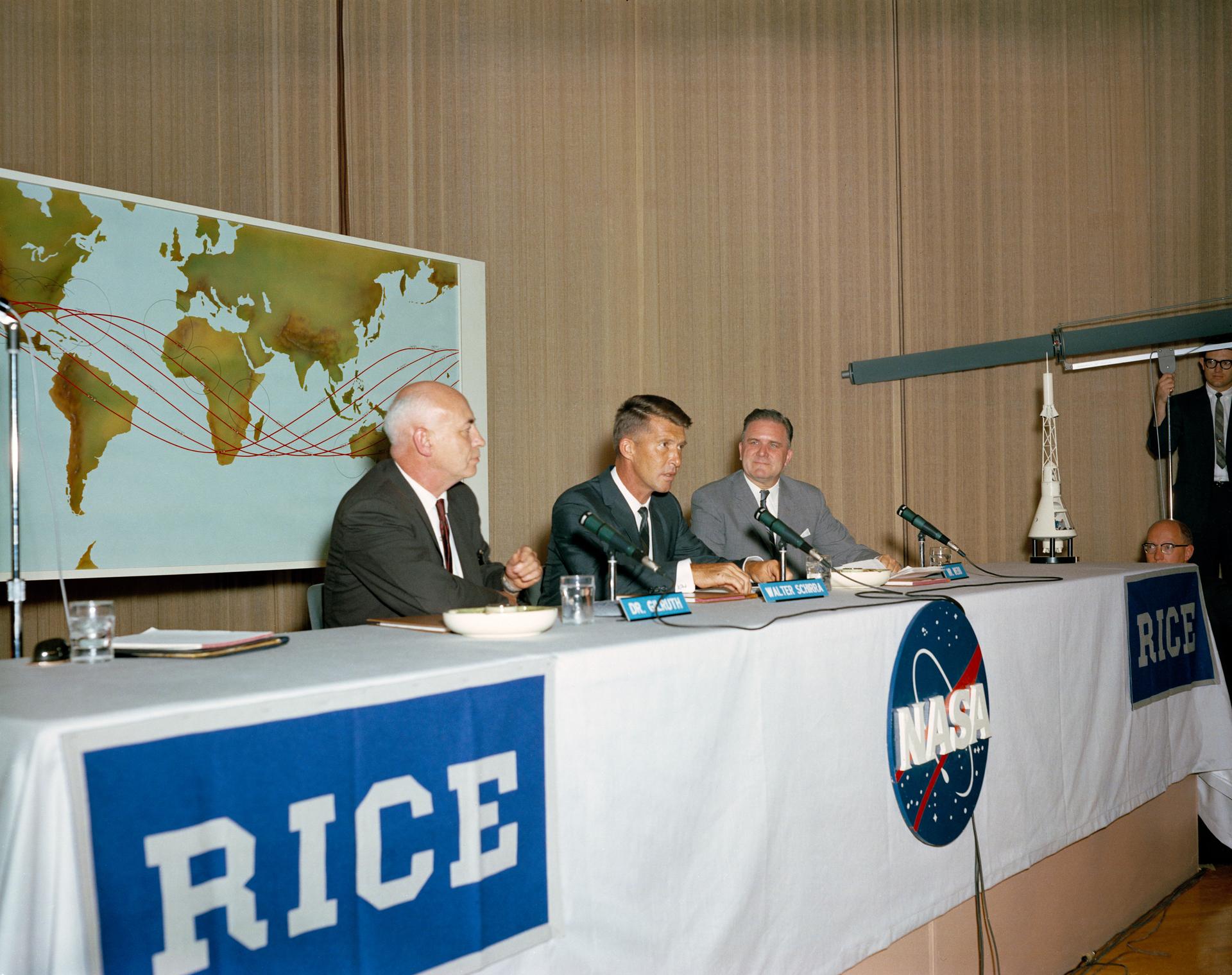
Public and political reaction was muted compared with the earlier missions. Schirra gave a public lecture at Rice University on returning to Houston and was given a motorcade through the city, but the Cuban Missile Crisis had been escalating since September and pushed the flight down the news schedules: worry about the relative effectiveness of Soviet and American space launchers gave way to a more pressing concern about Soviet military rockets. On 16 October he travelled to Washington to receive the NASA Distinguished Service Medal from President Kennedy, the same day Kennedy first saw U-2 photographs of missile sites in Cuba; the meeting was friendly and informal despite the circumstances. Robert F. Kennedy took him aside to sound him out about a political career, as he had done with John Glenn a year earlier, but Schirra declined and stayed with NASA.
His later career took him to command of the backup crew for the first Gemini mission in 1965 and, that same year, the prime crew of Gemini 6A, where he flew the first active rendezvous between two spacecraft; earlier plans for an on-orbit docking had been cancelled. In 1968 he commanded the first crewed Apollo mission, Apollo 7, and he retired from NASA in the summer of 1969 as the only astronaut to fly Mercury, Gemini and Apollo.
The capsule, after display at the U.S. Space & Rocket Center and the Johnson Space Center, moved to the Astronaut Hall of Fame near Titusville, Florida. With that institution's relocation to the Kennedy Space Center Visitor Complex, Sigma 7 is now displayed in its Heroes and Legends hall.
Images
Elsewhere
- Wikimedia CommonsSigma 7 remolcada hacia el USS Kearsarge (CVS-33) para su recuperación, 3-10-1962 (US Navy, NH 97404) ↗
- Wikimedia CommonsCápsula Sigma 7 expuesta en el Johnson Space Center, 1966 (NASA s66-53205) ↗
- Wikimedia CommonsCápsula Sigma 7 expuesta en Heroes & Legends, Kennedy Space Center Visitor Complex (2024) ↗
- Historic SpacecraftCápsula Mercury MA-8 (Sigma 7) expuesta en el Astronaut Hall of Fame, foto de Richard Kruse (2009) ↗
- AmericaSpaceSigma 7 descendiendo bajo su paracaídas tras las seis órbitas ↗
- Smithsonian National Air and Space MuseumCápsula Mercury MA-8 "Sigma 7", ficha de objeto en la colección del Smithsonian ↗
- Smithsonian National Air and Space MuseumTraje de presión volado por Schirra en Sigma 7, ficha de objeto del Smithsonian ↗
- RICHES – University of Central FloridaSchirra recibe la llave simbólica de lanzamiento de la tripulación del Atlas (previo a MA-8, colección Dr. Calvin D. Fowler) ↗
- San Diego Air & Space MuseumExposición en línea "Mercury-Sigma 7" del San Diego Air & Space Museum, archivo personal de Wally Schirra (pruebas previas al vuelo, telegramas de felicitación) ↗
- Flickr — NASA on The Commons"Mercury 8 in Hanger": personal en el Hangar S de Cabo Cañaveral prepara la cápsula Sigma 7 de Schirra para su traslado y acoplamiento al Atlas, 10-09-1962 ↗
- Flickr — NASA (nasa2explore)Sigma 7 Capsule Landing with Parachute (S62-04534, 3 Oct. 1962) ↗
- Google Arts & CultureS62-06108 — Close-up view of Mercury-Atlas 8 (MA-8) astronaut Walter Schirra Jr. being removed from his Sigma 7 capsule by Navy personnel (NASA/JSC, 3 Oct. 1962) ↗