NASA’s Most Dangerous Program Ever (Project Gemini) | Space Documentary For Sleep
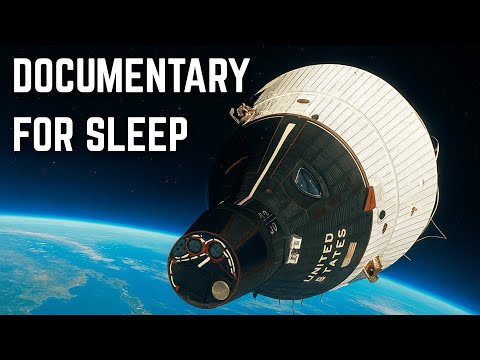
Video from the channel TopCosm about Project Gemini, linked on its Above Ten Thousand entry. Duration: 1:56:24. Language: English. Video type: Documentary.
What it's about
A narrated documentary about Project Gemini, the NASA program that bridged the gap between Mercury and the Moon landing. It explains why it was needed, what the spacecraft was like, and what each of its main missions contributed.
Historical context
The story opens with the New York parade for John Glenn in March 1962 and reviews the Soviet lead of those years. The USSR launched Sputnik 1 on October 4, 1957, sent Gagarin into orbit aboard Vostok 1 on April 12, 1961, and, with Voskhod 2 in March 1965, achieved the first spacewalk, carried out by Leonov. After the Bay of Pigs invasion, Kennedy asked for options to overtake the Soviets and, backed by von Braun, announced the lunar goal on May 25, 1961. Gemini had to solve three prior challenges: long-duration flight, since a trip to the Moon required at least eight days; rendezvous and docking between spacecraft; and working outside the spacecraft.
Key facts
The spacecraft, designed by Jim Chamberlain, carried two pilots with ejection seats and had a modular design. It was the first crewed spacecraft to use fuel cells and an onboard digital computer. It was launched by a Titan II using hypergolic propellants. On Gemini 4, in June 1965, Ed White carried out a spacewalk of about 20 minutes. In December 1965, Borman and Lovell spent 14 days in orbit aboard Gemini 7. Gemini 6A, which had lost its Agena target when the rocket exploded, positioned itself about 20 feet from them, after Schirra chose not to eject when the Titan II shut down on the pad. On March 16, 1966, Armstrong and Scott achieved the first docking with Gemini 8, but a stuck thruster sent the spacecraft into an uncontrolled spin and forced an early splashdown. Gemini 10 fired the Agena's engine to reach a record altitude of 475 miles. The spacewalks exhausted Cernan, Collins, and Gordon. Aldrin, on Gemini 12, trained underwater and logged five and a half hours outside the spacecraft. In total, there were ten crewed missions over 20 months.