Charles Pete Conrad | Project Gemini NASA | Project Gemini Rocket | Gemini Program | Gemini Missions
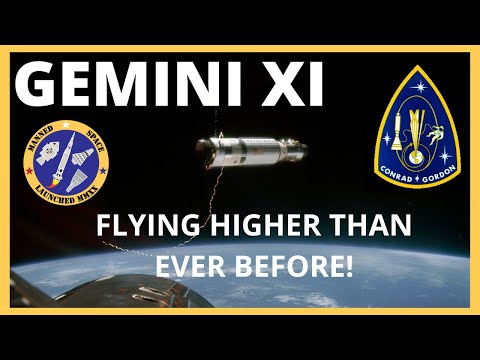
Video from the channel Manned Space about Project Gemini, linked on its Above Ten Thousand entry. Duration: 7:44. Language: English. Video type: Documentary.
What it's about
Educational piece on the Gemini 11 mission, commanded by Charles "Pete" Conrad together with Richard Gordon. The closing section is devoted to a commemorative plaque that belonged to Conrad.
Historical context
The video places the Gemini program as a bridge between Mercury, which had completed six single-crew flights, and the Apollo program. The name comes from the constellation of the twins, a reference to its two-seat spacecraft. Before Gemini 11, the program had already achieved orbital rendezvous (Gemini 6 and 7), docking (Gemini 8), and the lunar-duration endurance test (Gemini 7), and spacewalks had been carried out on Gemini 4, 9, and 10. Extravehicular activity remained the main unfinished business.
Key facts
Gemini 11 lifted off on September 12, 1966, at 10:42 (Eastern Daylight Time) from Launch Complex 19 at Cape Kennedy. An Agena target vehicle had been launched beforehand, and the crew met and docked with it less than two hours after liftoff. The following day, Gordon went outside tethered to the spacecraft by an umbilical, but the exertion exceeded the suit's cooling capacity and his visor fogged up. With Gordon's pulse and breathing at their limit, Conrad called off the spacewalk after 33 minutes. A second spacewalk, standing in the hatch, went off without incident. After undocking from the Agena on September 14, the spacecraft returned on the 15th with the first American reentry fully controlled by computer, splashing down less than two miles from the USS Guam. The plaque, made of wood in the shape of a shield, bears the ship's insignia (LPH-9) and names Conrad an honorary member of its crew.