The mission that SAVED the Apollo Program
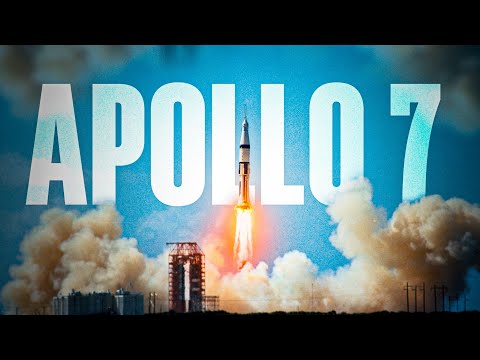
Video from the channel Dobra Espacial about Apollo program, linked on its Above Ten Thousand entry. Duration: 16:45. Language: Portuguese. Video type: Documentary.
What it's about
The video, in Portuguese, covers the Apollo 7 mission, the first crewed flight of the Apollo program. It begins with the fire that preceded it and ends with the splashdown and the mission's role in the decision to send Apollo 8 around the Moon.
Historical context
On January 27, 1967, during a test at Pad 34 at Cape Canaveral, a fire broke out in the cabin, which was pressurized with pure oxygen. Gus Grissom, Ed White, and Roger Chaffee, the crew of mission AS-204, later named Apollo 1, died. The investigation pointed to several causes: the high-pressure oxygen atmosphere, flammable materials, vulnerable wiring, and a hatch that did not allow a quick exit. The Block II command module received more than 1,300 modifications, which cost around 400 million dollars. Among them were a launch atmosphere with less oxygen, Beta cloth suits, an outward-opening hatch, and protected wiring.
Key facts
Wally Schirra, Donn Eisele, and Walter Cunningham launched on October 11, 1968, aboard a Saturn IB, from the same Pad 34. In orbit they rehearsed separation and approach to the S-IVB stage and practiced an orbital rendezvous. They also fired the service module engine eight times and made seven television broadcasts, the first ones live from space. The crew's colds strained the relationship with mission control, to the point that they made reentry without their helmets. They splashed down in the Atlantic on October 22 and were recovered by the USS Essex. The spacecraft was certified, and on November 12 it was announced that Apollo 8 would orbit the Moon.