The Apollo Test Program
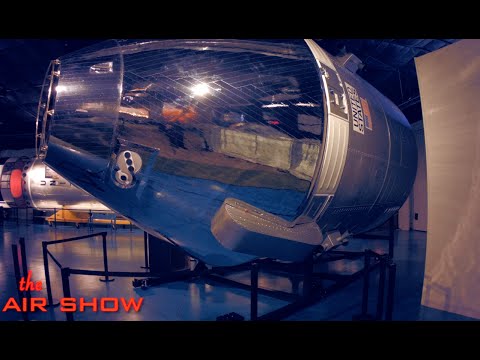
Video from the channel The Air Show about Apollo program, linked on its Above Ten Thousand entry. Duration: 6:07. Language: English. Video type: Documentary.
What it's about
A piece filmed in front of a full-scale replica of the Apollo spacecraft, on display at a museum named after General Stafford. It reviews the test program that preceded the Apollo 11 Moon landing: nearly five years of test flights overshadowed by that mission.
Historical context
The Soviet Union had taken the lead with Sputnik, the first satellite in orbit, and in 1961 with Yuri Gagarin, the first man in space. The United States responded with the Mercury program and the Titan rocket, which made possible the spacewalks and long-duration missions that paved the way for Apollo. President Kennedy's speech set the goal of reaching the Moon within that decade. The fire aboard Apollo 1 killed its entire crew, while the Soviets pressed ahead with their N1 Moon rocket.
Key facts
Thirty-six months after the speech, the first Apollo spacecraft, designated SA-6, was launched into low orbit. Over the following three years there were half a dozen uncrewed test flights. In November 1967, Apollo 4 debuted the complete Saturn V, 363 feet tall and weighing 6.2 million pounds, powered by Rocketdyne F-1 engines. Apollo 7 tested the command and service module with a crew in low orbit. Apollo 8 orbited the Moon and took the photograph known as Earthrise. Apollo 9 tested the lunar module in low orbit over roughly a week and a half. Apollo 10, launched on 18 May 1969 under Stafford's command, descended to about 47,000 feet above the lunar surface.