Apollo program · NASA · Uncrewed
AS-202
- Aug 25, 1966, 5:15 PM
- Launch date
- 1 hr 33 min
- Duration
- Success
- Outcome
-202_MISSION_-_KSC_(S66-50201)-800.webp)

.jpg)
_(cropped).jpg)

-34_-_APOLLO-SATURN_(A-S)_MISSION_202_-_PRELAUNCH_ALERT_-_KSC_(S66-50969)-1600.webp)
_202_-_RECOVERY_(S66-49413)-1600.webp)
-1600.webp)
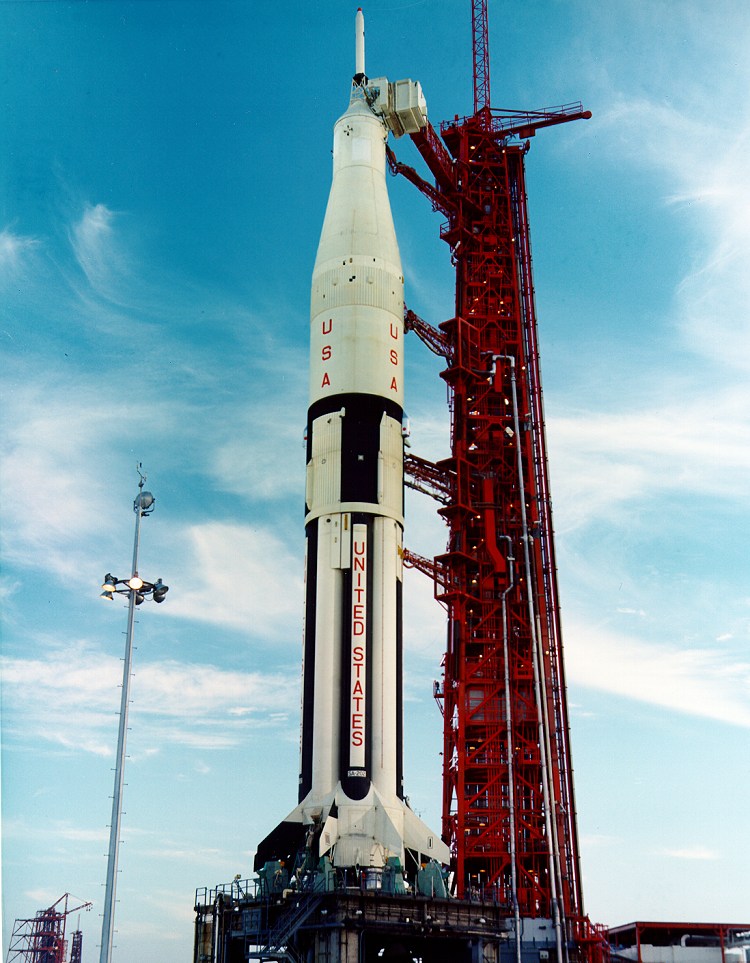
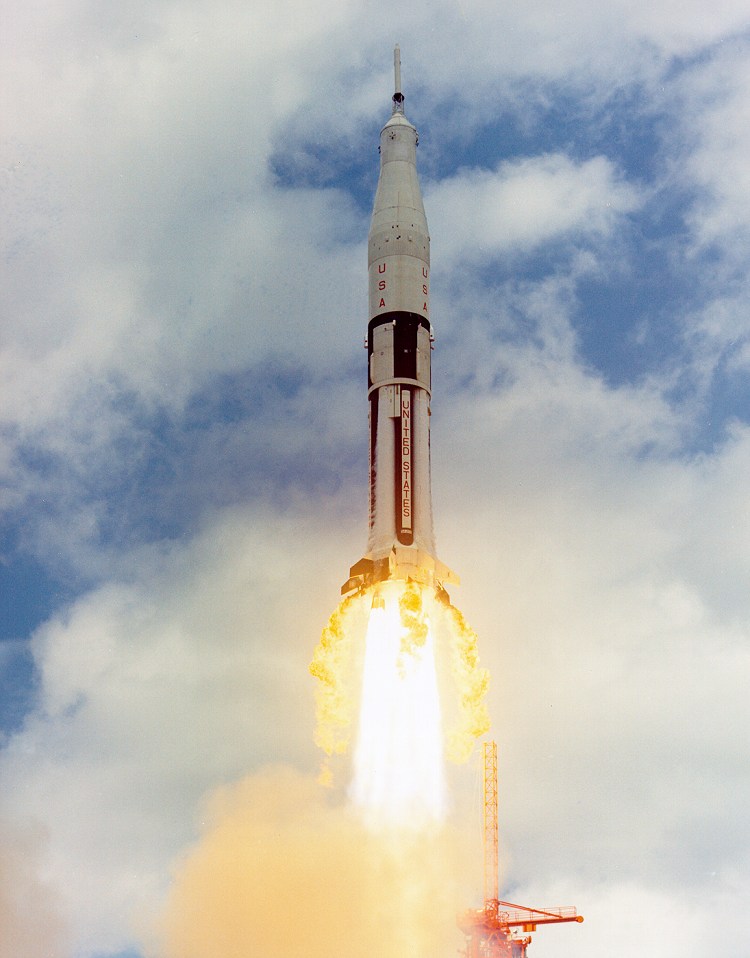
AS-202 —also designated SA-202 and informally called «Apollo 2»— was the second uncrewed suborbital test flight of a production Block I Apollo command and service module launched by a Saturn IB. It lifted off from Launch Complex 34 at Cape Kennedy on 25 August 1966 at 12:15 p.m. Eastern time (17:15:32 UTC) and lasted one hour and thirty-three minutes. It was the first flight of the programme to carry the spacecraft guidance and navigation system and the fuel-cell electrical system, two items on which any crewed flight depended entirely. The mission was designed as a deliberate step up from AS-201. Where that February flight had shown that rocket and spacecraft held together, AS-202 had to fly higher and stay aloft twice as long, and to make the service propulsion system (SPS) engine fire four times in succession, including two rapid three-second restarts. Above all it had to expose the heat shield to a thermal load of about 260 megajoules per square metre during a re-entry at roughly 28,000 feet per second, the speed of a return from low Earth orbit. The spacecraft, CSM-011, was essentially a production article capable of carrying a crew. It lacked the couches, the pressure suits, the crew provisions and some of the astronaut displays and controls, and carried additional research and development instrumentation in their place. The launch vehicle, SA-202, likewise departed from the standard Saturn IB, with R&D instrumentation and R&D structure in the first stage and a television camera in the instrument unit. A delay in the readiness of spacecraft 011 pushed the flight behind AS-203, so that in practice AS-202 was the third Saturn IB test flight despite its number. The flight went almost exactly as planned. The launch vehicle placed the spacecraft on a long ballistic trajectory; the SPS made its four programmed burns; the command module entered the atmosphere at 28,512 feet per second (8,690 m/s) and flew a skip re-entry, dipping to 36 nautical miles (67 km), rising again to 44 nautical miles (81 km) and finally splashing down in the North Pacific after deploying its main parachutes at 23,790 feet (7,250 m). It was the first recovery of an Apollo spacecraft in the Pacific: the carrier USS Hornet needed eight and a half hours to reach the capsule, which had landed 205 nautical miles (380 km) from the intended point. NASA recorded every primary and detailed test objective as accomplished. With the heat shield validated, guidance and navigation flown, the fuel cells working and the emergency detection system exercised for the first time in closed-loop configuration, the programme judged the Block I spacecraft and the Saturn IB ready to carry men into orbit on the next mission, AS-204. The AS-202 command module was displayed in the United States pavilion at Expo 67 in Montreal and is now preserved aboard USS Hornet, the museum ship at Alameda, California.
Payload
AS-202 carried no scientific payload: the payload was the object of the test itself. Atop the Saturn IB SA-202 flew command and service module CSM-011, a production Block I article with a launch weight of 56,900 lb, stripped of couches, space suits, crew provisions, biomedical instrumentation and part of the displays and controls intended for astronauts. In their place the spacecraft carried a developmental Block I heat shield, a command module control programmer, an altitude reference system and additional research and development instrumentation to record how the systems behaved in flight. A structural tie-bar occupied the position a lunar module would have taken on a Moon mission. The launch vehicle brought its own experimental load: R&D instrumentation and R&D structure in the S-IB first stage, a television camera in the instrument unit, and an ejectable camera mounted on the S-IB looking forward, which filmed the second stage separating and lighting its engine.
History
A rung on the ladder to the Moon
By the middle of 1966 the Apollo programme was not yet flying crews, but it had begun to test its hardware piece by piece. The strategy was a chain of uncrewed flights that each added one increment of difficulty: first prove that rocket and spacecraft could survive together, then prove that the spacecraft could come home. AS-202 is the rung at which the combination stopped being a structural demonstration and became a full rehearsal of systems.
The flight was framed explicitly as an extension of AS-201. That mission had demonstrated the structural integrity of the stack and a short re-entry; AS-202 was to take the rocket higher and keep the spacecraft flying twice as long, with the spacecraft's main engine firing four times along the way. The difference was not merely one of degree: for the first time the Apollo guidance and navigation system and the service module's fuel-cell electrical system were aboard, two subsystems without which crewed flight was simply impossible.
_202_-_RECOVERY_(S66-49413).jpg)
One point of scheduling explains a common confusion. Although its number suggests otherwise, AS-202 was the third Saturn IB test flight: a delay in the readiness of spacecraft 011 pushed its launch behind that of AS-203, which flew in July 1966 with a quite different purpose.
The spacecraft: CSM-011
CSM-011 was in essence a production Block I command and service module, in principle capable of carrying a crew. Its departures from the «operational» Block I configuration were all aimed at an uncrewed test flight and were documented one by one: a developmental Block I heat shield was fitted; couches, space suits and crew provisions were omitted; a tie-bar was added in the place a lunar module would occupy on a Moon mission; biomedical instrumentation was left out; certain displays and controls related to astronaut operation were removed; a command module control programmer and an altitude reference system were added; and additional R&D instrumentation was carried.
The spacecraft was delivered to Cape Kennedy in April 1966. Its launch weight was 56,900 lb, and the complete space vehicle weighed 1,312,300 lb at lift-off.
The launch vehicle SA-202
The Saturn IB assigned to this mission was not a standard article either. SA-202 differed from the baseline design on three counts: it carried research and development instrumentation, it incorporated R&D structure in the S-IB first stage, and it mounted a television camera in the instrument unit to observe the spacecraft circuit. The stages reached the Cape in stages of their own: the S-IVB second stage in January 1966, and both the S-IB first stage and the instrument unit in February 1966.
Objectives: a long list, with no exceptions
The mission carried six primary objectives. The first was to demonstrate the structural integrity and compatibility of launch vehicle and spacecraft and to confirm launch loads. The second was to demonstrate separations: the S-IVB/instrument unit/spacecraft stack from the S-IB, the launch escape system and boost protective cover from the CSM and launch vehicle, the CSM from the S-IVB/IU/adapter, and the command module from the service module. The third was to verify the operation of the launch vehicle's propulsion, guidance and control and electrical systems, and of the spacecraft's heat shield, SPS including multiple restart, guidance and navigation, environmental control, communications, command module and service module reaction control systems, stabilisation and control system, earth landing system and electrical power system. The fourth was to evaluate the space vehicle's emergency detection system in closed-loop configuration. The fifth was to evaluate the heat shield under a high heat load during entry at approximately 28,000 feet per second. The sixth was to exercise the mission support facilities and operations required for launch, mission conduct and command module recovery.
Beneath them hung a list of detailed test objectives of revealing thoroughness: demonstrate multiple SPS restart with at least three burns of at least three seconds at ten-second intervals; determine long-duration SPS performance over a burn of approximately 200 seconds, including shutdown characteristics; obtain data on engine firing stability; verify the astrosextant thermal protection subsystem; verify S-band operation in turnaround-ranging and downlink modes; and evaluate the heat shield ablator under a heat load of 20,000 Btu per square foot. NASA recorded every objective, primary and detailed, as accomplished.
A catalogue of firsts
AS-202 accumulated an unusual number of firsts. It was the first Apollo/Saturn flight to use fuel cells in the service module; the first to fly the emergency detection system in closed-loop configuration, that is, with a genuine capacity to trigger an automatic abort; the first test of unified S-band communications; the first flight of the Apollo guidance and navigation system; and the first recovery of an Apollo spacecraft in the Pacific area. To these were added a repeat of the S-IVB common bulkhead pressure test and a communications test through the re-entry blackout.
Ascent
Lift-off came from Launch Complex 34 on 25 August 1966 at 12:15 p.m. Eastern time, on a launch azimuth of 105 degrees. The boost phase was nominal. The first stage burned for just under two and a half minutes and lifted the vehicle to an altitude of 31.4 nautical miles (58.2 km), 30.4 nautical miles (56.3 km) downrange from the pad. The second stage then burned for a further seven and a half minutes and left the spacecraft on a long ballistic trajectory; no orbital insertion was planned. The command and service module separated at an altitude of 419.8 nautical miles (777.5 km).
Four burns of the main engine
The SPS was preprogrammed to fire four times. The first burn came a couple of seconds after separation from the S-IVB and lasted three minutes and thirty-five seconds: it was the one that raised the spacecraft's apogee to 617.1 nautical miles (1,142.9 km), 874.8 nautical miles (1,620.1 km) downrange. Twenty-five minutes later came the second burn, of one minute and twenty-eight seconds. Ten seconds after it shut down, the engine fired twice more, three seconds each time, to test its rapid restart capability. That sequence —a long burn followed by short pulses at ten-second intervals— was precisely what the detailed objective on multiple restart demanded, and it answered a very concrete worry: on a lunar mission the SPS would have to light without fail after days of flight, first to enter lunar orbit and then to leave it.
The skip re-entry
The command module entered the atmosphere at 28,512 feet per second (8,690 m/s). Instead of descending in one pass it flew a skip re-entry: it dipped first to 36 nautical miles (67 km), climbed back to 44 nautical miles (81 km) —having shed 4,300 feet per second (1,300 m/s) of speed by then— and only afterwards continued down. The profile was not a flourish. Stretching the trajectory inside the atmosphere multiplies the time during which the shield must absorb heat, and that was exactly the quantity the mission set out to measure, with a load of the order of 260 megajoules per square metre. The total range of the flight was 13,900 nautical miles.
Splashdown and recovery
The main parachutes deployed at 23,790 feet (7,250 m) and the command module splashed down in the North Pacific at 16°7' N, 168°54' E, 205 nautical miles (380 km) from the intended landing point and roughly 230 nautical miles (430 km) south-east of Wake Island. Landing occurred at 1:48 p.m. Eastern time, giving the mission a duration of one hour and thirty-three minutes. The dispersion from the target forced the carrier USS Hornet to steam for eight and a half hours to reach the capsule, which was aboard by 10:10 p.m. Eastern time on that same 25 August 1966.
The staging footage
AS-202 was one of three uncrewed Apollo missions —with Apollo 4 and Apollo 6— that obtained notable close-up footage of a Saturn rocket during staging. The technique came from the Saturn I: ejectable cameras mounted on the vehicle, released and recovered afterwards. On AS-202 the camera rode on the S-IB first stage, looking forward, and filmed the S-IVB second stage —a 200-series article— pulling away and lighting its single J-2 engine. The variant of the stage is recognisable by its ullage motors: the 200 series fired three, while the 500 series flown on the Saturn V carried only two. That footage has become standard stock material in documentaries about crewed flights —it was used in the documentary film Apollo 11— and is often misattributed to crewed missions.
Consequences and legacy
The outcome of AS-202 had an immediate effect on the programme's calendar. With the heat shield validated for entry from low Earth orbit, guidance and navigation proven in flight, the fuel cells operating and the emergency detection system exercised in closed loop, NASA judged that both the Block I spacecraft and the Saturn IB were fit to carry men into orbit on the next mission, AS-204 —the flight history knows as Apollo 1.
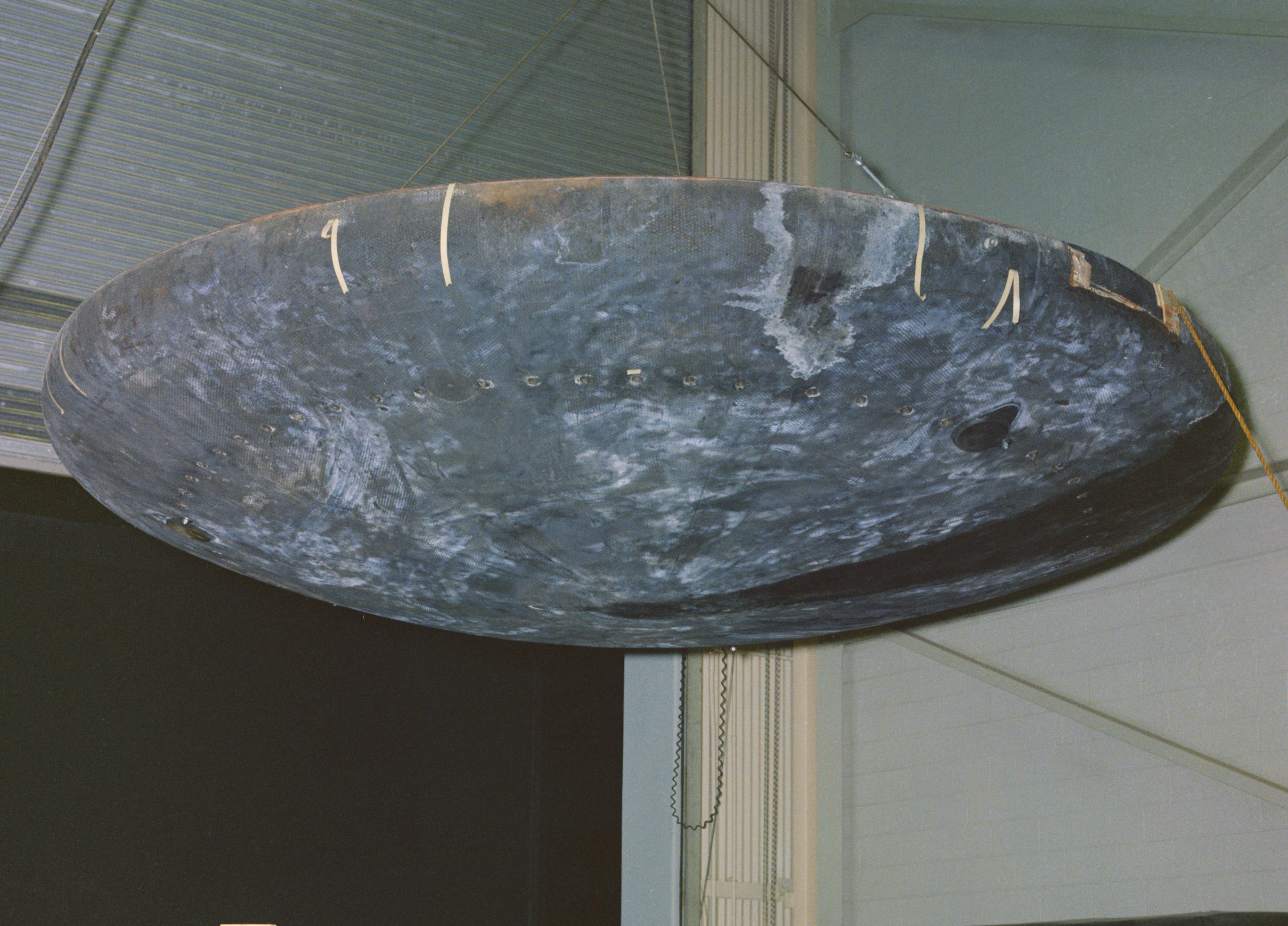
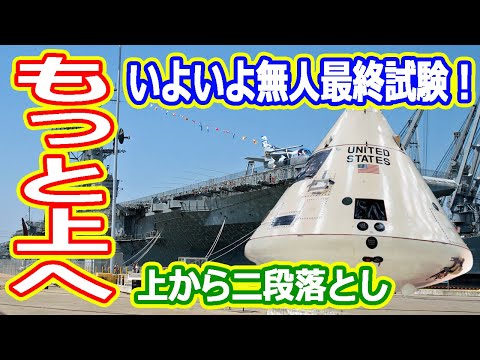
The command module itself had a second, public life: it was displayed in the United States pavilion at Expo 67 in Montreal and is preserved today aboard the aircraft carrier USS Hornet, open to visitors as the USS Hornet Museum in Alameda, California — the very ship that plucked it out of the water.
Images
Elsewhere
- AlamySaturn IB AS-202 rocket launches from Kennedy Space Center ↗
- DVIDSLiftoff - Apollo/Saturn 202 Mission ↗
- National Air and Space MuseumCommand Module, Apollo, #011A, AS-202 ↗
- Smithsonian InstitutionCommand Module, Apollo, #011A, AS-202 ↗
- Flickr#TBT: AS-202 Launches - Aug. 25, 1966 ↗
- Purdue University ArchivesSixteen photographs from AS-202 launch, 1966 ↗
- Historic SpacecraftProject Apollo - Command Module Photos ↗
- World SpaceflightUSS Hornet CVS-12 - Apollo recovery ship (AS-202) ↗
- NASA55 Years Ago: Apollo AS-202, Final Test Flight Before Planned First Crew Mission ↗
- NASAThis Week in NASA History: AS-202 Launches - Aug. 25, 1966 ↗
- Space Launch NowSaturn IB | Apollo AS-202 ↗
- Next SpaceflightAS-202 | Saturn IB ↗