Did you know…
Why did blue origin rocket explode?
Short answer
No Blue Origin rocket has exploded with people aboard. The event usually meant is the uncrewed New Shepard flight NS-23 on 12 September 2022, when the booster's BE-3PM engine nozzle failed during ascent; the abort system fired and carried the capsule to a safe parachute landing while the booster was destroyed.
What actually happened on NS-23
On 12 September 2022 a New Shepard vehicle carrying research payloads and no passengers suffered a failure roughly a minute into flight. Video showed an abnormal plume from the booster followed by the immediate activation of the launch escape system: the solid motor in the crew capsule fired, pushed it clear of the rising booster and the capsule descended under parachutes to an intact landing in West Texas. The propulsion module was lost.
The investigation, conducted by Blue Origin under Federal Aviation Administration oversight, attributed the failure to a structural fatigue failure of the nozzle on the BE-3PM engine, driven by operating temperatures higher than the design had anticipated. Corrective actions included design changes to the nozzle and to engine control parameters. New Shepard returned to flight with an uncrewed mission in December 2023 and resumed carrying passengers the following year.
Why the abort mattered more than the loss
Escape systems are the part of a crewed launcher that everyone hopes never to see used. NS-23 was an unplanned full-scale demonstration in real flight conditions, at high dynamic pressure, and it worked as designed. Had passengers been aboard, the sequence they would have experienced was the one the system exists for: a hard push, a short free fall and a parachute descent.
Not the only anomaly, and not unique
Blue Origin had already tested the same escape system deliberately in 2016 and 2018. Other vehicles have had comparable in-flight losses without casualties, precisely because they flew uncrewed or aborted successfully. In the launch business, an uncrewed failure that validates the safety chain is expensive but not a disaster.
More questions
- Image pending
Astronauts and life in space
Why does astronauts float in space?
Because they are in free fall, not because gravity is absent. At the International Space Station's altitude of about 400 km, Earth still pulls almost as hard… more…
- Image pending
Astronauts and life in space
Why did yuri gagarin die?
Gagarin died in an aircraft crash, not in a spacecraft. On 27 March 1968 the MiG-15UTI trainer he was flying with instructor Vladimir Seryogin went down in… more…
- Image pending
Astronauts and life in space
How much an astronaut is paid?
NASA's civilian astronauts are ordinary federal employees, paid on the General Schedule grade-and-step scale with no bonus per flight, per spacewalk or per… more…
.png)
Astronauts and life in space
Why is blue origin so slow?
Blue Origin was built on deliberate, owner-funded incrementalism: its motto is Gradatim Ferociter, step by step, and it spent its first two decades on… more…
Astronauts and life in space
When did astronauts last walk on the moon?
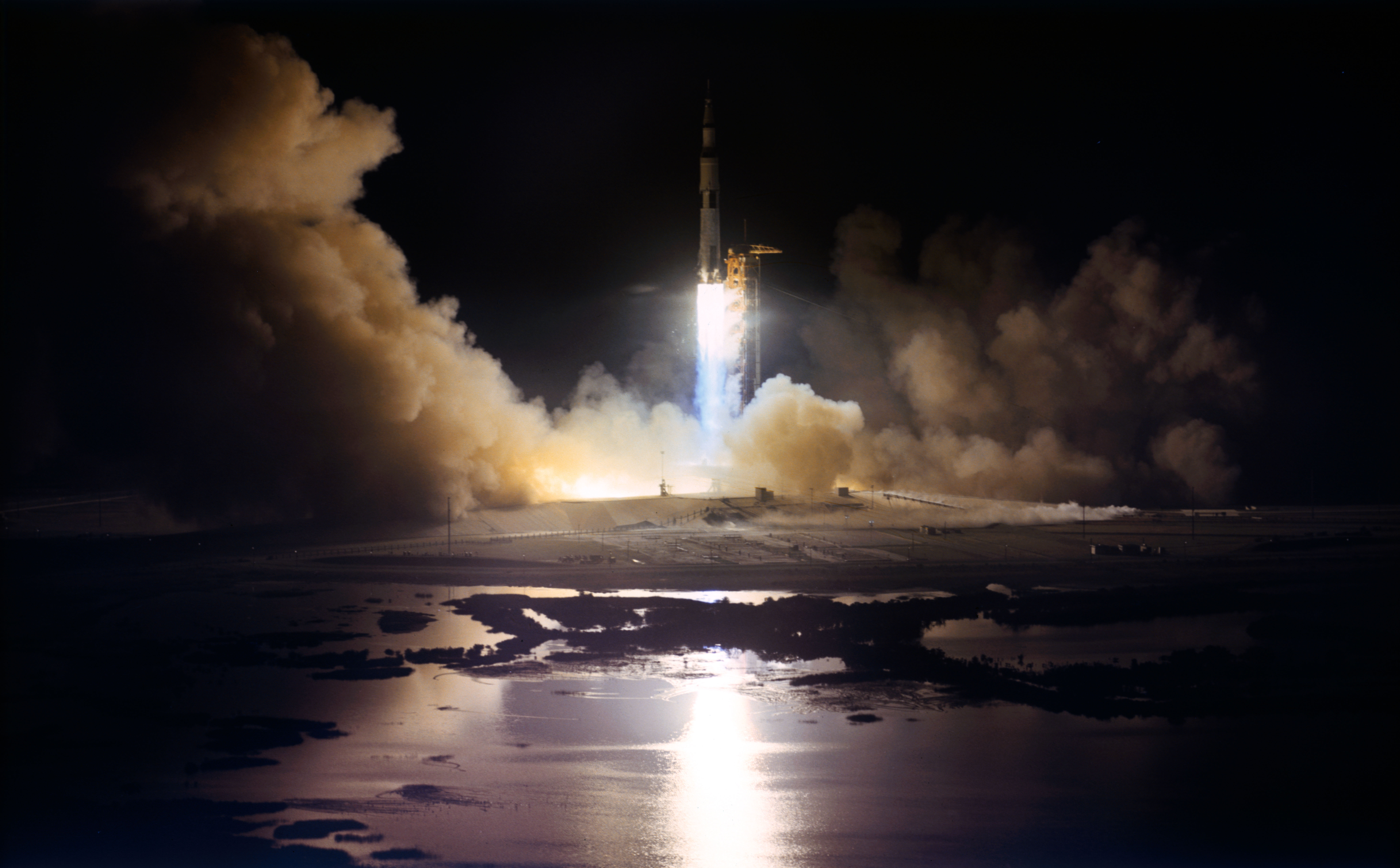
Apollo 17, in December 1972. Eugene Cernan and Harrison Schmitt landed in the Taurus-Littrow valley on 11 December 1972, worked on the surface for three days… more…
- Image pending
Astronauts and life in space
How high do astronauts orbit the earth?
Crewed spaceflight today happens a few hundred kilometres up. The International Space Station orbits at about 400 km, lapping the planet roughly every 90… more…
