Did you know…
What happens if an airplane's engines shut down in flight?
Short answer
If an airplane's engines shut off in flight, it doesn't fall: it glides. A commercial jet travels about 15-17 km for every 1,000 m it descends, so from 11,000 m it has over 150 km and about 20 minutes to restart the engines or reach a runway. Flight controls, instruments and radio keep working on backup systems.

An airplane without engines is a heavy glider
When people say a plane "shuts off" in the air, they usually mean its engines shut off. When that happens, lift doesn't disappear: the wings keep generating it as long as the aircraft keeps moving forward, and what's lost is the ability to maintain altitude. The aircraft enters a glide, a controlled descent that trades altitude for speed. A passenger jet has a glide ratio of between 15:1 and 17:1: for every 1,000 m it descends, it travels 15 to 17 km forward. From a cruise altitude of 11,000 m, that gives a radius of over 150 km and about 20 minutes of flight.
The controls keep working. Hydraulic and electrical systems are powered by the auxiliary power unit (APU), a small turbine in the tail that can be started in flight, and by the ram air turbine (RAT), a propeller that deploys into the airstream and generates power from the wind created by the descent itself. With it, an Airbus A320 retains flight controls, basic instruments and radio.
What the crew does
The first thing is to fly the aircraft: set the best-glide speed, around 400 km/h on a jet. The second is to attempt a restart; most engine stoppages are due to a transient cause, such as water in the fuel, ice or volcanic ash, and the engines restart once clear of the affected area. Only after that is where to go decided: an airport within glide range or, if there isn't one, the most favorable surface available.
Cases that ended well
In 1982, a British Airways Boeing 747 lost all four engines flying through an ash cloud over Indonesia; after about 13 minutes of gliding, the engines restarted and it landed in Jakarta. In 1983, the "Gimli Glider," an Air Canada Boeing 767, ran out of fuel at 12,500 m due to a unit-conversion error and glided to a former air base. In 2001, an Air Transat Airbus A330 glided 120 km to the Azores with no engines. And in 2009, US Airways Flight 1549 ditched on the Hudson River after ingesting geese in both engines at just 850 m of altitude, with no casualties. None of those aircraft fell: they all flew to the very end.
More questions
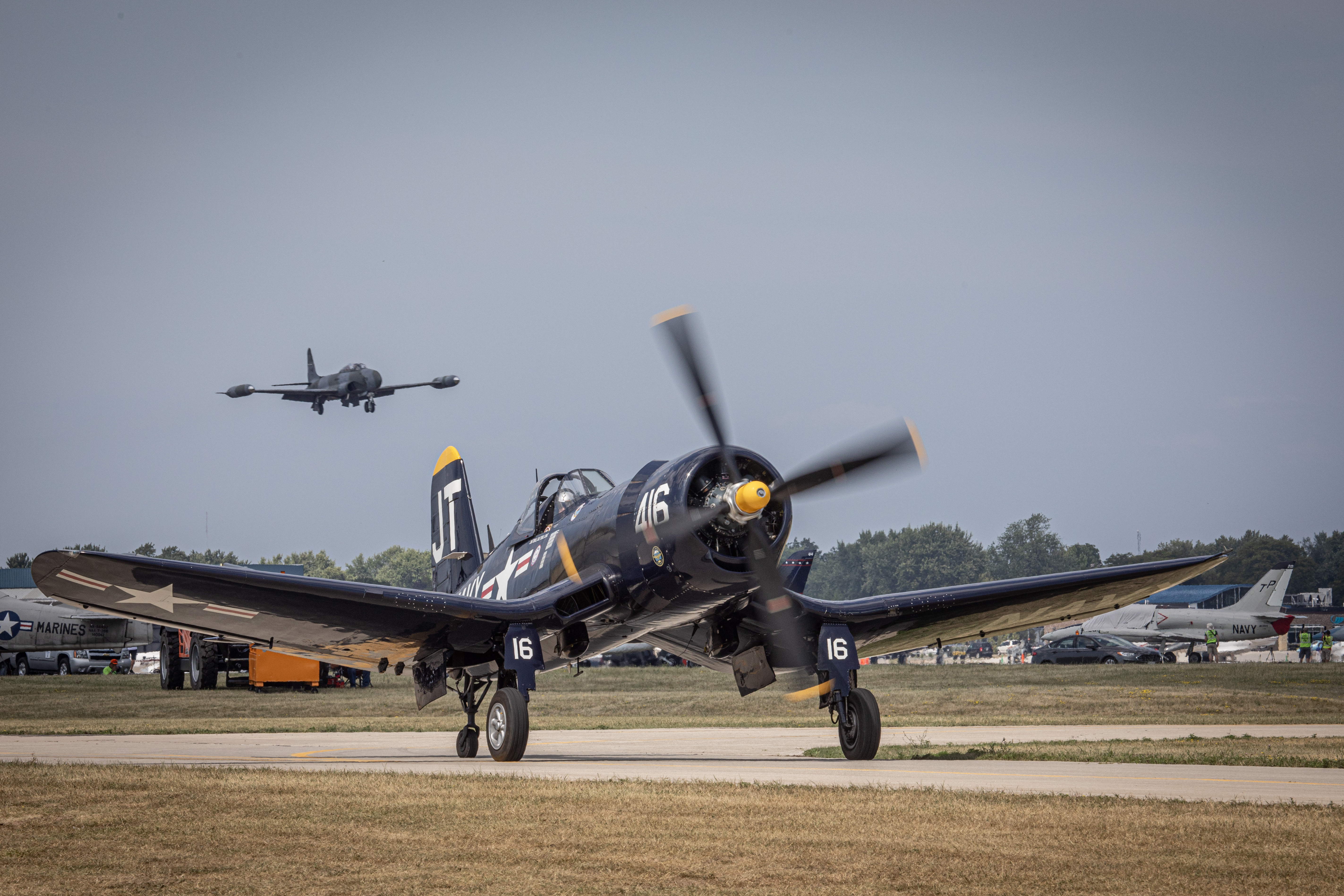
Physics of flight
Why can't a Corsair pilot apply full power when going around after a failed carrier landing?
Because at low speed and high power the Corsair would drop its left wing suddenly and with almost no warning, due to propeller torque. If the throttle was… more…
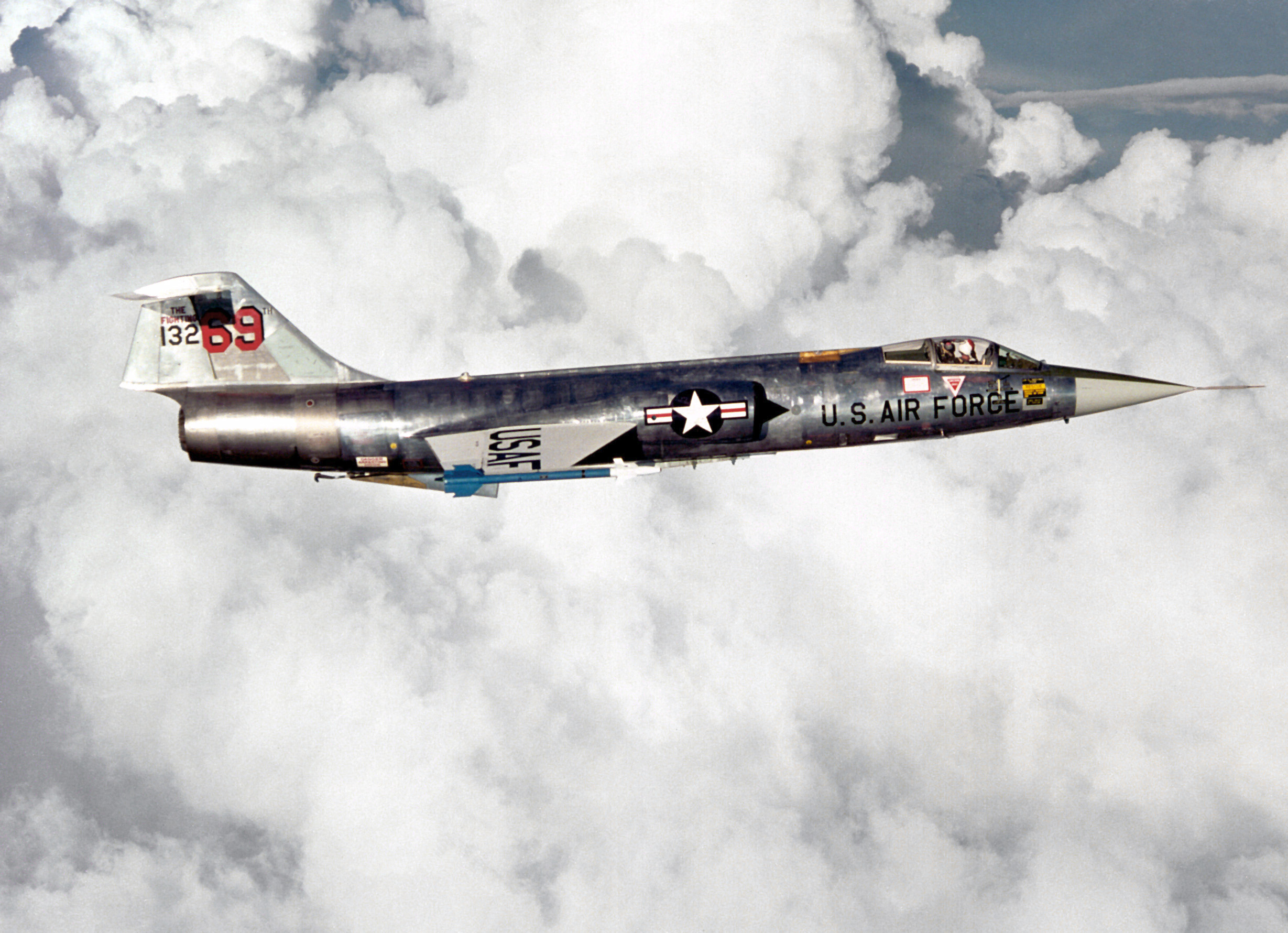
Physics of flight
What did the phrase "banking with intent to turn" mean among F-104 pilots?
It was a joke among Canadian F-104 pilots: banking the aircraft "with intent to turn" referred to its poor low-speed turning. Its sustained turn capability… more…
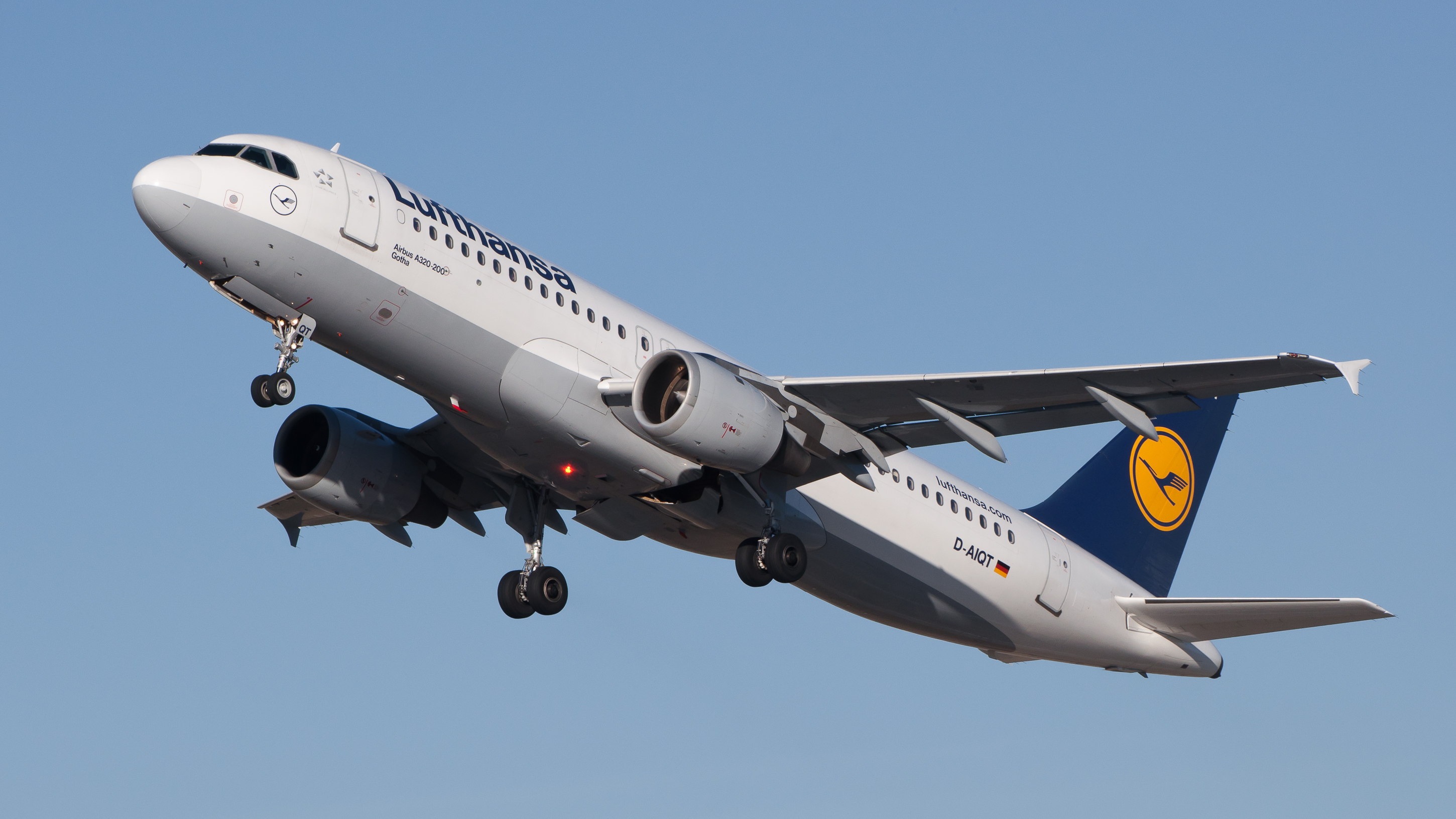
Julian Herzog (Website) (CC BY), vía commons Physics of flight
What is "flight envelope protection," which the A320 pioneered?
A set of limits embedded in the flight control software: it calculates the flight envelope, adds a safety margin, and blocks pilot inputs that would take the… more…
Julian Herzog (Website) (CC BY), vía commons Physics of flight
What is the A320's SHARP package for?
SHARP (SHort AiRfield Package) improves takeoff and landing performance on short runways and is designed to increase low-speed lift. It combines aerodynamic… more…
Physics of flight
What flaw sank Vought's all-metal V-141 fighter?
It wasn't a single flaw: tests showed the V-141 still flew poorly, was prone to spinning, and also suffered tail flutter, which is why it was rejected. It… more…
Physics of flight
What wind tunnel did NACA use to study the Corsair, and how big was it?
The full-scale 30- by 60-Foot Tunnel at the Langley Research Center, in Hampton, Virginia. NACA dedicated the facility on 27 May 1931 and used it to test the… more…

