Did you know…
Who makes US military aircraft?
Short answer
US military aircraft are mainly manufactured by three major groups: Lockheed Martin (F-35, F-22, F-16, C-130), Boeing (F-15EX, F/A-18, KC-46, P-8, T-7, and the upcoming F-47), and Northrop Grumman (B-2, B-21, E-2D). They are followed by General Atomics in drones, Bell and Sikorsky in helicopters, and Beechcraft in trainers (as of September 2026).

The Big Three
The US military aircraft industry consolidated in the 1990s around three main contractors. Lockheed Martin, with plants in Fort Worth (Texas), Marietta (Georgia), and Palmdale (California), produces the F-35 Lightning II, the most numerous fighter of the future, and the C-130J Hercules; it built the F-22 and continues delivering F-16s from Greenville (South Carolina) for export. Its subsidiary Sikorsky manufactures the UH-60 Black Hawk and CH-53K helicopters.
Boeing, from St. Louis (Missouri), delivers the F-15EX, the F/A-18 Super Hornet and the EA-18G, the T-7 trainer and the MQ-25 drone; in Everett and Renton (Washington) it converts commercial airliners into KC-46 tankers and P-8 Poseidon patrol aircraft, and in Philadelphia it produces the CH-47 Chinook and part of the V-22 Osprey. In 2025 it won the contract for the F-47, the Air Force's sixth-generation fighter.
Northrop Grumman builds the B-21 Raider stealth bomber in Palmdale and the carrier-based E-2D early-warning aircraft in St. Augustine (Florida); it maintains the B-2 fleet and builds the center fuselage section of the F-35.
The Second Tier
General Atomics, based in San Diego, dominates armed drones with the MQ-9 Reaper. Textron builds the T-6 Texan II trainer under the Beechcraft brand and, through Bell, the AH-1Z and UH-1Y helicopters and the V-22 alongside Boeing; it is also developing the V-280 Valor, the future replacement for the Army's Black Hawk.
Engines and Systems
None of these manufacturers build their own engines: Pratt & Whitney (F135, F119, F100) and GE Aerospace (F110, F404, F414) split propulsion between them, while Raytheon, Northrop Grumman, and L3Harris supply radars and electronic warfare systems. The Pentagon buys through multiyear programs, and Congress sets the quantities each year, so the production map shifts with the budget.
More questions
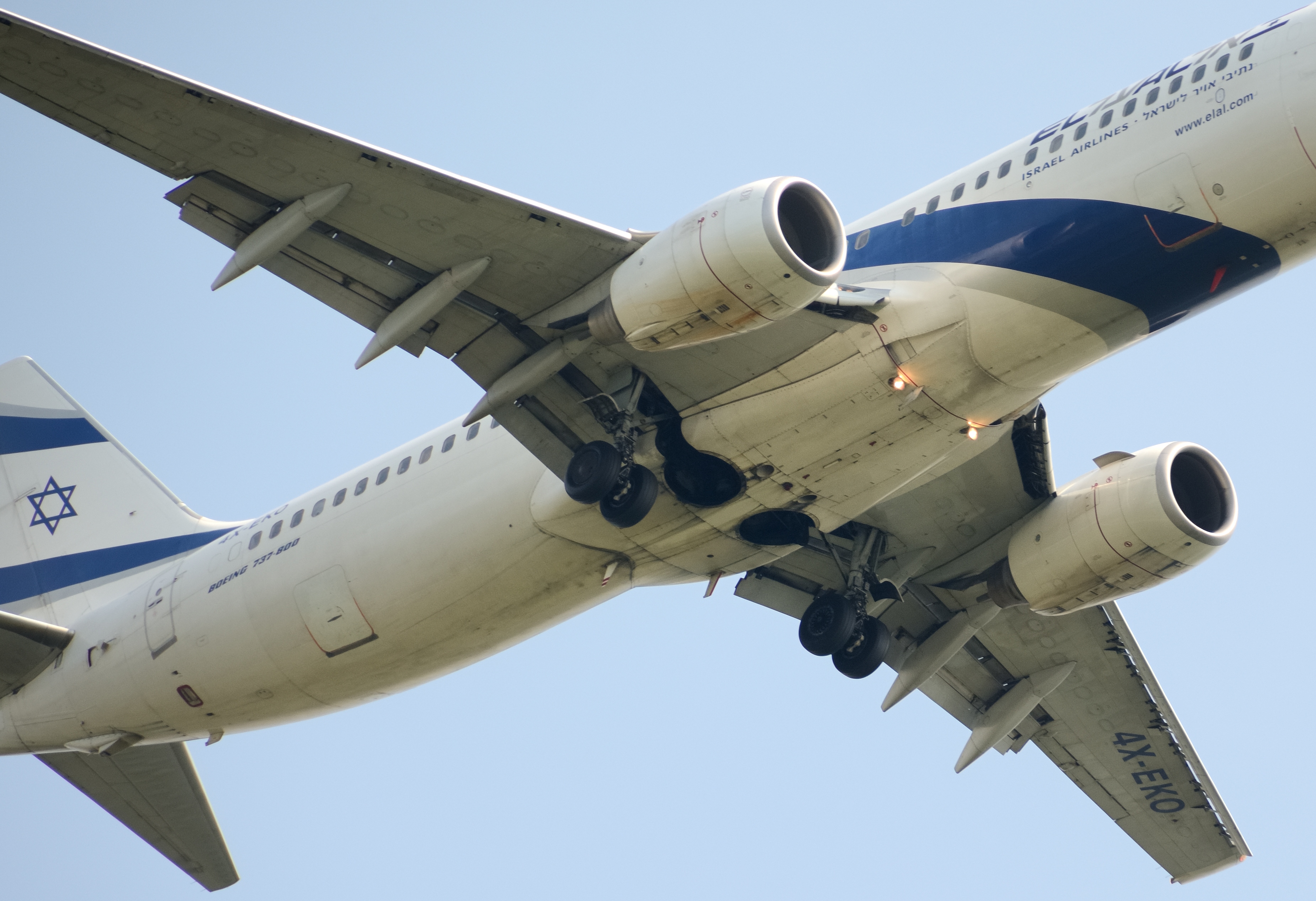
Peter Haas (CC BY SA), vía commons Military aviation
Why was the US Air Force's Boeing T-43 called "Gator"?
After its job: "Gator" is short for navigator. This modified Boeing 737-200 was used by the United States Air Force to train navigators, later called combat… more…
Military aviation
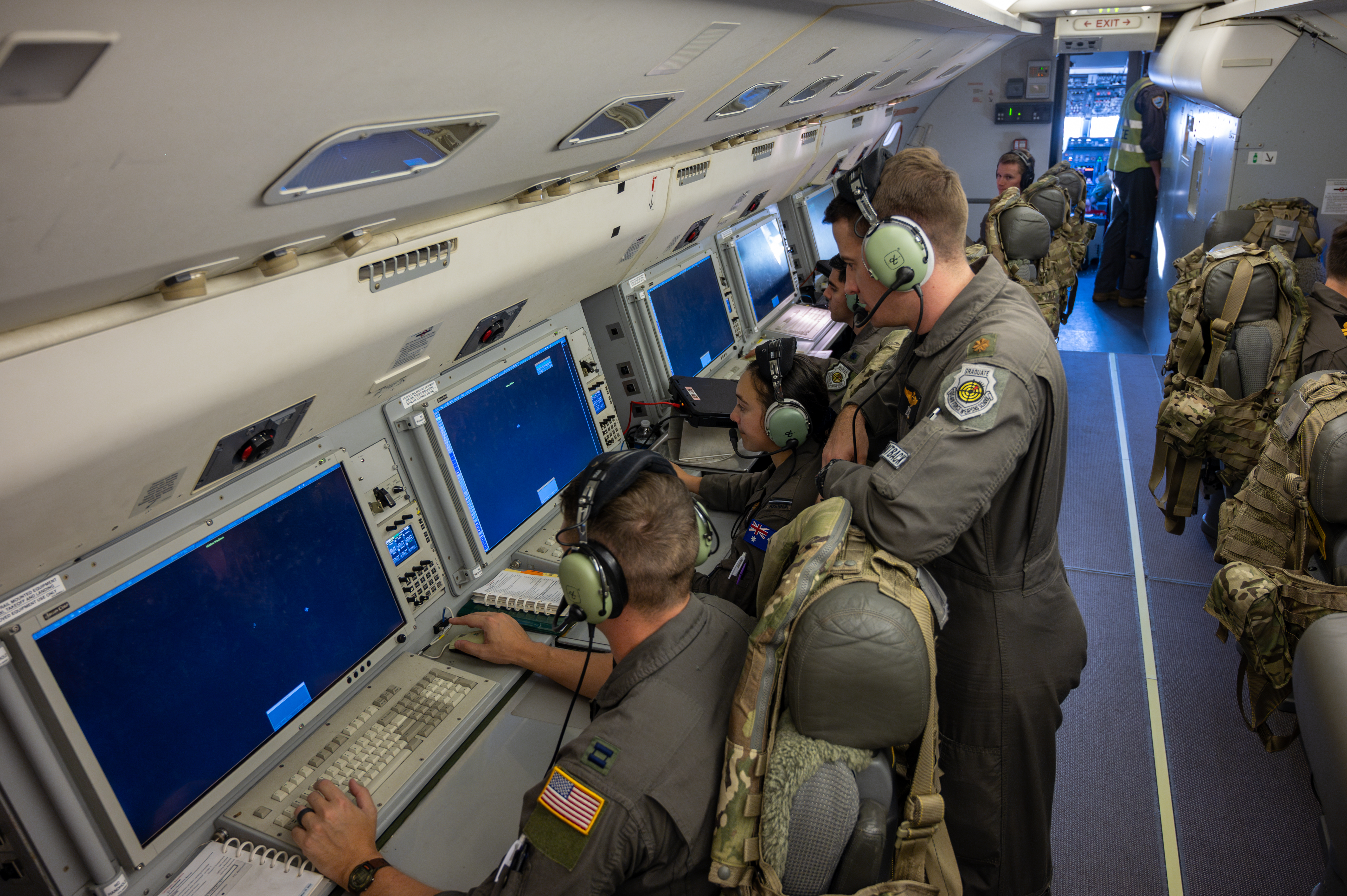
Where does the name of the E-7 Wedgetail radar aircraft come from?
The name comes from the wedge-tailed eagle, Australia's largest bird of prey. In 1996 Australia issued a request for tender for the RAAF under "Project… more…

Military aviation
Did you know the F-104's first prototype had an ejection seat that fired the pilot downward?
Yes: the first prototype, the XF-104, carried a Stanley B seat that fired downward, out of fear that an upward-firing seat wouldn't clear the T-tail. Early… more…
Military aviation
Did you know the F-104 was tested being launched like a rocket, with no runway?
Yes: the F-104 was tested with Zero-Length Launch (ZeLL), with the fighter on a short ramp and a booster rocket underneath that fired it into the air within… more…
Military aviation
What part of the F-104s did Lockheed itself build?
Most production came from other factories: the F-104G was built by Lockheed, but also by Canadair and a European consortium with Messerschmitt/MBB, Dornier… more…

Military aviation
What nickname did young US Navy pilots give the Corsair because it was so hard to land on a carrier?
It was known as the "Ensign Eliminator," and not without reason. Early Navy pilots also called it the "hog," "hosenose," or "bent-wing Widow Maker." Its long… more…


