Did you know…
Where does the name of the E-7 Wedgetail radar aircraft come from?
Short answer
The name comes from the wedge-tailed eagle, Australia's largest bird of prey. In 1996 Australia issued a request for tender for the RAAF under "Project Wedgetail," a name referring to that native eagle. The aircraft was designed under that project and received the designation E-7A Wedgetail.

An eagle that watches from on high
The name Wedgetail comes from the wedge-tailed eagle, Australia's largest bird of prey, known for soaring for long periods at great height while scanning the ground far below. The Australian program from which the aircraft emerged was called "Project Wedgetail," a reference to that native eagle, and under it Australia issued a request for tender for the RAAF in 1996. The aircraft was designed for the RAAF within that project and received the designation E-7A Wedgetail.
From tender to contract
As early as 1986, the Australian Department of Defence was evaluating industry proposals for airborne surveillance and early warning systems. Boeing won the contract in December 2000 with a 737-700 airframe carrying a Northrop Grumman MESA radar in a fixed dorsal structure. The E-7, also marketed as the Boeing 737 AEW&C, is a twin-engine airborne early warning and control aircraft originally designed for the Royal Australian Air Force.
The antenna that doesn't rotate
Based on the Boeing 737 Next Generation design, the aircraft carries a fixed AESA radar antenna instead of a rotating one. The 737 AEW&C is roughly similar to the 737-700ER and uses the Multi-role Electronically Scanned Array (MESA) radar from Northrop Grumman Electronic Systems. That radar is fixed, unlike the hydraulically rotating AN/APY-1/2 of the E-3 Sentry, which the 737 AEW&C is intended to replace. Despite this, it maintains a 360-degree azimuth sweep through two electronic side-facing arrays. The model has also been selected by the Turkish Air Force, the Republic of Korea's, and the United Kingdom.
More questions
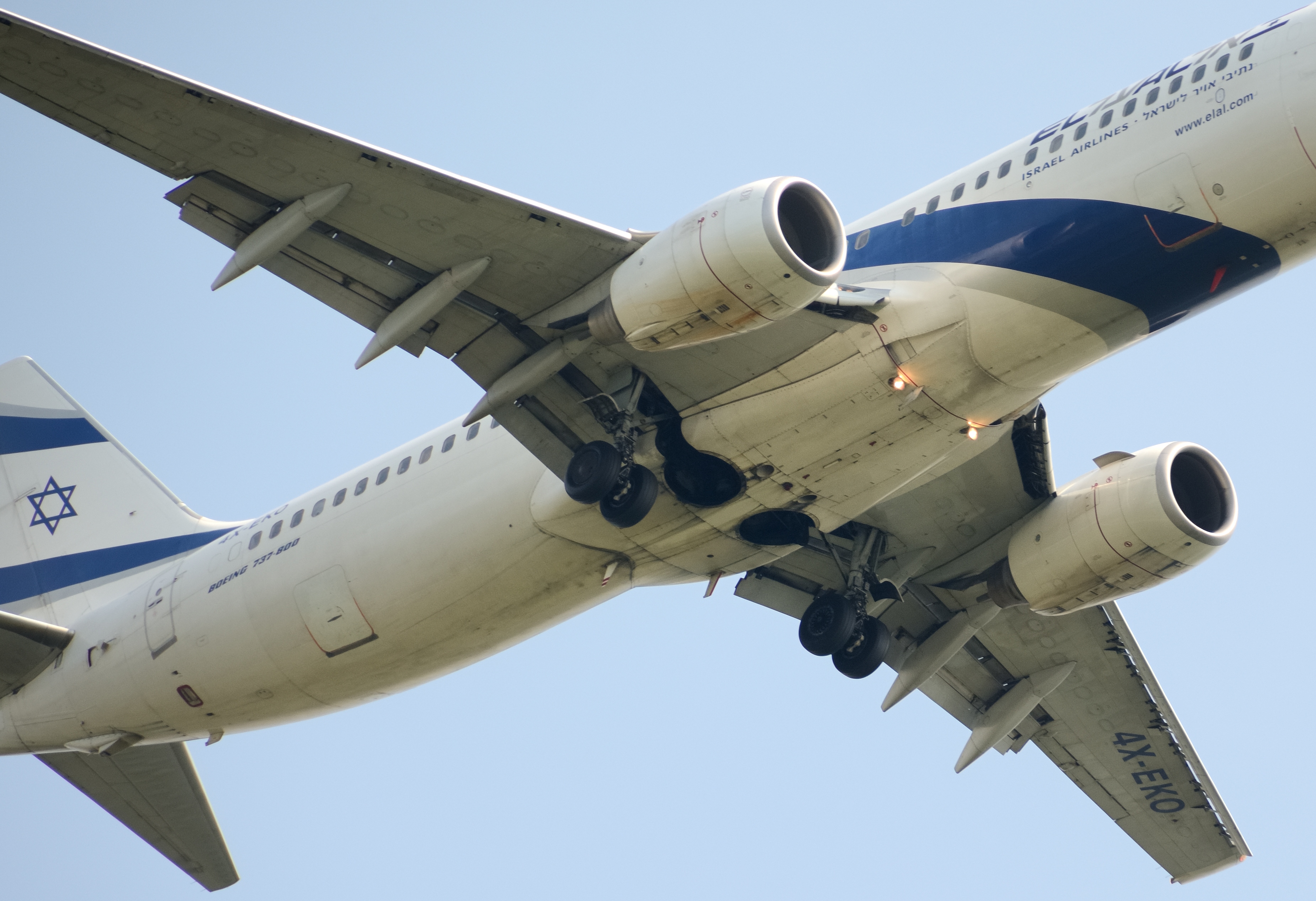
Peter Haas (CC BY SA), vía commons Military aviation
Why was the US Air Force's Boeing T-43 called "Gator"?
After its job: "Gator" is short for navigator. This modified Boeing 737-200 was used by the United States Air Force to train navigators, later called combat… more…

Military aviation
Did you know the F-104's first prototype had an ejection seat that fired the pilot downward?
Yes: the first prototype, the XF-104, carried a Stanley B seat that fired downward, out of fear that an upward-firing seat wouldn't clear the T-tail. Early… more…
Military aviation
Did you know the F-104 was tested being launched like a rocket, with no runway?
Yes: the F-104 was tested with Zero-Length Launch (ZeLL), with the fighter on a short ramp and a booster rocket underneath that fired it into the air within… more…
Military aviation
What part of the F-104s did Lockheed itself build?
Most production came from other factories: the F-104G was built by Lockheed, but also by Canadair and a European consortium with Messerschmitt/MBB, Dornier… more…

Military aviation
What nickname did young US Navy pilots give the Corsair because it was so hard to land on a carrier?
It was known as the "Ensign Eliminator," and not without reason. Early Navy pilots also called it the "hog," "hosenose," or "bent-wing Widow Maker." Its long… more…
Military aviation
What tactic let the Corsair beat the Zero without turning with it?
The tactic was to dive from above: a high-speed pass, a short burst, and a quick climb back to altitude. Engaging a Zero in a classic turning dogfight could… more…


