Did you know…
How much blue origin rocket cost?
Short answer
Blue Origin does not publish a list price for its rockets, so there is no official figure. Seats on the suborbital New Shepard have been sold at auction and privately, with the first charity auction seat going for 28 million dollars in June 2021; ordinary ticket prices are not disclosed. New Glenn launch prices are negotiated per contract (data of September 2026).
No published price list
Unlike some of its competitors, Blue Origin does not advertise a per-launch price for either of its vehicles. That is a deliberate commercial choice: the company sells launch services under negotiated contracts, and the terms of those contracts, including those signed with NASA and with satellite operators, are generally not broken out publicly. Any figure circulating as "the price of a Blue Origin rocket" should therefore be treated with caution unless it comes from a contract award notice.
What is actually known
The one hard number in the public record concerns a seat rather than a rocket. In June 2021 Blue Origin auctioned the first passenger seat on a crewed New Shepard flight for charity, and the winning bid was 28 million dollars. That was an auction for a unique item and says little about the routine cost of a ride; the company has since flown paying passengers under private terms it declines to disclose, and industry reporting has generally placed typical suborbital seat prices well below that mark without confirmation from Blue Origin.
New Glenn, the much larger orbital vehicle with a reusable first stage, is a different product entirely. It is aimed at heavy commercial satellites, constellation deployment and NASA missions, and its pricing is set contract by contract.
Why comparisons are hard
A suborbital hop and an orbital launch are not the same service and cannot be compared on price. New Shepard rises above the Kármán line and falls back within roughly ten minutes; reaching orbit requires far more energy, which is why orbital launch costs are measured in tens of millions of dollars per flight across the industry. Reusability lowers the marginal cost of a flight but not the price a customer pays, which reflects demand, insurance and manifest position as much as hardware.
More questions
- Image pending
Astronauts and life in space
Why does astronauts float in space?
Because they are in free fall, not because gravity is absent. At the International Space Station's altitude of about 400 km, Earth still pulls almost as hard… more…
- Image pending
Astronauts and life in space
Why did yuri gagarin die?
Gagarin died in an aircraft crash, not in a spacecraft. On 27 March 1968 the MiG-15UTI trainer he was flying with instructor Vladimir Seryogin went down in… more…
- Image pending
Astronauts and life in space
How much an astronaut is paid?
NASA's civilian astronauts are ordinary federal employees, paid on the General Schedule grade-and-step scale with no bonus per flight, per spacewalk or per… more…
.png)
Astronauts and life in space
Why is blue origin so slow?
Blue Origin was built on deliberate, owner-funded incrementalism: its motto is Gradatim Ferociter, step by step, and it spent its first two decades on… more…
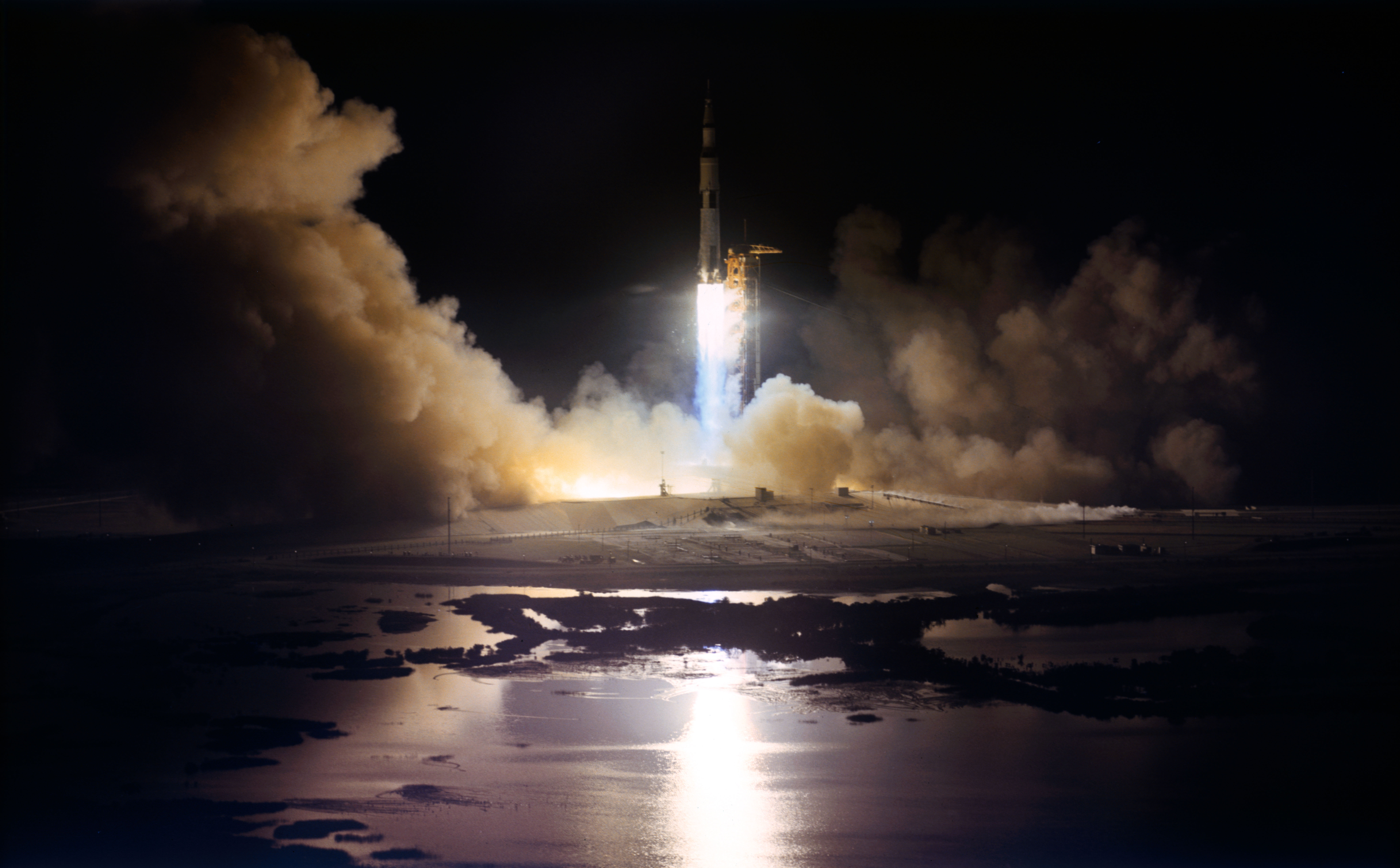
Astronauts and life in space
When did astronauts last walk on the moon?
Apollo 17, in December 1972. Eugene Cernan and Harrison Schmitt landed in the Taurus-Littrow valley on 11 December 1972, worked on the surface for three days… more…
- Image pending
Astronauts and life in space
How high do astronauts orbit the earth?
Crewed spaceflight today happens a few hundred kilometres up. The International Space Station orbits at about 400 km, lapping the planet roughly every 90… more…
