Did you know…
How long did the space race take?
Short answer
Just under twelve years, if you date it from Sputnik 1 on 4 October 1957 to the Apollo 11 landing on 20 July 1969. Stretch the definition to the Apollo-Soyuz docking of July 1975 and it runs to nearly eighteen years. Either way, the decisive stretch was that first dozen years.

From a beeping sphere to a footprint
The starting gun is easy to place: 4 October 1957, when the Soviet Union put Sputnik 1 into orbit and a radio signal from a polished metal sphere rearranged American politics. What followed came fast. The Soviet lead held through the early years, with the first animal in orbit, the first pictures of the lunar far side and, on 12 April 1961, Yuri Gagarin as the first human in orbit. Six weeks later President Kennedy committed the United States to landing a man on the Moon before the decade was out, choosing a goal distant enough that the existing Soviet advantage would not settle it.
Twelve years, then the air went out of it
Apollo 11 landed on 20 July 1969, eleven years and nine months after Sputnik. That is the span most people mean, and it is the one that makes sense: the objective was announced publicly, both sides pursued it, and one of them arrived. The Soviet lunar programme had failed quietly in the meantime, its N1 rocket destroyed on every attempt, and the failure was not admitted for two decades. After the landing the momentum drained away on both sides, budgets fell and later Apollo flights were cancelled.
Where you stop counting
A second date has a claim. In July 1975 an Apollo command module docked with a Soyuz in Earth orbit and the two commanders shook hands through the hatch, a gesture with no engineering purpose and a very clear political one. Count to there and the race lasted nearly eighteen years, ending not with a winner but with a joint mission. Anything later belongs to a different story: the Shuttle, Mir, and eventually a space station built by both sides together with a dozen other countries.
More questions
- Image pending
Astronauts and life in space
Why does astronauts float in space?
Because they are in free fall, not because gravity is absent. At the International Space Station's altitude of about 400 km, Earth still pulls almost as hard… more…
- Image pending
Astronauts and life in space
Why did yuri gagarin die?
Gagarin died in an aircraft crash, not in a spacecraft. On 27 March 1968 the MiG-15UTI trainer he was flying with instructor Vladimir Seryogin went down in… more…
- Image pending
Astronauts and life in space
How much an astronaut is paid?
NASA's civilian astronauts are ordinary federal employees, paid on the General Schedule grade-and-step scale with no bonus per flight, per spacewalk or per… more…
.png)
Astronauts and life in space
Why is blue origin so slow?
Blue Origin was built on deliberate, owner-funded incrementalism: its motto is Gradatim Ferociter, step by step, and it spent its first two decades on… more…
Astronauts and life in space
When did astronauts last walk on the moon?
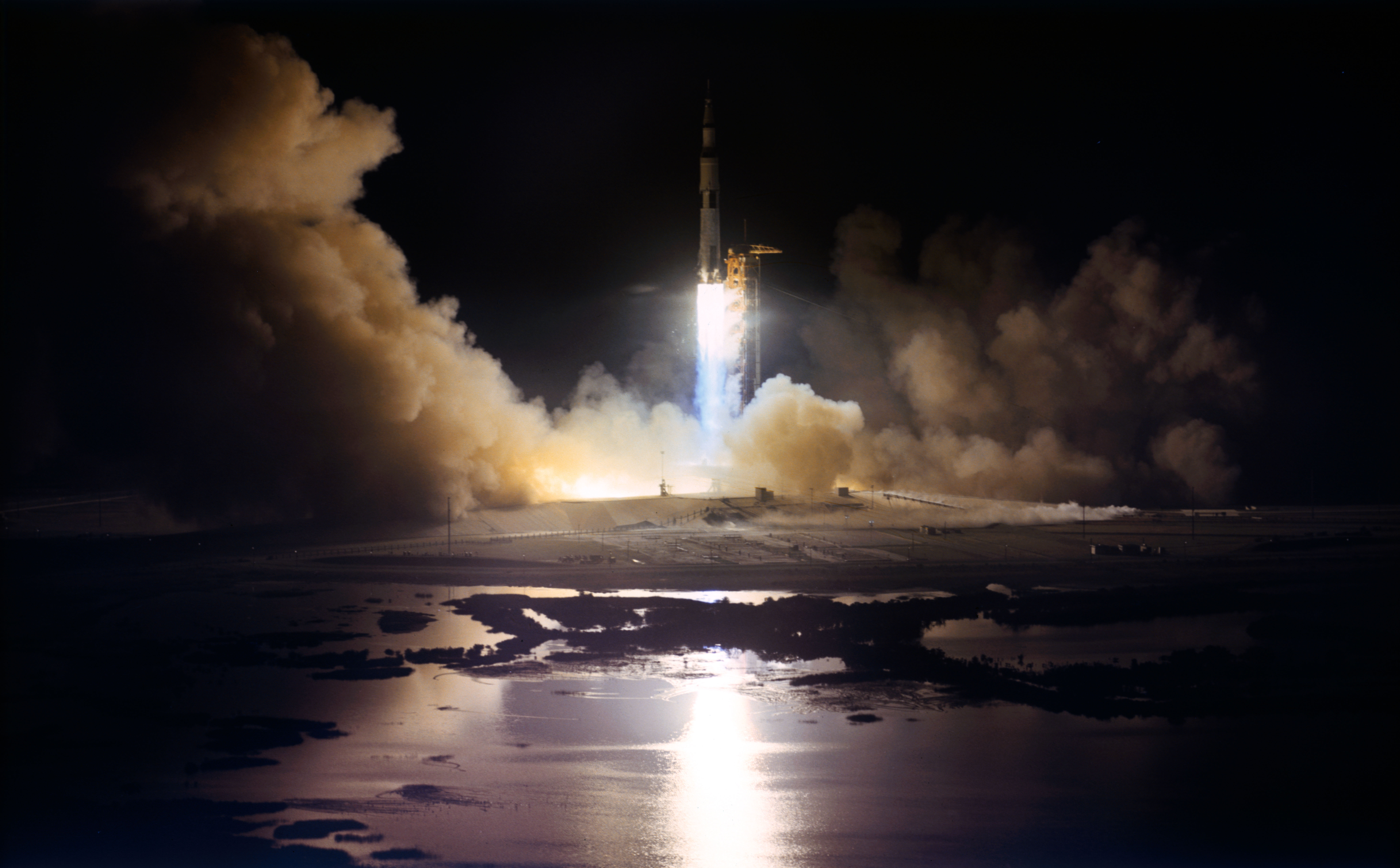
Apollo 17, in December 1972. Eugene Cernan and Harrison Schmitt landed in the Taurus-Littrow valley on 11 December 1972, worked on the surface for three days… more…
- Image pending
Astronauts and life in space
How high do astronauts orbit the earth?
Crewed spaceflight today happens a few hundred kilometres up. The International Space Station orbits at about 400 km, lapping the planet roughly every 90… more…
