Did you know…
How long blue origin in space?
Short answer
A New Shepard flight lasts about ten to eleven minutes from liftoff to touchdown, of which roughly three minutes are spent in weightlessness above the Kármán line at 100 km. Blue Origin's crewed flights are suborbital, so nobody stays in space: the capsule follows a ballistic arc and comes straight back down under parachutes.
The shape of the flight
New Shepard does not go into orbit, and that single fact explains every number attached to it. The booster lifts the capsule vertically, burns for a little over two minutes, and separates. Both halves continue upward on momentum alone; the capsule crosses the Kármán line at 100 km, the internationally used boundary of space, and the occupants unstrap and float for roughly three minutes while the vehicle coasts over the top of its arc. Then it falls back. The booster relights its engine and lands vertically on a pad near the launch site, and the capsule descends under three main parachutes, cushioned at the last moment by a retro-thrust puff of air. Liftoff to touchdown is about ten to eleven minutes.
Why it cannot be longer
Staying in space requires going sideways fast enough to keep missing the Earth — roughly 28,000 km/h in low orbit, against the far lower speed a suborbital hop needs. The energy difference is large, and New Shepard is not built for it. That is a design choice rather than a shortcoming: the vehicle exists to deliver a few minutes of clean microgravity and a view, cheaply and repeatedly, for passengers and for research payloads that need exactly that.
The orbital side of the company
Blue Origin's long-duration ambitions sit with New Glenn, its two-stage orbital rocket, which first reached orbit in January 2025 and is designed to place satellites and, in time, crewed and lunar hardware. A payload launched by New Glenn can remain in space indefinitely. The company is also developing the Blue Moon lander for NASA's Artemis programme and has proposed a commercial space station, but as of September 2026 its human flights remain the short suborbital hops of New Shepard.
More questions
- Image pending
Astronauts and life in space
Why does astronauts float in space?
Because they are in free fall, not because gravity is absent. At the International Space Station's altitude of about 400 km, Earth still pulls almost as hard… more…
- Image pending
Astronauts and life in space
Why did yuri gagarin die?
Gagarin died in an aircraft crash, not in a spacecraft. On 27 March 1968 the MiG-15UTI trainer he was flying with instructor Vladimir Seryogin went down in… more…
- Image pending
Astronauts and life in space
How much an astronaut is paid?
NASA's civilian astronauts are ordinary federal employees, paid on the General Schedule grade-and-step scale with no bonus per flight, per spacewalk or per… more…
.png)
Astronauts and life in space
Why is blue origin so slow?
Blue Origin was built on deliberate, owner-funded incrementalism: its motto is Gradatim Ferociter, step by step, and it spent its first two decades on… more…
Astronauts and life in space
When did astronauts last walk on the moon?
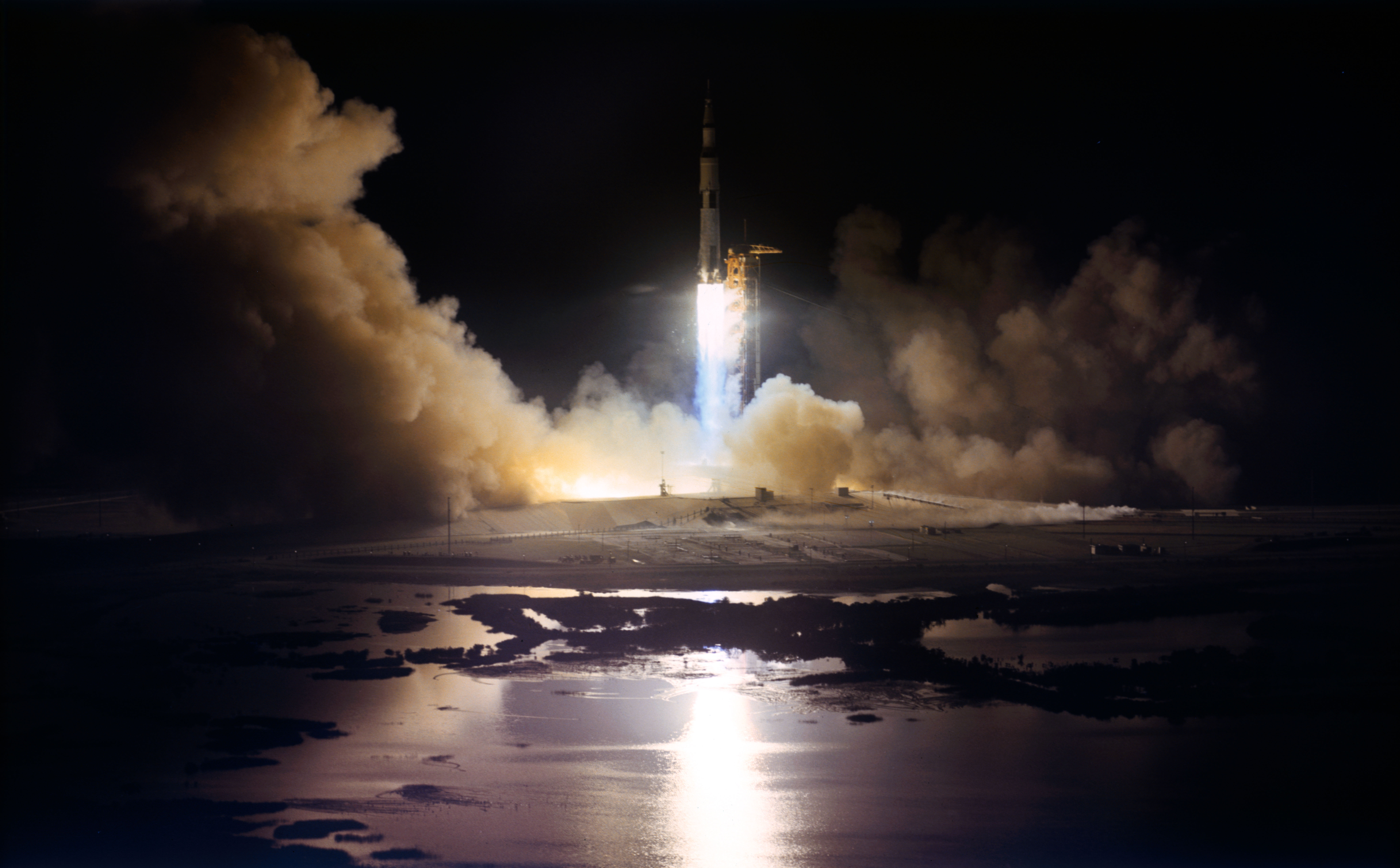
Apollo 17, in December 1972. Eugene Cernan and Harrison Schmitt landed in the Taurus-Littrow valley on 11 December 1972, worked on the surface for three days… more…
- Image pending
Astronauts and life in space
How high do astronauts orbit the earth?
Crewed spaceflight today happens a few hundred kilometres up. The International Space Station orbits at about 400 km, lapping the planet roughly every 90… more…
