Did you know…
How long apollo 11 took to reach moon?
Short answer
Apollo 11 took a little over three days to reach the Moon. It lifted off on 16 July 1969 and entered lunar orbit on 19 July, roughly 76 hours after launch. The landing followed the next day: Eagle touched down in the Sea of Tranquility on 20 July 1969, about four days and six hours into the mission.

Three days of coasting
The journey divides into two very different phases. The first lasted minutes: a Saturn V climbing through the atmosphere, staging twice and parking the spacecraft in Earth orbit. After a check-out circuit and a half, the third stage reignited for the translunar injection burn, accelerating the stack to roughly 10.8 km/s and committing it to the Moon.
Everything after that was coasting. With the engine silent, the spacecraft climbed against Earth's gravity and steadily lost speed, slowing to a few hundred metres per second near the point where lunar gravity begins to dominate — and then accelerating again as the Moon pulled it in. Lunar orbit insertion came about 76 hours after launch on 19 July, when the service module engine fired on the far side of the Moon, out of contact with Houston.
Why not faster
Three days was the economical answer, not a technical limit. A faster trajectory demands more propellant on departure and, worse, far more on arrival to shed the extra speed. Apollo's free-return profile also offered safety: if the service module engine had failed, the spacecraft would have looped around the Moon and returned to Earth without further burns. Apollo 13 owed its crew's survival to precisely that geometry in April 1970.
The rest of the timeline
Eagle undocked on 20 July and landed at 20:17 UTC, four days and six hours after launch. The surface stay lasted about 21 hours 36 minutes. The return was quicker than the outbound leg, with splashdown in the Pacific on 24 July — a complete mission of roughly eight days and three hours.
More questions
- Image pending
Astronauts and life in space
Why does astronauts float in space?
Because they are in free fall, not because gravity is absent. At the International Space Station's altitude of about 400 km, Earth still pulls almost as hard… more…
- Image pending
Astronauts and life in space
Why did yuri gagarin die?
Gagarin died in an aircraft crash, not in a spacecraft. On 27 March 1968 the MiG-15UTI trainer he was flying with instructor Vladimir Seryogin went down in… more…
- Image pending
Astronauts and life in space
How much an astronaut is paid?
NASA's civilian astronauts are ordinary federal employees, paid on the General Schedule grade-and-step scale with no bonus per flight, per spacewalk or per… more…
.png)
Astronauts and life in space
Why is blue origin so slow?
Blue Origin was built on deliberate, owner-funded incrementalism: its motto is Gradatim Ferociter, step by step, and it spent its first two decades on… more…
Astronauts and life in space
When did astronauts last walk on the moon?
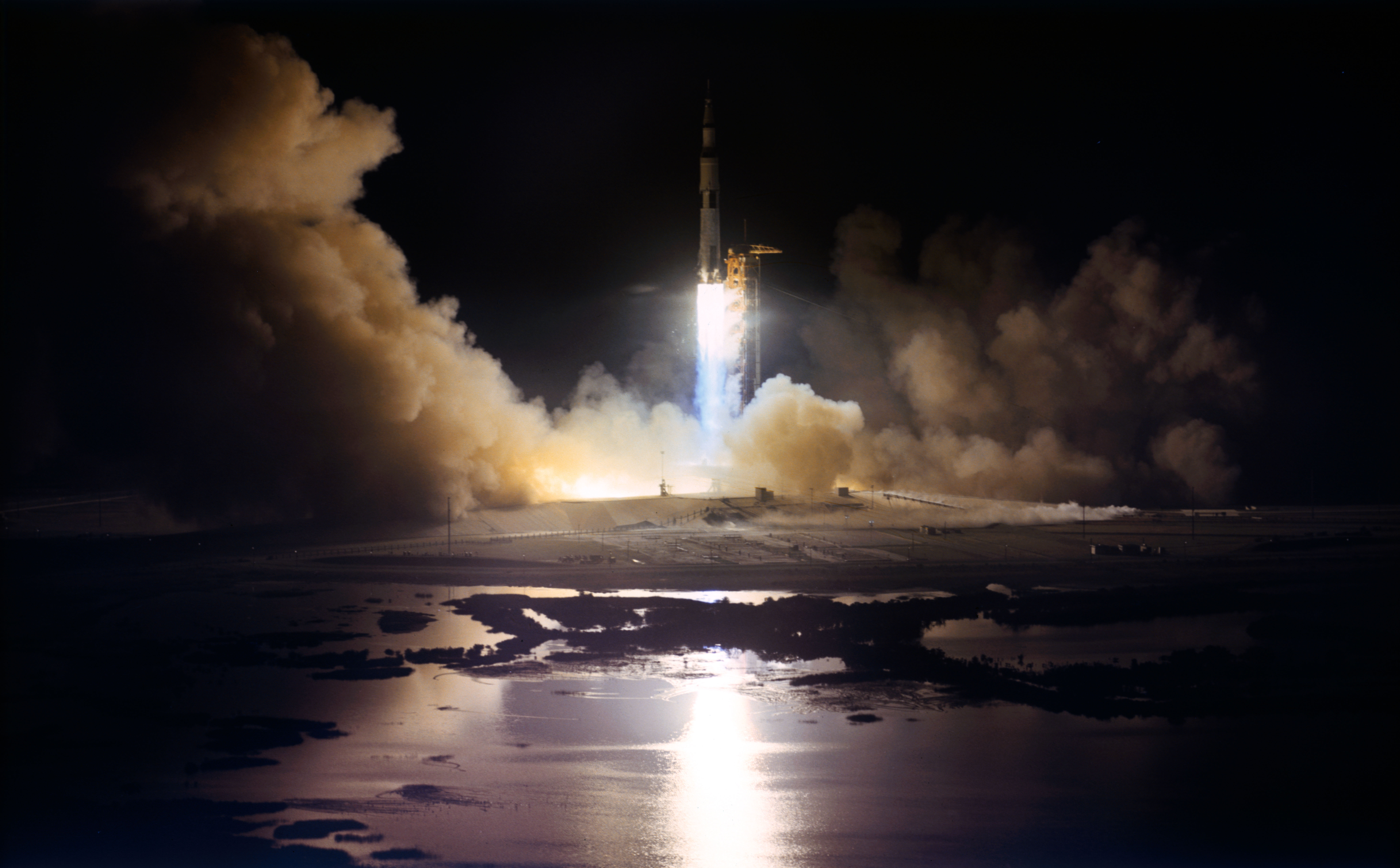
Apollo 17, in December 1972. Eugene Cernan and Harrison Schmitt landed in the Taurus-Littrow valley on 11 December 1972, worked on the surface for three days… more…
- Image pending
Astronauts and life in space
How high do astronauts orbit the earth?
Crewed spaceflight today happens a few hundred kilometres up. The International Space Station orbits at about 400 km, lapping the planet roughly every 90… more…
