Airshows
Canadian International Air Show 2023
September 2, 2023 – September 4, 2023Held
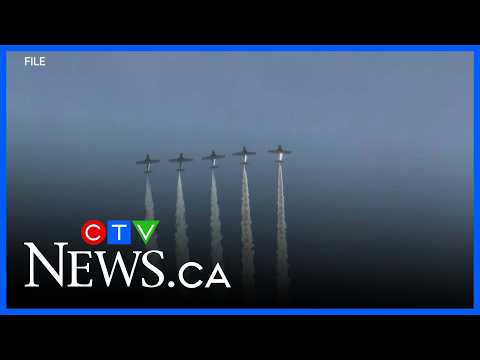
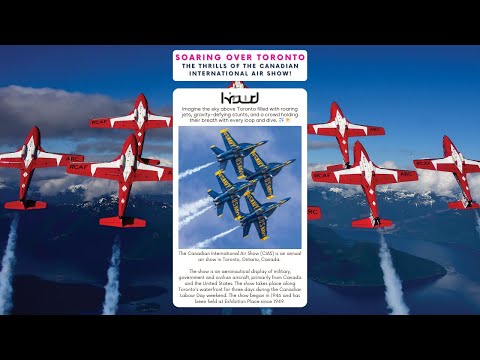
The U.S. Navy Blue Angels returned to Toronto for the first time in fourteen years at the 74th Canadian International Air Show, held from 2 to 4 September 2023 over Lake Ontario, sharing the bill with the Canadian Forces Snowbirds in a jet-team doubleheader rarely seen at the event.
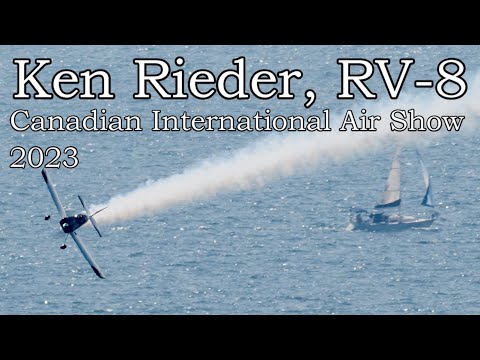
The show, which closes the Canadian National Exhibition every year on the Labour Day weekend, ran on all three afternoons from noon over the water off Exhibition Place, with the crowd spread along the waterfront, where no admission is charged, and across the fairgrounds, entered with the fair ticket. The Blue Angels presented their F/A-18 Super Hornets and the Snowbirds closed with their CT-114 Tutors. The Royal Canadian Air Force contributed the CF-18 Hornet demonstration, and the historic chapter fell to a P-51 Mustang in a heritage flight. Among the civilians, Gord Price stood out, still flying his aerobatic Yak-50 for the Toronto crowd at the age of 81. As usual at the event, the preceding Friday served as practice day over the lake and there was no static display on the ground.
This edition's line-up
Aerobatic teams


Flying display


History
History of the show, shared by all its editions.
A show staged over the water
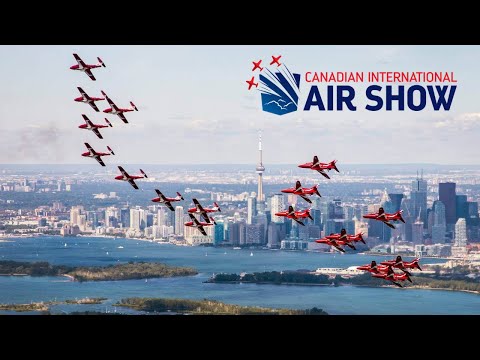
The Canadian International Air Show (CIAS) is the aerial display that closes the Toronto summer and, as its own organisation presents it, the longest continuously running air show in North America. It does not take place inside a fenced aerodrome but over the waters of Lake Ontario, directly south of Exhibition Place: the audience watches from the shoreline, from the waterfront parks — Marilyn Bell Park, Coronation Park, Ontario Place — and from boats anchored in the harbour, with the downtown Toronto skyline and the CN Tower as a backdrop. That character of an urban spectacle, spread along some fourteen kilometres of lakefront, is what sets the event apart from most North American shows, which are conceived as gated grounds with a single viewing area.
The practical consequence is an airspace-management puzzle. The aircraft do not take off where they perform: they fly in from Toronto Pearson International Airport (YYZ), Canada's busiest, and from Billy Bishop Toronto City Airport (YTZ), on the waterfront itself. The show's executive director, Lori Duthie, put it plainly in a *Wings Magazine* feature marking the 75th anniversary: at most shows everything happens at one airport, whereas Toronto involves two airports and a display line that is neither of them. To leave a window for civil traffic, the programme is split into three blocks — two jet blocks, with the island airport shut down, and a middle civilian block of light aircraft, helicopters and aerobatic teams that the airport can work around — which is why the fast jets both open and close the afternoon.
The display lasts three hours and forty minutes and runs on all three days of the Canadian Labour Day weekend, the same weekend that closes the Canadian National Exhibition. A practice session is normally held the day before. Watching from the shoreline is free — roughly 80 per cent of the prime viewing areas are open access — while watching from the CNE grounds or from the ticketed exclusive zone buys added services and access to the performers. There is no static aircraft display: a photo tour was introduced at Pearson in 1993 and a full static display in 1996 but, successful as it was, it had been dropped by the 1998 show.
Origins: Downsview, Malton and the move to the waterfront
Toronto hosted flying displays from the earliest years of aviation, as the city grew into a centre of air transport and aircraft manufacturing. One antecedent cited by *Wings Magazine* dates to 1919, when a formation of veteran pilots led by Lieutenant Colonel William Barker, a Canadian First World War ace, flew daily displays over the seventh edition of the modern Canadian National Exhibition in captured Fokker D.VII fighters; it is thought to be the first formation flying demonstration held in Canada.
The origin of the show as it exists today lies in the immediate post-war years, although the sources disagree on which edition counts as the first. The historical plaque unveiled by the Ontario Heritage Trust at Exhibition Place in 1999 and the reference encyclopaedia article agree on 1946: the National Aeronautical Association of Canada drew overflow crowds to a show at Downsview Airport, beside the de Havilland Canada plant. *Wings Magazine* confirms that "full-scale show" at Downsview in 1946 and adds two intermediate steps: in the summer of 1947, sixteen Avro Lincolns of the RAF's 617 "Dambuster" Squadron overflew Toronto on a North American goodwill tour; and a year later, in 1948, the Toronto Flying Club hosted a display at Malton Airport (today Pearson) which, as *The Globe and Mail* reported at the time, drew over 80,000 people who "stormed" the field. It is that Malton event which the show's own 75th-anniversary press release, issued in 2024, presents as "the first air show".
From 1949 onwards the accounts converge again. That year the display moved to the Toronto waterfront and Exhibition Place under the name National Air Show, and its first bill was headlined by the RCAF Blue Devils Vampire aerobatic team, forerunners of today's Snowbirds. The event was renamed the Canadian International Air Show in 1955 and was tied to the Canadian National Exhibition shortly afterwards: the official plaque and the encyclopaedia article date that affiliation to 1956 — when the show also expanded to two days — while the CNE's own article dates its presence as a major feature of the fair to 1949. Ever since, the Labour Day weekend over the lake has been Toronto's unofficial end of summer.
A show inside another show
The relationship with the Canadian National Exhibition explains much of the CIAS's identity. The CNE, founded in 1879 as the Toronto Industrial Exhibition, is Canada's largest annual community event, with roughly 1.6 million visitors, and is held at Exhibition Place, a 192-acre (78-hectare) site on the lakeshore west of downtown. Within that fair, the air show is the attraction that closes it, alongside the Warriors' Day Parade and the Labour Day Parade. The CIAS office sits inside the CNE administration building itself, and admission to the fairground and to the show has been combined in various forms over the years.
The setting has produced symbols of its own. Since it was built in 1964, the fire boat *William Lyon Mackenzie* has marked centre stage for the performers, a fixed point on the water around which the display line is organised.
Decades of programming: teams, visitors and rarities
From the start the programme has mixed Canadian and United States military aircraft, private aerobatic performers and civilian flypasts. The Government of Canada has often used the show to display newly acquired aircraft, particularly search-and-rescue assets, and the script has included parachuting, aerial firefighting and rescue demonstrations. Regular participants include the Snowbirds and other Canadian Armed Forces aircraft, the USAF and the US Navy; on the civilian and heritage side, the Royal Canadian Air Cadets, the Canadian Harvard Aircraft Association and Vintage Wings of Canada.
The list of notable appearances over the decades reads as a survey of aviation from the second half of the twentieth century onwards: the Aeronautica Militare's Frecce Tricolori, the RAF's Red Arrows and Vulcan, the Avro Lancaster, the B-17 Flying Fortress, the Breitling Jet Team, British Airways' Concorde, the CF-104 Starfighter, the Canadian Forces CF-18 Hornet, the Luftwaffe's Tornado and F-4 Phantom II, the Ontario Ministry of Natural Resources CL-415 water bomber, the CF-105 Arrow, the RCAF Golden Hawks, the USAF Thunderbirds along with the A-10, B-1, B-2, B-36, B-52, F-15, F-16, F-22, F-35, F-117 and SR-71, the U-2, the USMC Harrier and, from the US Navy, the Blue Angels, the F-14 Tomcat and the Super Hornet.
Some of those visits left stories of their own. The F-22 Raptor's first appearances were flown as a double act with the Cleveland Air Show, returning to the United States without landing in Canada; in 2007 the Raptor performed again and required heavy security around a hangar at Pearson, in what was the first landing of an F-22 outside the United States. In 2014 the Soviet-built Antonov An-2, the largest single-engine biplane ever built, crossed the Toronto waterfront for the first time. And in recent years pairing two jet teams on one bill has become a CIAS signature: in 1986 the crowd saw the Snowbirds, the Frecce Tricolori and the USAF Thunderbirds in the same show.
Anniversaries and commemorations
The CIAS has regularly marked significant dates in aviation history. In 1959 the F-86 Sabres of the RCAF Golden Helmuts flew to honour the 50th anniversary of powered flight in Canada. In 1979 came the first of ten visits by a British Airways Concorde, marking the show's 30th anniversary; the CIAS was among the first North American displays to feature the supersonic airliner. In 1998 Canadian astronaut Dave Williams carried a CIAS patch aboard his *Columbia* space shuttle flight. In 2010 Lieutenant Colonel Maryse Carmichael, the first female commanding officer of the Snowbirds, opened the show to mark the centennial of the Royal Canadian Navy and of women in aviation.
The 60th anniversary, in 2009, coincided with the centenary of powered flight in Canada and the 80th anniversary of the island airport, today Billy Bishop. The 75th, in 2024, converged with the centenary of the Royal Canadian Air Force and the diamond anniversary of the Red Arrows, who returned as part of a four-stop Canadian tour; that year's bill also brought back the F-22 Raptor, paired the Canadian Warplane Heritage Museum's Lancaster and B-25 Mitchell in formation, and fielded a CF-18 in a commemorative RCAF centenary scheme.
Accidents and incidents
Like any long-running flying display, the CIAS carries a record of accidents the city remembers. A press account published by BlogTO counted nine accidents and incidents during displays across the show's first 75 years, plus four more during practice or transit, with fatalities in 1953, 1966, 1977, 1989 and 1995.
The documented occurrences during the display include a United States P-80 Shooting Star overstressed in 1946, left with visible wrinkles in the fuselage and returned to Dayton by flatbed truck; an RCAF CF-100 Mk.3T overstressed on 20 September 1952 during a 500-knot pass with a vertical pull-up, which recovered safely to North Bay; the Canadair Sabre 4 that crashed into Lake Ontario on 19 September 1953, killing its pilot, after attempting to recover from a loop without sufficient altitude; the death of US Navy Blue Angels pilot Lt Cmdr Dick Oliver on 2 September 1966, when his F-11 Tiger struck the breakwater at the island airport and debris injured two bystanders; the De Havilland DH-83C Fox Moth that spun into the lake on 5 September 1976, coming to rest a few metres from spectators on the shoreline, from whose wreck Toronto Harbour Police leading hand Robert Riekstins recovered a submerged passenger after diving three times, an action for which he was decorated; the death of Allen Ness, a founding member of the Canadian Warplane Heritage Museum, who stalled a Fairey Firefly on 2 September 1977; that of Snowbirds pilot Captain Shane Antaya, whose CT-114 Tutor fell into the lake on 3 September 1989 after a mid-air collision from which team commander Major Dan Dempsey ejected safely; and the most remembered of all, the RAF Hawker Siddeley Nimrod MR.2P that stalled in a low-altitude turn and crashed into Lake Ontario on 2 September 1995, killing all seven crew, filmed from several angles by the crowd. In 1998 a member of the SkyHawks parachute team suffered a compound leg fracture when his canopy snagged in tree branches, and three team-mates landed outside the drop zone.
To these must be added occurrences related to the show but outside the display itself: the collision of two Royal Canadian Navy Seafires during practice over Malton on 23 August 1949, which killed Lieutenant Commander Clifford Watson and Lieutenant Charles Elton; the loss of an RCAF CF-100 Mk.4B in an inverted spin during practice on 5 September 1957, killing Flying Officers H. R. Norris and R. C. Dougall; and two September 2000 episodes, one in which an Enstrom F28A helicopter lost its slung load shortly after departure, and another in which two Snowbirds Tutors touched in flight while transiting from Pearson, after which the formation declared an emergency and one aircraft requested a landing.
How the show is sustained
The CIAS is a not-for-profit funded entirely by sponsorship and ticket sales. Many of the military aircraft perform at no cost, while civilian acts and visiting jet teams — the Red Arrows or the Thunderbirds, for instance — charge performer fees that the show pays in full. Planning runs two and three years ahead rather than year to year, because Canadian, American and British military schedules are locked in far in advance; even so, the military side of the bill can change five to three weeks before the show, while the civilian side must be closed by the end of July so the paperwork reaches Transport Canada in time.
The logistics of the 75th-anniversary edition give a sense of the scale: 500,000 litres of fuel, 1,400 hotel rooms, 102 rental vehicles and more than 700 boxed meals for a team of 200 volunteers. The permanent structure is minimal: the executive director is the sole staff member, supported by some twenty year-round volunteer managers and by the two hundred game-day volunteers. Lori Duthie took the role in 2018 after leaving Air Canada, but her family's involvement dates from the early 1970s, when her father, Don Duthie, ran the show; her grandfather George had been the CNE's sports director for over three decades.
The wider industry context explains some of the choices. According to the International Council of Air Shows, 82 shows are held in North America between the first day of summer and Labour Day; NAV Canada coordinated 29 in 2023 and generally negotiates sponsorship-in-kind agreements rather than billing for its services. In the early 2010s the temporary withdrawal of the Thunderbirds and the Blue Angels for budget reasons, together with the FAA billing for air traffic control, put many smaller shows out of business. The CIAS has responded by improving the spectator experience — live audio narration through its website, a live stream watched from 40 countries in 2023 — and by creating a free-access STEM area with a CF-18 cockpit mock-up, a cadet glider and booths from aerospace colleges and companies, aimed at the industry's skills shortage.
Noise and local opposition
The show is not universally welcomed in Toronto. Some waterfront residents object to jet noise and others to the military presence; the sound of fighter demonstrations has been likened to that of an active war zone, an argument a *Toronto Star* columnist made in 2016 in writing that, in a city with a large refugee population and residents who have lived through war, it is insulting, invasive and violent. Since 2012 the Wikipedia article about the show has been repeatedly vandalised over show weekend as a form of protest, a phenomenon noted by Toronto media. In 2021 city councillor Joe Cressy called for the show to end, and in 2023 Mayor Olivia Chow wrote to the organisers noting that many residents chose Toronto as a place of refuge and that the noise of high-powered jets brings back memories of the violence they fled. The City of Toronto, for its part, states that the show complies with all applicable regulations, including the noise rules published by Transport Canada.
Pandemic and return
In 2020 both the air show and the Canadian National Exhibition were cancelled because of the COVID-19 pandemic, and the show was held virtually. In 2021 the display went ahead even though the CNE remained cancelled, and in 2022 the bill returned to normal — except that the Snowbirds had to withdraw weeks beforehand after an incident involving one of their Tutors on take-off in British Columbia, forcing a scramble to fill the closing block the team traditionally occupies.
The 2026 edition
The 77th Canadian International Air Show runs from 5 to 7 September 2026, from 12:00 to 15:40 each day, in the usual format over the lake off Exhibition Place and framed by the CNE. It is a particularly significant year: the Canadian Forces Snowbirds make their 55th appearance at Toronto and do so in their final showing before the pause in operations the team announced in May 2026 for after the season; local press notes they are unlikely to be seen over the city again until the 2030s, when a replacement for the CT-114 Tutor enters service. The nine-aircraft formation of red-and-white jets that traditionally closes the show is, for that reason, the centrepiece of the 2026 bill.
The rest of the announced programme mixes debuts and regulars: the Jack Aces Formation Aerobatic Team makes its first appearance with three restored P-51 Mustangs; Pink Jet, a not-for-profit dedicated to breast cancer awareness, flies an Aero L-39 Albatros painted pink; Vintage Wings of Canada brings its Victory Flight pairing the Supermarine Spitfire and the Hawker Hurricane in a shared flight; Trevor Rafferty returns with his Christen Eagle and Mike Tryggvason debuts a new Edge 540 V3. The performer list published by the organisers also includes the CF-18 demonstration, the RCAF CP-140 Aurora and CH-146 Griffon, the RCAF Heritage Flight, a T-33, the Beechcraft Expeditor, the Harvard Mk II, Dan Fortin's Nanchang CJ-6, an RCMP Black Hawk helicopter and Redline Air Shows. The August press release also announced the USAF F-16 Demo Team; Toronto media subsequently reported that the American fighters had pulled out amid political tensions, and the schedule preview published in show week no longer listed them.
On the ground, the ticketed exclusive zone sits in Marilyn Bell Park, across from the OVO Athletic Centre and next to the CNE grounds, with an autograph tent, food vendors and first-come seating; general admission was announced at 107.99 dollars including all taxes and fees, and also grants same-day access to the fairground. The Bailey Bridge linking to the CNE is closed for the 2026 edition, so pedestrians are routed via British Columbia Road to cross Lake Shore Boulevard towards the free STEM Runway and the show zone. As every year, the organisers press for public transit: the Exhibition GO station and the TTC streetcar and bus routes to Dufferin Gate and Exhibition Loop are the recommended options against limited parking that fills early.
Figures still in dispute
Two sheet fields are left unset pending an editorial decision. The first is the year of the first edition: three independent sources — the encyclopaedia article, the Ontario Heritage Trust's official plaque and the *Wings Magazine* feature — place the origin in 1946 at Downsview, while the show's own 75th-anniversary press release dates the first air show to 1948 at Malton. The second is the organising body: since the 1950s the show has been an attraction of the Canadian National Exhibition, run by the Canadian National Exhibition Association, yet it operates with its own executive director and its own sponsorship structure, and no consulted source fixes a single formal organiser name. Nor is there an attendance figure attributable to the air show alone: the organisation and the trade press speak of more than a million people along the waterfront over the weekend, and of up to 1.4 million counting the live stream and viewers on boats and rooftops, but these are estimates for the whole weekend rather than an official count for the show.
Images


Elsewhere
- Canadian International Air Show (oficial)Ficha oficial de los Snowbirds (RCAF) en el sitio del Canadian International Air Show ↗
- Canadian International Air Show (oficial)Cartel de artistas de la edición 2026 del Canadian International Air Show ↗
- The Ex (CNE)Página del Air Show dentro del sitio oficial de la Canadian National Exhibition ↗
- CBC NewsAviones sobrevuelan Toronto antes del air show de la CNE ↗
- CBC NewsGalería fotográfica de demostraciones aéreas, incluida la CIAS ↗
- blogTOCobertura del air show de la CNE 2026, última exhibición formal de los Snowbirds por varios años ↗
- Getty ImagesBanco de fotografías del CNE Air Show en Getty Images ↗
- iStockBanco de fotografías de los Canadian Snowbirds en iStock ↗
- GlobeNewswireNota de prensa: los Snowbirds protagonizan la edición 2026 del Canadian International Air Show ↗
- Today's NorthumberlandVídeo y galería fotográfica de la 76.ª edición del Canadian International Air Show ↗
- Canada.ca / Royal Canadian Air ForcePágina oficial de la Royal Canadian Air Force sobre los Snowbirds ↗
- CTV News TorontoQué esperar del fin de semana del Canadian International Air Show ↗