MIG-29 DOCUMENTARY
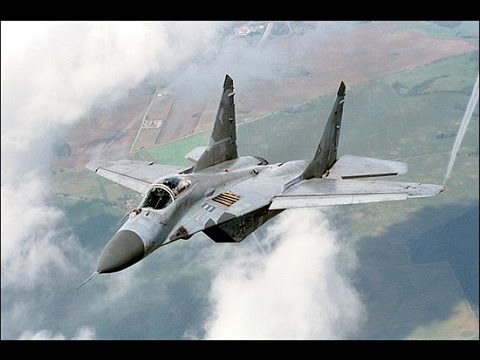
Video from the channel Aviation Technology Space Channel about MiG-29, linked on its Above Ten Thousand entry. Duration: 45:04. Language: English. Video type: Documentary.
What it's about
An English-language documentary about the Mikoyan MiG-29, codenamed "Fulcrum" by NATO. It covers its origins in the Cold War, its design, manufacture, testing, variants and service history, with statements from pilots, mechanics and factory staff.
Historical background
The video places the aircraft in the line of Mikoyan fighters: the late-1940s MiG-9, the MiG-15 of the Korean War, the MiG-17 and MiG-19, the MiG-21, the variable-geometry MiG-23 and its MiG-27 derivative, and the MiG-25 Foxbat, whose simplicity was exposed after Viktor Belenko's defection in 1976. The USSR wanted a fighter that could win close combat against NATO aircraft. It had to be effective by day and night, in any weather and under jamming, and able to strike ground targets. Its appearance, alongside that of the Su-27, worried NATO. After German reunification, East Germany's MiG-29s passed to the Luftwaffe and were tested in mock dogfights against the F-16.
Key facts
It carries two RD-33 engines producing over 8,300 kg of thrust with afterburner. Changing an engine takes about 45 minutes, compared with 8-10 hours on aircraft of its generation, and the intakes close during taxiing to protect them from runway debris. The radar detects targets at 100 km and tracks up to 10 of them. It is rounded out by an infrared sensor with laser rangefinder and a helmet-mounted sight, and its armament combines missiles, rockets, bombs and a 30 mm cannon. It was built at a Moscow plant in about a month, with around 15 units in progress at a time, and by the end of 1989 more than 700 had been delivered.
There was a naval version, tested with a ski-jump ramp, an arrestor hook and folding wings. The MiG-29M incorporated quadruplex digital fly-by-wire control, which the video credits with manoeuvres such as the cobra or the tail slide. The documentary reviews its use in Syria, Yugoslavia, Yemen in 1994 (with former Moldovan aircraft) and Iraq in the Gulf War, where up to five were lost in air combat, and describes its combat record as inconclusive.