Lockheed P-38 Lightning Aircraft WWII Pilot Flight Training Film 1943
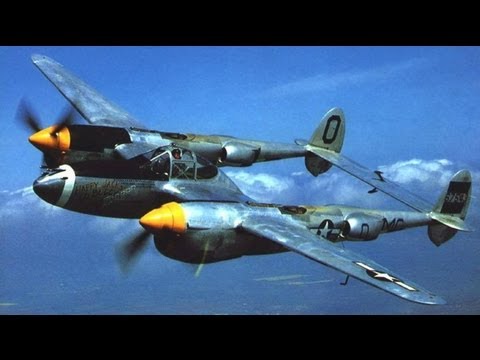
Video from the channel Aviation Explorer about Lockheed P-38 Lightning, linked on its Above Ten Thousand entry. Duration: 34:56. Language: English. Video type: Archive footage.
What it shows
A pilot training film for the Lockheed P-38 Lightning covering normal and emergency handling. It opens by debunking the idea that bailing out is difficult because of the tail booms, and shows two ways to do it: rolling the aircraft inverted and dropping out, or exiting through the left window and sliding off the wing. It then covers takeoff: brakes held while manifold pressure is brought up to 40 inches, rotation at 90-100 mph and immediate gear retraction. It also shows takeoff with 50% flaps to clear an obstacle, the climb, a near-imperceptible stall thanks to the counter-rotating propellers, the ten-second limit on inverted flight, and landing, approaching at 120 mph and touching down on the main wheels.
When and where it was filmed
It was filmed during wartime with the manufacturer's production pilots, presented as those who have flown the most P-38 hours; the chief engineering test pilot leads the demonstrations. The two-seat training version, nicknamed "piggy back," appears, in which the new pilot flies behind the instructor.
Context
Much of the film deals with emergencies. It shows extending the gear and flaps with the hand pump or the emergency system, and how to control a runaway propeller caused by a short circuit using the throttle and circuit breakers. It devotes a lot of time to single-engine flight: the three steps to secure a dead engine (mixture to idle cut-off, propeller feathered and throttle closed), practicing single-engine flight while keeping the dead engine ready to be unfeathered, cross-feeding fuel, and engine failure on takeoff at 120 mph, with drop tanks jettisoned. At 20,000 feet and on a single 1,150 hp engine, the aircraft reaches 205 mph indicated, about 282 mph true, and loses around 20% of its range.