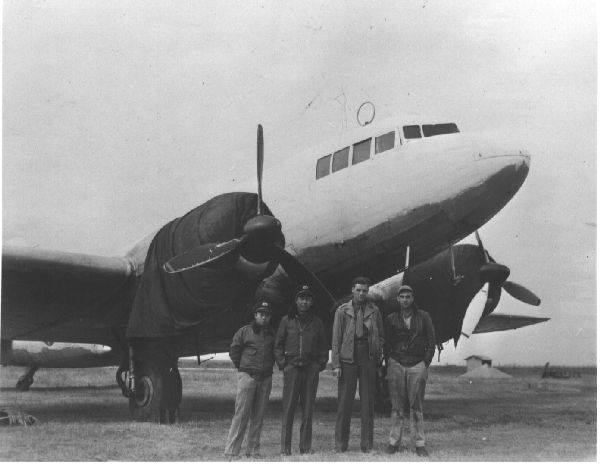
Douglas DC-3 variant
Douglas DC-3 Showa/Nakajima L2D
Japanese licence-built version of the DC-3 produced by Nakajima and Showa as the Navy Type 0 Transport; with 487 built it was Japan's most numerous wartime transport.

- 487
- Units built
- 3,000 km
- Range
History
The Shōwa L2D and Nakajima L2D, designated Navy Type 0 Transport by the Imperial Japanese Navy and given the Allied code name Tabby, were the licence-built Japanese versions of the Douglas DC-3. Numerically, the L2D series was the most important Japanese transport aircraft of the Second World War.
Nakajima had already been building the DC-2 under licence since 1935, and in February 1938 it acquired the DC-3 licence for 90,000 dollars. Before that, Great Northern Airways and the Far East Fur Trading Company had bought 22 DC-3s between 1937 and 1939: 13 Cyclone-powered DC-3s and nine Twin Wasp-powered DC-3As. Two of them were delivered unassembled and assigned to a relatively new firm, Shōwa Aircraft. Shōwa and Nakajima worked together to set up a production series and, although the L2D was intended for both civil and military use, almost all of the output went to the Navy.
The Nakajima prototype, powered by Pratt & Whitney SB3G radials, first flew in October 1939 and entered production in 1940 as the L2D1, using parts imported from the United States, while the two Shōwa aircraft were assembled to Japanese standards to simplify manufacture. The first batches from both companies differed little from the Douglas original; the main change was the locally built Mitsubishi Kinsei 43 radial of similar power. A Japanese-engineered version followed: by 1942 Nakajima had built, including the prototype, 71 L2D2 Navy Type 0 Transport Model 11s before turning to its own combat aircraft. Shōwa, once its factory was complete, built the next series, a total of 416 aircraft, including 75 freighters with large cargo doors and a strengthened floor. This first military version with wide doors was the counterpart of the American C-47 and appeared at about the same time.
While the civil versions were almost identical to the DC-3, the military ones, though similar in appearance, were substantially different. The 1,325 hp (975 kW) Kinsei 51 and 53 engines had enlarged nacelles and big propeller spinners; the cockpit bulkhead was moved back 40 inches (100 cm) so that all four crew members sat in one compartment, and three extra windows were added behind the cockpit. The most radical changes came from shortages of strategic materials: in less critical structural areas metal was replaced by wood, and as many as 20 transports had wooden rudders, stabilisers, ailerons, fins, elevators and doors. An all-wood version, the L2D5, was ready for production at the end of the war but was never completed. The series also included the L2D3 Model 22, re-engined with Kinsei 51, 52 or 53 engines and with more cockpit side glazing; the L2D3a, armed with a 13 mm machine gun in a dorsal turret and two 7.7 mm guns in the side hatches; the cargo versions with the -L suffix; and the L2D4 Model 23 with 1,590 hp (1,170 kW) Kinsei 62 engines. The armament was never a production standard.
The original DC-3s of Dai Nippon Koku were pressed into military service alongside the licence-built L2Ds. The L2Ds served with air groups in the southern Philippines and with squadrons attached to the 3rd, 4th, 6th, 11th, 12th, 13th and 14th Air Fleets, the Combined Fleet and the China Area and Southwest Area Fleets. Thanks to their large load capacity they were used in every Japanese theatre as passenger and cargo transports, and were vital for supplying distant garrisons on the Pacific islands and New Guinea. They also served as staff and communications aircraft and in the maritime surveillance role. The future president of Indonesia, Sukarno, flew in an L2D2 during talks on Indonesian independence with the Japanese authorities in early 1945.
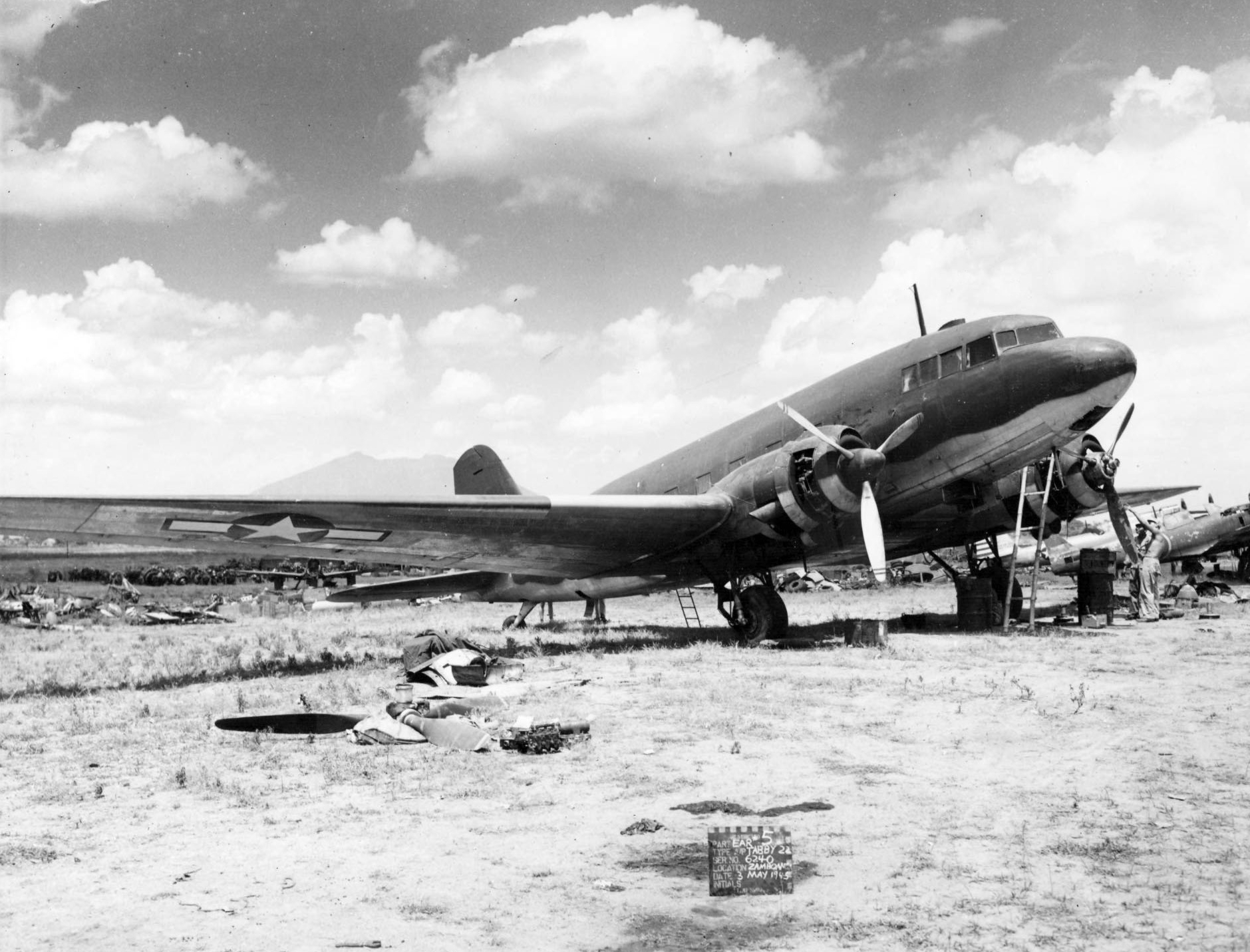
At least one L2D was captured at Zamboanga airfield in May 1945, repaired and tested at Clark Field. After the Japanese surrender the Royal Air Force, short of resources in South East Asia, formed the Gremlin Task Force with Japanese aircraft and crews, including L2Ds that supplemented the C-47 Dakotas of No. 118 Wing; they kept their white surrender finish with South East Asia Command roundels. In the Dutch East Indies at least three were captured at Perak airfield near Surabaya wearing Indonesian nationalist markings; two were flown to Batavia but were in poor condition, and the third was abandoned after an emergency landing on the way to Medan. One captured aircraft served with the Chinese airline CNAC in 1945, and another L2D2 was used in 1946 by the French transport group 1/34 in Indochina. No example is known to survive.
Multimedia