Consolidated B-24 Liberator variant
Consolidated B-24 Liberator B Mk.II / LB-30
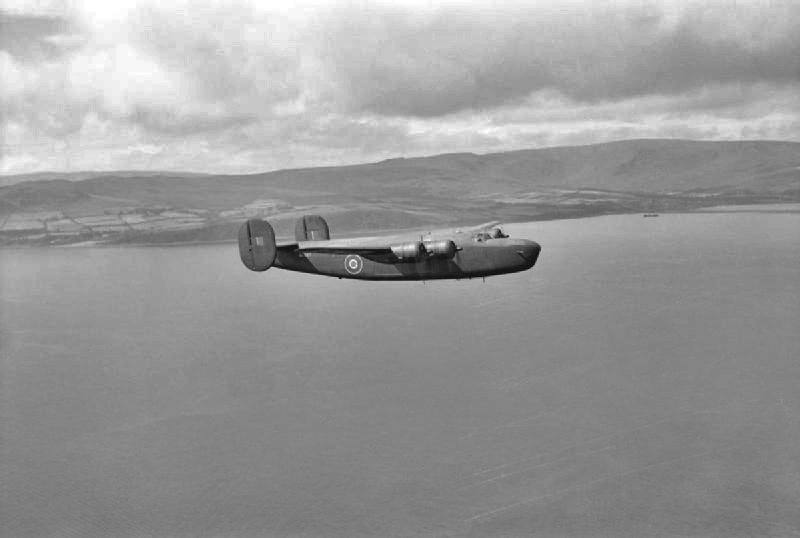
Combat version of the Liberator built to British specification for the RAF: lengthened forward fuselage, Boulton Paul turrets and self-sealing tanks. Of the 165-aircraft batch, the USAAF requisitioned about 75 after Pearl Harbor and flew them as LB-30s in Java, Panama, the Aleutians and as transports.
Consolidated B-24 Liberator sheet

- 165
- Units built
History
The Liberator B Mk.II was the first version of Consolidated's bomber built for real combat, and its story is tied to an inherited designation: LB-30. The letters came from a French order. France issued a specification for a heavy bomber in May 1938 and Consolidated answered with the Model 30, a land bomber derived from its Model 29 flying boat — hence "Land Bomber 30". By the time Paris actually placed the order, in June 1940, the company had moved on to the Model 32 (the XB-24), and after the fall of France the contracts passed to Britain. The designations should not be confused: the six pre-production LB-30As, almost identical to the YB-24 and with the short nose, lacked self-sealing tanks, were ruled out by the RAF for operations over Europe and ended up disarmed on Ferry Command's transatlantic shuttle. The B Mk.II is a different aircraft.
The RAF ordered a batch of 165 Liberator IIs directly, without USAAF contract numbers, built at San Diego to British specifications and fitted with British equipment. For that reason there is no exact counterpart in the B-24 series, although technically it resembled the B-24C. The most visible change was the lengthened forward fuselage: the general narrative describes a 79 cm plug ahead of the wing, while the variant list rounds it to three feet. The extra room served the crew and, above all, new equipment such as ASV Mark II radar, and according to the same source it answered a hunch of Reuben Fleet, who had always felt the nose was too short. A deeper rear fuselage, a wider tailplane, armour and self-sealing tanks were also added. The engines were Pratt & Whitney R-1830-S3C4G units with two-speed superchargers driving Curtiss Electric full-feathering propellers.

It was also the first Liberator with powered turrets, all of them by Boulton Paul. The dorsal turret, with four 7.7 mm Browning guns, sat further aft than on any American version, in line with the wing trailing edge; the tail turret was a Type E. Only the first aircraft, completed as a pattern machine and lost on a test flight, left the factory armed: the rest were delivered without guns and the turrets were fitted in the United Kingdom. Sources disagree on the total number of guns: one counts eleven (eight in the two turrets, one in the nose and two in the waist) while another reaches fourteen by adding pairs of waist guns, a nose gun and a ventral gun. Maximum take-off weight rose slightly to 29,140 kg and the ceiling went from about 6,500 to about 7,300 m, but drag cut the top speed to 423 km/h.
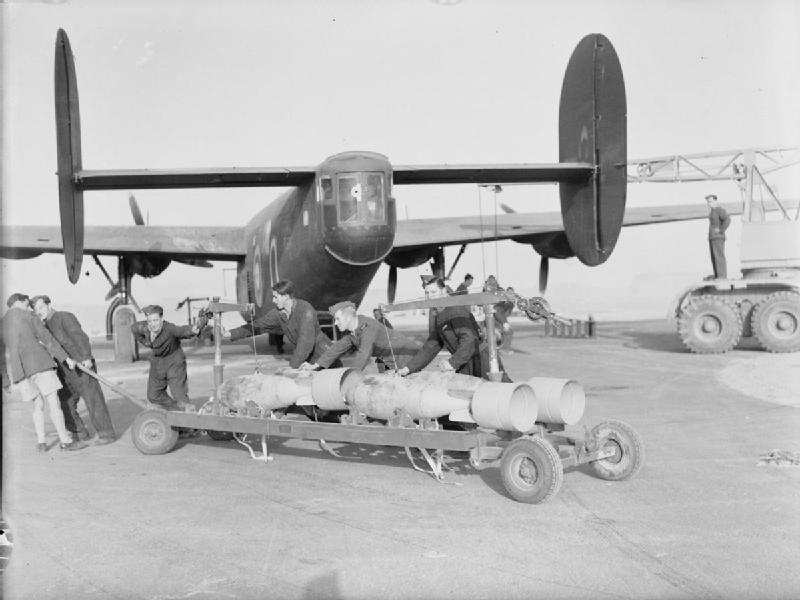
In British service the Liberator IIs were split between Coastal Command, Bomber Command and the state airline BOAC. Several became unarmed long-range freighters linking the United Kingdom with Egypt on a wide Atlantic detour around Spain, and they took part in the evacuation of Java. Two RAF bomber squadrons with Liberators deployed to the Middle East in early 1942. Those converted into transports were designated C Mk.II; one of them was "Commando", Winston Churchill's personal aircraft, later rebuilt to C Mk.IX standard with a single fin.
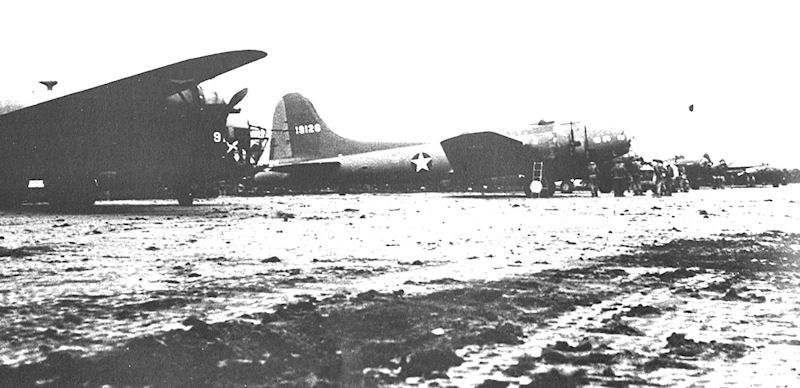
After the attack on Pearl Harbor, the USAAF kept about 75 aircraft destined for the RAF and flew them under the manufacturer's designation, LB-30. It changed them to suit its own practice: 12.7 mm machine guns instead of the British weapons, a twin-gun Martin dorsal turret in place of the four-gun Boulton Paul, and a manual twin-gun tail position instead of the powered turret. Twelve LB-30s sent to Java with the 11th Bombardment Squadron (7th Group) flew the first American Liberator combat missions in mid-January; two came back shot up by Japanese fighters: one was written off with battle damage and the other crash-landed on a beach. The 19th Group also used them in Java, the 6th in the Panama Canal Zone, the 7th took a large group to India and the 29th flew them from Alaska over the Aleutians. On 6 June 1942 four LB-30s from Hawaii, staging through Midway, tried to attack Wake Island but could not locate it. Twenty-three aircraft went back to the RAF in 1943.
A single airframe sums up the type's versatility. AL557 was taken on charge at Dorval, Quebec, on 13 October 1941 and from 17 March 1942 flew with Nos. 224 and 120 Squadrons of Coastal Command; it then served with No. 511 Squadron, working with BOAC on Ferry Command's return service, and with 1445 Flight, and in July 1943 reached India as a transport with No. 159 Squadron. In 1945 Scottish Aviation converted it for passengers; it flew on the Greek register with Hellenic Airways and eventually crashed in Alaska, and its remains are now under restoration in the United States. The LB-30's civil life also included Qantas, which from June 1944 used two converted aircraft on its Indian Ocean route: they covered the 4,952 km from Learmonth to Ceylon in 17 hours with 2,500 kg of payload, whereas the Catalinas needed 27 hours and carried only 450 kg.
Multimedia




-800.webp)


3495.jpg)


-1600.webp)


-800.webp)
