Familie: Falcon · SpaceX
Falcon 9
Startstatistik
- 683
- Starts (Stand 30. August 2026)
- 71
- Erfolge
- 2
- Fehlschläge
- 97.3 %
- Erfolgsquote

-1600.webp)
-1600.webp)


_de_un_Falcon_9_con_Crew_Dragon_hacia_la_rampa%2C_misi%C3%B3n_Crew-9-1600.webp)


-1600.webp)

-1600.webp)

-800.webp)
-1600.webp)
-1600.webp)


-1600.webp)
-1600.webp)


-1600.webp)
-1600.webp)
-1600.webp)

-1600.webp)

-1600.webp)

-800.webp)

-1600.webp)
-1600.webp)


Die Falcon 9 ist die Trägerrakete, die die Regeln des Zugangs zum Weltraum veränderte: eine zweistufige Rakete, angetrieben von RP-1-Kerosin und flüssigem Sauerstoff, deren erste Stufe zurückkehrt, aufrecht landet und erneut fliegt — etwas, das die Industrie für wirtschaftlich unmöglich hielt, bis SpaceX es zur Routine machte. Sie entstand aus dem kommerziellen NASA-Programm der Mitte der 2000er-Jahre, als die Behörde darauf setzte, Transportdienste bei privaten Unternehmen einzukaufen, anstatt eigene Raketen zu entwickeln. SpaceX, das von der kleinen Falcon 1 kam, antwortete mit einer Trägerrakete mit neun Merlin-Triebwerken, die am 4. Juni 2010 debütierte und die das Unternehmen selbst mit etwa 300 Millionen US-Dollar entwickelte — gegenüber den 3,6 Milliarden US-Dollar, die die NASA für den traditionellen Weg nach dem Prinzip „Kosten plus Honorar" veranschlagt hatte. Am 21. Dezember 2015 gelang ihr etwas nie Dagewesenes: die erste Stufe einer orbitalen Rakete wieder sicher auf festem Boden zu landen. Seitdem war die Wiederverwendung kein Experiment mehr — mit Landungen auf autonomen Plattformen im Ozean, Boostern, die bis zu 36 Flüge ansammeln, und einer beispiellosen Startkadenz in der Geschichte. Auch die Nutzlastverkleidung wird geborgen und wiederverwendet; die zweite Stufe hingegen nicht: SpaceX gab dieses Ziel Ende 2014 auf, nachdem sich zeigte, dass Hitzeschild und Bergungsausrüstung zu viel Nutzlast kosteten. Die Rakete hat sich in fünf großen Überarbeitungen weiterentwickelt — v1.0, v1.1, Full Thrust (oder Block 3), Block 4 und Block 5 —, von 8.500 kg auf mehr als 22.800 kg Nutzlast in den niedrigen Erdorbit in der Einwegkonfiguration. Die aktuelle Version, der Block 5, fliegt seit Mai 2018 und ist für den Transport von Besatzungen zertifiziert, mit neun Merlin-1D-Triebwerken, die auf Meereshöhe 7.607 kN Schub liefern. Heute ist die Falcon 9 das Arbeitspferd des westlichen Zugangs zum Weltraum: Sie bringt seit 2020 mit der Raumkapsel Crew Dragon Astronauten zur Internationalen Raumstation, baut die Starlink-Konstellation aus, startet Rideshare-Missionen mit Dutzenden Kleinsatelliten und verzeichnete zum 30. Juli 2026 668 Erfolge bei 671 vollständigen Flügen — eine Zuverlässigkeit von 99,6 %.
Falcon 9 in den Nachrichten
Das US-amerikanische Raumfahrtunternehmen SpaceX startete am Donnerstag die Falcon-9-Rakete mit der Mission USSF-481 vom Weltraumstartkomplex 4E (SLC-4E) auf der Space Force Base…
.jpg)
Der Start nutzt eine Falcon-9-Rakete, um eine geheime Militärnutzlast von der Vandenberg Space Force Base in Kalifornien zu transportieren Der Beitrag SpaceX startet geheime…
Die Abgasfahnen einer Falcon-9-Rakete von SpaceX, die das Dragon-Raumschiff des Unternehmens trug, erscheinen beim Start der CRS-35-Mission von SpaceX für die NASA im Licht der aufgehenden Sonne…
.jpg)
Sonnenlicht beleuchtet die Abgasfahnen einer Falcon-9-Rakete von SpaceX, die am 13. Oktober 2026 das Dragon-Raumschiff des Unternehmens trug. Dieses visuelle Phänomen wird als „Qualle“ bezeichnet…
.jpg)
Ruhige Woche bei den Starts; SpaceX' Falcon 9 bestreitet den Großteil… Der Beitrag Launch Preview: Falcon 9, ZhuQue-2E to launch during quiet week erschien zuerst auf…

Antrieb
Die Falcon 9 Block 5 verbrennt in beiden Stufen dieselbe Treibstoffkombination: raffiniertes Kerosin RP-1 als Brennstoff und flüssigen Sauerstoff (LOX) als Oxidator. Seit der Version Full Thrust werden beide Komponenten kryogen unterkühlt geladen, um sie zu verdichten – so passt mehr Masse in dasselbe Tankvolumen –, eine Änderung, die für sich allein den Schub um 17 % steigerte. Die Tanks bestehen aus Aluminium-Lithium-Legierung, wobei der LOX-Tank in Monocoque-Bauweise gefertigt ist und der Treibstofftank in Schalenbauweise mit Stringern. Die erste Stufe trägt neun Merlin-1D-Triebwerke im „Octaweb“-Muster. Jedes liefert 854 kN Schub, sodass die Stufe auf Meereshöhe 7.607 kN und im Vakuum 8.227 kN entwickelt, mit spezifischen Impulsen von 283 s bzw. 312 s und einer nominalen Brenndauer von 162 Sekunden. Das Merlin ist ein Gasgenerator-Triebwerk mit offenem Kreislauf und brennstoffreichem Betrieb: Ein Pintle-Einspritzkopf – ein Erbe des Abstiegstriebwerks der Apollo-Mondlandefähre – und eine einwellige Turbopumpe mit doppeltem Laufrad versorgen eine regenerativ gekühlte Brennkammer. Die Zündung erfolgt nicht elektrisch: Eingespritzt wird ein pyrophores Gemisch aus Triethylaluminium und Triethylbor (TEA-TEB), das beim Kontakt mit dem Oxidator spontan entzündet. Jedes Triebwerk wird von drei redundanten Rechnern gesteuert, die sich gegenseitig überwachen, und die Stufe ist mit „Engine-out“-Fähigkeit ausgelegt, das heißt, sie kann den Ausfall eines Triebwerks im Flug tolerieren. Die Lagesteuerung während des Aufstiegs erfolgt durch Schwenken (Gimbaling) der Merlin-Triebwerke selbst, die ihre Düse für Nick-, Gier- und Rollbewegungen ausrichten; in den ballistischen Flugphasen und beim Abstieg der Erststufe übernehmen Stickstoffgas-Steuertriebwerke und ausklappbare aerodynamische Gitterflossen die Kontrolle. Die zweite Stufe trägt ein einzelnes Merlin Vacuum (MVac), eine Variante des 1D mit deutlich größerem Austrittsquerschnitt und Expansionsdüse: 981 kN Schub, 348 s spezifischer Impuls, eine nominale Brenndauer von 397 Sekunden und eine Treibstoffladung von 92.670 kg. Das Triebwerk lässt sich bis auf 39 % seines maximalen Schubs (360 kN) drosseln und ist für eine Wiederzündung im Orbit ausgelegt – die Treibstoffleitungen des Zünders wurden thermisch isoliert, um eine Wiederzündung nach längeren Driftphasen zu ermöglichen –, was die Kreisbahn zirkularisiert, den geostationären Transferorbit erreicht oder die Stufe deorbitiert. Die Lagesteuerung kombiniert das Schwenken des Triebwerks mit Stickstoffgas-Steuertriebwerken.
Geschichte
Die Falcon 9 debütierte am 4. Juni 2010 und veränderte den Zugang zum Weltraum grundlegend: Im Dezember 2015 gelang ihr die erste angetriebene Landung einer orbitalen Erststufe, und seither ist die Wiederverwendung die Norm der Familie.
Ursprung
SpaceX kündigte die Falcon 9 im Oktober 2005 an, als das Unternehmen mit seiner kleinen Falcon 1 noch keine Umlaufbahn erreicht hatte, und versprach den Erststart für die erste Hälfte von 2007; der tatsächliche Erstflug ließ jedoch bis 2010 auf sich warten. Zuvor hatte das Unternehmen eine Zwischenstufe erwogen, die Falcon 5, verwarf diesen Weg jedoch zugunsten eines direkten Sprungs zu einer Trägerrakete mit neun Triebwerken. Der Name der Familie stammt vom Millennium Falken aus Star Wars.
.jpg)
Der entscheidende Anstoß kam von der NASA. Das kommerzielle Frachtprogramm — das 2006 unterzeichnete COTS-Abkommen, rechtlich als Space Act Agreement ausgestaltet, um „einen kommerziellen Orbitaltransportdienst zu entwickeln und zu demonstrieren" — finanzierte sowohl die Rakete als auch die Dragon-Kapsel über Meilensteinzahlungen: 278 Millionen US-Dollar für drei Demonstrationsflüge, später auf 396 Millionen aufgestockt. 2008 gewann SpaceX zudem einen Vertrag über kommerzielle Nachschubdienste (Commercial Resupply Services) im Wert von 1,6 Milliarden US-Dollar mit mindestens zwölf Missionen zur Internationalen Raumstation, zahlbar erst nach Abschluss der Demonstrationen. Die Entscheidung der Behörde, Transportdienste einzukaufen statt eigene Raketen zu besitzen, erwies sich als günstig: 2011 bezifferte SpaceX die Entwicklungskosten der Falcon 9 v1.0 auf rund 300 Millionen US-Dollar, während die NASA schätzte, dass sie auf dem traditionellen Weg 3,6 Milliarden ausgegeben hätte; ein Bericht der Behörde selbst kam auf etwa 4 Milliarden gegenüber 1,7 Milliarden bei einer „kommerzielleren" Entwicklung. 2014 erklärte SpaceX, dass die Kombination aus Falcon 9 und Dragon insgesamt 396 Millionen von der NASA und mehr als 450 Millionen aus eigenen Mitteln gekostet habe.
Konfiguration und Architektur
Die Falcon 9 ist eine zweistufige Trägerrakete, die in beiden Stufen flüssigen Sauerstoff und Raketenkerosin (RP-1) verbrennt. Die erste Stufe trägt neun Merlin-1D-Triebwerke in der Anordnung, die SpaceX Octaweb nennt; die zweite ein einzelnes Merlin 1D Vacuum mit langer oder kurzer Düse. Die Zündung erfolgt über ein selbstentzündliches (pyrophores) Gemisch aus Triethylaluminium und Triethylboran (TEA-TEB), das sich beim Kontakt ohne Funken entzündet.
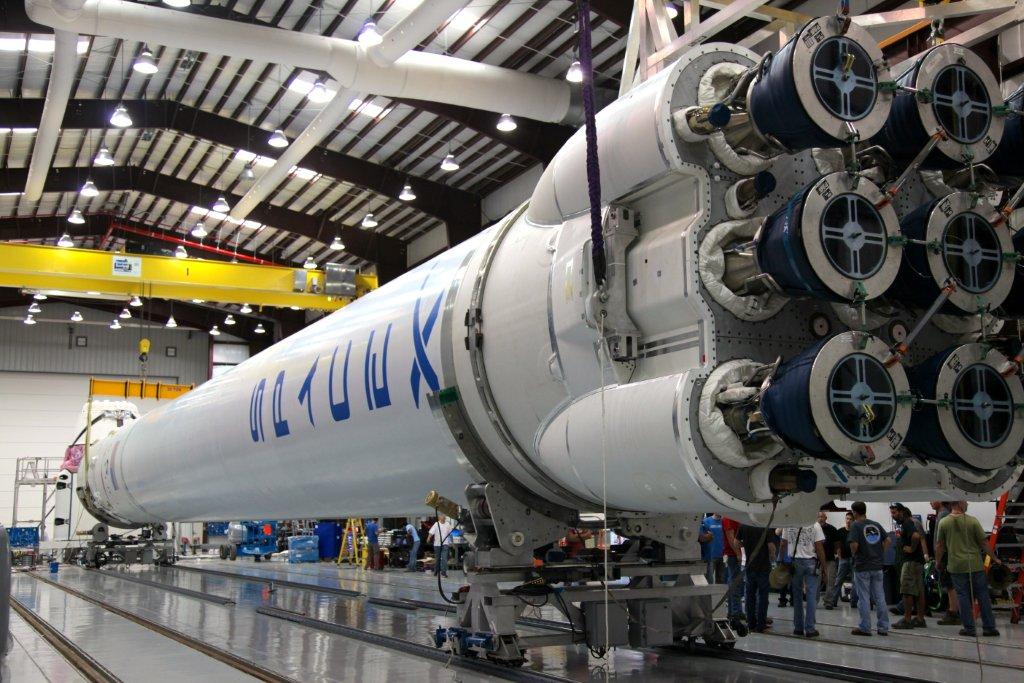
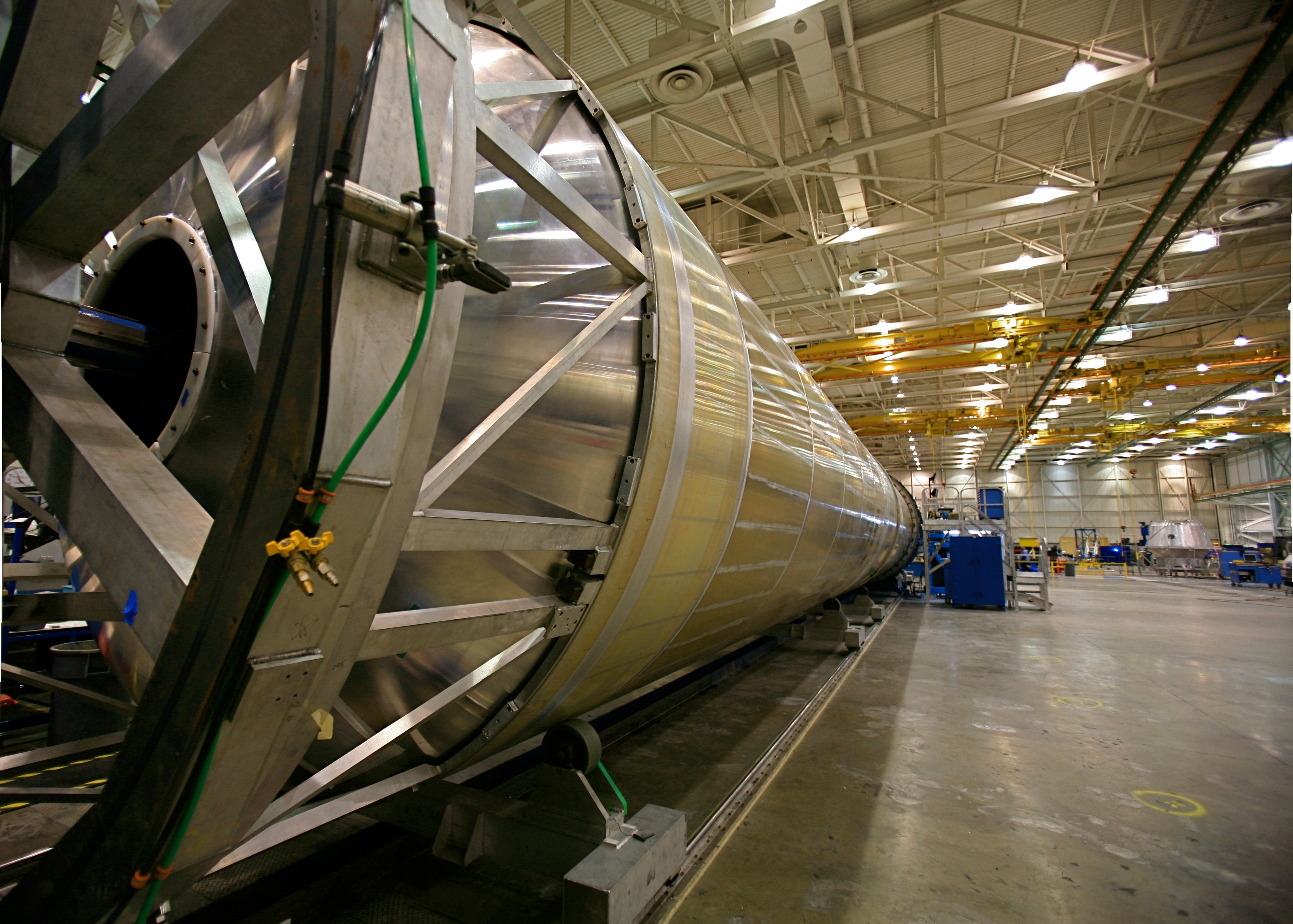
Die Tanks bestehen aus Aluminium-Lithium-Legierung, rührreibgeschweißt, wobei der Sauerstofftank in Monocoque-Bauweise gefertigt ist und der Treibstofftank in Schalen-Stringer-Bauweise. Der Tank der zweiten Stufe ist eine verkürzte Version des Tanks der ersten Stufe und teilt sich Werkzeuge, Material und Fertigungstechniken — eine Konstruktionsentscheidung, die die Produktion verbilligt. Die Zwischenstufe, die beide verbindet, ist eine Verbundstruktur aus Kohlefaser mit Aluminiumkern, mit wiederverwendbaren Trennklammern und einem pneumatischen Abstoßsystem; die ursprüngliche Konstruktion hatte zwölf Verbindungspunkte, die in der v1.1 auf drei reduziert wurden.
Die Nutzlastverkleidung schützt Nutzlasten, die nicht in einer Dragon fliegen: Sie ist 13 m lang, hat 5,2 m Durchmesser, wiegt rund 1.900 kg und besteht aus einer Kohlefaserhaut über einem Aluminium-Wabenkern. Sie wird in Hawthorne entworfen und gefertigt und wurde 2013 in der Plum-Brook-Anlage der NASA getestet, wo an einem Exemplar in Originalgröße im Vakuum akustischer Schock, mechanische Startvibration und elektrostatische Entladungen nachgebildet wurden.
Die Flugsteuerung stützt sich auf redundante, fehlertolerante Computer mit in C++ geschriebener Software unter Linux und handelsüblichen Komponenten, die durch das Design strahlungstolerant sind, statt auf gehärtete Bauteile zu setzen. Jede Stufe verfügt über eigene Flugcomputer, und jedes Merlin-Triebwerk über eine eigene Steuerung: drei Computer, die sich gegenseitig überstimmen können, jeder mit zwei CPUs, die die beiden anderen des Trios ständig überwachen. Die wiederverwendbaren Booster tragen vier ausfahrbare Landebeine an der Basis sowie Gitterflossen, die nach der Stufentrennung ausgeklappt werden; die Aluminium-Gitterflossen der frühen Full-Thrust-Booster wichen später Titan-Flossen, aus einem Stück gegossen und geschnitten, größer, mit besserer Steuerautorität, in der Lage, der Wiedereintrittshitze standzuhalten und sich mit minimaler Wartung unbegrenzt oft wiederverwenden zu lassen. Booster, die zum Verbrauch bestimmt sind, fliegen ohne Beine und Flossen.
Die Merlin-Triebwerke
Das Merlin ist ein turbopumpengespeistes Triebwerk im Gasgenerator-Kreislauf. Die Version 1D wurde zwischen 2011 und 2012 mit drei erklärten Zielen entwickelt — Zuverlässigkeit, Leistung und einfache Fertigung — und flog erstmals 2013. Die ursprünglichen Ziele von 2011 lagen bei 690 kN Schub im Vakuum; im November 2013 erklärte Elon Musk, das Triebwerk arbeite bei 85 % seines Potenzials und man erwarte, den Schub auf Meereshöhe auf etwa 730 kN bei einem Schub-Gewicht-Verhältnis von 180 zu steigern. Im Mai 2016 kündigte SpaceX eine Verbesserung auf 914 kN im Vakuum und 845 kN auf Meereshöhe an, mit der die Falcon 9 in der Einwegkonfiguration rund 22 Tonnen in den niedrigen Erdorbit bringen würde; im Mai 2018 bestätigte das Unternehmen mit der Indienststellung des Block 5, dass der Wert von 845 kN erreicht worden war. Jedes Merlin-Triebwerk des Block 5 liefert 854 kN Schub.
Die Vakuumvariante, das Merlin 1D Vacuum, wurde für die zweite Stufe der v1.1 und der Falcon Heavy entwickelt. Im Jahr 2020 lag ihr Schub bei 981 kN mit einem spezifischen Impuls von 348 Sekunden — dem höchsten Wert, der je von einem US-amerikanischen Kohlenwasserstofftriebwerk erreicht wurde.
v1.0: die ursprüngliche Rakete
Die Falcon 9 v1.0 war eine zwischen 2005 und 2010 entwickelte Einwegrakete, die fünfmal flog — alle Flüge erfolgreich — bis zu ihrer Ausmusterung 2013. Sie war 53 m hoch, hatte 3,66 m Durchmesser und eine Startmasse von 318 Tonnen. Ihre erste Stufe trug neun Merlin-1C-Triebwerke in einem 3×3-Raster, jedes mit 556 kN auf Meereshöhe, für einen Gesamtschub beim Abheben von etwa 5.000 kN. Die zweite Stufe hatte ein einzelnes vakuumangepasstes Merlin 1C mit einem Expansionsverhältnis von 117:1 und einer nominalen Brenndauer von 345 Sekunden und nutzte Stickstoffgas-Triebwerke zur Lagekontrolle. Sie brachte zwischen 8.500 und 9.000 kg in den niedrigen Erdorbit von Cape Canaveral aus und 3.400 kg in den geostationären Transferorbit. Sie flog nie mit einer Nutzlastverkleidung: Ihre fünf Missionen transportierten alle die Dragon-Raumkapsel.
Die ersten Bergungsversuche — ein leichter Hitzeschild aus ablativem Kork und Fallschirme — scheiterten an der aerodynamischen Belastung und der Wiedereintrittshitze. 2011 startete SpaceX ein formelles Entwicklungsprogramm für eine wiederverwendbare Falcon 9, das sich zunächst auf die erste Stufe konzentrierte.
v1.1: der Größensprung
Die v1.1, die im September 2013 erstmals flog, war 60 % schwerer und lieferte 60 % mehr Schub als die v1.0. Ihre neun Merlin-1D-Triebwerke wurden in dem achteckigen Octaweb-Muster neu angeordnet, um die Fertigung zu vereinfachen, und die Tanks wuchsen um 60 % in der Länge, was die Rakete anfälliger für Biegung im Flug machte. Die erste Stufe lieferte 5.885 kN auf Meereshöhe, die auf 6.672 kN anstiegen, sobald der Booster die Atmosphäre verließ, bei einer nominalen Brenndauer von 180 Sekunden. Das Trennsystem wurde von zwölf auf drei Verbindungspunkte reduziert, und Avionik und Software wurden aktualisiert.
Das Ergebnis war eine Steigerung der Nutzlastkapazität von 9.000 kg auf 13.150 kg in den niedrigen Erdorbit und auf 4.850 kg in den geostationären Transferorbit, bei 68,4 m Höhe und 506 Tonnen Startmasse. SpaceX-Präsidentin Gwynne Shotwell räumte ein, dass die v1.1 über etwa 30 % mehr Kapazität verfügte, als in der veröffentlichten Preisliste angegeben war: Diese Marge war für die Rückführung der Stufen mittels angetriebenem Wiedereintritt reserviert. Die Treibstoffleitungen des Zünders der zweiten Stufe wurden später isoliert, um Wiederzündungen im All nach langen ballistischen Flugphasen zu ermöglichen, und bei den letzten Flügen kamen vier ausfahrbare Landebeine aus Kohlefaser und Aluminiumwaben hinzu, um Landeversuche zu unternehmen. Ihr Erstflug transportierte einen kleinen Satelliten, den 500 kg schweren CASSIOPE, war der erste Start von Vandenberg aus und der erste Versuch einer angetriebenen Rückkehr der Stufe.
Full Thrust und Block 4
Das Full-Thrust-Upgrade — auch als FT, v1.2 oder Block 3 bekannt — brachte im Dezember 2015 größere Änderungen. Die wichtigste war die Unterkühlung der Treibstoffe zur Erhöhung ihrer Dichte, was 17 % mehr Schub ermöglichte; zudem wurde das Stufentrennsystem verbessert, die zweite Stufe verlängert, um mehr Treibstoff aufzunehmen, und die Streben verstärkt, die die Heliumflaschen halten und die als Ursache des Fehlschlags von Flug 19 verdächtigt wurden. Mit 70 m Höhe und 549 Tonnen Startmasse brachte die Version 22.800 kg in den niedrigen Erdorbit und 8.300 kg in den geostationären Transferorbit in der Einwegkonfiguration sowie etwa 5.300 kg nach GTO bei Wiederverwendung der Stufe. Die tatsächliche Nutzlast war durch die strukturelle Grenze des Nutzlastadapters auf 10.886 kg begrenzt.
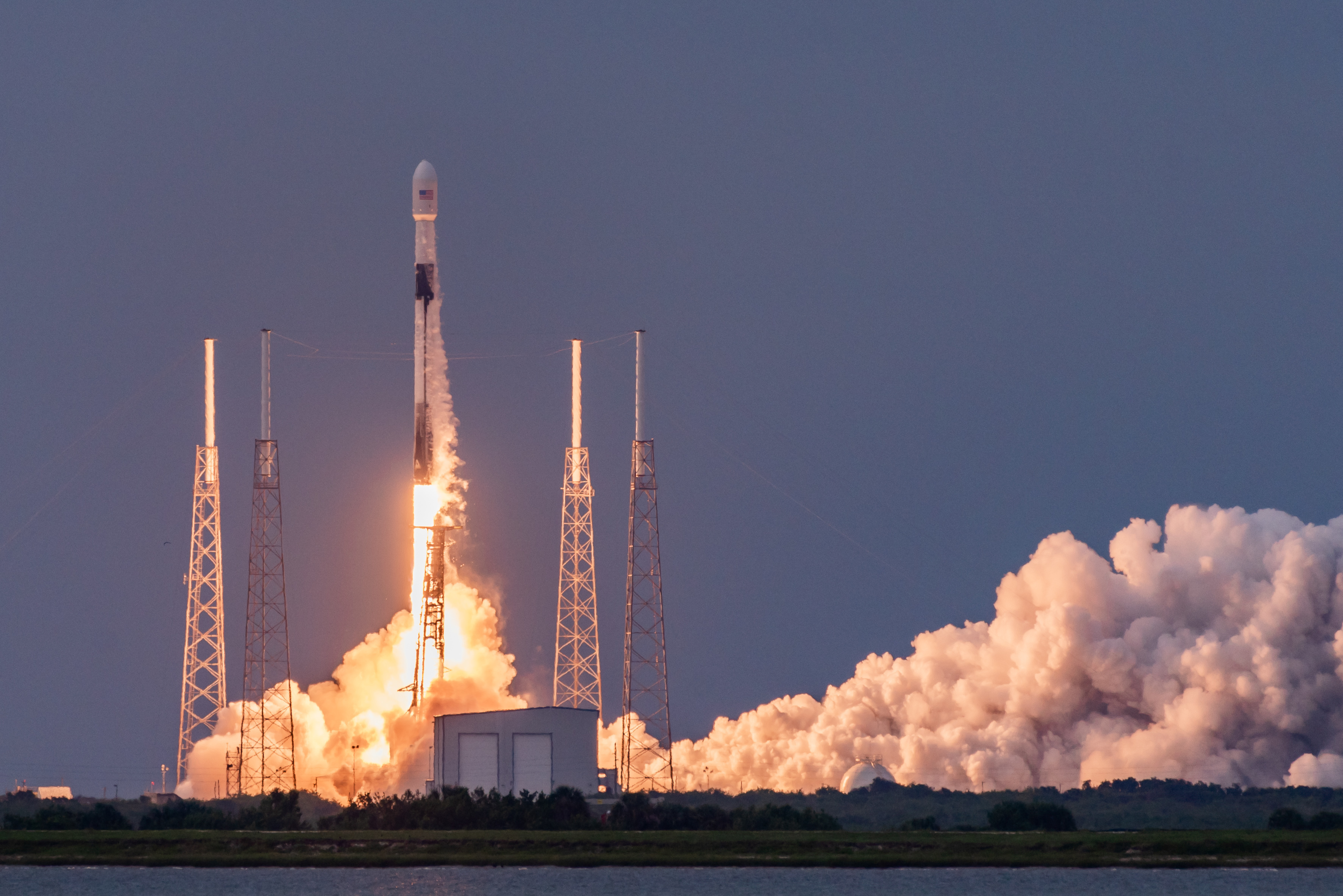
Die Full Thrust war die erste Version mit einer wirklich wiederverwendbaren ersten Stufe, entwickelt mit den Systemen und der Software, die an Prototypen erprobt worden waren. Die Pläne, auch die zweite Stufe wiederzuverwenden, wurden aufgegeben: Das Gewicht des Hitzeschilds und der zugehörigen Ausrüstung schmälerte die Nutzlast zu stark. Mit dieser Version wurde das autonome Flugsicherheitssystem (AFSS, Autonomous Flight Safety System) eingeführt, das das Bodenpersonal und die Ausrüstung zur Flugabbruchentscheidung durch bordeigene Entscheidungslogik und Navigation ersetzte; es debütierte beim CRS-10-Start im Februar 2017 und wurde bei allen Starts nach dem 16. März eingesetzt. Im Juni 2017 flog die zweite Charge von zehn Iridium-NEXT-Satelliten bereits mit den Titan-Gitterflossen.
Der 2017 eingeführte Block 4 war eine Übergangsversion: Zunächst wurde nur die zweite Stufe verändert, die bei NROL-76 und Inmarsat-5 F5 im Mai 2017 sowie bei Intelsat 35e im Juli auf Block-3-Erststufen flog. Das vollständige Design mit beiden Stufen im Block-4-Standard debütierte bei der Mission CRS-12 am 14. August 2017 und enthielt die schrittweisen Schuberhöhungen, die schließlich zum Block 5 führen sollten.
Block 5: die endgültige Version
Im Oktober 2016 beschrieb Musk den Block 5 als eine Sammlung „vieler kleinerer Verfeinerungen, die zusammen bedeutend sind", wobei der erhöhte Schub und die verbesserten Landebeine die wichtigsten seien; im Januar 2017 fügte er hinzu, die Version „verbessere Leistung und Wiederverwendbarkeit deutlich". Der Erstflug fand am 11. Mai 2018 mit dem Satelliten Bangabandhu-1 statt.
Ihre Kennzahlen beschreiben eine ausgereifte Rakete. Die erste Stufe ist 42,6 m lang, die zweite 12,6 m, beide mit 3,7 m Durchmesser. Die erste wiegt leer 22.200 kg und beladen 433.100 kg, mit Kapazität für 287.400 kg unterkühlten flüssigen Sauerstoff und 123.500 kg RP-1; die zweite wiegt leer 4.000 kg und beladen 111.500 kg, mit 75.200 kg Sauerstoff und 32.300 kg Kerosin. Die neun Merlin-1D-Triebwerke liefern zusammen 7.607 kN, das Merlin Vacuum der zweiten Stufe 934 kN. Die Düsen sind schwenkbar, mit einem Expansionsverhältnis von 16:1 unten und 165:1 oben. Beide Stufen können wiederzünden: die erste nur mit drei Triebwerken, für die Rückkehr-, Wiedereintritts- und Landemanöver; die zweite mit redundanten doppelten pyrophoren TEA-TEB-Zündern. Die Tanks werden mit erhitztem Helium unter Druck gesetzt. Die angegebene Kapazität beträgt mindestens 22.800 kg in den niedrigen Erdorbit im Einwegmodus und mindestens 17.400 kg bei Wiederverwendung der Stufe — die schwerste explizit bestätigte Nutzlast — sowie mindestens 8.300 kg nach GTO im Einwegmodus gegenüber 5.800 kg wiederverwendbar.
Die Eroberung der Wiederverwendbarkeit
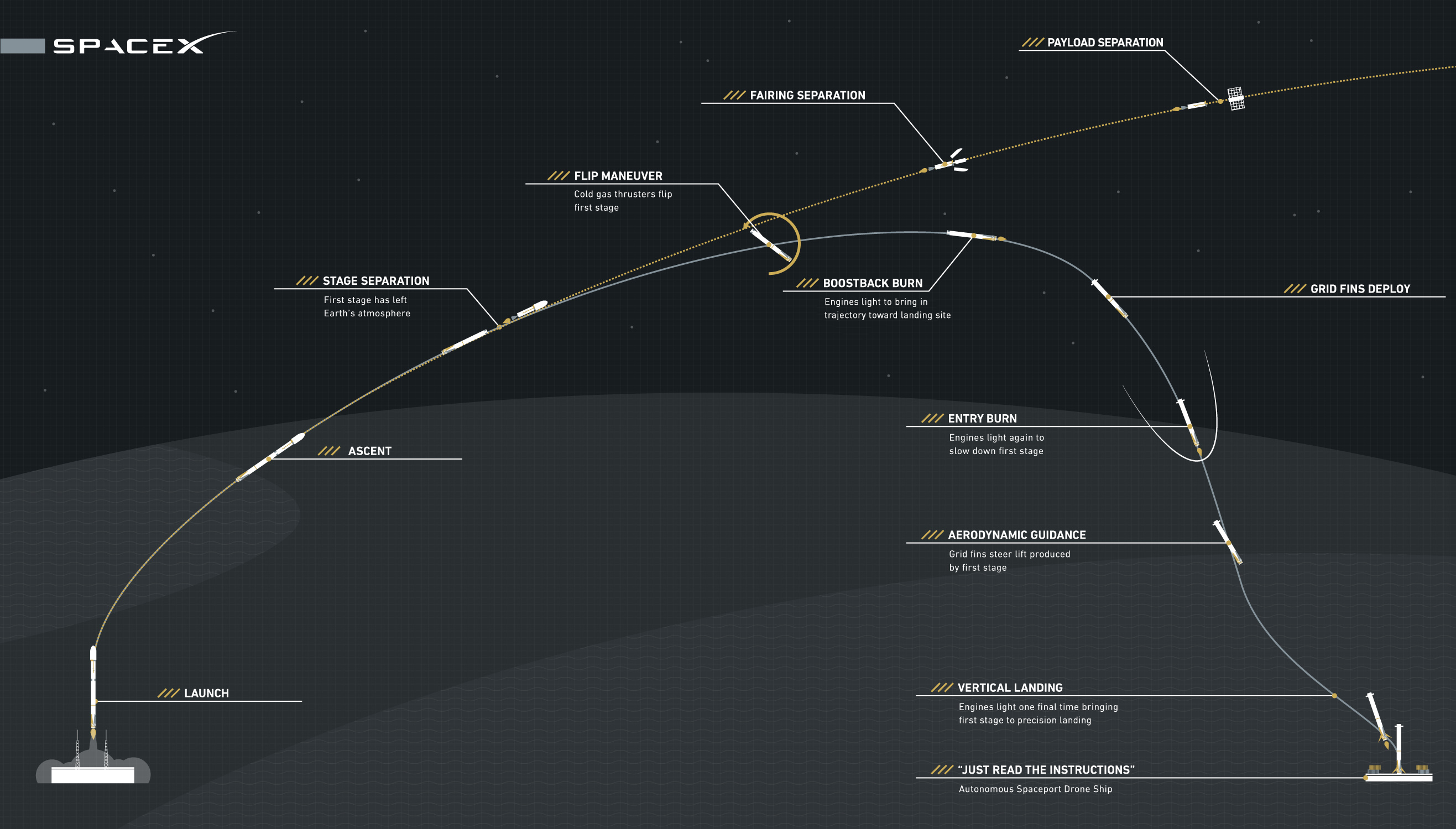
SpaceX plante von Anfang an, beide Stufen wiederzuverwenden. Die ersten Stufen der frühen Flüge trugen Fallschirme und eine Schicht aus ablativem Kork, salzkorrosionsbeständig, überstanden jedoch weder die aerodynamische Belastung noch die Erhitzung. Ende 2011 gab das Unternehmen die Fallschirme zugunsten des angetriebenen Abstiegs auf und stellte das Design im Februar 2012 fertig.
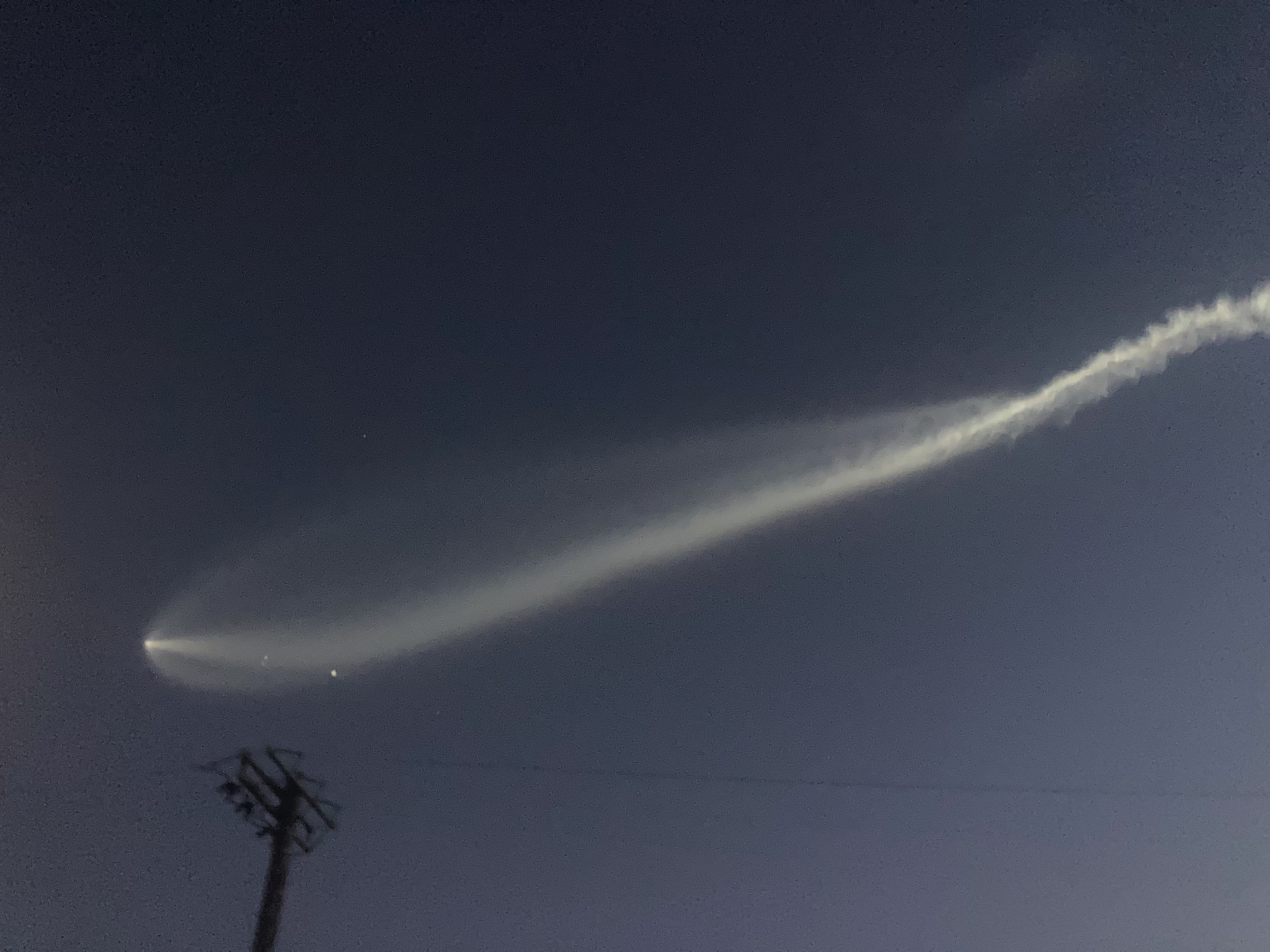
Angetriebene Landungen wurden zunächst mit dem Grasshopper erprobt, einem suborbitalen Demonstrator für geringe Höhe und niedrige Geschwindigkeit, der zwischen 2012 und 2013 acht senkrechte Landungen durchführte, darunter einen 79 Sekunden dauernden Hin- und Rückflug bis auf 744 m Höhe. Im März 2013 kündigte SpaceX an, dass ab dem ersten Flug der v1.1 alle Booster für den angetriebenen Abstieg ausgerüstet würden.
Bei Flug 6 im September 2013 sollte die Stufe mit einer Wiedereintrittszündung und einer weiteren kurz vor dem Wasserkontakt abbremsen. Zwar war es kein vollständiger Erfolg, doch gelang es der Stufe, die Richtung zu ändern und kontrolliert in die Atmosphäre einzutreten; bei der letzten Zündung konnten die Steuertriebwerke eine aerodynamisch induzierte Drehung nicht überwinden, und die Fliehkraft entzog dem Triebwerk den Treibstoff, das daraufhin vorzeitig abschaltete. Nach vier weiteren Tests über dem Ozean versuchte der Booster von CRS-5 im Januar 2015, auf der autonomen schwimmenden Plattform zu landen: Er trug erstmals bei einer Orbitalmission die Gitterflossen, wurde erfolgreich zum Schiff gelenkt und schlug beim Aufsetzen auf dem Deck auf, nachdem ihm die Hydraulikflüssigkeit ausgegangen war. Im April 2015 blockierte bei CRS-6 ein Zweistoffventil, und das Steuersystem reagierte nicht rechtzeitig.
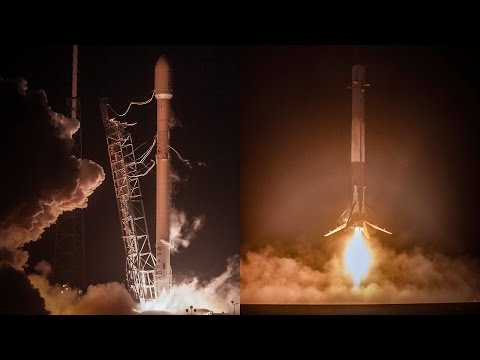
Am 21. Dezember 2015, bei Flug 20 — der Mission Orbcomm OG-2 —, landete eine erste Stufe erstmals auf einer Landeplattform an Land in der Nähe des Startorts. Es war das erste Mal in der Geschichte, dass die erste Stufe einer Orbitalrakete nach Erfüllung ihrer Mission eine kontrollierte senkrechte Landung schaffte. Die erste erfolgreiche Landung auf einer autonomen Plattform im Meer gelang im April 2016 bei der Mission CRS-8 auf der Of Course I Still Love You. Zwischen 2013 und 2016 wurden sechzehn Testflüge durchgeführt, von denen sechs mit einer weichen Landung und Bergung des Boosters endeten. Seit Januar 2017 sind, von wenigen Ausnahmen abgesehen — dem Mittelbooster des Testflugs der Falcon Heavy, der Mission STP-2, der Nachschubmission CRS-16 und einigen Starlink-Missionen —, alle Landeversuche erfolgreich verlaufen. Zwei Booster gingen nach der Landung im Meer verloren: der Mittelbooster von Arabsat-6A und der B1058 nach einem Starlink-Flug.
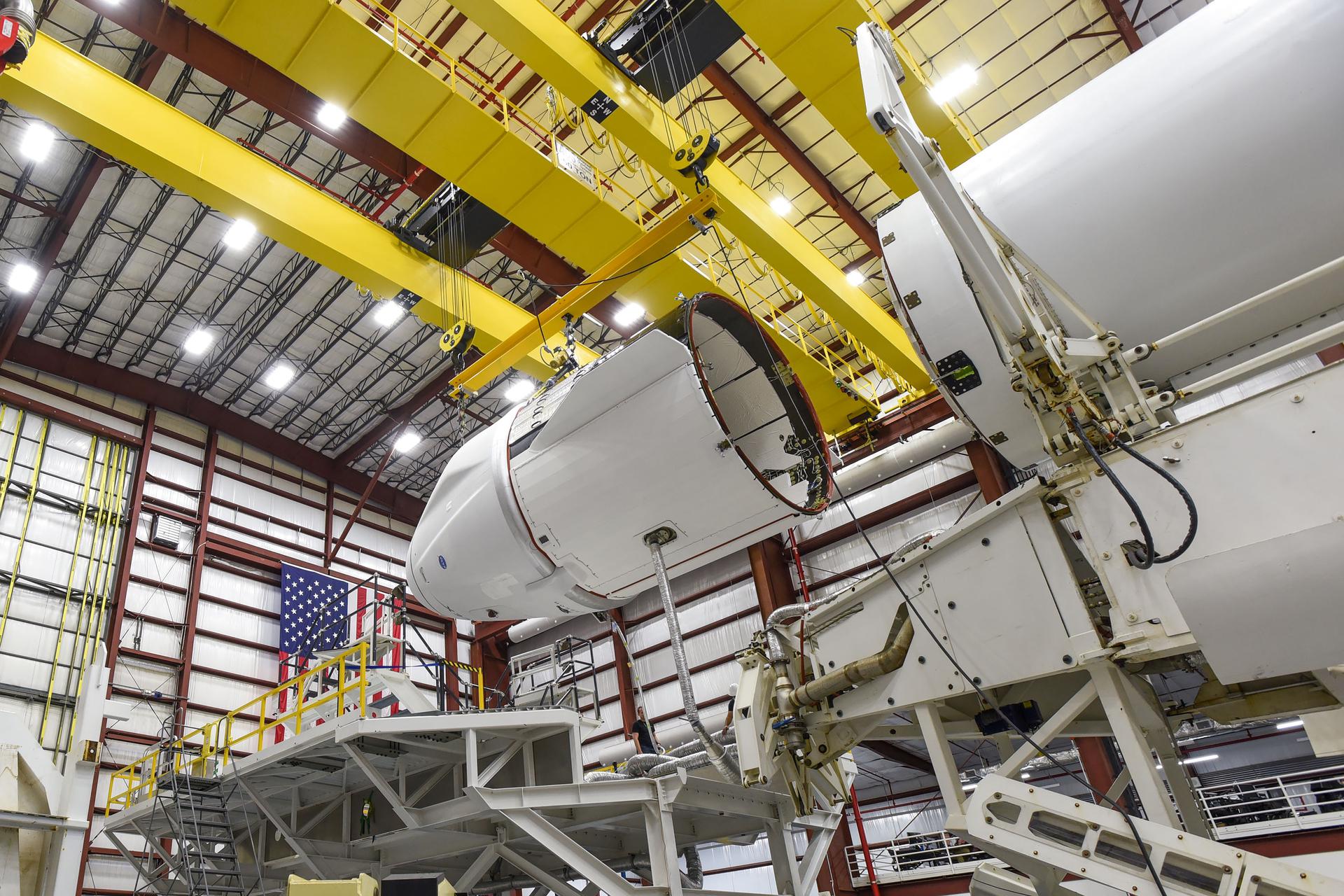
Der erste operative Wiedereinsatz eines bereits geflogenen Boosters war der des B1021 im März 2017 bei der Mission SES-10, nachdem er im April 2016 bei CRS-8 geflogen war; er wurde nach seiner zweiten Landung ausgemustert. Im Juni 2017 brachte der B1029 den Satelliten BulgariaSat-1 nach GTO, nachdem er im Januar desselben Jahres eine Iridium-NEXT-Mission geflogen hatte. Der dritte Wiedereinsatz erfolgte im November 2018 mit SSO-A, dessen Kern, der B1046, der erste gebaute Block-5-Booster gewesen war und mit Bangabandhu-1 die Version eingeweiht hatte. Im Mai 2021 erreichte ein Booster zehn Missionen, und zum 30. Juli 2026 lag der Rekord bei 36 Flügen desselben Exemplars, mit insgesamt 598 erfolgreichen Landungen.
Auch die Nutzlastverkleidung wird geborgen. SpaceX entwickelte Hälften mit lenkbaren Fallschirmen und Steuertriebwerken: Die erste wurde im März 2017 nach SES-10 nach einer sanften Wasserung geborgen. Es folgte ein Luftfangsystem mit zwei Schiffen, die mit riesigen Netzen ausgestattet waren und 2019 ihre ersten Fänge erzielten; angesichts uneinheitlicher Ergebnisse kehrte das Unternehmen zur Wasserung und Bergung aus dem Meer zurück. Seit 2019 sind die Verkleidungen für den Wiedereintritt und einen erneuten Flug ausgelegt. Die zweite Stufe hingegen wurde abgeschrieben: Ende 2014 kam SpaceX zu dem Schluss, dass die Masse von Hitzeschild, Landetriebwerken und der übrigen Ausrüstung zu hoch war, und gab die Bemühungen auf.
Zuverlässigkeit, Fehlschläge und Anomalien
Zum 30. Juli 2026 hatte die Falcon 9 668 vollständig erfolgreiche Missionen von 671 absolviert, eine Erfolgsquote von 99,6 %, mit zwei Fehlschlägen im Flug, einem Teilerfolg und einer Zerstörung vor dem Start. Der Block 5 allein lag bei 99,8 % (614 von 615). Der Vergleich mit der historischen Konkurrenz ist aufschlussreich: Die Sojus-Familie kam auf 1.880 Starts mit 95,1 % Erfolgsquote, die Proton-Serie auf 425 mit 88,7 %, die europäische Ariane 5 auf 117 mit 95,7 % und die chinesische Chang Zheng 3B auf 85 mit 95,3 %.
Die Startsequenz beinhaltet eine Bodenhaltephase, bei der die Triebwerke gezündet und die Systeme geprüft werden, bevor die Rakete freigegeben wird — dasselbe Prinzip, das schon die Saturn V und das Space Shuttle nutzten —, mit automatischer Abschaltung und Treibstoffablass, falls eine Anomalie erkannt wird. Das Fahrzeug verfügt über dreifach redundante Flugcomputer und Trägheitsnavigation mit GPS-Korrektur.
.jpg)
Die erste Warnung kam früh und in Form eines Teilerfolgs: Bei CRS-1 im Oktober 2012 verlor Triebwerk Nummer 1 nach 79 Sekunden an Druck und schaltete ab. Die erste Stufe brannte 28 Sekunden länger als geplant und die zweite weitere 15 Sekunden, um dies auszugleichen, was die Treibstoffreserven verringerte und die Wahrscheinlichkeit, die Sekundärmission abzuschließen, von 99 % auf 95 % senkte; die NASA, die vertraglich mehrere Entscheidungspunkte kontrollierte, verweigerte SpaceX die Wiederzündung der zweiten Stufe, und die Sekundärnutzlast trat wieder in die Atmosphäre ein. Die Hauptmission dagegen wurde erfüllt: Es war der praktische Nachweis der Fähigkeit, ein Triebwerk zu verlieren und trotzdem weiterzufliegen — ein von der Philosophie der Saturn-Familie geerbtes Merkmal. Die Merlin-1D-Triebwerke erlitten zwei vorzeitige Abschaltungen beim Aufstieg — im März 2020 wegen schlecht ausgespültem Isopropanol nach einer Reinigung, und im Februar 2021 wegen heißer Gase, die durch ein Ermüdungsloch in der Abdeckung in ein Triebwerk eindrangen —; keiner der beiden Vorfälle beeinträchtigte die Hauptmission, doch beide vereitelten die Landung.
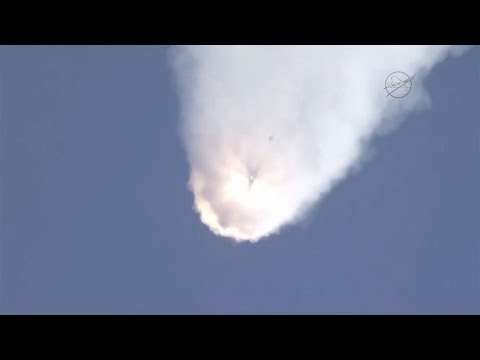
Der schwere Fehlschlag ereignete sich am 28. Juni 2015 bei CRS-7, dem neunzehnten Flug der Falcon 9 und dem vierzehnten der v1.1. Das Fahrzeug zerbrach nach 139 Sekunden, kurz vor der Stufentrennung: Es erschien eine weiße Dampfwolke, gefolgt von einem raschen Druckverlust im Flüssigsauerstofftank der zweiten Stufe. Die Dragon-Kapsel wurde herausgeschleudert und sendete weiter Daten, bis sie auf den Ozean aufschlug; SpaceX erklärte, sie hätte geborgen werden können, wenn die Fallschirme ausgelöst worden wären, doch die an Bord befindliche Softwareversion sah dieses Szenario nicht vor. Die Untersuchung führte den Unfall auf das Versagen einer Strebe zurück, die eine Hochdruck-Heliumflasche im Sauerstofftank hielt: Der Behälter löste sich und schlug gegen die obere Kuppel des Tanks. Der Bericht von SpaceX wies darauf hin, dass der Edelstahlbolzen für eine Last von 10.000 Pfund zertifiziert war und bereits bei 2.000 Pfund versagte.
Etwas mehr als ein Jahr später, am 1. September 2016, explodierte das Fahrzeug, das den israelischen Satelliten AMOS-6 starten sollte — es wäre Flug 29 gewesen — auf der Startrampe während der Vorbereitungen für einen statischen Zündtest, mit dem Verlust der Rakete und der Nutzlast. Es gab keine Verletzten. SpaceX veröffentlichte die Ursache am 2. Januar 2017: Die Innenauskleidung mehrerer Druckbehälter mit Verbundstoffummantelung (COPV) hatte sich verformt und Perforationen verursacht, durch die flüssiger oder fester Sauerstoff eindrang.
Die extreme Startkadenz brachte ab Mitte 2024 ihre eigene Reihe von Problemen mit sich. Im Juli jenes Jahres versagte das Triebwerk der Oberstufe beim Start der Starlink-Gruppe 9-3, mit dem Verlust aller zwanzig Satelliten und einer zweiwöchigen Startpause der Flotte durch die FAA. Im August kippte ein Booster um und wurde bei der Landung nach einem ansonsten erfolgreichen Start zerstört — die erste gescheiterte Landung seit mehr als drei Jahren. Im September versagte nach der Mission Crew-9 die Oberstufe erneut bei der Deorbit-Zündung und trat außerhalb der vorgesehenen Zone wieder in die Atmosphäre ein, zehn Tage vor dem Startfenster der NASA-Sonde Europa Clipper, die zwei Zündungen derselben Stufe erforderte; die Behörde beteiligte sich an der Untersuchung und berief ein eigenes unabhängiges Gremium ein. Europa Clipper startete am 14. Oktober ohne Zwischenfälle. Im Februar 2025 konnte eine weitere Oberstufe nach der Starlink-Gruppe 11-4 ihre Deorbit-Zündung nicht ausführen und blieb zwei Wochen in der Umlaufbahn, bevor sie unkontrolliert in der Nähe von Posen in Polen wieder eintrat, aufgrund eines Flüssigsauerstofflecks ähnlich dem vom Juli 2024; im März ging ein weiterer Booster verloren, der nach der Landung auf der Plattform durch ein Treibstoffleck in einem Triebwerk während des Aufstiegs Feuer fing und umkippte. Das Sicherheitsberatungsgremium für die Luft- und Raumfahrt der NASA warnte in seinem Jahresbericht 2024, dass das Starttempo „das umsichtige Urteilsvermögen, die sorgfältige Analyse und die gewissenhafte Umsetzung von Korrekturmaßnahmen beeinträchtigen" könne, lobte zugleich aber die Transparenz des Unternehmens.
Bemannter Raumflug
Die Falcon 9 ist für den bemannten Raumflug qualifiziert und bringt NASA-Astronauten zur Internationalen Raumstation. Der erste, unbemannte Flug der Crew Dragon war die Mission Demo-1, bei Flug 69 der Trägerrakete. Der entscheidende Schritt kam mit Demo-2: Am 30. Mai 2020, bei Flug 85, brachte eine Falcon 9 die Kapsel Endeavour mit den Astronauten Doug Hurley und Bob Behnken an Bord in die Umlaufbahn. Es war der erste bemannte Orbitalflug von US-amerikanischem Boden seit der letzten Shuttle-Mission 2011, der erste, der von einem kommerziellen Anbieter durchgeführt wurde, und der erste zweiköpfige Orbitalflug aus den USA seit STS-4 von 1982.
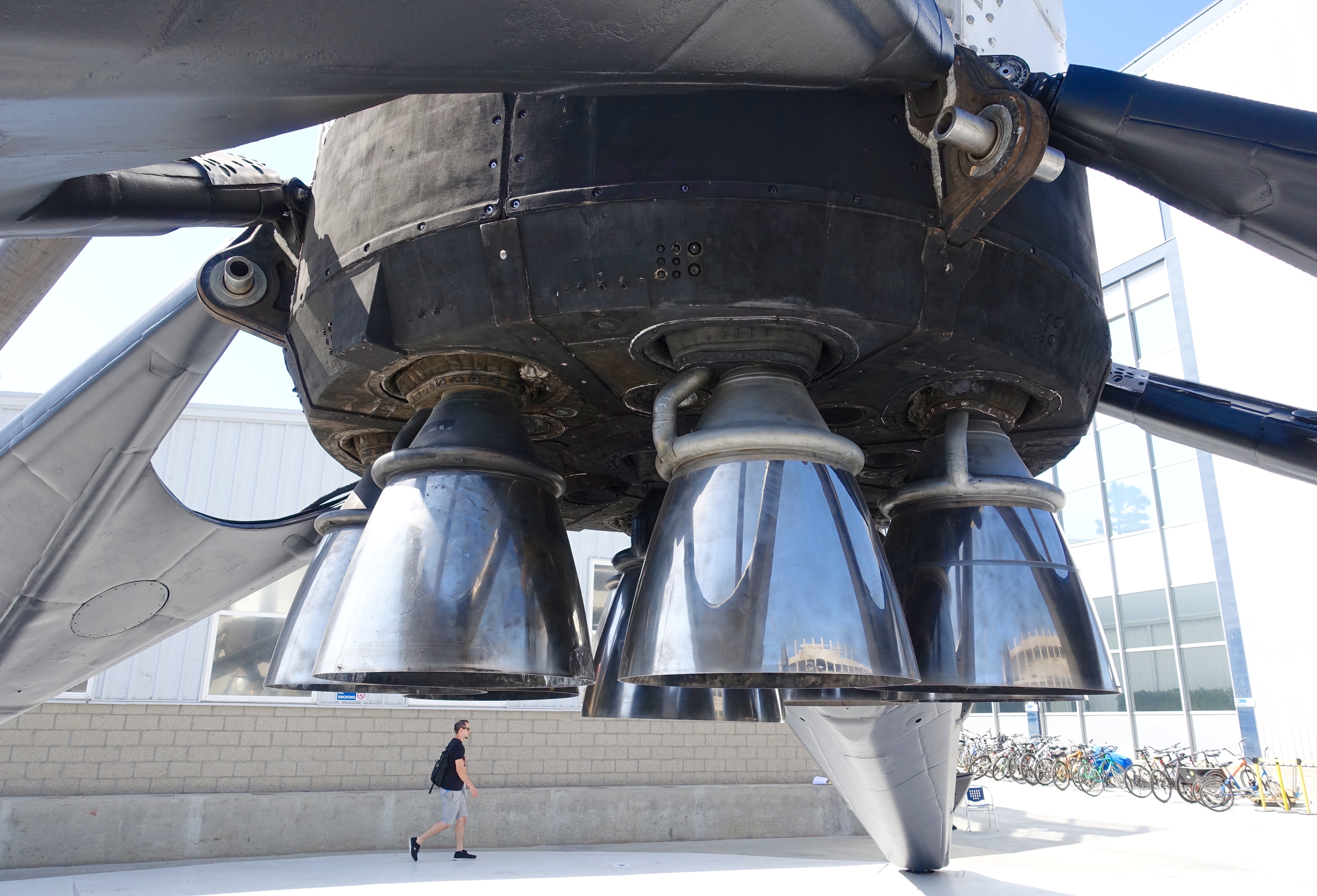
Das Andocken, autonom, aber von der Besatzung überwacht, erfolgte am 31. Mai, neunzehn Stunden nach dem Start; nach dem sanften Einfangen (soft capture) wurden zwölf Haken geschlossen, um elf Minuten später das feste Andocken (hard capture) abzuschließen. Hurley und Behnken arbeiteten 62 Tage zusammen mit der Expedition 63 — Behnken unternahm vier Weltraumausstiege mit Chris Cassidy, um Batterien auszutauschen —, und die Endeavour koppelte am 1. August 2020 autonom ab. Demo-2 vervollständigte die Validierung der bemannten Operationen mit SpaceX-Material und verlieh der Kapsel ihre Zertifizierung für den bemannten Raumflug. Im September 2021 war die Mission Inspiration4 bei Flug 126 der erste vollständig private Orbitalflug.
Neben der Zulassung für bemannte Flüge ist die Falcon 9 für das National-Security-Space-Launch-Programm zertifiziert, und das Launch Services Program der NASA stuft sie in „Kategorie 3" (geringes Risiko) ein — jene Kategorie, die es erlaubt, ihr die teuersten, wichtigsten und komplexesten Missionen der Behörde anzuvertrauen.
Nutzlasten, Rekorde und bedeutende Missionen
Die Liste der Premieren der Falcon 9 fasst das Jahrzehnt zusammen. Flug 1 im Juni 2010 trug eine Qualifikationseinheit der Dragon. Flug 3, mit der Dragon C2+, war die erste Frachtlieferung zur Internationalen Raumstation. Flug 7 brachte SES-8, den ersten Satelliten in den geostationären Transferorbit; Flug 9, bei CRS-3, weihte die Landebeine ein und erzielte den ersten kontrollierten Abstieg bis zum senkrechten Aufsetzen auf dem Ozean; Flug 15 platzierte das Observatorium DSCOVR im L1-Punkt des Sonne-Erde-Systems. Nach den Landungen der Flüge 20 und 23 weihte Flug 30 (CRS-10) den Komplex LC-39A ein, Flug 32 (SES-10) brachte den ersten Wiedereinsatz eines Boosters und die erste Bergung einer Nutzlastverkleidung, und Flug 41 startete das Raumflugzeug X-37B bei dessen fünfter Mission. Flug 129 trug die Sonde DART, die erste Mission zur Verteidigung des Planeten gegen einen erdnahen Asteroiden, und Flug 134 (CRS-24) markierte die hundertste Landung.
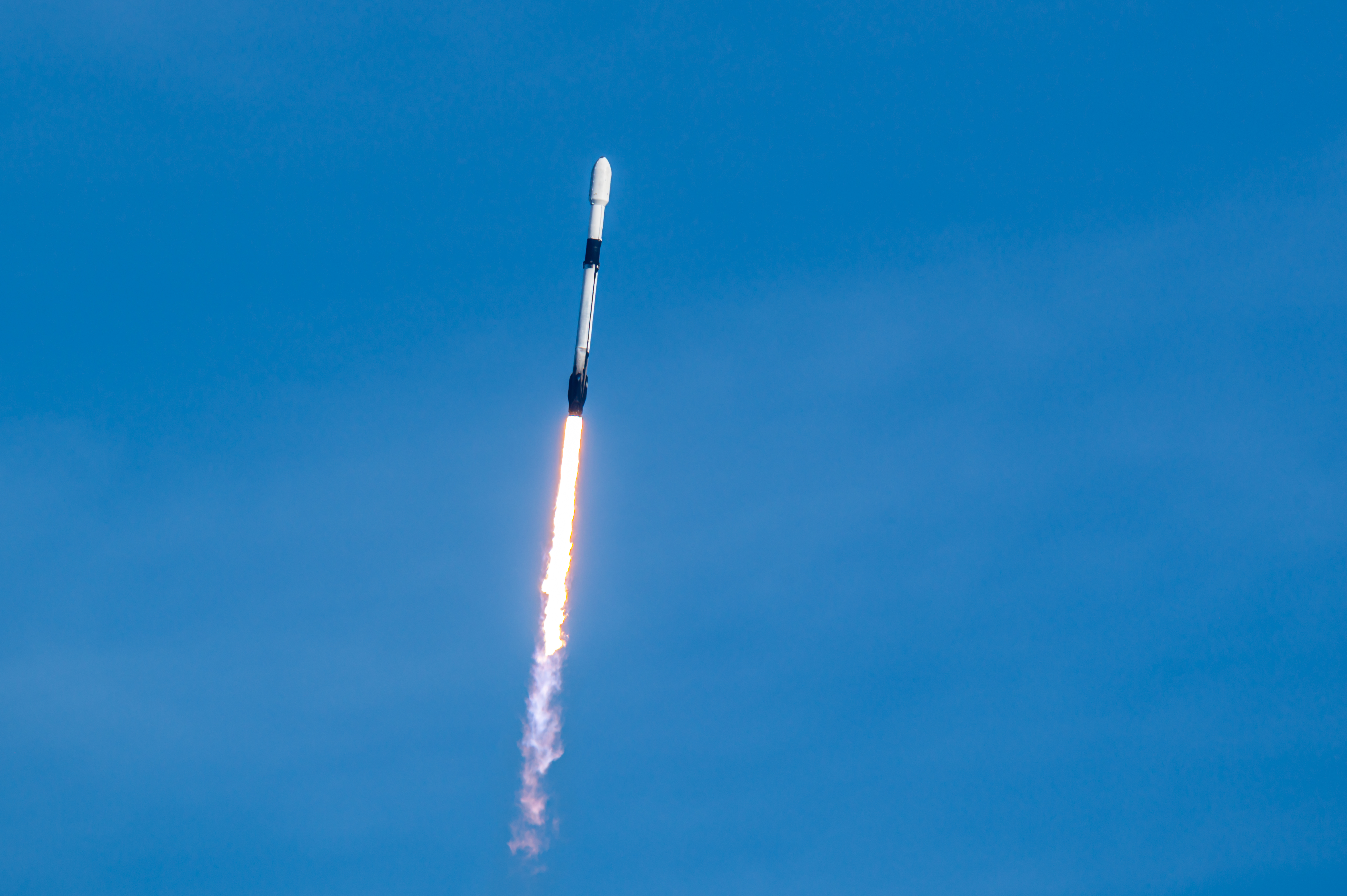
Die schwersten in den geostationären Transferorbit beförderten Nutzlasten waren Intelsat 35e mit 6.761 kg, in eine vorteilhafte supersynchrone Umlaufbahn gebracht, und Telstar 19V mit 7.075 kg, in einem energieärmeren GTO mit einem Apogäum weit unter der geostationären Höhe. Am 24. Januar 2021 stellte die Mission Transporter-1 — Flug 106 — mit 143 Satelliten an Bord den Rekord für die meisten von einer einzigen Rakete gestarteten Satelliten auf.
Starlink und die Startkadenz
Den Löwenanteil der Starts stellt heute SpaceX selbst. Starlink, die Satelliteninternet-Konstellation im niedrigen Erdorbit, umfasste im Juni 2026 rund 10.413 Satelliten, von denen 10.397 einsatzbereit waren und mit Nutzerterminals und Bodenstationen kommunizierten; im August 2026 lag die aktive Flotte bei 10.895 Einheiten über beide Hardware-Generationen hinweg. Der Aufbau eines solchen Schwarms machte den Orbitalstart zu einer nahezu routinemäßigen Operation und erklärt die beispiellose Startkadenz der Falcon 9, die mehr Starts vorweist als jede andere aktive Trägerrakete. Die zweite Satellitengeneration passt jedoch nicht in die Falcon 9: SpaceX erklärte 2022, die Gen2-Satelliten seien zu groß und benötigten die Starship.
Rideshare: Transporter und Bandwagon
SpaceX betreibt zwei reguläre Rideshare-Programme für Kleinsatelliten. Transporter, 2021 gestartet, fliegt in einen sonnensynchronen Orbit mit Inklinationen nahe 90°, bedient vor allem Erdbeobachtungsnutzlasten und startet etwa alle vier Monate von Vandenberg aus. Bandwagon, das 2024 begann, ermöglicht Zugang zu mittleren Inklinationen von etwa 45° mit Missionen alle sechs Monate von Cape Canaveral aus.
Da diese Missionen viele Satelliten in einer einzigen Ablieferungsbahn zurücklassen, greift ein Großteil der Kunden auf Orbitaltransferfahrzeuge Dritter zurück — Momentus mit seinem Vigoride, D-Orbit mit dem ION Satellite Carrier oder Exolaunch —, die sich von der Oberstufe trennen und jede Nutzlast zu ihrer endgültigen Höhe und Inklination bringen. Die Mission Vigoride-7, bei Transporter-16, demonstrierte den Einsatz von Hochleistungsbussen für komplexe Regierungsnutzlasten von DARPA und der NASA. Für Satelliten zwischen 500 und 2.500 kg bietet SpaceX zudem die Position „Cake Topper" an, oben auf dem Stapel, die bei einem konventionellen Start eine Hauptnutzlast einnehmen würde. 2025 lag der Einstiegspreis bei 300.000 US-Dollar für 50 kg in den sonnensynchronen Orbit. Die Kombination aus hoher Kadenz und niedrigem Preis hat SpaceX zum dominierenden Anbieter im Markt für Kleinsatelliten gemacht und den Betreibern dedizierter Mikroträgerraketen das Leben schwer gemacht.
Startplätze
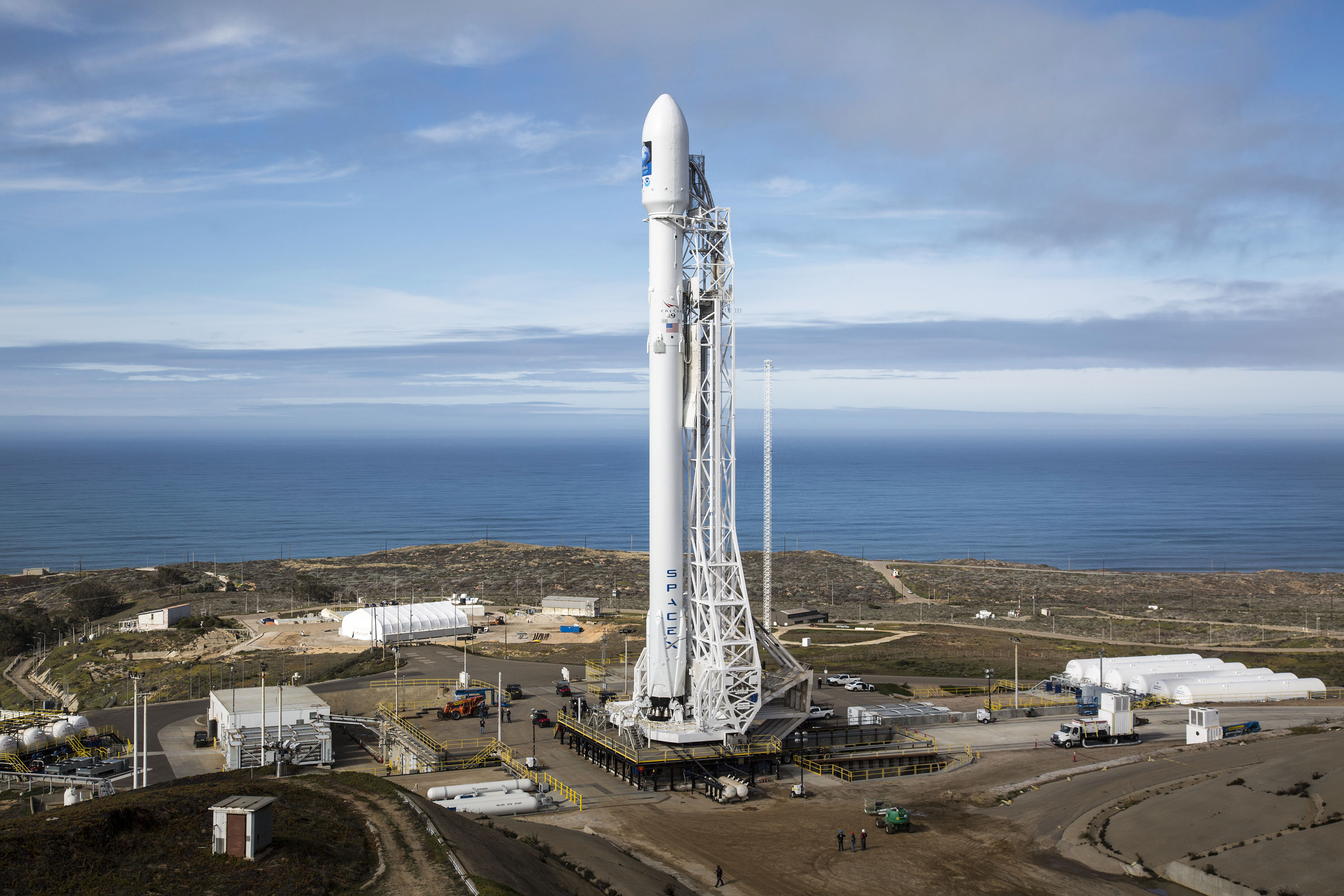
Die Falcon 9 startet von drei Orbitalkomplexen: dem SLC-40 der Cape Canaveral Space Force Station in Florida, in Betrieb seit 2007; dem SLC-4E der Vandenberg Space Force Base in Kalifornien, seit 2013; und dem LC-39A des Kennedy Space Center in Florida, seit 2017. Jeder hat seine Rolle: Der SLC-40 ist die Hochfrequenz-Startrampe für Umlaufbahnen mittlerer Inklination zwischen 28,5° und 55°; der SLC-4E ist für stark geneigte Polarumlaufbahnen zwischen 66° und 145° optimiert; und der LC-39A ist den komplexen Missionen vorbehalten, etwa den Flügen der Crew Dragon oder der Falcon Heavy, wobei der SLC-40 2024 zusätzlich als Ausweichstartplatz für die Crew Dragon hergerichtet wurde. Am 21. April 2023 genehmigte die Space Force SpaceX die Anmietung des Komplexes SLC-6 in Vandenberg, der die vierte Orbitalstartrampe des Unternehmens werden und Starts der Falcon Heavy von der Westküste aus ermöglichen wird.
Preis und Auswirkung auf die Branche
Beim Erstflug 2010 lag der angekündigte Preis für einen kommerziellen Start mit der v1.0 bei 49,9 bis 56 Millionen US-Dollar. Danach stieg er im Takt der Inflation: 54 bis 59,5 Millionen 2012, 56,5 Millionen für die v1.1 2013, 61,2 Millionen 2014, 62 Millionen für die Full Thrust 2016 und 74 Millionen für den Block 5 im Jahr 2026. Öffentliche Verträge sind teurer: Eine Dragon-Frachtmission zur Raumstation kostete die NASA 133 Millionen zum Festpreis, die DSCOVR-Mission für die NOAA 97 Millionen, und Starts der US-Luftwaffe 95 Millionen im Jahr 2020 wegen zusätzlicher Sicherheitsanforderungen. Dieser Unterschied veranlasste 2020 den Roskosmos-Chef Dmitri Rogosin, SpaceX Dumping auf dem kommerziellen Markt vorzuwerfen.
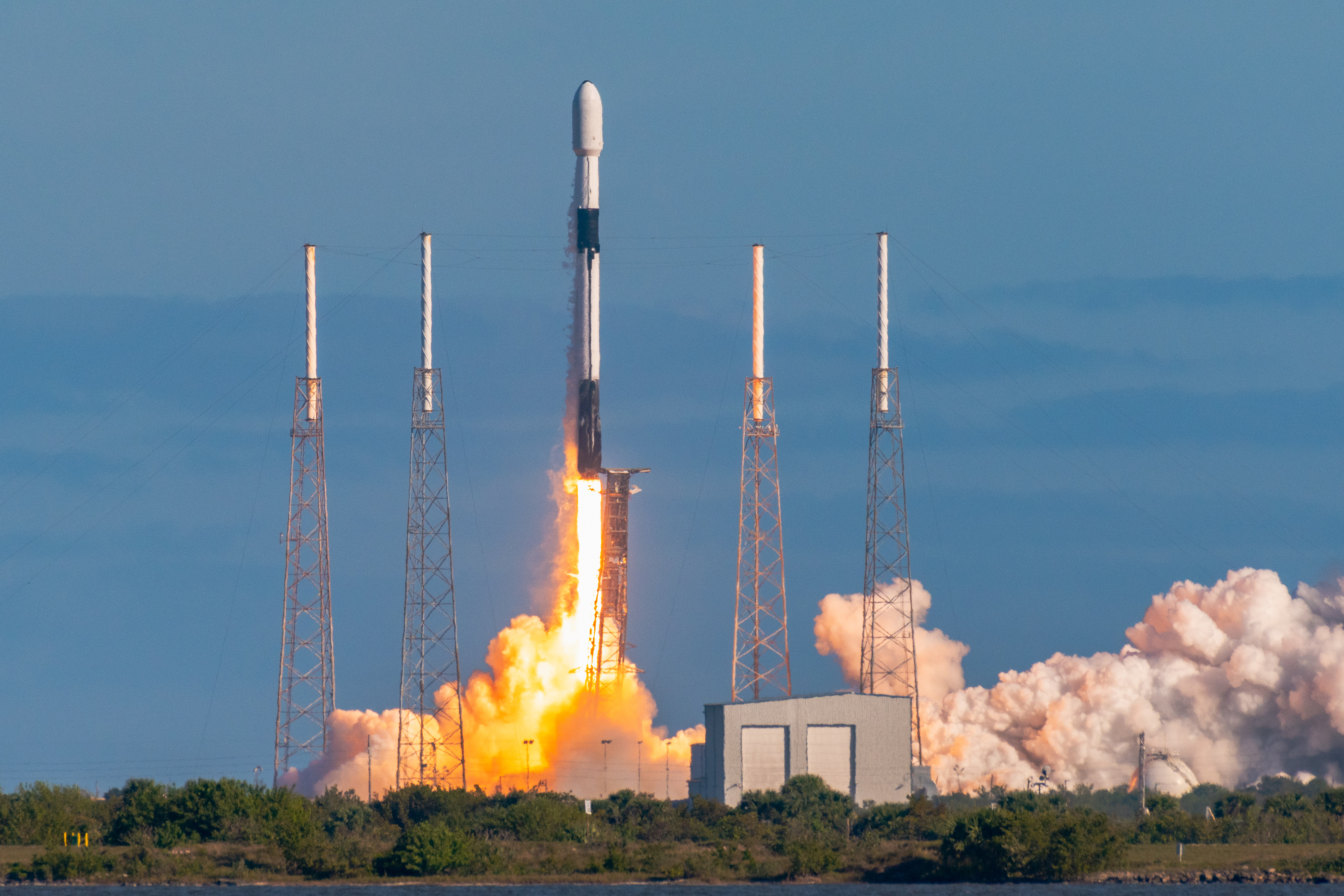
Intern wurden die Kosten eines Starts 2024 auf 15 bis 28 Millionen US-Dollar geschätzt, einschließlich Personal, Wiederaufbereitung, Montage, Betrieb und Abschreibung der Anlagen; die nicht geborgene zweite Stufe ist der teuerste Posten, mit Produktionskosten von 12 Millionen laut der Betriebsleiterin des Unternehmens. Die Debatte über die Wirtschaftlichkeit der Wiederverwendung wurde öffentlich geführt: ULA-Chef Tory Bruno rechnete vor, dass jeder Booster zehnmal fliegen müsste, um die Mehrkosten für die Entwicklung und den Betrieb einer wiederverwendbaren Rakete auszugleichen, während Musk argumentierte, dass Bergung und Wiederaufbereitung weniger als 10 % kosten und der Break-even-Punkt bereits beim zweiten Flug erreicht sei, mit erheblichen Einsparungen schon ab dem dritten.
Der Preisverfall zwang die Konkurrenten, ihr Angebot neu zu gestalten: Arianespace brachte die Ariane 6 heraus, ULA entwickelte die Vulcan Centaur, und Roskosmos zog sich auf die Proton-M zurück.
Vermächtnis
Die Falcon 9 bewies, dass die angetriebene Wiederverwendung technisch und wirtschaftlich funktioniert, und zwang die gesamte Branche — von Europa bis China —, ihre Trägerraketen um diese Idee herum neu zu gestalten. Sie machte die Landung einer Orbitalrakete zu einem alltäglichen Bild, gab den USA die Fähigkeit zurück, Menschen ins All zu bringen, und trägt im Alleingang die größte Satellitenkonstellation der Geschichte. Nur wenige Maschinen haben die Grenze des im Weltraum Machbaren seit dem Space Shuttle so weit verschoben.
_de_un_Falcon_9_con_Crew_Dragon_hacia_la_rampa%2C_misi%C3%B3n_Crew-9.jpg)
Chronologie der Starts
| Datum | Startplatz | Programm | Ergebnis | Nutzlast |
|---|---|---|---|---|
| 10.10.2026, 07:39 | Space Launch Complex 4E | — | Erfolg | Tranche 1 Transport Layer A is one of six missions by the United States Space Force Space Development Agency (SDA) for the Proliferated Warfighter Space Architecture (PWSA) Tranche 1 Transport Layer constellation, which will provide assured, resilient, low-latency military data and connectivity worldwide to the full range of warfighter platforms from Low Earth Orbit satellites. The constellation will be interconnected with Optical Inter-Satellite Links (OISLs) which have significantly increased performance over existing radio frequency crosslinks. It is expected to operate over Ka band, have stereo coverage and be dynamically networked for simpler hand-offs, greater bandwidth and fault tolerance. This launch carries 21 satellites manufactured by Northrop Grumman. |
| 01.10.2026, 18:32 | Space Launch Complex 4E | — | Erfolg | Dedicated rideshare flight to a sun-synchronous orbit with dozens of small microsatellites and nanosatellites for commercial and government customers. |
| 01.10.2026, 15:10 | Space Launch Complex 40 | — | Erfolg | SpaceX Crew-13 is the thirteenth crewed operational flight of a Crew Dragon spacecraft to the International Space Station as part of NASA's Commercial Crew Program. |
| 26.09.2026, 14:00 | Space Launch Complex 4E | — | Erfolg | A classified mission for the United States Space Force. It is possibly a batch of classified LEO satellites based on SpaceX’s Starshield satellite bus, based on locations of rocket stage drop zones being exact fits with previous Starlink Group 15 launches. |
| 20.09.2026, 01:47 | Space Launch Complex 4E | — | Erfolg | A batch of 27 satellites for the Starlink mega-constellation - SpaceX's project for space-based Internet communication system. |
| 17.09.2026, 01:07 | Space Launch Complex 4E | — | Erfolg | USSF-259 is a classified mission for the United States Space Force. It is possibly a batch of classified LEO satellites based on SpaceX’s Starshield satellite bus, based on locations of ascent rocket stage drop zones being fits with previous SDA Transport Layer launches. |
| 13.09.2026, 18:49 | Space Launch Complex 40 | — | Erfolg | 3 high-throughput communications satellites in Medium Earth Orbit (MEO) built by Boeing and operated by SES. |
| 10.09.2026, 15:42 | Space Launch Complex 4E | — | Erfolg | USSF-153 is a classified mission for the United States Space Force. It is possibly a batch of classified LEO satellites based on SpaceX’s Starshield satellite bus, based on locations of rocket stage drop zones being exact fits with previous Starlink Group 15 launches. |
| 06.09.2026, 14:26 | Space Launch Complex 4E | — | Erfolg | A batch of 27 satellites for the Starlink mega-constellation - SpaceX's project for space-based Internet communication system. |
| 02.09.2026, 08:42 | Space Launch Complex 4E | — | Erfolg | A batch of 27 satellites for the Starlink mega-constellation - SpaceX's project for space-based Internet communication system. |
| 26.08.2026, 09:35 | Space Launch Complex 4E | — | Erfolg | A batch of 27 satellites for the Starlink mega-constellation - SpaceX's project for space-based Internet communication system. |
| 25.08.2026, 09:33 | Space Launch Complex 40 | — | Erfolg | A batch of 29 satellites for the Starlink mega-constellation - SpaceX's project for space-based Internet communication system. |
| 22.08.2026, 07:25 | Space Launch Complex 4E | — | Erfolg | A batch of 27 satellites for the Starlink mega-constellation - SpaceX's project for space-based Internet communication system. |
| 21.08.2026, 15:14 | Space Launch Complex 40 | — | Erfolg | A batch of 29 satellites for the Starlink mega-constellation - SpaceX's project for space-based Internet communication system. |
| 19.08.2026, 04:01 | Space Launch Complex 4E | — | Erfolg | A batch of 24 satellites for the Starlink mega-constellation - SpaceX's project for space-based Internet communication system. |
| 16.08.2026, 01:50 | Space Launch Complex 4E | — | Erfolg | USSF-366 is a classified mission for the United States Space Force. It is possibly a batch of classified LEO satellites based on SpaceX’s Starshield satellite bus, based on locations of rocket stage drop zones being exact fits with previous Starlink Group 15 launches. |
| 16.08.2026, 01:12 | Space Launch Complex 40 | — | Erfolg | The Globalstar global mobile communications network offers global, digital real time voice, data and fax services via its Low Earth Orbit satellite constellation. The constellation operates in a 1410 km orbit inclined at 52 degrees. In early 2022, Globalstar contracted with MDA for the construction of 17 new 2nd generation refresh satellites to replenish the existing constellation. Rocket Lab is sub-contracted to build the satellites' buses and the launch dispensers. |
| 12.08.2026, 04:46 | Space Launch Complex 4E | — | Erfolg | A batch of 24 satellites for the Starlink mega-constellation - SpaceX's project for space-based Internet communication system. |
| 11.08.2026, 15:58 | Space Launch Complex 40 | — | Erfolg | A batch of 29 satellites for the Starlink mega-constellation - SpaceX's project for space-based Internet communication system. |
| 08.08.2026, 16:35 | Space Launch Complex 4E | — | Erfolg | A batch of 24 satellites for the Starlink mega-constellation - SpaceX's project for space-based Internet communication system. |
| 05.08.2026, 07:49 | Space Launch Complex 40 | — | Erfolg | AST SpaceMobile’s Block 2 BlueBird satellites are designed to deliver up to 10 times the bandwidth capacity of the BlueBird Block 1 satellites, required to achieve 24/7 continuous cellular broadband service coverage in the United States, with beams designed to support a capacity of up to 40 MHz, enabling peak data transmission speeds up to 120 Mbps, supporting voice, full data and video applications. The Block 2 BlueBirds, featuring as large as 2400 square foot communications arrays, will be the largest satellites ever commercially deployed in Low Earth orbit once launched. This launch will feature 3 satellites. |
| 04.08.2026, 17:05 | Space Launch Complex 4E | — | Erfolg | A batch of 24 satellites for the Starlink mega-constellation - SpaceX's project for space-based Internet communication system. |
| 01.08.2026, 03:08 | Space Launch Complex 4E | — | Erfolg | A batch of 24 satellites for the Starlink mega-constellation - SpaceX's project for space-based Internet communication system. |
| 30.07.2026, 07:10 | Space Launch Complex 40 | — | Erfolg | Classified payload for the US National Reconnaissance Office. |
| 25.07.2026, 15:51 | Space Launch Complex 4E | — | Erfolg | A batch of 24 satellites for the Starlink mega-constellation - SpaceX's project for space-based Internet communication system. |
| 21.07.2026, 21:15 | Space Launch Complex 40 | — | Erfolg | The Northrop Grumman/SpaceLogistics MRV-1 is a mission extension payload including a mission robotic vehicle (MRV) and multiple mission extension pods (MEPs). The MRV is designed to attach up to 30 MEPs (Mission Extension Pods) to various satellites in GEO over the course of its life, and the MEPs (Mission Extension Pods) are 400 kg spacecraft designed to be captured by the MRV and then attached to a customer's satellite. A single MEP can extend a 2000 kg satellite's service life by up to 6 years. For this mission, 2 of the MEP's will service satellites for Intelsat, while the third will service a satellite for Optus. |
| 21.07.2026, 14:49 | Space Launch Complex 4E | — | Erfolg | A batch of 24 satellites for the Starlink mega-constellation - SpaceX's project for space-based Internet communication system. |
| 16.07.2026, 20:32 | Space Launch Complex 4E | — | Erfolg | Tranche 1 Transport Layer E is one of six missions by the United States Space Force Space Development Agency (SDA) for the Proliferated Warfighter Space Architecture (PWSA) Tranche 1 Transport Layer constellation, which will provide assured, resilient, low-latency military data and connectivity worldwide to the full range of warfighter platforms from Low Earth Orbit satellites. The constellation will be interconnected with Optical Inter-Satellite Links (OISLs) which have significantly increased performance over existing radio frequency crosslinks. It is expected to operate over Ka band, have stereo coverage and be dynamically networked for simpler hand-offs, greater bandwidth and fault tolerance. This launch carries 21 satellites manufactured by York Space Systems. |
| 14.07.2026, 09:10 | Space Launch Complex 40 | — | Erfolg | A batch of 29 satellites for the Starlink mega-constellation - SpaceX's project for space-based Internet communication system. |
| 14.07.2026, 01:28 | Space Launch Complex 4E | — | Erfolg | A batch of 27 satellites for the Starlink mega-constellation - SpaceX's project for space-based Internet communication system. |
| 11.07.2026, 03:01 | Space Launch Complex 4E | — | Erfolg | A batch of 24 satellites for the Starlink mega-constellation - SpaceX's project for space-based Internet communication system. |
| 09.07.2026, 09:25 | Space Launch Complex 40 | — | Erfolg | A batch of 29 satellites for the Starlink mega-constellation - SpaceX's project for space-based Internet communication system. |
| 07.07.2026, 07:12 | Space Launch Complex 4E | — | Erfolg | Dedicated rideshare flight to a sun-synchronous orbit with dozens of small microsatellites and nanosatellites for commercial and government customers. |
| 05.07.2026, 10:50 | Space Launch Complex 40 | — | Erfolg | A batch of 29 satellites for the Starlink mega-constellation - SpaceX's project for space-based Internet communication system. The Falcon 9 1st stage carries 2 customer payload from Besxar Space Industries for testing their Fabships pilot reusable semiconductor wafers manufacturing pods in launch and re-entry environments. |
| 02.07.2026, 02:58 | Space Launch Complex 4E | — | Erfolg | A batch of 24 satellites for the Starlink mega-constellation - SpaceX's project for space-based Internet communication system. |
| 29.06.2026, 02:25 | Space Launch Complex 40 | — | Erfolg | SXM-11 is the 12th high-powered, digital, audio radio satellite built by Lanteris Space (ex-Maxar, Space System/Loral) for SiriusXM. The SXM-11 satellite will be based on the proven IM-1300 (ex-LS-1300)-class platform and built at the company’s manufacturing facility in Palo Alto, California. SXM-11 has a large, mesh, unfurlable reflector almost 10 meters in diameter that allows SiriusXM programming to reach its radios, including those in moving vehicles. |
| 28.06.2026, 16:09 | Space Launch Complex 4E | — | Erfolg | A batch of 24 satellites for the Starlink mega-constellation - SpaceX's project for space-based Internet communication system. |
| 25.06.2026, 03:30 | Space Launch Complex 4E | — | Erfolg | A batch of 24 satellites for the Starlink mega-constellation - SpaceX's project for space-based Internet communication system. |
| 23.06.2026, 10:53 | Space Launch Complex 40 | — | Erfolg | Note: Mission profile and payload details are TBD. Demonstration mission for SpaceX’s Project Starfall, which aims to mass-produce reentry capsules designed to autonomously transport valuable customer experiments and other payloads safely back from space to Earth, including for in-orbit manufacturing. Starfall is a cylindrical shaped capsule approximately 0.75 meters tall with a diameter of 3.1 meters, weighing approximately 2100 kilograms, and capable of carrying 1000 kilograms of payload. It is designed to be carried on Starship flights. |
| 21.06.2026, 16:39 | Space Launch Complex 4E | — | Erfolg | A batch of 24 satellites for the Starlink mega-constellation - SpaceX's project for space-based Internet communication system. |
| 19.06.2026, 08:50 | Space Launch Complex 4E | — | Erfolg | Fourteenth batch of satellites for a reconnaissance satellite constellation built by SpaceX and Northrop Grumman for the National Reconnaissance Office to provide imaging and other reconnaissance capabilities. |
| 17.06.2026, 06:39 | Space Launch Complex 40 | — | Erfolg | AST SpaceMobile’s Block 2 BlueBird satellites are designed to deliver up to 10 times the bandwidth capacity of the BlueBird Block 1 satellites, required to achieve 24/7 continuous cellular broadband service coverage in the United States, with beams designed to support a capacity of up to 40 MHz, enabling peak data transmission speeds up to 120 Mbps, supporting voice, full data and video applications. The Block 2 BlueBirds, featuring as large as 2400 square foot communications arrays, will be the largest satellites ever commercially deployed in Low Earth orbit once launched. This launch will feature 3 satellites. |
| 15.06.2026, 15:34 | Space Launch Complex 4E | — | Erfolg | A batch of 24 satellites for the Starlink mega-constellation - SpaceX's project for space-based Internet communication system. |
| 12.06.2026, 12:37 | Space Launch Complex 40 | — | Erfolg | A batch of 29 satellites for the Starlink mega-constellation - SpaceX's project for space-based Internet communication system. |
| 11.06.2026, 15:05 | Space Launch Complex 4E | — | Erfolg | A batch of 24 satellites for the Starlink mega-constellation - SpaceX's project for space-based Internet communication system. |
| 08.06.2026, 10:13 | Space Launch Complex 40 | — | Erfolg | A batch of 29 satellites for the Starlink mega-constellation - SpaceX's project for space-based Internet communication system. |
| 07.06.2026, 04:24 | Space Launch Complex 4E | — | Erfolg | A batch of 21 satellites for the Starlink mega-constellation - SpaceX's project for space-based Internet communication system. 2 US military Starshield satellites are also on board. |
| 04.06.2026, 10:26 | Space Launch Complex 40 | — | Erfolg | A batch of 29 satellites for the Starlink mega-constellation - SpaceX's project for space-based Internet communication system. |
| 03.06.2026, 15:40 | Space Launch Complex 4E | — | Erfolg | A batch of 24 satellites for the Starlink mega-constellation - SpaceX's project for space-based Internet communication system. |
| 30.05.2026, 15:25 | Space Launch Complex 4E | — | Erfolg | A batch of 24 satellites for the Starlink mega-constellation - SpaceX's project for space-based Internet communication system. |
Versionen
| v1.0 | v1.1 | Full Thrust | Block 4 | Block 5 | |
|---|---|---|---|---|---|
| Erster Start | 4. Juni 2010 | 29. September 2013 | 22. Dezember 2015 | 14. August 2017 | 11. Mai 2018 |
| Letzter Start | 1. März 2013 | 17. Januar 2016 | 22. Februar 2018 | 29. Juni 2018 | — |
| Antrieb | Neun Merlin-1C-Triebwerke mit raffiniertem Kerosin und flüssigem Sauerstoff in der ersten Stufe, mit 170 Sekunden Brenndauer; ein Merlin 1C Vacuum mit 617 kN in der zweiten. Das Merlin 1C nutzte eine regenerative Kühlung und einen spezifischen Impuls von 275 s auf Meereshöhe und 304 s im Vakuum. | Erste Stufe: 9 Merlin 1D in einem Octaweb (5.885 kN auf Meereshöhe, 6.672 kN im Vakuum). Zweite Stufe: 1 Merlin 1D Vacuum (716 kN). Flüssiger Sauerstoff und RP-1. | Neun verbesserte Merlin-1D-Triebwerke in der ersten Stufe, mit 6.800 kN beim Start und 162 Sekunden Brenndauer, und ein Merlin 1D Vacuum mit 934 kN – 840 kN bei der Variante mit kurzer Düse – in der zweiten, mit 348 s spezifischem Impuls. Die kryogene Kühlung von Kerosin und flüssigem Sauerstoff ist es, die den Schubsprung ermöglicht. | Gleiche Merlin-Architektur wie die Full Thrust, mit schrittweisen Schuberhöhungen, die zum endgültigen Wert des Block 5 führen; SpaceX veröffentlichte keine eigenen Schubwerte für den Block 4. | Neun Merlin 1D+ in der ersten Stufe mit 7.600 kN beim Start und ein Merlin 1D Vacuum mit 934 kN in der zweiten, die mit einem Missionserweiterungs-Kit für zusätzliche Zündungen und längere Flüge ausgestattet werden kann. Treibstoffe: flüssiger Sauerstoff und RP-1, durch kryogene Kühlung verdichtet. |
| Treibstoff | LOX / RP-1 | LOX / RP-1 | LOX / RP-1 | LOX / RP-1 | LOX / RP-1 |
| Höhe | 54,9 m | 68,4 m | 70 m Bester Wert dieser Zeile | — | 70 m Bester Wert dieser Zeile |
| Durchmesser | 3,7 m Bester Wert dieser Zeile | 3,7 m Bester Wert dieser Zeile | 3,7 m Bester Wert dieser Zeile | 3,7 m Bester Wert dieser Zeile | 3,7 m Bester Wert dieser Zeile |
| Masse | 333.400 kg | 505.846 kg | 549.000 kg Bester Wert dieser Zeile | — | 549.000 kg Bester Wert dieser Zeile |
| Startschub | 4.940 kN | 5.885 kN | 6.800 kN | — | 7.607 kN Bester Wert dieser Zeile |
| Stufen | 2 Bester Wert dieser Zeile | 2 Bester Wert dieser Zeile | 2 Bester Wert dieser Zeile | 2 Bester Wert dieser Zeile | 2 Bester Wert dieser Zeile |
| Nutzlast LEO | 10.450 kg | 13.150 kg | 22.800 kg Bester Wert dieser Zeile | — | 22.000 kg |
| Nutzlast GTO | 4.540 kg | 4.850 kg | 8.300 kg Bester Wert dieser Zeile | — | 8.300 kg Bester Wert dieser Zeile |
| Höhe der Nutzlastverkleidung | — | 13 m | — | — | 13,2 m Bester Wert dieser Zeile |
| Durchmesser der Nutzlastverkleidung | — | 5,2 m Bester Wert dieser Zeile | — | — | 5,2 m Bester Wert dieser Zeile |
| Wiederverwendbar | Nein | Nein | Ja | Ja | Ja |
Bilder
Anderswo
- Wikimedia CommonsFalcon 9 booster B1063 tras el aterrizaje en el dron OCISLY ↗
- Wikimedia CommonsFalcon 9 lanza la misión CRS-34 desde Cabo Cañaveral ↗
- Wikimedia CommonsFalcon 9 lanza la misión TRACERS de la NASA desde Vandenberg ↗
- NASADespegue de Falcon 9 con la cápsula Dragon (CRS-8) ↗
- NASAFalcon 9 en la plataforma SLC-40 antes del lanzamiento CRS-6 ↗
- Flickr (SpaceX)Falcon 9 y Dragon despegan en la misión CRS-5 ↗
- Flickr (SpaceX)Aterrizaje de la primera etapa de Falcon 9 tras la misión SES-10 ↗
- Flickr (SpaceX)Primera etapa de Falcon 9 en el hangar de SpaceX ↗
- TeslaratiBooster Falcon 9 Block 5 regresa a bordo del dron oceánico ↗
- TeslaratiAterrizaje del booster de Falcon 9, fotos de prensa in situ ↗
- Getty ImagesFalcon 9 y la cápsula Crew Dragon listos para el lanzamiento ↗
- BehanceDespiece (cutaway) del Falcon 9 Full Thrust Block 4 ↗
Die restlichen 1 anzeigen
Videos















![[Annulation météo] LANCEMENT SPACEX CRS-34 (Fusée Falcon 9 - Lancement spatial FR Cargo vers l'ISS)](https://i.ytimg.com/vi/oRwxxyQnrQo/hqdefault.jpg)





![🔴 EN DIRECT LANCEMENT SPACEX SES-18 et SES-19 ( Fusée Falcon 9 - Lancement spatial ) [FR]](https://i.ytimg.com/vi/QLsMMEMMFpk/hqdefault.jpg)







![[Annulation à T-1m14s] LANCEMENT SPACEX STARLINK 17 ( Fusée FALCON 9 )](https://i.ytimg.com/vi/F7QoYQlWIPo/hqdefault.jpg)












Wussten Sie… über Falcon 9
- Wie viel ps hat die falcon 9?
Raketen werden nicht in PS, sondern im Schub angegeben: Die neun Merlin-Triebwerke der Falcon-9-Erststufe liefern auf Meereshöhe zusammen 7.686 kN (1.710.000…