Aviação geral · Civil · Reino Unido
Britten-Norman Islander
- 13 de junho de 1965
- Primeiro voo
- 1967
- Entrada ao serviço
- Em serviço
- Estado
- 1280
- Unidades construídas


%2C_Luxembourg_PP1238175060-800.webp)

-800.webp)
-1600.webp)

_-_geograph.org.uk_-_3656747-800.webp)
_2017-09-23_Andre_Gerwing_Collection_ID_004648-1600.webp)
%2C_Luxembourg_PP1345485718-800.webp)
-1600.webp)


-800.webp)
-800.webp)


_(5920708161)-1600.webp)
_11-1600.webp)


%2C_Germany_PP1365007828-800.webp)
_aircraft_in_a_parachuting_exercise_in_Estonia_(5675975348).png)


-800.webp)


_(5921272408)-1600.webp)


-1600.webp)
-1600.webp)
-800.webp)


-1600.webp)
_(5921271902)-1600.webp)
%2C_Luxembourg_PP1234970128-800.webp)



_(5921273102)-1600.webp)


_at_Uetersen_airfield-1600.webp)
O Britten-Norman Islander é um bimotor utilitário ligeiro britânico, com capacidade para um piloto e nove passageiros, desenhado nos anos sessenta para o transporte de terceiro nível entre pistas curtas e mal preparadas. Voou pela primeira vez a 13 de junho de 1965, obteve a certificação britânica em agosto de 1967 e continua em produção, com 1280 unidades construídas e um regresso à fábrica original de Bembridge anunciado em 2023.
Eventos relacionados
Fichas relacionadas
Categoria
Atualidade de Britten-Norman Islander

A especialista em interiores de aeronaves Starling Aerospace entregou os assentos de tripulação e passageiros para a aeronave 2317, o primeiro Britten-Norman Islander construído no Reino Unido…

Britten-Norman Islander teve suas estruturas produzidas na Romênia desde 1968, embora a montagem final continuasse na Ilha de Wight
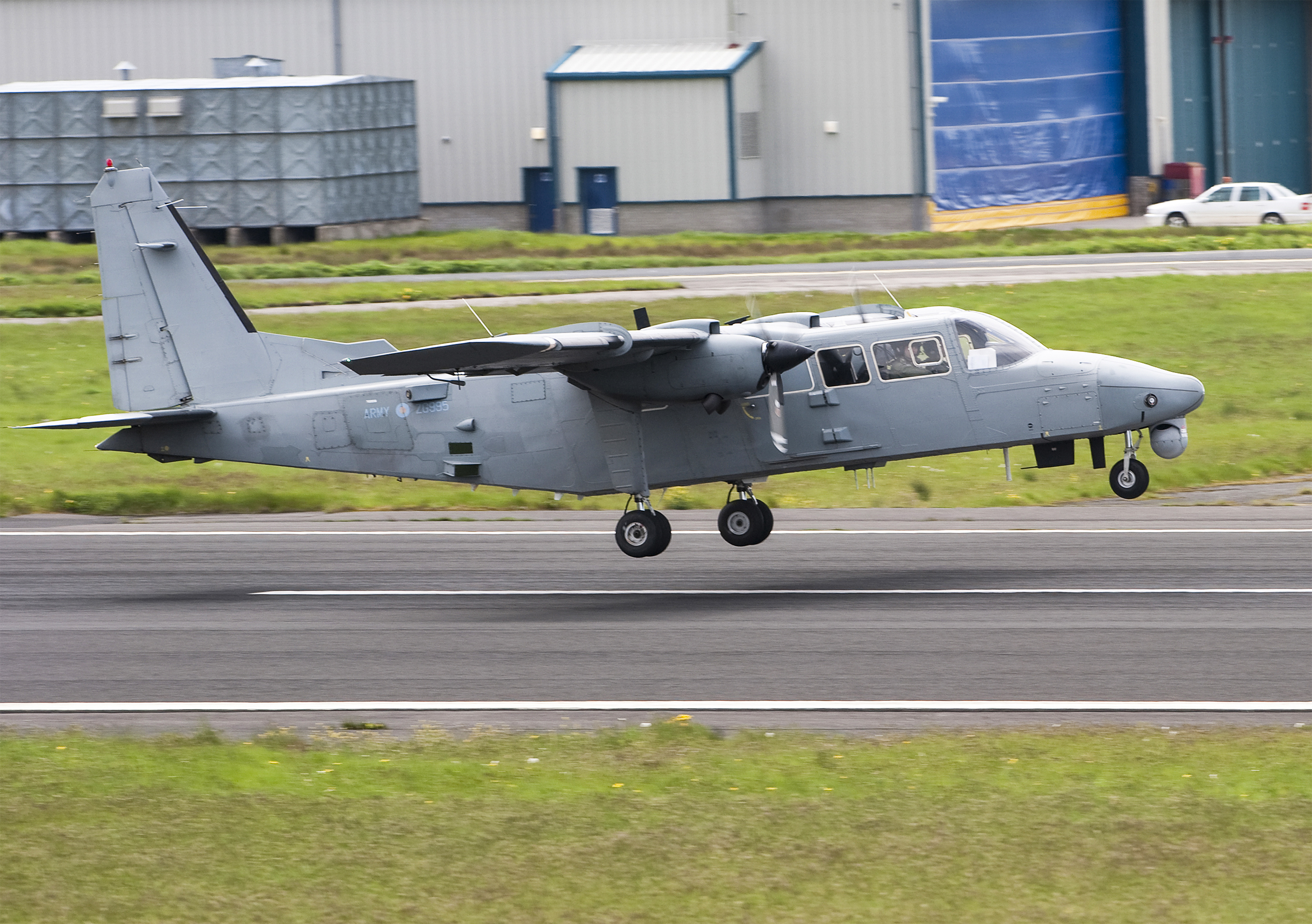
A Britten-Norman completou o voo inaugural do primeiro avião de seu tipo, montado inteiramente na Ilha de Wight, e recupera o controle total do processo.
04-09-2026 O Britten-Norman Islander completa o seu primeiro voo de teste fabricado na linha de montagem da Ilha de Wight, consolidando o regresso integral da produção deste…
A Britten-Norman prepara para o voo inaugural o primeiro Islander construído integralmente no Reino Unido. A aeronave será entregue às Ilhas Malvinas.
História
John Britten e Desmond Norman, sócios na conversão de aviões agrícolas, começaram em 1963 a trabalhar num bimotor de pistão simples e barato. A sua leitura do mercado foi certeira: às incipientes companhias aéreas de terceiro nível interessava-lhes mais a carga paga do que a velocidade ou o alcance, de modo que o novo avião sacrificou prestações a favor da capacidade. As asas e as superfícies de cauda foram feitas de corda e espessura constantes e todas as nervuras da asa são idênticas, decisões tomadas para baratear o fabrico. O protótipo G-ATCT voou a 13 de junho de 1965 com dois motores Rolls-Royce Continental IO-360-B e apareceu quatro dias mais tarde no Salão de Paris; os ensaios aconselharam aumentar a envergadura e adotar os Avco Lycoming O-540-E, que ficaram como grupo motopropulsor padrão. O primeiro avião de série voou a 24 de abril de 1967 e a certificação britânica chegou em agosto desse ano.
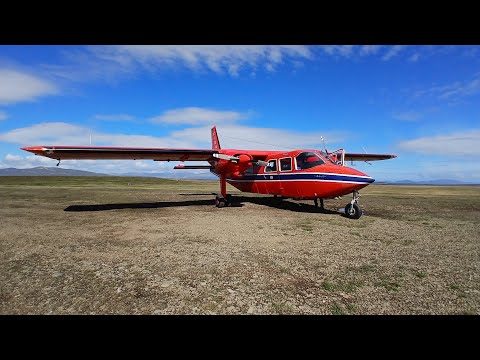
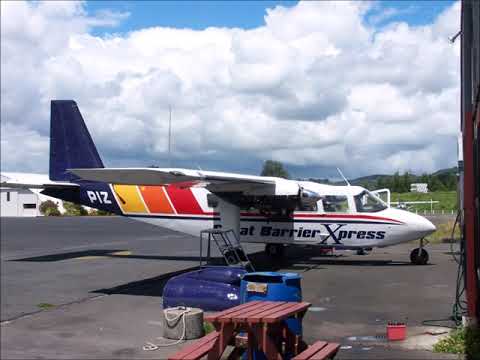
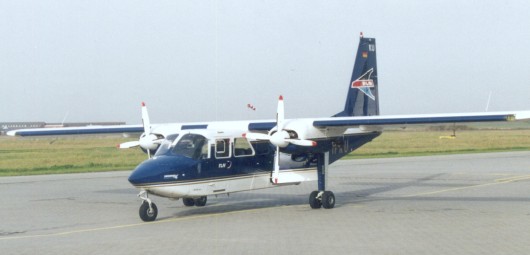
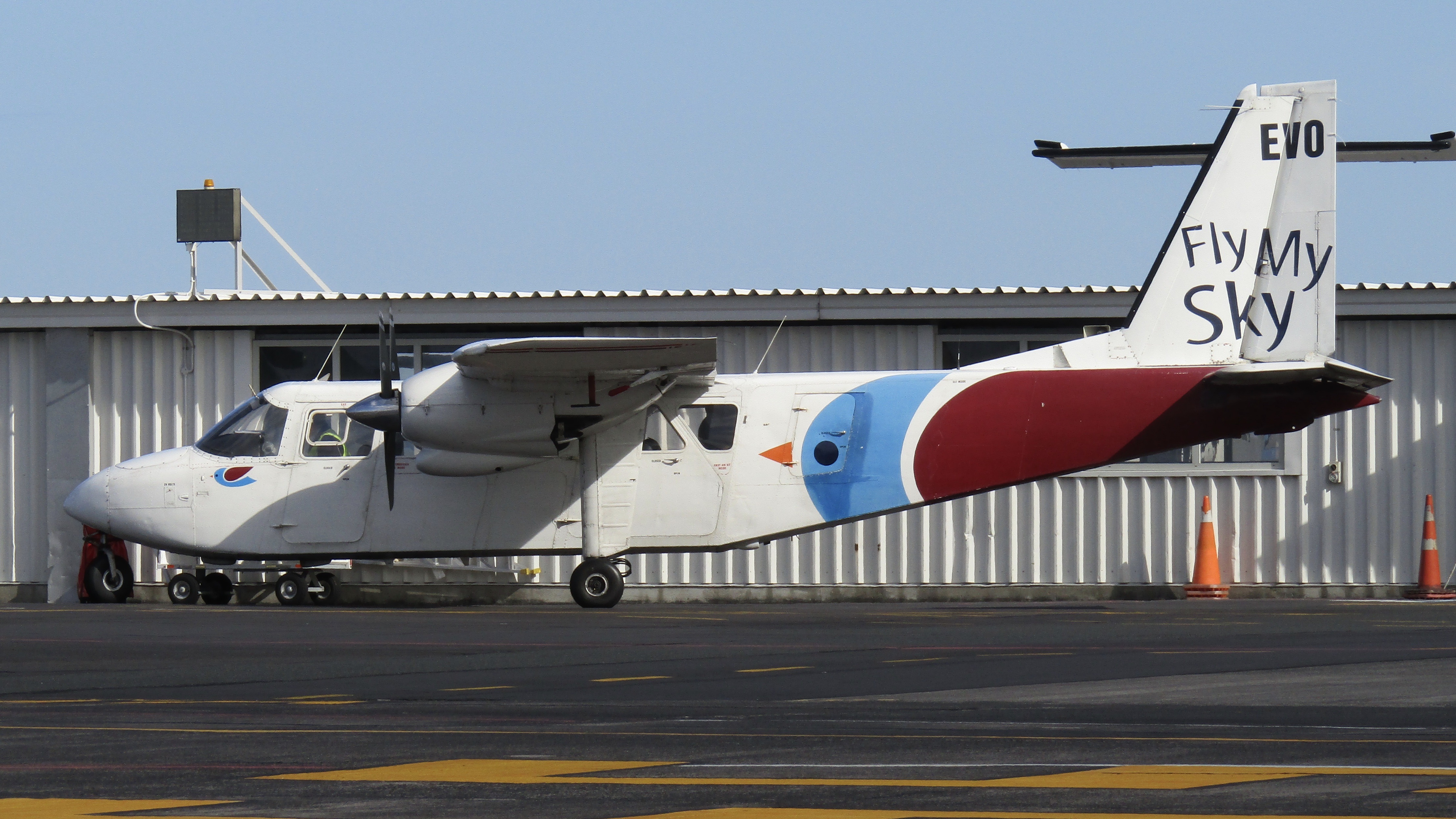
O Islander é um monoplano de asa ao nível do ombro, fuselagem retangular e trem triciclo fixo, sem coxia central: as suas filas de assentos aproveitam ao máximo uma cabina de apenas 1,09 m de largura, com duas portas a bombordo e uma a estibordo. Essa cabina reconfigura-se em pouco tempo, daí a variedade de ofícios do tipo: voos regulares e charter, carga, ambulância com três macas, trabalho agrícola, vigilância aérea, lançamento de paraquedistas e tarefas policiais. A versão militar, apresentada em 1970 com o nome de Defender, acrescentou pontos de fixação sob a asa, e a Maritime Defender orientou-se para a patrulha costeira e o salvamento. A partir de 1980 pôde encomendar-se com turbo-hélices Allison 250, configuração designada BN-2T, cujos primeiros exemplares entraram ao serviço em 1981.
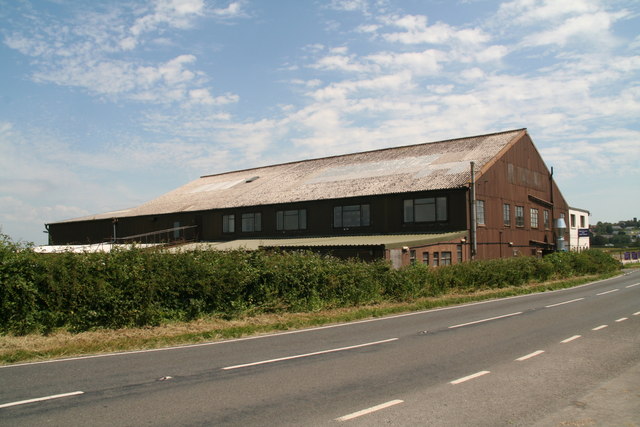
A procura depressa ultrapassou a capacidade de Bembridge, na ilha de Wight. A produção repartiu-se pela Europa — montagem na Roménia, acabamento na Bélgica após a compra da empresa pela Fairey em 1972 — e em 1975 juntou-se uma licença filipina; mais de 500 aparelhos saíram da linha romena. Em 1974 as vendas superaram o recorde de 548 encomendas detido pelo bimotor comercial britânico mais vendido, e em 1982 entregou-se o Islander número 1000. Depois as vendas caíram, em parte porque os aviões já vendidos duravam muito: em 2016 o fabricante falava em cerca de 500 operadores em mais de 120 países e, em outubro de 2019, mantinham-se ao serviço 800 aparelhos. O tipo detém um recorde curioso: cobre para a Loganair a ligação regular mais curta do mundo, entre Westray e Papa Westray, de 2,7 km e cerca de dois minutos de voo.
Variantes
| BN-2 (prototipo) | BN-2T Turbine Islander | BN-2A-10 | BN-2A-2 | BN-2A-20 | BN-2A-21 | BN-2A-23 | BN-2A-24 | BN-2A-25 | BN-2A-26 | BN-2A-27 | BN-2A-3 | BN-2A-30 (hidroavión con flotadores) | BN-2A-41 Turbo Islander | BN-2A-6 | BN-2A-7 | BN-2A-8 | BN-2A-9 | BN-2A Islander | BN-2B-20 | BN-2B-21 | BN-2B-26 | BN-2B-27 | BN-2B Defender | BN-2B Islander II | BN-2 con fanes entubados (banco de pruebas) | BN-2E Islander Super | BN-2T-4R AEW Defender | BN-2T-4S Defender 4000 | Defender AL Mk 1 | Defender AL Mk 2 / R2 | Defender T Mk 3 | Islander AL1 / R1 | Islander CC2 / CC2A | Maritime Defender | Project Fresson (Islander eléctrico) | |
|---|---|---|---|---|---|---|---|---|---|---|---|---|---|---|---|---|---|---|---|---|---|---|---|---|---|---|---|---|---|---|---|---|---|---|---|---|
| Primeiro voo | 13 de junho de 1965 | 2 de agosto de 1980 | — | — | — | — | — | — | — | — | — | — | — | — | — | — | — | — | — | — | — | — | — | — | — | — | — | — | — | — | — | — | — | — | — | — |
| Tipo de aeronave | Light utility aircraft | — | Light utility aircraft | Light utility aircraft | Avión utilitario ligero | Light utility aircraft | Light utility aircraft | Light utility aircraft | Light utility aircraft | Light utility aircraft | Light utility aircraft | Light utility aircraft | Light utility aircraft | Avión utilitario ligero | Light utility aircraft | Light utility aircraft | Light utility aircraft | Light utility aircraft | — | Light utility aircraft | Avión utilitario ligero | Light utility aircraft | Light utility aircraft | — | — | Light utility aircraft | Light utility aircraft | Light military surveillance aircraft | — | Light military surveillance aircraft | Light military surveillance aircraft | Light military training aircraft | Light military liaison and reconnaissance aircraft | Light military liaison aircraft | Armed light maritime patrol aircraft | Light utility aircraft |
| Grupo motopropulsor | 2 × Rolls-Royce/Continental IO-360-B piston engines of 157 kW (210 hp) each; the prototype was soon re-engined with 194 kW Lycoming O-540-E4C5 units. | — | 2 × turbocharged, fuel-injected Lycoming TIO-540-H1A piston engines of 201 kW (270 hp) each, on the BN-2A-8 airframe with raised take-off weight. | 2 × fuel-injected Lycoming IO-540-K1B5 piston engines of 224 kW (300 hp) each. | 2 × motor de pistón de inyección Lycoming IO-540-K1B5 de 224 kW (300 hp) unitarios. | 2 × fuel-injected Lycoming IO-540-K1B5 piston engines of 224 kW (300 hp) each. | 2 × fuel-injected Lycoming IO-540-K1B5 piston engines of 224 kW (300 hp) each: a single BN-2A-24 re-engined and fitted with wingtip tanks. | 2 × Lycoming O-540-E4C5 piston engines of 194 kW (260 hp) each, as on the BN-2A-27 it derives from. | 2 × Lycoming O-540-E4C5 piston engines of 194 kW (260 hp) each: essentially a BN-2A-26 with the BN-2A-8S long nose, built by Fairey at Gosselies as the donor airframe for the BN-2A-41 prototype. | 2 × Lycoming O-540-E4C5 piston engines of 194 kW (260 hp) each. | 2 × Lycoming O-540-E4C5 piston engines of 194 kW (260 hp) each. | 2 × fuel-injected Lycoming IO-540-K1B5 piston engines of 224 kW (300 hp) each. | 2 × Lycoming O-540-E4C5 piston engines of 194 kW (260 hp) each; the BN-2A-3x family covered the floatplane and amphibian projects, the even-numbered designations taking the 224 kW engine instead. | 2 × turbohélice Lycoming LTP 101 con hélices de abanderamiento automático, montados unos 15 cm más al exterior que los pistones de serie. | 2 × Lycoming O-540-E4C5 piston engines of 194 kW (260 hp) each. | 2 × Lycoming O-540-E4C5 piston engines of 194 kW (260 hp) each. | 2 × Lycoming O-540-E4C5 piston engines of 194 kW (260 hp) each. | 2 × Lycoming O-540-E4C5 piston engines of 194 kW (260 hp) each. | — | 2 × fuel-injected Lycoming IO-540-K1B5 piston engines of 224 kW (300 hp) each, with two- or three-blade Hartzell propellers depending on modification. | 2 × motor de pistón de inyección Lycoming IO-540-K1B5 de 224 kW (300 hp) unitarios. | 2 × Lycoming O-540-E4C5 piston engines of 194 kW (260 hp) each; some aircraft carry the three-blade Hartzell propeller of modification NB-M-1361. | 2 × Lycoming O-540-E4C5 piston engines of 194 kW (260 hp) each. | — | — | 2 × Lycoming O-540-E4C5 piston engines of 194 kW (260 hp) each driving Dowty Rotol ducted fans, tested in 1977 to cut noise against the conventional propeller; the installation called for local strengthening of the main wing spar at the root. | 2 × Lycoming O-540-E4C5 piston engines of 194 kW (260 hp) each, unchanged from the BN-2 it was converted from. | 2 × Allison 250-B17F/1 turboprops of 298 kW (400 shp) each, with 1.98 m three-blade Hartzell propellers. | — | 2 × Allison 250-B17F/1 turboprops of 298 kW (400 shp) each. | 2 × Allison 250-B17F/1 turboprops of 298 kW (400 shp) each. | 2 × Allison 250-B17F/1 turboprops of 298 kW (400 shp) each. | 2 × Allison 250-B17C turboprops flat-rated at 239 kW (320 shp) each. | 2 × Allison 250-B17C turboprops flat-rated at 239 kW (320 shp) each. | 2 × fuel-injected Lycoming IO-540-K1B5 piston engines of 224 kW (300 hp) each. | Hydrogen fuel-cell electric powertrain (HFCPS) by Cranfield Aerospace Solutions: 240 kW of electrical power yielding up to 220 kW at the motor. The demonstrator replaces one of the Islander's two piston engines. |
| Motorização | 2 × Rolls-Royce/Continental IO-360-B | 2 × Allison 250-B17C | 2 × Lycoming TIO-540-H1A | 2 × Lycoming IO-540-K1B5 | 2 × Lycoming IO-540-K1B5 | 2 × Lycoming IO-540-K1B5 | 2 × Lycoming IO-540-K1B5 | 2 × Lycoming O-540-E4C5 | 2 × Lycoming O-540-E4C5 | 2 × Lycoming O-540-E4C5 | 2 × Lycoming O-540-E4C5 | 2 × Lycoming IO-540-K1B5 | 2 × Lycoming O-540-E4C5 | 2 × Lycoming LTP 101 | 2 × Lycoming O-540-E4C5 | 2 × Lycoming O-540-E4C5 | 2 × Lycoming O-540-E4C5 | 2 × Lycoming O-540-E4C5 | 2 × Lycoming O-540-E4C5 | 2 × Lycoming IO-540-K1B5 | 2 × Lycoming IO-540-K1B5 | 2 × Lycoming O-540-E4C5 | 2 × Lycoming O-540-E4C5 | 2 × Lycoming IO-540-K1B5 | 2 × Lycoming O-540-E4C5 | 2 × Lycoming O-540-E4C5 | 2 × Lycoming O-540-E4C5 | 2 × Allison 250-B17F/1 | 2 × Allison 250-B17F/1 | 2 × Allison 250-B17F/1 | 2 × Allison 250-B17F/1 | 2 × Allison 250-B17F/1 | 2 × Allison 250-B17C | 2 × Allison 250-B17C | 2 × Lycoming IO-540-K1B5 | Cranfield Aerospace Solutions HFCPS (pila de combustible de hidrógeno) |
| Potência unitária | 211 hp | 321 hp | 270 hp | 300 hp | 300 hp | 300 hp | 300 hp | 260 hp | 260 hp | 260 hp | 260 hp | 300 hp | 260 hp | — | 260 hp | 260 hp | 260 hp | 260 hp | 260 hp | 300 hp | 300 hp | 260 hp | 260 hp | 300 hp | 260 hp | 260 hp | 260 hp | 400 hp Melhor valor da linha | 400 hp Melhor valor da linha | 400 hp Melhor valor da linha | 400 hp Melhor valor da linha | 400 hp Melhor valor da linha | 321 hp | 321 hp | 300 hp | 220 kW |
| Comprimento | 10,9 m | 10,9 m | — | — | — | — | — | — | — | — | — | — | — | — | — | — | — | — | 10,9 m | — | — | — | — | — | 10,9 m | — | — | 12,4 m Melhor valor da linha | 12,2 m | — | — | — | — | — | — | — |
| Envergadura | — | — | — | — | — | — | — | — | — | — | — | — | — | — | — | — | — | — | — | — | — | — | — | — | 14,9 m | — | — | 16,2 m Melhor valor da linha | 16,2 m Melhor valor da linha | — | — | — | — | — | — | — |
| Altura | 4,2 m | 4,5 m Melhor valor da linha | — | — | — | — | — | — | — | — | — | — | — | — | — | — | — | — | 4,2 m | — | — | — | — | — | 4,2 m | — | — | 4,2 m | 4,4 m | — | — | — | — | — | — | — |
| Área alar | 30,2 m² | 30,2 m² | — | 30,2 m² | — | — | — | — | — | — | — | — | — | — | 30,2 m² | — | — | — | 30,2 m² | 30,2 m² | — | 30,2 m² | — | — | 30,2 m² | — | — | 32,7 m² Melhor valor da linha | 32,7 m² Melhor valor da linha | 32,7 m² Melhor valor da linha | 32,7 m² Melhor valor da linha | 32,7 m² Melhor valor da linha | 30,2 m² | 30,2 m² | — | — |
| Peso vazio | — | — | — | — | — | — | — | — | — | — | — | — | — | — | — | — | — | — | — | — | — | — | — | — | 1866 kg Melhor valor da linha | — | — | — | 2223 kg | — | — | — | — | — | — | — |
| MTOW | 2585 kg | 3175 kg | — | 2858 kg | 2994 kg | 2994 kg | — | — | — | 2994 kg | 2994 kg | 2858 kg | — | — | 2858 kg | — | 2858 kg | 2858 kg | 2722 kg | 2994 kg | 2994 kg | 2994 kg | 2994 kg | 2994 kg | 2994 kg | — | — | 3855 kg | 3856 kg Melhor valor da linha | 3855 kg | 3855 kg | 3855 kg | 3175 kg | 3175 kg | 2994 kg | — |
| Velocidade máxima | — | — | — | — | — | — | — | — | — | — | — | — | — | — | — | — | — | — | — | — | — | — | — | — | 274 km/h | — | — | — | 326 km/h Melhor valor da linha | — | — | — | — | — | — | — |
| Altitude da velocidade máxima | — | — | — | — | — | — | — | — | — | — | — | — | — | — | — | — | — | — | — | — | — | — | — | — | 0 m | — | — | — | — | — | — | — | — | — | — | — |
| Velocidade de cruzeiro | — | — | — | — | — | — | — | — | — | — | — | — | — | — | — | — | — | — | — | — | — | — | — | — | 240 km/h | — | — | — | 280 km/h Melhor valor da linha | — | — | — | — | — | — | — |
| Altitude de cruzeiro | — | — | — | — | — | — | — | — | — | — | — | — | — | — | — | — | — | — | — | — | — | — | — | — | 3700 m | — | — | — | — | — | — | — | — | — | — | — |
| Teto de serviço | — | — | — | — | — | — | — | — | — | — | — | — | — | — | — | — | — | — | — | — | — | — | — | — | 4000 m | — | — | — | 7600 m Melhor valor da linha | — | — | — | — | — | — | — |
| Razão de subida inicial | — | — | — | — | — | — | — | — | — | — | — | — | — | — | — | — | — | — | — | — | — | — | — | — | 4,4 m/s | — | — | — | — | — | — | — | — | — | — | — |
| Alcance | — | — | — | — | — | — | — | — | — | — | — | — | — | — | — | — | — | — | — | — | — | — | — | — | 1398 km | — | — | — | 1863 km Melhor valor da linha | — | — | — | — | — | — | — |
| Raio de ação | 0 km Melhor valor da linha | 0 km Melhor valor da linha | 0 km Melhor valor da linha | 0 km Melhor valor da linha | 0 km Melhor valor da linha | 0 km Melhor valor da linha | 0 km Melhor valor da linha | 0 km Melhor valor da linha | 0 km Melhor valor da linha | 0 km Melhor valor da linha | 0 km Melhor valor da linha | 0 km Melhor valor da linha | 0 km Melhor valor da linha | 0 km Melhor valor da linha | 0 km Melhor valor da linha | 0 km Melhor valor da linha | 0 km Melhor valor da linha | 0 km Melhor valor da linha | 0 km Melhor valor da linha | 0 km Melhor valor da linha | 0 km Melhor valor da linha | 0 km Melhor valor da linha | 0 km Melhor valor da linha | — | 0 km Melhor valor da linha | 0 km Melhor valor da linha | 0 km Melhor valor da linha | — | — | — | — | — | — | — | — | 0 km Melhor valor da linha |
| Autonomia | — | — | — | — | — | — | — | — | — | — | — | — | — | — | — | — | — | — | — | — | — | — | — | — | — | — | — | — | 510 min | — | — | — | — | — | — | — |
| Armamento | None: civil prototype with no weapons capability. | — | None: civil variant with no weapons capability. | None: civil variant with no weapons capability. | Ninguno: variante civil sin capacidad de armamento. | None in civil guise; the production Defender was armed on this airframe. | None: civil variant with no weapons capability. | None: civil variant with no weapons capability. | None: civil variant with no weapons capability. | None: civil variant with no weapons capability. | None: civil variant with no weapons capability. | None: civil variant with no weapons capability. | None: civil project with no weapons capability. | Ninguno: prototipo civil sin capacidad de armamento. | None: civil variant with no weapons capability. | None: civil variant with no weapons capability. | None: civil variant with no weapons capability. | None: civil variant with no weapons capability. | — | None: civil variant with no weapons capability. | Ninguno en la versión civil; la célula sostuvo el BN-2B-21 Defender y el Maritime Defender. | None: civil variant with no weapons capability. | None: civil variant with no weapons capability. | — | — | None: civil flying testbed. | None: civil prototype with no weapons capability. | No weapons of its own: the payload is the early-warning radar in the nose radome and its mission consoles. | — | No offensive weapons as standard: a low-light-level television camera in an under-nose turret, cabin-mounted cameras or COMINT equipment, and infrared jammers in underwing pods against surface-to-air missiles. | No offensive weapons: as the Defender AL.1 but with a different sensor fit. Redesignated Defender R.2 in 2019. | None: training version of the Defender AL.1. | Only two underwing pylons, half the Defender's; in British Army service they carry mission equipment rather than weapons. | None: RAF communications and liaison aircraft. | Bendix/King search radar, forward-looking infrared, sonobuoys, a magnetic anomaly detector and acoustic processors; on the four underwing hardpoints, two Sting Ray torpedoes, four Sea Skua anti-ship missiles or other stores, up to 1,134 kg. | None: civil propulsion demonstrator. |
| Carga bélica máxima | 0 kg | 0 kg | 0 kg | 0 kg | 0 kg | 0 kg | 0 kg | 0 kg | 0 kg | 0 kg | 0 kg | 0 kg | 0 kg | 0 kg | 0 kg | 0 kg | 0 kg | 0 kg | 0 kg | 0 kg | 0 kg | 0 kg | 0 kg | 1134 kg Melhor valor da linha | 0 kg | 0 kg | 0 kg | — | 1134 kg Melhor valor da linha | — | — | — | — | — | 1134 kg Melhor valor da linha | 0 kg |
| Carga útil | — | — | — | — | — | — | — | — | — | — | — | — | — | — | — | — | — | — | — | — | — | — | — | — | 929 kg | — | — | — | — | — | — | — | — | — | — | — |
| Capacidade de carga | Cabin for up to ten occupants: pilot plus nine passengers. | — | Cabin for up to ten occupants: pilot plus nine passengers. | Cabin for up to ten occupants: pilot plus nine passengers. | Cabina de hasta diez ocupantes: piloto y nueve pasajeros. | Cabin for up to ten occupants, with increased span and wingtip tanks. | BN-2A-8S long nose; cabin for up to ten occupants. | Identical to the BN-2A-27 apart from the BN-2A-8S long nose; cabin for up to ten occupants. | Cabin for up to ten occupants, long-nose configuration. | Cabin for up to ten occupants; the agricultural and firefighting Islanders came from this version. | Cabin for up to ten occupants, with increased span and wingtip tanks. | Cabin for up to ten occupants: pilot plus nine passengers. | Projected float configuration; never went beyond mock-up. | El avión de serie previsto llevaba piloto y once pasajeros; el único prototipo mantuvo la cabina estándar con el morro largo del BN-2A-8S. | Cabin for up to ten occupants: pilot plus nine passengers. | Cabin for up to ten occupants: pilot plus nine passengers. | Lengthened nose with extra baggage bay; cabin for up to ten occupants. | Cabin for up to ten occupants: pilot plus nine passengers. | — | Cabin for up to ten occupants, with better soundproofing and interior than the BN-2A. | Cabina de hasta diez ocupantes con envergadura aumentada y depósitos en punta de ala. | Cabin for up to ten occupants; the most numerous piston version of the B series. | Cabin for up to ten occupants, with increased span and wingtip tanks. | — | — | Standard Islander airframe, cabin unchanged. | Fuselage stretched by an 84 cm plug ahead of the wing and the internal baggage step removed: two more double seats, up to thirteen passengers besides the pilot, with a new starboard rear door. | Stretched fuselage and the Trislander's larger-span wing; the ten-seat cabin is given over to operator stations. | — | Defender 4000 configured for reconnaissance; the cabin houses the mission equipment and its operators. | Cabin taken up by mission consoles and sensors. | Cabin arranged for crew training on the Defender mission system. | Built as Defenders though designated Islanders; no sliding door, but provision for a wide range of mission equipment. | Transport cabin for up to ten occupants; the CC.2A is a civil BN-2T brought up to CC.2 standard. | Cabin reworked as a sensor-operator station for long-range patrol and reconnaissance. | Keeps the Islander's nine-passenger cabin; hydrogen is carried in SHyFT tanks. |
| Tripulação | 1 Melhor valor da linha | 1 Melhor valor da linha | 1 Melhor valor da linha | 1 Melhor valor da linha | 1 Melhor valor da linha | 1 Melhor valor da linha | 1 Melhor valor da linha | 1 Melhor valor da linha | 1 Melhor valor da linha | 1 Melhor valor da linha | 1 Melhor valor da linha | 1 Melhor valor da linha | — | — | 1 Melhor valor da linha | 1 Melhor valor da linha | 1 Melhor valor da linha | 1 Melhor valor da linha | 1 Melhor valor da linha | 1 Melhor valor da linha | 1 Melhor valor da linha | 1 Melhor valor da linha | 1 Melhor valor da linha | 1 Melhor valor da linha | 1 Melhor valor da linha | — | 1 Melhor valor da linha | 1 Melhor valor da linha | 2 | 2 | 2 | 2 | — | 1 Melhor valor da linha | 2 | — |
| Passageiros | 9 | 9 | 9 | 9 | 9 | 9 | 9 | 9 | 9 | 9 | 9 | 9 | 9 | — | 9 | 9 | 9 | 9 | 9 | 9 | 9 | 9 | 9 | 9 | 9 | — | 13 Melhor valor da linha | 9 | 9 | — | — | — | — | 9 | — | 9 |
| Unidades construídas | — | — | — | — | — | — | 1 | — | — | — | — | — | — | 1 | — | — | — | — | 251 Melhor valor da linha | — | — | — | — | — | — | 1 | 1 | — | — | 4 | — | 1 | 7 | 3 | — | — |
Imagens