Aviazione generale · Civile · Regno Unito
Britten-Norman Islander
- 13 giugno 1965
- Primo volo
- 1967
- Entrata in servizio
- In servizio
- Stato
- 1280
- Esemplari costruiti
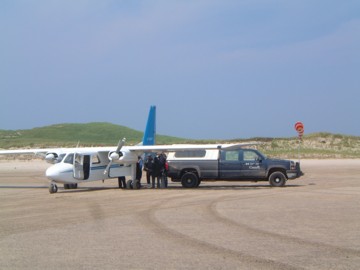

_11-1600.webp)


Il Britten-Norman Islander è un bimotore utilitario leggero britannico, con capacità per un pilota e nove passeggeri, progettato negli anni sessanta per il trasporto di terzo livello fra piste corte e mal preparate. Volò per la prima volta il 13 giugno 1965, ottenne la certificazione britannica nell'agosto del 1967 ed è tuttora in produzione, con 1280 unità costruite e un ritorno alla fabbrica originaria di Bembridge annunciato nel 2023.
Eventi correlati
Schede correlate
Categoria
Storia
John Britten e Desmond Norman, soci nella conversione di aerei agricoli, cominciarono nel 1963 a lavorare a un bimotore a pistoni semplice ed economico. La loro lettura del mercato fu azzeccata: alle nascenti compagnie aeree di terzo livello importava più il carico pagante che la velocità o l'autonomia, e così il nuovo aereo sacrificò le prestazioni a favore della capacità. Le ali e le superfici di coda vennero realizzate a corda e spessore costanti e tutte le centine alari sono identiche, scelte compiute per abbassare i costi di fabbricazione. Il prototipo G-ATCT volò il 13 giugno 1965 con due motori Rolls-Royce Continental IO-360-B e comparve quattro giorni più tardi al Salone di Parigi; le prove consigliarono di aumentare l'apertura alare e di adottare gli Avco Lycoming O-540-E, che rimasero come motorizzazione standard. Il primo aereo di serie volò il 24 aprile 1967 e la certificazione britannica arrivò nell'agosto di quell'anno.
L'Islander è un monoplano ad ala alta a spalla, con fusoliera rettangolare e carrello triciclo fisso, privo di corridoio centrale: le sue file di sedili sfruttano al massimo una cabina larga appena 1,09 m, con due porte a babordo e una a tribordo. Quella cabina si riconfigura in poco tempo, da cui la varietà di mestieri del tipo: voli di linea e charter, carico, ambulanza con tre barelle, lavoro agricolo, sorveglianza aerea, lancio di paracadutisti e compiti di polizia. La versione militare, presentata nel 1970 con il nome di Defender, aggiunse attacchi subalari, e la Maritime Defender fu orientata al pattugliamento costiero e al soccorso. Dal 1980 poté essere ordinato con turboeliche Allison 250, configurazione designata BN-2T, i cui primi esemplari entrarono in servizio nel 1981.
La domanda superò presto la capacità di Bembridge, sull'isola di Wight. La produzione si distribuì per l'Europa —montaggio in Romania, finitura in Belgio dopo l'acquisto dell'azienda da parte di Fairey nel 1972— e nel 1975 si aggiunse una licenza filippina; più di 500 apparecchi uscirono dalla linea rumena. Nel 1974 le vendite superarono il record di 548 ordini detenuto dal bimotore commerciale britannico più venduto, e nel 1982 fu consegnato l'Islander numero 1000. In seguito le vendite calarono, in parte perché gli aerei già venduti duravano a lungo: nel 2016 il costruttore parlava di circa 500 operatori in più di 120 paesi, e nell'ottobre del 2019 erano ancora in servizio 800 apparecchi. Il tipo detiene un record curioso: copre per Loganair il collegamento di linea più corto del mondo, fra Westray e Papa Westray, di 2,7 km e circa due minuti di volo.
Varianti
| BN-2 (prototipo) | BN-2A-10 | BN-2A-2 | BN-2A-20 | BN-2A-21 | BN-2A-23 | BN-2A-24 | BN-2A-25 | BN-2A-26 | BN-2A-27 | BN-2A-3 | BN-2A-30 (hidroavión con flotadores) | BN-2A-41 Turbo Islander | BN-2A-6 | BN-2A-7 | BN-2A-8 | BN-2A-9 | BN-2A Islander | BN-2B-20 | BN-2B-21 | BN-2B-26 | BN-2B-27 | BN-2B Defender | BN-2B Islander II | BN-2 con fanes entubados (banco de pruebas) | BN-2E Islander Super | BN-2T-4R AEW Defender | BN-2T-4S Defender 4000 | BN-2T Turbine Islander | Defender AL Mk 1 | Defender AL Mk 2 / R2 | Defender T Mk 3 | Islander AL1 / R1 | Islander CC2 / CC2A | Maritime Defender | Project Fresson (Islander eléctrico) | |
|---|---|---|---|---|---|---|---|---|---|---|---|---|---|---|---|---|---|---|---|---|---|---|---|---|---|---|---|---|---|---|---|---|---|---|---|---|
| Primo volo | 13 giugno 1965 | — | — | — | — | — | — | — | — | — | — | — | — | — | — | — | — | — | — | — | — | — | — | — | — | — | — | — | — | — | — | — | — | — | — | — |
| Tipo di aeromobile | Light utility aircraft | Light utility aircraft | Light utility aircraft | Avión utilitario ligero | Light utility aircraft | Light utility aircraft | Light utility aircraft | Light utility aircraft | Light utility aircraft | Light utility aircraft | Light utility aircraft | Light utility aircraft | Avión utilitario ligero | Light utility aircraft | Light utility aircraft | Light utility aircraft | Light utility aircraft | Light utility aircraft | Light utility aircraft | Avión utilitario ligero | Light utility aircraft | Light utility aircraft | Armed light patrol and surveillance aircraft | Light utility aircraft | Light utility aircraft | Light utility aircraft | Light military surveillance aircraft | Armed light patrol and surveillance aircraft | Light utility aircraft | Light military surveillance aircraft | Light military surveillance aircraft | Light military training aircraft | Light military liaison and reconnaissance aircraft | Light military liaison aircraft | Armed light maritime patrol aircraft | Light utility aircraft |
| Apparato propulsivo | 2 × Rolls-Royce/Continental IO-360-B piston engines of 157 kW (210 hp) each; the prototype was soon re-engined with 194 kW Lycoming O-540-E4C5 units. | 2 × turbocharged, fuel-injected Lycoming TIO-540-H1A piston engines of 201 kW (270 hp) each, on the BN-2A-8 airframe with raised take-off weight. | 2 × fuel-injected Lycoming IO-540-K1B5 piston engines of 224 kW (300 hp) each. | 2 × motor de pistón de inyección Lycoming IO-540-K1B5 de 224 kW (300 hp) unitarios. | 2 × fuel-injected Lycoming IO-540-K1B5 piston engines of 224 kW (300 hp) each. | 2 × fuel-injected Lycoming IO-540-K1B5 piston engines of 224 kW (300 hp) each: a single BN-2A-24 re-engined and fitted with wingtip tanks. | 2 × Lycoming O-540-E4C5 piston engines of 194 kW (260 hp) each, as on the BN-2A-27 it derives from. | 2 × Lycoming O-540-E4C5 piston engines of 194 kW (260 hp) each: essentially a BN-2A-26 with the BN-2A-8S long nose, built by Fairey at Gosselies as the donor airframe for the BN-2A-41 prototype. | 2 × Lycoming O-540-E4C5 piston engines of 194 kW (260 hp) each. | 2 × Lycoming O-540-E4C5 piston engines of 194 kW (260 hp) each. | 2 × fuel-injected Lycoming IO-540-K1B5 piston engines of 224 kW (300 hp) each. | 2 × Lycoming O-540-E4C5 piston engines of 194 kW (260 hp) each; the BN-2A-3x family covered the floatplane and amphibian projects, the even-numbered designations taking the 224 kW engine instead. | 2 × turbohélice Lycoming LTP 101 con hélices de abanderamiento automático, montados unos 15 cm más al exterior que los pistones de serie. | 2 × Lycoming O-540-E4C5 piston engines of 194 kW (260 hp) each. | 2 × Lycoming O-540-E4C5 piston engines of 194 kW (260 hp) each. | 2 × Lycoming O-540-E4C5 piston engines of 194 kW (260 hp) each. | 2 × Lycoming O-540-E4C5 piston engines of 194 kW (260 hp) each. | 2 × Lycoming O-540-E4C5 piston engines of 194 kW (260 hp) each. | 2 × fuel-injected Lycoming IO-540-K1B5 piston engines of 224 kW (300 hp) each, with two- or three-blade Hartzell propellers depending on modification. | 2 × motor de pistón de inyección Lycoming IO-540-K1B5 de 224 kW (300 hp) unitarios. | 2 × Lycoming O-540-E4C5 piston engines of 194 kW (260 hp) each; some aircraft carry the three-blade Hartzell propeller of modification NB-M-1361. | 2 × Lycoming O-540-E4C5 piston engines of 194 kW (260 hp) each. | 2 × fuel-injected Lycoming IO-540-K1B5 piston engines of 224 kW (300 hp) each. | 2 × Lycoming O-540-E4C5 piston engines of 194 kW (260 hp) each, driving two-blade Hartzell constant-speed propellers of 1.98 m diameter. | 2 × Lycoming O-540-E4C5 piston engines of 194 kW (260 hp) each driving Dowty Rotol ducted fans, tested in 1977 to cut noise against the conventional propeller; the installation called for local strengthening of the main wing spar at the root. | 2 × Lycoming O-540-E4C5 piston engines of 194 kW (260 hp) each, unchanged from the BN-2 it was converted from. | 2 × Allison 250-B17F/1 turboprops of 298 kW (400 shp) each, with 1.98 m three-blade Hartzell propellers. | 2 × Allison 250-B17F/1 turboprops of 298 kW (400 shp) each, with three-blade Hartzell propellers. | 2 × Allison 250-B17C turboprops flat-rated at 239 kW (320 shp) each, governed to a maximum of 2030 propeller rpm, with 1.98 m three-blade Hartzell propellers. | 2 × Allison 250-B17F/1 turboprops of 298 kW (400 shp) each. | 2 × Allison 250-B17F/1 turboprops of 298 kW (400 shp) each. | 2 × Allison 250-B17F/1 turboprops of 298 kW (400 shp) each. | 2 × Allison 250-B17C turboprops flat-rated at 239 kW (320 shp) each. | 2 × Allison 250-B17C turboprops flat-rated at 239 kW (320 shp) each. | 2 × fuel-injected Lycoming IO-540-K1B5 piston engines of 224 kW (300 hp) each. | Hydrogen fuel-cell electric powertrain (HFCPS) by Cranfield Aerospace Solutions: 240 kW of electrical power yielding up to 220 kW at the motor. The demonstrator replaces one of the Islander's two piston engines. |
| Motorizzazione | 2 × Rolls-Royce/Continental IO-360-B | 2 × Lycoming TIO-540-H1A | 2 × Lycoming IO-540-K1B5 | 2 × Lycoming IO-540-K1B5 | 2 × Lycoming IO-540-K1B5 | 2 × Lycoming IO-540-K1B5 | 2 × Lycoming O-540-E4C5 | 2 × Lycoming O-540-E4C5 | 2 × Lycoming O-540-E4C5 | 2 × Lycoming O-540-E4C5 | 2 × Lycoming IO-540-K1B5 | 2 × Lycoming O-540-E4C5 | 2 × Lycoming LTP 101 | 2 × Lycoming O-540-E4C5 | 2 × Lycoming O-540-E4C5 | 2 × Lycoming O-540-E4C5 | 2 × Lycoming O-540-E4C5 | 2 × Lycoming O-540-E4C5 | 2 × Lycoming IO-540-K1B5 | 2 × Lycoming IO-540-K1B5 | 2 × Lycoming O-540-E4C5 | 2 × Lycoming O-540-E4C5 | 2 × Lycoming IO-540-K1B5 | 2 × Lycoming O-540-E4C5 | 2 × Lycoming O-540-E4C5 | 2 × Lycoming O-540-E4C5 | 2 × Allison 250-B17F/1 | 2 × Allison 250-B17F/1 | 2 × Allison 250-B17C | 2 × Allison 250-B17F/1 | 2 × Allison 250-B17F/1 | 2 × Allison 250-B17F/1 | 2 × Allison 250-B17C | 2 × Allison 250-B17C | 2 × Lycoming IO-540-K1B5 | Cranfield Aerospace Solutions HFCPS (pila de combustible de hidrógeno) |
| Potenza unitaria | 211 hp | 270 hp | 300 hp | 300 hp | 300 hp | 300 hp | 260 hp | 260 hp | 260 hp | 260 hp | 300 hp | 260 hp | — | 260 hp | 260 hp | 260 hp | 260 hp | 260 hp | 300 hp | 300 hp | 260 hp | 260 hp | 300 hp | 260 hp | 260 hp | 260 hp | 400 hp Valore migliore della riga | 400 hp Valore migliore della riga | 321 hp | 400 hp Valore migliore della riga | 400 hp Valore migliore della riga | 400 hp Valore migliore della riga | 321 hp | 321 hp | 300 hp | 220 kW |
| Lunghezza | 10,9 m | — | — | — | — | — | — | — | — | — | — | — | — | — | — | — | — | 10,9 m | — | — | — | — | — | 10,9 m | — | — | 12,4 m Valore migliore della riga | 12,2 m | 10,9 m | — | — | — | — | — | — | — |
| Apertura alare | — | — | — | — | — | — | — | — | — | — | — | — | — | — | — | — | — | — | — | — | — | — | — | 14,9 m | — | — | 16,2 m Valore migliore della riga | 16,2 m Valore migliore della riga | — | — | — | — | — | — | — | — |
| Altezza | 4,2 m | — | — | — | — | — | — | — | — | — | — | — | — | — | — | — | — | 4,2 m | — | — | — | — | — | 4,2 m | — | — | 4,2 m | 4,4 m | 4,5 m Valore migliore della riga | — | — | — | — | — | — | — |
| Superficie alare | 30,2 m² | — | 30,2 m² | — | — | — | — | — | — | — | — | — | — | 30,2 m² | — | — | — | 30,2 m² | 30,2 m² | — | 30,2 m² | — | — | 30,2 m² | — | — | 32,7 m² Valore migliore della riga | 32,7 m² Valore migliore della riga | 30,2 m² | 32,7 m² Valore migliore della riga | 32,7 m² Valore migliore della riga | 32,7 m² Valore migliore della riga | 30,2 m² | 30,2 m² | — | — |
| Peso a vuoto | — | — | — | — | — | — | — | — | — | — | — | — | — | — | — | — | — | — | — | — | — | — | — | 1866 kg Valore migliore della riga | — | — | — | 2223 kg | — | — | — | — | — | — | — | — |
| MTOW | 2585 kg | — | 2858 kg | 2994 kg | 2994 kg | — | — | — | 2994 kg | 2994 kg | 2858 kg | — | — | 2858 kg | — | 2858 kg | 2858 kg | 2722 kg | 2994 kg | 2994 kg | 2994 kg | 2994 kg | 2994 kg | 2994 kg | — | — | 3855 kg | 3856 kg Valore migliore della riga | 3175 kg | 3855 kg | 3855 kg | 3855 kg | 3175 kg | 3175 kg | 2994 kg | — |
| Velocità massima | — | — | — | — | — | — | — | — | — | — | — | — | — | — | — | — | — | — | — | — | — | — | — | 274 km/h | — | — | — | 326 km/h Valore migliore della riga | — | — | — | — | — | — | — | — |
| Quota di velocità massima | — | — | — | — | — | — | — | — | — | — | — | — | — | — | — | — | — | — | — | — | — | — | — | 0 m | — | — | — | — | — | — | — | — | — | — | — | — |
| Velocità di crociera | — | — | — | — | — | — | — | — | — | — | — | — | — | — | — | — | — | — | — | — | — | — | — | 240 km/h | — | — | — | 280 km/h Valore migliore della riga | — | — | — | — | — | — | — | — |
| Quota di crociera | — | — | — | — | — | — | — | — | — | — | — | — | — | — | — | — | — | — | — | — | — | — | — | 3700 m | — | — | — | — | — | — | — | — | — | — | — | — |
| Tangenza operativa | — | — | — | — | — | — | — | — | — | — | — | — | — | — | — | — | — | — | — | — | — | — | — | 4000 m | — | — | — | 7600 m Valore migliore della riga | — | — | — | — | — | — | — | — |
| Velocità di salita iniziale | — | — | — | — | — | — | — | — | — | — | — | — | — | — | — | — | — | — | — | — | — | — | — | 4,4 m/s | — | — | — | — | — | — | — | — | — | — | — | — |
| Autonomia | — | — | — | — | — | — | — | — | — | — | — | — | — | — | — | — | — | — | — | — | — | — | — | 1398 km | — | — | — | 1863 km Valore migliore della riga | — | — | — | — | — | — | — | — |
| Raggio d'azione | 0 km Valore migliore della riga | 0 km Valore migliore della riga | 0 km Valore migliore della riga | 0 km Valore migliore della riga | 0 km Valore migliore della riga | 0 km Valore migliore della riga | 0 km Valore migliore della riga | 0 km Valore migliore della riga | 0 km Valore migliore della riga | 0 km Valore migliore della riga | 0 km Valore migliore della riga | 0 km Valore migliore della riga | 0 km Valore migliore della riga | 0 km Valore migliore della riga | 0 km Valore migliore della riga | 0 km Valore migliore della riga | 0 km Valore migliore della riga | 0 km Valore migliore della riga | 0 km Valore migliore della riga | 0 km Valore migliore della riga | 0 km Valore migliore della riga | 0 km Valore migliore della riga | — | 0 km Valore migliore della riga | 0 km Valore migliore della riga | 0 km Valore migliore della riga | — | — | 0 km Valore migliore della riga | — | — | — | — | — | — | 0 km Valore migliore della riga |
| Durata di volo | — | — | — | — | — | — | — | — | — | — | — | — | — | — | — | — | — | — | — | — | — | — | — | — | — | — | — | 510 min | — | — | — | — | — | — | — | — |
| Condizioni di autonomia | — | — | — | — | — | — | — | — | — | — | — | — | — | — | — | — | — | — | — | — | — | — | — | 1,398 km with reserves at 240 km/h and 3,700 m, at 59% power; service ceiling 4,000 m. | — | — | — | 1,863 km on VFR reserves and eight and a half hours of endurance; service ceiling 7,600 m. | — | — | — | — | — | — | — | — |
| Armamento | None: civil prototype with no weapons capability. | None: civil variant with no weapons capability. | None: civil variant with no weapons capability. | Ninguno: variante civil sin capacidad de armamento. | None in civil guise; the production Defender was armed on this airframe. | None: civil variant with no weapons capability. | None: civil variant with no weapons capability. | None: civil variant with no weapons capability. | None: civil variant with no weapons capability. | None: civil variant with no weapons capability. | None: civil variant with no weapons capability. | None: civil project with no weapons capability. | Ninguno: prototipo civil sin capacidad de armamento. | None: civil variant with no weapons capability. | None: civil variant with no weapons capability. | None: civil variant with no weapons capability. | None: civil variant with no weapons capability. | None: civil variant with no weapons capability. | None: civil variant with no weapons capability. | Ninguno en la versión civil; la célula sostuvo el BN-2B-21 Defender y el Maritime Defender. | None: civil variant with no weapons capability. | None: civil variant with no weapons capability. | Four underwing hardpoints for up to 1,134 kg of drop tanks, bombs, missiles, 7.62 mm machine-gun pods, rocket pods, flares and sensors; the wing carries dedicated strengthening for the pylons. | None: civil transport variant, with neither hardpoints nor combat systems. | None: civil flying testbed. | None: civil prototype with no weapons capability. | No weapons of its own: the payload is the early-warning radar in the nose radome and its mission consoles. | Four underwing hardpoints for up to 1,134 kg of bombs, missiles, machine-gun pods, rocket pods, drop tanks or sensors. | None on the civil transport version. | No offensive weapons as standard: a low-light-level television camera in an under-nose turret, cabin-mounted cameras or COMINT equipment, and infrared jammers in underwing pods against surface-to-air missiles. | No offensive weapons: as the Defender AL.1 but with a different sensor fit. Redesignated Defender R.2 in 2019. | None: training version of the Defender AL.1. | Only two underwing pylons, half the Defender's; in British Army service they carry mission equipment rather than weapons. | None: RAF communications and liaison aircraft. | Bendix/King search radar, forward-looking infrared, sonobuoys, a magnetic anomaly detector and acoustic processors; on the four underwing hardpoints, two Sting Ray torpedoes, four Sea Skua anti-ship missiles or other stores, up to 1,134 kg. | None: civil propulsion demonstrator. |
| Carico bellico massimo | 0 kg | 0 kg | 0 kg | 0 kg | 0 kg | 0 kg | 0 kg | 0 kg | 0 kg | 0 kg | 0 kg | 0 kg | 0 kg | 0 kg | 0 kg | 0 kg | 0 kg | 0 kg | 0 kg | 0 kg | 0 kg | 0 kg | 1134 kg Valore migliore della riga | 0 kg | 0 kg | 0 kg | — | 1134 kg Valore migliore della riga | 0 kg | — | — | — | — | — | 1134 kg Valore migliore della riga | 0 kg |
| Carico utile | — | — | — | — | — | — | — | — | — | — | — | — | — | — | — | — | — | — | — | — | — | — | — | 929 kg | — | — | — | — | — | — | — | — | — | — | — | — |
| Capacità di carico | Cabin for up to ten occupants: pilot plus nine passengers. | Cabin for up to ten occupants: pilot plus nine passengers. | Cabin for up to ten occupants: pilot plus nine passengers. | Cabina de hasta diez ocupantes: piloto y nueve pasajeros. | Cabin for up to ten occupants, with increased span and wingtip tanks. | BN-2A-8S long nose; cabin for up to ten occupants. | Identical to the BN-2A-27 apart from the BN-2A-8S long nose; cabin for up to ten occupants. | Cabin for up to ten occupants, long-nose configuration. | Cabin for up to ten occupants; the agricultural and firefighting Islanders came from this version. | Cabin for up to ten occupants, with increased span and wingtip tanks. | Cabin for up to ten occupants: pilot plus nine passengers. | Projected float configuration; never went beyond mock-up. | El avión de serie previsto llevaba piloto y once pasajeros; el único prototipo mantuvo la cabina estándar con el morro largo del BN-2A-8S. | Cabin for up to ten occupants: pilot plus nine passengers. | Cabin for up to ten occupants: pilot plus nine passengers. | Lengthened nose with extra baggage bay; cabin for up to ten occupants. | Cabin for up to ten occupants: pilot plus nine passengers. | Cabin for up to ten occupants — pilot plus nine passengers — reached through individual side doors. | Cabin for up to ten occupants, with better soundproofing and interior than the BN-2A. | Cabina de hasta diez ocupantes con envergadura aumentada y depósitos en punta de ala. | Cabin for up to ten occupants; the most numerous piston version of the B series. | Cabin for up to ten occupants, with increased span and wingtip tanks. | Cabin for up to ten occupants, adaptable to troop transport, logistic support and casualty evacuation. | Ten seats — pilot plus nine passengers — in a cabin served by individual side doors and no aisle; maximum payload 929 kg, with 620 litres of fuel. | Standard Islander airframe, cabin unchanged. | Fuselage stretched by an 84 cm plug ahead of the wing and the internal baggage step removed: two more double seats, up to thirteen passengers besides the pilot, with a new starboard rear door. | Stretched fuselage and the Trislander's larger-span wing; the ten-seat cabin is given over to operator stations. | Stretched fuselage with the Trislander's strengthened wing and undercarriage; up to sixteen troops in the transport role, with two flight crew. | Cabin for up to ten occupants; the turbine raises maximum take-off weight to 3,175 kg. | Defender 4000 configured for reconnaissance; the cabin houses the mission equipment and its operators. | Cabin taken up by mission consoles and sensors. | Cabin arranged for crew training on the Defender mission system. | Built as Defenders though designated Islanders; no sliding door, but provision for a wide range of mission equipment. | Transport cabin for up to ten occupants; the CC.2A is a civil BN-2T brought up to CC.2 standard. | Cabin reworked as a sensor-operator station for long-range patrol and reconnaissance. | Keeps the Islander's nine-passenger cabin; hydrogen is carried in SHyFT tanks. |
| Equipaggio | 1 Valore migliore della riga | 1 Valore migliore della riga | 1 Valore migliore della riga | 1 Valore migliore della riga | 1 Valore migliore della riga | 1 Valore migliore della riga | 1 Valore migliore della riga | 1 Valore migliore della riga | 1 Valore migliore della riga | 1 Valore migliore della riga | 1 Valore migliore della riga | — | — | 1 Valore migliore della riga | 1 Valore migliore della riga | 1 Valore migliore della riga | 1 Valore migliore della riga | 1 Valore migliore della riga | 1 Valore migliore della riga | 1 Valore migliore della riga | 1 Valore migliore della riga | 1 Valore migliore della riga | 1 Valore migliore della riga | 1 Valore migliore della riga | — | 1 Valore migliore della riga | 1 Valore migliore della riga | 2 | 1 Valore migliore della riga | 2 | 2 | 2 | — | 1 Valore migliore della riga | 2 | — |
| Passeggeri | 9 | 9 | 9 | 9 | 9 | 9 | 9 | 9 | 9 | 9 | 9 | 9 | — | 9 | 9 | 9 | 9 | 9 | 9 | 9 | 9 | 9 | 9 | 9 | — | 13 Valore migliore della riga | 9 | 9 | 9 | — | — | — | — | 9 | — | 9 |
| Esemplari costruiti | — | — | — | — | — | 1 | — | — | — | — | — | — | 1 | — | — | — | — | — | — | — | — | — | — | — | 1 | 1 | — | — | — | 4 | — | 1 | 7 Valore migliore della riga | 3 | — | — |
Immagini