Family: Long March
Long March 5
Launch statistics
- 18
- Launches (as of July 27, 2026)
- 1
- Successes
- 0
- Failures
- 100.0 %
- Success rate
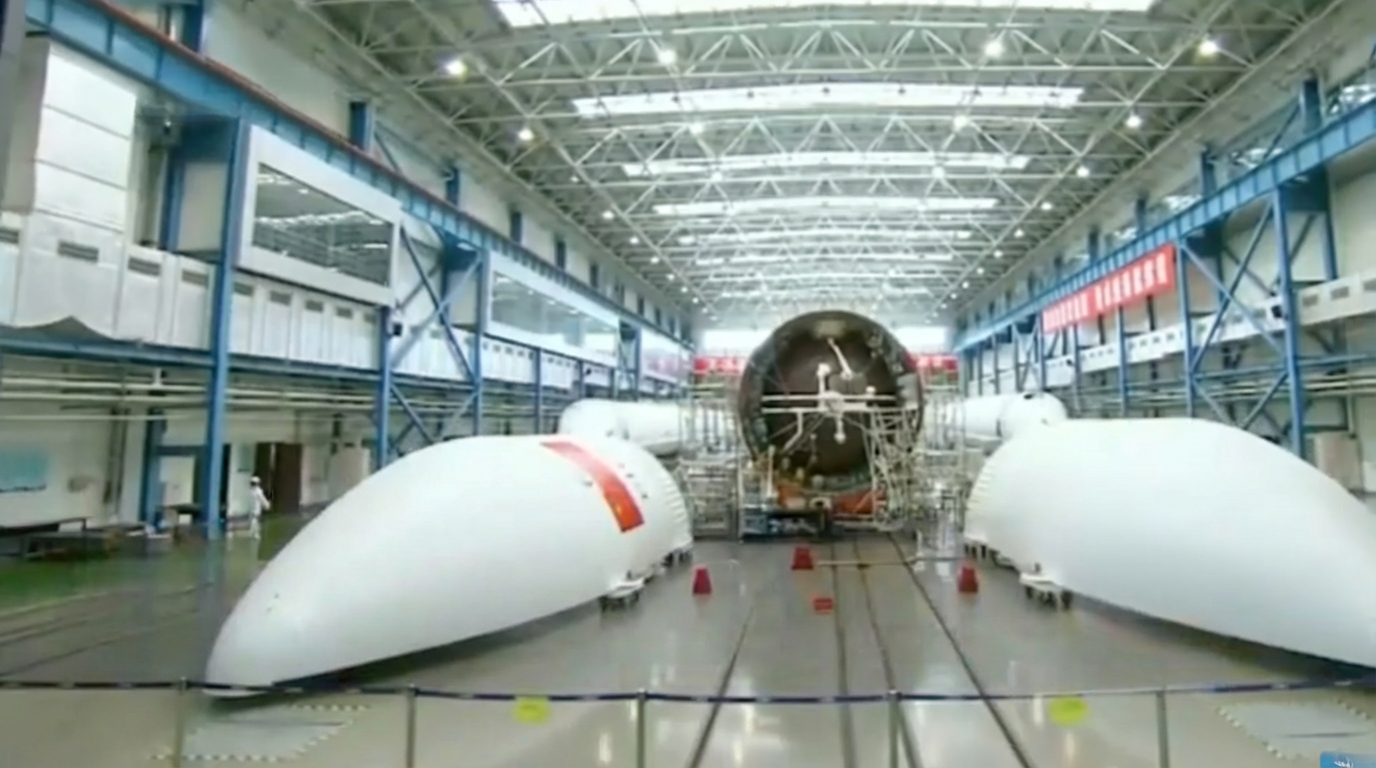
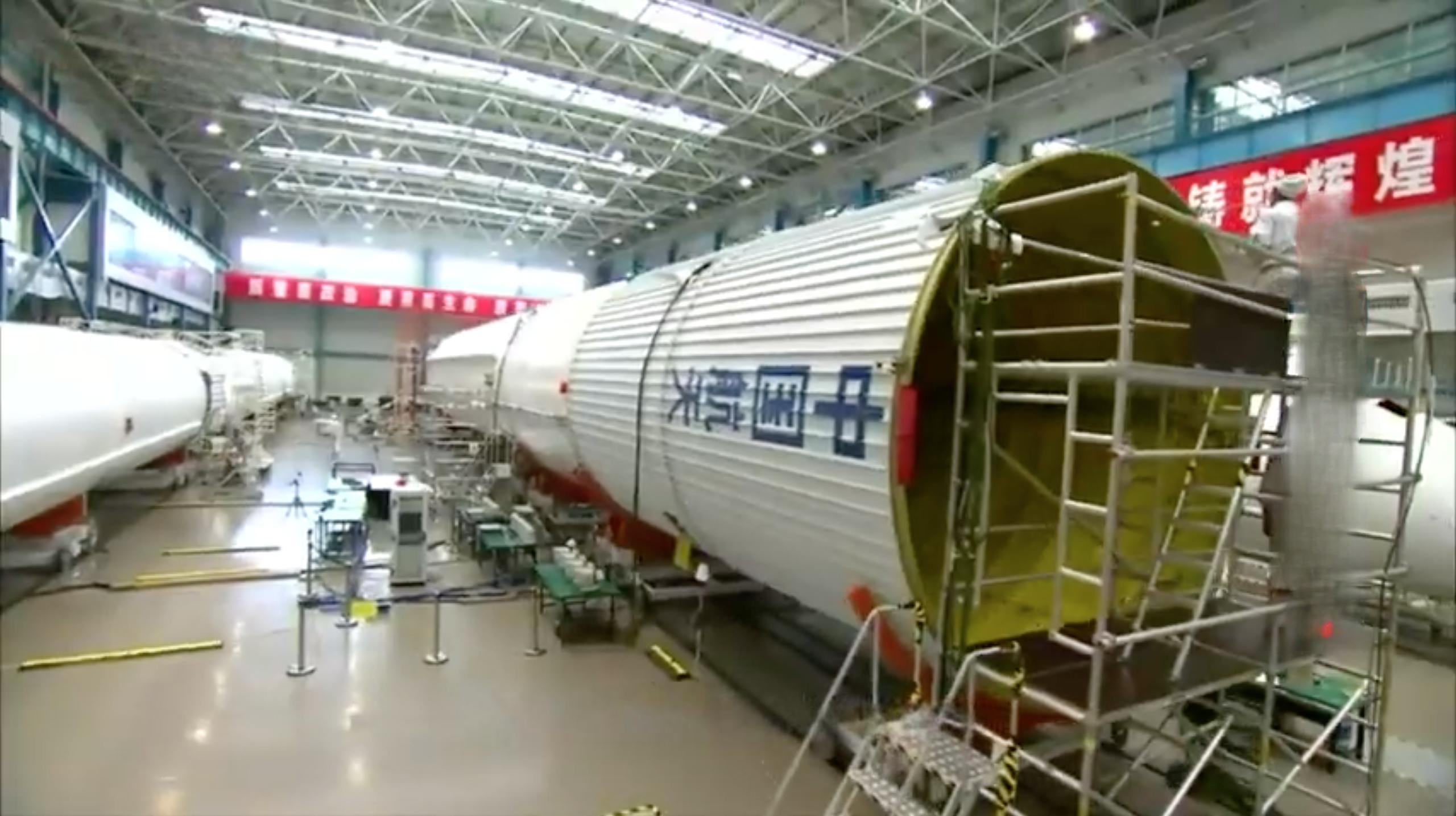


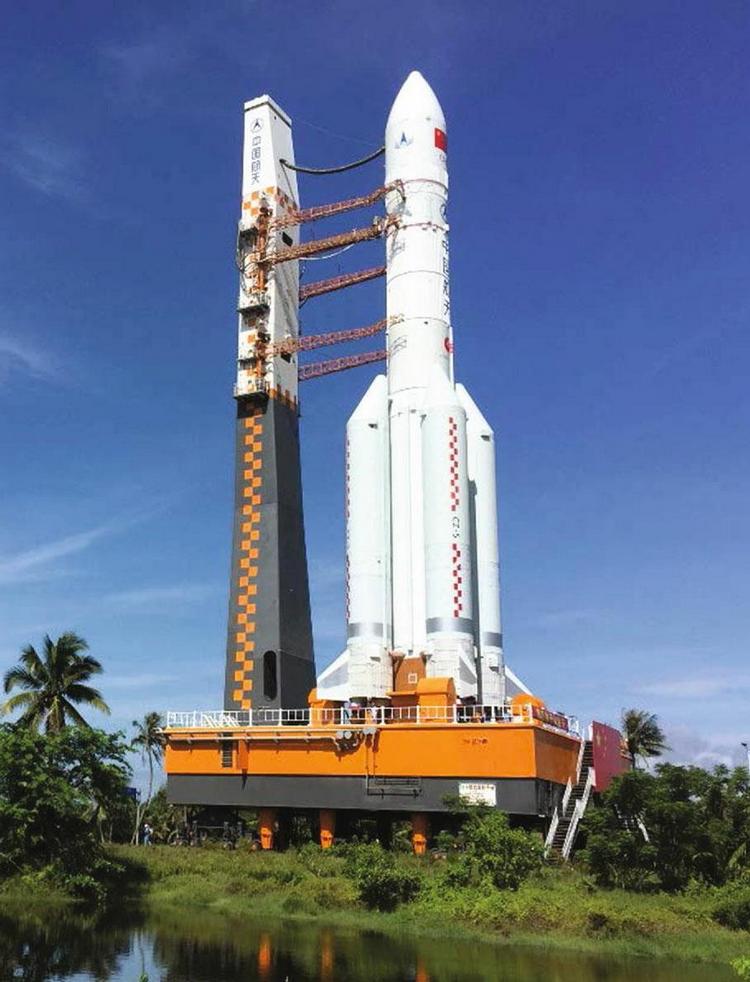

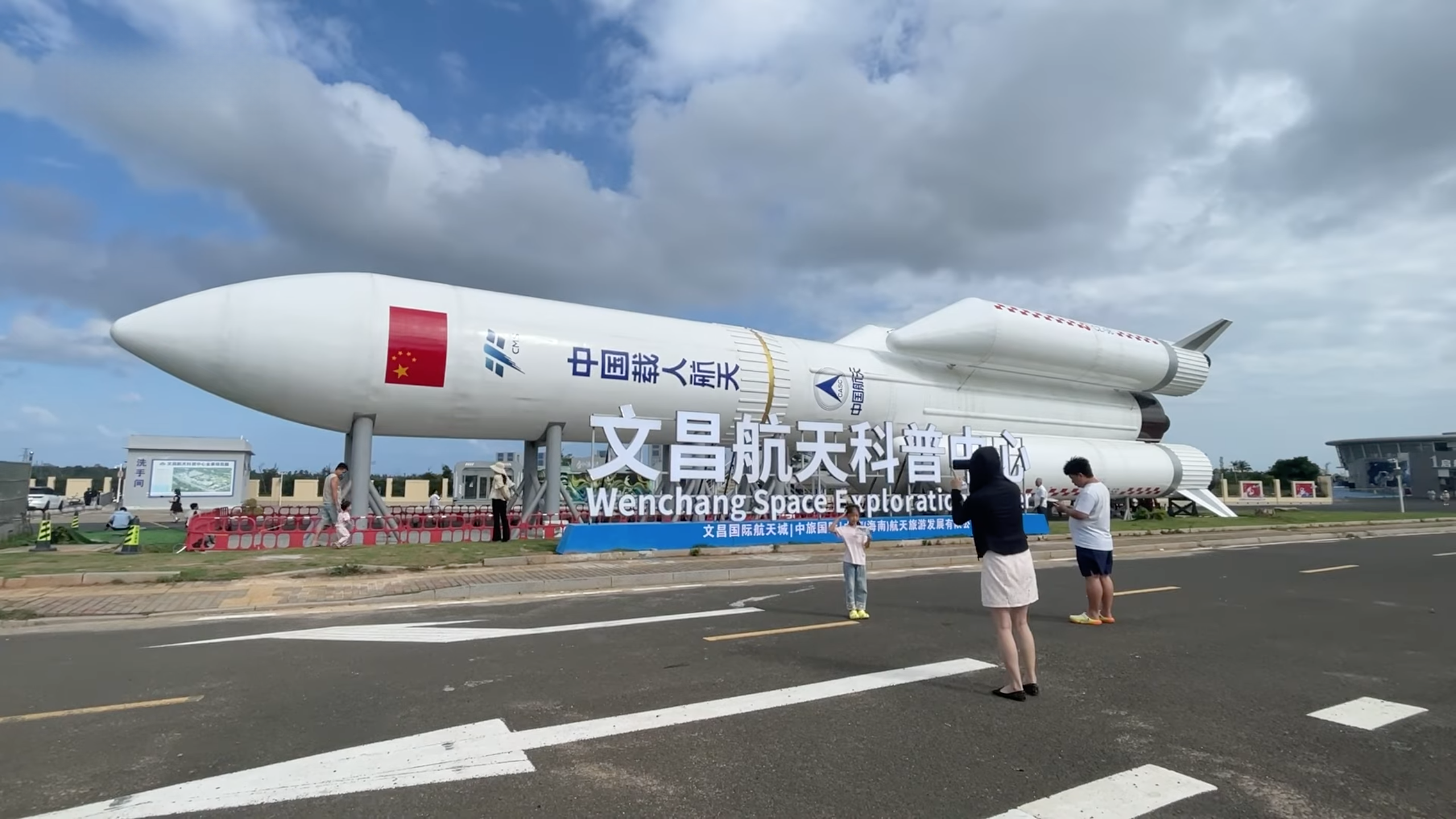


The Long March 5 (Chang Zheng 5, CZ-5), nicknamed in China "Pang-Wu" (胖五, "Fat-Five"), is the heavy-lift launcher developed by the China Academy of Launch Vehicle Technology (CALT). It is the most powerful Long March rocket ever built and also the most powerful orbital launch vehicle operating outside the United States. It stands 56.97 m tall in its standard configuration (63.2 m with the extended fairing), measures 5 m in diameter and lifts off with a mass of 851,800 kg from the Wenchang Space Launch Site on Hainan Island. Its architecture pairs a hydrolox core stage driven by two YF-77 engines with four kerolox strap-on boosters, each carrying two YF-100 engines ultimately derived from the Soviet RD-120. The second stage, also cryogenic, uses two YF-75D engines. Two variants are in service: the CZ-5, which can add a hypergolic Yuanzheng-2 third stage with two YF-50D engines and places roughly 14,000 kg into geostationary transfer orbit, and the CZ-5B, which omits the second stage and is optimised for bulky low Earth orbit payloads of up to about 25,000 kg. The CZ-5 has carried cornerstones of the Chinese space programme: all three modules of the Tiangong space station, the Chang'e 5 and Chang'e 6 lunar sample-return missions, and the Tianwen-1 Mars orbiter, lander and rover. It has also lofted military satellites of the Shijian, Tongxin Jishu Shiyan and Yaogan programmes, as well as groups of the Guowang satellite internet constellation. Cost per launch is estimated at around US$160 million.
History
Approval and development
China initiated the CZ-5 programme in 2007, after two decades of feasibility studies, in anticipation of its need for greater low Earth and geostationary transfer orbit payload capacity over the following 20 to 30 years. The rocket was to be manufactured in Tianjin, a coastal city near Beijing, and launched from the new Wenchang Space Launch Site on the southern island of Hainan. Engine work had started earlier: testing directed by CNSA began in 2005, and by mid-2007 both the YF-100 and the YF-77 had been successfully fired. In July 2012 a 1200 kN LOX/kerosene booster engine was test-fired. The first photographs of a CZ-5 under test appeared in March 2015, and the first production vehicle shipped from Tianjin to Hainan on 20 September 2015 for launch rehearsals.
Early flights and the 2017 stand-down
The maiden flight, originally planned for 2014, finally took place on 3 November 2016. The countdown was interrupted three times by flight control computer and tracking software problems, and lift-off slipped by nearly three hours. The second launch, on 2 July 2017, suffered an anomaly shortly after lift-off and was declared a failure 45 minutes into flight; investigators traced the cause to the oxidiser turbopump of one of the core stage's YF-77 engines. A 28-month hiatus followed until the Y3 mission of 27 December 2019 placed the Shijian-20 communications satellite into geostationary transfer orbit, marking the programme's return to flight.
The CZ-5B and Tiangong
The programme's fourth flight debuted the CZ-5B variant, which keeps the core stage and its four strap-on boosters but deletes the second stage. It flew on 5 May 2020 carrying an uncrewed prototype of China's future deep-space crewed spacecraft. The variant then became the workhorse of Tiangong assembly, beginning with the Tianhe core module. Its core stages, which reached orbit, produced widely reported uncontrolled re-entries in 2020 and 2021.
Launch timeline
| Date | Launch site | Outcome | Payload |
|---|---|---|---|
| Jun 11, 2026, 7:30 AM | 101 | Success | Chinese classified satellite claimed to be for communication technology test purposes. Actual mission not known. |
Versions
| CZ-5 | CZ-5B | CZ-5-200 | CZ-5-320 | CZ-5-522 | CZ-5-540 | |
|---|---|---|---|---|---|---|
| First launch | November 3, 2016 | May 5, 2020 | — | — | — | — |
| Last launch | June 11, 2026 | August 13, 2025 | — | — | — | — |
| Height | 57 m | 53.7 m | 33 m | 55 m | 58 m Best value in this row | 53 m |
| Diameter | 5 m Best value in this row | 5 m Best value in this row | — | — | — | — |
| Mass | 851,800 kg Best value in this row | 837,500 kg | 82,000 kg | 420,000 kg | 630,000 kg | 470,000 kg |
| Stages | 2 Best value in this row | — | 2 Best value in this row | 3 | 2 Best value in this row | 2 Best value in this row |
| LEO capacity | — | 25,000 kg Best value in this row | 1,500 kg | 10,000 kg | 20,000 kg | 10,000 kg |
| GTO capacity | 14,000 kg Best value in this row | — | — | 6,000 kg | 11,000 kg | 6,000 kg |
| Reusable | No | No | No | No | No | No |
Images