Family: Falcon · SpaceX
Falcon 1
Launch statistics
- 5
- Total launches
- —
- Successes
- —
- Failures
- —
- Success rate
Falcon 1 in the news
September 1, 2026
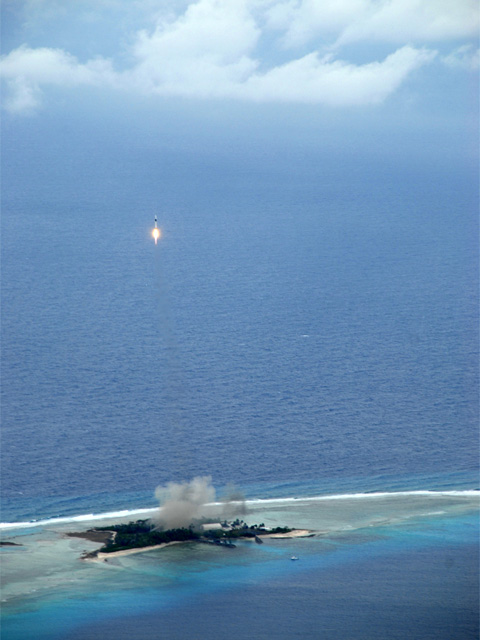
Elon Musk recently restated a fact that still defines SpaceX’s origin story: if Falcon 1’s fourth launch had failed, the company would not exist. The comment answered a reminder that after three…
-1600.webp)

-1600.webp)
.jpg)
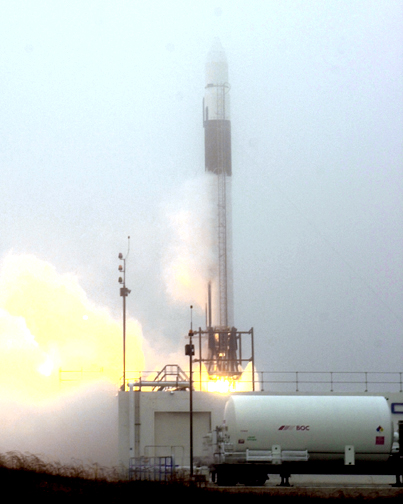
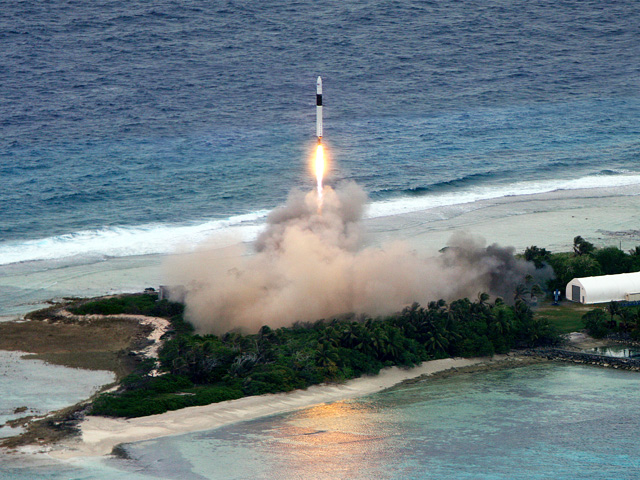

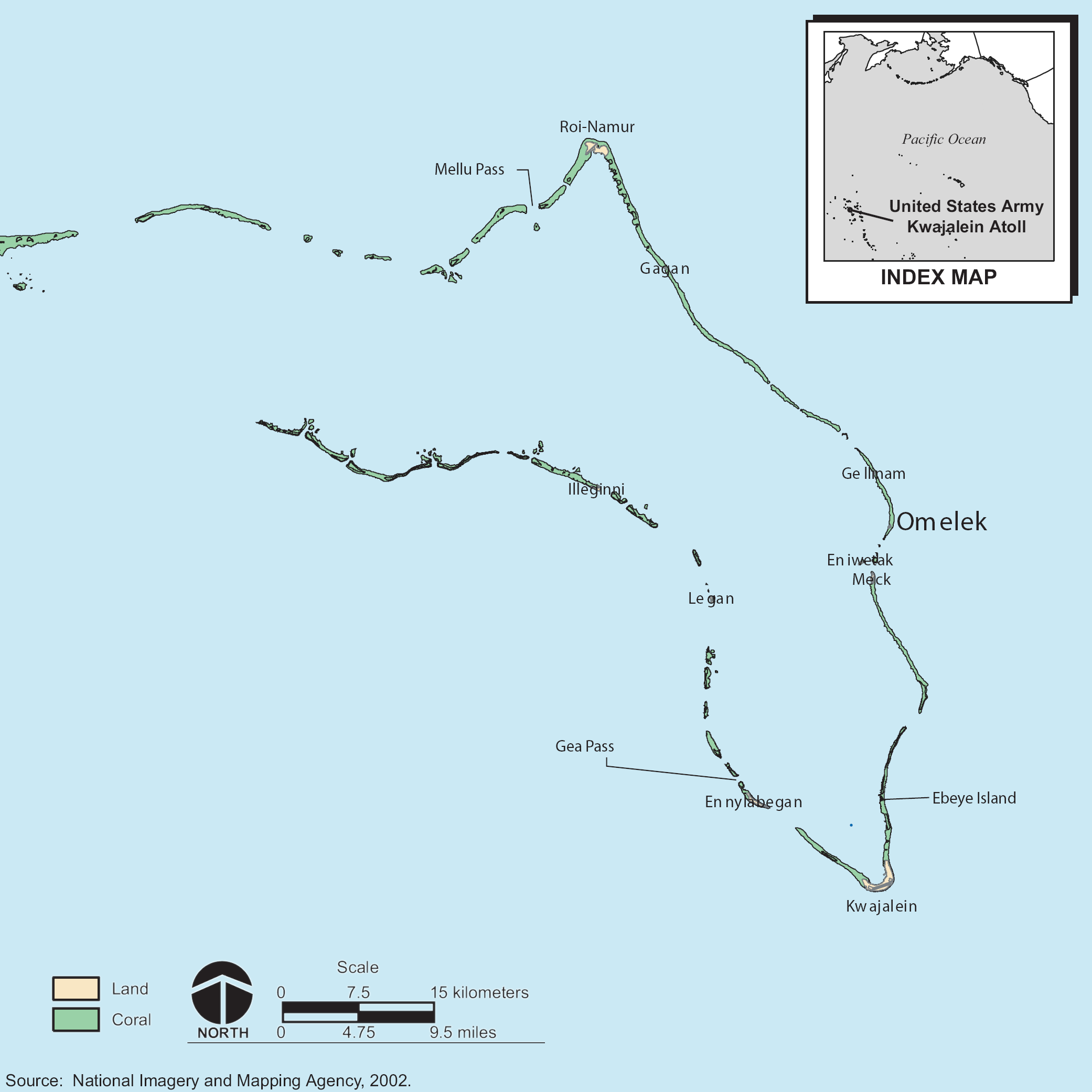


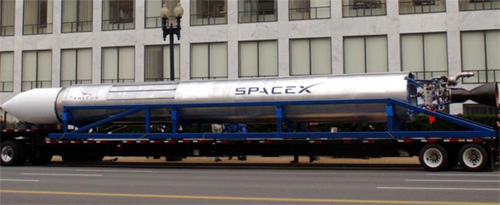
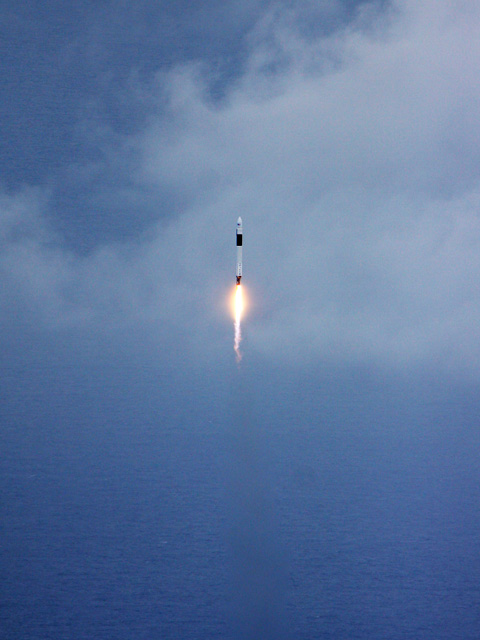
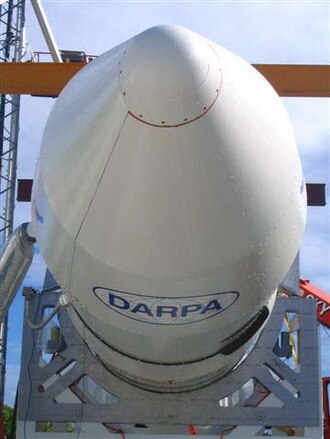
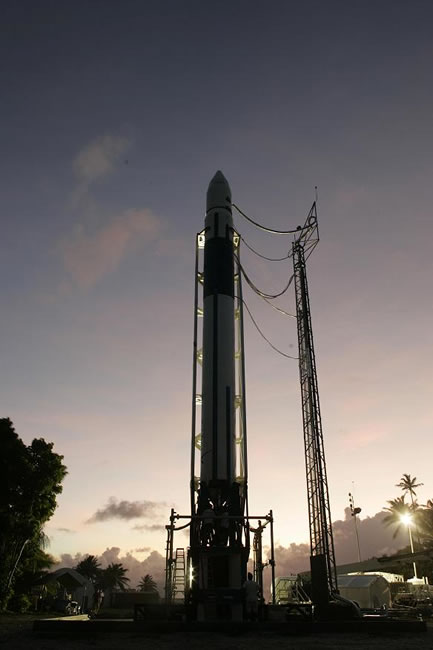
The Falcon 1 was the first launch vehicle built by SpaceX and the first privately developed and privately funded liquid-propellant orbital rocket to reach Earth orbit. It was a two-stage vehicle burning kerosene and liquid oxygen, about twenty-one metres tall and 1.7 metres in diameter, deliberately conceived small: placing a few hundred kilograms in low Earth orbit was enough to give the company Elon Musk founded in 2002 a product to sell before it ran out of money. Its importance lies less in what it carried than in what it taught. The first stage had a single Merlin engine — the ablatively cooled 1A on the first two flights, the regeneratively cooled 1C from the third onward — and the second a pressure-fed, restartable Kestrel with a niobium skirt and cold gas roll control. That friction-stir-welded aluminium tank architecture, that engine and those avionics built on commercial hardware carried over almost intact to the Falcon 9: the five Falcon 1 flights are the test bed the whole later family came out of. Development was privately funded, on the order of a hundred million dollars according to published figures, and the advertised prices drifted down in performance and up in money: 5.9 million dollars in 2005, 6.7 between 2006 and 2007, 7.9 in 2008 and 7 million on the late 2009 list. The first two launches were bought by the United States Department of Defense through DARPA. All five flights left from Omelek Island in the Kwajalein Atoll, some seven acres of land 2,500 miles southwest of Hawaii inside the US Army's test range. The first three failed: in 2006 a nut corroded by sea spray caused a leak and a fire forty-one seconds into flight; in 2007 a knock at staging upset thrust vector control and sloshing oxygen in the upper tank kept the vehicle from reaching orbital velocity; in 2008 residual first stage thrust made it recontact the second stage five seconds after separation. Each failure was answered with a specific fix: stainless steel hardware, baffles in the oxygen tank, and a longer interval between shutdown and separation. The fourth flight, on 28 September 2008, was assembled in six weeks from available parts with the company close to insolvency, and it reached orbit with a mass simulator nicknamed Ratsat. The fifth, on 14 July 2009, placed the Malaysian observation satellite RazakSAT in low equatorial orbit: the programme's only paying customer. There was no sixth. SpaceX retired the vehicle that same year in favour of the Falcon 9, cancelled the stretched Falcon 1e — which promised more than double the payload and never flew — and reassigned the contracted payloads as secondaries on the larger rocket.
Related events
Powerplant
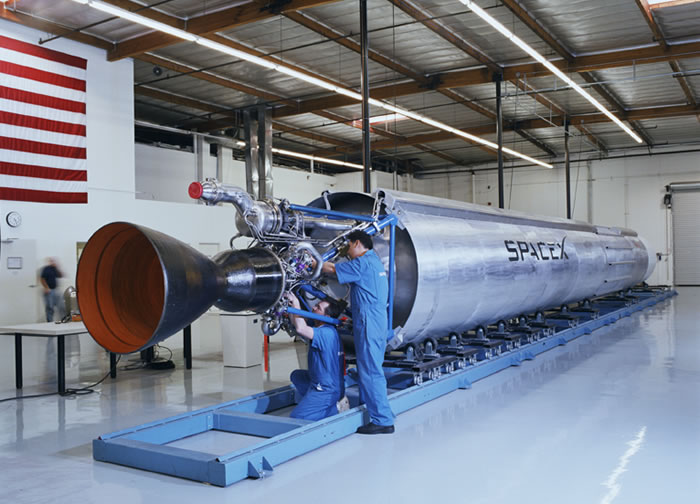
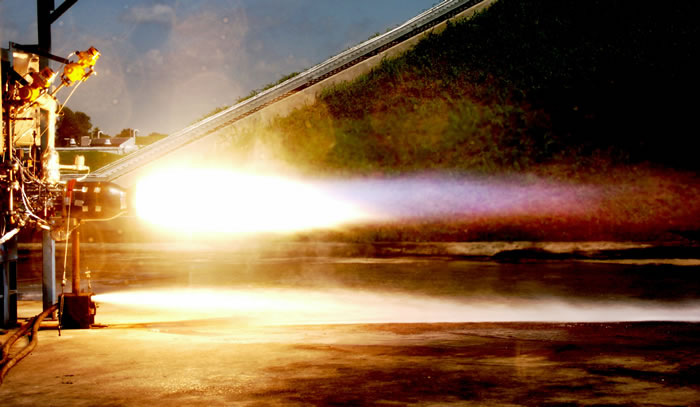
The Falcon 1 burned liquid oxygen and rocket-grade kerosene (RP-1) in both stages, with a single engine on each. The first stage was turbopump-fed and the second pressure-fed; both used a pintle injector, chosen according to the SpaceX user's guide for its inherent combustion stability. On the first stage the engine changed halfway through the programme. The first two flights, in 2006 and 2007, carried a Merlin 1A; from the third onwards, in August 2008, the Merlin 1C flew, as Gunter's Space Page and the Encyclopedia Astronautica entry agree. The essential difference between them lies in chamber cooling: SpaceNews describes the Merlin 1C as the "new SpaceX-developed regeneratively-cooled engine", that is, an engine that cools the chamber by circulating the kerosene itself through its walls before injecting it, instead of consuming an ablative lining that erodes during the burn. Moving from one solution to the other is what allows a longer burn, repeated firings and reuse of the engine without renewing the chamber, and it is consistent with the programme's leap in performance. One tension between sources is worth flagging: revision 7 of the user's guide still justifies the first stage design with "an ablative chamber" even though its comparison table already designates the Merlin 1C. The material consulted documents neither the thrust nor the specific impulse of the Merlin 1A, so no figures for that engine are given here. For the Merlin 1C there are corroborated figures. The user's guide credits it with 78,000 pounds-force of sea-level thrust — 347 kN, the same figure given by Encyclopedia Astronautica and the one Spaceflight Now quoted in its report on the fourth flight — 300 seconds of vacuum specific impulse and a nominal burn of 169 seconds ended by propellant depletion. The cycle was gas generator rather than staged combustion, and the turbopump used a single shaft for both the liquid oxygen and the kerosene: the guide presents all three decisions — kerosene and liquid oxygen, gas generator, single-shaft turbopump — as a deliberate pursuit of simplicity over maximum performance. Pitch and yaw control was hydraulic, but without a hydraulic system of its own: it was fed with pressurised RP-1 tapped from the high-pressure side of the pump, which removed an entire subsystem and the failure mode of running out of pressurised fluid at a stroke. Roll was controlled by vectoring the turbopump exhaust through a redundant actuator, another subsystem suppressed on the same criterion. The second stage carried a pressure-fed Kestrel, whose technology derives — according to Gunter's Space Page — from the Apollo Lunar Module descent engine. The user's guide documents the Kestrel 2 version: some 6.9 thousand pounds-force of vacuum thrust, around 30.7 kN, with 317 seconds of specific impulse and a nominal burn of 418 seconds cut off on reaching a predetermined velocity, with restart capability in orbit. Here the sources diverge: Wikipedia gives 31 kN and 330 seconds, and Encyclopedia Astronautica 33.3 kN; the manufacturer's figure is written down and the spread recorded. Stage attitude control was split between electromechanical actuators for pitch and yaw and cold gas thrusters for roll. On both stages tank pressurisation used heated helium. The guide specifies that the helium tanks were composite over-wrapped inconel pressure vessels made by Arde Corporation, the same ones used on the Delta III. Wikipedia adds that the Kestrel incorporated a titanium heat exchanger to pass its waste heat to the helium and so extend its working capacity, a detail recorded here as attributed because it could not be corroborated by a second source.
History
A small rocket to break into a closed market
The Falcon 1 was the first launch vehicle built by Space Exploration Technologies, the company Elon Musk founded in 2002 with the fortune he made selling Zip2 and PayPal. The starting premise was not to build the most capable rocket possible but the smallest one that would still be useful: a two-stage orbital vehicle able to place a few hundred kilograms in low Earth orbit, conceived explicitly as a minimum viable product so the company would not run out of money before it ever flew. That discipline of scope — start small, grow later — is what separates the Falcon 1 from the long list of private launchers that never left the drawing board.
Development was privately funded. Wikipedia puts the total programme cost at roughly ninety to one hundred million dollars, and after the fourth flight Musk said he had put around one hundred million of his own money into the rocket. The only precedents for privately funded orbital launchers were the Conestoga of 1982 and the Pegasus, first flown in 1990 but released from a carrier aircraft. Private development did not mean private customers: the first two Falcon 1 launches were bought by the United States Department of Defense under a programme evaluating new launch vehicles for DARPA use.
The Falcon 1 also had a second, less visible and ultimately more important role: to serve as a flight test bed for the components and structural concepts that would be reused on the Falcon 9. The Merlin 1C engine that debuted on the third Falcon 1 flight was the same one that flew on the first five Falcon 9 vehicles, and the tank architecture, the avionics and the countdown sequence carried over almost intact. Without the five flights from Omelek — three of them failures — the Falcon family as we know it would not exist.
How the vehicle was built
The Falcon 1 was a two-stage launcher burning liquid oxygen and rocket-grade kerosene (RP-1) in both stages. According to SpaceX's official user's guide it stood about twenty-one metres tall counting both stages with fairing and interstage, with a body diameter of 1.7 metres and a slightly narrower fairing at 1.54 metres. Astronautix gives a gross mass of 27,670 kg.
The first stage primary structure was a space-grade aluminium alloy in a graduated monocoque architecture with a common bulkhead between the liquid oxygen and kerosene tanks, stabilised by flight pressure. SpaceX described it as a deliberate middle ground between a fully pressure-stabilised design such as the Atlas II and a heavier isogrid design such as the Delta II: the former is more mass-efficient but forces the rocket to be handled pressurised, the latter simplifies ground handling at the cost of weight. Wikipedia specifies friction-stir-welded 2219 aluminium alloy, and notes the stage could be transported unpressurised and gained stiffness once pressurised for flight. The user's guide gives that first stage a dry mass of 3,000 lb — about 1,361 kg — and usable propellant of 47,380 lb, roughly 21,491 kg.
A single Merlin engine powered it. The first two flights used the ablatively cooled Merlin 1A; from the third flight onward the regeneratively cooled Merlin 1C flew, turbopump-fed on a gas generator cycle. The user's guide credits it with 78,000 lbf of sea-level thrust — about 347 kN — and a vacuum specific impulse of 300 s, with a nominal burn time of 169 seconds ending in propellant depletion. Pitch and yaw control came from hydraulic thrust vector control of the nozzle, roll control from turbopump exhaust. Tank pressurisation used heated helium stored in composite-overwrapped inconel tanks from Arde Corporation, the same model used in Boeing's Delta IV.
The second stage was far simpler: a single pressure-fed Kestrel engine with no turbopump and with restart capability — a far from trivial feature that the fourth flight demonstrated in orbit. The user's guide gives it 6,9 klbf of vacuum thrust, around 31 kN, a vacuum specific impulse of 317 s and a nominal burn time of 418 seconds, terminated not by depletion but on reaching a predetermined velocity. Pitch and yaw were controlled by electro-mechanical actuators on the nozzle and roll by cold gas thrusters; the same heated helium served for pressurisation, for the attitude thrusters and to settle propellant before a restart in free fall. The engine carried a titanium heat exchanger that passed waste heat into the helium, and dual redundant torch igniters to make restart reliable. The nozzle skirt was niobium, a choice that proved providential on the second flight. Stage separation used redundantly initiated explosive bolts and a pneumatic pusher system.
Guidance, navigation and control rested on a ruggedised PC/104-class flight computer with a Pentium-class 586 (Geode) processor, an inertial measurement unit and a GPS receiver supplying navigation updates. The package included S-band telemetry, an S-band video downlink, a C-band transponder, tank pressure regulation and power distribution. As a standard payload separation system SpaceX offered a 38-inch (0.9652 m) marmon band; separation was non-explosive, driven by springs, with residual tip-off rates below one degree per second, and the payload could be spun up to about 6 rpm if the customer wanted it.
Performance, price and services
The user's guide published performance curves for the Falcon 1 and the planned Falcon 1e to 185, 300, 500 and 700 km orbits as a function of inclination, in both direct and two-burn profiles. The contrasting reference sheets give concrete figures: Gunter's Space Page credits the operational Falcon 1 with 470 kg to low Earth orbit and 290 kg to low equatorial orbit, and 420 kg for the development version; Astronautix gives 420 kg to a 200 km orbit at 9.1 degrees inclination and 150 kg to a 700 km sun-synchronous orbit. Wikipedia records how the commercial promise evolved: the initial plan spoke of about 600 kg to low Earth orbit, and capacity ended up trimmed to roughly 420 kg.
For insertion accuracy, with no flight statistics to draw on, SpaceX committed in the document to a maximum error of a tenth of a degree in inclination, five kilometres at perigee and fifteen at apogee. Ten seconds after payload separation, if analysis called for it, the second stage performed a collision avoidance manoeuvre using cold gas thrusters tilted twenty degrees forward so the plume would not impinge on the spacecraft.
Pricing moved down in performance and up in money. In 2005 the Falcon 1 was advertised at 5.9 million dollars; from 2006 to 2007 the quoted operational price was 6.7 million; at the time of the fourth flight in 2008 SpaceX put it at 7.9 million and claimed to be more than three times cheaper than any American competitor. In late 2009 the company published 7 million for the Falcon 1 and 8.5 million for the Falcon 1e, with discounts for multi-launch contracts. The price covered range services, standard payload integration and third-party liability insurance.
Omelek: an atoll in the middle of the Pacific
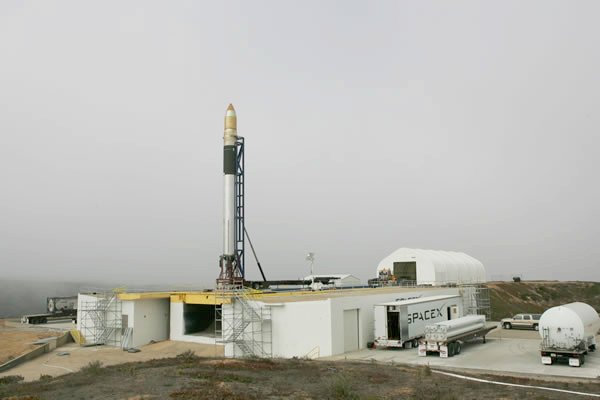
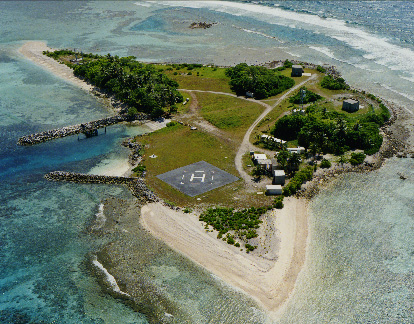
The original launch site was to be Space Launch Complex 3W at Vandenberg Air Force Base in California, but it was abandoned at the static-fire stage because of persistent scheduling conflicts with neighbouring pads: the Air Force did not want an untested rocket to fly before the last Titan IV had left nearby SLC-4E. That blockage pushed SpaceX to build its own facility in an improbable place: Omelek Island, a strip of some seven acres in the Kwajalein Atoll, Marshall Islands, about 2,500 miles southwest of Hawaii, inside the US Army's Ronald Reagan Test Site.
The island held a hangar containing the payload processing facility, with a class 100,000 clean room as the baseline in the official document, a customer office area, and the pad itself. In the user's guide SpaceX advertised an eighteen-day launch campaign and a short countdown as availability arguments against traditional ranges. The equatorial location — all five flights headed east at inclinations around nine degrees — was ideal for low-inclination orbits and disastrous logistically: every rocket and every payload had to be shipped to the far side of the Pacific. The island's salt-laden air would also play a direct part in the first failure.
Space Launch Complex 40 at Cape Canaveral — the pad the Falcon 9 would later occupy — was considered for low-inclination Falcon 1 launches, but was never fitted out for the smaller rocket before its retirement. All five flights left from Omelek.
Flight 1, 24 March 2006: a corroded nut
The first campaign slipped repeatedly. A December 2005 attempt was aborted when a faulty valve drew a vacuum in the first stage fuel tank and the walls collapsed inward, damaging the structure; the whole stage had to be replaced. Liftoff finally came on 24 March 2006 at 22:30 UTC — the morning of the 25th local time on Omelek — carrying FalconSAT-2, a roughly 20 kg satellite from the US Air Force Academy meant to measure space plasma phenomena, contracted through DARPA.
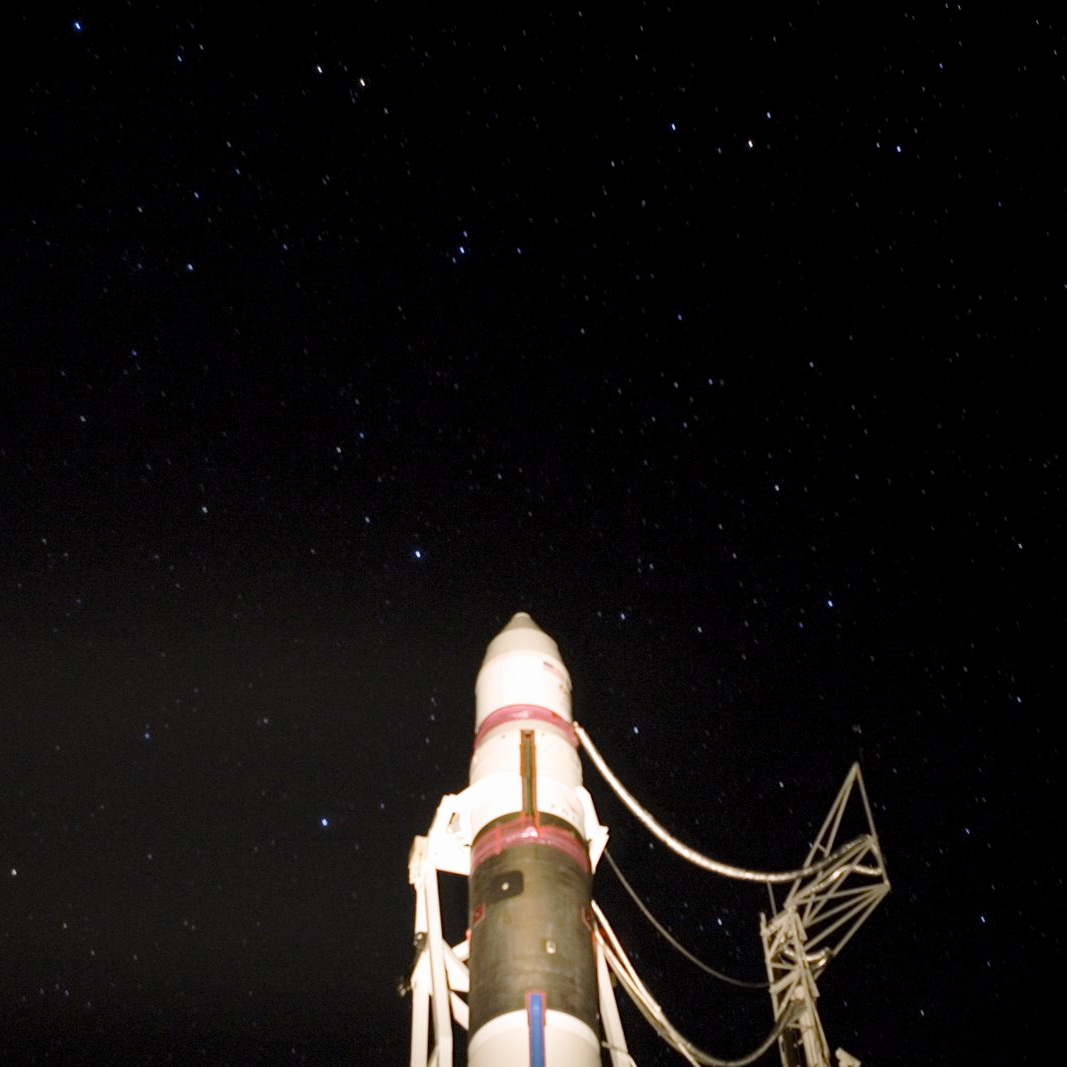
The flight lasted less than a minute. Video shows a noticeable roll from liftoff; at T+26 seconds the rocket pitched over sharply and at T+41 seconds it hit a dead reef about 250 feet from the pad. The cause was a fuel line leak and the resulting fire in the engine bay. SpaceX initially blamed an improperly tightened nut, but a later DARPA review concluded the nut had been correctly tightened — its locking wire was still in place — and had failed through corrosion caused by saltwater spray. FalconSAT-2 separated from the booster and fell on the island, going through the roof of SpaceX's machine shop; damage reports range from slight to significant.
The response was structural rather than local: aluminium hardware was replaced with stainless steel and pre-liftoff computer checks were increased thirtyfold. The lesson of this flight was less about the nut than about the environment: a rocket living exposed to the sea demands a different materials policy.
Flight 2, 21 March 2007: oxygen sloshing
The second flight accumulated nearly a year of delays over second stage problems and range availability — a Minuteman III test whose re-entry crossed Kwajalein forced a change of date. On 19 March the attempt was scrubbed one minute and two seconds before liftoff by the safety computer, which read a few milliseconds of hardware delay as a transmission failure. On 21 March, after an abort in the final second with the engine already lit, the rocket lifted off at 01:10 UTC with a DemoSat payload for DARPA and NASA.
The first stage performed well. The trouble came at staging: the interstage fairing atop the first stage struck the second stage engine bell as the nozzle cleared the interstage, because the first stage was rotating far faster than expected — about 2.5 degrees per second against an expected maximum of 0.5. Musk noted the bump did not appear to have caused damage and that a niobium skirt had been chosen over carbon-carbon precisely for scenarios like this. But the knock threw off the thrust vector control response. Around T+4:20 a circular coning oscillation appeared and grew; at T+5:01 the vehicle began to roll and useful telemetry ended. The second stage engine shut down at T+7:30 because of a roll control problem: sloshing liquid oxygen in its tank fed the oscillation, and the thrust vector control system, overcompensating after the nozzle strike, could not damp it out. The rocket reached 289 km altitude and 5.1 km/s against the 7.5 km/s orbit required, and did manage to deploy the mass simulator ring.
SpaceX presented the flight as a partial success — it claimed to have flight-proven more than 95 per cent of the Falcon 1's systems — and proposed two fixes: baffles in the second stage oxygen tank to damp the slosh, with adjusted control logic, and a Merlin shutdown initiated at a much lower thrust level, at some cost to engine reusability. The first stage was not recovered because its GPS tracking device failed.
Flight 3, 3 August 2008: five seconds too many
The third flight debuted the regeneratively cooled Merlin 1C, the engine destined for the Falcon 9, and carried the most valuable payload so far: the Trailblazer military satellite, NASA's NanoSail-D and PRESat nanosatellites — around 4 kg each, in three-unit cubesat format — and a Celestis space burial capsule carrying the ashes of astronaut Gordon Cooper and actor James Doohan.
The countdown was rough. An earlier attempt slipped over slow helium loading, which left the vehicle in a premature launch state by exposing fuel and oxidiser to cryogenic helium; the next was aborted half a second before liftoff by a sensor misreading. With twenty-five minutes of window left, the Falcon 1 lifted off from Omelek at 03:35 UTC. The first stage flew, in Musk's words, picture-perfect: it went through the sound barrier and maximum dynamic pressure without incident, and the Merlin 1C debut passed with honours.
The failure came at separation, about two and a half minutes into flight. The Merlin 1C completed its burn, but thrust took longer than expected to decay: residual propellant in the engine evaporated and kept producing transient thrust, so the first stage recontacted the second just as the two were parting, leaving the upper stage tumbling. SpaceX abruptly cut the onboard camera feed seconds before the event. None of the payloads reached orbit.
What stands out about the diagnosis is its modesty: SpaceX's flight summary concluded that flight 4 could go ahead with no technological upgrades at all, because it was enough to lengthen the interval between first stage engine shutdown and the separation command. A rocket lost to five seconds of internal timing. Years later Musk publicly took the blame for all three failures and admitted he had been acting as chief engineer not by choice but because he could not hire anyone better willing to take the job.
Flight 4, 28 September 2008: orbit, on the fourth try
The fourth Falcon 1 was assembled in six weeks from available parts, and it was literally the last shot: Musk has explained he was out of money, with Tesla and SolarCity absorbing capital, a failed financing round that summer and the recession closing in. To save time a Boeing C-17 Globemaster III was chartered to fly the rocket to Kwajalein; en route, repressurisation exceeded what the team had expected from the aircraft's manual and the rocket partially imploded, forcing emergency repairs on the spot.
It lifted off from Omelek on 28 September 2008 at 23:15 UTC, fifteen minutes into a five-hour window. The Merlin 1C ramped up to its 78,000 lbf of thrust and the vehicle flew east. The first stage completed its burn at two and a half minutes and separated five seconds later — the exact moment where the previous flight had died — this time cleanly; the second stage lit the Kestrel and the two fairing halves were released half a minute afterwards. The Kestrel burned for nearly seven minutes and shut down nine minutes and thirty-one seconds after liftoff with the rocket in orbit. After a coast phase the engine relit to circularise, demonstrating upper stage restart in flight.
The payload was a hexagonal aluminium alloy mass simulator of about 165 kg (364 lb) and a metre and a half tall, built by SpaceX for this mission and nicknamed Ratsat after a sticker someone stuck on it. It stayed attached to the second stage. Published orbital parameters differ by source: the SpaceX press release spoke of an elliptical orbit of 500 by 700 km at 9.2 degrees inclination, "exactly as targeted"; Spaceflight Now, using military tracking data, reported an initial orbit of 205 by 404 miles at 9.3 degrees and a final circularisation just under 400 miles; Wikipedia records an initial orbit of 330 by 650 km and a final one of 621 by 643 km at 9.35 degrees; Astronautix catalogues 622 by 643 km at 9.3 degrees. The discrepancy is recorded on this sheet.
With this flight the Falcon 1 became the first privately developed and privately funded liquid-propellant launch vehicle to reach Earth orbit. Musk summed it up without grandeur: more relief than elation after six years of work. The first stage, which in theory should have descended by parachute for recovery at sea, did not survive re-entry; the team knew that beforehand, because there had been no time to improve its thermal protection.
Flight 5, 14 July 2009: the first customer
The fifth and final flight was the only one to carry a real commercial payload. RazakSAT was a Malaysian Earth observation satellite of about 180 kg built by ATSB, six-sided and little more than a metre tall, with a medium-aperture camera resolving about 2.5 metres in panchromatic and around 5 metres in colour. It was among SpaceX's earliest contracts and should have flown on the fourth Falcon 1, but Musk chose not to risk a customer's satellite before completing a successful test flight.
The campaign had its own delay: less than a week before the April 2009 date a compatibility concern surfaced between satellite and launcher — predicted vibration environments that could affect the spacecraft — and the flight slipped by several weeks. The new window opened on 13 July. Liftoff came at 03:35 UTC on 14 July 2009 (the night of the 13th US eastern time), more than four hours late because of a glitch in the helium system and rain showers over the island.
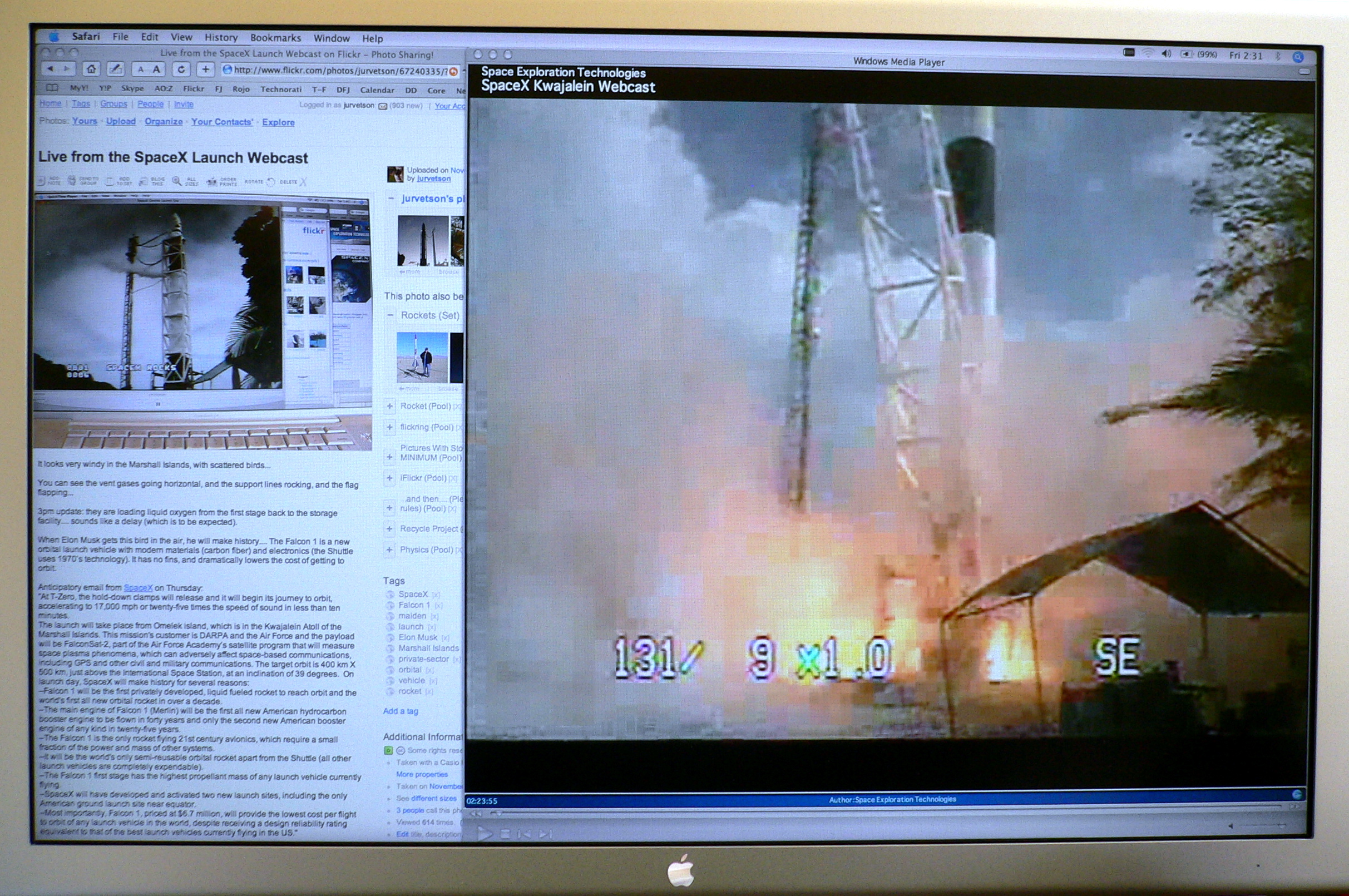
The profile was nominal: through the speed of sound in under a minute, first stage shutdown and separation around two and a half minutes, Kestrel ignition, fairing jettison just past the three-minute mark and first second-stage shutdown at nine and a half minutes. After a ballistic coast the Kestrel relit to circularise, and RazakSAT separated close to an hour after liftoff. Astronautix catalogues the resulting orbit at 665 by 690 km at 9 degrees inclination. Musk described the insertion as a bullseye.
The low equatorial orbit was the whole point of the mission: it let RazakSAT pass over Malaysia up to a dozen times a day, far more often than an observation satellite in sun-synchronous orbit, for agriculture, environmental monitoring, forestry, mapping, transport and urban planning. That flight's upper stage was still in low Earth orbit years afterwards.
Falcon 1e: the version that never flew
Even before the first success SpaceX was publishing the performance of an upgraded version. The Falcon 1e was to enter service in the second quarter of 2010 with a stretched first stage — 90 feet against the 70 of the original stack, according to the user's guide comparison table — strengthened for greater axial loads and fitted with a Merlin 1C run at full capacity, at 125 klbf of sea-level thrust, on the order of 556 kN, and a vacuum specific impulse of 304 s. Stage dry mass rose to 5,680 lb and usable propellant to 87,000 lb. The fairing grew to 1.7 metres and changed material: a composite ogive instead of aluminium skin and stringer, with two access doors as standard. The second stage was common with the Falcon 1.
The gain was substantial: Gunter's Space Page credits the Falcon 1e with 1,010 kg to low Earth orbit against the Falcon 1's 470 kg, rather more than double. The price announced in late 2009 was 8.5 million dollars, though Wikipedia also records a projection of about 1,000 kg for eleven million.
It never flew. Introduction slipped first to 2012 because the Falcon 9 took priority, and SpaceX eventually withdrew the vehicle from the market citing insufficient demand. Payloads contracted for the Falcon 1 and Falcon 1e were reassigned: in 2012 the company announced they would fly as secondary payloads on the Falcon 9.
Retirement and legacy
After the RazakSAT flight there were no more. Planned launches were postponed, then cancelled, and the vehicle was decommissioned, with an explanation from the company as brief as it was revealing: they could not make the Falcon 1 work as a business. The small launcher was retired in 2009 in favour of the Falcon 9 v1.0, and the small-satellite market it set out to open would take almost a decade to be filled by other vehicles.
It would be a mistake to measure the Falcon 1 by its commercial balance. Five flights, two successes, a single paying payload and no profit; and yet this is the vehicle that taught SpaceX how to build rockets. Out of it came the Merlin in its regenerative form, the friction-stir-welded aluminium tank architecture, the hold-down system that verifies the engine at full power with the rocket still restrained, avionics built on commercial hardware, the practice of designing and testing nearly everything in house rather than subcontracting, and a culture of fast, public failure investigation. The three consecutive failures and the fourth flight saved with the last money available form the company's founding episode, and explain why the Falcon 9 reached the pad with a substantial part of its design already flight-proven.
It also left behind a fact the industry took a while to absorb: a private company, with under a hundred million dollars and six years, could put something in orbit. Until 2008 that had been, in Musk's own words, a country thing, not a company thing.
Launch timeline
| Date | Launch site | Program | Outcome | Payload |
|---|
Versions
| Falcon 1 (dev) | Falcon 1 | Falcon 1e | |
|---|---|---|---|
| First launch | March 24, 2006 | August 3, 2008 | — |
| Last launch | March 21, 2007 | July 14, 2009 | — |
| Propellant | LOX/RP-1 | LOX/RP-1 | LOX/RP-1 |
| Height | — | 21.3 m | 27.4 m Best value in this row |
| Diameter | — | 1.7 m Best value in this row | 1.7 m Best value in this row |
| Mass | — | 27,670 kg | — |
| Liftoff thrust | — | 347 kN | 556 kN Best value in this row |
| Stages | 2 Best value in this row | 2 Best value in this row | 2 Best value in this row |
| LEO capacity | 420 kg | 470 kg | 1,010 kg Best value in this row |
| Fairing diameter | — | 1.5 m | 1.7 m Best value in this row |
| Reusable | No | No | No |
Images
Elsewhere
- Gunter's Space PageFalcon 1 en Omelek — ficha técnica y fotos (Gunter's Space Page) ↗
- The Planetary SocietyLanzamiento del Falcon 1 desde Omelek, 14-07-2009 (RazakSAT) ↗
- Spaceflight NowFalcon 1 rumbo a órbita con RazakSAT — vuelo 5 ↗
- Spaceflight NowFalcon 1 en su primer vuelo orbital con éxito — vuelo 4, 28-09-2008 ↗
- Spaceflight NowEl Falcon 1 en la fábrica de SpaceX, Hawthorne (California) ↗
- TechCrunchEl Falcon 1 alcanza órbita: reportaje de TechCrunch ↗
- FlickrLa sala de control móvil (Command Van) durante el vuelo 5 del Falcon 1 ↗
- TeslaratiFalcon 1 Flight 4 despegando desde Kwajalein — 10º aniversario ↗
- Historic SpacecraftFalcon 1 — plano de tres vistas ↗
- FlickrSeparación de etapas del Falcon 1 ↗
- FlickrFalcon 1 en la rampa antes del lanzamiento ↗