Apollo program · NASA · Uncrewed
Apollo 5
- Jan 22, 1968, 10:48 PM
- Launch date
- 7 hr 50 min
- Duration
- Success
- Outcome
-1600.webp)

-1600.webp)

_%E2%80%94_lanzamiento_desde_el_Complejo_37_(S68-19456)-1600.webp)

-1600.webp)



-1600.webp)
.jpg)


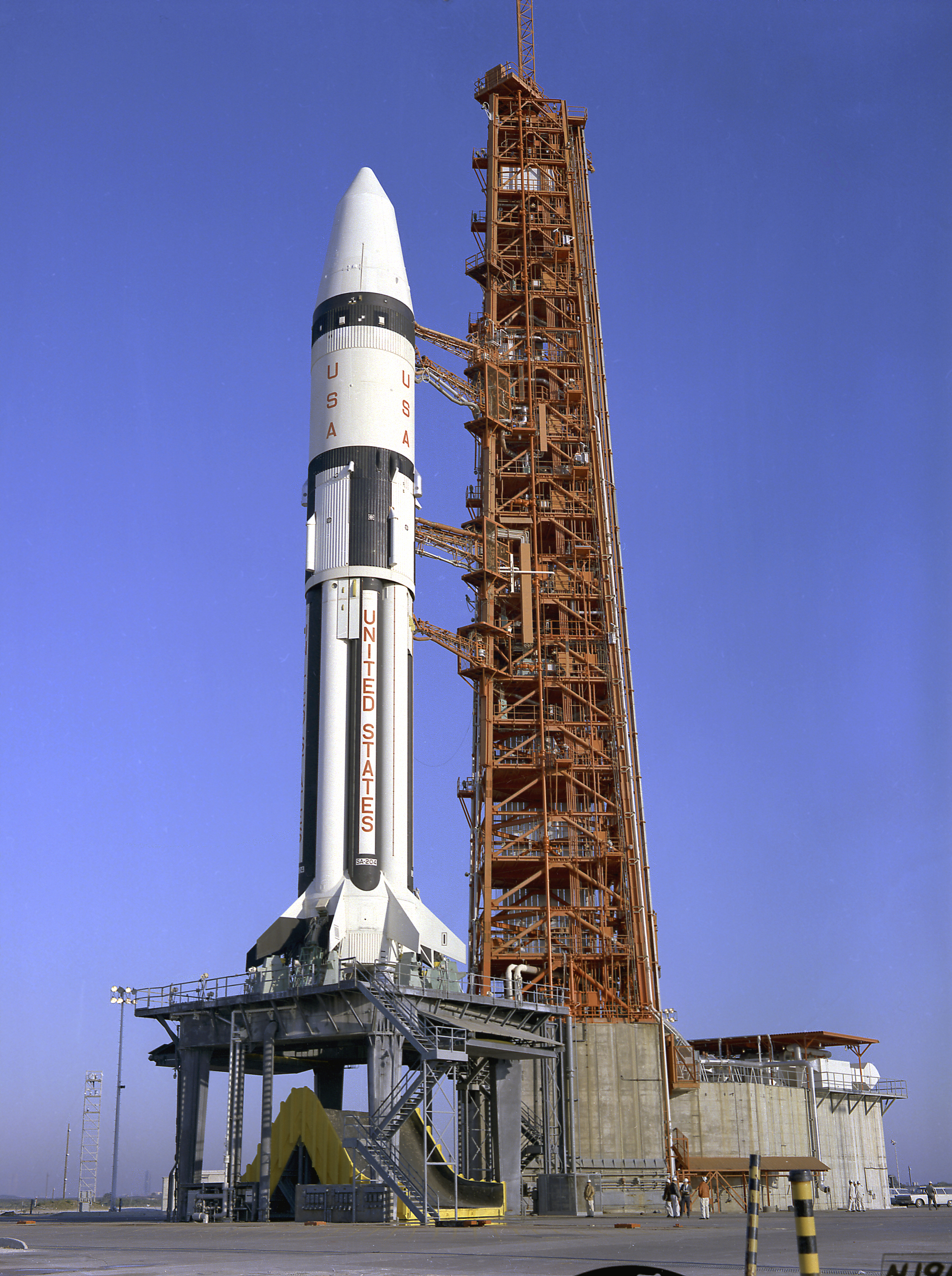
Apollo 5, also designated AS-204, was the first flight of the Apollo lunar module and one of the uncrewed missions that decided whether the programme would meet its end-of-decade deadline. It lifted off from Cape Kennedy on 22 January 1968 from Launch Complex 37B, boosted by a Saturn IB, carrying LM-1 at the top of the stack: the first flight-ready lunar module Grumman delivered to NASA. There was no command and service module and no launch escape tower, so the vehicle looked stubby and truncated, and it had a single purpose: to prove in Earth orbit that the craft meant to land on the Moon actually worked. Getting to the pad took a long time. The lunar module was the most delayed element of the whole programme: NASA had asked Grumman to deliver LM-1 by September 1966, and the vehicle did not reach Florida until June 1967, with leaks in the ascent stage that forced the two stages to be demated and remated more than once. Meanwhile the Apollo 1 fire freed up the AS-204 launch vehicle, the last Saturn IB with full research and development instrumentation, which was taken down from Launch Complex 34 and erected on Complex 37 in place of the AS-206 originally assigned. The flight had three hard objectives: to fire the descent and ascent engines in space for the first time, to show that they could be started and stopped as in a real landing, and to carry out the so-called fire-in-the-hole test, igniting the ascent engine while the descent stage was still attached. That was both the lunar lift-off procedure and the abort procedure for a landing gone wrong. Evaluating the instrument unit in its Saturn V configuration was added to the list. The first planned descent-engine burn, scheduled for 39 seconds, was cut off after four: the Apollo Guidance Computer detected that the spacecraft was not building up speed at the expected rate and applied a shutdown that had been designed in deliberately, to give a crew time to decide. With nobody aboard, Mission Control in Houston, with Eugene F. Kranz as flight director, switched command to the mission programmer and flew an alternate plan that strung together two more descent-engine firings and two ascent-engine firings, one of them the fire-in-the-hole manoeuvre. NASA judged the mission a success: all primary objectives were met and, after reading the preliminary report, programme director Samuel C. Phillips ordered that no second uncrewed lunar module flight be planned. LM-2 never flew, and the first crewed lunar module waited for Apollo 9 in March 1969. What was left of LM-1 burned up in the atmosphere within days and weeks of the flight; no recovery had ever been intended.
Payload
The payload of Apollo 5 was LM-1, the first flight-ready Apollo lunar module, built by Grumman, housed inside the SLA-7 spacecraft-lunar module adapter and covered by a nose cap that stood in for the command and service module and the launch escape tower. LM-1 flew without landing gear — unnecessary on an orbital flight and pointless on a vehicle with no heat shield that would break up on re-entry — and with its windows replaced by aluminium plates, after an LM-5 window broke during testing in December 1967. With no crew aboard it carried a mission programmer able to command its manoeuvres remotely, and neither all of its systems were activated nor were consumables fully loaded: the primary batteries were partly discharged to avoid over-voltage problems and the environmental control oxygen tanks were only partly filled. The lunar module and its adapter together weighed about 14,400 kg, and the lunar module alone about 14,360 kg. The mission carried no scientific experiments and no secondary payload: the lunar module and its two propulsion systems were at once the cargo and the object of the test.
History
The missing piece of the lunar programme
When President John F. Kennedy committed the United States in 1961 to landing an astronaut on the Moon before the end of the decade and returning him safely, how it would be done was still open. In late 1962, after a long technical argument, NASA settled on lunar orbit rendezvous: the complete Apollo spacecraft would be sent towards the Moon by the third stage of the Saturn V, the S-IVB, and once in lunar orbit the astronauts making the landing would transfer to a separate craft, then called the lunar excursion module and later simply the lunar module. That vehicle would undock from the command and service module, land, take off again and re-dock; the command module would make the trip home and the lunar module would be discarded.
The decision made the lunar module the keystone of the whole arch. NASA invited eleven companies in 1962 to bid for its construction and announced on 7 November of that year that the contract had gone to Grumman, in Bethpage, New York. It was an unprecedented machine: it would never fly in the atmosphere, it would be built as light as possible, and its reliability had no fallback, because a failure on the lunar surface could not be rescued. Before anybody rode it, it had to be seen working on its own in space, and that demonstration was Apollo 5.
A schedule that slips month by month
The office of General Samuel C. Phillips, Apollo programme director, had originally planned to launch the first lunar module in April 1967 aboard Apollo-Saturn 206. Allowing six months of checkout at the Kennedy Space Center, delivery of LM-1 was requested for September 1966. Development ran long and the date slipped from month to month. In January 1967 the AS-206 launch vehicle was erected on Complex 37 with the arrival of its payload still uncertain.
.jpg)
The Apollo 1 fire, that same month, rearranged the board. With crewed flights on hold, NASA decided to use AS-204 — the Saturn IB that would have carried the Grissom crew, and the last one with full research and development instrumentation — for the lunar module's debut. The rocket had been at the Cape since August 1966; it was taken down from Complex 34 in March 1967, the launch preparation crew under Rocco Petrone inspected it for corrosion or any other damage from its long stay on the pad, and it was erected on Complex 37 on 12 April.
With no lunar module to install, NASA and Grumman engineers built a plywood mockup on Complex 37 for facilities verification. To simulate the cable hook-up they bought hundreds of feet of garden hose at a hardware store and routed it down through the complex interfaces and the spacecraft-lunar module adapter. On 12 May 1967 George M. Low, Apollo spacecraft manager, told NASA headquarters that Grumman was committed to delivering LM-1 on 28 June, while noting that the goal would be hard to meet.
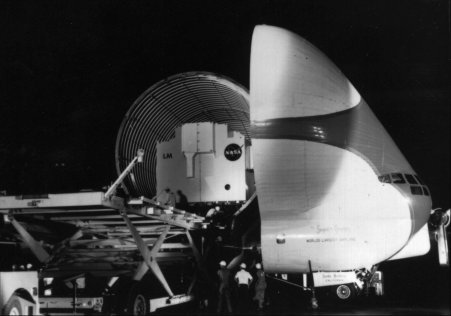
The lunar module reached Cape Kennedy aboard Aero Spacelines' Super Guppy in late June 1967, and the stages were mated four days later. A four-hundred-strong team under John J. Williams, a veteran of Mercury and Gemini launch operations, checked that the vehicle met specification and then supervised the Grumman technicians who tested and modified it. Summer and autumn were one problem after another: helium regulators and water-glycol accumulators replaced on the ascent stage, deficiencies in the spacecraft acceptance checkout system, leaks in the ground support equipment, contamination traced in the gaseous nitrogen facility, and a "significant misalignment" where the fuel inlet elbows met the spacecraft propellant line, because the parts had been built to the specification of the earlier engine. Grumman fabricated new elbows and had them at Kennedy within three days. Leaks in the ascent stage forced the stages apart in August and again in September, and they were remated in October.
_%E2%80%94_lanzamiento_desde_el_Complejo_37_(S68-19456).jpg)
By early September 1967 the mission was running about thirty-nine days behind the plan set in July, though every known issue was being worked except some propulsion system leaks. Most flight documentation was ready by late in the year: mission director William C. Schneider, who had held the same job in Gemini, issued the mission rules in November 1967, assigning responsibilities and spelling out what to do in almost any eventuality. The lunar module was mated to its launch vehicle on 19 November 1967 and the flight readiness test was completed on 22 December. In early January 1968 it was announced that Apollo 5 would launch no earlier than 18 January. Preparations for the countdown demonstration test began in mid-January, simulated lift-off came on the 19th, and the actual countdown, shortened to twenty-two hours, started on the 21st.
A Saturn IB with no tower and no cabin
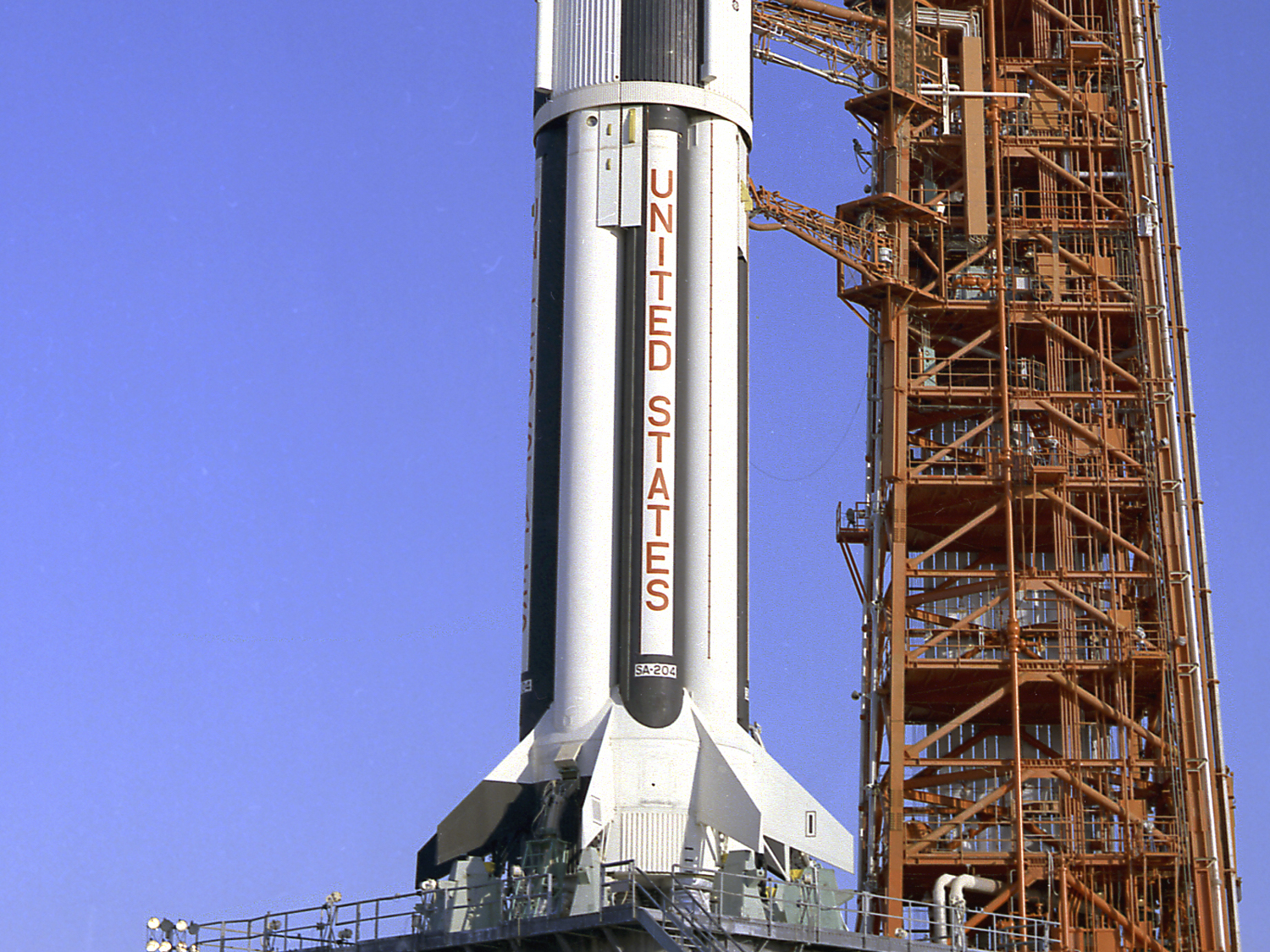
The Apollo 5 space vehicle looked like no other Apollo. Without a command and service module and without an escape tower, the stack stood some 55 metres tall and looked squat and cut off. Instead, the lunar module rode inside the spacecraft-lunar module adapter, numbered SLA-7, just below the nose cap; four adapter panels would open in orbit, once the cap had been jettisoned, to let LM-1 out. Ignition weight for the whole vehicle, spacecraft and propellant included, was 589,413 kg.
LM-1 was the first flight-ready lunar module. It carried no landing gear: it did not need it on an orbital mission and, having no heat shield, it would break up on re-entry anyway, so leaving the legs off saved weight. After a window of LM-5 — the one that would fly on Apollo 11 — broke during testing in December 1967, NASA replaced LM-1's windows with aluminium plates for fear one might fail in flight. With nobody aboard, a mission programmer was installed that could command the craft remotely. Not every system was activated and consumables were not fully loaded either: the primary batteries were partly discharged to avoid over-voltage problems and the environmental control oxygen tanks were only partly filled.
Twenty-five priorities and fire in the hole
The flight plan was organised around twenty-five priorities monitored by seventeen specialists. The first three concerned fire in the hole, the test that gave the delicate part of the exercise its name: firing the ascent engine while the descent stage was still attached, to measure structural effects, staging dynamics and stability in a simulated lunar abort. The phrase comes from mining, from the warning shouted before a charge is set off. It was the procedure by which a crew would leave the lunar surface and, above all, the one by which they would abort a landing that went wrong at the last moment.
The remaining objectives were to operate the descent and ascent propulsion systems, starting and stopping them to simulate the phases of a landing mission, to evaluate lunar module staging, and to check the behaviour of the instrument unit in its Saturn V configuration. The lunar module was to be monitored for a few hours in low Earth orbit. Pre-flight estimates gave the ascent stage of LM-1 about two years in orbit before re-entering and breaking up, and about three weeks to the descent stage.
22 January 1968
The countdown was not clean. Loading the hypergolic propellants ran into procedural trouble and delayed the terminal count, and at T minus two and a half hours test supervisor Donald Phillips called a hold because of failures in a power supply and in the ground computer systems. In all, the mission accumulated a 228-minute hold, caused by a spacecraft water boiler temperature higher than planned — traced to a problem in the ground support equipment freon supply — and by the failure of a power supply in an output register of the digital data-acquisition system. Everything was fixed in time to launch before dark.
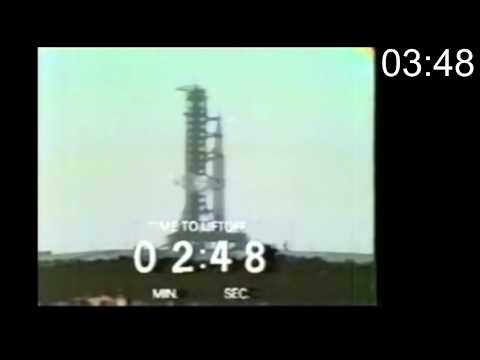
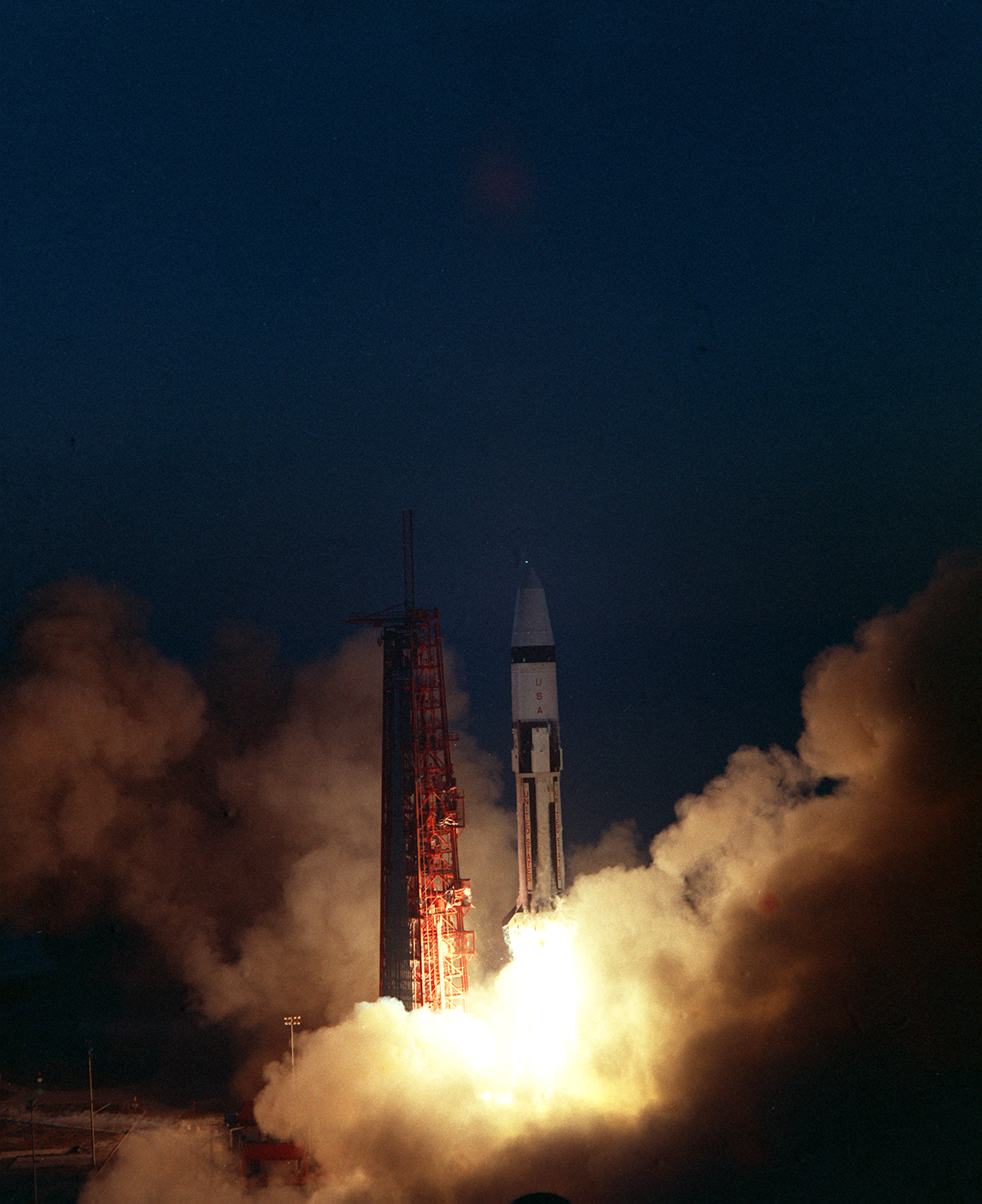
Apollo 5 lifted off from Launch Complex 37B at Cape Kennedy Air Force Station at 17:48:08 Eastern Standard Time, 22:48:08 UTC on 22 January 1968. The Saturn IB performed exactly as planned: the S-IVB engine shut down ten minutes into flight and the vehicle entered orbit ten seconds later, with a perigee of 163 km and an apogee of 222 km. The nose cap was jettisoned and, after a coast of 43 minutes and 52 seconds, LM-1's attitude control engines pulled it away from the adapter and the S-IVB stage, leaving it in a 167 by 222 km orbit.
The guidance computer cuts the burn
After two revolutions of checkout, ground control commanded the first descent-engine burn, planned for 39 seconds. Four seconds in, the Apollo Guidance Computer shut the engine down: the spacecraft was not building up speed at the expected rate. The cutoff was not a malfunction but a deliberate feature, meant to give a crew on a piloted flight room to analyse the situation and decide whether to restart the engine and press on.
The cause lay in the way the test had been prepared. One of the engine's valves was suspected of leaking, so it was left unarmed until the moment of ignition in orbit; that made the propellant take longer to reach the engine. Under normal conditions the burn would have started with the tank fully pressurised and would have reached the required velocity within four seconds, but with partial pressurisation it would have taken six. The tanks were also only half full, which added to the slow acceleration. Programmers could have adjusted the software to allow for the lag, but they were never told.
The alternate mission
In Houston the lead flight director was John Hodge, with Eugene F. Kranz as his chief assistant; it was Kranz's team that ran the flight once Apollo 5 cleared the pad. Skipping the burns would have made the mission a failure, so Mission Control decided on the spot to run the engine tests and the fire-in-the-hole test under manual control from the ground. A signal switched off the guidance computer and handed command to the mission programmer, which commanded the vehicle's manoeuvres. There were communication problems with the spacecraft, but the team accomplished every burn.
The descent engine was fired twice more, once for a full 33 seconds, and there were two ascent-engine firings, one of them the abort manoeuvre with the stages still joined. After the first ascent-engine firing the apogee rose to 961 km, with perigee at 172 km. George Mueller reported to Administrator James Webb that all primary objectives had been achieved. Eight hours into the mission, with the burns complete, the ascent stage lost attitude control because of a guidance system problem and was left tumbling.
Wreckage in doomed orbits
The stages were left low enough that atmospheric drag would decay their orbits quickly. The ascent stage re-entered on 24 January 1968 and burned up; the descent stage lasted until 12 February, its fiery remains falling into the Pacific several hundred kilometres south-west of Guam. Simulations put the re-entry of the launch vehicle's S-IVB stage at about fifteen and a half hours after lift-off. Nothing was recovered: recovery had never been planned, and LM-1 had no heat shield.
What changed afterwards
Apollo 5 settled the question that mattered. After reading a preliminary version of the mission report, General Phillips wired the three manned space flight centres not to plan a second uncrewed lunar module mission. Shipment of LM-2 and its Saturn IB to the Cape was held pending an assessment by George Mueller's certification board, which on 6 and 7 March agreed there was no reason to repeat the exercise. The first lunar module to carry people would be launched by a Saturn V, and that flight was Apollo 9, in March 1969.
George M. Low credited the success to two things: good hardware and outstanding flight control teams under Kranz's leadership. That did not mean the lunar module was finished. Ascent engine instability was a worry from August 1967 to June 1968; when Mueller and Phillips visited the engine's builder in the summer of 1967 they agreed Bell had a good chance of solving the fuel injector problems in time for the first crewed lander, but NASA hired Rocketdyne in parallel to develop an alternate injector, a contract of about a year that was delivered on schedule and on cost. Cancelling an uncrewed flight, in a programme with six flights planned for 1968, was exactly the kind of margin NASA needed to reach the Moon within the decade.
Images
Elsewhere
- AmericaSpaceFire in the Hole: Remembering Apollo 5, OTD in 1968 ↗
- Boeing ImagesApollo 5 Mission (Saturn IB SA-204 / LM-1) ↗
- Space.comApollo 5 in Photos: NASA's First Lunar Module Test Flight ↗
- Smithsonian National Air and Space MuseumApollo 5 ↗
- AlamyApollo 5 Launch, 1968 ↗
- Getty ImagesApollo 5 — colección fotográfica ↗
- Internet ArchiveApollo 5 liftoff (S68-19456) ↗