Apollo 14 (50th Anniversary)
Video from the channel Homemade Documentaries about Apollo 14, linked on its Above Ten Thousand entry. Duration: 1:28:24. Language: English. Video type: Documentary.
What it's about
Amateur documentary, edited from NASA footage, covering the Apollo 14 mission from the crew selection to splashdown. It follows the preparation, launch, technical problems solved during the flight, the two surface excursions in the Fra Mauro region and the return to Earth.
Historical context
Alan Shepard, the first American in space aboard Freedom 7, had been grounded by Ménière's disease and was head of the astronaut office alongside Deke Slayton. Experimental surgery by Dr. William House restored his flight status in May 1969. Shepard chose two rookies as crewmates: Edgar Mitchell, lunar module pilot, and Stuart Roosa, command module pilot. He had hoped for Apollo 13, but was assigned Apollo 14. After the Apollo 13 accident, Apollo 18 and 19 were cancelled and the service module was redesigned, with a third, isolated cryogenic oxygen tank, no destratification fans, new wiring and an auxiliary 400 Ah battery. Apollo 14 inherited the Fra Mauro landing site, in the ejecta of the Mare Imbrium, with the Cone crater as its target, and it was the last H-type mission.
Highlights
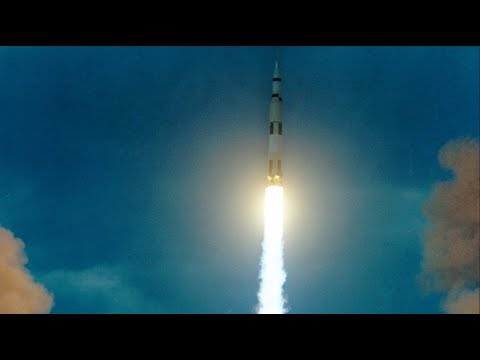
The launch took place on January 31, 1971, aboard the Saturn V AS-509, delayed 40 minutes due to weather; the command module was called Kitty Hawk and the lunar module, Antares. Docking failed five times because of the probe's latches and was achieved after nearly two hours. Once in lunar orbit, a contaminated abort switch gave off false signals: Don Eyles, of the Draper Laboratory, devised a procedure so the guidance computer would ignore them. During the descent, the landing radar failed to lock onto the surface until a switch was reset. On the first excursion the crew set up the ALSEP and tested the MET cart, and transmitted the first high-resolution color video from the surface. The second, on February 6, aimed for the rim of Cone crater, nearly 1 km in diameter; the astronauts ended up about 20 m away without recognizing it. 42 kg of samples were collected, among them 14321, Big Bertha, in which Curtin University identified in 2019 a fragment of terrestrial origin more than 4 billion years old. Meanwhile, Roosa carried out mapping and photography from orbit. After the return, with microgravity demonstrations for Skylab, the spacecraft splashed down in the South Pacific at mission hour 216:02.